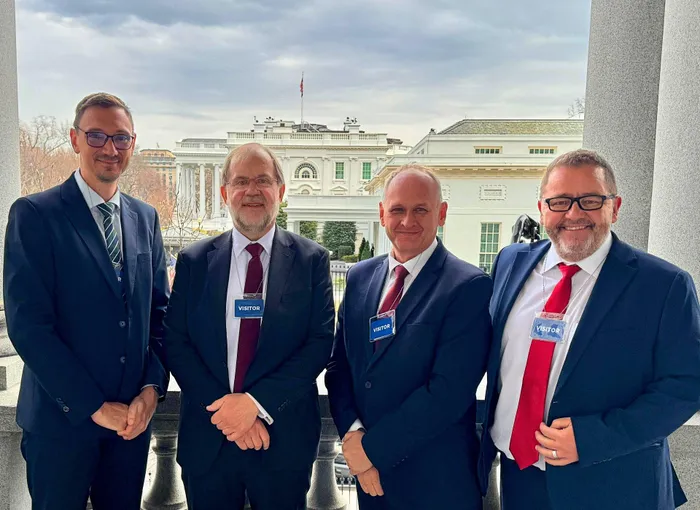
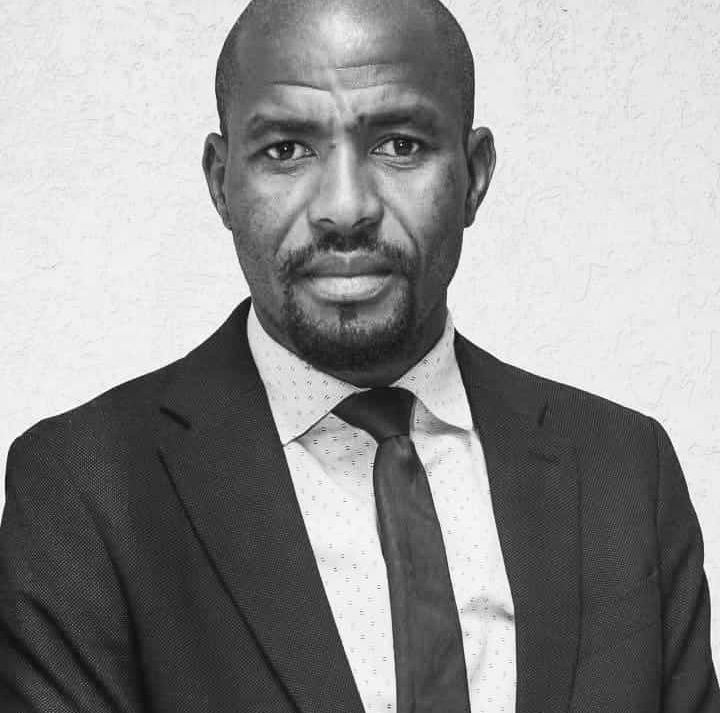
A high-level delegation of Afrikaner leaders recently met with senior United States government officials in Washington, D.C., where the White House outlined specific conditions for normalising relations with South Africa.
During these discussions, US officials raised four major concerns they believe must be addressed to restore trust and cooperation:
Farm Attacks Violent attacks on farmers must be officially recognised as priority crimes. The US urged that these cases be investigated by the Hawks, South Africa’s Directorate for Priority Crime Investigation, in the same manner as rhino poaching and cash-in-transit heists.
“Kill the Boer†Chant The United States called on the African National Congress (ANC) to unambiguously denounce the controversial “Kill the Boer†chant, stating it must be condemned in all contexts, regardless of historical or cultural arguments.
Land Expropriation US officials expressed firm opposition to land expropriation without compensation. They emphasised that any expropriation must involve fair market compensation and be pursued only after all legal remedies have been exhausted
Black Economic Empowerment (BEE) Exemptions The US argued that BEE requirements act as non-tariff trade barriers and requested that American companies operating in South Africa be exempt from such regulations.
These issues, the delegation was told, reflect longstanding concerns the US has conveyed to South African authorities, including ahead of a past meeting between former President Donald Trump and President Cyril Ramaphosa.
Following the talks, the South African delegation reiterated its commitment to transparency and building stronger international ties. They pledged to communicate the US’s position to both the South African government and the broader public.
As veld fire season nears, communities must stay alert. South Africa is experiencing increasingly frequent and intense veld fires, often causing severe property damage, injuries, and even fatalities.
Here’s how you can protect yourself, your loved ones, and your property.
If You Encounter a Veld Fire
Report the fire: Dial 112 from your cell and ask to be directed to the local fire department.
Do not drive into fire or smoke.
If already in the area:
Stop in a low vegetation zone.
Turn off your car, switch on hazard lights and headlights.
Stay inside with windows and vents closed; lie low under window level.
After the fire front passes:
If heat or fumes intensify inside, move to the already burnt ground.
Never drive through flames or dense smoke.
If trapped, find a safe, burned area and stay there until it’s safe.
Common Causes of Veld Fires
Natural causes: Lightning.
Human activity: Uncontrolled braais, illegal burning, arson.
Weather risks: Heatwaves and strong winds worsen fires.
Now is the time to act — landowners are urged to implement fire prevention strategies as winter begins.
Firebreaks — Your First Line of Defence
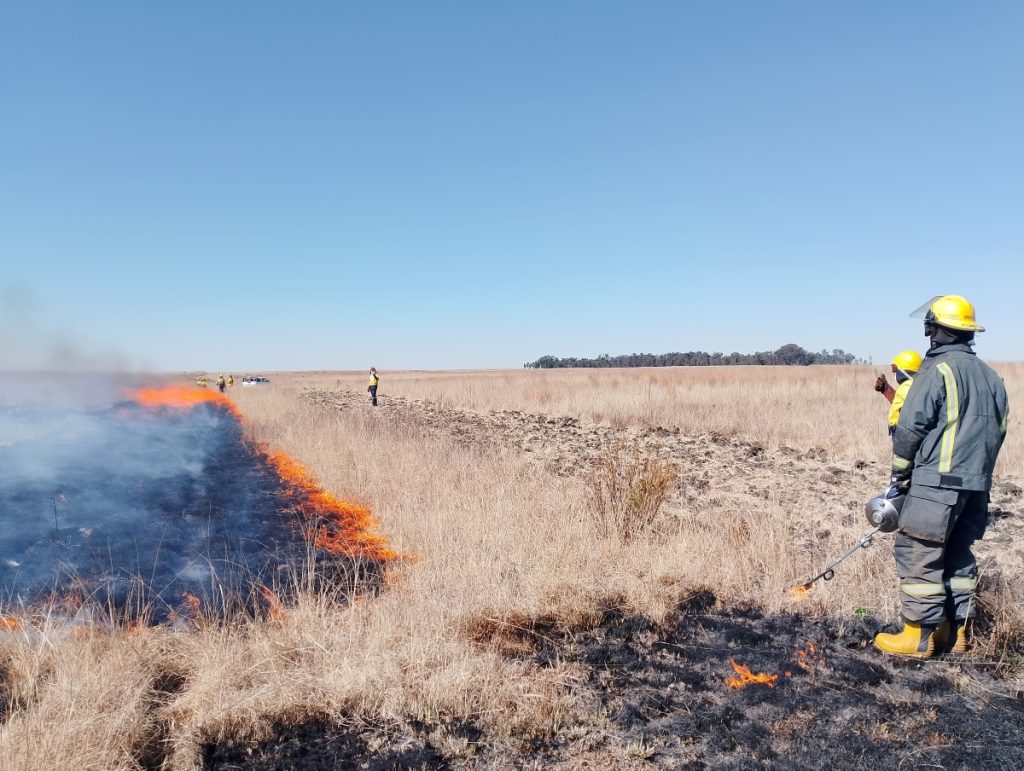
Firebreaks slow or stop fire from spreading and can be made by:
Burning (when authorised),
Ploughing,
Scraping or raking,
Spraying herbicides,
Cutting back trees to reduce fuel loads.
Firebreaks must be practical, documented with neighbours, and comply with local Fire Protection Association (FPA) rules.
What the Law Requires (Veld and Forest Fire Act No. 101 of 1998)
Property owners must:
Join or work with a local Fire Protection Association (FPA).
Coordinate firebreak burns with neighbours.
Have sufficient equipment and trained personnel on site.
Planning & Implementing Firebreaks
Timing: Only burn when permitted by your FPA.
Weather Conditions:
Wind speed: below 15 km/h,
Humidity: above 30%,
Moderate temperatures.
Firebreak Prep:
Demarcate by cutting or ploughing.
Start downwind and allow slow spread.
Use back-burns or natural barriers when possible.
Monitor constantly — extinguish if needed.
After the Burn
Ensure the fire is completely out — no smouldering areas left.
Check for re-ignition from animal dung.
Monitor the site for at least 24 hours.
Firebreaks should be:
Wide and long enough to stop a spreading fire.
Maintained during fire season.
Free from flammable waste (tyres, plastic).
Built to prevent erosion.
How to Respond to a Fire
Move away immediately — never ignore a fire, even if distant.
If trapped:
Head to a safe zone: burnt areas, roads, or non-flammable zones.
Do not try to outrun flames if surrounded.
Get Informed, Stay Safe
Join Your Local Fire Protection Association (FPA):
Mpumalanga Umbrella FPA (MUFPA)
Highveld FPA (HEFPA)
Useful Resources:
Department of Forestry, Fisheries and the Environment: dffe.gov.za
Fire Protection Association of Southern Africa: library@fpasa.co.za | 011 397 1618
AfriForum cracks down on suspected cattle thieves, seizes nearly R1 million worth of stolen cattle in Mpumalanga
Hennie Bekker (English)Hennie Bekker (Afrikaans)
AfriForum’s new training module in combating livestock theft has already borne fruit after members of AfriForum’s Delmas Hawks neighbourhood watch have been cracking down on suspected cattle thieves since Saturday and have seized 64 stolen cattle in two separate operations. The value of the stolen cattle is estimated at R960 000.
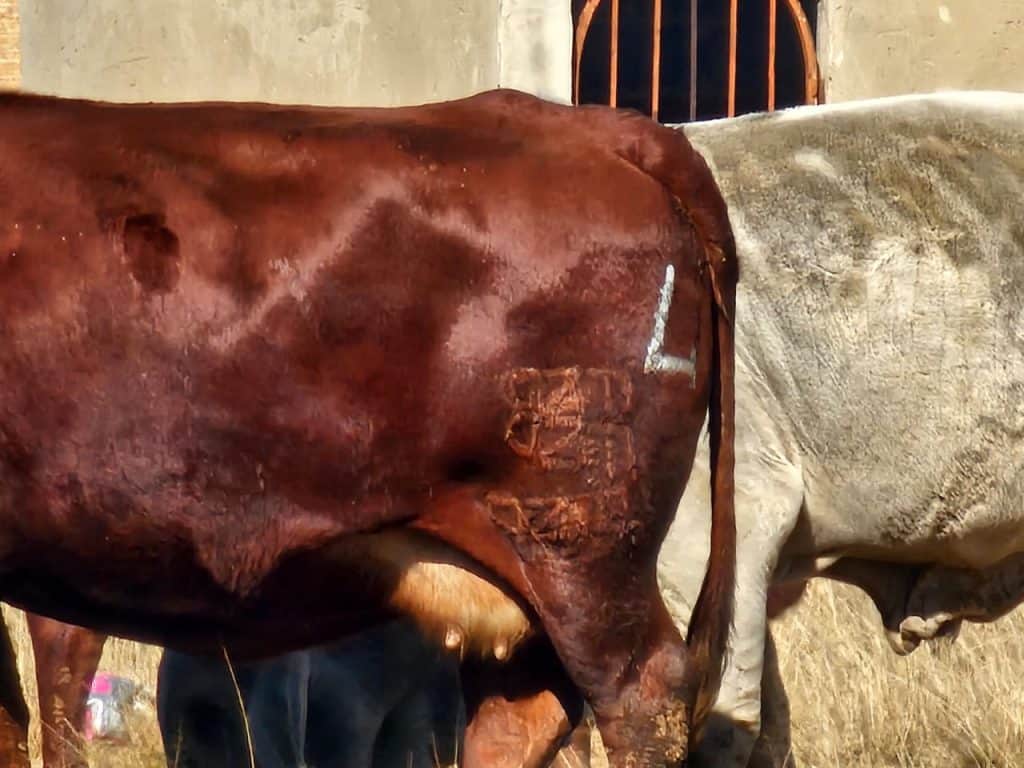
In the latest incident, the Delmas Hawks recovered eleven heifers that were stolen last night from a farm outside Delmas. The operation, which was launched at around 10:00 this morning (25/6/2025) in collaboration with the South African Police Service (SAPS), follows information received about the stolen cattle that were spotted in Botleng, outside Delmas. The police have since seized these cattle, which were found in Botleng with fresh blood on their ears (where the ear tags had been removed) and new brand marks. No one has been arrested in connection with this incident yet.
One of the heifers seized in Botleng this morning. The new brand mark is clearly visible.
In an unrelated incident, the Delmas Hawks conducted inspections in collaboration with the SAPS’ livestock theft unit at two separate cattle auctions in Sundra this past weekend. This was done as part of the practical component of their training. At the end of the weekend-long operation, a total of 53 stolen cattle were seized.
During inspections at the auctions on Saturday, neighbourhood watch members identified nine cows that were suspected to have been stolen and that the suspected cattle thieves planned to sell at the auction. Immediately upon identifying these animals, the authorities issued instructions to refrain from auctioning them.
The SAPS took in one suspect for questioning in relation to the cattle. The SAPS’ livestock theft unit is now on the trail of two more suspects who are suspected of planning to sell stolen cattle at the same auction.
A farmer from Bethal has since reported the theft of 45 cattle to the SAPS’s livestock theft unit, and the nine auction kraal cows were successfully claimed as his property.
The arrested suspect pointed out to AfriForum and the SAPS the loading area of ​​the stolen cattle on a site outside Hendrina. A further 20 cattle with their ears cut off were found at the scene. This mutilation was probably done to remove the cattle’s tattoos which could identify their rightful owner. It is suspected that the cattle came from a farm in the Hendrina district. A severed ear tag from one of the auction kraal cows was also found at the scene.
After a follow-up operation on Sunday, the SAPS, with AfriForum’s assistance, tracked down more cattle stolen by the same livestock theft network. Tracks were followed over a distance of approximately 20 km, but despite the suspected cattle thieves’ ingenious attempts to cover up their own and the cattle’s tracks, the neighbourhood watch, police members and the farmer whose cattle were stolen managed to outwit the thieves with meticulous tracking.
By yesterday afternoon, authorities had already recovered a total of 53 cows, including 33 of the Bethal farmer’s 45 stolen cows.
According to Hennie Bekker, AfriForum’s District Coordinator for the Mpumalanga Highveld, there are still two suspects at large. “However, the weekend’s operation was a huge success, and in addition to the cows that were recovered, valuable information was also collected that points to the work of a possible stock theft syndicate. Forged cattle branding documents that were used to register the cattle at the auction as well as other personal documentation of one of the suspects are important pieces of evidence that will ensure that the net can be tightened around these suspected cattle thieves who are harassing farmers in the region,†explains Bekker.
The police investigation is currently ongoing. AfriForum is assisting the stock theft unit by providing information and drones if they are needed further.
AfriForum sharpens its skills to catch livestock thieves
Last week (18 June), AfriForum presented its first online training session for its brand-new training module on combating livestock theft. This new module aims to tackle livestock theft – a multi-million rand crime problem. Neighbourhood and farm watch members from all over the country tuned in for this session, which provided training on several critical issues in combating and identifying this crime, including livestock transport permits, livestock identification, scene preservation and livestock documentation and auctions.
The extent of stock theft in South Africa
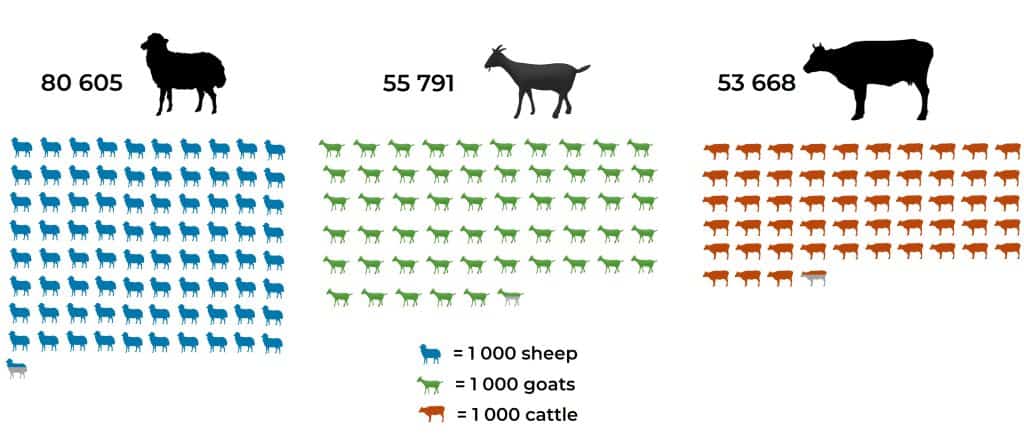
At least 80 600 sheep, 55 700 goats and 53 600 cattle were reported stolen to the SAPS in the past financial year in South Africa. These approximately 190 000 head of livestock, as well as smaller quantities of pigs, chickens, game, donkeys and ostriches that were stolen and for which 25 606 complaints were lodged with the SAPS, form part of a crime industry that is no longer just a small-scale opportunistic crime. Over the years, stock theft has transformed into a sophisticated crime involving syndicates, posing serious risks to the financial survival and progress of farming in the country.
Theft of sheep, goats and cattle as reported to SAPS in 2024/2025
According to recent calculations made by AfriForum, stock theft cost the agricultural industry at least R200 million in direct losses during the fourth quarter of 2024/2025 (January to March 2025). Conservatively estimated, the theft of cattle, sheep and goats alone cost the industry approximately R880 million in direct losses, in the twelve months from April 2024 to March of this year. However, this amount does not include additional losses such as the loss of breeding potential. Experts estimate that only about 30% of stock theft is reported, which means that the actual extent of stock theft and the resulting financial losses are significantly greater than they appear at first glance.
THE HIDDEN DANGERS OF GIVING ANIMALS AWAY FOR FREE.
In the world of animal welfare and pet ownership, there exists a “well-intentioned” but often overlooked practice that can lead to unforeseen consequences for our furry companions and the humans who open their homes to them. It’s the act of giving animals away for free, a seemingly generous gesture that, more often than not, conceals a host of concerns and challenges. While the intention behind such acts may be “innocent”, the reality is far more complex. When you give animals away for free or sell them to strangers, you play Russian Roulette with the lives of sentient beings.
Facebook doesn’t allow the selling of animals on their platform, but unfortunately, they don’t seem to have a problem with free animals. There is a local group that promotes free animals. Most of us in animal welfare get blocked there. When I engaged with one of their admins via Messenger, asking if they understood what they were doing, this individual responded with: “People want to sell them, and she is just keeping order in the group and being an admin.” She also has the mentality that if it is not against the law so, then it is acceptable. Something doesn’t have to be illegal to be immoral, dangerous, or unethical.
In this article, we delve into the hidden pitfalls of giving animals away without a “price tag”. Your intentions might be considered well-meaning, but here we will share some reasons why anyone who actually cares should seriously reconsider “free to good home” ads!
Editorial note: This article is a reprint from 3 July 2024
NOT A GOOD HOME, BUT A GOOD PLACEMENT
Our biggest challenge in an overwhelmed animal welfare system is the massive overpopulation crisis fuelled by irresponsible owners, breeders, pet shops that sell animals, those who give them away for free to strangers, and those who support these practices. There are not enough homes for every domestic animal, and that is why we so fiercely advocate for spaying and neutering.
So, if there are not enough homes, how many good homes do you think there are? What do you consider a good home?
Sadly, a “good home” means very little in today’s society. What people don’t seem to understand is that whether they sell, buy, give an animal away for free, or adopt, it is never just about a good home, but about a good placement for that animal. The needs of the animal should come first, always! Paying for an animal or having a big yard and money is no guarantee that they will be taken care of and loved as they deserve.
How can you guarantee it is a good home? Do you really know what we consider a good home? You most likely can’t because you are not trained to do this. Animal rescuers can share hundreds of stories about this that ended up in horror situations for those animals.
SOME REASONS WHY “FREE TO GOOD HOME” ADS ARE DANGEROUS
From the lack of screening and financial considerations to the risk of exploitation and the consequences of insufficient education, we will shed light on the concerns that surround the practice of giving animals away for free. By examining these issues, we aim to encourage a more thoughtful and responsible approach like pet adoption, one that prioritizes the welfare of animals and ensures that their new homes are loving, safe, and prepared to meet their unique needs.
Giving animals away for free can raise several concerns, both for the welfare of the animals and the people involved. Some of the main concerns include:
Giving animals away for free contributes to pet overpopulation, well, more than contributes… it fuels it. In SA on a daily basis, an average of 2800 (yes two zeros and yes daily) healthy animals are humanely killed because there are just not enough homes. Without responsible breeding practices and adoption fees, there may be less incentive for people to spay/neuter their pets, leading to more unwanted litters. How many of the free animals do you think are sterilized? Usually, only a few exceptions, and this just continues the cycle.
2. LACK OF SCREENING
When animals are given away for free, there is often minimal or no screening of potential owners. This can lead to animals being placed in homes where they may not receive proper care, attention, or even be subjected to abuse.
Those who failed the adoption process are on the list, too. Some people could not get animals through reputable shelters, so now they troll these “free to good home” posts. There is a reason that shelters reject some people, who those who do not work in animal welfare would consider “good homes”. So, chances are high that someone who asks for animals online, free or for sale, might have been rejected by reputable organizations already.
If these animals are not re-homed properly with home checks and sterilization, through the SPCA or reputable animal welfare organizations, these animals, countless times, end up in the wrong hands!
3. RISK OF EXPLOITATION
Free animals can be attractive to individuals who may not have the best intentions. Some people may acquire free animals with the intention of:
Reselling them for profit.
There are speculators, which means the person can make a pure profit by selling these animals instead of having to care for mothers and litters. They collect the “free to good home” or buy litters only after they have found buyers.
These “free to good home” animals are targets for animal dealers, too. They take these animals and also sell them for profit. They can be sold to other people as pets, to breeders, to puppy mills, for animal trades like skin or, for racing, as security animals, and to laboratories for animal testing to mention a few. Some call them “flippers”. Trailers full of dogs and other animals are found at borders and other places by the authorities.
Using them for illegal purposes.
Dog fighters may take the power breeds to use in fights, and bait dogs (other breeds and species, including cats) can easily be obtained through these adverts and used in fights too. Bait animals are used for sparring and building up the aggression of the pedigree or power breed, like a pre-show for the main event. Some take these animals to abuse them, to rape them, to offer them as sacrifices (yes, we have witches that live in our community).
Used as food. In some cases, these animals are used as food for humans and other animals.
Animal dealers troll these ads too and are “experts” when it comes to fooling most. They pretend to care for the animals in front of you, and if you are not trained to spot them, like those who work in animal welfare, you will be fooled, and an animal will pay the price. There are literally animal brokers who will meet you at a different house or even have a fake Facebook profile where it looks like they love animals.
4. FINANCIAL CAPABILITY
Owning a pet comes with various expenses, including food, veterinary care, grooming, and more. If someone cannot afford to adopt a pet, they may struggle to provide for the animal’s needs, potentially leading to neglect or abandonment.
5. LACK OF COMMITMENT
People who acquire pets for free may not be as committed to their care as those who invest time and money in adoption, not that it is a guarantee either. This can result in impulsive buying, with some owners giving up on the animal when they no longer want the responsibility.
6. HEALTH AND SAFETY CONCERNS
Free animals may not have received necessary vaccinations, veterinary care, or proper socialization. This can lead to health and behavioural problems for the animal and potential risks to other pets and humans in the community.
7. LACK OF EDUCATION
When animals are given away without any educational resources or support, new owners may not have the knowledge and skills needed to care for the pet properly. This can result in behaviour problems and animal suffering.
To address these concerns, many animal welfare organizations and shelters charge adoption fees and conduct thorough screening processes to ensure that animals are placed in responsible, loving homes. These fees help cover the costs of care and can act as a barrier to impulsive or ill-prepared adopters, ensuring a better quality of life for the animals. Additionally, providing educational resources and support to new pet owners can help ensure the well-being of the animals and reduce the risk of abandonment or neglect.
WHERE DOES“FREE TO GOOD HOME” STOCK COME FROM?
Free to good home “stock” usually comes from backyard breeders, irresponsible owners, or those who do not want animals anymore because it is inconvenient for them. Someone in a difficult situation, the very few exceptions, will do re-homing through a responsible organization.
Also, read about winter tips for keeping your pets warm!
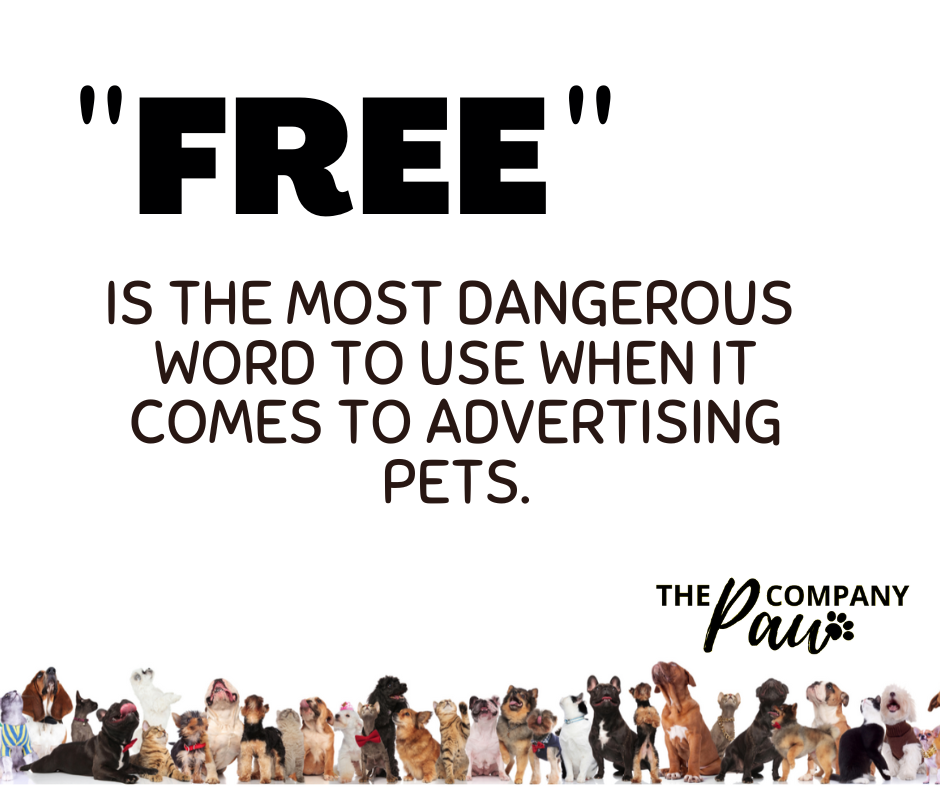
Image by The Paw Company
NO ANIMAL IS ACTUALLY FREE
The “buying price” is but a small expense compared to their care by a responsible pet guardian (owner). Usually, the veterinary bill for first vaccinations, de-worming, tick and flea treatment, and sterilization will fall on the new owner, and this will remain an expense during the animal’s lifespan. If you are at all a responsible pet owner, you will need to pay for sterilization as well as spend on proper food, toys, and shelter, in addition to securing your yard properly. All this will easily be more than R2000! Do you think someone who asks for free animals will do the above? Can you guarantee they will?
Yes, we don’t support selling, and yes, we don’t support “free to good home”, so what do we support? ADOPT DON’T SHOP! Adoption from reputable organizations is the only kind of “trading” of animals we support and the only ethical option. These organizations will do an adoption application, home check, sterilization, adoption contract, and follow-ups. That’s responsible. Note that there are registered organizations that do not do this. Don’t support them!
Responsible adoption practices are essential for the well-being of our beloved pets. The complexities of pet ownership demand careful consideration, commitment, and financial responsibility. The fact remains that millions of animals are euthanized annually because there are just not enough homes for all the animals, and even far fewer good homes.
HOW CAN YOU HELP?
Educate your friends and family on this topic and share our posts.
Report any such post on the social media platform and to your local welfare organizations. Facebook doesn’t allow the selling of animals, so report it too.
Spay and neuter your animals and don’t give them away for free (nor sell them).
Rehome your pets through reputable organizations if you can’t take care of them.
Please stop supporting the “free to good home” ads.
Stop supporting breeders, pet shops, and animal dealers.
Stop being mad at shelters and start blaming breeders (of any kind), irresponsible pet owners, and every single person who gives animals away for free as if they are objects and not sentient beings.
Adopt, don’t shop. Adoption is the only ethical option!
Are you willing to take these risks with an animal’s life? If these people really cared about these animals, they would let them be adopted through a responsible organization because irresponsible homing hurts animals.
The act of giving animals away for free, while maybe well-intentioned, can lead to a myriad of problems that impact the welfare of both animals and humans. Let us strive for a future where the act of giving animals away for free is replaced by a culture of responsible and compassionate pet adoption. In doing so, we can create a world where every animal enjoys the love, security, and respect it truly deserves. By uniting our efforts, we can pave the way for a brighter and more humane future for pets and their human companions alike.
Join us again next week as we explore issues around the pets of our lives.
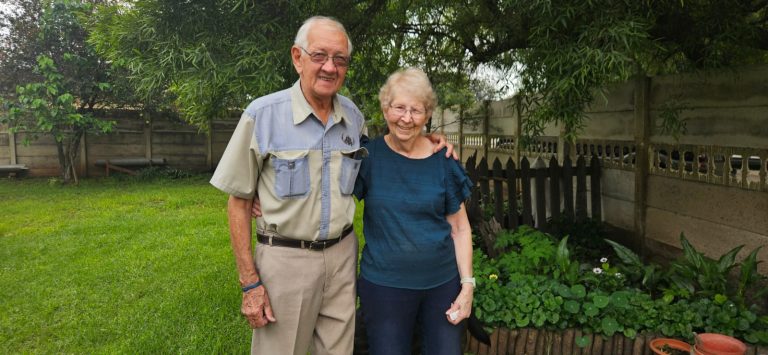
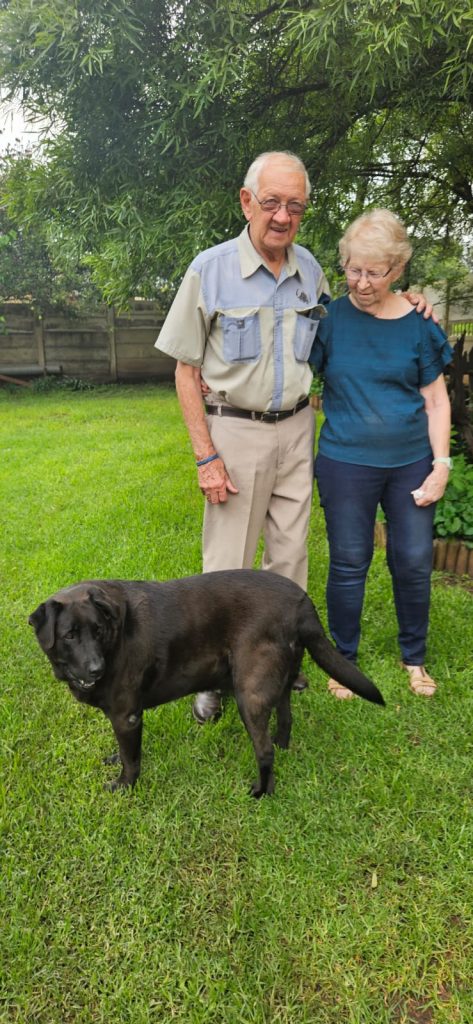
After more than 44 years in Secunda, JC and Juanita Lesch have made the big move to a peaceful retirement village at the East Rand, closing a remarkable chapter marked by community service, creativity, and dedication.
The decision to relocate comes as JC’s health requires a quieter pace of life, and the tranquil new environment promises much-needed rest for both him and Juanita. JC spent his career in the mining industry, with a long and loyal service record at Sasol, where he eventually retired.
Their journey to a new home, however, wasn’t without hurdles. The initial property they considered would not allow pets, forcing them to face the heartbreaking possibility of rehoming their beloved Labrador. But fate intervened—an ideal, pet-friendly home became available, and their four-legged family member is happily moving with them.
While JC was known for his hard work and steady presence, it was Juanita who became something of a local icon. Renowned for her exquisite silk paintings, she handcrafted scarves and ties that became cherished items worn with pride. Her passion extended beyond her own artwork—Juanita offered art and embroidery classes from her home, sharing her talents generously with the community. She also served for many years as chairwoman of the Women’s Agricultural Union, proving her tireless commitment to uplifting and inspiring others.
Juanita told The Bulletin, “I don’t know what I’m going to do, but I’ll definitely keep myself busy.” Knowing her energy and creativity, that could mean anything from painting and teaching to taking on a new community role. One thing is certain: she won’t be sitting still for long.
As the Lesch family settles into their new home, the Secunda community will surely feel their absence, but their legacy of warmth, service, and artistry will continue to echo through the lives they touched.
The Democratic Alliance (DA) strongly condemns the ANC-led Mpumalanga Provincial Government’s refusal to conduct lifestyle audits on senior government officials—this as allegations of widespread corruption escalate, with six out of ten Heads of Departments (HODs) in the province currently under investigation, suspended, or implicated in financial misconduct.
In a sitting of the Mpumalanga Legislature on Friday, the DA introduced a motion calling for urgent lifestyle audits on:
All HODs and Chief Financial Officers (CFOs)
The Secretary of the Legislature
Senior procurement officials
Executives in provincial parastatals
Senior managers in both the provincial government and municipalities
This call was prompted by the ongoing investigations involving HODs from the departments of:
Education
Sports, Culture and Recreation
Agriculture
Public Works
Safety and Security
Human Settlements
Despite the severity of the allegations, the ANC majority in the Legislature chose to racialise the debate, claiming that the call for accountability was rooted in colonialism and “white people not accepting that black people can be successful,” said Annerie Weber, MPL – DA Spokesperson on Education, Mpumalanga Province
Annerie Weber, MPL, DA Spokesperson on Education, Mpumalanga Province
This deflection is particularly disingenuous, given that the implicated officials are being investigated by the ANC’s own MECs—not the DA. Ironically, the EFF abstained from the vote, offering no support or opposition to the proposed anti-corruption measure.
The DA remains resolute in its fight against maladministration, corruption, and self-enrichment. The refusal to implement lifestyle audits exposes the ANC’s lack of political will to address corruption within its ranks.
The people of Mpumalanga deserve a transparent and accountable government. The DA will continue to push for reforms that protect public funds and restore integrity to our institutions.
The Democratic Alliance (DA) is calling on the Minister of Cooperative Governance, Velenkosini Hlabisa, to urgently intervene in Mpumalanga and compel the provincial government to declare vacancies in Wards 14 and 26, where prolonged councillor absences have resulted in the near collapse of service delivery.
In Govan Mbeki Local Municipality, Ward 14 Councillor Jabu Zwane resigned on 28 May 2025, submitting his resignation to the Municipal Manager. Despite this formal step and Zwane’s public criticism of the ANC’s governance, the resignation has not been officially acknowledged, raising concerns that political considerations are delaying the declaration of a vacancy.
In eMalahleni Local Municipality, Ward 26 Councillor BT Twala has been absent and inactive for over a year and two months. The council has suspended his salary, yet no explanation for his disappearance has been made public, nor has a vacancy been declared. Credible reports suggest his absence is linked to politically sensitive matters within the ANC.
The Municipal Structures Act is clear: when a councillor resigns, is incapacitated, missing, expelled, or deceased, a vacancy must be declared by the council in consultation with the relevant MEC. A by-election must then be held within 90 days to restore representation for affected residents.
However, both the ANC-led Mpumalanga Government and MEC for COGTA, Speedy Mashilo, have failed to fulfil this legal obligation. As a result, communities in these wards continue to suffer from non-functional ward representation, poor governance, and a collapse in basic service delivery.
The DA demands:
The immediate declaration of vacancies in both wards,
Compliance with the Municipal Structures Act,
The scheduling of by-elections without political delay.
We will escalate this matter to Minister Hlabisa through our parliamentary representatives to ensure that the people of Wards 14 and 26 are no longer denied their democratic right to representation and service delivery.
The DA remains committed to upholding the rule of law and standing up for residents whose constitutional rights are being neglected by a government prioritising political preservation over public interest.
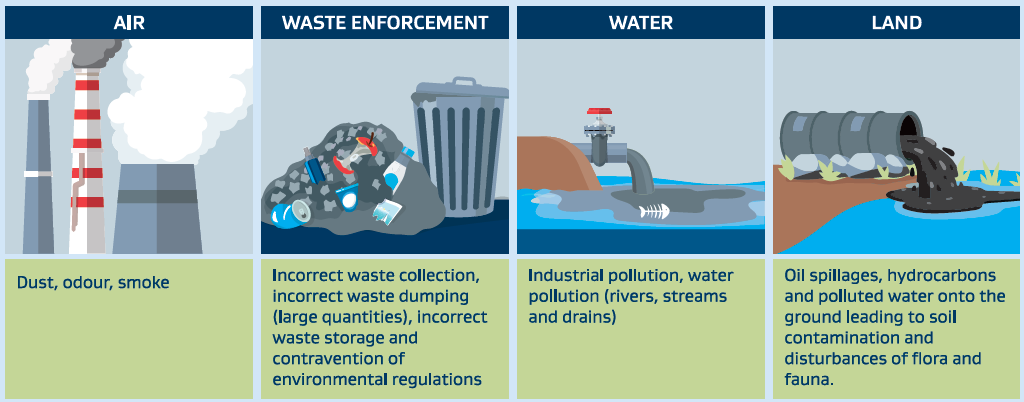
An environmental complaint is defined as any written or verbal complaint raised via the complaint line or to the environmental department by any person setting forth a cause of action or investigation for environmental impact arising under any Environmental laws or licenses. An environmental complaint arises from issues that pose a threat to the environment, a threat to health or an adverse impact on nature, amenity and lifestyle.
They come under several categories, such as but not limited to:
Call the standby cell phone number 0829021989 or send an email to environmentstandby.secunda@sasol.com The contact details can be used by both the internal and external stakeholders. The environmental complaints e-mail address and the standby line is available 24 hours a day, 7 days a week
Expect continuous feedback while the complaint is being investigated
After conducting a thorough investigation, feedback is given to the complainant.
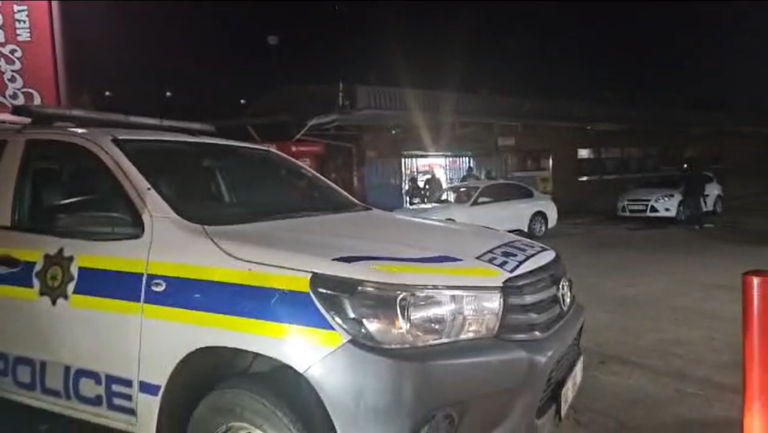
Two suspects, aged 37 and 40, were arrested following a shootout with police during an attempted armed robbery in Leslie on Tuesday, 17 June 2025, at approximately 18:00. A 38-year-old police constable sustained a gunshot wound to the hip during the exchange of fire and was transported to the hospital for medical treatment.
According to the preliminary report, members from the Leslie SAPS were on patrol when they encountered an ongoing robbery at a local liquor outlet. Upon approaching the scene, the suspects opened fire on the officers, prompting police to return fire. During the crossfire, the constable was injured.
Initial investigations indicate that approximately seven armed men, dressed in police reflector vests, entered the liquor store under the pretence of conducting an investigation into counterfeit liquor. The suspects allegedly identified themselves as police officers and questioned the store owner. After spending nearly an hour at the premises, the suspects attempted to carry out a robbery.
Police members from Visible Policing (Vispol) in Leslie arrived at the scene, resulting in the shootout. While several suspects managed to flee, they abandoned two vehicles—a white BMW 3 Series bearing false registration plates and a white Ford Focus reported stolen in Bronkhorstspruit (Gauteng Province) in March 2025. Both vehicles were seized for further investigation.
A follow-up search in the area led to the arrest of two suspects found hiding in an enclosed storeroom. The duo has been charged with attempted murder, armed robbery, and possession of suspected stolen property. Forensic experts and investigators are continuing to process the scene and collect evidence. Further arrests are expected as the investigation unfolds.
The arrested suspects are expected to appear before the Leslie Periodical Court on Friday, 20 June 2025.
The remaining suspects are still at large. Police urge anyone with information that may assist in their apprehension to contact Detective Constable Thembayona Mkhulisi on 066 577 6013, or call Crime Stop at 08600 10111. Alternatively, information can be submitted via the MySAPS App. All information received will be treated with the strictest confidentiality, and callers may remain anonymous.
The Acting Provincial Commissioner of SAPS in Mpumalanga, Major General (Dr) Zeph Mkhwanazi, welcomed the arrests and commended the swift action taken by police members. “Those who attack our law enforcement officers will face the full might of the law. We will not rest until all those responsible are brought to justice,” he said.
Govan Mbeki Municipality – Controversy continues to mount after Cllr Jabu Zwane, the former MMC for Electrical and Mechanical Engineering and ANC ward councillor for Ward 14, resigned on 28 May 2025 — a move that has yet to be officially acknowledged by the Speaker of Council.
Zwane submitted his resignation during a council sitting, reportedly handing a printed email to the Speaker, Cllr Fikile F. Magagamela, before walking out of the chamber. The letter, addressed to Executive Mayor Cllr NG Zuma, stated Zwane’s immediate resignation from both the African National Congress (ANC) and his council duties.
However, 22 days later, no declaration of a vacancy has been made.
Sources close to the council allege that the Speaker has refused to accept the resignation letter, arguing that it was not formally addressed to her. Critics say this inaction may be politically motivated, citing fears within the ANC of triggering a potentially damaging by-election, given the party’s recent decline in local support.
In his resignation letter, Zwane delivered a stinging critique of his former party, stating:
“The ANC has turned to be a foreign organisation which is no longer biased to the poor, vulnerable blacks in general and Africans in particular. I have decided to terminate my membership from the organisation effective immediately.”
By resigning from the ANC, Zwane automatically forfeited his seat on the council, per municipal regulations.
Speaking to The Bulletin, Zwane elaborated on his reasons, accusing the ANC leadership of ignoring corruption allegations and suppressing internal dissent. He specifically referenced the controversial Section 106 report, alleging that it was being “swept under the carpet” to protect implicated individuals.
He further accused former councillors — Ethel Nkosi, Lindi Masina, and Thandi Ngxonono — of still exerting significant influence over the municipality despite being deployed elsewhere.
“We need to get them to release their grip on this municipality,” Zwane said.
In a recent radio interview, Zwane reiterated that he had handed his resignation to both the Speaker and the ANC Chief Whip. He claimed that when raising concerns about irregularities involving security companies contracted by the municipality, he was silenced at both local and higher caucus levels.
Zwane also alleged that Cllr Thandi Ngxonono laid a case of intimidation against him, only to suggest later that she would drop the charges if he withdrew his resignation.
He went further, making explosive claims that senior political figures continue to wield unofficial power over administrative appointments and financial transactions in the municipality:
“Ethel Nkosi is controlling everything in Govan Mbeki — from the executive mayor to directors and even junior staff,” he alleged. “Some officials are still paying her or buying things like TVs and furniture for her.”
Despite these serious accusations and the clear indication that Zwane has vacated his position, Speaker Magagamela has yet to act, drawing criticism for ignoring due process.
Observers say the silence may be a strategic delay aimed at avoiding a by-election that could cost the ANC a vital seat. Others suggest the hesitation reflects broader internal instability.
Opposition parties are now being urged to intervene, potentially escalating the matter to the Independent Electoral Commission (IEC) or the courts if necessary.
As the municipality remains in limbo, one question remains: Is this political manoeuvring — or a cover-up waiting to unravel?