Michelle Nell, General Manager Secunda
Mall, spoke to The Bulletin about the precautions the mall is taking during
this time to ensure their customers stay safe and feel safe.
“We have supplied all the car guards with gloves and sanitiser,” said Michelle.
“At every entrance we have placed a person with a mask and gloves with Dettol sanitiser so that our customers can sanitise their hands. The security was also supplied with sanitiser and we have increased the cleaning times for seating areas, bathrooms and other much used areas.” Michelle continued.
Michelle added that all the cleaning
staff were supplied with gloves and masks.
Unfortunately, the kids play area has been closed for the time being.
The following is a press release from
Secunda Mall and is also available on their Facebook page:
In light of the hand sanitiser shortage
we’ve got you covered.
Visit Secunda Mall and
receive a warm welcome as well as a hygienic Dettol spritz when entering
through any of our main entrances.
Secunda Mall uses disinfectant cleaning
detergents as a rule and in light of recent circumstances we can assure all our
customers that we will continue to work diligently to provide our customers
with a safe and hygienic shopping experience.
Secunda Mall encourages everyone to follow the guidelines set out by the South
African Department of Health as well as that of the World Health Organisation.
• Clean hands frequently
with alcohol-based hand rub or soap and water
• Cover nose and mouth when coughing and sneezing with tissue or flexed elbow
• Disinfect frequently used surfaces
• Use sanitising wipes before using shopping carts
Michelle also informed us
that the mall is following the guidelines that were set out by the government.
No alcohol will be served after 18:00. The restaurants are following the 50-person
requirement and have spaced their seating accordingly.
This should not deter any
customer to order from their favourite restaurant because guess what… You can
still order food from your favourite restaurant by reading how to below!
Secunda
Mall has placed a selection of NEW blue cones close to our entrances in order
to assist our restaurants & customers with a quick and easy way to CALL and
COLLECT!
– Please note these are only for customers who
have placed an order with one of our participating restaurants.
– Customers are limited to 10min MAX and may not
exit their vehicle.
ORDER:
Phone your favourite restaurant – provide your
name, order from menu and your car make & reg no.
Have the restaurant indicate how long your waiting
period will be.
Collect at the nearest entrance.
The Bulletin reported on 16 March that The Electoral Commission will urgently
approach the Electoral Court to postpone all scheduled by-elections as part of
its response to the COVID-19 pandemic.
This is
particularly important to residents of Secunda. A vacancy arose when the councillor
of ward 30, Cllr Tim Denny, resigned. He relocated to the Sasolburg area.
Several other
by-elections were to be held across the country with one in Emalahleni as well.
The Electoral
Commission was able to obtain an order in the Electoral Court of South Africa
that postponed the by-elections by no more than 120 days from the date of the
order. The order date is today, 19 March 2020.
The Bulletin
spoke to Jane Sithole, DA Provincial Leader in Mpumalanga.
“The DA in
Mpumalanga welcomes the decision by the Electoral Court to postpone all
scheduled by-elections in response to the COVID-19 pandemic,” said Jane, “In
the face of increasing transmission risk of the Covid-19 virus, the Democratic
Alliance has also taken the decision across the Province to pause all political
activity which involves human-to-human contact or close proximity between
people.”
“Given
heightened awareness and concerns over the Covid-19 pandemic, significant
numbers of voters might stay away from voting stations. This would have
resulted in low participation levels, which will undermine the freeness and
fairness of elections,” Jane continued.
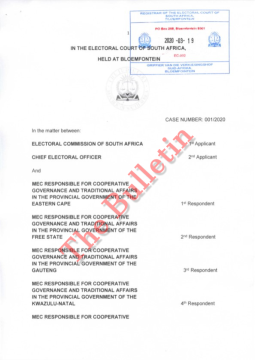
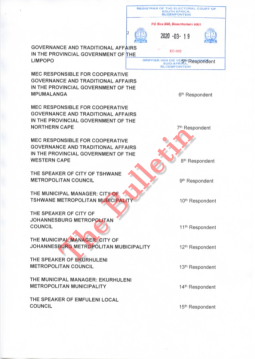
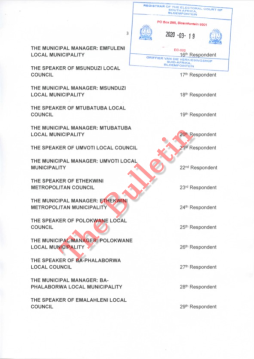
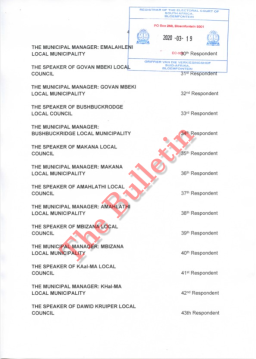
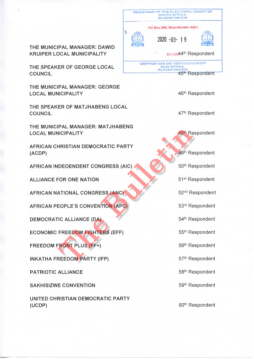
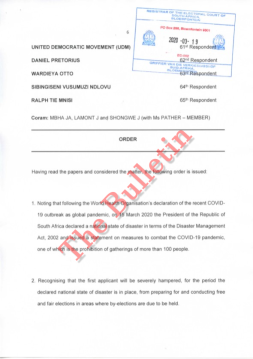
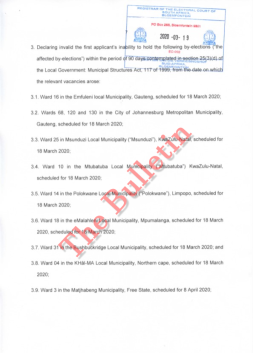
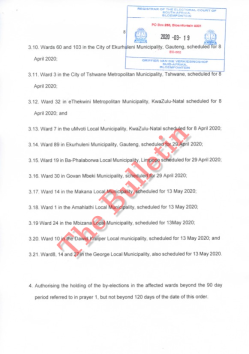
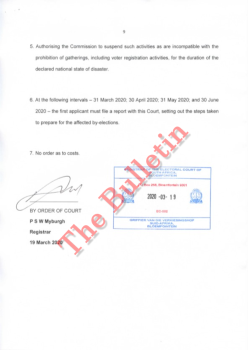
The full court
order is hereby attached.
All by-elections are now postponed.
The Bulletin reported on 16 March that The Electoral Commission will urgently
approach the Electoral Court to postpone all scheduled by-elections as part of
its response to the COVID-19 pandemic.
This is
particularly important to residents of Secunda. A vacancy arose when the councillor
of ward 30, Cllr Tim Denny, resigned. He relocated to the Sasolburg area.
Several other
by-elections were to be held across the country with one in Emalahleni as well.
The Electoral
Commission was able to obtain an order in the Electoral Court of South Africa
that postponed the by-elections by no more than 120 days from the date of the
order. The order date is today, 19 March 2020.
The Bulletin
spoke to Jane Sithole, DA Provincial Leader in Mpumalanga.
“The DA in
Mpumalanga welcomes the decision by the Electoral Court to postpone all
scheduled by-elections in response to the COVID-19 pandemic,” said Jane, “In
the face of increasing transmission risk of the Covid-19 virus, the Democratic
Alliance has also taken the decision across the Province to pause all political
activity which involves human-to-human contact or close proximity between
people.”
“Given
heightened awareness and concerns over the Covid-19 pandemic, significant
numbers of voters might stay away from voting stations. This would have
resulted in low participation levels, which will undermine the freeness and
fairness of elections,” Jane continued.
The Bulletin has received increasing reports
of animals being dropped off at animal shelters. The reason for this is that
people are scared that their pet/s or their animals will pass COVID-19 on to
them.
According to the CDC (Centres for Disease
Control and Prevention) they have not received any reports of pets or other
animals that were infected with COVID-19. Further studies will have to be
conducted to recognise if different animals could be affected by COVID-19 and
also how.
What you should know is (taken from the CDC’s
website):
Coronaviruses
are a large family of viruses. Some cause illness in people and others
cause illness in certain types of animals.
Coronaviruses
that infect animals can become able to infect people, but this is rare.
Do not
know the exact source of the current outbreak of coronavirus disease 2019
(COVID-19).
Do not
have evidence that companion animals, including pets, can spread COVID-19.
Do not
have evidence to suggest that imported animals or animal products imported
pose a risk for spreading the 2019 novel coronavirus.
There
is still no evidence to suggest that any animals, including pets,
livestock, or wildlife, might be a source of COVID-19 infection at this
time.
However,
because all animals can carry germs that can make people sick, it’s always a
good idea to practice healthy habits around pets and other animals.
Wash your hands after handling animals, their food, waste, or supplies.
Practice good pet hygiene and clean up after pets properly.
Take pets to the veterinarian regularly and talk to your veterinarian if you have questions about your pet’s health.
If you do feel unwell limit your interaction with
your pets and other animals. The same you would do with human interaction,
self-isolate. Even though there has been no reports of pets or other animals
contracting the COVID-19 VIRUS, be safe rather than sorry. This is just a
precaution to keep you and your pets or animals healthy.
Ask another family member in your household to take care of your beloved pet or other animals.
Try to avoid contact with your pet or other animals i.e. no petting, snuggling, kissing, being licked or sharing food.
If you have to take care of you pet/s or other animals and you do not feel well, follow basic hygiene by washing your hands properly before and after you have been around or have been interacting with your pet/s or other animals.
Please remember that an animal is for life and part
of your family. Please do not use the COVID-19 virus as an excuse to dispose of
them.
The Department of Education hosted an awards ceremony last week at Laerskool Hoëveld in honour of the Top 3 students in the Highveld Ridge West en Higveld Ridge East areas. The following 2019 Grade 9 students received awards:
Mathematics:
1. Jan-Hendrik Groenewald
100%
2. Olivia Joubert
96%
Natural Sciences
1. Jan-Hendrik Groenewald
97%
2. Masindi Nekhubvi
96%
Technology
1. Lianke de Vries
98%
1. Chenique van der Vyver
98%
2. Zelri de la Rey
97%
3. Emmarentia Viljoen
97%
English FAL
1. Cabous Harmse
94
2. Lianke de Vries
93
2. Chana Dunn
93
2. Chenique van der Vyver
93
English HL
1. Masindi Nekhubvi
94%
2. Mercy Ambat
89%
Recognition was also given to Grade 12 learners who
were the top performers in 2019 in the Highveld Ridge West and East areas in
their NSC exams.
The following 2019 Grade 12 learners received trophies and certificates from the Department of Education:
Kaylie Strydom
Top performer overall.
Top learner at the school.
93% average
Best performer in Physical Science
97%
Best performer in Accounting
96%
Best performer in Life Science
96%
Lize Smit
One of the top performers at the school
91,5 % average
NInè Rudolph
One of the top performers at the school
91% average
Best performer in Business Studies
83%
Best performer in English FAL
89%
Janine Orsmond
Best performer in Agricultural Science
86%
Ferdi Janse van Rensburg
Best performer in Math Literacy
78%
Nicole Maciel and Jean van der Merwe received certificates
and trophies for 100% attendance.
Recognition was also given to the Grade 12 teachers for outstanding subject performances:
Elsabè Cilliers
Accounting
JJ Hennop
Agricultural Science
Stephnie Kroucamp
Mathematics
Jan Koekemoer
Life Science
Hoërskool Secunda received the award for the best perfoming school: 95,8% pass rate and also the awrd for quality results in the highest university exemption for Quintile 4 – 5 schools.
“Rand weakness against the US dollar has paled into insignificance against the fuel price bonanza caused by the massive retreat of international petroleum prices, setting the stage for large reductions in fuel prices at month-end,” according to the Automobile Association (AA) which was commenting on unaudited mid-month fuel price data released by the Central Energy Fund.
Currently the data shows that petrol has
decreased by R1.11 per litre and diesel by R1.10. But Finance Minister Tito Mboweni announced at the end of
February that there will be a 25-cent increase to fuel levies, which will come
into effect in April.
“As the spread of the COVID-19 virus accelerates across the globe, world financial markets have plunged, with capital fleeing to safe-haven assets. The Rand has been sharply weaker against the dollar on this trend,” said the AA.
The global oil price that tanked with 30% on
Monday, 9 March, is also a huge contributor to the lower fuel prices. On the same
Monday, the Rand also crashed to the lowest it has been in 4 years. This turned
to about 23 cents p/l that was cut out from the benefit of lower oil prices.
Finance
Minister Tito Mboweni said at the 2020 Budget Speech held in Parliament on
Wednesday, 25 February, that fuel levies, the two major taxes – the
General Fuel and Road Accident Fund levies, will increase by 25 cents a
litre, 16 cents of the 25 cents will go to the General Fuel levy and 9 cents to
the Road Accident Fund.
Fuel
in South Africa already carries a substantial tax
burden. Countries who border South Africa and buy fuel directly from South
Africa do not add these taxes. This makes the fuel cheaper in neighbouring
countries.
Let’s see what the future in fuel prices holds for us. Will South
Africans buckle under financial constraints or will we rise triumphantly?
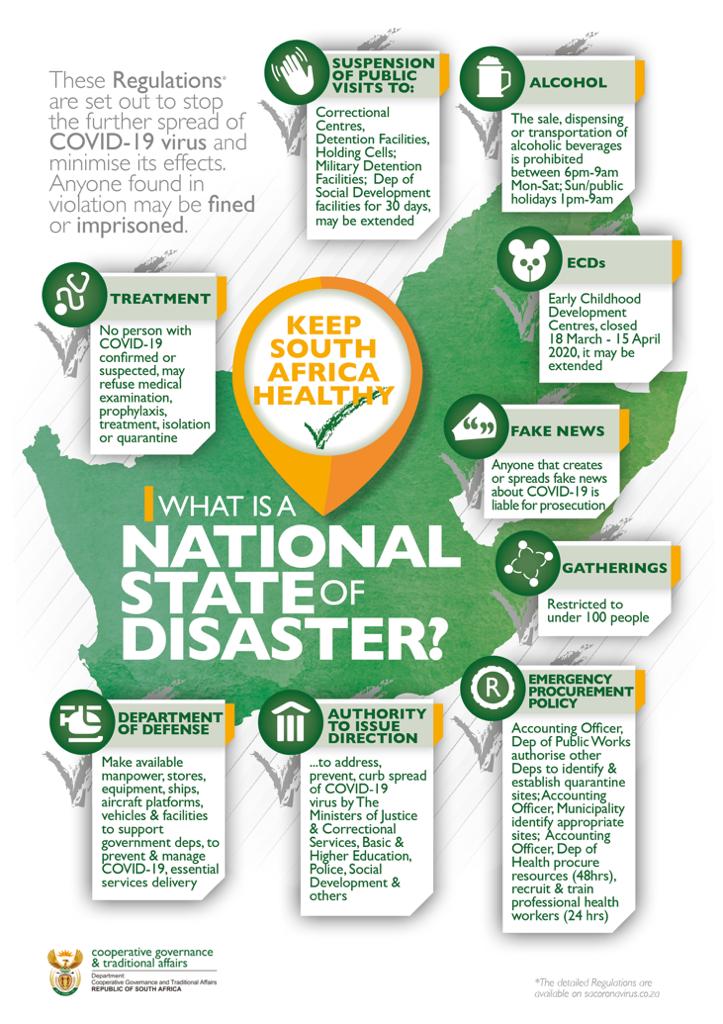
A National State of Disaster is now a
reality. The minister announced the State of Disaster a few days ago and it was
published in the Government Gazette dated 18 March 2020.03.19
This placed several severe restrictions on
the citizens of South Africa.
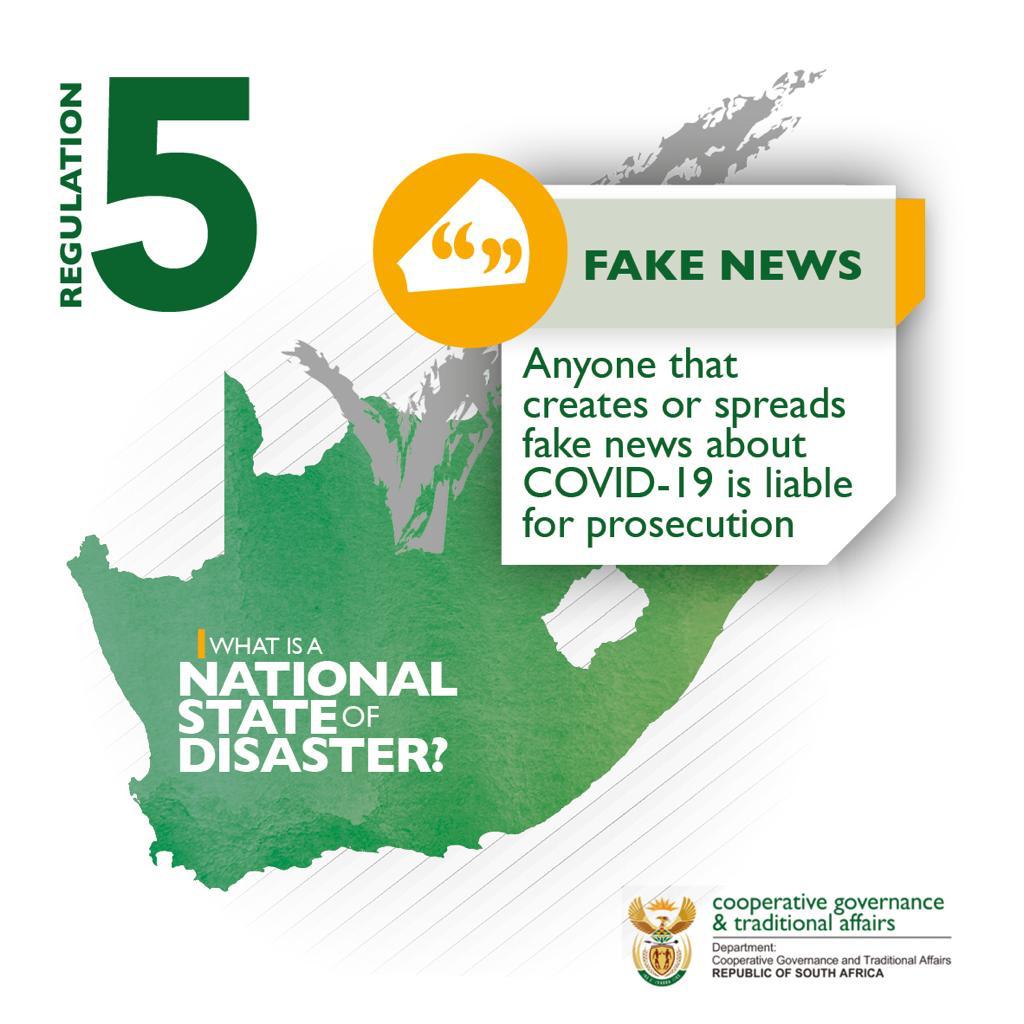
The first case of the Coronavirus has been
confirmed in Secunda amidst calls that it was fake news.
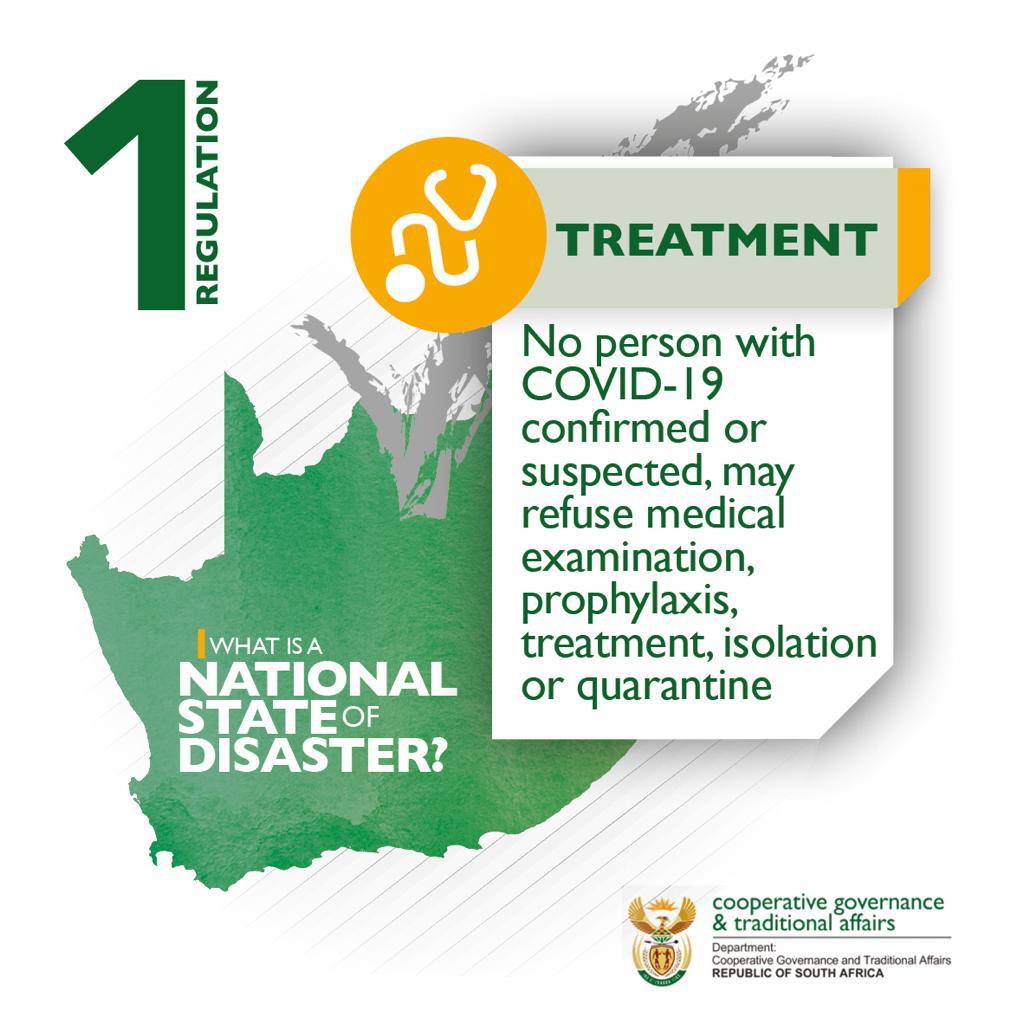
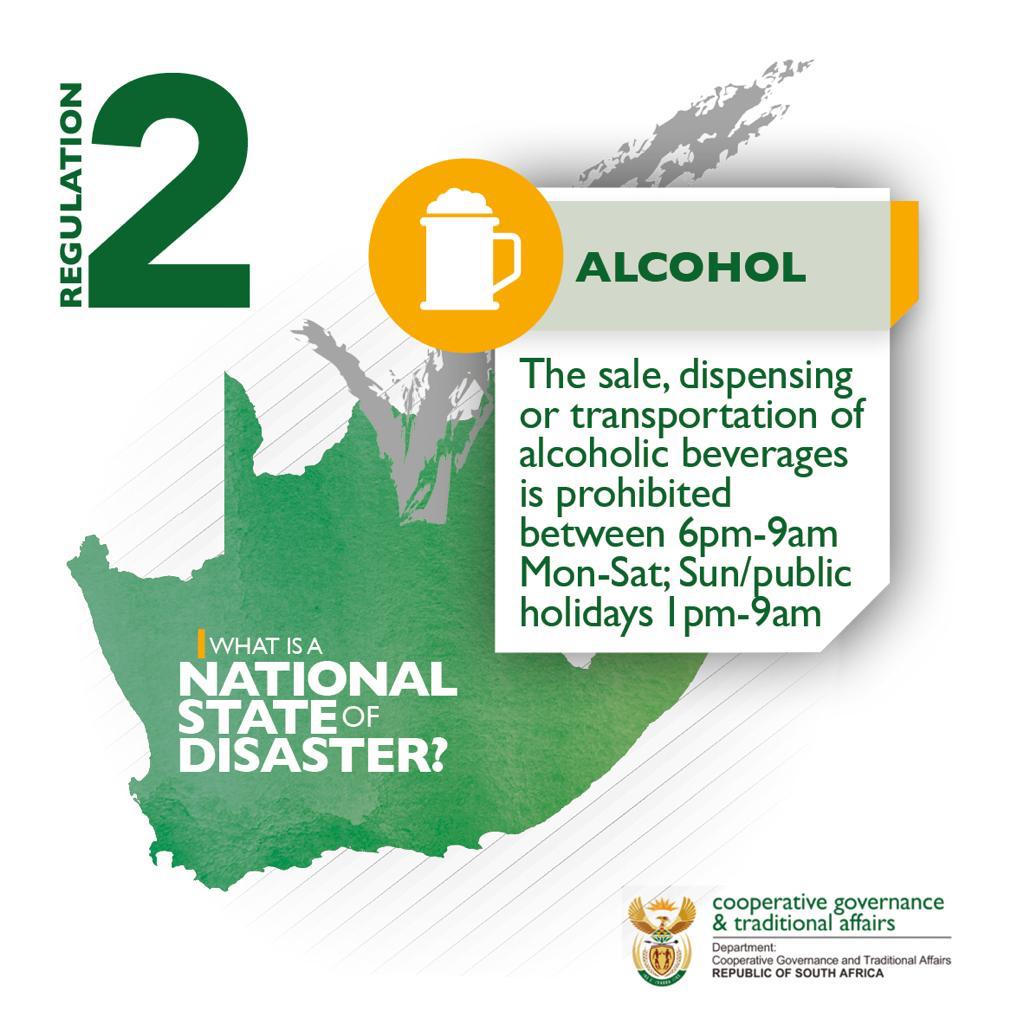
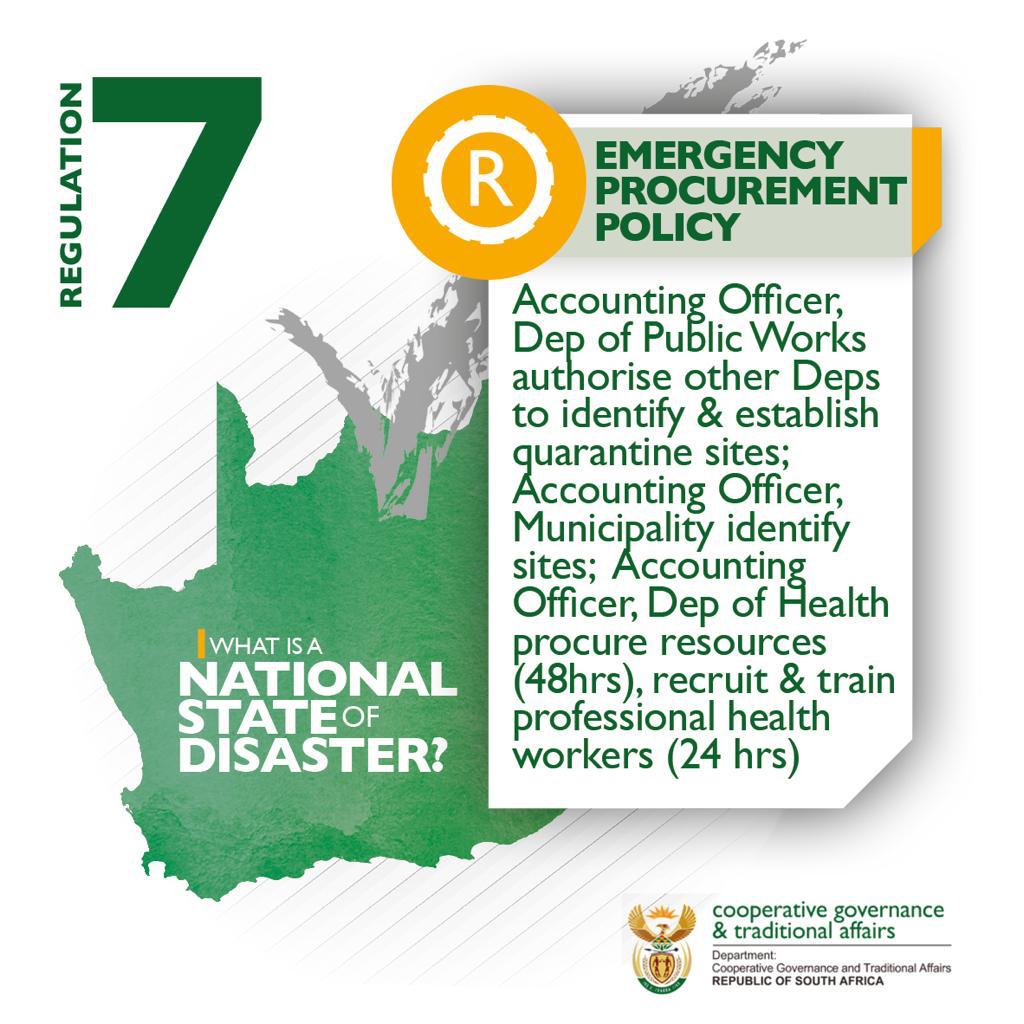
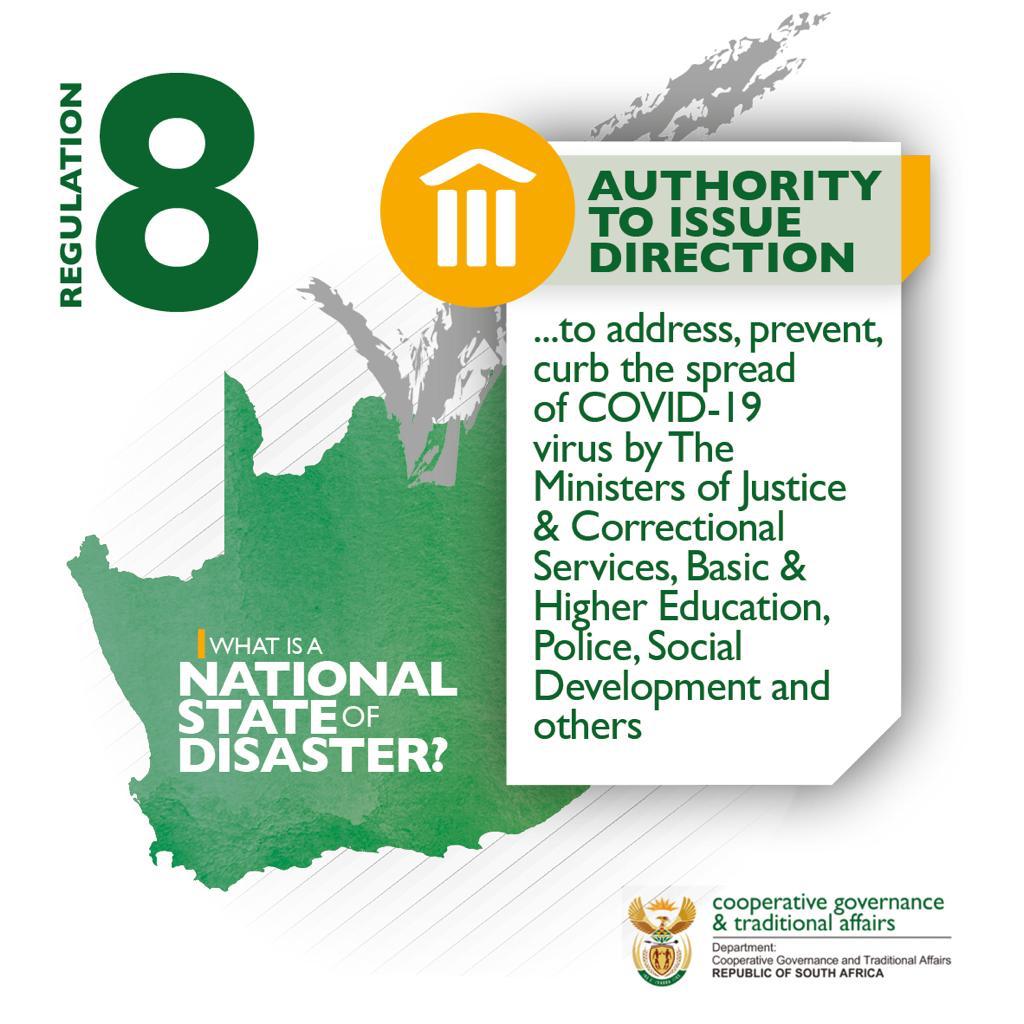
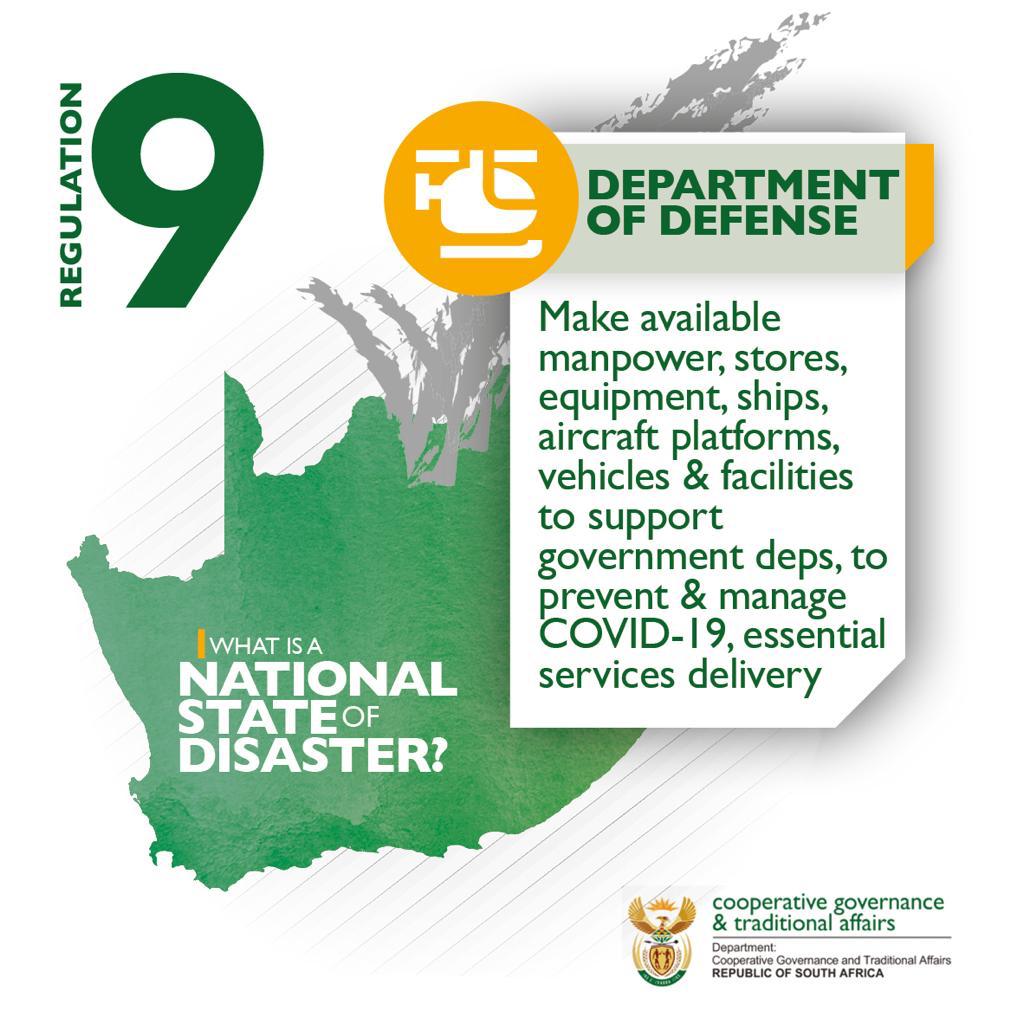
Here are a few graphics to help readers
understand the restrictions etc. in the regulations as well as the full
regulations.
SCHEDULE
Definitions
1. In these Regulations, unless the context
otherwise indicates—
‘adequate space’ means not more than one person per square meter of floor space;
‘COVID-19’
means the Novel Coronavirus (2019-nCov) which is an infectious disease
caused by a virus, which emerged during
2019 and was declared a global pandemic by the
WHO during the year 2020 that has
previously not been scientifically identified in humans;
‘Criminal Procedure Act’ means the Criminal Procedure Act, 1977 (Act No. 51 of 1977);
‘enforcement officer’ includes a member of the South African Police Service, the South
African National Defence Force and a peace
officer as defined in section 1 of the Criminal
Procedure Act;
‘donor’
means an individual, corporation or organisation that is a contributor of cash,
kind
and/or other assets;
‘gathering’
means any assembly, concourse or procession of more than 100 persons,
wholly or partially in open air or in a
building or premises;
‘isolation’
means separating a sick individual with a contagious disease from healthy
individuals without that contagious disease
in such a manner as to prevent the spread of
infection or contamination;
‘liquor’
means—
(a) any liquor product, as defined in
section 1 of the Liquor Products Act, 1979 (Act No.
60 of 1989);
(b) beer or traditional African beer; or
(c) any other substance or drink declared
to be liquor under the Liquor Act, 2003 (Act
No. 59 of 2003), but does not include
methylated spirits;
‘national state of disaster’ means the national state of disaster declared by Government
Notice No. R. 313 of 15 March 2020;
‘partial care facility’ means a facility offering partial care as defined in section 1 of
the
Children’s Act, 2005 (Act No. 38 of 2005);
‘quarantine’
means separating asymptomatic individuals potentially exposed to a disease
from non-exposed individuals in such a
manner as to prevent the possible spread of
infection or contamination;
‘school’
means a school as defined in section 1 of the South African Schools Act, 1984
(Act
No. 84 of 1996); and
‘the Act’
means the Disaster Management Act, 2002 (Act No. 57 of 2002).
‘WHO’ means
the World Health Organisation.
Release of resources
2. (1) The
Department of Defence must, for the duration of the declared
national state of disaster, within its
available resources—
(a) release and mobilise any available
resources, including human resources, stores,
equipment, ships, aircraft platforms, vehicles
and facilities; and
(b) ensure the delivery of essential
services,
as may be required, to prevent, limit,
contain, combat and manage the spread of COVID19.
(2) National organs of state must, within
their available resources release
their personnel for the rendering of
emergency services, as contemplated in section 27(2)(b)
of the Act.
(3) Institutions within national,
provincial and local government must make
resources, other than funding, available to
implement these Regulations or directions issued
in terms of section 27(2) of the Act
regarding the national state of disaster.
(4) Institutions within national,
provincial and local government must—
(a) make funding available; and
(b) as far as possible, without affecting
service delivery in relation to the realisation of the
rights contemplated in sections 26 to 29 of
the Constitution of the Republic of South
Africa, 1996, shift funding,
within its budget to implement these
Regulations or directions issued in terms of section
27(2) of the Act, regarding the national
state of disaster.
(5) The National Treasury and provincial
treasuries must take the
necessary steps in terms of applicable
legislation to implement these Regulations or
directions issued in terms of section 27(2)
of the Act, in relation to the national state of
disaster.
(6) Donor funding received to assist with
the national state of disaster must
be—
(a)
paid into the Reconstruction and Development Fund, established by the
Reconstruction and Development Fund Act,
1994 (Act No. 7 of 1994); and
(b) used strictly for purposes of
implementing these Regulations and directions issued in
terms of section 27(2) of the Act in
relation to the national state of disaster.
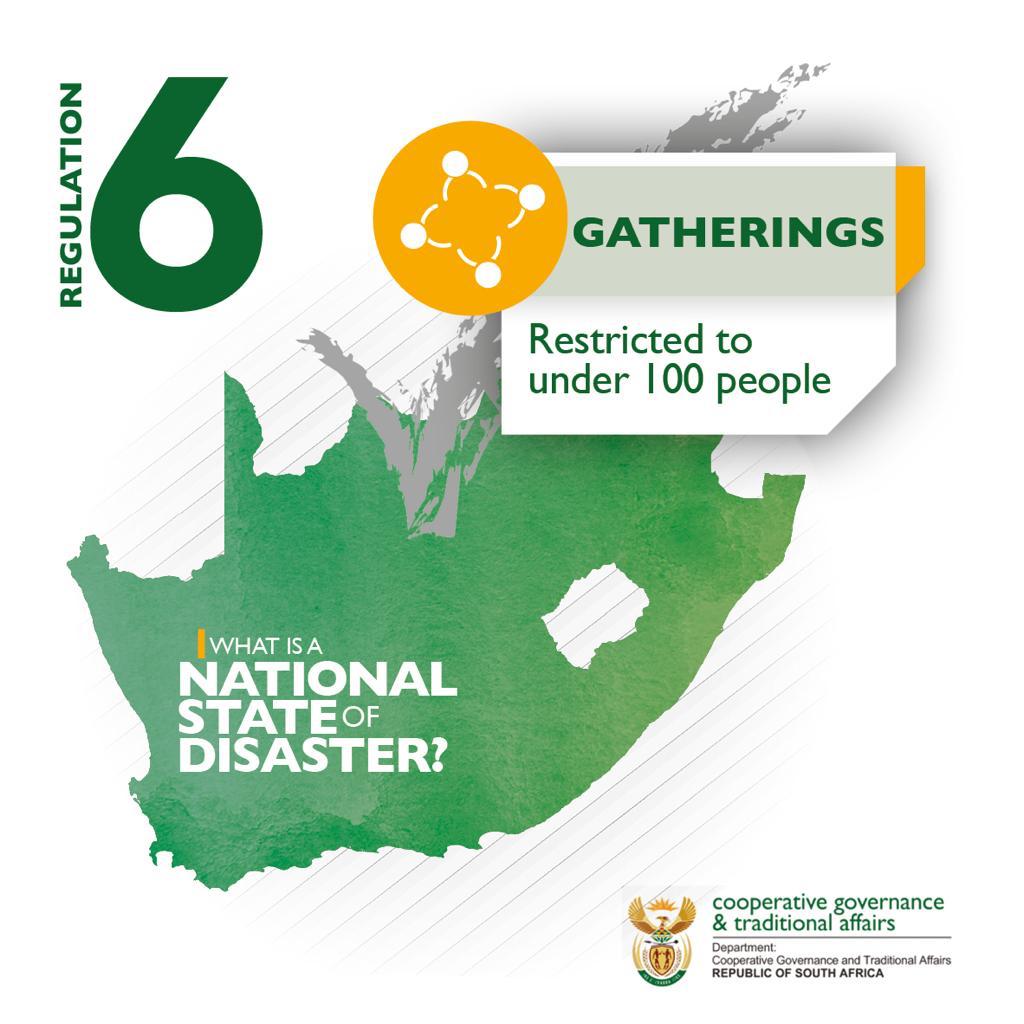
Prevention and prohibition of gatherings
3. (1) In
order to contain the spread of COVID-19, a gathering is prohibited.
(2) An enforcement officer must, where a
gathering takes place—
(a) order the persons at the gathering to
disperse immediately; and
(b) if they refuse to disperse, take
appropriate action, which may, subject to the Criminal
Procedure Act include arrest and detention.
(3) The assembly of more than 50 persons at
premises where liquor is sold
and consumed is prohibited.
Refusal of medical examination,
prophylaxis, treatment, isolation and quarantine
4. (1) No
person who has been clinically, or by a laboratory, confirmed as having
COVID-19, or who is suspected of having
contracted COVID-19, or who has been in contact
with a person who is a carrier of COVID–19,
may refuse consent to an enforcement officer
for—
(a) submission of that person to a medical
examination, including but not limited to the
taking of any bodily sample by a person
authorised in law to do so;
(b) admission of that person to a health
establishment or a quarantine or isolation site; or
(c) submission of that person to mandatory
prophylaxis, treatment, isolation or quarantine
or isolation in order to prevent
transmission:
Provided that if a person does not comply
with the instruction or order of the enforcement
officer, that person must be placed in
isolation or quarantine for a period of 48 hours, as the
case may be, pending a warrant being issued
by a magistrate, on application by an
enforcement officer for the medical
examination contemplated in paragraph (a).
(2) A warrant contemplated in sub
regulation (1) may be issued by a magistrate, if
it appears from information on oath or
affirmation by an enforcement officer —
(a) that a person is confirmed as having
been infected with COVID-19;
(b)
who is on reasonable grounds suspected of having contracted COVID-19, or who
has
been in contact with, or on reasonable
grounds suspected to have been in contact
with a person who is a carrier or infected
with COVID–19.
(3) The warrant may impose restrictions on
the powers of the enforcement officer
as the magistrate may deem fit.
(4) A warrant issued in terms of this
regulation remains in force until —
(a) it is executed;
(b) it is cancelled by the person who
issued it or, if such person is not available, by any
person with like authority;
(c) the expiry of ninety days from the date
of its issue; or
(d) the purpose for the issuing of the
warrant has lapsed,
whichever occurs first.
(5) No person is entitled to compensation
for any loss or damage arising out of
any bona fide action or omission by an
enforcement officer under this regulation.
Places of quarantine and isolation
5. (1) The
Minister of Public Works and Infrastructure must identify and make
available sites to be used as isolation and
quarantine facilities as the need arises.
(2) The Members of the Executive Council
responsible for public works must
identify and make available sites to be
used as isolation and quarantine facilities within each
province, as the need arises.
(3) The accounting officers of
municipalities must identify and make available
sites to be used as isolation and
quarantine facilities within their local areas and provide the
list to the Department of Health for
resourcing.
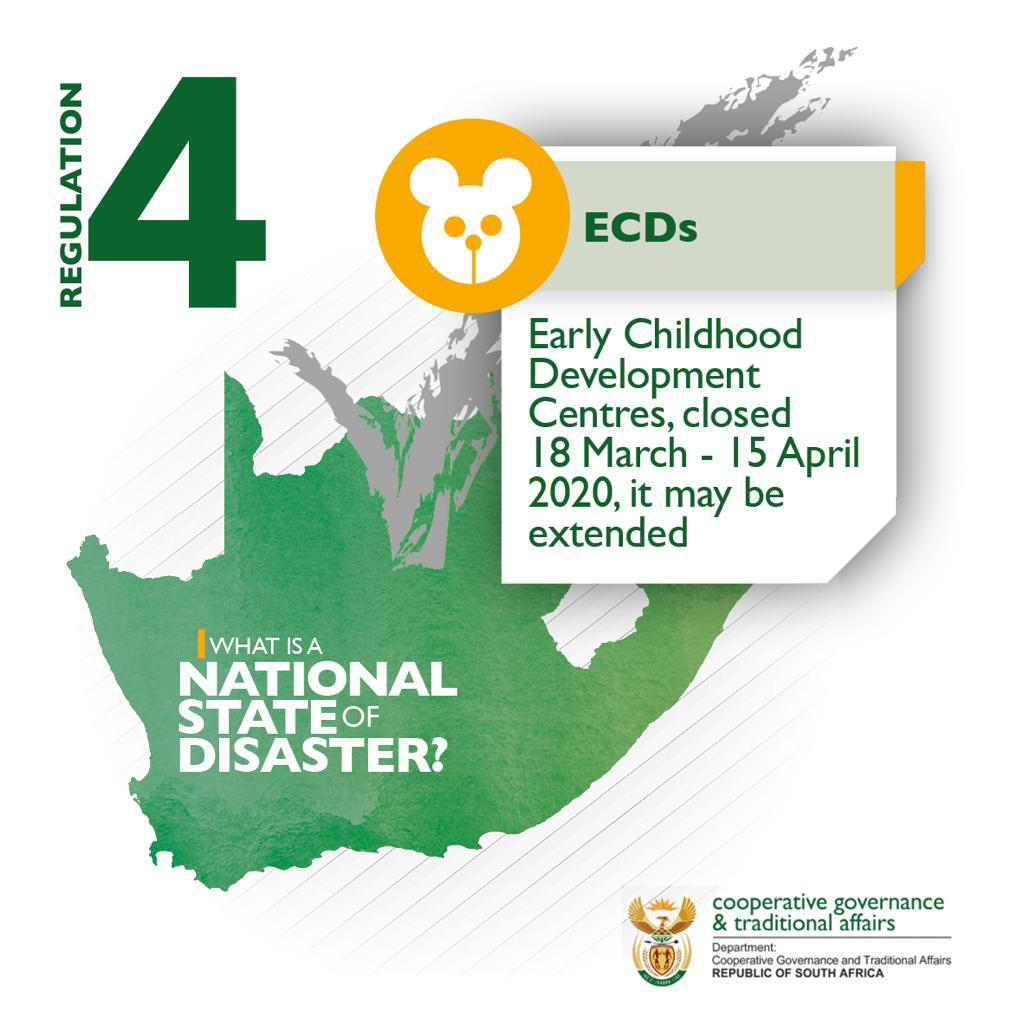
Closure of schools and partial care
facilities
6. Schools
and partial care facilities must be closed by 18 March 2020 until 15 April
2020, which period may be extended for the
duration of the national state of disaster by the
cabinet member responsible.
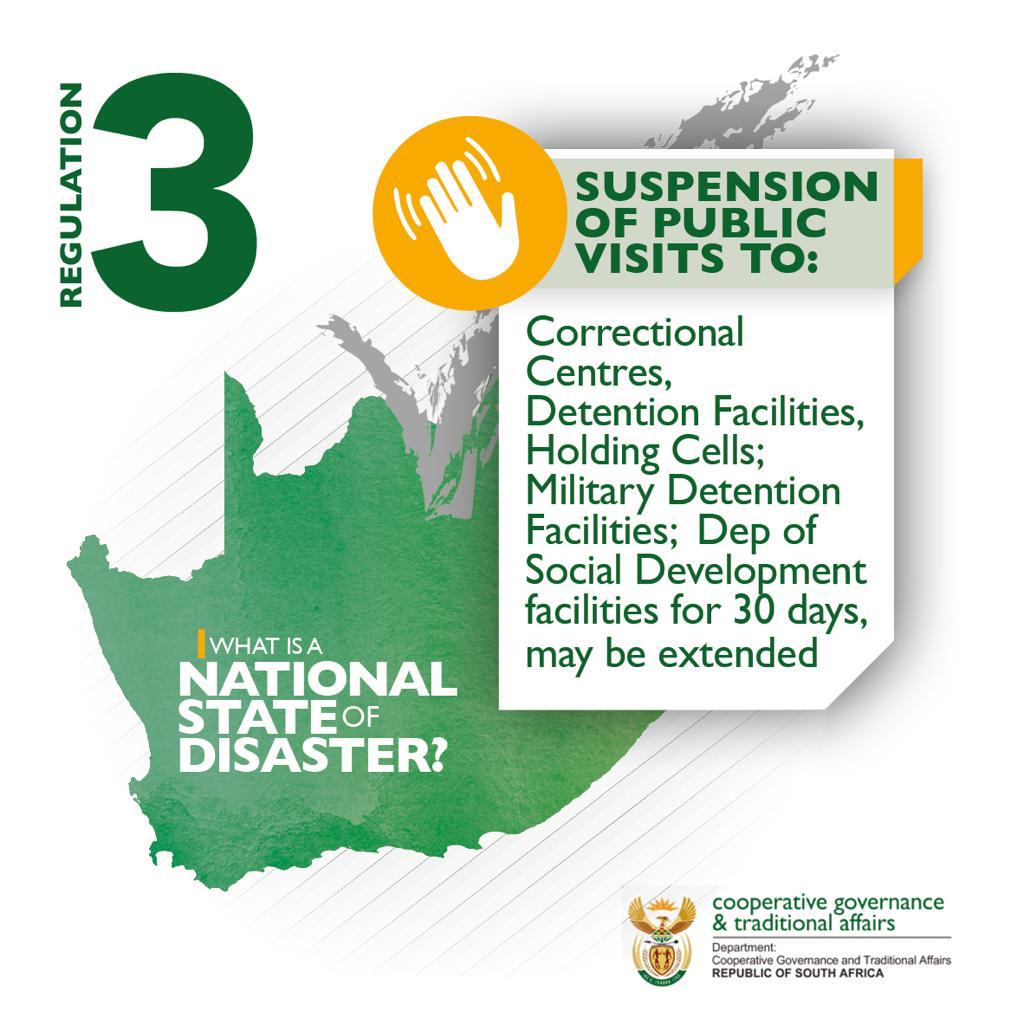
Suspension of visits
7. All
visits by members of the public to—
(a) Correctional Centres;
(b)
Remand Detention Facilities;
(c) Holding Cells;
(d) Military Detention Facilities; and
(e) Department of Social Development
facilities, including Child and Youth Care Centres,
shelters, One Stop Centres and Treatment
Centres,
are suspended for a period of 30 days from
the date of publication of this Notice, which
period may be extended for any period, but
not beyond the duration of the national state of
disaster by the cabinet member responsible.
Limitation on the sale, dispensing or
transportation of liquor
8. (1) All
on-consumption premises selling liquor, including taverns, restaurants and
clubs, must be closed with immediate
effect, or must accommodate no more than 50 persons
at any time: Provided that adequate space
is available and that all directions in respect of
hygienic conditions and limitation of
exposure to persons with COVID-19, are adhered to.
(2)
All premises selling liquor which provide accommodation must implement
measures to stop the spread of COVID-19:
Provided that adequate space is available and
that all directions in respect of hygienic
conditions and limitation of exposure to persons with
COVID-19 are adhered to.
(3) No special or events liquor licenses
may be considered for approval during
the duration of the national state of
disaster.
(4) All on-consumption premises selling
liquor referred to in sub regulation (1)
must be closed —
(i) between 18:00 and 09:00 the next
morning on weekdays and Saturdays; and
(ii) from 13:00 on Sundays and public
holidays.
(5) All off-consumption premises selling
liquor must be closed —
(i) between 18:00 and 09:00 the next
morning on weekdays and Saturdays; and
(ii) from 13:00 on Sundays and public
holidays.
Emergency Procurement Procedures
9. Emergency
procurement for institutions is subject to —
(a)
the Public Finance Management Act, 1999 (Act No. 1 of 1999) and the applicable
emergency provisions in the Regulations or
Instructions made under section 76 of
that Act; and
(b) the Municipal Finance Management Act,
2003 (Act No. 56 of 2003) and the
applicable emergency provisions in the
Regulations made under that Act.
Authority to issue directions
10. (1) The
Minister of Health may—
(a) issue directions to address, prevent
and combat the spread of COVID-19 in any area
of the Republic of South Africa, which
directions may include the—
(i) recruitment and training of human
resources from the Department of Health
and other entities responsible for the
handling of COVID-19 mortal remains;
(ii) deployment of human resources from the
Department of Health to identified
sites to render services;
(iii) sourcing of human resources from the
Expanded Public Works Programme
retired health professionals and
Non-Governmental Organisations to render
services in identified sites;
(iv) provision of health equipment,
sanitation materials and medical supplies;
(v) identification and establishment of
mortuaries that will accommodate all
COVID-19 mortal remains;
(vi) disposal of COVID-19 mortal remains;
and
(b) vary the directions referred to in
paragraph (a) as the circumstances require.
(2) The Minister of Justice and
Correctional Services may—
(a) issue directions to address, prevent
and combat the spread of COVID-19 in all
Correctional Centres and Remand Detention
Facilities in the Republic of South Africa;
(b) after consultation with the Chief
Justice, where appropriate, issue directions to
address, prevent and combat the spread of
COVID-19 in all courts and court precincts
in the Republic of South Africa; and
(c) vary the directions referred to in
paragraphs (a) and (b) as the circumstances require.
(3) The Ministers of Basic and Higher
Education may —
(a) issue directions to address, prevent
and combat the spread of COVID-19 in all
schools and institutions of higher
learning; and
(b) vary the directions referred to in (a)
as the circumstances require.
(4) The Minister of Police may—
(a) issue directions to address, prevent
and combat the spread of COVID-19 in all police
stations, police precincts and holding
cells; and
(b) vary the directions referred to in
paragraph (a) as the circumstances require.
(5) The Minister of Social Development may—
(a) issue directions to address, prevent
and combat the spread of COVID-19 in all
Department of Social Development
facilities; and
(b) vary the directions referred to in
paragraph (a) as the circumstances require.
(6) The Minister of Trade and Industry may
—
(a) issue directions to—
(i) protect consumers from excessive,
unfair, unreasonable or unjust pricing of
goods and services during the national
state of disaster; and
(ii) maintain security and availability of
the supply of goods and services during
the national state of disaster;
(b) issue directions to address, prevent
and combat the spread of COVID-19; and
(c) vary the directions referred to in
paragraphs (a) and (b) as the circumstances require.
(7) The Minister of Transport may—
(a) issue directions to address, prevent
and combat the spread of COVID-19 in matters
falling within his mandate; and
(b) vary the directions referred to in
paragraph (a) as the circumstances require.
(8) Any Minister may issue and vary
directions, as required, within his or
her mandate, to address, prevent and combat
the spread of COVID-19, from time to
time, as may be required, including—
(a) disseminating information required for
dealing with the national state of disaster;
A National State of Disaster is now a
reality. The minister announced the State of Disaster a few days ago and it was
published in the Government Gazette dated 18 March 2020.03.19
This placed several severe restrictions on
the citizens of South Africa.
The first case of the Coronavirus has been
confirmed in Secunda amidst calls that it was fake news.
Here are a few graphics to help readers
understand the restrictions etc. in the regulations as well as the full
regulations.
SCHEDULE
Definitions
1. In these Regulations, unless the context
otherwise indicates—
‘adequate space’ means not more than one person per square meter of floor space;
‘COVID-19’
means the Novel Coronavirus (2019-nCov) which is an infectious disease
caused by a virus, which emerged during
2019 and was declared a global pandemic by the
WHO during the year 2020 that has
previously not been scientifically identified in humans;
‘Criminal Procedure Act’ means the Criminal Procedure Act, 1977 (Act No. 51 of 1977);
‘enforcement officer’ includes a member of the South African Police Service, the South
African National Defence Force and a peace
officer as defined in section 1 of the Criminal
Procedure Act;
‘donor’
means an individual, corporation or organisation that is a contributor of cash,
kind
and/or other assets;
‘gathering’
means any assembly, concourse or procession of more than 100 persons,
wholly or partially in open air or in a
building or premises;
‘isolation’
means separating a sick individual with a contagious disease from healthy
individuals without that contagious disease
in such a manner as to prevent the spread of
infection or contamination;
‘liquor’
means—
(a) any liquor product, as defined in
section 1 of the Liquor Products Act, 1979 (Act No.
60 of 1989);
(b) beer or traditional African beer; or
(c) any other substance or drink declared
to be liquor under the Liquor Act, 2003 (Act
No. 59 of 2003), but does not include
methylated spirits;
‘national state of disaster’ means the national state of disaster declared by Government
Notice No. R. 313 of 15 March 2020;
‘partial care facility’ means a facility offering partial care as defined in section 1 of
the
Children’s Act, 2005 (Act No. 38 of 2005);
‘quarantine’
means separating asymptomatic individuals potentially exposed to a disease
from non-exposed individuals in such a
manner as to prevent the possible spread of
infection or contamination;
‘school’
means a school as defined in section 1 of the South African Schools Act, 1984
(Act
No. 84 of 1996); and
‘the Act’
means the Disaster Management Act, 2002 (Act No. 57 of 2002).
‘WHO’ means
the World Health Organisation.
Release of resources
2. (1) The
Department of Defence must, for the duration of the declared
national state of disaster, within its
available resources—
(a) release and mobilise any available
resources, including human resources, stores,
equipment, ships, aircraft platforms, vehicles
and facilities; and
(b) ensure the delivery of essential
services,
as may be required, to prevent, limit,
contain, combat and manage the spread of COVID19.
(2) National organs of state must, within
their available resources release
their personnel for the rendering of
emergency services, as contemplated in section 27(2)(b)
of the Act.
(3) Institutions within national,
provincial and local government must make
resources, other than funding, available to
implement these Regulations or directions issued
in terms of section 27(2) of the Act
regarding the national state of disaster.
(4) Institutions within national,
provincial and local government must—
(a) make funding available; and
(b) as far as possible, without affecting
service delivery in relation to the realisation of the
rights contemplated in sections 26 to 29 of
the Constitution of the Republic of South
Africa, 1996, shift funding,
within its budget to implement these
Regulations or directions issued in terms of section
27(2) of the Act, regarding the national
state of disaster.
(5) The National Treasury and provincial
treasuries must take the
necessary steps in terms of applicable
legislation to implement these Regulations or
directions issued in terms of section 27(2)
of the Act, in relation to the national state of
disaster.
(6) Donor funding received to assist with
the national state of disaster must
be—
(a)
paid into the Reconstruction and Development Fund, established by the
Reconstruction and Development Fund Act,
1994 (Act No. 7 of 1994); and
(b) used strictly for purposes of
implementing these Regulations and directions issued in
terms of section 27(2) of the Act in
relation to the national state of disaster.
Prevention and prohibition of gatherings
3. (1) In
order to contain the spread of COVID-19, a gathering is prohibited.
(2) An enforcement officer must, where a
gathering takes place—
(a) order the persons at the gathering to
disperse immediately; and
(b) if they refuse to disperse, take
appropriate action, which may, subject to the Criminal
Procedure Act include arrest and detention.
(3) The assembly of more than 50 persons at
premises where liquor is sold
and consumed is prohibited.
Refusal of medical examination,
prophylaxis, treatment, isolation and quarantine
4. (1) No
person who has been clinically, or by a laboratory, confirmed as having
COVID-19, or who is suspected of having
contracted COVID-19, or who has been in contact
with a person who is a carrier of COVID–19,
may refuse consent to an enforcement officer
for—
(a) submission of that person to a medical
examination, including but not limited to the
taking of any bodily sample by a person
authorised in law to do so;
(b) admission of that person to a health
establishment or a quarantine or isolation site; or
(c) submission of that person to mandatory
prophylaxis, treatment, isolation or quarantine
or isolation in order to prevent
transmission:
Provided that if a person does not comply
with the instruction or order of the enforcement
officer, that person must be placed in
isolation or quarantine for a period of 48 hours, as the
case may be, pending a warrant being issued
by a magistrate, on application by an
enforcement officer for the medical
examination contemplated in paragraph (a).
(2) A warrant contemplated in sub
regulation (1) may be issued by a magistrate, if
it appears from information on oath or
affirmation by an enforcement officer —
(a) that a person is confirmed as having
been infected with COVID-19;
(b)
who is on reasonable grounds suspected of having contracted COVID-19, or who
has
been in contact with, or on reasonable
grounds suspected to have been in contact
with a person who is a carrier or infected
with COVID–19.
(3) The warrant may impose restrictions on
the powers of the enforcement officer
as the magistrate may deem fit.
(4) A warrant issued in terms of this
regulation remains in force until —
(a) it is executed;
(b) it is cancelled by the person who
issued it or, if such person is not available, by any
person with like authority;
(c) the expiry of ninety days from the date
of its issue; or
(d) the purpose for the issuing of the
warrant has lapsed,
whichever occurs first.
(5) No person is entitled to compensation
for any loss or damage arising out of
any bona fide action or omission by an
enforcement officer under this regulation.
Places of quarantine and isolation
5. (1) The
Minister of Public Works and Infrastructure must identify and make
available sites to be used as isolation and
quarantine facilities as the need arises.
(2) The Members of the Executive Council
responsible for public works must
identify and make available sites to be
used as isolation and quarantine facilities within each
province, as the need arises.
(3) The accounting officers of
municipalities must identify and make available
sites to be used as isolation and
quarantine facilities within their local areas and provide the
list to the Department of Health for
resourcing.
Closure of schools and partial care
facilities
6. Schools
and partial care facilities must be closed by 18 March 2020 until 15 April
2020, which period may be extended for the
duration of the national state of disaster by the
cabinet member responsible.
Suspension of visits
7. All
visits by members of the public to—
(a) Correctional Centres;
(b)
Remand Detention Facilities;
(c) Holding Cells;
(d) Military Detention Facilities; and
(e) Department of Social Development
facilities, including Child and Youth Care Centres,
shelters, One Stop Centres and Treatment
Centres,
are suspended for a period of 30 days from
the date of publication of this Notice, which
period may be extended for any period, but
not beyond the duration of the national state of
disaster by the cabinet member responsible.
Limitation on the sale, dispensing or
transportation of liquor
8. (1) All
on-consumption premises selling liquor, including taverns, restaurants and
clubs, must be closed with immediate
effect, or must accommodate no more than 50 persons
at any time: Provided that adequate space
is available and that all directions in respect of
hygienic conditions and limitation of
exposure to persons with COVID-19, are adhered to.
(2)
All premises selling liquor which provide accommodation must implement
measures to stop the spread of COVID-19:
Provided that adequate space is available and
that all directions in respect of hygienic
conditions and limitation of exposure to persons with
COVID-19 are adhered to.
(3) No special or events liquor licenses
may be considered for approval during
the duration of the national state of
disaster.
(4) All on-consumption premises selling
liquor referred to in sub regulation (1)
must be closed —
(i) between 18:00 and 09:00 the next
morning on weekdays and Saturdays; and
(ii) from 13:00 on Sundays and public
holidays.
(5) All off-consumption premises selling
liquor must be closed —
(i) between 18:00 and 09:00 the next
morning on weekdays and Saturdays; and
(ii) from 13:00 on Sundays and public
holidays.
Emergency Procurement Procedures
9. Emergency
procurement for institutions is subject to —
(a)
the Public Finance Management Act, 1999 (Act No. 1 of 1999) and the applicable
emergency provisions in the Regulations or
Instructions made under section 76 of
that Act; and
(b) the Municipal Finance Management Act,
2003 (Act No. 56 of 2003) and the
applicable emergency provisions in the
Regulations made under that Act.
Authority to issue directions
10. (1) The
Minister of Health may—
(a) issue directions to address, prevent
and combat the spread of COVID-19 in any area
of the Republic of South Africa, which
directions may include the—
(i) recruitment and training of human
resources from the Department of Health
and other entities responsible for the
handling of COVID-19 mortal remains;
(ii) deployment of human resources from the
Department of Health to identified
sites to render services;
(iii) sourcing of human resources from the
Expanded Public Works Programme
retired health professionals and
Non-Governmental Organisations to render
services in identified sites;
(iv) provision of health equipment,
sanitation materials and medical supplies;
(v) identification and establishment of
mortuaries that will accommodate all
COVID-19 mortal remains;
(vi) disposal of COVID-19 mortal remains;
and
(b) vary the directions referred to in
paragraph (a) as the circumstances require.
(2) The Minister of Justice and
Correctional Services may—
(a) issue directions to address, prevent
and combat the spread of COVID-19 in all
Correctional Centres and Remand Detention
Facilities in the Republic of South Africa;
(b) after consultation with the Chief
Justice, where appropriate, issue directions to
address, prevent and combat the spread of
COVID-19 in all courts and court precincts
in the Republic of South Africa; and
(c) vary the directions referred to in
paragraphs (a) and (b) as the circumstances require.
(3) The Ministers of Basic and Higher
Education may —
(a) issue directions to address, prevent
and combat the spread of COVID-19 in all
schools and institutions of higher
learning; and
(b) vary the directions referred to in (a)
as the circumstances require.
(4) The Minister of Police may—
(a) issue directions to address, prevent
and combat the spread of COVID-19 in all police
stations, police precincts and holding
cells; and
(b) vary the directions referred to in
paragraph (a) as the circumstances require.
(5) The Minister of Social Development may—
(a) issue directions to address, prevent
and combat the spread of COVID-19 in all
Department of Social Development
facilities; and
(b) vary the directions referred to in
paragraph (a) as the circumstances require.
(6) The Minister of Trade and Industry may
—
(a) issue directions to—
(i) protect consumers from excessive,
unfair, unreasonable or unjust pricing of
goods and services during the national
state of disaster; and
(ii) maintain security and availability of
the supply of goods and services during
the national state of disaster;
(b) issue directions to address, prevent
and combat the spread of COVID-19; and
(c) vary the directions referred to in
paragraphs (a) and (b) as the circumstances require.
(7) The Minister of Transport may—
(a) issue directions to address, prevent
and combat the spread of COVID-19 in matters
falling within his mandate; and
(b) vary the directions referred to in
paragraph (a) as the circumstances require.
(8) Any Minister may issue and vary
directions, as required, within his or
her mandate, to address, prevent and combat
the spread of COVID-19, from time to
time, as may be required, including—
(a) disseminating information required for
dealing with the national state of disaster;
The restrictions of the State of Disaster have
far reaching consequences for several industries.
One such industry is the food and beverage
industry. Restaurants will have to restrict their patrons to 50 unless certain
conditions are met.
The minister published in the Government Gazette;
regulations that need to be followed until the end of the State of Disaster.
Here is the preamble of the regulations as
published in the Government Gazette dated 18 March 2020
REGULATIONS ISSUED IN TERMS OF SECTION 27(2)0
OF THE DISASTER MANAGEMENT ACT, 2002.
I, Dr Nkosazana Dlamini Zuma, the Minister of
Cooperative Governance and Traditional Affairs, designated under Section 3 of
the Disaster Management Act, 2002 (Act No. 57 of 2002) ( “the Act “),
having declared a national state of disaster, published in Government Gazette
No. 43096 on 15 March 2020, in terms of Section 27(2) of the Act, after consulting
the relevant Cabinet members, hereby make the Regulations set out in the
schedule hereto regarding the steps necessary to prevent an escalation of the
disaster or to alleviate, contain and minimise the effects of the disaster
The restaurant industry had severe
restrictions imposed that meant all restaurants selling liquor must close from
18H00 until 09H00 the next day. This meant that the industry would suffer
tremendous financial setbacks.
The Restaurant Association of South Africa on Monday said
restaurants would not close amid the coronavirus outbreak in the
country.
The association said it had been advised by Tourism
Minister Mmamoloko Kubayi-Ngubane to stay open for business by
following the necessary precautionary measures.
The association’s Wendy Alberts said they would follow
all health guidelines.
Listen to her voice clip here:
Wendy Alberts from The Restaurant Association of South Africa
The regulations are very strict regarding the selling
of alcohol. No alcohol after 6 at night. Taverns and pubs are also not allowed
to sell any liquor after 18H00.
Here are the full regulations on restaurants as
Gazetted.
Limitation on the sale, dispensing or transportation
of liquor
8. (1) All on-consumption premises selling liquor,
including taverns, restaurants and
clubs, must be closed with immediate effect, or must
accommodate no more than 50 persons
at any time: Provided that adequate space is available
and that all directions in respect of
hygienic conditions and limitation of exposure to
persons with COVID-19, are adhered to.
(2) All
premises selling liquor which provide accommodation must implement
measures to stop the spread of COVID-19: Provided that
adequate space is available and
that all directions in respect of hygienic conditions
and limitation of exposure to persons with
COVID-19 are adhered to.
(3) No special or events liquor licenses may be
considered for approval during
the duration of the national state of disaster.
(4) All on-consumption premises selling liquor
referred to in sub regulation (1)
must be closed —
(i) between 18:00
and 09:00 the next morning on weekdays and Saturdays; and
(ii) from 13:00
on Sundays and public holidays.
(5) All off-consumption premises selling liquor must
be closed —
(i) between 18:00
and 09:00 the next morning on weekdays and Saturdays; and
The restrictions of the State of Disaster have
far reaching consequences for several industries.
One such industry is the food and beverage
industry. Restaurants will have to restrict their patrons to 50 unless certain
conditions are met.
The minister published in the Government Gazette;
regulations that need to be followed until the end of the State of Disaster.
Here is the preamble of the regulations as
published in the Government Gazette dated 18 March 2020
REGULATIONS ISSUED IN TERMS OF SECTION 27(2)0
OF THE DISASTER MANAGEMENT ACT, 2002.
I, Dr Nkosazana Dlamini Zuma, the Minister of
Cooperative Governance and Traditional Affairs, designated under Section 3 of
the Disaster Management Act, 2002 (Act No. 57 of 2002) ( “the Act “),
having declared a national state of disaster, published in Government Gazette
No. 43096 on 15 March 2020, in terms of Section 27(2) of the Act, after consulting
the relevant Cabinet members, hereby make the Regulations set out in the
schedule hereto regarding the steps necessary to prevent an escalation of the
disaster or to alleviate, contain and minimise the effects of the disaster
The restaurant industry had severe
restrictions imposed that meant all restaurants selling liquor must close from
18H00 until 09H00 the next day. This meant that the industry would suffer
tremendous financial setbacks.
The Restaurant Association of South Africa on Monday said
restaurants would not close amid the coronavirus outbreak in the
country.
The association said it had been advised by Tourism
Minister Mmamoloko Kubayi-Ngubane to stay open for business by
following the necessary precautionary measures.
The association’s Wendy Alberts said they would follow
all health guidelines.
Listen to her voice clip here:
Wendy Alberts from The Restaurant Association of South Africa
The regulations are very strict regarding the selling
of alcohol. No alcohol after 6 at night. Taverns and pubs are also not allowed
to sell any liquor after 18H00.
Here are the full regulations on restaurants as
Gazetted.
Limitation on the sale, dispensing or transportation
of liquor
8. (1) All on-consumption premises selling liquor,
including taverns, restaurants and
clubs, must be closed with immediate effect, or must
accommodate no more than 50 persons
at any time: Provided that adequate space is available
and that all directions in respect of
hygienic conditions and limitation of exposure to
persons with COVID-19, are adhered to.
(2) All
premises selling liquor which provide accommodation must implement
measures to stop the spread of COVID-19: Provided that
adequate space is available and
that all directions in respect of hygienic conditions
and limitation of exposure to persons with
COVID-19 are adhered to.
(3) No special or events liquor licenses may be
considered for approval during
the duration of the national state of disaster.
(4) All on-consumption premises selling liquor
referred to in sub regulation (1)
must be closed —
(i) between 18:00
and 09:00 the next morning on weekdays and Saturdays; and
(ii) from 13:00
on Sundays and public holidays.
(5) All off-consumption premises selling liquor must
be closed —
(i) between 18:00
and 09:00 the next morning on weekdays and Saturdays; and
Lize is an easy-going freelance content writer with a BA Visual Communication and Masters in Fashion Merchandising. She is always pushing the boundaries of knowledge and experience; with writing experience in the USA and currently pursuing an MBA she adds some flair to all her written work.
Since the pandemic outbreak in November, COVID-19 has taken its toll on the world. From the South African economy on the verge of collapsing, to doomsday bulk shopping and the worst, thousands of deaths across the world, this is one for the books and something humanity was not prepared for.
The impact of COVID-19
On a more personal level we have seen the changes
happening amongst us, here in Secunda, Mpumalanga, as a result of corona
(COVID-19). Hand sanitiser has become a luxury, schools are closed until Easter
weekend, our favourite music festival was postponed to August (check out Misty Waters’ new date), the Cosmos Festival was cancelled and
just when Zebra Lounge thought they were immune, the government brings in a new
regulation – all bars and restaurants that serve alcohol have to be closed by
18h00.
Zebra Lounge, known for only opening at 16h00, must now close
2 hours later… We respect the government’s decision and will follow any
regulations in order to keep our employees, customers and community safe.
However, when the government hands you lemons as a result of a pandemic, you
start selling tequila at 10am.
With this new regulation put into place we would
like to let everyone know that, for the time being, Zebra Lounge will be open
from 9h00 until 18h00. If you are wondering “what does one do at a bar that
early in the morning?” It is an easy answer, there’s more at Zebra Lounge than
just alcohol. Come and put your feet up in our lovely lounge, enjoy a nice hot
coffee and a cigarette or cigar indoors, as our days are growing colder while
autumn approaches. We offer FREE WIFI, so if you
are getting antsy from staying inside your house all day, bring your laptop and
get some work done at Zebra’s.
If all of that has still not convinced you to spend your days at Zebra
Lounge, maybe cards and board games will. Zebra Lounge has various board games,
from Catan and Monopoly, to Rummikub and Uno. Bring all your friends and
challenge them to a settler’s journey.
We have to find ways to adjust to this temporary new way of life and
Zebra Lounge is doing the same by modifying trading hours and thinking of new
and exciting ideas to keep our spirits lifted during these troubling times.
Wash your hands, stay safe and come to Zebra’s for a strong drink when you feel like life is overwhelming.
For more information you can visit the Lake Umuzi website.