Home Blog Page 33

ANIMALS 101 – ARE YOU DRESSED TO KILL OR DO YOU KILL TO DRESS?

YOUR GUIDE TO “WEARING IT KIND” BECAUSE TOGETHER WE CAN FIX FASHION AND PREVENT ANIMAL CRUELTY.

Animal cruelty comes in many forms and you might, unknowingly, be contributing to it by supporting certain practices, and industries, and buying certain beauty products or certain clothing items. Last week we looked at the products you use and the testing of those products on animals during the manufacturing process. You can read more about that here and how to make ethical choices when choosing beauty products.

This week we will look at your wardrobe and whether it is cruelty-free. With so many animal-friendly options available, and more on the market every day, it’s never been easier to have a cruelty-free wardrobe. Use the WEAR IT KIND GUIDE from FOUR PAWS to find out how you can show more compassion in fashion.

This article is a reprint from 16 November 2022.
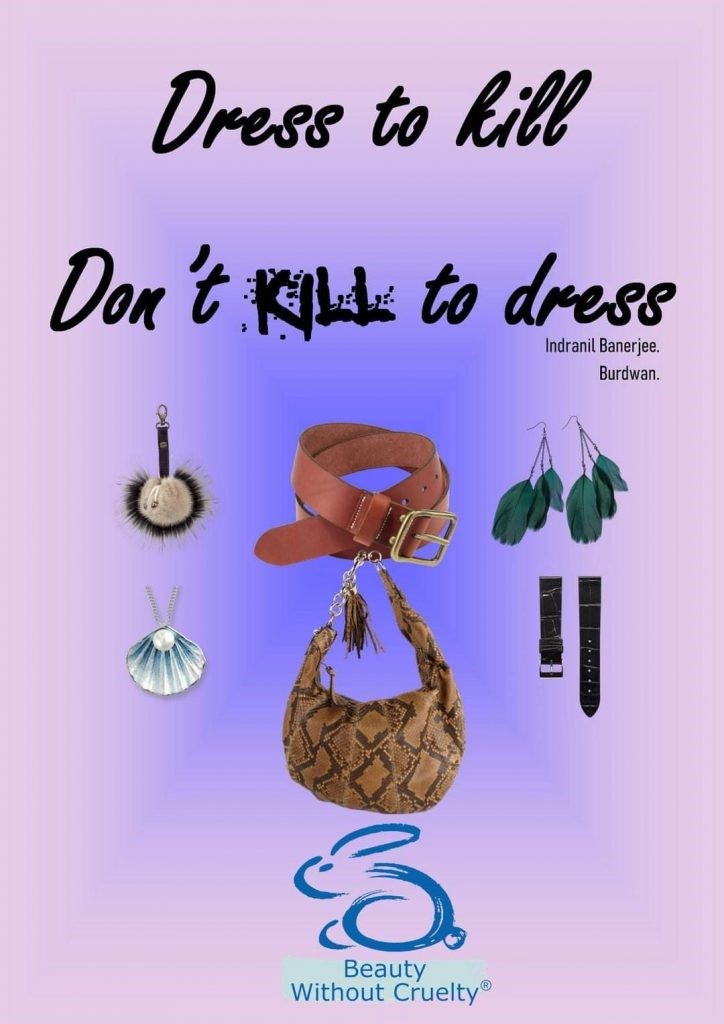
cruelty-free
Image by Beauty Without Cruelty

IN 5 SIMPLE STEPS YOU CAN MAKE A WORLD OF DIFFERENCE!

(by FOUR PAWS)

  1. Look for more sustainable plant-based fibers like organic or recycled cotton and hemp – these fabrics are gentle on the planet and can be found in so many fashion items.
  2. Go for products made from waste! Discarded fishing nets, plastic bottles, recycled polyester, and even used coffee grinds are being made into versatile, durable, and luxurious fabrics turning one of the world’s greatest problems – consumer waste – into one of its best solutions!
  3. Love pre-loved! Wearing it Kind doesn’t have to break the bank. Try the 80:20 rule – 80% pre-loved and 20% new and kind.
  4. Be a protector of oceans, rivers, and lakes every time you wash! Use a washing bag in your machine to capture nasty microfibres and put a stop to harmful microplastic pollution.
  5. Speak up! Already have a favourite brand you wish was doing more? Let them know! Your voice may be just the motivation they need to make their products better for animals, people, and the planet.
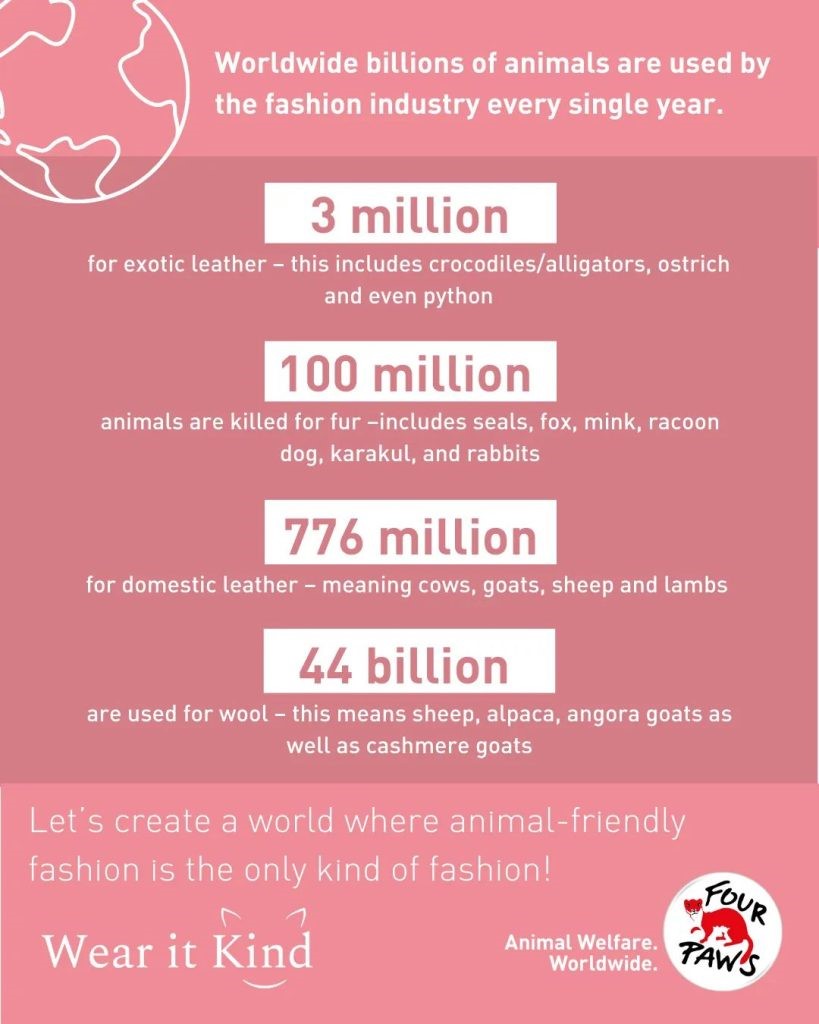
wear it kind
Wear it Kind – Image by Four Paws

LET’S LOOK AT SOME ITEMS IN YOUR WARDROBE

OUTDOOR & ACTIVEWEAR

More people are wearing outdoor and activewear than ever before but, while it may be practical and super comfortable for us, it can have disastrous impacts on animals and the environment. That is unless we Wear it Kind. By choosing recycled plastic, you’ll not only look fabulous, but you’ll also feel fabulous in the knowledge that you’re helping to clean up our oceans and earth! 

Look for items made from recycled plastics like Econyl – a warm, adaptable, and innovative product made entirely from the ocean and landfill waste! It’s made by recycling industrial plastic, fabric scraps, and discarded or lost fishing nets. Once abandoned at sea, these ‘ghost nets,’ last indefinitely, trapping and killing animals such as turtles and dolphins.

COATS & KNITWEAR

Recycled polyester, hemp, and organic or recycled cotton are great options here. If you want the look and feel of cashmere, but without the cruelty, go no further than vegetable cashmere, a revolutionary product made from soy pulp, a by-product of tofu production.

For those choosing to continue to wear wool, at minimum ensure it is mulesed wool-free, and don’t forget what’s inside the coat, Primaloft® is a great alternative to down for keeping you warm!

Mulesing is a cruel practice in which lambs have large strips of skin cut away from their buttocks without necessary pain relief. For a long time, this happened because of the (wrong) assumption that a sheep produces more wool if it has more skin folds. Check out the Brands Against Mulesing list to see which brands are taking a stand against mulesing.
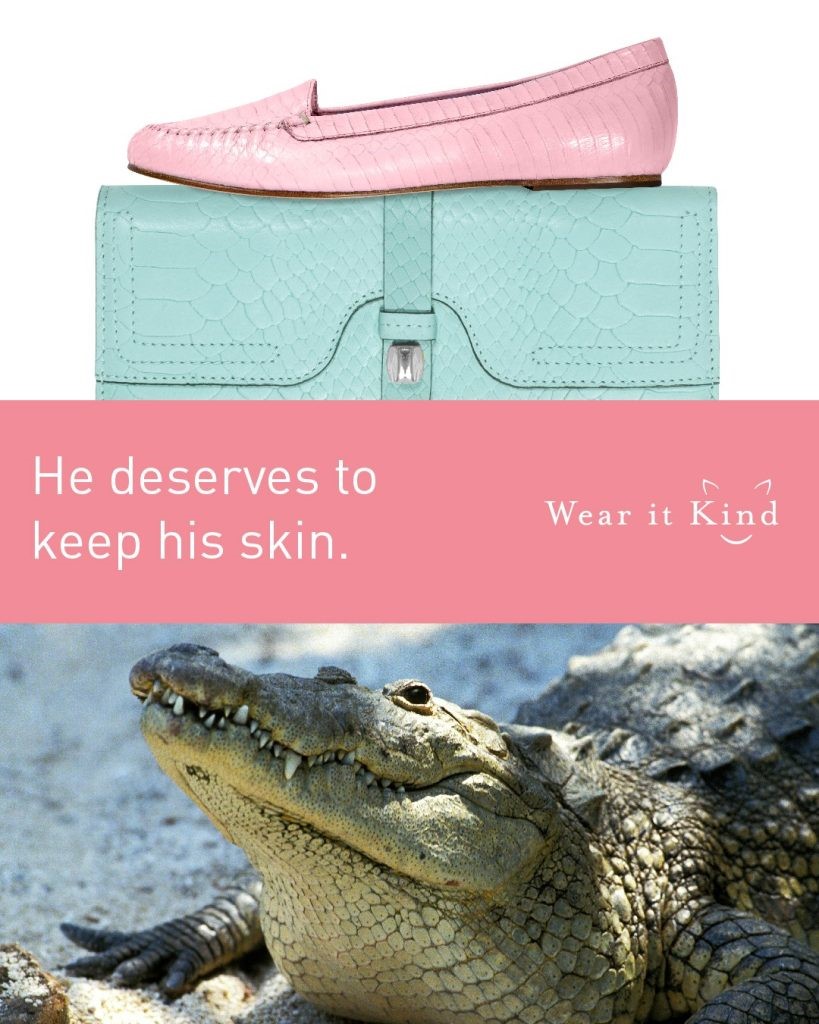
cruelty-free
Wear it Kind – Image by Four Paws

SHOES, BELTS & HANDBAGS

The range of animal-friendly leather alternatives on the market is growing all the time, here are just a few of the fantastic plant-based options now available.

  • Piñatex is a durable, leather-look product made using pineapple leaves. Developed in Italy, this material is growing in popularity with designers, retailers, and customers alike, and, in 2019, department store H&M released a range of boots and jackets using Pinatex and other sustainable materials.
  • Apple leather – another innovative product to hit the market. Made from the leftovers from apple harvesting, apple leather is strong, hypoallergenic, and 100% biodegradable.
  • Mushroom, or mycelium, leather is another new kid on the block that could be set to change the future of fashion. While it’s a relatively new technology, prototype mycelium leather bags, belts, and other accessories were released in 2019 and we could soon see a lot more of them.
  • For coffee lovers, there could soon be another way to enjoy the bean we love so much! Pioneered by a German company, Nat-2, coffee leather will turn a waste product from the global coffee market into a versatile and sustainable alternative to animal leather.
  • Cork is another more sustainable alternative that not only looks great and performs well but is gentle on the earth. It’s no surprise that a growing number of brands are turning to cork for their designs and more of it is appearing on our shelves.

And this is just the beginning of an ever-expanding list! With more humane alternatives reaching the market all the time, keep a look out for leather made from coconuts, cactus, and teak leaves, just to name a few.
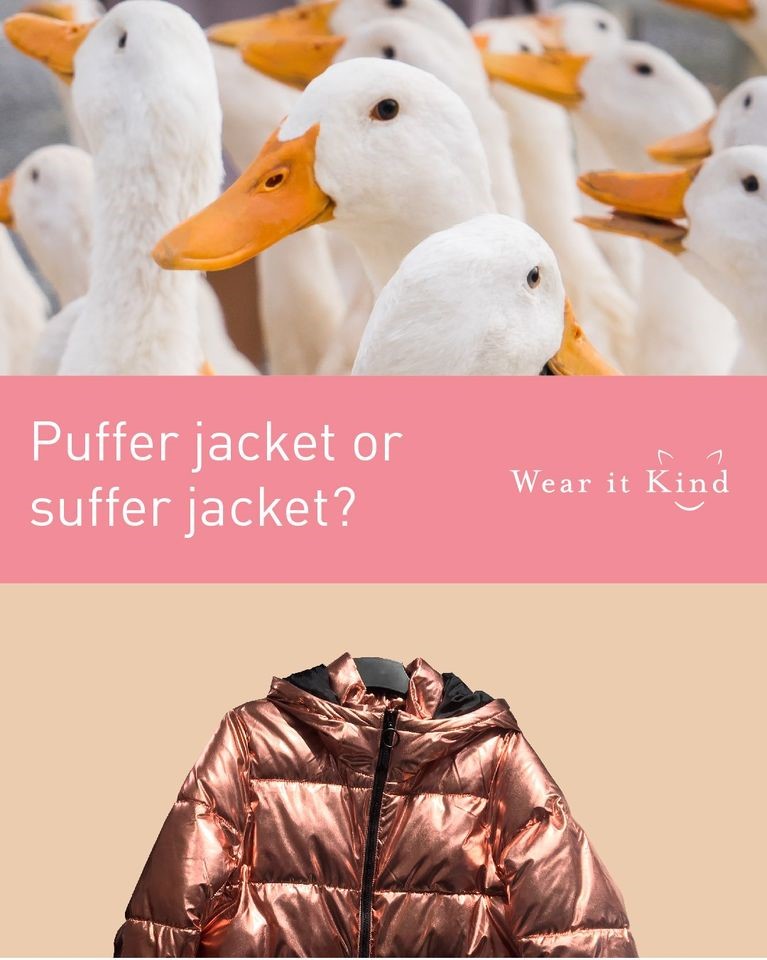
cruelty-free
Wear it Kind – Image by Four Paws

BASICS AND WARM WEATHER

  • Linen has long been an ethical choice for the fashion-conscious. It has strong sustainability credentials and, unlike many clothes available in stores today, it can be worn time and time again and still look great!
  • Lyocell and modal fabrics, generally known by the brand name Tencel, are a newer alternative. Made by processing wood pulp, lyocell, and model fabrics are super soft and resist wrinkling.
  • Microsilk is a revolutionary product that captures the unique properties of silk without harm to any animal. By studying the way spiders spin silk fibers, Bolt Threads, the creators of Microsilk, have imitated nature to create stunning fabrics favoured by ethical fashion designers such as Stella McCartney.
  • When looking for hats that offer sun protection while looking great with any outfit, look no further than jute, straw, and organic cotton. These three materials are versatile, durable, and kind to the plant.

Find brands that are kind to all living beings via our friends at the brand rating platform Good On You.

The demand for ethical fashion is higher than ever! Animal-friendly fashion helps us to #LiveKinder because we don’t need to harm animals to look good. You can help, by taking the pledge and demonstrating the huge support for animal-friendly and sustainable fashion! Will you WEAR IT KIND? You can sign the pledge here

Next week we will look at why adoption is the only ethical option and what you need to know when adopting an animal.

WHEN YOU KNOW BETTER, DO BETTER!

Sasol sponsors Mpumalanga Basketball Association

0

Secunda, Mpumalanga – In an initiative aimed at supporting the development of basketball in the province, Sasol on Thursday, 25 April 2024, handed over training equipment worth over R100 000 to the Mpumalanga Basketball Association.

The equipment includes 40 leather basketballs, 40 coaching boards, 50 metal referee whistles and six training marker cones. The sponsorship is a continuation of Sasol’s diverse portfolio of investments in sports, including teams in fenceline communities.

The Sasol team, led by Mashudu Ndou, Head: Community Affairs with Mxolisi Masina, Chairperson of Mpumalanga Basketball Association.

Over the years, Sasol has sponsored various teams at grassroots levels such as amateur football and netball teams, Banyana Banyana, semi-professional women’s football league (the Sasol League), and the Mpumalanga Sports Awards.  

The Mpumalanga Basketball Association is a provincial governing body of men’s and women’s basketball. Its task is to develop the sport and prepare teams to compete at a national level. The association has been an affiliate of Basketball South Africa since 2021.

Sasol continues to contribute to the development of sport in the communities it operates.

ANIMALS 101 – ARE THE PRODUCTS YOU USE TESTED ON ANIMALS?

0

ARE YOU MAKING ETHICAL CHOICES WHEN IT COMES TO ANIMALS AND THE PRODUCTS YOU USE?

Most people don’t really give any thought to animals when they buy products for themselves, whether clothes, beauty, or cleaning products, medicines, etc., but when you work in animal welfare, it most likely becomes second nature to make ethical choices, especially when it involves animals. Cruelty is not only physical abuse, but unknowingly, you might be cruel to animals by supporting certain practices, products, or industries. Today, we will focus on the medical and beauty industry and animal testing.

24 April is World Day for Laboratory Animals, an “international day of commemoration” for animals in laboratories.

Animals used for research include (in decreasing order) mice, rats, birds, rabbits, guinea pigs, hamsters, farm animals (including pigs and sheep), dogs, primates (including monkeys and chimpanzees), and cats. Frogs and fish are also widely used. These are, however, not the only ones, and some are sadly not protected under animal welfare Acts.  Animals can’t consent to this, and their lives are given for a “cause” they can’t comprehend. Do you think that is ethical and acceptable?

Charles Magel shares that when you ask the experimenters why they experiment on animals, the answer is, ‘Because the animals are like us.’ Ask the experimenters why it is morally okay to experiment on animals, and the answer is, ‘Because the animals are not like us.”

There are modern, reliable, effective, repeatable, and available tools, yet they are not being exclusively used. Why? Dr. James Gallagher gives part of the answer: “Animal studies are done for legal reasons, not scientific ones. The predictive value of such studies is meaningless to men”.  Legislation and potential litigation are to blame, along with vested interests.

animal testing
Image by Beauty without Cruelty (South Africa)

This article is a reprint from 21 September 2022.

MEDICAL RESEARCH AND ANIMAL TESTING

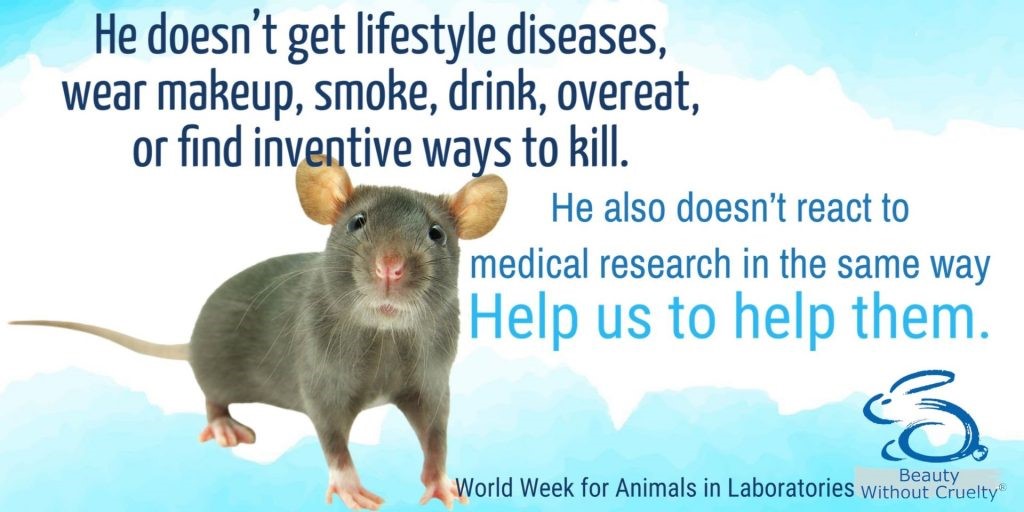
Every year millions of animals suffer and die for nothing because animal-based experiments are misleading and retard medical progress. Did you know that when it comes to the statistics for medical research, the number of animals who suffer and die in laboratories increases to over 190 million a year, and likely more by now? It is heartbreaking if you can even begin to imagine the suffering, kept in cages their whole life, being blinded, blistered, and poisoned.

Here are just a few examples of how animal-based testing retard medical progress or how animals respond differently to humans as shared by Beauty without Cruelty SA:

  • The introduction of blood transfusion was delayed for over 200 years because of the misleading results of animal experiments.
  • Corneal transplants were delayed nearly 90 years by misleading animal tests.
  • Morphine drugs are a depressant in rats, dogs, hamsters, and other species, but produce tremors and convulsions at comparable doses in mice and cats. Morphine sedates people and dogs but causes maniacal excitement in cats and mice.
  • Tests on animals have led to around 100 drugs being thought potentially useful for stroke; not one has proved effective in humans.
  • Penicillin kills guinea pigs but can be a lifesaver for humans.
  • Aspirin and Streptomycin can produce allergic reactions in lab animals.
  • Paracetamol kills cats.
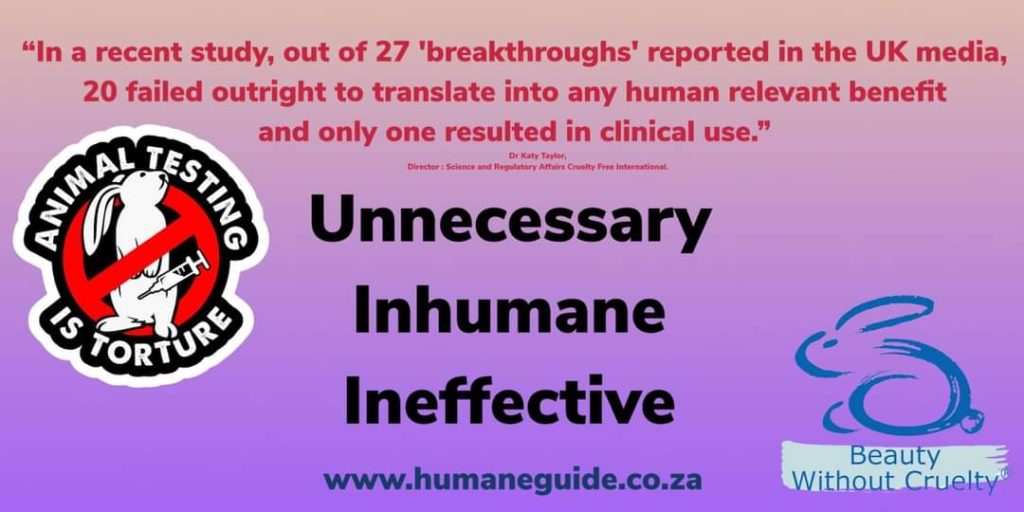
  • Did you know that more than 90% of experimental drugs that are safe and effective in animals fail in human clinical trials because they are too dangerous?

Animal studies do not predict with any certainty what will happen in humans! Dr. Sabin Albert also said that giving cancer to laboratory animals has not and will not help us to understand the disease or to treat those persons suffering from it.

Three major conditions explain why animal experimentation, regardless of the disease category studied, fails to reliably inform human health:

  1. The effects of the laboratory environment and other variables on study outcomes.
  2. Disparities between animal models of disease and human diseases.
  3. Species differences in physiology and genetics.

I agree with Beauty without Cruelty when they say that you don’t need to be a balaclava-wearing animal rights activist to question the value of animal studies in this area of medical research.  Animal testing is INHUMANE, UNNECESSARY & INEFFECTIVE! There are safe, modern, effective, accurate, reliable, and repeatable methods available that require no living beings. What’s missing is the will. Why are governments not legislating an end to all animal use and insisting that all future research and testing options must be modern, as these are the ones that benefit humans in the short, medium, and long term?

animal testing
Image by Beauty Without Cruelty

We also support the development of the 4 R’s guiding principles, namely Replacement, Reduction, Refinement, and Responsibility, when using animals for scientific purposes. The more we push for better welfare standards, higher prioritization of animal life, and further questioning the scientific validity of animal experiments, the more we can make a difference.

Read part three of our animal cruelty awareness series this month with a focus on the cruel industries and practices you might unknowingly be supporting.

ARE YOU USING CRUELTY-FREE BEAUTY PRODUCTS?

Animal testing for cosmetics will never have a place, will never be necessary or valid, and should always be condemned.

laboratory animals
Image by Beauty without Cruelty (South Africa)

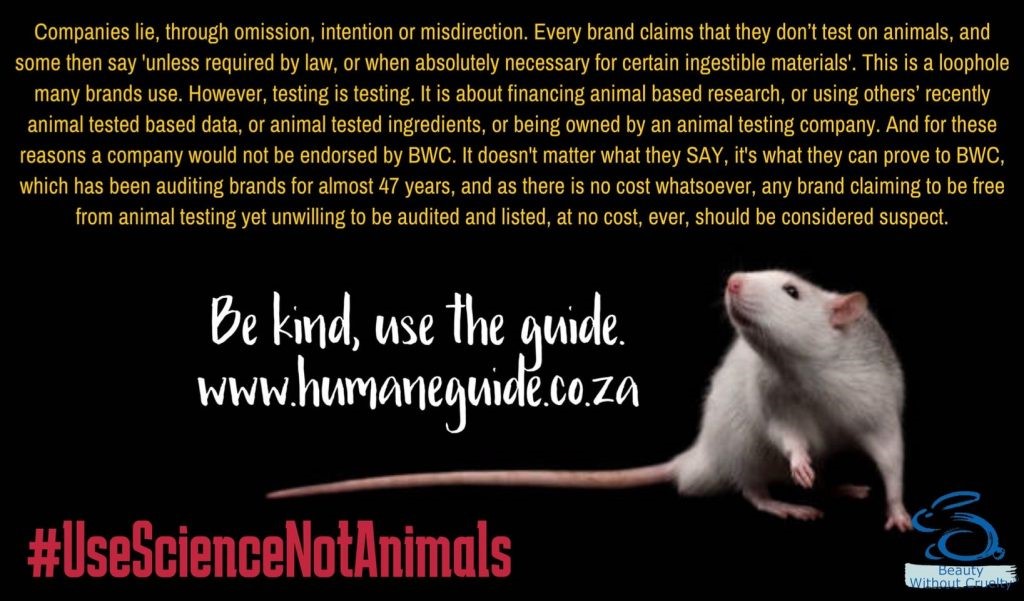
The term “cruelty-free” is unregulated. This means that brands aren’t breaking the law by calling themselves cruelty-free, even if they test on animals. Companies lie through omission, intention, or misdirection. Many beauty brands try to mislead us this way, even some sold by your friends and family! It is not what they claim, but what they can prove!

The CRUELTY-FREE 5 QUESTIONS cover the stages at which animal testing can occur. If a brand can confirm that it passes these stages without animal testing, we can consider them cruelty-free. Brands that are truly transparent and cruelty-free will respond with clear answers to these questions. If they skip questions or follow up with a short animal testing policy or smart marketing slogans, watch out because you might not be dealing with a cruelty-free company.

Contact the brand and ask them the CRUELTY-FREE 5 QUESTIONS.

  • Does your brand test on animals, for either finished products or ingredients?
  • Do your suppliers test on animals? How do you ensure this?
  • Do any third parties test on animals on your behalf?
  • Do you test on animals where required by law?
  • In which countries are your products sold?

One way you can distinguish these types of products from others is the rabbit logo on the product.  It does not cost anything to be able to use the rabbit logo, so when the brand can answer “no” to the 5 questions, with proof, they may be allowed to use the logos. So, the only reason I can think of why a brand would not do it is that they are either testing on animals or they don’t care enough. PLEASE NOTE, there are different rabbit logos, and not all rabbit logos mean the same. Some add a bunny that just says, “We love animals”. That doesn’t mean they are cruelty-free. I trust the Beauty without Cruelty logo. 

Bunny logo
Logo of Beauty without Cruelty (South Africa)

The day you make this decision to change the brands you love or products that work for you to cruelty-free brands, it can be quite overwhelming, and it certainly was for me! There are just so many products that are tested on animals worldwide. Be kind and use the humane guide endorsed by Beauty without Cruelty (South Africa). They have already done the hard work, and this comprehensive list of beauty products, not tested on animals, can and should be your go-to. Keep in mind that there are companies listed that don’t use the logo, which also means the guide is essential. You can also contact BWC via social media to confirm.

If your brand is not listed there, you can contact your brand and ask the 5 cruelty-free questions, or encourage them to apply for the use of the logo if they claim they are cruelty-free. I first asked a brand if they are cruelty-free and got a smart marketing slogan reply back. I then asked the 5 questions with no reply, so I changed my brand. For another brand, I asked about the rabbit logo they do use, which I know doesn’t mean they are cruelty-free, and got no reply. 

Next, you can start by changing out your beauty products one by one as your current ones are finished.  I have used Oh So Heavenly, The Good Stuff, Be Bare Life (shampoo and conditioner bars), and the W-beauty brand from Woolworths. (None are paid endorsements.) 

Next, you can move to more environmentally friendly packaging products. Also, think about the clothes you wear. Do you dress to kill, or kill to dress?  I now choose not to buy any more fur, feathers (including feather duvets), or leather products. I will share more on wearing it kind, next week!

Cruelty-free cosmetics
Image by Beauty Without Cruelty

CHINA – As of May 2021, according to the Chinese National Medical Products Administration (NMPA), imported cosmetics products that fall into the ‘general’ category will no longer require mandatory animal testing to enter the Chinese beauty market. This means that shampoo, body wash, lotions, and make-up no longer require mandatory animal testing for products sold IN China. While animal use remains standard for hair dyes, perming products, blemish pigment-removing products, sunscreens, and others, including cosmetics claiming new efficacy, this is still a significant step forward. There is no mandatory animal use requirement for products manufactured in China for export purposes.

Watch this 4-minute animated short film on #SaveRalph. It is directed by Spencer Susser and stars Zac Efron, Ricky Gervais, and others.

The least we can do is remember the animals, be thankful, and acknowledge them for any breakthroughs in medical sciences they have helped towards, but continue to protest all unjust harm to them, and for animal-free research to be our future.  Make ethical choices when you buy products, and please help create awareness for the many millions of animals who suffer and die in labs around the world for useless research every year!  

Next week, we will look at your clothing choice!

WHEN YOU KNOW BETTER, DO BETTER!

GMM residents to pay more for poor services

0

Residents will, once again, have to grind their teeth and pay more for services that, in the eyes of some residents, are non-existent.

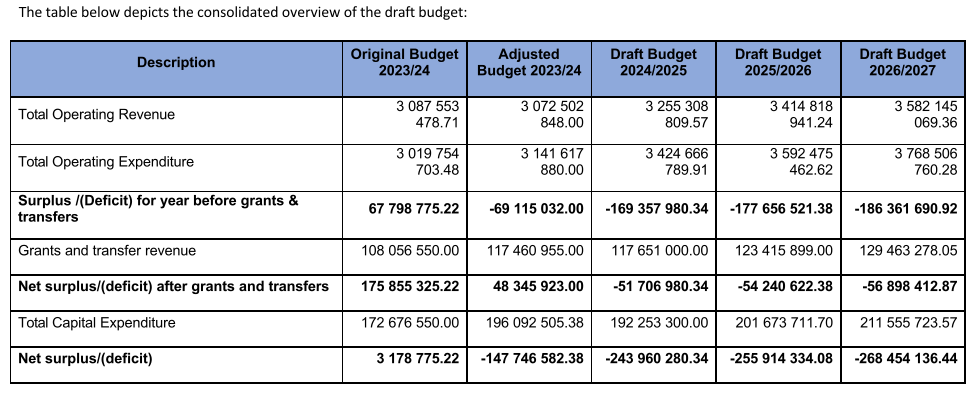
This will hurt the people more as they struggle daily to survive in this bad economic climate, and this is while the Executive Mayor, Cllr Zuma, insists on spending money on projects such as the huge failure, SEJACUFE. SEJACUFE is reported to surpass the R5m mark.

The following is stated in the Draft Budget Medium Term Revenue and Expenditure Forecasts (2024/2025)

Residents will have to face the following increases:

That proposed tariff increases BE ADOPTED in principle:

ASSESSMENT RATES

All property taxes as per the 2023/2024 tariff book increased by 4.9%.

SEWERAGE

All sewerage charges as per the 2023/2024 tariff book increased by 5.9%.

REFUSE

All refuse charges as per the 2023/2024 tariff book increased by 4.9%.

WATER

All basic water charges as per the 2023/2024 tariff book increased by 5.9%

ELECTRICITY

All basic electricity charges increase by 9.86% in line with NERSA

DEPOSITS

Tariff book 2023/24 book increased by 4.9%.

MISCELLANEOUS TARIFFS

  • As per the 2023/24 tariff book increased by 4.9%.
  • These are tariffs that are used on a need basis.
  • All tariffs exclude VAT except in the case of assessment rates that are zero-rated.

INTEREST / CAPITALIZED ARREARS

  • No interest will be levied on those arrears for which the consumer made formal arrangements.
  • Interest will only be levied on those arrears for which no formal arrangement exists and/or arrears as a result of not complying with the said arrangements.
  • Interest rates will be levied at market-related rates.

The municipality is implementing the inclining block tariffs on electricity and water. The IBT for the electricity is in line with the NERSA guidelines. The water tariffs are also designed using the inclining block model to promote a conservative approach to domestic consumers.

The municipality will still ensure that the poor are protected through the indigent support scheme as per the indigent policy and debt collection strategy. The threshold for increasing free basic services for a household will be reviewed. The increase in the package indicates the municipality’s commitment to protect the poor and also to ensure that those who cannot afford to pay are not burdened with the unpaid accounts.

The 2024/2025 draft budget comprises of R 3 149 billion for operating expenditure and R 117 million for capital investment programs. The total operating income budget is R 3 261 billion resulting in an operating deficit of R 111 million.

The budget that is contained in the agenda for March when it was passed by majority vote paints a pretty bleak picture.

GMM’s draft budget is R3149 billion which, currently, the municipality’s creditors amount to R5.5 billion, with Eskom and Rand Water’s debt totalling to R5.4 billion. The current outstanding creditors are in line with the cash flow, therefore the municipality is unable to pay its creditors timeously which might lead to litigations.

The municipality will be unable to pay the obligations when they become due and that will result in non-compliance with section 99(2)(b) of the Municipal Finance Management Act

There is no doubt that the new tariffs will have an adverse effect on all stakeholders.

While Eskom will be increasing the tariffs by 12% GMM approved an increase of 9,86%.

GMM is already struggling to cover just the normal costs, let alone a deficit on bulk purchases.

Read the adjustment budget HERE

Daily Maverick shuts down for 24 hours to flag global crisis in journalism

0

THE ASSOCIATION OF INDEPENDENT PUBLISHERS (AIP) STRONGLY SUPPORTS DAILY MAVERICK’S CALL TO ACTION AROUND JOURNALISM EMERGENCY

The AIP strongly supports Daily Maverick’s shutdown to highlight the emergency in journalism across the globe and in South Africa’s cities, small towns, townships, and rural areas.

However, our members want to take a different stance. Most of our publishers don’t have the resources to close – not for a day, not even for an hour. Our margins are too slim. So as AIP we’re starting a campaign – with our audiences – highlighting the importance of what local media means to our communities, and what we believe will happen if it vanishes.

South Africa’s local media is shrinking. Rapidly.

AIP is an independent community media membership organisation. We represent 147 publishers and 178 publications across the country. (AIP members are independent of mainstream media companies such as Media24 and Caxton.)

Our publications are based mostly in townships, small towns and rural areas. We are a diverse, strong-minded, big-voiced grouping, representing all the 11 official languages in the country – 109 of our publications cover languages other than English.

And we’re fighting for our lives.

In 2016 AIP had 204 publications – now we have 178. The overall print runs were 7.5m monthly – now we have 2.5m. We boasted a monthly readership across the country of 22.6m. Now we have approximately 7.5m readers: a drop of 15.1m – over 8 years.

Covid was devastating for AIP. While mainstream media (e.g. the SABC and News24) had surging audiences online, community media, largely print-based, largely driven by local advertisers whose businesses had to shut their doors, haemorrhaged. It was difficult for poorer township and rural audiences to access online content at home. Also, the majority of our publications stopped printing. Approximately 40% of our publications closed for the duration of Covid.

Post-Covid there were green shoots.

Publications started printing again: but fewer copies and less frequently. Publishers printed not weekly now but monthly – and not 10 000 to 20 000 copies a week but 5000 copies per month.

One of the problems was that the price of printing kept surging.

Publishers were encouraged to go online – but there were no silver bullets. The majority of online advertising was absorbed by the big tech platforms (Google and Facebook). If it was difficult to make money in the mainstream media, it was even more difficult for local media. Online audiences are small at community level – but to make money online you need huge audiences (with millions of users). But further, even with large audiences it is difficult to earn revenue in African languages as they are simply not recognised by the big tech platforms.

What does this mean for local democracy?

As Daily Maverick points out, the shrinking of local voices means less local government accountability. It means more corruption and mismanagement at the municipal level in big cities, in small towns and rural areas. It means less delivery of services and more crime. And as local infrastructure collapses, it makes it more difficult for local businesses to operate.

Way forward

Alongside the calls for action outlined by Daily Maverick (calling for corporate support, government subsidies and tax breaks) AIP also calls for:

  • More corporate and small business advertising support for local journalism.
  • The strengthening of the Media Development and Diversity Agency to play a more proactive role in the community media sector and for all community sectors – print, online and broadcast – not just broadcast.
  • For National Treasury GCIS, provincial and local government structures to ensure government advertising is placed in local publications and to be transparent about what is spent and on which media.
  • For research to be done as regards all the advertising intermediaries that exist at community level to look at which ones assist the industry, and which don’t.
  • Finally, to ensure greater Seta support for local journalism training.

And all is not lost. The 147 publishers in AIP represent some of the most resilient media professionals in South Africa, with the closest understanding of the news interests and information needs in communities, most representative of South African citizenry. And AIP is committed to the fight to keep community news alive in South Africa.

ANIMALS 101 – ARE YOU UNKNOWINGLY SUPPORTING CRUELTY TO ANIMALS?

1

CRUELTY COMES IN MANY FORMS AND MANY PEOPLE, UNKNOWINGLY, SUPPORT THESE PRACTICES OR INDUSTRIES.

In light of April being the Prevention of Cruelty to Animals Month, we want to look at some industries and practices that are contributing to the cruelty to animals, that you might be supporting.  Have you ever complained about a dog being chained, yet you take your kids to petting farms, aquariums, on animal rides, or to the circus? Whether it hurts them physically or not, there is always an ethical, welfare, and cruelty question! Let’s look at a few practices or industries.

Read part one and two about understanding cruelty and reporting and preventing cruelty.

Image shared via The Paw Company

This article is a reprint from 20 April 2022

ANIMAL RIDES & WILDLIFE INTERACTION

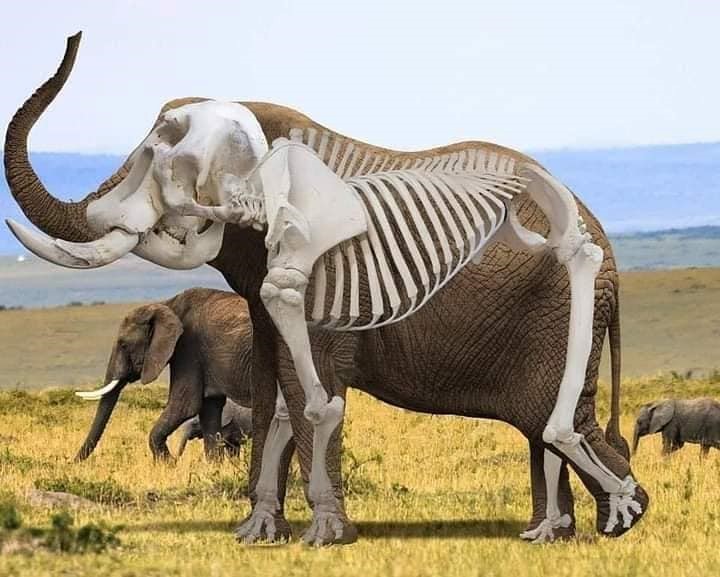
Responsible people and tourists do not interact with captive wild animals! While many elephant-riding operations say that their animals are well treated, there is no quick, easy, or humane way to train any elephant, Asian or African, purely for the pleasure of people to ride these highly intelligent and majestic creatures. Also, look at the spine structure and think about whether it will hurt or not.

CIRCUS WITH PERFORMING ANIMALS

When you purchase a ticket to a circus that exploits animals, you’re supporting their misery. Circus life is not good for animals!

ZOO, AQUARIUMS & PETTING FARMS

Video of animals in permanent lockdown.

CRUELTY COMES IN MANY FORMS

Image by The Paw Company

HOARDING ANIMALS

Too many animals living on one property can be a sign of animal hoarding. Thousands of animals are hoarding victims each year. Animals are kept in overcrowded, deteriorated areas and unfortunately, most hoarding animal victims will have to be euthanized due to ill health. Even animal welfare organizations resort to hoarding which is never beneficial for the animals.

ANIMAL TESTING

Every year millions of animals suffer and die for nothing – animal-based experiments are misleading and retard medical progress. There are safe, modern, effective, accurate, reliable, and repeatable methods available that require no living beings. Watch this Save Ralph short film.

BEAUTY WITHOUT CRUELTY

Make a difference where you can, by using kind options for household cleaners and grooming needs. It doesn’t matter what a brand says, it is what it can prove and remember that all bunny logos mean the same.

Image by Beauty Without Cruelty

UNETHICAL HUNTING PRACTICES

Even though we understand that hunting is deeply entrenched in the SA culture, we strongly object to any hunting or fishing for sport, entertainment, or recreational purposes. The sport does not justify causing suffering to animals.

CANNED LION HUNTING

A canned hunt is a trophy hunt that is not a “fair chase”; it has been made too easy for the hunter. Animals have been kept in a confined area, such as in a fenced-in area, increasing the likelihood of the hunter obtaining a kill. A canned hunt is a hunt for animals that have been raised on game ranches until they are mature enough to be killed for trophy collections.

GREEN HUNTING

Catch-and-release hunting is now possible by converting a high-powered rifle to a tranquilizer dart gun, immobilizing the animal for fun.

HUNTING WITH DOGS

The welfare concerns are crucial here and both the dog and its prey can get injured and die a terrible death, apart from the living conditions of the hunting dogs.

DRIVEN HUNTS

A line of beaters pushes the animal in the direction of a chain of waiting hunters, this way you can be relatively certain of getting a chance to shoot the game several times each day.

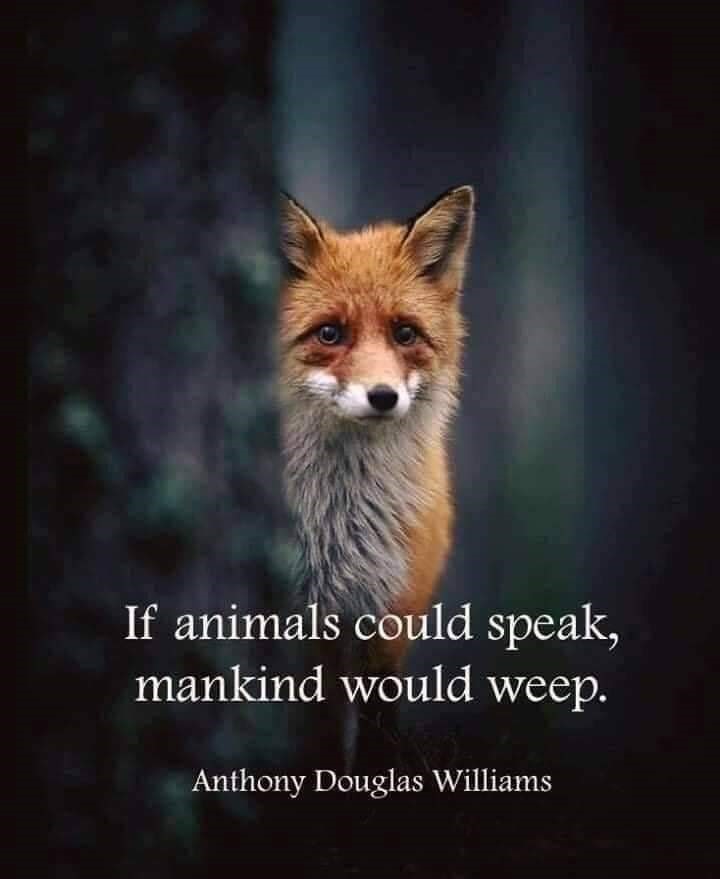
Fox hunting is a very disturbing form of hunting. There are more humane ways to deal with what you perceive as “pests”.

Image shared via The Paw Company

DOWN/FEATHER PRODUCTS

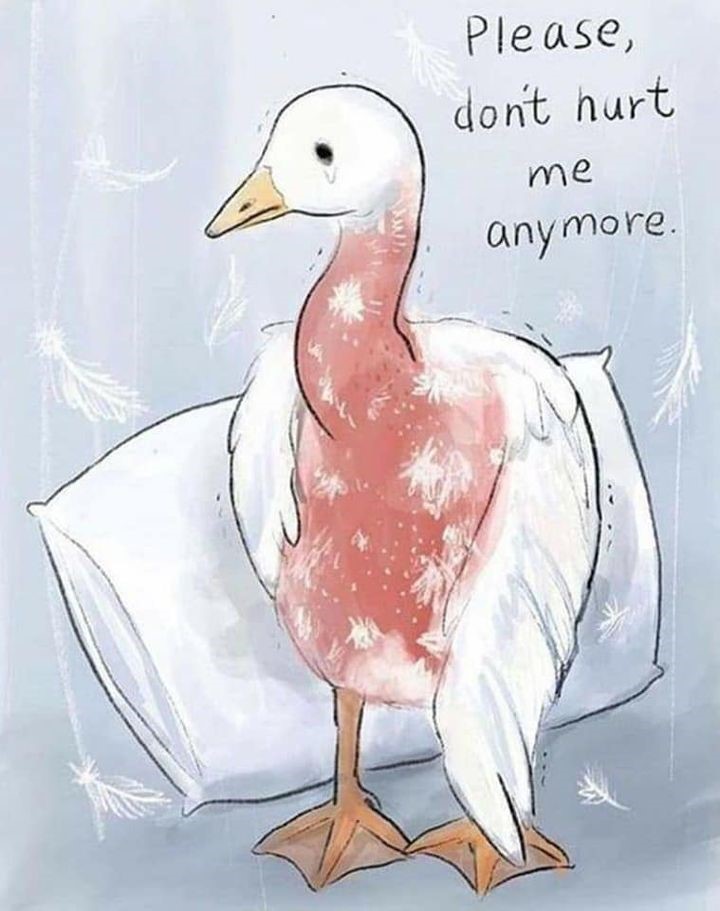
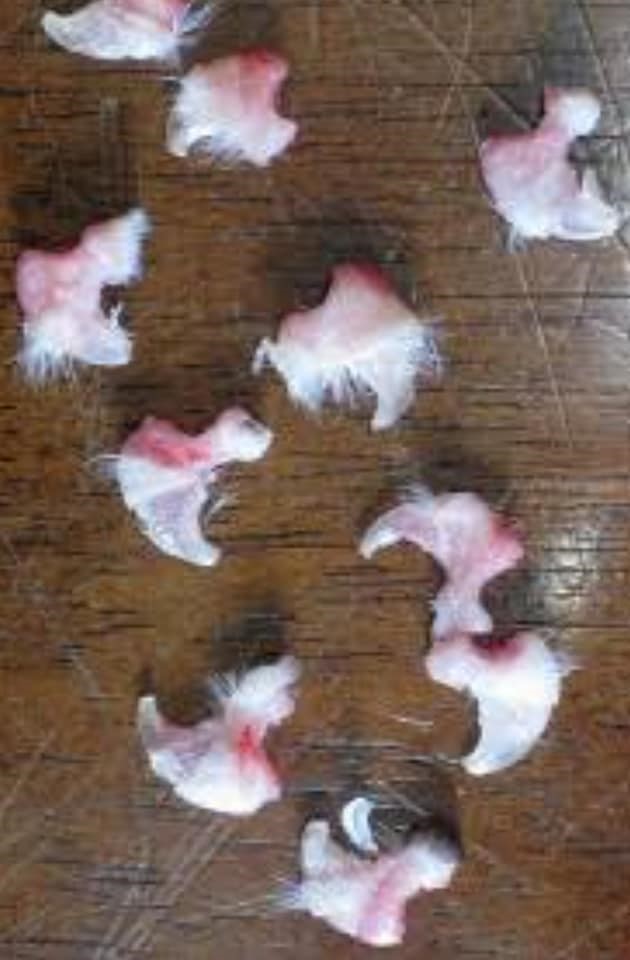
Are you ok with cruel beauty or comfort? If you’re considering buying a product stuffed with down or body feathers, the first thought on your mind probably isn’t: “Where did these feathers come from? One of the ways they collect feathers is live-plucking. Live plucking is exactly what it sounds like a goose or duck is held down by their neck or wings as the “targeted feathers” are torn from their skin. When the skin rips during this process it is sewn up with a straight needle (no analgesic or sterilization used) and the bird is left to recover before the next “harvest of feathers.” This process is repeated every 6-7 weeks before the bird’s eventual slaughter (or death from the trauma of the plucking process itself).

Image shared via The Paw Company

DECLAWING CATS

This is an amputation equivalent to the first digits of your fingers. We believe declawing cats is both unethical and inhumane. We also believe that Veterinarians should say no to this procedure unless there is a medical reason for it. There are many alternatives for responsible pet owners who are not lazy. Watch this video about declawing.

Image shared via The Paw Company

TAIL DOCKING & EAR CROPPING

While docking and bobbing are more commonly used to refer to the removal of the tail, the term cropping is used for the ears. There is no justifiable reason to dock a dog’s tail or ears. Those who do it will be liable for prosecution under the Animal Protection Act no 71 of 1962. This mutalation affects the dog’s body language for humans and other animals. When you buy breeds where this has been done, you are supporting cruelty.

SPA’S & FISH

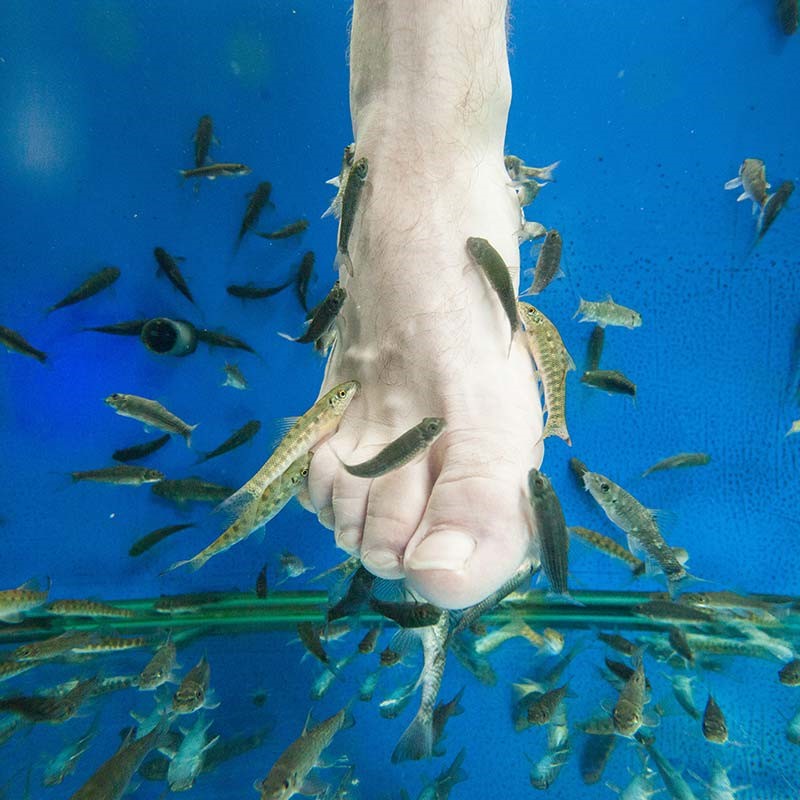
Many factors seriously compromise the welfare of the fish, leading to suffering and may even kill the animals. The water quality is affected and temperature changes are also a concern. Toxic (to fish) chemicals such as from toiletries or nail varnish may leach into the water. Chemicals used to clean or disinfect tanks or to clean clients’ feet before treatment may also be toxic to the fish. Overcrowding fish in a small volume of water will lead to increased concentrations of ammonia too. Well-fed fish may show no interest in human skin and may be unlikely to feed on the skin if they have access to appropriate food sources. There is also the question of what happens to the fish once they have become too big to be used for pedicures.

Image by NSPCA

CATCH & RELEASE

People catch & release for personal fun. Take a photo to boost your low self-esteem maybe or for some likes on Facebook? You are not doing this for conservation. Fish can feel the injury and depending on where you hook them, it can have detrimental effects on their well-being and that is apart from the fact that many die about a week later, due to infection of the injury site.

THE ANIMAL FOOD INDUSTRY, WITH A SPECIAL MENTION OF FOIE GRAS

The ethical questions regarding food sources is a topic on its own, but Foie gras and the methods used is a particular concern. Foie gras is a specialty food made of duck or goose liver.  One bird is forced to consume between 160 and 210 kgs of corn mush in only three weeks. This is the equivalent of a 68kg human consuming roughly 27kgs of oiled pasta daily, or 54 boxes of pasta a day.

The list goes on…………….

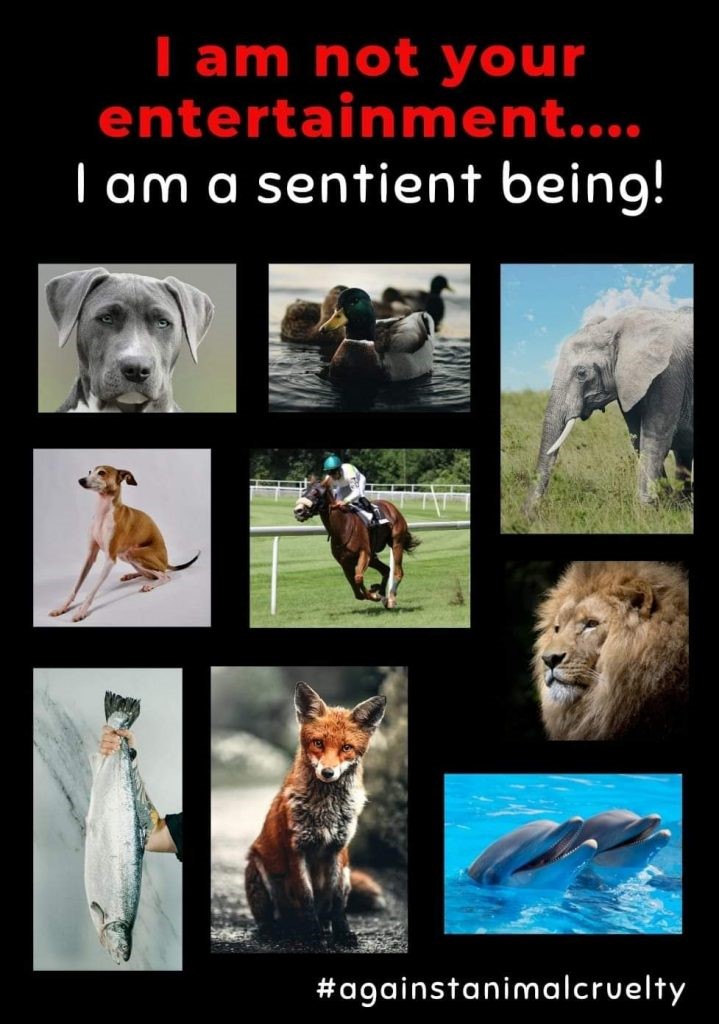
There is no way for you to justify these cruel practices or industries.  Animals do not deserve to be treated like products. They are sentient beings and deserve respect, care, and most of all freedom.

Next week we will look at laboratory animals used for testing.

WHEN YOU KNOW BETTER, DO BETTER!
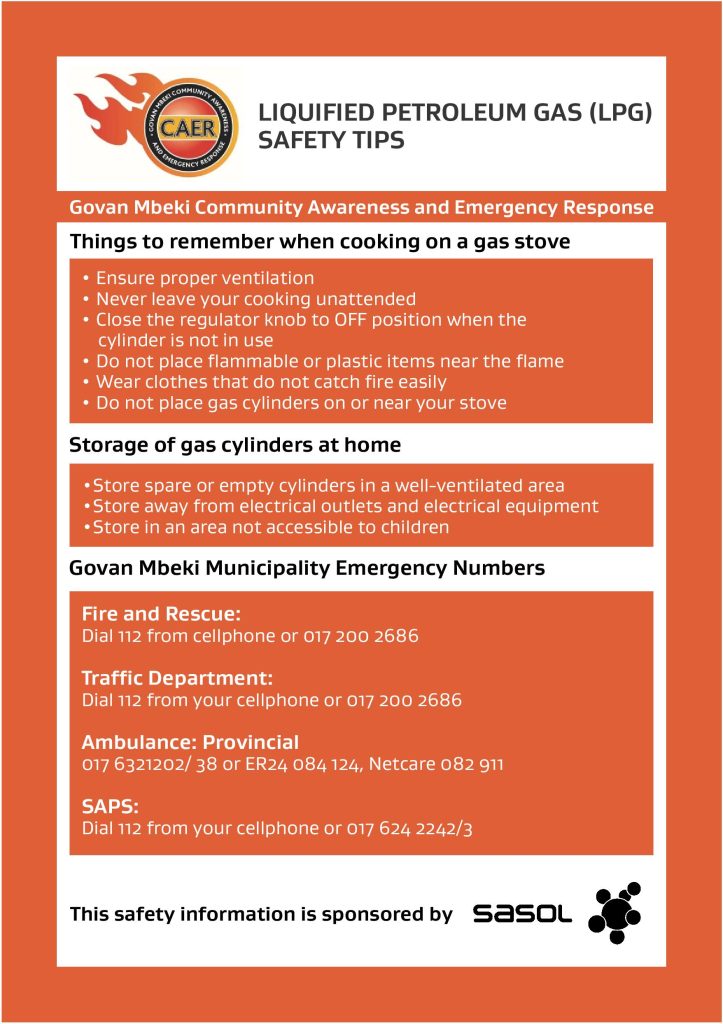
LIQUIFIED PETROLEUM GAS (LPG) SAFETY TIPS

Govan Mbeki Community Awareness and Emergency Response

Things to remember when cooking with a gas stove

  • Ensure proper ventilation
  • Never leave your cooking unattended
  • Close
the
regulator
knob
to
OFF
position
when
the
cylinder
is
not
in
use
  • Do not place flammable or plastic items near the flame
  • Wear clothes that do not catch fire easily
  • Do not place gas cylinders on or near your stove

Storage of gas Cylinders at home

  • Store spare or empty cylinders in a well‑ventilated area
  • Store away from electrical outlets and electrical equipment
  • Store in an area not accessible to children

Govan Mbeki Municipality Emergency Numbers

Fire and Rescue꞉

Dial 112 from Cellphone or 017 200 2686

Traffic Department꞉

Dial 112 from your cellphone or 017 200 2686

Ambulance꞉

Provincial 017 6321202/38 or ER24 084 124, Netcare 082 911

SAPS꞉

Dial 112 from your cellphone or 017 624 2242/3

This safety information is sponsored by SASOL

E-Tolls officially Shutdown

0

Transport Minister Sindisiwe Chikunga and Gauteng Premier Panizza Lesufi shut down e-tolls in Gauteng

Transport Minister Sindisiwe Chikunga and Gauteng Premier Panyaza Lesufi have together shut down the e-tolls system. “It has been a long road, but we have finally put an end to e-tolls in Gauteng,” Chikunga said, with Lesufi standing alongside her at a gantry on the N1 in Johannesburg on Thursday night.

Transport Minister Sindisiwe Chikunga

“From midnight on Thursday, 11 April 2024, e-tolls are dead and motorists will no longer have to pay e-tolls,” said Minister Chikunga.

Minister Chikunga and Premier Lesufi were accompanied by Gauteng MEC for Transport and Logistics Kedibone Diale-Tlabela and SANRAL CEO Reginald Demana to witness the shutting down of the e-tolls system last night.

“Tonight we are celebrating a victory for our democracy. The decision to end e-tolls is a testament to our government’s commitment to its people; the voices of our citizens have been heard and our government has listened. As we bid farewell to e-tolls, we usher in a new dawn of an e-toll-free society where road users will no longer be charged for using the freeways in Gauteng,” she said.

Premier Lesufi said he and the citizens of Gauteng were relieved and excited that e-tolls were finally behind them. “The fact that we are here shows that we have eradicated a long-standing problem. I also want to say that we have proven wrong those doomsayers who didn’t believe us when we said we were going to end e-tolls. Here is the proof; e-tolls are no more and the residents of Gauteng can move forward.”

Speaking at the Central Operations Centre (COC) in Centurion, SANRAL CEO Reginald Demana said the infrastructure created for e-tolls would continue to be used for many other purposes. “One of our biggest priorities in this process is to ensure that we preserve the jobs of the more than 900 employees working at the COC, the call centre and various kiosks across the province. In addition to using the infrastructure for critical road safety and law enforcement functions, world-class interoperability systems, parking payment solutions, account-based ticketing and several other systems which we are considering for the future,” said Demana.

Govan Mbeki: FF Plus welcomes fine of R200 million imposed for environmental legislation violations

0

The FF Plus welcomes the fine of R200 million imposed by the Bethal Magistrate’s Court on the Govan Mbeki Local Municipality (Bethal, Charl Cilliers, Embalenhle, Evander, Kinross, Leandra, Secunda, Trichardt) on Tuesday for violating environmental legislation.

The fine was imposed after the state and the Municipality (GMM) entered into a plea and sentence agreement, according to the National Prosecuting Authority (NPA).

The Municipality was found guilty on six charges relating to National Environmental Management Act (NEMA) violations, the pollution of water sources, National Water Act violations and failure to comply with a compliance notice.

“The FF Plus has been putting pressure on the Municipality to resolve the ongoing sewage crisis and related pollution since 2019,” said Aranda Nel-Buitendag FF Plus councillor: Govan Mbeki Municipality, “In 2020, the party asked the Green Scorpions to investigate sewage violations in GMM. In 2021, the FF Plus went so far as to file a complaint with the police in Secunda against the then Municipal Manager, Ms Lizzy Shabalala.”

Aranda Nel-Buitendag, FF Plus councillor

The FF Plus resorted to that course of action after several requests to the Municipality, to urgently resolve the problem, fell on deaf ears.

The party asked the Green Scorpions in 2020 to investigate the sewage pollution, particularly in Evander.

In 2022, the party lodged a complaint with the Human Rights Commission (HRC) about the flow of sewage from the Emzinoni settlement and the eMbalenhle water treatment plant to the Trichardt Tributary and Blesbok Tributary.

Decaying infrastructure and the mismanagement of funds are the main causes of this crisis.

The Govan Mbeki Local Municipality’s failure to routinely maintain and replace infrastructure is a violation of the community’s constitutional right to live in an environment that is not harmful to their health or wellbeing, in terms of section 24 of the Constitution.

“The FF Plus will keep fulfilling the role of watchdog for the community,” said Aranda

DA in GMM welcomes the R200m Fine for pollution issues

0

R200 million fine imposed on Govan Mbeki Municipality for Contravention of the Environment Act

The Democratic Alliance (DA) in Mpumalanga welcomes the R200 million fine imposed on the Govan Mbeki Local Municipality (GMM) for contravention of the National Environmental Management Act of 1998.

This week, the Bethal Magistrate Court fined GMM R200 Million for releasing raw and untreated sewage polluting the local freshwater streams. It is alleged that GMM has been polluting the water streams intentionally for almost two years.

“The DA has been consistent in calling on the municipality to deal with sewer spillage in GMM, but this was met with deaf ears. We first reported this matter to the South African Human Rights Commission (SAHRC) in 2012,” said Cllr James Masango – DA Councilor in Govan Mbeki Municipality, “The municipality, together with its former Manager, Felani Mndebele, were summoned to the SAHRC offices in Mbombela where they were asked to respond to the DA’s complaints about the sewage spills. However, nothing was done to improve the situation after that.”

Cllr James Masango

The sewerage system in GMM has deteriorated further due to systemic corruption, maladministration, fraud, incapacity and poor maintenance of the current infrastructure.

Most sewage pump stations and some Wastewater Treatment Plants in GMM are dysfunctional. Compounding the crisis is that the GMM is bankrupt, and it was one of the municipalities in Mpumalanga that were categorised as dysfunctional by the Provincial Government.

“It is not clear if this municipality is going to pay the R200 million if it is unable to pay Eskom and Rand Water,” said Masango

“It is a wake-up call for the people of Govan Mbeki to remove the uncaring and corrupt ANC from government. It is only a DA Government that can rescue GMM and the rest of South Africa from ANC mismanagement.”