AFRIFORUM WELCOMES “STINK FINE” FOR MP MUNICIPALITY, DISAPPOINTED THAT OFFICIALS ARE NOT HELD PERSONALLY RESPONSIBLE
AfriForum today, welcomed the “stink fine” of R200 million, which was imposed on the Govan Mbeki Local Municipality yesterday by the Bethal Magistrate’s Court. However, the civil rights organisation argues that the relevant responsible municipal officials should much rather be held personally liable for the various violations of environmental and water legislation of which the municipality has now been found guilty.
The municipality was found guilty of widespread pollution of natural water resources with raw sewage and the mismanagement of municipal landfills that took place between November 2019 and September 2020.
According to Marais de Vaal, AfriForum’s Environmental Advisor, environmental legislation is generally applied very strictly in the case of the private sector. However, government agencies, which are among the nation’s biggest polluters and violators of environmental laws, are often not held accountable for violations. AfriForum, therefore, welcomes the court’s decision to act firmly against the Govan Mbeki Local Municipality, through a fine and accompanying court order to compel the municipality to carry out necessary repairs to municipal infrastructure.
However, AfriForum is disappointed that the relevant municipal officials are not held personally accountable. The private sector and government institutions must be judged by the same yardstick when it comes to environmental legislation. However, it is unfair that directors of companies are held personally liable for wrongdoing, while municipal officials get away with their crimes.
A further concern is that the fine imposed on the municipality, which must therefore be paid from the municipality’s budget, effectively means that taxpayers have to pay for the fine. This is while the community is already paying for the municipality’s failures and pollution.
“The fact that a proposal to buy a new, luxurious car for the mayor was recently tabled in the municipal council just highlights how unconcerned municipal officials are in carrying out their obligations in the service of the community. Service delivery can no longer be left in the hands of criminal municipal officials,” says De Vaal.
The fine that has now been imposed on the Govan Mbeki Local Municipality will only worsen the financial predicament in which the municipality already finds itself, explains De Vaal. He maintains that the R3 billion that is already owed to Eskom, and the R800 million that the municipality owes to Rand Water, together with the fine of R200 million leave serious concerns about the sustainability of the municipality.
AfriForum will reach out to the municipality to help tackle the pollution problem, which still occurs in many respects. According to De Vaal, the community has the necessary expertise and willingness to solve these problems.
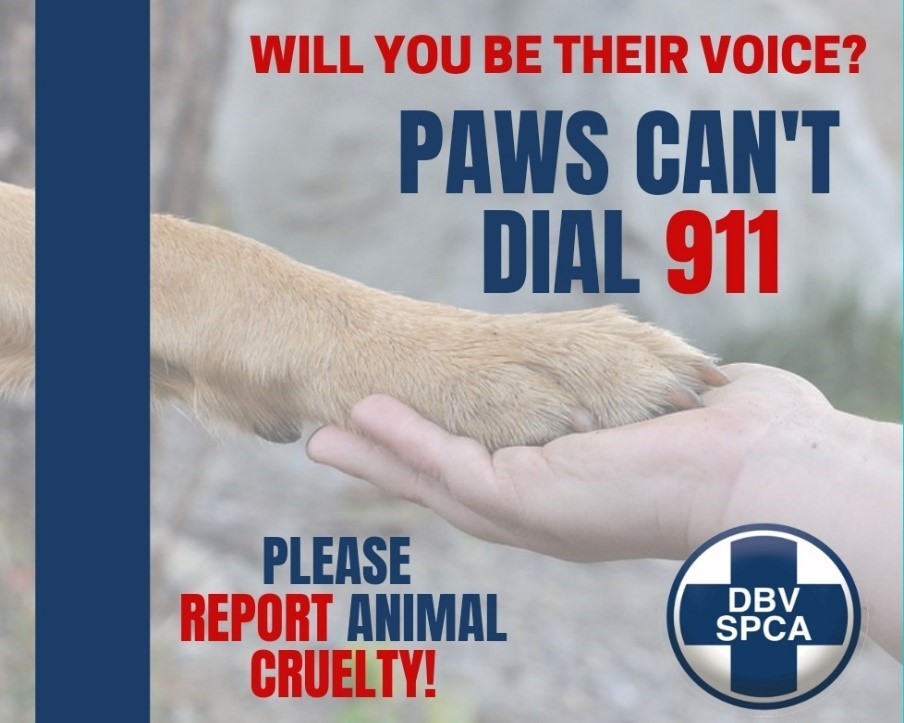
Pets have no voice to cry out for help and they can’t dial 911. They aren’t able to alert authorities to abuse, and they can’t quietly discuss their pain and injuries with a veterinarian. You have to be the eyes and ears for the animals you encounter to ensure that if there is any abuse, it can be stopped in time or prevented. If you do not report cruelty, then you are complicit.
As we mentioned last week, neglect may require an educational visit from an SPCA inspector or animal welfare worker and abuse may require the removal of the animal from the home and prosecuting the offenders. Either way, your call will guarantee a better life for that animal.
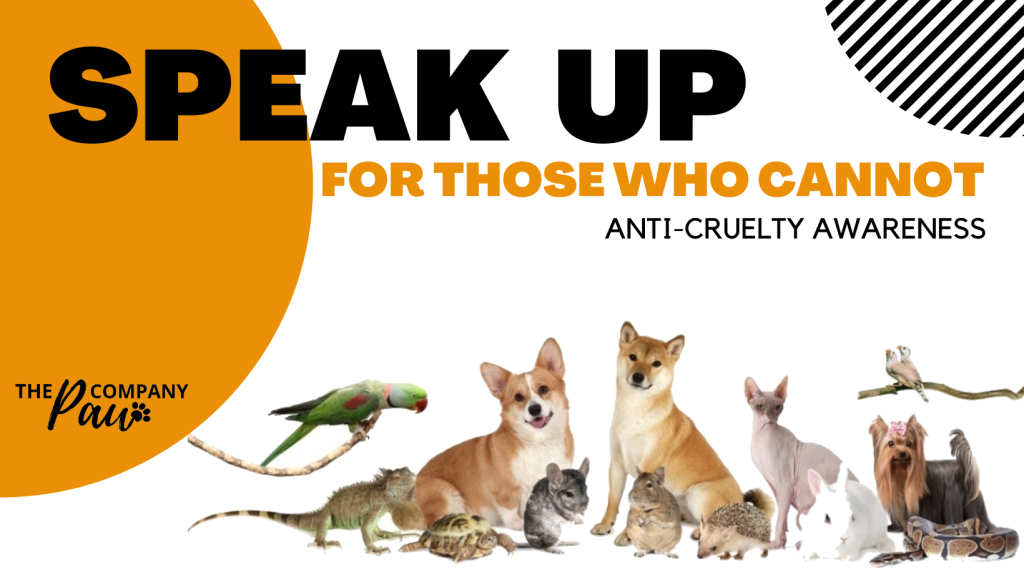
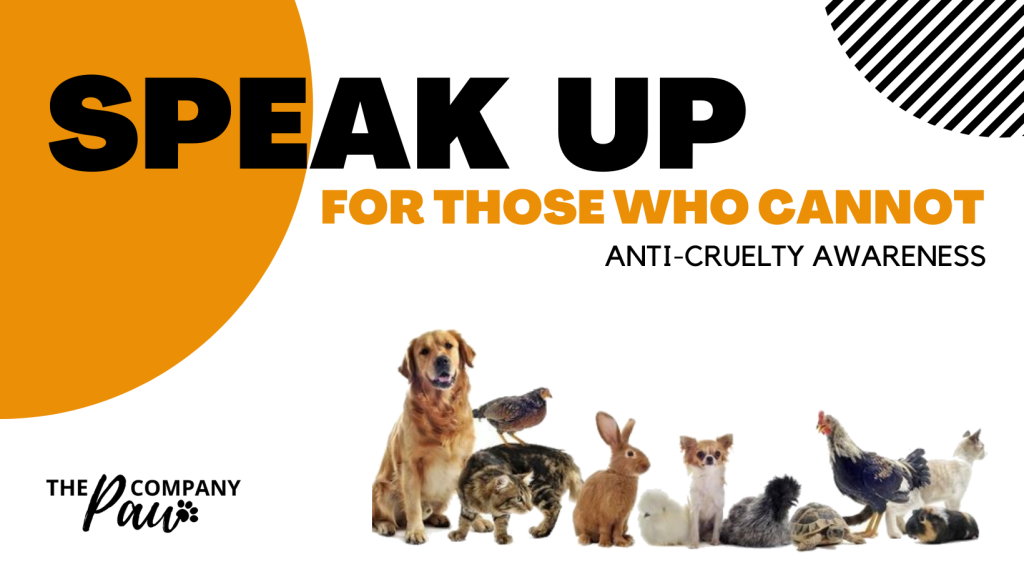
Anti-animal cruelty awareness – Image by The Paw Company
This article is a re-print published 26 April 2023.
UNKNOWINGLY YOU CAN BE CONTRIBUTING TO THE PROBLEM.
Cruelty comes in many forms and you might, unknowingly, be supporting it!
• Breed – there’s no such thing as responsible breeding when we have a massive overpopulation crisis!
• Support breeders (registered or backyard) when millions have to die
• Support pet shops that sell animals
• Support Aquariums
• Support Zoos
• Support Petting farms
• Support wild animal interaction (e.g., rides)
• Support Circuses with animals
• Support unethical hunting practices
• Do not sterilize your pets
• Do not keep them safe and let them roam the streets (including cats)
• Support irresponsible organizations
• Do not report cruelty
• Abandon/abuse/neglect any animal
• Give animals away for free
• Use products tested on animals
• Support “free to good home” ads
• Not planning for your pets when you immigrate or in your will.
…..the list goes on and it is easy to unknowingly contribute to the problem.
REPORTING CRUELTY
Save your local SPCA office and emergency numbers on your phone. Also, include the numbers of the areas where your friends or family stay or where you visit frequently.
HOW TO REPORT
Is it safe to take a photo/video?
Get an exact address or pin drop.
Call your local SPCA. Find them via the NSPCA website.
Assist with the case.
Report if it happens again.
Please understand that the SPCA or animal welfare organizations can’t always just take the animal. There is a legal process to follow!
ALWAYS REPORT CRUELTY!
If you notice an animal that appears to be suffering, call your local animal welfare agency (mainly the SPCA in SA) immediately! Do not send a message or email or do this through social media as we lose precious time! Call until they answer! It can always be done anonymously and even if you are unsure, rather report so the SPCA can investigate. You can find an SPCA near your location or contact the NSPCA directly. You can also report it to your local SAPS, but I would rather do it through the SPCA or other local animal welfare organizations willing to assist.
Read here how to recognize the signs of cruelty, but if you are unsure whether it is cruelty or not, report it anyway! Please understand that the SPCA can’t just take an animal away on the first visit. They need proof of the cruelty and there is a process to follow including writing a notice to comply or warnings before a warrant can be obtained for the removal of the animal in question. In clear-cut cases, it can happen faster. When you call them and they go out, and you feel nothing has happened, follow up and contact the NSPCA – nspca@nspca.co.za. When it happens again, please contact them again and even provide affidavits where possible. This will help with the process. If you report cruelty to a SPCA and they claim it is not their area, by law, they still need to make sure that the case is attended to.
Be a responsible pet owner. Know about and fulfill the needs of your pet. Don’t just concern yourself with basic needs – give your pet positive experiences that really enhance their well-being. It is a lifetime commitment, not just when it suits you.
Be an example of kindness to other pets. Foster a pet that has suffered abandonment. Sadly, many pets are relinquished to shelters for various reasons. Foster homes help these animals to recover and prepare them to move on to a new permanent loving home. If you can, ADOPT!
Intervene if you witness animal cruelty, abuse, or neglect. Do what you can to stop someone from mistreating an animal. However, be sensible and if necessary, seek help from other witnesses or authorities. An animal that has been mistreated needs support, sometimes immediately. You can make a real difference by taking an animal out of a harmful situation.
You can keep food, water, a leash, and a blanket in your car. If you see an animal in need or roaming around you can help. Approach only if it is safe for both you and the animal, as we do not want them to run away into danger. If the animal is hurt, stay with them or follow them at a safe distance, while you wait for your local animal welfare organizations to come and assist you. If you can pick up the animal, take them to your Vet, the SPCA, or into your yard until the owners are found.
Teach your children to have respect for animals. Set a good example by being respectful towards animals. Show children how to interact with and treat animals with love and consideration. Even if your pet allows it, kids should not be sitting on or pulling on the ears or tails, etc. of pets. Help them to grow up to become the next generation of advocates for animals. Children who are cruel to animals often grow up to be cruel to people as well. Nip animal cruelty in the butt early on, even better, prevent it!
Know the legislation & support legislation that promotes kindness to animals. Stronger animal welfare laws and harsher penalties for abusers will lead to fewer cruelty cases. Support the campaigns and advocate for animal rights! Ask what animal welfare policies the political party you support has. You can read the Prevention of Cruelty to Animals Act, 1993 (Act 169).
Animal and social welfare link. Consider that neglect of animals can be closely linked to domestic violence. Animal abuse usually precedes or is concurrent with other abuse. By reporting your suspicions, you may also be helping both the animal in need and the family members concerned.
Educate people around you about the issue. Help people to understand that they can intervene in situations where animals are being neglected or even tormented. Animals have a right to live without fear or pain, and we have a responsibility to step in if their rights aren’t respected. Promote programs at schools! You can read more on specific educational animal welfare topics on the NSPCA website.
Offer help to people who seem overwhelmed with their animals. Animals aren’t necessarily neglected out of a lack of love. An owner may not have the psychological resources to provide an animal with the appropriate care. Whatever the reasons may be, an affected pet must be removed from a place of neglect and given the care it needs to live and thrive. Any help you give to an animal may help a human too.
Volunteer in animal welfare, whether it is by fostering, helping at kennels, sharing posts, or by donating to those who do the work. Take care of those animal welfare workers in the trenches, so they can continue this sad and tough job. Whether it is words of encouragement, a gift, treatment, or just a coffee.
Using cruelty-free products like skin/body/hair/make-up and clothes. The www.humaneguide.co.za are products endorsed by Beauty without Cruelty (South Africa) that do not test on or pay for testing on animals. Don’t be fooled by companies’ smart and sly slogans. It is never what the company claims, but what they can prove! Be informed!
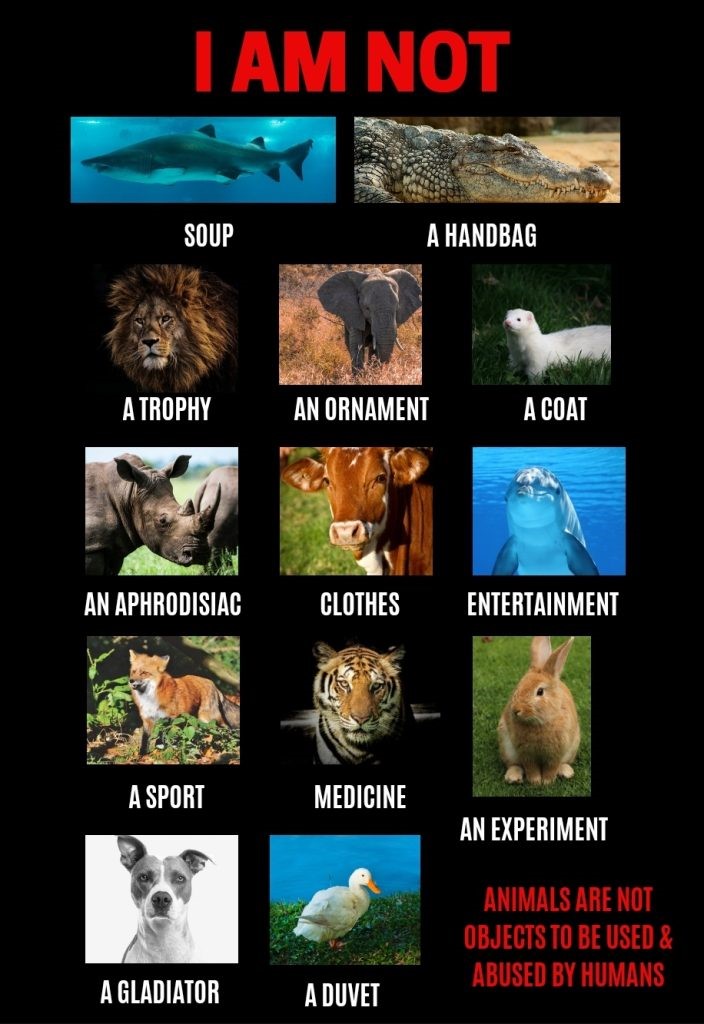
Don’t support “free to good home” ads and report the selling of animals on social media. Don’t support breeders, pet shops, animal dealers/brokers, the circus, aquariums, petting farms, animal rides, animal sports, unethical hunting practices, or any industry that exploits animals for money or entertainment.
Preventing animal cruelty is no easy task, but with your help, we CAN DO THIS!
In a ruling handed down yesterday morning by the Johannesburg High Court, the Democratic Alliance (DA) has won a seminal case finding the governing party of South Africa, the African National Congress (ANC) and its secretary-general, Fikile Mbalula, guilty of contempt of court.
“The ruling confirms beyond all doubt that the ANC is a lawless criminal syndicate that is prepared to trigger a constitutional crisis to hide the fact that its corrupt cadre deployment committee is the root cause of state capture, corruption and service delivery failure,” said Dr Leon Schreiber MP – DA Shadow Minister of Public Service and Administration.
Dr Leon Schreiber MP – DA Shadow Minister of Public Service and Administration
“The DA approached the court, on an urgent basis, on 4 March 2024 after the ANC unlawfully redacted, destroyed and withheld records of its cadre deployment committee dating back to 1 January 2013, when Cyril Ramaphosa became its chairman. The court today agreed with the DA that this behaviour by the ANC, in violation of a court order upheld by the Constitutional Court, amounts to “wilful” and “male fide” contempt of court.”
While the ANC is clearly prepared to go to any length to hide its dirty cadre deployment secrets and undermine the rule of law, there is, fortunately, no limit to the DA’s determination to uphold the rule of law and abolish cadre deployment corruption from the face of this country.
The court consequently declared that the ANC is in breach of an order that was affirmed by the Constitutional Court. The court ordered the ANC to pay the DA’s full costs for the application, and to, within 15 days, give effect to the original court order by:
1. Providing to the DA all of the information that has already been disclosed and that is further required to be disclosed in unredacted form so as to ensure all names of persons are legible;
2. Providing to the DA all of the information related to the processes and decisions of the ANC cadre deployment committee during the period 1 January 2013 to 1 January 2021, including but not limited to minutes, draft minutes, notes, attendance registers, communications and decisions of the deployment committee whether prepared by or communicated to staff members of the ANC, members of the committee, chairpersons of the committee, and government officials; and
3. Emails, Whatsapps and other social media communications between and among members of the committee and between committee members, committee chairpersons and government officials.
4. Providing the DA with copies of all attachments to emails, Whatsapps and other social media communications;
5. Making available the following items to a neutral third-party information technology expert agreed to by the DA for the purposes of extracting information required to be disclosed by the court order:
The hard drive and laptop of ANC official Thepelo Masilela;
The personal email of Thapelo Masilela; and
The laptop of ANC official Lungi Mtshali.
6. The ANC is directed to report to the court and to the DA’s attorneys, in writing and under oath, of its compliance with the court order.
7. The ANC is ordered to pay the costs of this application on the attorney and client scale such to include the costs of two counsels.
In its ruling, the court specifically condemned the ANC’s contemptuous failure to disclose communications and records held by Cyril Ramaphosa. “The court noted that “in particular, [the ANC] was obliged to disclose communication relating to the committee’s work by, and involving, President Cyril Ramaphosa, who was the chairperson of the committee between 2013 and 2018,” said Dr Leon Schreiber to the Bulletin.
As a result of today’s ruling, the DA calls on Ramaphosa to act in accordance with his position as President of South Africa in order to bring an end to this escalating constitutional crisis triggered by his party, by abiding by the ruling and handing over to the DA all of his personal emails, Whatsapps and other communication revealing the role he personally played in state capture through his position as ANC cadre deployment chairperson.
“Once again, the clock is ticking on the ANC. It has 15 working days – until 24 April 2024 – to hand overall, complete and unredacted cadre deployment records, including those held by Ramaphosa. As we have done throughout our years-long battle to expose and defeat ANC cadre deployment, the DA reserves our right to pursue further action against the constitutional delinquents masquerading as a governing party,” concluded Dr Leon Schreiber
WHEN YOU UNDERSTAND CRUELTY TO ANIMALS BETTER, YOU CAN HELP US ADDRESS THE PROBLEM MORE EFFECTIVELY.
Animals do not have a voice, so we need to be their voices! When was the last time you heard of anyone tuning themselves in for animal abuse? It just doesn’t happen often, if at all, the tuning in I mean. Preventing animal cruelty is in all of our best interests. Animal cruelty is not only despicable in its own right, but it is often a gateway crime to violence against adults and children. Studies show that children who witness animal abuse are at a greater risk of becoming animal abusers themselves.
We follow the 5 (6) freedoms of animal welfare:
Freedom from hunger & thirst
Freedom from pain, injury, disease
Freedom from discomfort
Freedom from fear & distress
Freedom to express natural behaviours
…….and then our hope for all wildlife, to be free!
We are committed to breaking the cycle, and to help us stop animal cruelty, you need to understand the problem or how you might be contributing, recognize the signs, report it, and help educate others to prevent it.
This article is a reprint, first published 19 April 2023.
UNDERSTANDING THE PROBLEM
If you do not work in animal welfare or know someone who does, you probably know very little about what is really going on, but that is no excuse. What you might see on Facebook and social media is not even the tip of the iceberg. Our hearts break every day for the hurt that is out there. It is preventable though!
A few facts about animal abuse:
The abuse of pets and animal companions is a daily occurrence.
Many animals suffer multiple forms of abuse, with the most common type of abuse being neglect and abandonment.
Cases of animal abuse include neglect, shooting, stabbing, fighting, beating, mutilation, torture, strangulation, rape, cannibalism, burning and poisoning.
Most animal abuse is never reported.
Dogs and cats are the most common victims, but abuse happens among other animal species, including domestic, farm animals, wild animals, small pets, birds, etc.
Although there are bad people, ANIMAL OVERPOPULATION is a massive problem, especially with cats and dogs. If there were fewer animals, with enough “good homes”, fewer animals could land in the wrong hands and be abused. Why is there an OVERPOPULATION CRISIS? Because people don’t sterilize their pets, they support breeders and give or sell them to anyone. When animals end up in the wrong hands, they pay the ultimate price. There are animal dealers, who easily fool the untrained individual. Do you want to take that risk with the life of a sentient being?
This needs to be addressed through education, sterilization campaigns, and stricter breeding regulations. Yes, I would rather see a breed go extinct than let them endure any suffering.
ONCE YOU LEARN TO RECOGNIZE THE SIGNS OF ANIMAL ABUSE, YOU’LL BE BETTER EQUIPPED TO REPORT IT.
The Humane Society divides cruelty into two kinds: direct violence and neglect. Some call it active vs. passive cruelty.
Direct violence. Signs include open wounds, multiple scars, limping, or difficulty walking. Many dogs that suffer direct violence will also display behaviours such as hiding, walking with their head down and tail between their legs, or cringing when people approach. Since those can also occur for other reasons, these behavioural signs alone shouldn’t be taken as definitive proof that a dog is being hurt.
Neglect. Most people don’t go so far as to actually lay hands on their pet to hurt them, but what happens with far too many owners is just as bad: they neglect the needs of their dog/pet.
CRUELTY CASES
All animal cruelty cases can be separated into three basic categories:
It may be hard to believe, but many people don’t even know that the harm they are inflicting on their pets, is in fact abuse. This type of abuse is known as unintentional, and it’s caused by neglect, animal hoarding, or failure to meet an animal’s basic needs.
Intentional animal abuse and cruel intent both refer to abuse that is performed with the knowledge that an animal is being harmed and possibly injured.
Cruel intent is often recurring and abusers in this category feel a sense of power, control, or enjoyment when inflicting pain on these animals.
RECOGNIZE SIGNS OF CRUELTY (Bulawayo SPCA)
1 – POOR BODY CONDITION AND NOTICEABLE TRAUMA
The animal has severe matting and a filthy coat, hair loss, lesions, scabs, or other skin conditions that have not been treated. Open sores or obvious wounds. They appear to be flea or tick-infested. They are underweight with bones clearly visible or dehydrated. They might be limping or unable to walk at all or have congested eyes or ears. They are in obvious physical distress, have no signs of medical care like bandages, etc., and require veterinary care. Withholding/denial of medical care whether sick or injured is also considered cruel.
2 – LACK OF FOOD OR WATER
Every time you see this animal you notice that they have no obvious sources of food and/or freshwater. They may be aggressive due to starvation and thirst, and perhaps very lethargic.
3 – LACK OF SHELTER
The animal is contained in an area that is largely or fully exposed to inclement weather or constant sun.
4 – LACK OF SANITATION
Feces and/or debris cover the animal’s living area. Offensive odours coming from a home or yard, such as the constant smell of ammonia or feces.
5 – ABANDONED
The animal is left in a house, yard, or other areas that appear empty or devoid of normal human activity. Reports of companion animals abandoned and left to die inside vacant buildings are alarmingly common. It is a crime under SA law to abandon an animal.
6 – THE ANIMAL IS TIED OR CAGED
They have little or no room to move and are unable to stand or turn. Animals are kept confined inside a car, garage, basement, attic, or other enclosed areas.
7 – CHAINS, ROPES, WIRE, OR PADLOCKS AROUND THE ANIMAL’S NECK
Be on the lookout for anything around an animal’s neck that may have become embedded and/or infected, including regular collars. If an animal is tied there are chaining or tethering regulations that need to be followed!
8 – SIGNS OF AN ANIMAL BEING TRAINED TO OR HAVING BEEN USED TO FIGHT
This is especially common with power-breed dogs, and even roosters. You may see training implements, treadmills, spring poles, etc. More likely you will notice obvious signs of trauma, including scars, open wounds, infections, and even missing body parts, such as ears or tails.
9 – THE ANIMAL’S BEHAVIOR IS ABNORMAL
They may be very aggressive, hostile, ill, distressed, or severely shy, e.g., cowering, hiding, fear-biting, even with or especially with the owner.
10 – TOO MANY ANIMALS LIVING ON ONE PROPERTY
This can be a sign of animal hoarding, which makes the conditions no less cruel. An estimated hundreds of thousands of animals are hoarding victims each year. An individual who has a large number of animals in his/her care and they may not even know the total number when questioned. Animals are kept in overcrowded, deteriorated areas. Your local municipal bylaws state how many animals may be kept. Many organizations in animal welfare are also guilty of this.
11 – OVERT ACTS OF VIOLENCE
An owner or any person who is being overtly violent against the animal, striking or throwing objects at them, or otherwise physically abusing them.
There is no violence against an animal that is justified and a person who would abuse an animal in public or plain sight is likely doing far worse outside of view. The death of one or more animals under suspicious conditions should also be reported and investigated.
What I share is there to help you understand cruelty better and know what to look for. Some of the above signs by themselves do not necessarily mean that an animal is being abused. It’s important to examine the entire situation before jumping to conclusions, but rather report it if you are unsure, so it can be investigated.
For EXAMPLE, you might notice that your neighbour’s three cats are infested with fleas and are physically uncomfortable. After a short conversation with your neighbour, you learn that all three cats are being treated, and they appear healthy and socially adjusted. You conclude that these cats are probably not being abused. On the other hand, you notice another neighbourhood dog with an obvious flea infestation who also looks emaciated, has open sores on its body, and acts aggressively when approached. In this case, you may have reason to suspect abuse.
THE LINK
In recent years, the link between animal abuse and domestic abuse is supported by a growing body of research and anecdotal evidence that has shed light on a disturbing connection that exists between two forms of violence. While each of these issues has long been recognized as independent societal problems, the emerging understanding of their interrelationship has brought attention to the complex dynamics that underlie both. The link between animal abuse and domestic abuse is not merely coincidental but rather represents a deep-rooted and troubling correlation that demands further exploration and intervention.Read more about the link between animal abuse and domestic abuse here.
Download the cover photo in the article and add it to your profile.
Add a frame to your profile picture.
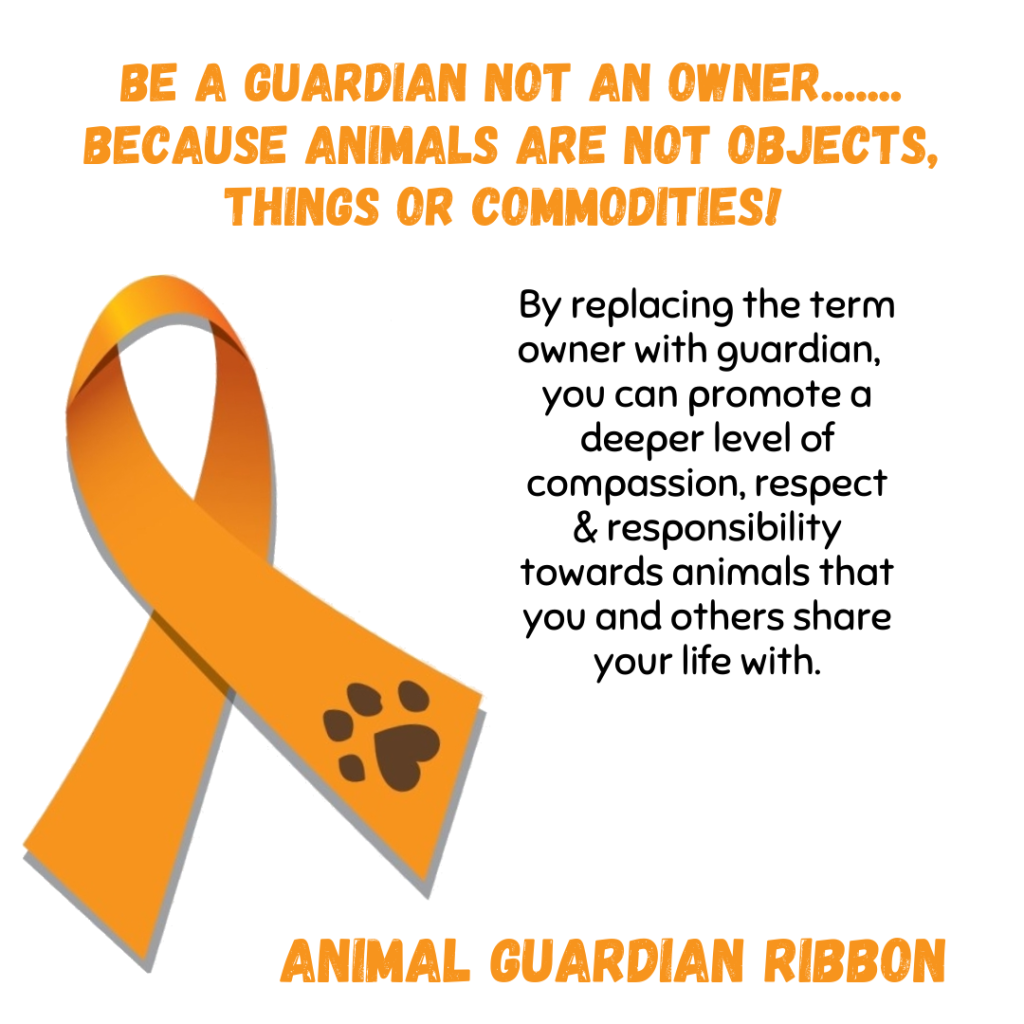
Tie an orange ribbon outside your home.
Share posts to educate about animal cruelty.
Wear an orange ribbon or clothing and more………
Preventing animal cruelty is not an easy task, but with your help, we CAN DO THIS! Next week we will look into how you can report cruelty and help us fight cruelty!
The Sasol ESD Fenceline Community Development Programme is a strategic initiative designed to stimulate the township economy by creating meaningful opportunities for qualifying township suppliers, fostering growth, and redirecting procurement spending towards Small and Medium Enterprises (SMEs) in our fenceline regions. As a key Sasol strategic imperative, the programme exemplifies our commitment to expanding access to economic opportunities thereby, delivering significant social value to our fenceline communities.
AVAILABLE OPPORTUNITIES
The following opportunities are currently available on the Linkage platform for qualifying SMEs within 50km of our Secunda fenceline with priority given to township businesses in the following municipalities: Gert Sibande District Municipality, Govan Mbeki Local Municipality, Dipaleseng Local Municipality and Lekwa Local municipality.
Civil
Fencing
Facilities
Hospitality Services
Security Services
Vehicle Maintenance & Spares
Industrial Plumbing Services
Input Materials & Packaging
Supply of Wooden Pallets
Recovery of NMP (N-Methyl-2-Pyrrolidone)
Water Treatment Services
EC&l
Lab-based Analysers
Mining Electrical & Control
C&l Engineering Services
Condition Monitoring on Electrical Equipment.
Low Voltage AC Motor Repairs
Mining Development Opportunities
Construction & maintenance of medium and low-pressure seals underground
Manufacturing & supply of welded mesh
Stone dust sampling and laboratory analysis underground
Supply of OEM (Fletcher) Roof-bolter maintenance spares
Professional Services
Branded Safety Signs in the plant
Corporate Photography
Event Management & Technical Production
Supply of Promotional Items
APPLYING FOR OPPORTUNITIES
APPLICATION DEADLINE: 23:59 ON 12 APRIL 2024
SMEs (EMEs and QSEs) in these categories can apply for these opportunities via the Sasol Linkage platform.
How to apply:
Linkage registered SMEs apply by indicating interest on Linkage for the specified opportunity
SMEs (EMEs and QSEs) currently operating in these categories and are not registered on Linkage, can apply for these opportunities by following Step 1 and 2 below:
STEP 1: EXPRESS INTEREST AND REQUEST LINK
Send an expression of interest to info.esd@sasol.com and request a link to register on Linkage. Email must include:
Specified Opportunity of interest from the provided list
Business name
Contact person
Email address
Contact number
NOTE: THIS STEP MUST BE COMPLETED BY 5 APRIL 2024
STEP 2: REGISTER, UPLOAD AND GET GRADED
Register on Linkage, Upload required documentation and Request Grading. Process:
Receive Link and Register on Linkage
Upload Documents
Indicate interest for the specific opportunity
Complete Survey
Request Grading
APPLICATION DEADLINE: 23:59 ON 12 APRIL 2024 All application steps must be completed on this date.
IMPORTANT TO NOTE:
Refer to Linkage for detailed specifications of these opportunities
ONLY Linkage-graded applicants will be considered for this opportunity.
Companies that are already approved for certain scopes will not be considered for scope extensions
Support available
Assistance on registering on Linkage is provided by Sasol ESD, at the Secunda Small Business Centre, Grand Palace Building, Hennis Street, Secunda or via email onsupport@linkage.co.za
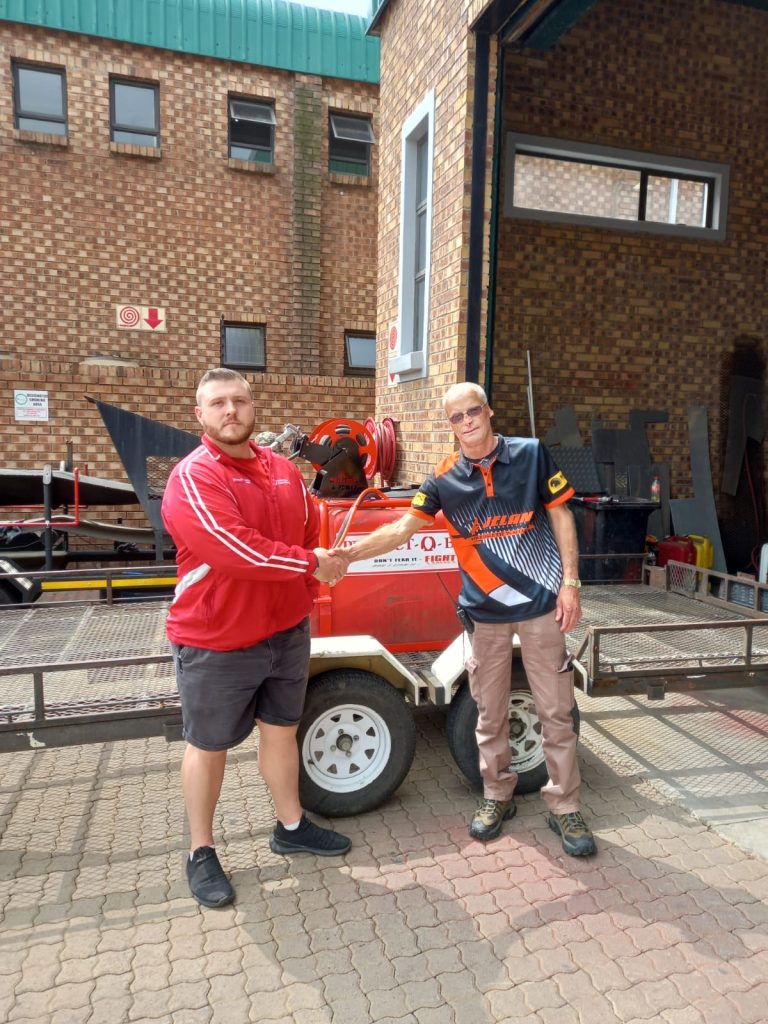
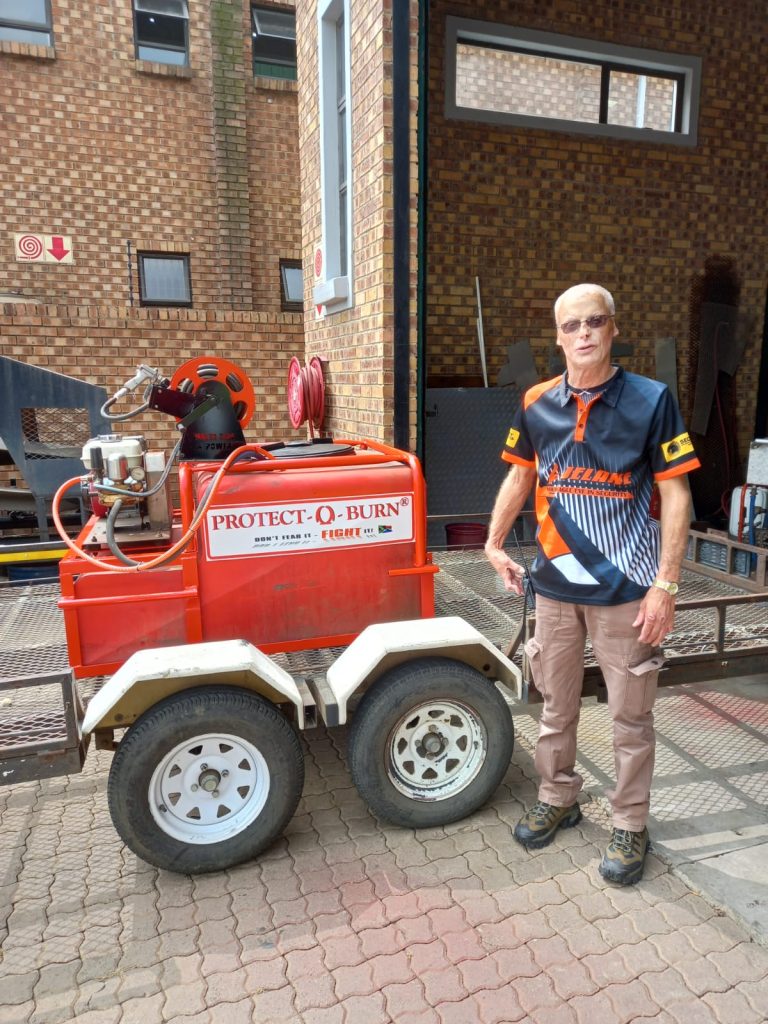
Protect-O-Burn invested in the well-being of the community by donating Bakkie Fire Fighting units to Alf Bylevelt from Jelane and The Bulletin.
These units will help in fighting house fires, vehicle fires and veldt fires.
“Thank you to Protect-O-Burn for this investment into the community’s well-being,” said Alf, “we can now continue to serve and protect the community as we are mostly the first on a scene.”
Calvin Solomon (Protect-O-Burn) hands the unit to Alf Beylefelt (Jelane)
Protect-O-Burn began with small fire protection projects that could be built where it was previously believed to be impossible to do so. Recognizing the simplicity and efficacy of a vehicle equipped with SEFFF, they initially outsourced the building of fire engines and emergency response vehicles equipped with the company’s innovative foam and began supplying emergency response units to local government and private industry.
Protect o Burn was originally founded in 2006 by Jaco Du Plessis. Due to the lack of effectivity of conventional firefighting foam at that time and to this day, the pioneers of Protect-O-Burn developed a unique, premanufactured, fully aspirated firefighting foam. In close cooperation with some of the Southern Hemisphere’s best fire engineers, we have what is now known as Protect Self Expanding Fire Fighting Foam (SEFFF).
For 3 years they developed the foam and a business plan and finally registered the Protect Burn Company in 2006, with 2 trademarks, 2 patents and unique products that were already beginning to gather interest from industry heavyweights such as Sasol before it was even launched.
In 2010, as the company continued to grow, they then met Dr. Istavan Szocs, who had developed a unique firefighting system for tank farm fire protection, negotiated and concluded the purchase of the patent and trademarks for his revolutionary EN Certified Foam Fatale system.
In 2017 Paul Van der Walt took ownership of the company after founder Jaco Du Plessis immigrated to North America. As owner and managing director Paul Van der Walt has taken the company to even greater heights and continues to do so till this day.
Thank you to Protecto-O-Burn for your contribution.
A WEEK AFTER EASTER, THE CANDY WILL BE FORGOTTEN, BUT SADLY SO WILL THE RABBIT.
Easter is around the corner and with Easter comes family gatherings, chocolate, Easter egg hunts, and gifts. Please don’t use this occasion to give your children chicks and rabbits just because they asked for them and think that they look “cute.” Pet ownership is a huge commitment and responsibility and it’s not something that should be done on impulse.
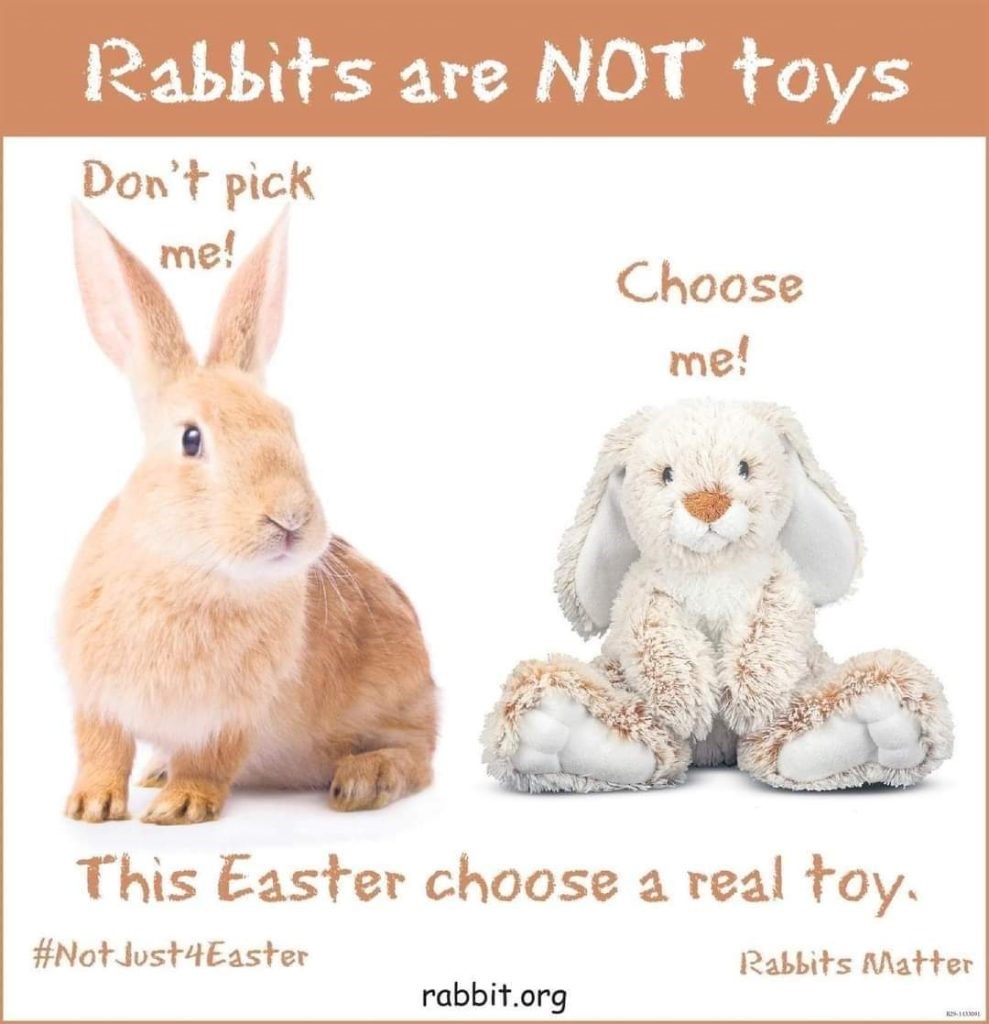
Did you know that rabbits are some of the most popular pets after cats and dogs, but also one of the highest abandoned animals? 95% of rabbits gifted for an Easter gift don’t make it to their first birthday. Stuffed toys or a chocolate bunny is a way more ethical and safe option.
A rabbit that seems cute, can quickly turn into a mixture between a toddler going through their terrible twos and a puppy that is into everything. Now add the mood swings and hormones of a teenager and soon you will have something that is hard work and not so fun because you can’t meet their needs.
In addition, Easter, like every holiday, involves potential hazards for your pets, that every pet parent should be aware of, so make sure your pets avoid Easter goodies and decorations to avoid unexpected heartaches.
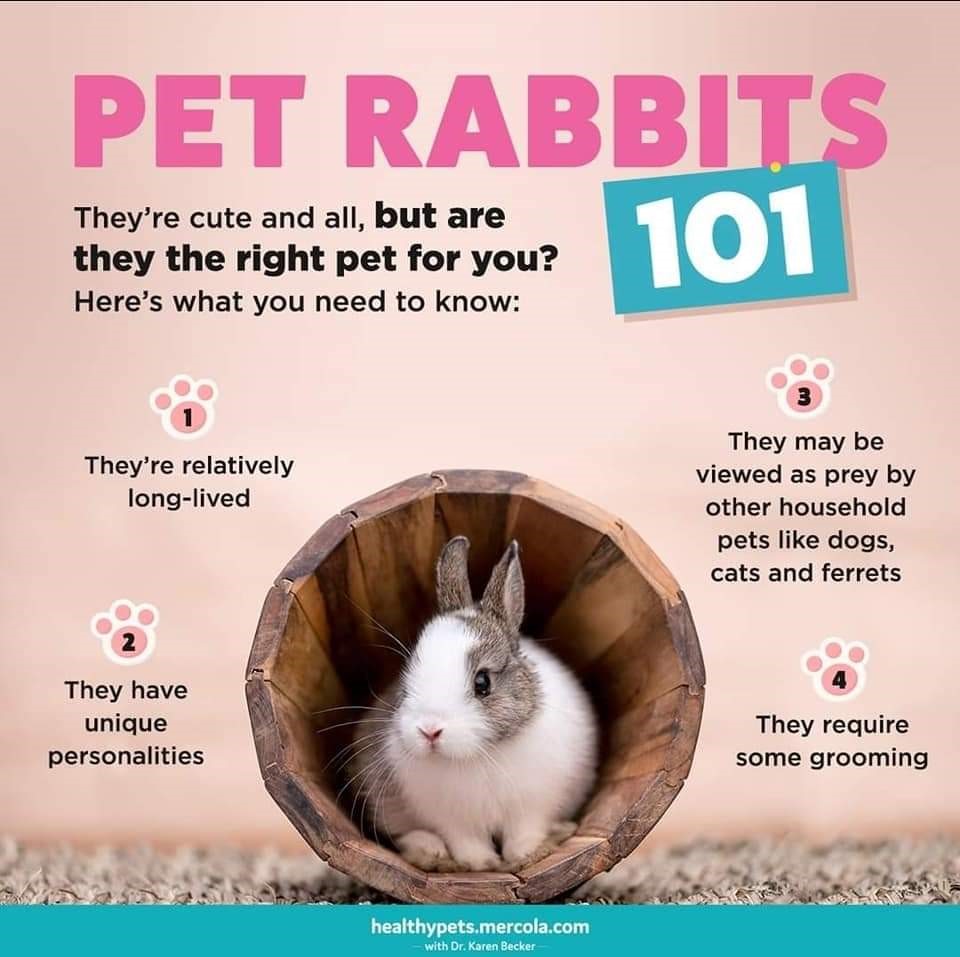
1) Rabbits can live more than 10 years, so this is a long commitment. They need food, water, hay, and regular medical care, including spaying neutering, and enrichment.
2) They’re not ideal pets for children – the curiosity and high energy of children are terrifying to most bunnies and because rabbits are prey animals they may take a long time before they tolerate being picked up.
3) When your children tire of the bunny, they cannot live “in the wild”. Domesticated rabbits usually last 1-2 days if left in a park or the woods before they suffer a terrible death from a predator or nearby traffic.
4) Rabbits’ teeth never stop growing, so they are always looking for something to chew on. Electrical cords look like roots. They will gnaw on furniture, shoes, rugs, drywall, skirtings, and anything they can reach.
5) As prey animals, they are genetically programmed to maintain a normal appearance, even if they are very sick. They don’t whine like a dog or meow like a cat. They can become critically ill without you realizing it. You need to spend time observing and getting to know your bunny and their body language to detect the least deviation from “normal” and get him or her to a vet quickly!
6) Rabbits’ gestation period is 31 to 33 days and they can fall pregnant within a few days after giving birth – they can reproduce hundreds of offspring within just a few years.
7) A balanced diet is imperative and the illusion that bunnies require only carrots is misleading – a variety of vegetables, hay, and even herbs is vital to a healthy diet.
If you have a rabbit already, please make sure that you choose your veterinarian carefully because not all vets are qualified to treat them. You need an exotic pet vet and even better, one that specializes in rabbits.
Easter – Image by Rabbit.org
WHY GIVING A BUNNY (OR ANY ANIMAL) AS A GIFTIS A TERRIBLE IDEA!
Animals are not and should never be seen as commodities. They are sentient beings and not disposable toys. Giving them as gifts sends the wrong message and is usually an impulse buy.
Animals are not gifts; they are many years of commitment.
Children’s attention span will fit better with a stuffed toy than with a sentient being whose needs should be a priority. Children lose interest quickly.
Tragically, many of the rabbits are abandoned in the weeks after Easter, once families begin to realize that caring for a rabbit is a major commitment. Many end up dead, abandoned, dumped on already overwhelmed shelters, or end up confined in outdoor hutches, before their first birthday.
Caring properly for a rabbit is complex. In general, rabbits need appropriate housing, exercise, socialization, and a specific diet for good welfare. Rabbits are high-maintenance pets with many specific physical and emotional needs. It is not an ideal pet for kids! Rabbits may suffer from boredom and depression if they are kept in cages, so they need many hours of free-roaming time and mental stimulation every day in a spacious, rabbit-proof area. Rabbits also require a diet rich in hay and fresh vegetables. Some breeds of rabbits, particularly the longer-haired rabbits, may require daily grooming. You must understand their physical, dietary, and social requirements, including the fact that most bunnies need friends, before getting them!
Dogs are much more often the victims of chocolate poisoning than cats because dogs like sweet-tasting things, and they’re indiscriminate eaters. Both theobromine and caffeine stimulate the central nervous system and heart muscles. They also relax smooth muscles, especially the bronchial muscles, and increase the production of urine by the kidneys. Even small amounts of chocolate can cause adverse reactions in pets, and the darker the chocolate, the more theobromine it contains.
Easter candy, baked goods, and other products containing xylitol
Sadly, xylitol poisoning in dogs is reaching epidemic proportions. Just a few years ago, xylitol could be found in less than a hundred products, but today it can be found in a wide range of products. Xylitol is a sweetener that is highly toxic to dogs. Xylitol is used to sweeten a wide range of products, including sugar-free gum and mints, nicotine gum, chewable vitamins, certain prescription drugs, dental hygiene products, and baked goods. It can also be purchased in granulated form as a sugar replacement to sweeten beverages, cereals, and other foods.
Easter basket grass and other fillers
The plastic grass used in Easter baskets can look tasty to pets, but it can’t be absorbed into their bodies. This means it can become lodged at any point along the gastrointestinal (GI) tract and create serious problems. If the grass is a staple in your Easter baskets, consider substituting paper grass or tissue paper.
Plastic eggs, foil wrappings, and Easter toys can also be attractive to pets, so be sure to keep Easter baskets and their contents well out of the reach of your dog or cat.
If you hide hardboiled eggs in your house or yard for the kiddos to find, be sure to keep track of how many you hide and how many are found. You don’t want your pet to discover a rotten egg in a few weeks or months and eat it.
Also, keep in mind that plastic eggs can easily be cracked and produce small sharp shards that can cause injury if your pet swallows them.
If you dye your Easter eggs, make sure to use non-toxic food colouring.
Easter lilies
A variety of lilies can potentially be toxic/deadly to pets, especially cats, but dogs too. Nontoxic varieties of lilies include the Calla, Peace, and Peruvian. If a kitty swallows even a tiny amount of any portion of these plants, including the pollen, kidney failure can result.
Easter dinner
Most types of traditional holiday feasts for humans are entirely too fatty and otherwise problematic for dogs and cats. Easter dinners are no exception, especially when they include things like honey-glazed ham, scalloped potatoes, macaroni and cheese, bread, buns, and desserts. Additional human foods to keep away from your pet due to their potential toxicity include onions, garlic, leeks, and chives; grapes, raisins, sultanas, and currants; and macadamia nuts. Cooked bones are also a no-no, along with alcohol.
Easter gardening supplies
If you plan any yard work, be sure to avoid exposing your pet to chemical fertilizers, herbicides, and pesticides. If you know or suspect your pet has eaten a potentially toxic substance, immediately contact your veterinarian!
Read last week’s article on holiday safety for your pets.
Do yourself, your bank account, and the rescues who are all overwhelmed with unwanted pets a favour and ADOPT! Critter Rescue SA adopts their rabbits out sterilized, after performing a property check as well as supporting your family with sufficient information regarding housing and dietary requirements. Please do your homework before getting any pets!
If you can’t commit to their whole life, then please do not get them. Keep your pet’s safety in mind this Easter and have a blessed one with loved ones.
April is Prevention of Cruelty to Animals Awareness Month and for the next four weeks we will be focussing on this topic and how you can help because unknowingly, you might be contributing to animal cruelty.
“Mpumalanga government departments and municipalities have failed to meet Premier Refilwe Mtsweni-Tsipane’s ambitious job creation targets of 99 000 aimed at addressing the 48,1% expanded unemployment crisis ravaging the province,” said the DA’s Spokesperson on Finance & Economic Development, MPL Bosman Grobler.
In February 2023 while presenting her State of the Province Address (SOPA), Mtsweni-Tsipane announced the ambitious Mpumalanga Government’s Job Massification Plan where she tasked all her departments and municipalities to create 99 000 within the 2023/2024 financial year. Each department and municipality was given a certain target to meet, but only the Departments of Safety & Security and CoGTA reached their targets.
Premier Refilwe Mtsweni-Tsipane
The 2023/2024 Financial Year comes to an end on 31 March 2024, but the provincial departments and municipalities only managed to create 26 699 jobs so far out of the 99 000 that Premier Mtshweni-Tsipane tasked them to create. Like any other job creation plan before, this means that Mtsweni-Tsipane’s ambitious Mpumalanga Government’s Job Massification Plan has also failed.
It is obvious that this pronouncement was not taken seriously by her Cabinet as they only managed to create 26 699 (26.96%) of the 99 000 jobs. Could this be a sign that Mtsweni-Tsipane’s Cabinet has lost faith in her?
Had the Cabinet shown their full support and tried their level best by completing the Mpumalanga International Fresh Produce Market as well as the Agri-Hubs; or completed the various (incomplete) hospitals and schools across Mpumalanga, the 99 000 jobs could have been created in the 2023 year and many families would have been less reliant on the government for social grants or even food parcels.
Below are the targets given to each department, and the only figures they could manage to reach:
The Department of Public Works, Roads and Transport had a target of creating 13 629 jobs, but they only created 8 877 (4 752 outstanding).
The Department of Agriculture, Rural Development, Land and Environmental Affairs had a target of 5 176 but only managed to create 2 634 jobs (2 542 outstanding)
The Department of Education had a target of 3 668 but only managed to create 2 371 jobs (1 297 outstanding.
The Department of Health had a target of 992 but only managed to create 262 (730 outstanding).
The Department of Economic Development and Tourism had a target of 289 but created only 67 jobs (222 outstanding).
The Mpumalanga Tourism and Parks Agency (MTPA) had a target of 1,160, but only created 253 jobs (907 outstanding).
The Mpumalanga Economic Growth Agency (MEGA) has a target of 10 956, but only created a lousy 43 jobs. (10 913 outstanding).
Municipalities were mandated to create 16 844 but only managed to create 11 008 (5 836 outstanding).
The Department of Community Safety, Security and Liaison had a target of 804, but went above their target and created 994 jobs (190 more jobs).
CoGTA had a target of creating 190 jobs. They reached their target.
“Only the Democratic Alliance (DA) has practical solutions and plans to Rescue South Africa from unemployment and poverty. We have a realistic plan in place as outlined in our manifesto proposal,” said Bosman, “We will bring this very high unemployment rate down by creating two million new jobs across the country. This will be done by doing the following:
creating conditions for the private sector to thrive,
reforming labour markets,
removing all the unnecessary red tapes that hinder the ordinary South African from starting a small business,
changing the tax system to encourage investment,
developing a competitive export-orientated economy,
and by getting the public finances under control.”
“In addition, the DA will also introduce the Youth Employment Opportunity Certificate which will empower young people. This will give them a better chance to find employment in this country that needs economic growth and sustainable prosperity,”
“The DA can rescue South Africans from unemployment and change the dismal picture we currently see,” concluded Bosman, “We will build a capable state that implements plans and solutions meant to benefit all South Africans. However, this can only be achieved if every eligible voter goes out to vote for the DA on the 29th of May 2024.”
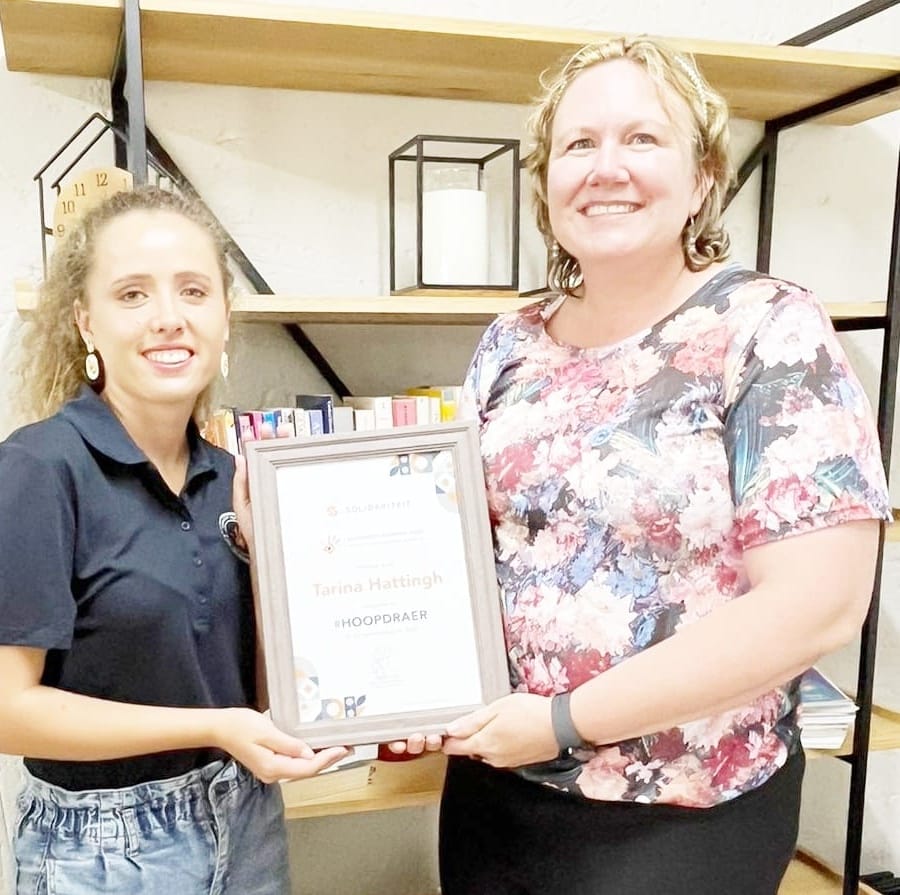
Solidariteit het onlangs die Hoopdraer toekenning aan Tarina Hatting oorhandig.
Links Maatskaplike werkster van Helpende Hand Louise Zitzke. Regs is Tarina Hatting ontvanger van die Helpende Hand Hoopdraer toekenning.
Die Hoopdraer toekenning word toegeken aan ‘n Maatskaplike Werker wat ‘n onblusbare passie vir sy of haar werk het en ondanks moeilike omstandighede steeds die fakkel van hoop in hulle gemeenskap aangee.
Die toekenning was aan Tarina oorhandig deur Louise Zitzke Helpende Hand Maatskaplike werkster, Liza de Coning Voorsitter Helpende Hand – Secunda en Henda van Deventer van Solidariteit Vakbond.
Van links: Liza de Coning Voorsitter Helpende Hand. Louise Zitzke Helpende Hand Maatskaplike werkster. Tarina Hatting en heel regs is Henda van Deventer van Solidariteit Vakbond.
Hier is die dankie boodskap wat Tarina gestuur het
Baie dankie vir die groot voorreg om die Hoopdraer toekenning te ontvang. Dit was ‘n onverwagse verrassing en groot eer.
Ek dink nie enige maatsaplike werker is in die beroep om enigsins erkenning daarvoor te ontvang nie. Ons doen maatskaplike werk omdat ons ‘n hart vir mense het en glo in die potensiaal van mense om te groei, te ontwikkel en vir die beter te kan verander. Om ‘n verskil in iemand se lewe te maak, is vir my meer as genoeg erkenning en toewyding om voort te gaan met elke dag se pogings om mense se lewenskwaliteit en emosionele funksionering te verhoog.
Om ‘n maatskaplike werker te wees, is soveel meer as net ‘n beroep – dit is die voortdurende behoefte om ‘n verskil te maak asook om mense en gemeenskappe op te lig. Dit is verseker nie elke dag maklik of lekker nie, maar met die beroep se uitdagings en al, glo ek dat God ons elke dag oor iemand se pad stuur, en ons gebruik om lewens op een of ander manier aan te raak en beter te maak.
Ek is al 20 jaar lank ‘n maatskaplike werker, waarvan ek vir 11jaar spesialiseer in forensiese maatskaplike werk.
Tarina Hatting is voorwaar ‘n voorbeeld vir ons almal.
HOOPDRAERS
Hilde Kruger, 2024
Wanneer die ligte af gaan, maar niemand dit sien nie.
En die stilte begin skree, maar niemand dit hoor nie.
Harte met gate in …
Bejaardes wat lanklaas kon sing …
Onsekerhede met vrae wat oorloop …
Leë oë vol wanhoop en vals hoop.
Donker wolke sonder silwer rande …
Hoe sal ons leef in ’n wêreld sonder ’n helpende hand?
Daar is mense met overalls aan …
Neem hul hande, dis tyd om op te staan.
Die laaste opsie, wat jou eerste kon wees.
’n Stem vir die kinders wat vergeet het hoe om kind te wees …
Tel mekaar op en laat mense in,
Sorg dat die verskil by jou begin.
Kyk na jou buurman en die een wat agter jou loop …
Met gemeenskapsontwikkeling skep ons weer hoop.
Staan vas …
Staan sterk …
God is besig om deur ons te werk.
Ons is kampvegters en fakkeldraers,
Die Hoopdraers van hoop.
Die maatskaplike werkers wat saam met jou die pad sal loop.
The Sasol Highveld Photography held its monthly club meeting at Sasol Club recently.
The Best Senior at the meeting was Louis van der Walt with his photograph “Behind Wolfberg Arch MilkyWay”
Behind Wolfberg Arch MilkyWay
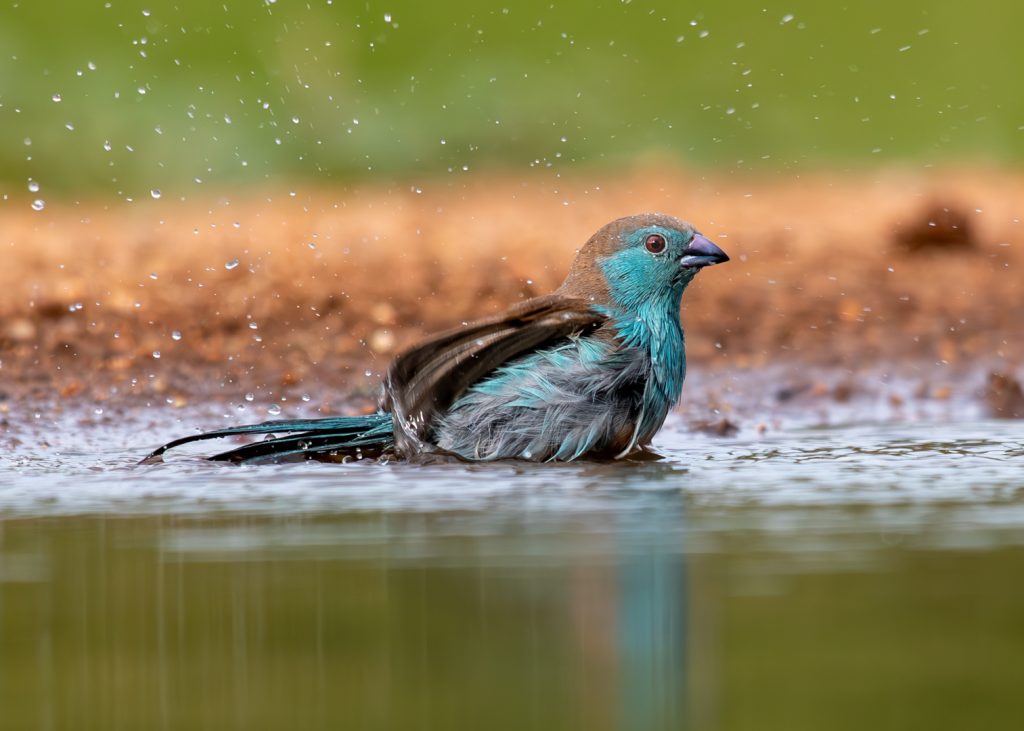
The best Junior at the meeting was Edmund Hattingh with “Blousysie geniet die water”
Blousysie geniet die water
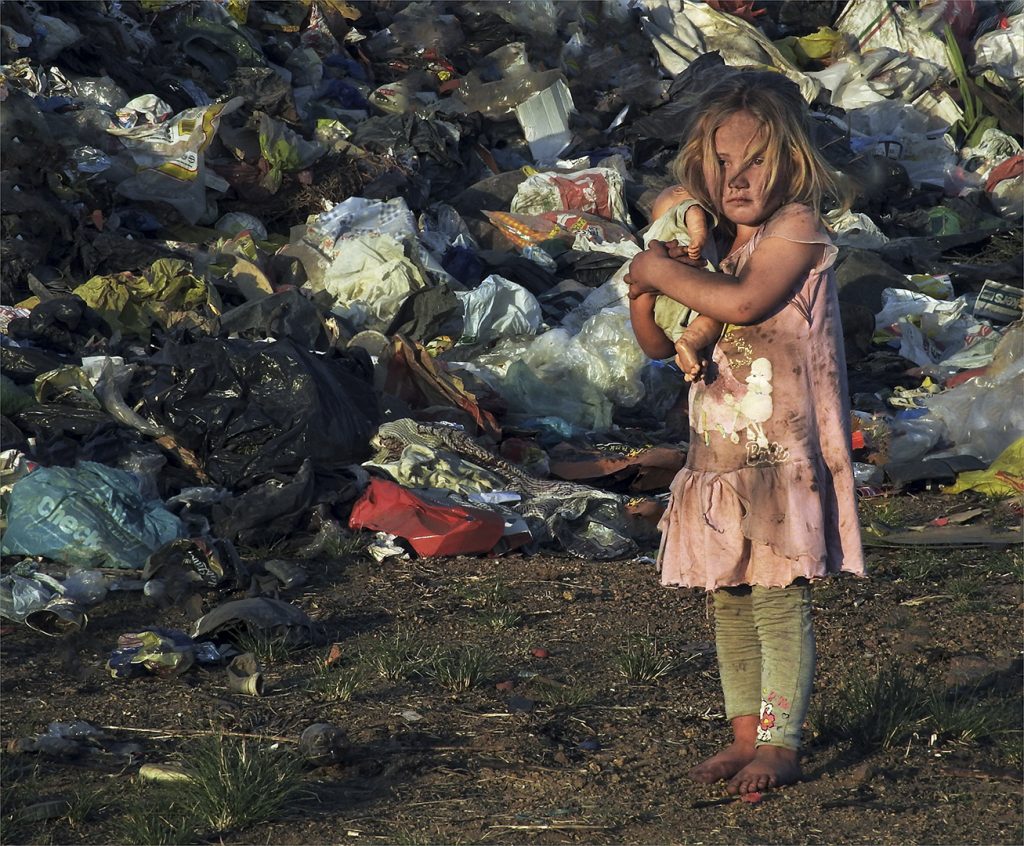
The best photographer in the Set Subject category was Sussa Pelser with “Klou aan Pop.”
Klou aan Pop
See the video with all the photographs at the bottom of the article
Johan Drotsky spoke about Artificial Intelligence (AI) and how it is creeping into photography.
Ai generated Photo
Get this image on: FreepikAi generated Photo
Get this image on: Flickr
The following paragraphs are excerpts from a blog on the popular photography company, Orms, website. Please visit the page HERE and read the full insightful article there.
Over the past few years, the connection between AI and photography has slowly become more integrated. AI is utilised in diverse ways to augment the capabilities of modern cameras, effectively aiding photographers in producing superior images. While some photographers revel in the transformative power of AI, others remain hesitant.
As is its nature, AI continues to evolve and improve day by day, making it harder to argue against the fact that it makes nearly every application to which it’s applied incredibly efficient. With the recent infiltration of AI in almost every platform and online tool, it’s something we can no longer ignore. Google’s BARD and Magenta, Midjourney, Open Ai’s ChatGPT and Dall-E and Photoshop’s Firefly are all ground-breaking AI applications that have completely changed the way we work and create. For some, this spells the beginning of the end; for others, this opens up a world of possibilities.
Earlier in 2023,German photographer Boris Eldagsen won the Creative category of the Sony World Photography Award. However, the artist refused the prize, admitting that he submitted an AI-generated image with the aim of testing whether photography competitions were prepared for the influence of AI in photographic competitions. The winning photograph depicted two women from different generations in black and white.
Club Photos
Even though AI is with us the photographers themselves took all the photos shown at the club evening.
Here is a video with the photographs that achieved “Gold” and “Certificate of Merit” awards.