Home Blog Page 196

Kruik Oggenddiens 31 Mei 2020

Welkome by Kruik se oggenddiens

Die Heilige Gees lei jou na Jesus

Lewe met die Heilige Gees

Dankie dat jy vanoggend saam met ons reis en hierdie diens saam ons beleef, ons gebed is dat die Here opnuut ‘n bewustheid van Sy teenwoordigheid by jou sal los.

Ons het ook ‘n Smallville Kinderkerk les vir jou beskikbaar op Smallville se Facebook blad of op Kruik Gemeente se Youtube kanaal.

Maak ‘n finansiële bydrae op 2 verskillende maniere:

Gee Aanlyn – Kruik Gemeente, ABSA, Tjek, 632005, Rek nr: 1510140016 2. Gee deur Zapper App – vind ons QR code in die diens aankondigings.

Kontak ons gerus op Kruik Gemeente se Facebook Messenger en Whatsapp lyn (0721336130) of besoek ons webtuiste by: https://www.kruik.co.za/.

Ons sal graag met jou gesels.

Geniet ons oggenddiens

LES OOK: Kruik se oggenddiens 24 Mei 2020

SAPS Capacitate Complaints Centre to deal with reports of police brutality

The South African Police Service; in response to the judgement handed down on Friday, 15 May 2020, by Judge H Fabricius in the North Gauteng (Pretoria) High Court of South Africa; in the matter of Mr Collins Khosa, has capacitated the SAPS’  National Service Complaints Centre to enable the public to also report allegations of police brutality or cruel, inhumane and/or degrading treatment and/or punishment, committed by members of the SAPS.

The public may, for the duration of the State of Disaster, report complaints regarding the SAPS at the nearest police station, the National Service Complaints Centre on the toll free number 0800 333 177 or on the following email addresses complaintsnodalpoint@saps.gov.za or service@saps.gov.za.

Complaints can vary from torture and/or cruel, inhumane and/or degrading treatment and/or punishment, committed by law enforcement members including poor service delivery regarding police response, investigations, police negligence and police misconduct. 

When members of the public report a complaint; the respective complaint will be required to contain detailed information such as full names and surname, identity number, residential/business address, telephone and cell phone numbers and an email address.

Complainants will also be required to give a detailed description of what occurred during the incident including the province/area in which the complaint originates as well as the date and time of the incident and details of the SAPS officials involved.

The national state of disaster has created an unprecedented situation which requires the co-operation of everyone to prevent, limit, contain, combat and manage the spreading of COVID-19.

Law enforcement agencies are expected to ensure that the disaster management regulations are adhered to by all inhabitants of the country.

Regulations and Directions are available at http://www.saps.gov.za/newsroom/ regulations/regulations.php or https://www.gov.za/coronavirus/guidelines.

Members of the public suspected to be in contravention of the disaster management regulations may expect the following to happen:

> Be arrested or requested to accompany a law enforcement officer to a police station

> If the offence is of a serious nature, the person may be detained, subject hereto that he or she must be brought before a court as soon as reasonably possible, but not later than 48 hours after the arrest

> The person may apply for bail at his or her appearance in court

> If the offence is less serious, the community service centre commander or the senior member of the SAPS in charge must consider the release of a person (in consultation with the investigating officer) ─

(a) on a written warning to appear in court (section 72 of the Criminal Procedure Act, 1977) [Form SAPS 496 will be issued with a court date]

(b) on a written notice (section 56 of the Criminal Procedure Act, 1977) (Form J 534 will be issued with an option to pay a fine or appear in court on the date indicated on the form. This option enables a person to pay an admission of guilt fine and to be released thereafter. This means that the person will not have to appear in court, but by paying the admission of guilt fine, it is regarded as if the person has been convicted in court on the charge and the person will have criminal record)

(c) on bail (sections 59 and 59A of the Criminal Procedure Act, 1977) [J398 or J399] (This means that an amount for the bail will be determined by the relevant police official or the prosecutor. The person will have to appear on a date indicated on the receipt)

(d) after a charge has been withdrawn through an arrangement with the Public Prosecutor; or

(e) if he or she was detained as a suspect, but is released from detention before the expiry of the 48-hour period because no charge is brought against him or her (section 50(1)(c) of the Criminal Procedure Act, 1977) [SAPS 328].

The public is urged to take note that the guidelines regarding enforcement of the State of Disaster Regulations allow that a law enforcement officer may forcibly confine the body of the arrested person if the person does not submit to custody (in accordance with section 39 of the Criminal Procedure Act, 1977).

ALSO READ: Ayanda Kubheka apologises formally to SAPS member

Furthermore, if the suspect resists the arrest or attempts to flee, section 49(2) of the Criminal Procedure Act, 1977, authorises an enforcement officer to use force that is reasonably necessary and proportional to overcome such resistance or attempt.

However, under no circumstances may a person be tortured, assaulted or mistreated in any manner by a law enforcement officer.

It is expected of law enforcement officers to support the aim of the State of Disaster by providing a service, render assistance, give advice, guide and lead the community, in order to ensure that lives are saved.

This is being achieved by ensuring that there is enforcement to inter-provincial/districts travel through roadblocks and Vehicle Check Points, checking and verification of permits issued under the regulations, ensuring closure of borders and monitoring movement of cargo, issuing of fines and arresting of offenders for non-compliance, compliance check during routine patrols and high visibility patrols and visits to identified areas.

These enforcement activities also ensure that the restriction of movement of persons as the main component of efforts to confine and manage the spreading of COVID-19 is achieved.

Law enforcement officers are further expected to encourage and sensitise members of the public to adhere to social distancing.

Even though social distancing is currently not an offence and it cannot therefore be enforced, law enforcement agencies must ensure that high visibility is maintained around malls, shopping centres and other areas and that the public is informed about compliance with the promulgated regulations in terms of section 27(2) of the Disaster Management Act, 2002; liaise with private security to assist enforcement within their mandate and social distancing (2 meter away from other persons) is applied in public when shopping and visiting health facilities.

Further enquiries can be directed to Brigadier Hlathi 082 462 0804

Sewer problems plague GMM and threaten health in the region

Govan Mbeki Municipality has been plagued with Sewer spillages for a very long time. The problem would pop up on the local media from time to time and sometimes even make it to national media.

GMM has seen protest after protest regarding service delivery.

The Bulletin decided to investigate the situation and was appalled with what we saw.

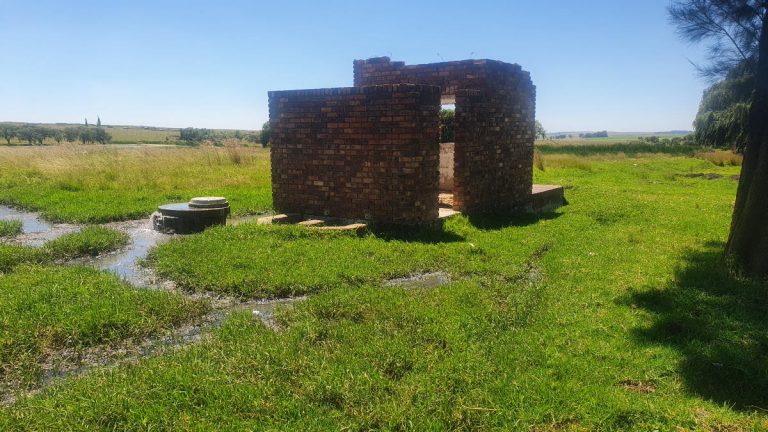
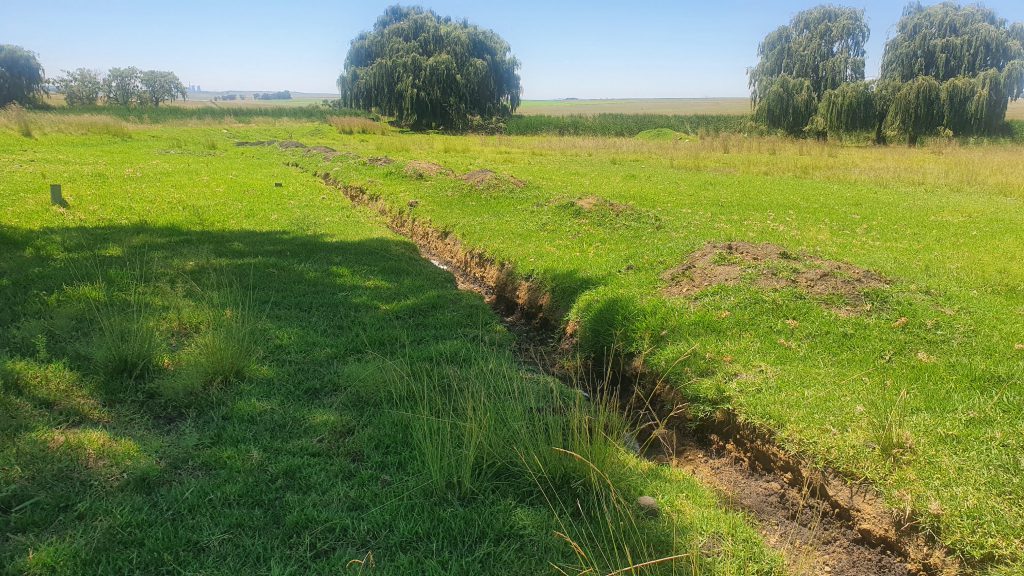
There is not one stream or river in GMM that is not polluted. Raw sewerage flows into all our streams and rivers, this, in turn, flows into our dams that supply our drinking water.

Sewer in Bethal

The Bulletin spoke to several opposition party councillors regarding the non-delivery of services in GMM. It was clear that they agreed that something drastic should be done.

The sewerage issues are constantly raised in council but never attended to in a serious manner.

Democratic Alliance Caucus leader in GMM, Cllr Ciska Jordaan, spoke to The Bulletin regarding the sewer problems in GMM.

“The dismal state of sewer infrastructure in the Govan Mbeki Municipality has been the cause of raw sewerage flooding the streets of several towns in this municipality for years on end, to the point where residents have undignifiedly become so accustomed to it that they sometimes do not even bother reporting it anymore,” Ciska said

ALSO READ: How Does Sewage Affect the Environment?

She also explained that questions submitted in the past by the DA to the Executive Mayor, Thandi Ngxonono, on the matter have been responded to with futile turnaround strategies and indications of projects on the Integrated Development Plan. Research done by the DA indicated that many of these projects have been in the IDP for up to 15 years, are budgeted for annually, yet never completed. 

Sewer in eMbalenhle

Several members of the provincial legislator have tried to move the ANC led council into action but to no avail. Former caucus leader of the DA in the Mpumalanga legislature, James Masango made a case early in 2019 against the municipality at the South African Human Rights Commission (SAHRC) regarding the horrid conditions that many residents are exposed to daily. Even though the ANC-led council had taken note with concern in July 2019 of the complaint that had been laid by the SAHRC, to date one has not yet seen any change.

The Bulletin will try and bring you the report from the SAHRC.

It appears that despite reports from the DA, the Health Inspectors of the GSDM, submissions to the IDP and budget from communities and investigations of the SAHRC; the heart of the problem lies with the mismanagement of funds allocated towards projects and unwillingness of the municipality to act drastically in the interest of the health of its residents.

“A chance to vote for change will emerge in 2021, we urge residents to make use of the opportunity and vote for a political party with a proven track record in good governance who cares for the health and safety of the people it serves – to vote DA.” Said Ciska

Sewer problems plague GMM and threaten health in the region
Missing infrastructure at Kinross pump station. Cables removed.

DA Councillor, Mariaan Chamberlain, must face the wrath of several residents daily as tempers flare when sewerage flows into a garden etc, as she is representing the Democratic Alliance on the technical portfolios.

ALSO READ: Family lives in sewerage for weeks

The Bulletin also spoke to Mariaan about the sewerage.

“Untreated sewage ends up in our waterways.” Says Mariaan, “In most of the cases the treatment plants cannot handle the accumulating wastewater, and untreated sewer gets redirected into our waterways, rivers, lakes and eventually in our oceans too. Most of the towns we visited, from Lebohang in the West to Bethal in the East, the infrastructure of GMM is either non-existent or non-compliable. Pump stations were built for R28m +, but raw sewerage is still being redirected into our waterways, due to broken pipes or no pipes at all. It is a major environmental disaster taking place. From the Blesbok Spruit in Bethal feeding the Vaal river to the sewerage from Lebogang, feeding the Olifants river.”

Sewer in Emzinoni

Mariaan also stated that the DA opened a case at the SAHRC against the municipality for human rights contraventions.

The last report noted in a council meeting on 29 July 2019, details were given of severe spillages.

“The ANC led council took note with concern. It is close to a year later, that we found on an oversight visit on sanitation, that nothing has been done after the release of the report a year ago.” Mariaan concluded

The sewerage problem needs to be addressed as soon as possible as it is contaminating the water.

The Bulletin found that in Evander there is even a pipe, that is neatly installed underground, from a pump station that ends in a small stream. Sewerage is often dumped into the stream through this pipe.

The situation in Kinross is so bad that sewerage has been flowing into the streams for several years already. In Dorfan street there is a manhole overflowing directly into the stormwater system. This is just a few meters away from the municipal offices. The pump station at the bottom of the old golf course has been completely removed and sewerage is flowing directly into the streams.

Sewer in Lebogang

Secunda has blocked drains that are overflowing unattended into the dams in town.

There is not one town in GMM that does not contribute to the contamination of our water systems.

In most areas visited by The Bulletin, a pungent sewerage smell was present. The continual sewer problems can only lead to health problems for all residents of Govan Mbeki Municipality.

The pump stations around GMM are also not in good order with many not even functional.

The N17 pump station near Lebohang has been completed and the contractor withdrew from the site but is still not operational since its completion in 2019

Urgent message on electricity in Bethal and eMzinoni

0

Urgent message on electricity in Bethal and eMzinoni

The Bulletin has been reporting on the ongoing electricity problems in Bethal and eMzinoni. Last night the protests continued. A message was sent this morning and it stated: Urgent message on electricity in Bethal and eMzinoni.

This morning the electricity was back on but between 06H30 and 09H30 there had been two power cuts already, a source told The Bulletin.

The GMM Management, Communications Unit sent out the following message this morning.

“The Govan Mbeki Municipality has appointed a service provider to attend to the electricity situation in Bethal and eMzinoni.

The Contractor is currently on site attending to the situation.

The GMM leadership is very concerned with the electricity challenges faced by our people in all corners of the municipality with specific reference to eMbalenhle and Bethal/eMzinoni.

It is against this background that the municipality would like to profusely apologise for the inconveniences caused by the electricity challenges.

We appeal for calm and cooperation from the community as the municipality attends to the issue through the appointed Contractor.”

According to another source, this contractor was hired to assist with one of the substations when the breakers exploded.

“The parts have arrived and the they are busy working on it,” the source said.

Cllr Mariaan Chamberlain said the following: “Some residents have been without electricity since Sunday and have lost a lot of perishables as well as electrical equipment. During this load shedding, which carries on in some instances up to 9 hours, is now leading up for residents not being able to enjoy breakfast, lunch, or in some instances not supper.”

“Old age homes are also affected, as some residents are on oxygen machines and is badly affected by this untimely power outages. Electricity network needs to be audited and upgraded to relieve the load shedding,” she continued.

The Bulletin will keep you updated on this matter.

SAPS arrest 2 Foreign Nationals with a large number of illegal cigarettes

Two arrested for the illegal trading in cigarettes and bribery in Kinross this afternoon.

Two persons were arrested for the possession of a large number of illegal cigarettes. The two then continued to offer the police officers R5200 as a bribe but were immediately arrested for bribery as well.

Kinross SAPS arrested two Somalian nationals with 467 cartons of cigarettes today 27 May 2020. Each carton contains 10 packets of cigarettes. This brings the total packages of cigarettes to 4670.

SAPS arrest to Foreign Nationals with large amount of illegal cigarettes
Cartons of illegal cigarettes, seized by Kinross SAPS

Cartons of these cheap and illegal cigarettes can fetch any price depending on the demand. According to SAPS these cartons sell for approximately R300 each. This would bring the street value of these cartons to R140100.00

The two is expected to appear in court very soon and will remain in custody until they appeared in court and have successfully applied for bail.

The Police acted on information received from the public.

SASOL not divesting its Fuel retail Business

Sasol is not divesting its downstream fuel retail business as part of its ongoing asset disposal process.

“While Sasol is in the process of reviewing opportunities in this regard, it is important to note that we remain committed to our strategy, which includes growing our fuel retail presence in South Africa,” said Sasol Chief Financial Officer, Paul Victor.

Sasol’s energy business in South Africa has a strong brand of 410 retail convenience centres, which account for 11% of the regulated retail market.

“Here, our focus remains on improving margins by looking for higher value markets for our existing production of fuels. This means both organic retail growth, by increasing our retail site development and conversion of sites to the Sasol brand, and possible small scale acquisitions,” Victor explained. 

“Although we are regularly approached by interested parties to acquire or partner with us in the retail network space, we are not in discussions with any such parties to divest or partner in our downstream fuel retail business. While recent events have created significant short-term challenges, we are confident our business is fundamentally robust and we have a clear pathway to resume value creation,” said Victor.

On 12 March 2020, Sasol announced that it was reviewing a variety of actions to address the challenges created by the impact of COVID-19 and the recent decline in the oil and chemical prices.

ALSO READ: Embattled Chemical and Energy group Sasol implements drastic actions.

ALSO READ: SOL: SASOL LIMITED – Update on Sasol’s Response to Covid-19

A package of measures have been developed that is intended to reposition the company over the following 24 months. One of these measures will be our existing asset disposal programme. Any divestment or similar activity will be executed in line with balance sheet, shareholder value and strategic objectives in mind and builds on the comprehensive asset review process which commenced in November 2017. 

Sasol has made progress on its expedited review of the business to consider how it can be most effectively positioned to be sustainable in a low oil price environment. Consistent with this approach, the expanded asset disposal process has yielded good interest in relation to a number of assets, despite the macro environment uncertainty.  

Timely updates on progress will be provided at the appropriate time in line with good corporate governance and our disclosure obligations pursuant to our listings on the JSE and the NYSE. Sasol’s vision is still to be a leading integrated global chemical and energy company, proudly rooted in our South African heritage, delivering superior value to our stakeholders

Embattled Chemicals and energy group Sasol implements drastic actions.

Sasol yesterday announced drastic actions aimed at reducing employee-related expenses.

Sasol has been negatively impacted by the drop in oil prices as well as the sharp decrease in the demand for fuel due to the COVID-19 lockdown that restricts travelling.

Businesses in Govan Mbeki Municipal area have always benefited from Sasol’s involvement in the area. Most businesses have some connection to Sasol, be it through direct business or offering services to people that work at Sasol.

The low share prices also negatively impacted on Sasol. Production cuts at Secunda Synfuels Operations (SSO) in Secunda by 25%.

“The group also revised its full-year production forecast for SSO, warning of a decrease to between 7.3- and 7.4-million tons, based on an operating rate of 75% of capacity for the remainder of the financial year.

The drop in domestic fuel demand had also led to a decision, taken together with its partner Total, to suspend production at the Natref refinery, in the Free State.

Natref was decommissioned between April 9 and April 20 and the planned May shutdown would now proceed earlier than initially scheduled.

The decline in mining construction chemicals demand during the lockdown had resulted in the suspension of production of Sasol’s ammonia, nitric acid and chlor-vinyl plants in Sasolburg.

Demand for Sasol’s other industrial chemicals had not been significantly impacted, however, and SSO’s residual operating capacity was prioritising chemicals production for supply to domestic and export markets.” TERENCE CREAMER of Mining Weekly reported

Sasol today announced it was implementing additional cash conservation measures to provide a further buffer against short term volatility due to the continued negative impact of COVID-19 on market demand.

“Earlier this month, Sasol announced that as part of a comprehensive response plan it had set a cash conservation target of US$2 billion by June 2021, focusing on management self-help measures aimed at increasing business efficiencies.” A statement from the company said.

“While we are making good progress on our target, the low oil price and impacts of COVID-19, and in particular the national lockdown in South Africa, has led to a steep decline in fuels demand,” said Sasol President and Chief Executive Officer Fleetwood Grobler.

“Given our assessment of the market and current developments, we are implementing further measures to increase cash conservation during this period.”

In addition to material cutbacks in capital, significant reductions in external spend, and ongoing work targeting a significant reduction in working capital, Sasol will implement a number of actions aimed at reducing employee-related expenses. 

The company is in discussions with its respective Retirement Funds’ Boards of Trustees to suspend the employer contribution to the Sasol South Africa retirement funds, for an eight-month period up to December 2020. In countries where a suspension of employer contributions is not possible, an equivalent salary sacrifice or alternatively a sacrifice to other benefits will apply.

A fee reduction of between 20% – 40% will be implemented for the Sasol Limited Board of Directors, across all fees. The Group Executive Committee will also implement a salary sacrifice of 20% up to December 2020.

As CEO, Mr. Grobler’s salary sacrifice comprises two-parts. For three months, 33% of his salary will be donated to the Solidarity Fund set up by the South African government to support the fight against COVID-19. For the remaining five months, a salary sacrifice of 20% will apply as part of the company’s cash conservation drive.

The company will also introduce a global salary sacrifice for employees from supervisory and specialist levels upwards, who do not form part of collective bargaining arrangements. This will be implemented in line with the respective legal requirements in different countries, according to a sliding scale. The scale ranges from 20% for employees in executive to senior manager levels to 10% for employees at supervisory levels, for a period of eight months.

Furthermore, Sasol will forgo salary increases in the new financial year, to all employees outside of its collective bargaining arrangements globally, and no short-term incentives will be payable this year.

“Given the current environment, we must take all necessary measures to proactively manage this market volatility and uncertainty. The decision to implement a salary sacrifice is regrettable, but this is a short term measure necessary to help secure Sasol’s long-term future.” Sasol said in their statement today.

So is die Lewe: Kerkgaan en Covid

Ouer mense praat baie van die “goeie ou dae”.  Dan brei hulle breedvoerig uit oor hoe goedkoop alles was, hoe goedgemanierd die kinders was en hoe gedissplineerd skole was.  Die arme kinders wat al hierdie stories moet aanhoor, ken dit al uit die kop.  

Hierdie hunkering na die verlede ‘n ingebore ding by ‘n mens.  Nie noodwendig na die omstandighede van die verlede nie, maar hoe jy gevoel het toe jy eens op ‘n tyd op ‘n sekere plek gebly het.  Veral in uiters onsekere en turbulente tye soos ons dit tans ervaar.   Die kerk soos ons dit ken, het in hierdie tyd heel verander.  Ten minste tydelik. 

Vanoggend, toe ek die rekenaar en mikrofoon afskakel ná my radio-pinksterdiens, wonder ek: hoeveel mense het ooit geluister? Vir ‘n wyle vlieg onthoubeelde deur my kop. Die kerkgeboue in Trichardt en Olifantsfontein, Plooysburg en die Lugmagbasis Langebaanweg. 

Baie is nog presies dieselfde: die preekstoel in Langebaanweg het na 30 jaar steeds die plaatjie op wat ek daar laat aanbring het sodat ek as predikant moet fokus behou oor die groot roeping, met die woorde van Joh 12:21: Meneer, ons wil Jesus graag ontmoet. Die manjifieke orrel met sy groot orrelkas en koperpype.  Die preekstoel met sy warm houtagtergrond.    

Skielik draai Kris Kristofferson soos ‘n refrein deur my kop: And I’ll give all my tomorrows for a single yesterday. Want in opsluittyd raak al die vergete goed so bekend: die dorpe, die huise, die strate. Toe verstaan ek meteens die frase: “goeie ou dae”.   Met bittersoet onthou, soos Koos Doep sing: “Gesigte, drome, name, is deur die wind verwaai.”  

Die stories van doerie jare breek stuk-stuk los uit jou vermufte geheue.  Soos die twee stout boeties wat in die gemeente was.  Vrek stout, al was hulle ouers diep gelowige en meelewende mense. Ek onthou: een Sondag was daar ‘n kinderpreek.  Die tema was: ons moet gedrewe Christene wees. Die hulpmiddele is fyn bedink: party Christene lyk net soos Christene, hulle is eintlik net daar vir die mooigeit. 

En ter demonstrasie ‘n porseleinkarretjie.  Ander weer moet heeltyd getrek of gestoot word om te beweeg.  Dit word gedemonstreer met ‘n outydse speelgoedlorrie aan ‘n tou vas.  Dan is daar die opwen-christene, hulle spring weg met ‘n spoed, maar gaan staan later heeltemal, en moet weer opgewen word. Die troefkaart in die preek: uit-die-hemel beheerde Christene.  Ek leen ‘n afstandbeheerde speelgoedrenmotor by die twee stout boeties om die punt te illustreer.

Ek kry dit net voor die diens, en het nie tyd om te oefen met die ding nie. Die seuntjies in die kinderdiens is in vervoering as die renmotor met ‘n spoed wegtrek voor op die nagmaaltafel. Of hulle hoegenaamd die boodskap gehoor of onthou het, weet ek tot vandag toe nie.  Want juis daardie oomblik loop die preek skeef: ek is onkundig oor die motor se remafstand, en ek jaag hom met ‘n bekwame spoed van die nagmaaltafel af sodat die kar op die vloer neerhop en onder die diakensbank in verdwyn.  Met die twee boeties wat soos een man opspring en kliphard skreeu: Ons @#%#@ kar.

Ek verlang na die kerk. Ek verlang na die eredienste, die diakens wat voor by die deur almal welkom heet (in Plooysburg het die manlike diakens al die vrouens gesoengroet, soos wat ons gebruik maar was), ek verlang na die gewyde stilte, die orrelvoorspel, die Kerkraad wat instap as die diens begin, die gemeente wat mekaar groet, die saamwees, die koinonia, die gemeente wat uit hulle harte saamsing. Stigtelik, gewyd.Die saam tee drink na die tyd. Die belydenisklas waar diep gesprekke gevoer is, en baie vrae oor God gevra is.

Ek smag daarna om al die ongepreekte preke wat nog in my kop draai, op papier neer te skryf, en met die gemeente te deel, terwyl ons saam soek na die woorde van God.

Ek smag na die atmosfeer van nagmaal, die beker en die brood wat omgestuur word, die gewydheid. Ek verlang na die slotgebed, die uitspreek van die sëen. Ek smag na wykbyeenkomstes, huisbesoeke, Bybelstudies, die mannebiduur Maandagoggende om 06:30 in Trichardt. Die basaars, gemeente-etes, die jeugbyeenkomstes.  Die heerlike byeenkomstes en toere van die senior burgers.

Predikante en kerke van alle denominasies moes drastiese aanpassings maak, om sodoende iets te behou van ‘n 2000 jare oue tradisie van gemeentes wat bymekaar kom. Dis maklik om negatiewe opmerkings te maak hieroor. Dis maklik om te sê kerke kan maar hulle sleutels weggooi. Die behoefte na ‘n outydse erediens bly brand in baie harte. Afhanklike, dankbare mededoë as gemeente voor God. Statig, waardig.

Prof Fanie Snyman van die Teologiese Fakulteit van UV skryf: “Ek salueer die dominees vir die manier waarop hulle blitsvinnig moes reageer op ‘n totaal nuwe situasie wat betref eredienste en die bediening van die Woord. Talle eredienste/preke is beskikbaar op sosiale media. Ek kyk en luister na klasmaats, talle predikantevriende en oud-studente. 

Terwyl ek kyk en luister het ek weer bewus geword van hoe verskriklik blootstellend ‘n preek (en eintlik ook die hantering van die liturgie) vir ‘n dominee is: Jou teologie, spritualiteit, Skrifbeskouing, graad van voorbereiding (helaas!), hermeneutiek, persoonlikheid kom alles in die spel. Tog waag dominees dit… Hoed af en my waardering vir dominees wat in hierdie vreemdste van vreemde tye ‘n woord uit die Woord wil laat hoor.”

Mag ek byvoeg: ook die lidmate. Amen.

GSDM invites communities to partake in the development agenda through public comments on the 2020/21 draft IDP and budget

0

Over the past week, Gert Sibande District Municipality (GSDM) engaged its seven sister municipalities presenting the Draft Integrated Development Plan (IDP) and Budget for comments and inputs. This is a process which started in October 2019 when an IDP review was conducted.

During the engagements, Member of the Mayoral Committee leading the Planning and Economic Development portfolio Cllr Bheki Buthelezi explained that the District was now at an integration phase where it is matching its financial resources for the financial year 2020/21 with the priorities identified and whereby stakeholders work out what needs to be managed for the projects to make impact on communities before the District can adopt the final IDP and Budget later this month of May 2020.

In all the engagements, the stakeholders agreed that the approved IDPs should be considerate of the effects of COVID-19 to an extent that budgets for planned projects which may not take place due to the pandemic such as sports related budgets be committed to other projects.

The Gert Sibande Local House of Traditional leaders which consists of 17 Traditional Councils was also engaged on 21 May.

All engagements were by use of virtual meetings as these meetings were held during stage 4 of the nationwide lockdown which prohibits large gatherings.

District Executive Mayor Cllr Muzi Chirwa presented the IDP & Budget to all the municipalities and valuable comments were made.

Further presentations will be made to the communities using local radios available within the District.

A summary of the draft IDP and Budget is available on the GSDM website and social media. The communities are urged to make comments for their local municipalities.

Comments can be submitted by email, direct message on applicable social media and via a WhatsApp number 061 361 0952.

The developmental agenda for any municipality must be determined its residents and we therefore encourage communities to submit comments before 28 May 2020.

SANBS CEO, Jonathan Louw, donates COVID-19 convalescent plasma

With the SARS-CoV-2 infection (COVID-19) now being a part of our reality, the focus is increasingly starting to move towards the development of effective treatments and cures for the virus.

One of these therapies currently in development is convalescent plasma.

The South African National Blood Service (SANBS) is at the forefront of this therapy in South Africa, currently participating in the collection of convalescent plasma for a national trial.

Heeding the call issued by the SANBS for convalescent plasma, Dr Jonathan Louw, the SANBS Chief Executive Officer has become one of the first people to donate convalescent plasma.

SANBS CEO, Jonathan Louw, donates COVID-19 convalescent plasma

Following what he called a “tough infection, coupled with a history of chronic asthma,” he is happy to have been able to make a full recovery following his intense battle with the infection. 

Dr Louw was one of the early contractors of the COVID-19 virus in the country. Having made a full recovery, he reflected on the effects of the diagnosis.

“I had to go to hospital a couple of times. I was isolated from family for a very long period. It has been a long journey but I’m really hoping that this disease will have a cure soon,” he added.

In the fight against COVID-19, the SANBS is one of a few international blood transfusion services embarking on this exciting research to determine if convalescent plasma, collected from recovered COVID-19 individuals, may help patients hospitalised with COVID-19. Currently there is no proven treatment to improve the outcome for these patients. Convalescent plasma may potentially be one of the only treatment options that works, however this needs to be tested in clinical trials. A convalescent plasma donation is just like a standard plasma donation, the key difference being the need for a specific type of donor.

 “I’ve been a regular donor for many years and through my convalescent plasma that is full of antibodies, I hope I can help someone else,” Louw concluded.

The SANBS is well positioned to collect this product as we already collect a similar product, source plasma, daily.

We have written two research protocols, one to collect the plasma and one to issue the plasma to patients enrolled in a randomised phase 2 placebo-controlled blinded clinical trial.

This is yet another area where we can be trusted to save lives.