YOUR PETS CAN BE HEALTHIER AND HAPPIER IN 2024 WITH SOME OR ALL OF THESE PAWSOME PET NEW YEAR’S RESOLUTIONS!
The presents are opened, the Christmas leftovers are done…….and now it’s that time of year again when we think about what we shouda-coulda-woulda done differently last year and vow to do better this year. I wish you and your pets a Pawsome 2024! May life treat you the way you treat your pets!
A new year brings new goals, renewed hope and 365 days of opportunity for you and your pet to bond, develop healthier habits and discover new ways to live a full life. Your pet can live a better tomorrow with your help.
An important first step is to avoid becoming overwhelmed thinking you need to make big changes overnight. Baby steps in the right direction are the way to go. The important thing is to make a plan and move steadily forward.
HERE ARE SOME IDEAS FOR PET-POSITIVE NEW YEAR’S RESOLUTION
Three-part series re-publication: Originally published 4 January 2023
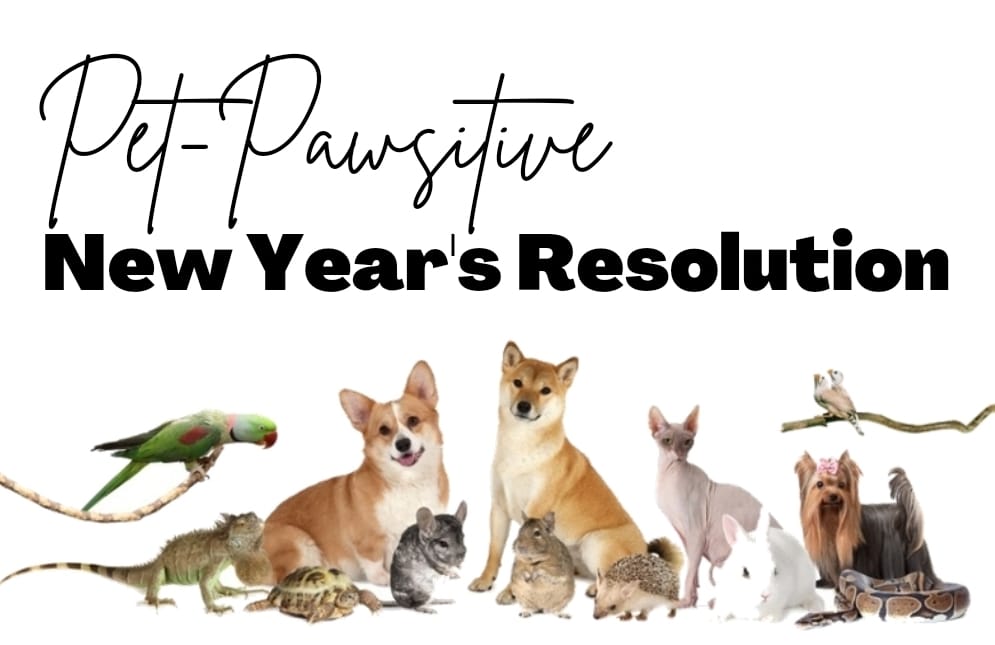
Pet New Year’s Resolutions – Image by The Paw Company
SPAY & NEUTER YOUR PETS.
This is probably our most important one. There are so many benefits to this plus you will help stop this massive overpopulation crisis we face in animal welfare. If your pet is already sterilized, thank you! Please consider sponsoring one other sterilization for someone in need this year.
MAINTAIN A HEALTHY WEIGHT FOR YOUR PET AND FEED THEM A NUTRITIOUS DIET.
As with us humans, it’s all too easy for a pet’s weight to gradually creep up over time. Measuring your pet’s food accurately is the first step to take to prevent overfeeding.
The goal in offering your pet fresh food, which they can truly thrive on, is to mimic the ancestral diet of dogs and cats as closely as possible without breaking the bank. Feed your pet as much unprocessed, fresh food as you can afford.
Ask your holistic veterinarian for food recommendations appropriate for your pet’s species, age, breed and lifestyle. Feed the recommended amount, and limit treats to small goodies in limited portions. Add in some healthy items, such as bits of carrots, apples and blueberries.
If you give them bones, follow these guidelines! See some advice we shared from Dr Karen Becker (Veterinarian and co-author of The Forever Dog) on fresh food ideas.
LEARN SOMETHING NEW ABOUT ANIMAL CARE, BEHAVIOUR OR PET HEALTH EVERY WEEK.
Learn about the optimal care for your pet, and safety, meeting all their species/breed-specific needs. Observe your pet’s body language and learn what they are trying to tell you.
Check out The Paw Company’s index post on various animal topics and follow our ANIMALS 101 series here in The Bulletin every Wednesday.
PROVIDE A LIFETIME OF TRAINING AND SOCIAL INTERACTION.
Dogs, cats and or other social animals can benefit from interaction with animals of the same species. Having a pet that is well-trained, obedient, happy, relaxed and responsive means that not only will your pet be easier to manage and safer in potentially dangerous situations, but you will also get more pleasure from your companionship as a result. Well-socialized have much less chance of winding up at an animal shelter.
Learn a new trick or address at least one of those behavioural concerns or “bad” habits of your pet. Get some professional help if you need to. Remember there is a difference between a trainer and a behaviourist. In the Secunda area contact our local trainer Jennifer.
IMPROVE YOUR KNOWLEDGE OF PET FIRST AID AND CREATE A PET EMERGENCY PLAN.
Accidents happen and the odds are that when your pets eat something they shouldn’t or get hurt, you will be home alone and it will be after veterinary hours. That’s why it’s so important for a pet parent to know how to handle an emergency and what the plan is in case of a fire, a flood, a car accident, or possible evacuations. Save your veterinarian and other local vet’s emergency number on your phone. Read more on having an emergency plan.
Also, see how you can help animal welfare organizations here.
STRENGTHEN YOUR BOND WITH QUALITY TIME.
You have a relationship bank account with your pet. Some negative actions like frustration and intimidation equal withdrawals while positive actions like play and attention are investments or deposits. Keep a positive bank balance.
Spend more time with your pets than you did last year! This can be some one-on-one time with your dog or cat, even if just at home watching some TV and cuddling or playing or having an adventure in the outside world. Sometimes resolve to just sit with your pet and watch the world go by and always be in the moment, not on your phone when you spend quality time together.
MEET ALL THEIR NEEDS.
A suitable environment.
Appropriate diet and fresh, clean, cool, drinking water daily.
Companionship.
A chance to exhibit normal behaviour.
Good health and medical attention when needed.
Enrichment is also crucial for your pet’s well-being. This includes food, sensory, cognitive, physical habitat and social enrichment.
It is good for both you and your pet. Get creative as exercise does not need to be boring. Play games or go for one of the 8 different walks.
Your pets didn’t have a choice when they came to stay with you and since you chose to have them, it is your responsibility to meet their every need! Next week we will continue with part 2 of this 3-part series on the pet-pawsitive New Year’s resolutions.
HOW YOU CAN LIGHTEN THE LOAD FOR ANIMAL WELFARE ORGANIZATIONS
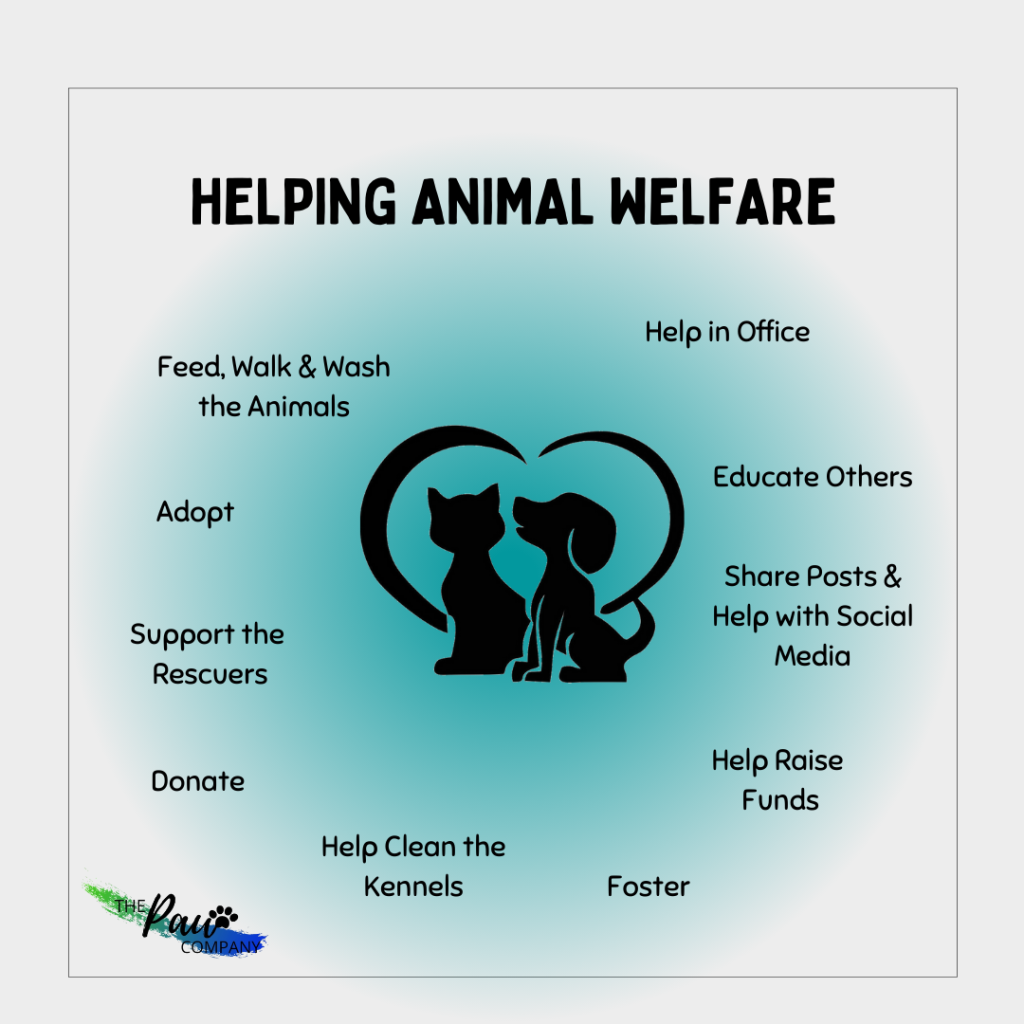
Animal welfare is a challenging and demanding endeavor that goes beyond the confines of a regular workday. Rescuers tirelessly dedicate themselves to saving lives, often without financial compensation, as they navigate the physical and emotional toll of their responsibilities. The holiday season, in particular, exacerbates the challenges faced by these unsung heroes. Here’s how you can get involved and make a meaningful impact in animal welfare.
GET INVOLVED
Connect with Local Shelters: Reach out to a reputable shelter or organization in your area to express your interest in volunteering. Call or visit the shelter, ask to speak to the volunteer coordinator, and introduce yourself.
Express Willingness to Help: Inquire about volunteer opportunities or other ways you can contribute to alleviating the shelter’s workload.
Explore Various Roles: Learn about the shelter’s operations and explore roles such as feeding, washing, walking, administrative tasks, or fostering.
Utilize Professional Skills: Offer any professional skills you possess, such as accounting, IT, or fundraising, bookkeeping, plumbing, electrical work, design work etc., to support the organization.
If you can’t adopt, FOSTER. If you can’t foster, SPONSOR. If you can’t sponsor, VOLUNTEER. If you can’t volunteer, DONATE. If you can’t donate, EDUCATE – NETWORK – SHARE. Everyone can do something, large or small, to help save a life!
Lending a paw – Image by Pexels.com
ADDITIONAL WAYS TO LIGHTEN THE LOAD
Stay Informed: Read and stay informed about resources shared by animal welfare organizations, even if they don’t directly apply to you at the moment.
Educate Others: Share your newfound knowledge with at least one person to contribute to broader awareness.
Practice Responsible Pet Ownership: Spay and neuter your pets, adopt from reputable organizations, and keep your animals safe in your yard.
Engage on Social Media: Support organizations by liking, sharing, and commenting on their posts, especially adoption-related content. Your engagement, especially commenting and sharing can increase the visibility of their posts.
Participate in Fundraising: If financial contributions aren’t feasible, support fundraising events and offer assistance in other ways. You can also organize a fundraiser for a reputable organization. Remember to get permission to use their logo if you need to and keep within the laws like the Lotto regulations when you do lucky draws.
Show Appreciation: Acknowledge the efforts of staff, rescuers, or volunteers by buying a coffee or lunch, leaving a note of encouragement, or offering another token of appreciation.
Support Reputable Organizations: Channel your support to organizations with proper adoption policies, financial transparency, and ethical practices. Not just those who claim to do it. There are those who, although registered, breed animals and sell animals, which is hypocritical and fuelling the massive overpopulation crisis.
Animals everywhere need help and your contribution matters. Avoid the “someone do something” mentality and take meaningful steps to assist.
If you come across an animal in distress, don’t just demand help; offer assistance, donate food or funds, or take the animal to a local organization or vet.
Understand that organizations may be overwhelmed at times. Offer your support, as you are someone who can make a difference.
Remember, your individual actions can have a significant impact, and by actively participating in animal welfare efforts, you contribute to the well-being of our furry friends and the dedicated individuals who strive to protect them.
There is a way for every person to help! It really takes a village and animal welfare organizations are constantly overwhelmed, especially during this time of year. Your time, skills, or funds can make a difference in the lives of animals.
Next week we will look at some pawsome New Year’s resolutions.
POLICE DETECT FOUL PLAY WHILST PROBING AN INQUEST AFTER RETRIEVAL OF A MAN’S BODY FROM THE RIVER
Nelspruit: 23 December 2023 – Police made a shocking discovery through the investigation into the sudden death of Mr Willem Kruger (29), whose lifeless body was retrieved from the Vaal River in November last year (2022) at Henbase Lodge, near Morgenzon. The investigators were hard at work and are now more convinced there was foul play.
According to a report, Mr Kruger is said to have disappeared in the early hours of 13 November 2022 after attending a bachelor’s party at Henbase Lodge, near Morgenzon. It is further reported that his friends searched for him as well as his vehicle.
After learning of his disappearance, this was formally reported to the Police. Sadly, he was found dead, and his body was taken out of the Vaal River a few days later, on 22 November 2022. His car, a white Toyota Bakkie was also retrieved from the river.
An Inquest docket was registered, and the Investigators immediately began probing. It was during the investigation that Police unearthed that the victim’s mobile phone and the vehicle’s tracker were off.
Though there were some beliefs that the victim could have taken a journey, driving back home to Groblersdal in the morning of 13 November 2022 then probably hijacked along the way.
Later, it was alleged that Mr Kruger could have driven his vehicle straight into the Vaal River not far from Henbase Lodge where the bachelor party was hosted. However, the Police Investigators followed all possible leads, and a massive search was conducted after the report made by his family at Groblersdal Police Station regarding his disappearance.
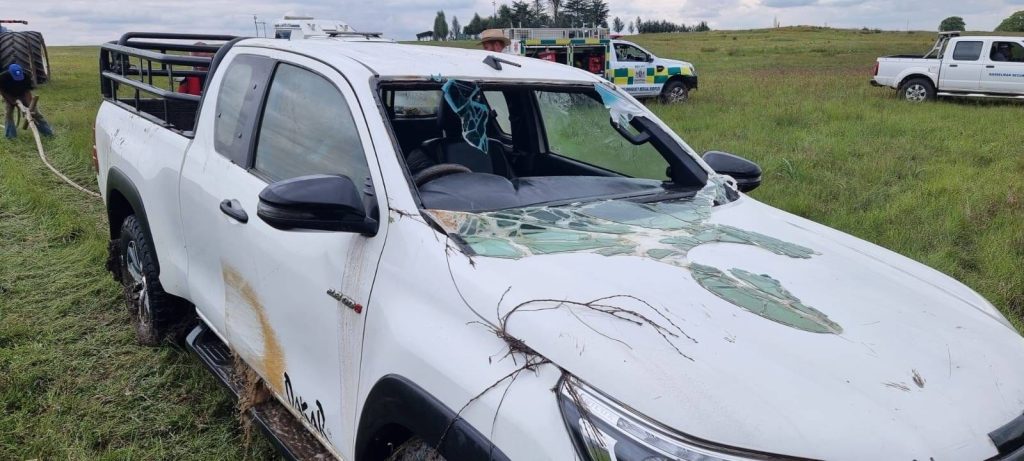
Willem Krugers Bakkie
It is said that on Monday, 14 November 2022, a search continued throughout the week until Friday, 18 November 2022 focusing mainly on the Vaal River, which is across the front of Henbase Lodge.
Various role players from the SAPS and members of the public assisted a lot with the search using various technological methods.
It was in the morning of 22 November 2022 when his vehicle was found inside the Vaal River, shockingly in an area that was thoroughly searched earlier during the week from 14 November 2022 until 18 November 2022.
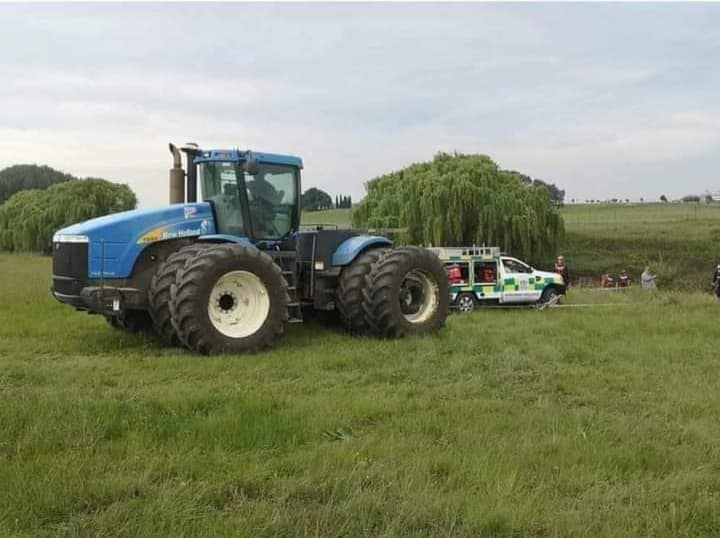
The tractor used to pull the bakkie out of the river
After the vehicle was recovered from the river, the body of a man was found inside the vehicle then later confirmed through dental records to be the body of Mr Willem Kruger.
The probe by the Police has been ongoing and an Inquest docket was opened as everybody was made to believe that Kruger drove himself into the Vaal River. Through further investigations, it was discovered that Mr Willem Kruger did not drive himself into the river.
Police also learned through investigation that the vehicle’s gear was found in park mode with its handbrake pulled up. The car keys were not found in the ignition and all of that raised some eyebrows amongst members of the investigation team.
Police are convinced that Mr Kruger as well as his vehicle were not inside the Vaal River during the week when a search was conducted.
No further details of the investigation will be shared at this stage. The SAPS investigators are working together with the National Prosecution Authority (NPA). For now, the case was changed from an inquest into murder following the alluded developments.
The Police in collaboration with the NPA are looking at the possibility of probing charges of defeating the ends of Justice on this case as well as Perjury charges against certain persons of interest whose identities cannot be revealed at this stage.
It must be noted that the Police received a lot of calls from concerned members of the public who were keen to know the status of the investigation. It is from this backdrop that the Police deemed it fit to share on the progress of the investigation of the case which has drawn a huge interest from the public.
Police further request anyone who might have valuable information that may assist further in the investigation to contact the Lead Investigator, Detective Warrant Office Vukile David Nhlapo at 067 336 2121 or call the Crime Stop number at 08600 10111. Alternatively, members of the public can send information via MYSAPSAPP. All received information will be treated as confidential and callers may opt to remain anonymous.
Meanwhile, the Provincial Commissioner of the SAPS in Mpumalanga, Lieutenant General Semakaleng Daphney Manamela has reassured the public that the team of Detectives assigned to probe this matter are seasonal Detectives who are well equipped and skilled.
The General further indicated that these members will surely produce the desired results, thereby ensuring that justice is served.
We post it here verbatim (Appologies, as it is in Afrikaans)
GEREGTIGHEID VIR WILLEM
Die volgende inligting is al ‘n ruk beskikbaar, maar dis tyd dat dit hier gedeel word.
Die voorruit van Willem se bakkie was alreeds stukkend toe dit uit die water gehaal was. (Rapport)
Verklarings op die toneel verskil egter of dit reeds stukkend was, of deur reddingswerkers gebreek is.
Willem se lyk was tussen die twee sitplekke, met voete wat vorentoe wys gevind.
Die agterruit van die bakkie was oop gewees, toe deur reddingswerkers toegetrek.
Die “aerial” van die bakkie is deur reddingswerkers afgebuig (sodat dit nie die rubberbote stukkend steek nie)
Die bestuurskant paneel aan die binnekant van die bakkie was afgebreek. Insluitend die handvatsel.
Ondersoekers sê dit dui daarop dat Willem die deur toe probeer hou het, terwyl iemand van buite af probeer oopmaak het.
Terwyl die bakkie gesleep was tot die oewer, het alles los by die voorruit begin uitkom.
Die lyk was onherkenbaar.
Henbase Lodge se eienaar se reuse dubbel-as trekker was gebruik om die bakkie verder uit te sleep, saam met die Gautengse soek-en-reddingseenheid se bakkies.
Die toneel was so versteur dat die polisie voel belangrike bewyse is weg. “Byna verwoes”
Die duidelike opdrag van ondersoekers en familie om die toneel uit te los, was ignoreer.
Op die tyd waar die bakkie ontdek was, was die ondersoekers en Kruger gesin in Pretoria.
Rolspelers was nog oppad na die toneel toe die bakkie reeds uitgesleep was.
Die misdaadverslagsentrum was veronderstel om die hele toneel en proses deeglik te monitor. Dit kon nie gedoen word nie.
Die privaatpatoloog kon nie vasstel hoe Willem oorlede is nie.
Die staatspatoloog se lykskouing is nog nie afgehandel nie.
Volgens Rapport se bron, al het Willem verdrink, was daar steeds vuilspel betrokke.
Daar 95% sekerheid dat Willem vermoor is.
Die slimhorlosie wat Willem gedra het, is steeds by ‘n kundige vir ondersoek.
Die polisie het ‘n gas van die ramparty, se Hilux bakkie geneem vir verdere ondersoek.
Dit na daar op CCTV vasgestel is dat die bakkie se linker- truspieltjie vorentoe gebuig was en ‘n groot duik aan die bestuurderskant. (Foto aangeheg)
‘n Week later was die truspieltjie afgesny en weg.
Die gas het nie geweet wat geword het van die truspieltjie nie.
Marius Schempers het vooraf betaal vir 2 aparte kamers. Willem en Callie Reynecke sou ‘n kamer gedeel het.
Daar het egter ‘n ander man die aand in Willem se kamer geslaap.
Willem het die aand vir Mnr. Schempers probeer bel.
Uitsprake gelaat op die groep is nie die persoonlike opinie van die skrywer nie, maar gebaseer op feite en inligting wat binne die media meegedeel word.
Die skrywer vat geen verantwoordelikheid vir kommentaar geplaas deur lede van die groep nie.
Hoofbron: Rapport, 5 Februarie 2023, “Willem Kruger: Bewyse op toneel verwoes”
FESTIVITIES DURING THE CHRISTMAS HOLIDAY MAY POSE DIFFERENT DANGERS FOR YOUR PETS.
With the holiday season in full swing, it’s essential to prioritize the safety and well-being of our furry companions.The festive atmosphere brings joy, decorations, and traditions. However, it’s essential to be aware of the potential dangers that these festivities pose to our beloved pets. In addition to pet-proofing your Christmas decorations, consider the following tips to ensure a joyful and safe environment for your pets.
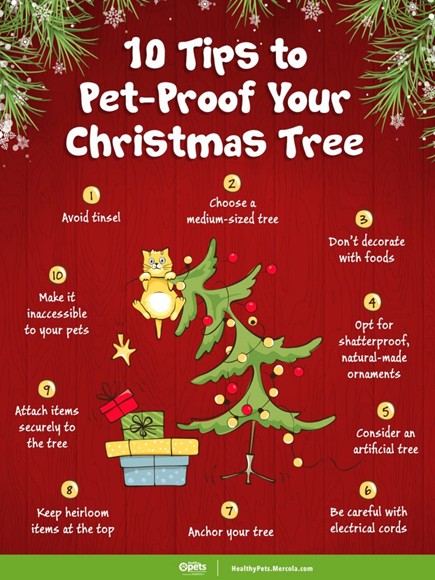
Christmas pet safety – Image by Dr. Karen Becker
PET-PROOFING YOUR CHRISTMAS TREE (Dr.Karen Becker)
Ditch the Tinsel: Tinsel, with its alluring light-catching abilities, can be a tempting toy for pets, risking digestive tract obstructions. Opt for natural material garlands securely wrapped around the tree.
Choose a Medium-Sized Tree: A medium-sized tree (1.5 m) is recommended for households with pets to minimize the risk of toppling over.
Avoid Decorating with Food: Resist the temptation to adorn the tree with candy canes and cookies, as it can pose a health risk to pets. Even seemingly harmless items like popcorn garlands should be avoided.
Optfor Shatter-Proof Ornaments: Glass ornaments are breakable, presenting a risk to pets. Choose shatter-proof alternatives made from natural materials like wool, silk, or wood.
Consider an Artificial Tree: Pets may be attracted to real tree needles, potentially causing stomach upset. An artificial tree eliminates this risk and prevents climbing, especially if the trunk is wrapped in foil.
Anchor Your Tree: Securely anchor the tree to a wall or ceiling to prevent accidental tipping.
Securely Attach Ornaments: Use secure fastenings like twine or string instead of metal hooks, reducing the risk of ingestion.
Be Cautious with Electrical Cords: Shorten and secure extension cords to minimize the risk of electrocution or entanglement. Consider using cords with automatic shut-off features.
Place Heirloom Ornaments at the Top: Keep valuable or sentimental ornaments out of reach of pets.
Make Your Tree Inaccessible: If pets are persistent, use a baby gate, or an elevated stand, or place the tree in a pet-restricted room.
CHRISTMAS FOOD TIPS
Avoid Toxic Foods: Refrain from feeding pets chocolate or caffeinated items containing theobromine, which is toxic to cats and dogs. No alchohol, onions, raisons, grapes, macadamia nuts or sugary stuff either.
Beware of Bones: Steer clear of feeding small and cooked bones to prevent obstructions, constipation, or dental emergencies.
Limit Fatty Foods: Avoid fatty foods that can lead to stomach upsets and other severe conditions.
Offer Safe Snacks: Provide safe, healthy snacks such as fruits (apples, strawberries, watermelon) and veggies (carrots, broccoli) as treats.
Educate Guests: Ensure that guests are aware of the food rules for your pets to prevent accidental feeding of harmful items.
OTHER SAFETY TIPS
Never leave your pets alone for more than 12 hours without someone checking in on them.
Keep your pets warm when it is cold and cool when it is hot.
Supervise play with toys, especially new toys.
If you are having guests over or young children, remember that it can be overwhelming for your pets. Create a safe pet-only space where your pet can feel secure and tell your kids and guests, not to disturb them in that space.
Save your veterinarian’s emergency number in advance and make sure you know which trusted veterinarians are available and when.
Wrapping paper, bows, and ribbons can cause intestinal blockages if your pets ingest them. This can cause serious illness and death.
If you are traveling with your pets, follow these safety tips. You can also take something familiar (bed or toy) with you to help comfort them.
If you travel and see an animal injured or in distress, please contact your nearest SPCA. You can find your nearest SPCA on www.nspca.co.za.
Remember to not give animals as gifts Read why here.
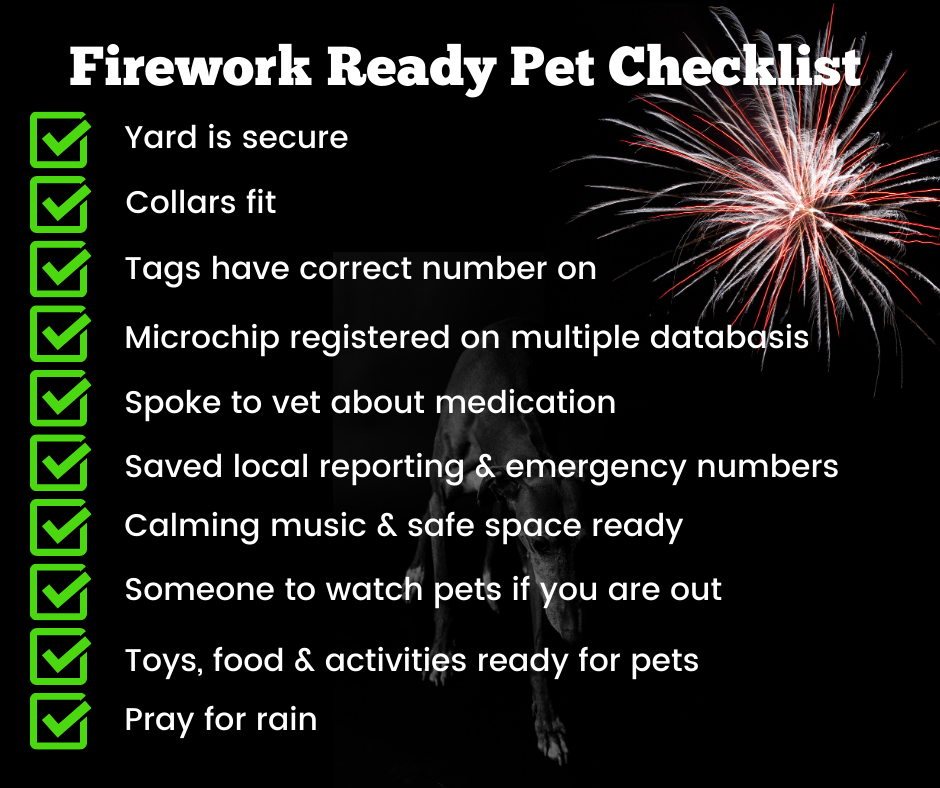
Prepare your pets for fireworks displays if you have a noise-phobic pet.
Fireworks preparation for pet – Image by The Paw Company
GUIDELINES FOR FIREWORK NIGHTS
Preparation: Look for your animals, especially cats, before the fireworks start.
Secure Indoors: Close windows and curtains, keeping pets indoors with doors, windows, and pet doors securely shut.
Additional Litter Boxes: Provide extra litter boxes if your cat is not accustomed to being indoors.
Pre-Firework Meal: Feed your pet before the fireworks to help calm them.
Safe Hiding Place: Offer a safe place with blankets and bedding to mask sounds, and consider a box for cats.
Avoid Luring Pets Out: If your pet is hiding, avoid trying to lure them out, which can increase anxiety.
Distraction with Treats: Distract your pet with treats or playtime if they display nervous behaviour.
Stay Calm: Stay home with your pets, offering comfort and calmness during frightening times.
This is a difficult time of the year for any animal welfare organization. The work is more with surrendered, stray, and abandoned animals and the funds are low. Please consider donating to a reputable and financially transparent organization. Don’t forget about the rescuers and staff doing the work!
As we celebrate, let’s prioritize the safety and well-being of our furry friends. Have a blessed festive season! Next week we will look at how you can help animal welfare organizations in this difficult time.
Sasolhosted the inaugural SVP Soccer and Netball Tournament at the Sasol Community and Recreation Centre in eMbalenhle on Saturday, 9 December 2023.
The tournament, in partnership with the South African Football Association (Local Football Association) and Gert Sibande Netball, was aimed at encouraging the youth to participate in recreational activities during the holiday season.
Sasol Senior Vice President for Secunda Operations, Gerrit Viljoen and Vice President for Community Affairs Mashudu Ndou join young football players at the SVP Soccer and Netball Tournament.
A similar tournament was successfully hosted in Wentworth, Durban on 2 December 2023. These fun-filled family events are part of Sasol’s ongoing support of sporting activities at grassroots level.
In Wentworth, the tournament was a response to Wentworth’s newly formed civil organisation, Changing Our Behaviour to Unite (COBTU). COBTU asked Sasol to assist the community with a public platform in order to create awareness around alcohol and drug abuse among the youth.
COPING WITH THE LOSS OF A BELOVED PET IS NOT EASY AND THIS PROCESS MAY DIFFER FOR FAMILY MEMBERS AND PETS.
Losing a beloved pet is an emotionally challenging experience that can evoke profound grief and sadness. Pets become cherished members of our families, offering unconditional love and companionship. Coping with their loss requires acknowledging and processing the unique bond shared with them. It’s essential to allow yourself the space to grieve after such a loss and in a way that works for you. Remembering the joy and positive moments shared with the pet can be a healing aspect of the grieving process. While the pain of loss may be intense, finding healthy ways to cope and honoring the memory of the departed furry friend can ultimately contribute to the healing journey. The loss of a pet can permanently impact your life. If loving our pets has changed our lives, it should not come as a surprise that losing them will do the same. We are the ones left behind, but we are not alone!
In my first article, I talked about grief, the stages of grief, the comorbidities of grief, a visualization exercise that helped me, pet loss resources, getting a new pet, and preparing for the Rainbow Bridge decision. In last week’s article, part two, I shared some of what I have learned and experienced about grief in the last year. We need a book series on this topic, but today I will touch on some basics of coping with that loss.
So first, there is certainly a stigmatization about grief that accompanies pet loss, yet grief is grief and loss is loss. Dr. Karen Becker shares that in her experience, and I agree, a lot of people feel their grief at the loss of a pet is unjustified because, after all, it’s not like they lost a human. This, of course, is a misconception and we should work hard at changing society’s perception about it. The grieving individual is now concerned not only about facing this overwhelming sadness and grief but also about getting help to deal with it.
Grief – Image by Dr. Karen Becker
NAVIGATING THE RAINBOW BRIDGE JOURNEY
People tend to say that time will heal but I don’t believe time can heal. In time, to protect our sanity, I think the wound does close and is covered with scar tissue, the pain lessens or might be gone, but the scar, the sadness or reminder of it, may remain. We don’t need healing from grief, but rather from the pain that accompanies it. Actively working through the pain and staying present can bring healing. Hopefully, in time the grief doesn’t consume us anymore or becomes less overwhelming, but time won’t change the fact that you need to grieve. People who are really struggling with the loss of an animal companion, usually have trouble accepting that they’re hurt. You need to accept that you hurt, experience those emotions and take or make time to grieve.
You also have to forgive yourself when there are feelings of guilt. You did the best you could and animals are very forgiving. Your pet would want you to laugh and enjoy and give a home to others. I don’t think animals fear death……they live in the now and by staying in the present and connected, our healing begins too.
In 2022 Dr. Karen Becker hosted a pet-loss-grief-awareness week to help us cope with this loss. Here are some of the interviews to watch about this topic:
Nancy Gordon Global, a loss and transformational grief specialist, helps you understand and cope with anticipatory grief and anxiety during your pet’s final chapter.
Moira Allen, author of “Coping With Sorrow on the Loss of Your Pet” and owner of The Pet Loss Support Page website, shares wisdom and guidance on how to care for your emotional well-being when you feel grief and guilt while caring for a pet whose health is failing.
Colleen Rolland is the president of the Association for Pet Loss and Bereavement (APLB), an organization where grieving pet owners can seek support. Colleen covers anticipatory grief, how to overcome the 5 stages of grief, and the amazing work of APLB in helping people cope with their loss.
Cole James is the executive director of the Grief Recovery Institute. He teaches effective methods to help you heal from the heartbreak of losing an animal companion.
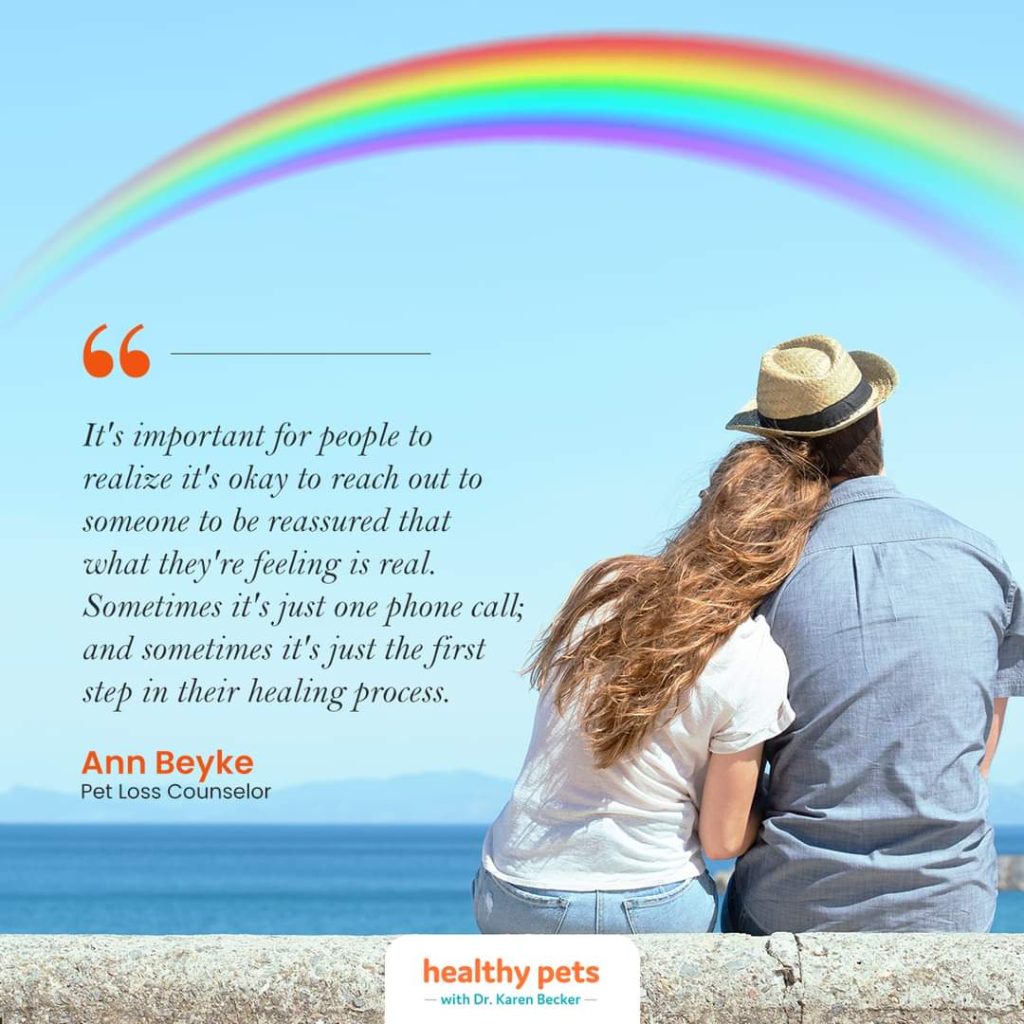
Ann Beyke discussed how expressing heavy feelings and talking to someone can help pet parents who lost their precious companion move on from grieving to recovery.
Carol Bryant, is a journalist, dog mom, and blog owner of Fidose of Reality. Learn how to memorialize a beloved pet in ways that are comforting and therapeutic, and why it’s important to seek support and professional help if necessary.
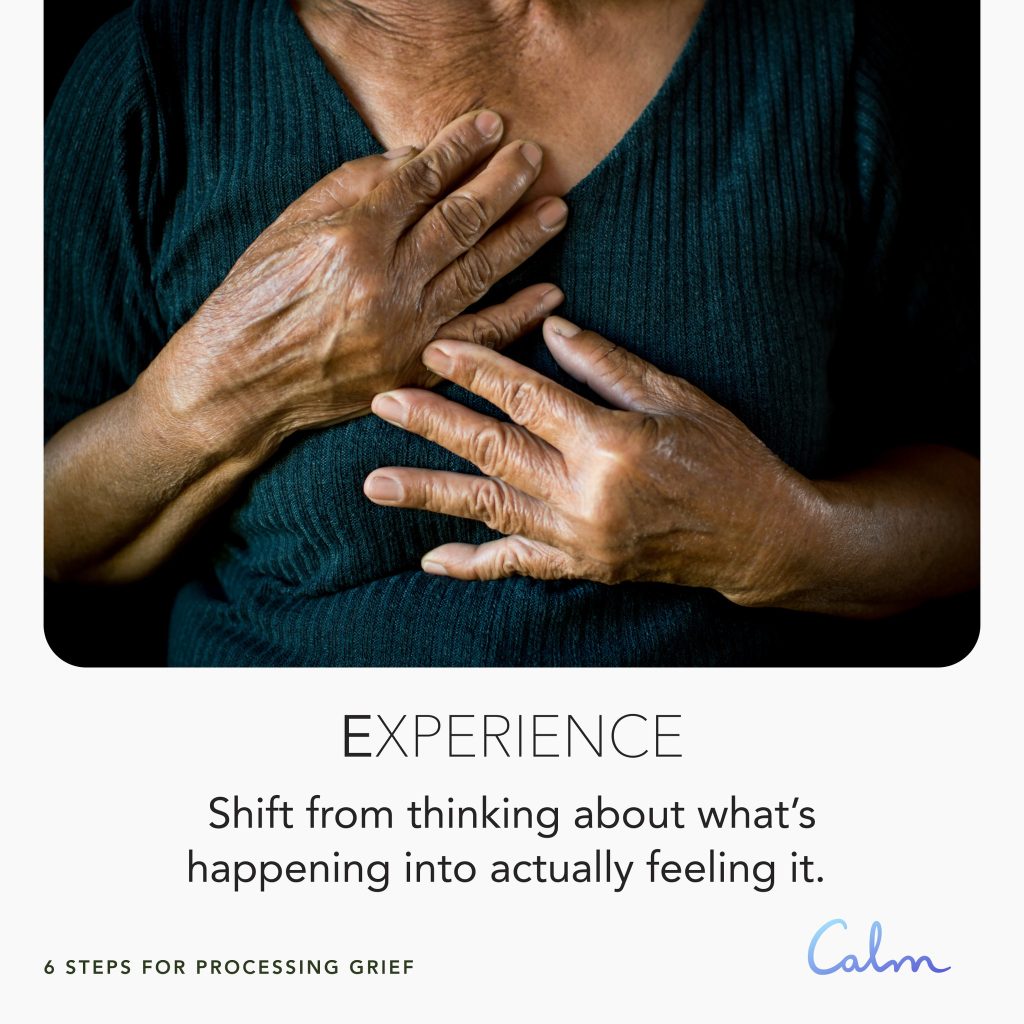
The Calm App also shares 6 steps to help process grief by Lama Rod Owens.
Grief – Images by Calm
DEPRESSION TIPS
We all have our on and off days and it is ok. Here are some small things you can do to help on those off days.
Shower or bath.
Moisturize everything.
Put on clean, comfortable clothes.
Drink cold water.
Clean something.
Blast music.
Make food.
Make something.
Take a walk because exercise is the most underutilized antidepressant.
Go outside.
Call someone.
Find something to be grateful for! Think of happy times and share happy stories.
BREATHE! This Calm App is a great tool for this. More specific for anxiety, abdominal or lateral breathing might be helpful, but just breathe deeply!
MEN GRIEF DIFFERENTLY
Navigating the grieving process in the face of a critically ill or deceased cherished pet is a deeply individual experience, and men and women often manifest their reactions in unique ways. Failing to comprehend and embrace these diverse grieving styles can lead to interpersonal challenges and conflicts within families and couples during this challenging period. The decisions surrounding expensive diagnostic procedures, euthanasia considerations, and post-death care for the pet’s body add complexity to an already emotional time. Misinterpretations of behaviours, misunderstandings of needs, and unmet expectations further contribute to the intricacies of grieving. Stereotypes play a role as well; societal expectations often pressure men to embody traits of toughness, confidence, rationality, and control.
Men typically channel their grief through physical actions, engaging in goal-oriented activities as a means of coping. This proactive approach can mislead observers into believing men are further along in the grieving process than they might be. It is crucial not to assume a man’s emotional state, even if he appears composed. When uncertainties arise, open communication becomes vital, as a man’s expression of anger may be a manifestation of grief rather than a reflection of personal feelings. Understanding that some men may even experience the loss of a pet as more profound than the loss of a parent needs a compassionate acknowledgement during this journey of grieving.
Someone shared with me about the loss of her first dog when she was quite young and that she remembers how her parents did not know how to handle it. That affected her bond with other animals and the way she processed that loss and those to follow.
Coping with the loss of a beloved pet is a challenging experience and sadness can be a really big emotion for children. It can be particularly impactful for children, as it often serves as their initial encounter with death and the loss of a pet is the first major grieving experience for a child.
The process is marked by a range of emotions, from trauma to confusion, and overwhelm, that may be difficult for young minds to comprehend. However, this difficult moment can become a powerful learning experience, laying the foundation for understanding and navigating future losses. Anticipating numerous questions from your child is common, providing insight into the level of information they need to begin processing the loss. Patience is key, as children may ask the same questions repeatedly. The circumstances of the pet’s passing also play a role in this delicate conversation.
Family pets, as cherished members, contribute love, companionship, and joy to our lives and those of our children. Balancing personal grief while guiding children through their own emotional journey can feel like a substantial burden. It’s essential not to feel obligated to project false strength but rather to engage in the process of teaching them about grief. Children may struggle with profound sadness, and their grief may manifest in short, intermittent bursts over an extended period. Offering activities or transitions to different tasks, such as play, can help prevent them from feeling overwhelmed. Just don’t avoid the feelings.
When discussing death with children, using concrete language like “died,” “dead,” or, in the case of euthanasia, “helped to die” provides clarity. Avoiding euphemisms, such as “put to sleep,” helps prevent confusion and potential fears, especially around bedtime. Sharing your own feelings of grief with your child, appropriately tailored to their level of understanding, can normalize the experience and convey that such emotions are valid and that we may not grieve in the same way. This open communication fosters healthy coping mechanisms for grief and loss both now and in their future experiences.
More resources for helping children cope with pet loss:
A child activity book developed and illustrated by Katie Nurmi
Rainbow Bridge Raina is also a unique page for kids (and adults) with a grieving heart.
Rainbowbridge.com shares helpful tips for the grieving child which include the following as well as age-related tips:
1. Giving the child permission to work through their grief.
Tell their teacher about the pet’s death.
Encourage the child to talk freely about the pet.
Give the child plenty of hugs and reassurance.
Discuss death, dying, and grief honestly.
2. NEVER say things like “God took your pet,” or the pet was “put to sleep.”
The child will learn to fear that God will take them, their parents, or their siblings.
The child will become afraid of going to sleep.
3. Include the child in everything that is going on.
4. Explain the permanency of death.
Children and grief – Image by Pexels.com
HELPING YOUR PET COPE WITH LOSS
Losing an animal companion can be difficult, including for the dogs or other pets in the household that lost their best buddy. While they might not understand the full extent of human absence, animals do understand the emotional feeling of missing someone who’s no longer a part of their daily lives.
Here are some signs of grief in our animal companions:
Changes in sleeping patterns.
Changes in eating habits.
Lack of interest in normal activities like playing.
Reluctance to be in a room or home alone, or away from human family members.
Wandering the house, searching for their lost friend.
Fearful behaviour.
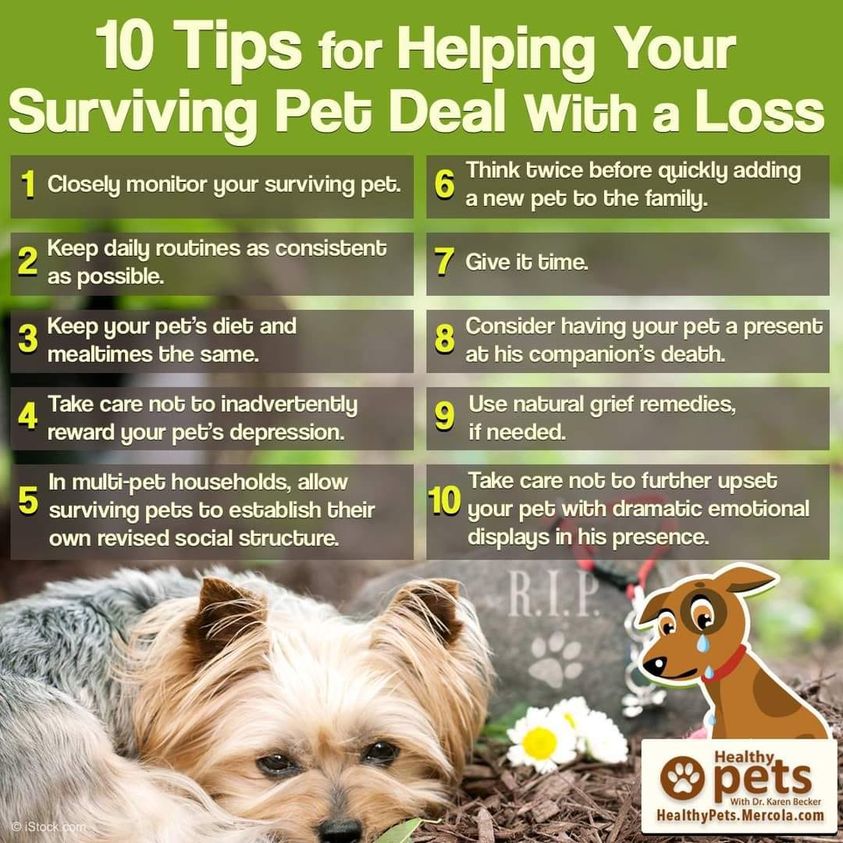
10 Tips by Dr. Karen Becker for helping your pet deal with loss:
Closely monitor your surviving pet.
Keep your pet’s diet and mealtimes the same.
Take care not to inadvertently reward your pet’s depression
Keep daily routines as consistent as possible.
Take care not to further upset your pet with dramatic emotional displays in their presence.
Think twice before quickly adding a new pet to the family in multi-pet households.
Allow surviving pets to establish their own revised social structure.
Consider having your pet present at his companion’s death.
Give it time.
Use natural grief remedies, if needed.
I often find that because we don’t want to grieve alone, we want others to grieve with us, including the pets that are still alive. Some animals that were closely bonded do grieve more, but be careful that you don’t project your feelings onto your pets. Their behaviour might just change because they feel your emotions.
Grief – Image by Dr. Karen Becker
WAYS TO REMEMBER YOUR PET
Create a Memorial: Design a dedicated memorial space in your home or garden with photos, candles, and perhaps a personalized plaque or memorial stone.
Keepsakes: Preserve memories with keepsakes like paw prints, fur clippings, or a favourite toy. Some services even offer jewellery made from ashes.
Plant a Tree or Flower: Choose a special spot to plant a tree, shrub, or flowers in honor of your pet, creating a living tribute.
Custom Artwork: Commission or create artwork, such as a painting or a framed photo collage, to capture the essence of your pet.
Write a Tribute: Compose a heartfelt letter, poem, or story about your pet’s life, capturing the joy they brought.
Donate in Their Name: Contribute to a charity or animal welfare organization in your pet’s name, supporting a cause they would appreciate.
Hold a Memorial Ceremony: Arrange a small gathering or ceremony with friends and family to share memories, celebrate their lives, and provide support.
Digital Remembrance: Create a digital tribute, perhaps a photo album or a social media post sharing your favourite moments with your pet.
Compile a Scrapbook or Photobook: Organize pictures, notes, and mementos in a scrapbook that chronicles your pet’s life and the special times you shared.
Keep Their Collar or Tag: Retain a physical reminder by keeping your pet’s collar, tag, or favourite accessory.
Remember, the key is to choose a memorial that feels meaningful and reflective of the unique bond you shared with your pet.
HOW TO RESPOND TO THE GRIEF OF OTHERS
When someone is struggling with the loss of a pet or a loved one, many people feel uncertain about how to respond, often avoiding the topic altogether. In my experience, a more supportive approach is for those grieving to openly acknowledge their pain, allowing those close to them to express empathy, check in regularly, and convey that they are thinking about them.
If someone is hurting, simple phrases like “sorry for your loss” and “I am here for you” are appropriate and enough. It’s important not to dictate how someone should feel; instead, validate their emotions. Expressing understanding and acknowledging their feelings is more comforting than offering personal perspectives. Emotions need recognition before they can be effectively navigated and regulated.
Being present for them is crucial, recognizing that some may prefer space while others appreciate regular check-ins or a combination of both. One friend brought me flowers and family member food. That meant a lot.
If you are a boss and your employee experience this loss, be considerate and kind as you would with human loss. Never tell anyone who lost a beloved pet, “that it is just an animal”. That shows that you lack understanding and compassion. Also, never suggest or even get a new pet for them soon after the death. It is very incensitive.
Grief – Image by Dr. Karen Becker
REMEMBER
Ensure that all family members are supported and understand that not all may experience the loss the same way.
Make time to grieve.
Make sure your other pets are ok as animals grieve too.
Other people, especially those without pets, don’t realize that the experience can be just as traumatic as losing a parent or child.
A physical memorial can provide comfort.
Don’t make any big or quick decisions like getting a new pet during this time.
Be supportive and considerate if someone experienced the loss of a pet.
Remember to mention and thank the people who’ve given you support during those hard days.
WHEN TO SEEK PROFESSIONAL HELP?
No one heals in a straight line. Grieving is individual and you need to heal at your own pace, taking it one day at a time. If you have experienced physical changes after the loss of a beloved pet, like weight loss or weight gain, chronic headaches, stomach-aches, or trouble sleeping, if you can’t function, if you can’t hold work, if you can’t have enjoyment, then professional help would be something to consider. If you have a gut feeling that you need to talk to someone, listen to your gut and reach out.
OTHER RESOURCES
There are many support groups online and it does help to be with people who understand and support you. Here are two of them:
Marin Humane Organization also offers a free, monthly support group (now via Zoom) for those who’ve lost pets. To learn more, go to marinhumane.org/get-involved/events. There are also many other support groups for individuals who lost pets.
Pet Loss: A Thoughtful Guide for Adults and Children, by Herbert A. Nieburg and Arlene Fischer
I Heard Your Dog Died: Imaginings for Those Who Have Lost a Pet, by Bonnie Kreitler
The Loss of a Pet: A Guide to Coping with the Grieving Process When a Pet Dies, by Wallace Sife
Coping With Sorrow on the Loss of Your Pet, by Moira Anderson Allen
Coping with pet loss is a highly personal journey, with each person experiencing a range of emotions unique to them. Finding solace in meaningful remembrances, be it through memorials or keepsakes, helps navigate the grief. It’s crucial to recognize that people grieve differently, and the support of understanding friends and family can be invaluable. By allowing space for individual expressions of grief and honoring cherished memories, one can gradually embrace resilience while acknowledging the enduring love and companionship shared with a beloved pet. Reach out for support when you need to, but most of all, make time to grieve!
Next week we will look at some Christmas holiday safety tips.
MPUMALANGA — Bonginkosi Zwelibanzi Manana(33) pleaded guilty and was sentenced to three years imprisonment by Standerton Regional Court on Friday, 08 December 2023 for dealing in drugs.
The accused sentencing came after he was arrested by Ermelo and Standerton K9 unit members on 23 January 2023. Members were on duty when receiving information regarding a suspicious motor vehicle, a Nissan Navara bakkie, that was traveling on the R35 road between Morgenzon and Amersfort, transporting cannabis. The K9 members followed up on the information.
Whilst driving towards Amersfort, a vehicle matching the description was spotted. Members switched on emergency lights and tried to stop the vehicle. While trying to flee, the suspects vehicle overturned, and two male accupants came out with slight injuries. K9 members introduced themselves and interviewed the driver who introduced himself as Saluleko Samora Dladla from Swaziland.
He was asked about the bags that were found in the vehicle wrapped with brown tape. The driver informed them that it was dagga from Swaziland. Both accused were then arrested, and dagga to the estimated value of R450 000.00 was confiscated.
The case was then transferred to the Hawks Secunda based Serious Organised Crime Investigation Unit for further investigation.
Both accused, Saluleko Samora Dladla(43) and Bonginkosi Zwelibanzi Manana(33), appeared before Morgenzon Magistrate Court on several occassions and the matter was transferred to Standerton Regional Court.
On Friday 08 December 2023, Manana pleaded guilty, and he was sentenced to three years imprisonment, which is wholly suspended for five years, and he was also declared unfit to possess a firearm.
Charges against Saluleko Samora Dladla were withdrawn.
MANY ARE EXCITED ABOUT THE FESTIVITIES AROUND THE CHRISTMAS HOLIDAYS, BUT FOR SOME, AFTER PET LOSS, IT IS A TIME THAT THEY DREAD.
With their shorter lifespans, pet loss is inevitable, and saying goodbye is something every pet lover faces eventually. Saying goodbye is the hardest part of our relationships with our pets. As someone mentioned in a pet grief group, you joined a club you never wanted to be part of. Regardless of the type of pet, furry, finned, or scaled, no matter the species, we love them with all of our hearts and feel their loss as strongly as we’d feel the loss of a human family member or friend.
Last year I did an article on pet loss and the grief that accompanies it, shortly after a loss. When I looked back on many of the published posts in this series, the grief article had some of the highest views, which means that so many experience this, and since society stigmatization of loss, many suffer alone.
In my first article, I talked about grief, the stages of grief, the comorbidities of grief, a visualization exercise that helped me, pet loss resources, getting a new pet, and preparing for the Rainbow Bridge decision. This week I want to share some of what I learned about grief in the last year and next week we will look at some coping strategies and remembering your pets.
Grief is a universal emotion and in an excerpt from Belonging: Remembering Ourselves Home, Toko-pa Turner sums it up well:
“Grief is the response to a broken bond of belonging. Whether through the loss of a loved one, a way of life, or a cherished community, grief is the reaction to being torn from what you love. But while grief may look like an expression of pain that serves no purpose, it is actually the soul’s acknowledgment of what we value. Yet in our culture, we are deeply unskilled with grief. We hold it at a distance as best we can, both in ourselves and in each other, treating it as, Joanna Macy says, like “an enemy of cheerfulness.” There is unspoken shame associated with grief. It is sanctioned in very few places, in small doses, for exceptional occasions. Grief is the expression of healing in motion. Because what remains hidden for too long doesn’t change. It is calcified in place, often sealed by shame, left untouched and forgotten by time. But when it can finally come into the open to be seen, it is exposed to new conditions and it begins to move. It rises on a salty geyser of tears, sometimes sung to the surface by a terrific moan, streaming down our cheeks until it moistens the soil where we stand, preparing us for new growth.”
Carol Bryant writes, “It’s an odd thing, grief. We fear it, dismiss it, try and avoid it, occasionally have brushes with it, and most often times, without warning, it invites itself into our lives. No welcome mat but it comes nonetheless.”
She goes on using the metaphor of grief as a suitcase: “I view my grief as a suitcase. Some days it’s a cosmetics bag full and others it’s Samsonite gorilla-sized. Sometimes I feel like I’m on a carousel in the airport waiting for the form my grief will take. Do I wait days or weeks before I tear up and ache so very much or is today a carry-on kind of day where I just take it with me? In any event, I know my luggage always arrives and never gets lost. If you are grieving the death of a beloved pet, please understand you are forever changed. I’ve learned to live with my grief and carry it with me as an invisible suitcase.”
I agree that society is unskilled in dealing with grief, more so when the loss involves an animal. We certainly don’t talk or think about it enough and maybe that is because it scares us.
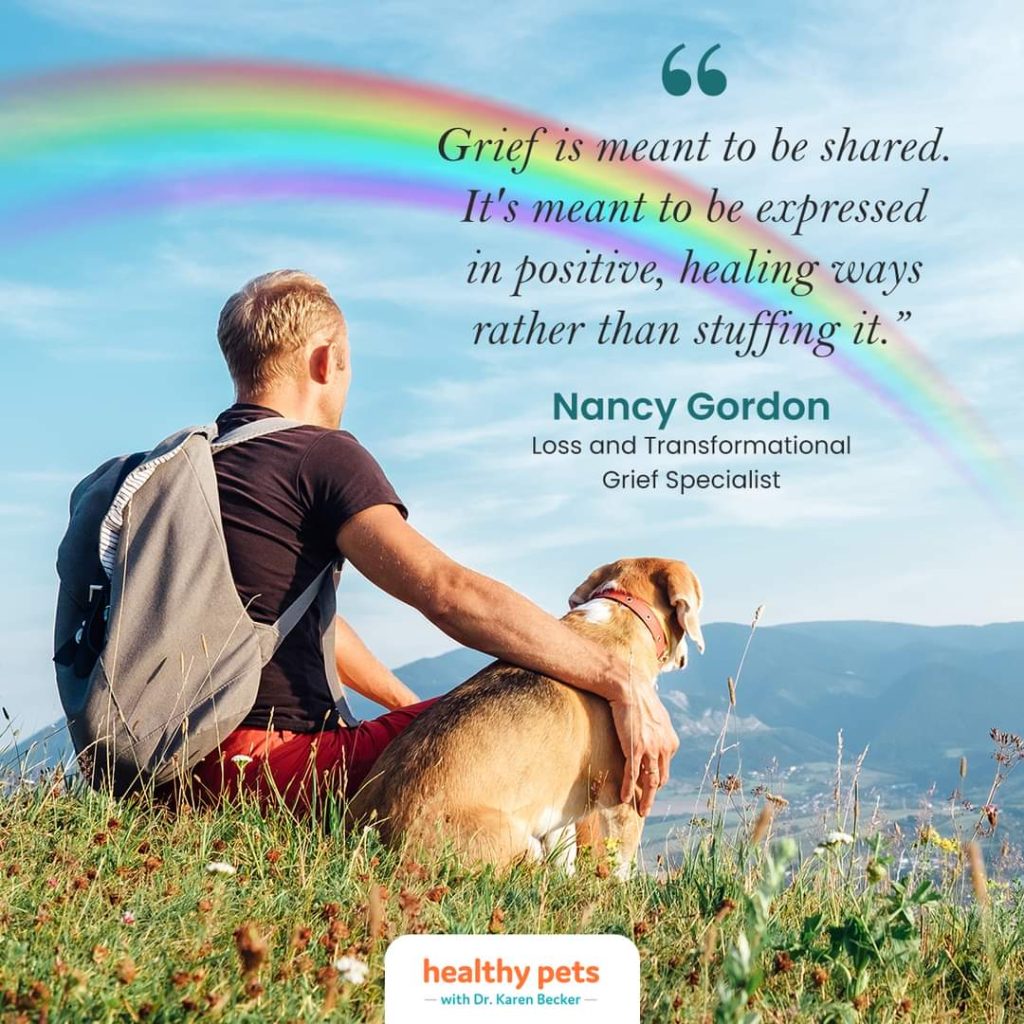
Nancy Gordon, a loss and transformational grief specialist, shares this: “Unhealed grief puts a lock on your heart. It’s so important for people to realize that the key to unlocking your heart is to face the guilt and grief. Now, facing it is often very, very hard for people. Grief is meant to be shared. It’s meant to be expressed in positive, healing ways rather than stuffing it.”
Pet loss – Image by Bark & Whiskers
WHY DOES PET LOSS HURT?
There may be many reasons but some of the major reasons are certainly because animals’ love is so unconditional, non-judgemental, and accepting. They have seen you at your best and your worst. Sometimes these pets have helped us through major life-changing events like losing someone, illness, a new job or new school, divorce, etc. Grief is a sign you were loved and loved deeply. The grief is real because the emotions you experienced with your pet were real. The loss is valid because you didn’t lose a thing you lost someone close and special to you.
During my grief journey, I watched a TEDx talk by an emergency vet Dr. Sarah Hoggan who shared about the comorbidities of grief and how these comorbidities can complicate grief. Having to make the PTS decision or losing an animal due to a preventable accident are just two of them. My first article covered more on this.
In the first article, I touched on the stages of grief which starts with anticipatory grief. This is a grief you experience before the actual loss. Then there is denial, guilt/anger, bargaining, depression, and acceptance.Because grief is such an individual process, not everyone may experience all the stages and it might also not be in this particular order, however, our first response to the loss is usually denial, and the last acceptance.
THE SIXTH STAGE OF GRIEF
David Kessler wrote a book in which he refers to the sixth stage of grief: Finding meaning again. In his book, Kessler gives readers a roadmap to remembering those who have died with more love than pain; he shows us how to move forward in a way that honors our loved ones. Adoption can be part of this. Once you reach the stage of acceptance and you are back in a positive place, the best tribute you can pay to a pet that has passed is to give another one a second chance by adopting from a reputable rescue organization.
Please don’t get a new pet when you are still going through the grieving stages because you will bring the new pet into a weak and sad energy, which is not fair to them and never to “replace” the other one.
In an article by Carol Bryant titled: Anatomy of a Grieving Dog Mom she writes: “I never thought I would ever feel complete again. The logical part of me knows we all will die someday. The unprepared part of me wasn’t ready, couldn’t have prepared, and went into a downward spiral of pain as a grieving dog mom. There’s a hole in my heart where it used to be whole.”
That is exactly how I feel and probably, you reading this too. Last week we adopted a new boy from our local SPCA. It was not a quick decision and never should be, but the time was right for me now. Although this new addition will not ever replace the others, my heart feels whole again. Someone said that grief is love that is looking for a home…………this speaks deeply to me.
Pet loss – Image by Dr. Karen Becker
Also, read why animals should not be given as gifts.
REMEMBER THIS ABOUT GRIEF
Rainbow Bridge Raina and others share the following to keep in mind when you are grieving.
You are not grieving too long, but your journey will likely take longer than you think.
There is no right or wrong way to grieve as long as you don’t hurt yourself.
Your journey will look different because grief is personal.
Be kind to yourself because grief is messy.
Others won’t understand, you don’t need their permission to grieve.
People will say wrong things to help you feel better.
It may feel that your world stopped in this grief. We will all experience a loss that will get us stuck, but you won’t be stuck forever.
Grief can be a liar and irrational.
We live in a society where the world doesn’t even stop for death. If your thoughts wander or you forget about your pet for a moment, that is ok.
You are not alone.
It does get better but it takes time as grief changes and morphs. It becomes lighter and you will survive and feel joy again.
Don’t be afraid to reach out for support. There are professional counsellors for those who have lost pets.
PREPARING FOR THE DECISION
In the first article, I talked about preparing for this dreadful decision and there are some practical resources to help you make this decision. What I want to highlight here is that you should never wait too long to make that decision, no matter how hard it is. It is the last gift you can give your beloved animal. Don’t prolong your pet’s suffering because of your or your child’s emotions. That is not fair to the animal who is suffering and please remain by their side in the moment. I can assure you the guilt of waiting too long or letting them die at home will be harder than when you do it “too” early. I see it clearly in the grief groups but also with our experiences. I know too many people who waited too long, usually because they didn’t want the responsiblity of this big decision.
Remember to never let the animal suffer because you do not have the funds to euthanize them. Contact your local SPCA or animal rescue as there are ways they can help with this or talk to your veterinarian. Please be kind to those in animal welfare because we cry for other people’s pets too and many in the trenches experience this loss frequently.
My heart goes out to every person who has to make a euthanasia (PTS) decision or who has lost their beloved fur family members. The reality is as Nick Cave describes it: “……if we love, we grieve, that’s the deal, that’s the pact. Grief is a terrible reminder about the depth of our love, and like love, grief is non-negotiable.” To my fellow travellers on the road of grief, you, the survivor of this death, now embark on a journey of grief and healing. Here is a beautiful video of the reunion at the Rainbow Bridge.
Next week we will continue this topic and look at coping with the loss, especially for children, how to help our other pets cope, and ways to remember your pet.
“We would like to make a difference in the communities that we operate in” said Randel Rademann, Evander General Manager, in his opening remarks “and what a better place to start with than our youth”.
Evander Gold Mining (Pty)Ltd, as part of their pledge to make a difference in their communities, decided to hand over Science and Computer Laboratories to Thistle Grove Combined School and Thomas Nhlabathi Secondary School.
The ceremony was held at Thistle Grove Combined School on 16 November. The handover also forms part of their Social Labour Plan.
Cobus Loots, Pan African Resources CEO spoke about the role and stability that mining had achieved in the past 150 years.
“At the beginning of 2018, we were losing a lot of money,” said Cobus, “So much so that we had to retrench over 2000 people.”
“This gave us an opportunity to reset things and I am very glad to say that we are now one of the lowest “cost to produce” of gold in Africa. ”Under our feet is one of the biggest undeveloped Gold resources in the world, 34m Ounces!”
“We are going to be here for a long time still” continued Cobus, “and we will continue to invest in our communities.”
In his keynote address, Mpumalanga District Director, Mr P.P. Magagula said “We are not going anywhere if we don’t promote maths, science and technology.”
There were also items by some learners that the crowd enjoyed a lot.