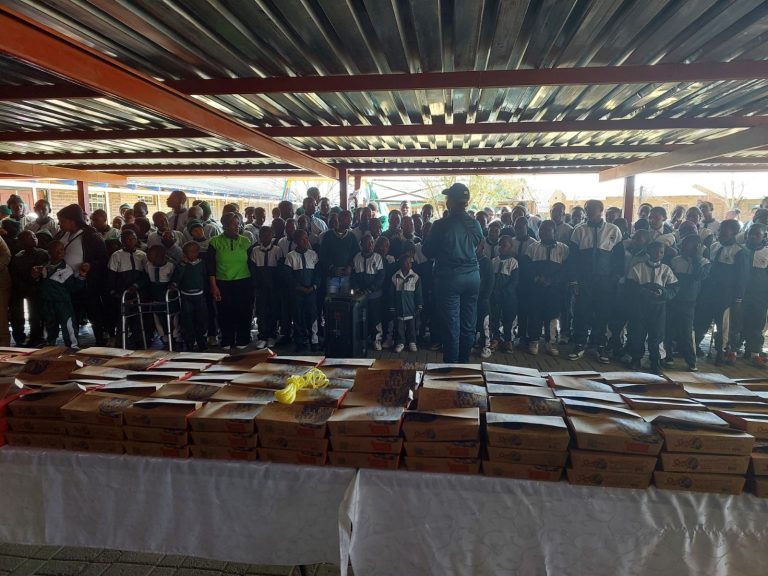
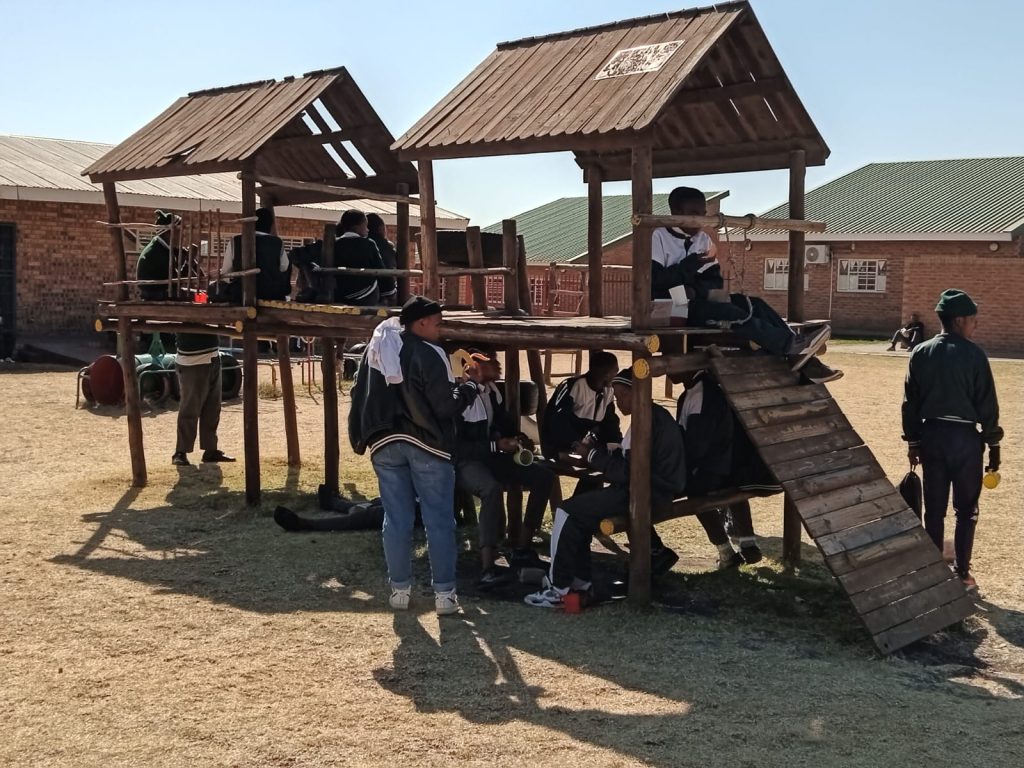
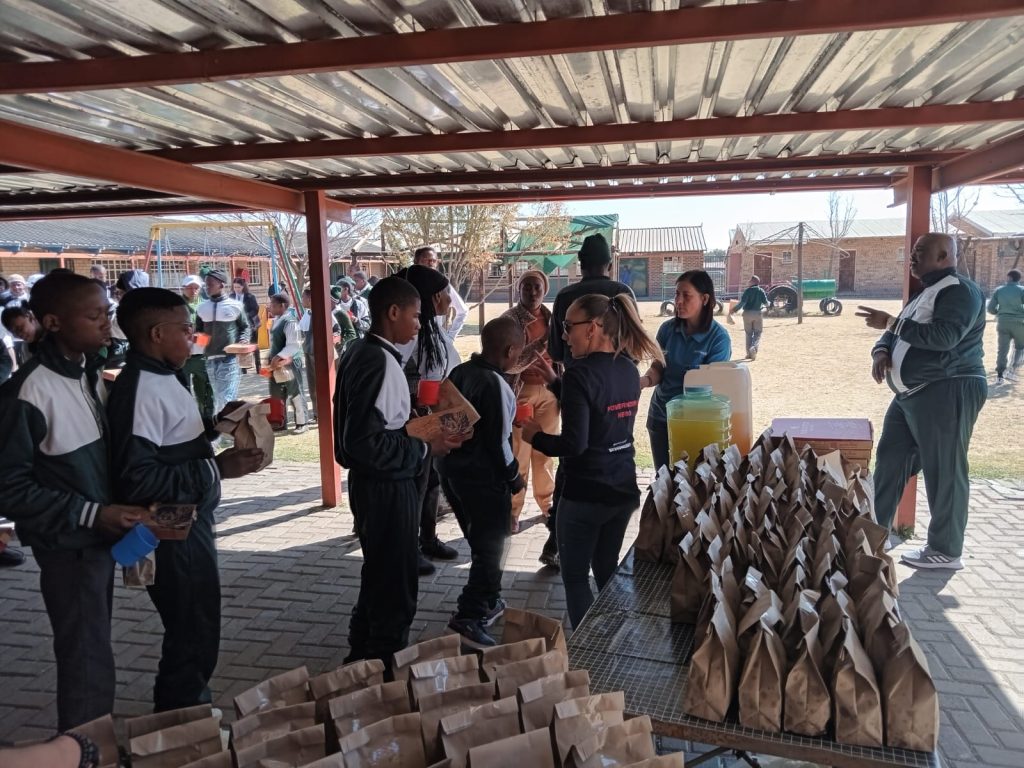
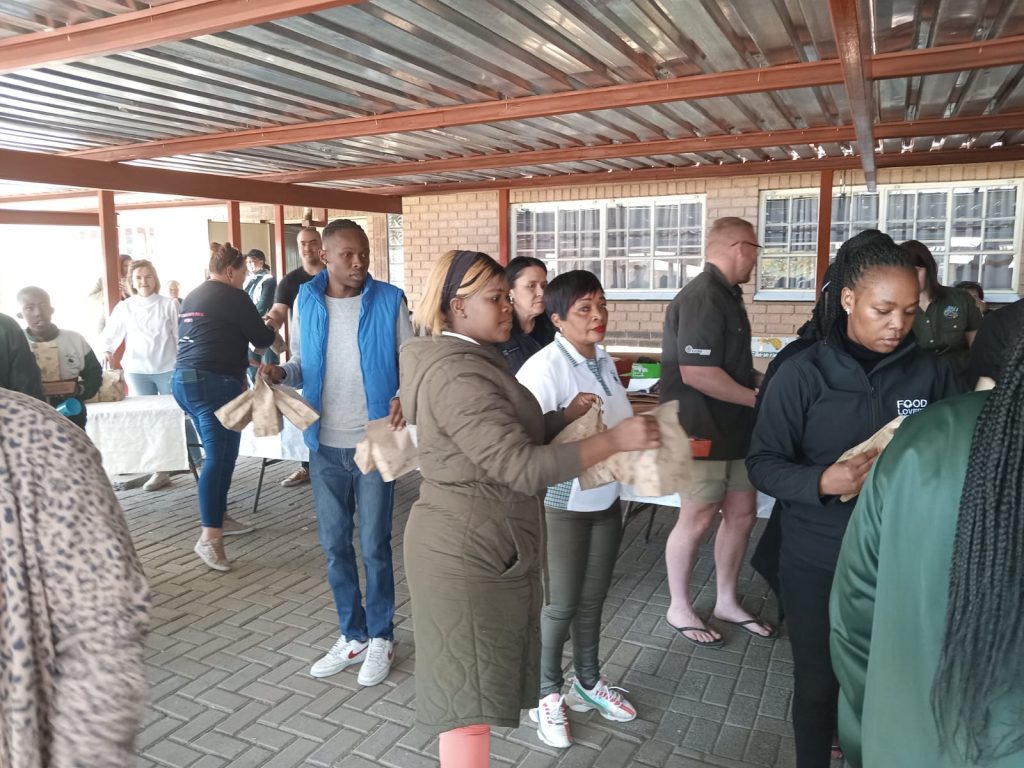
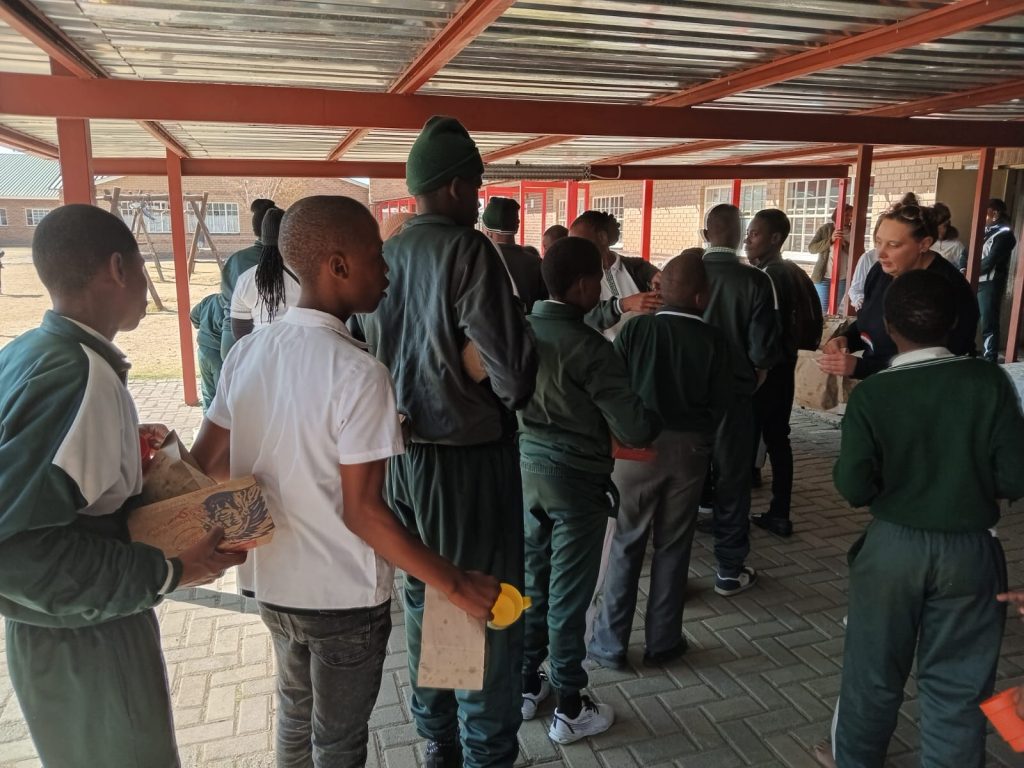
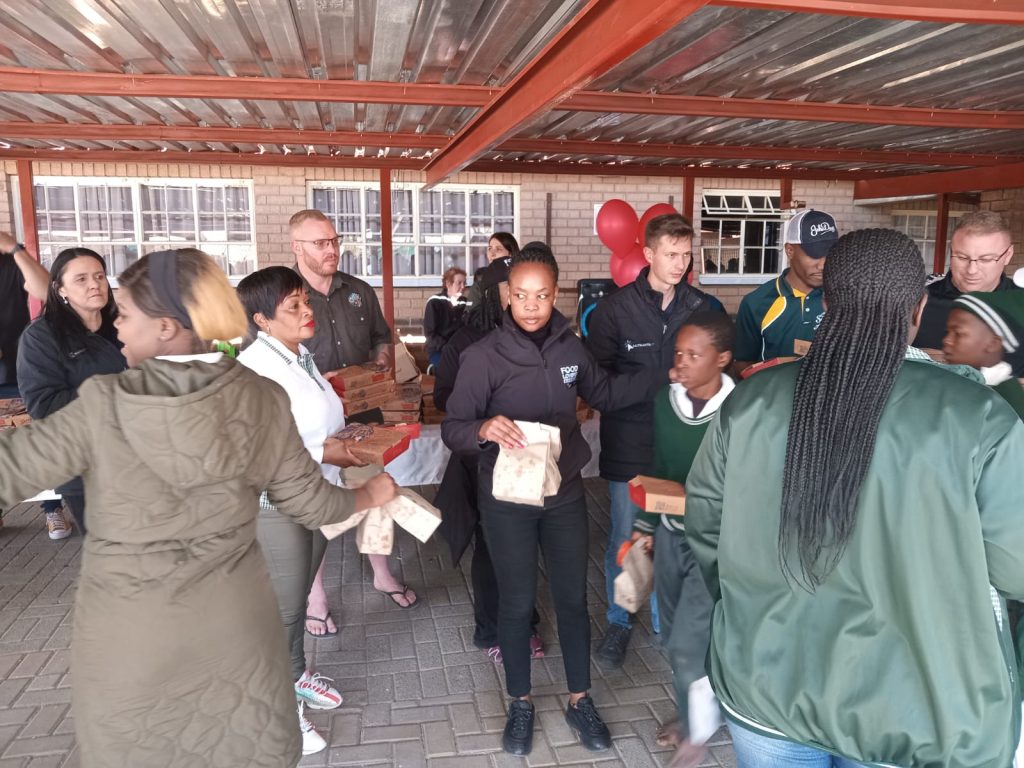
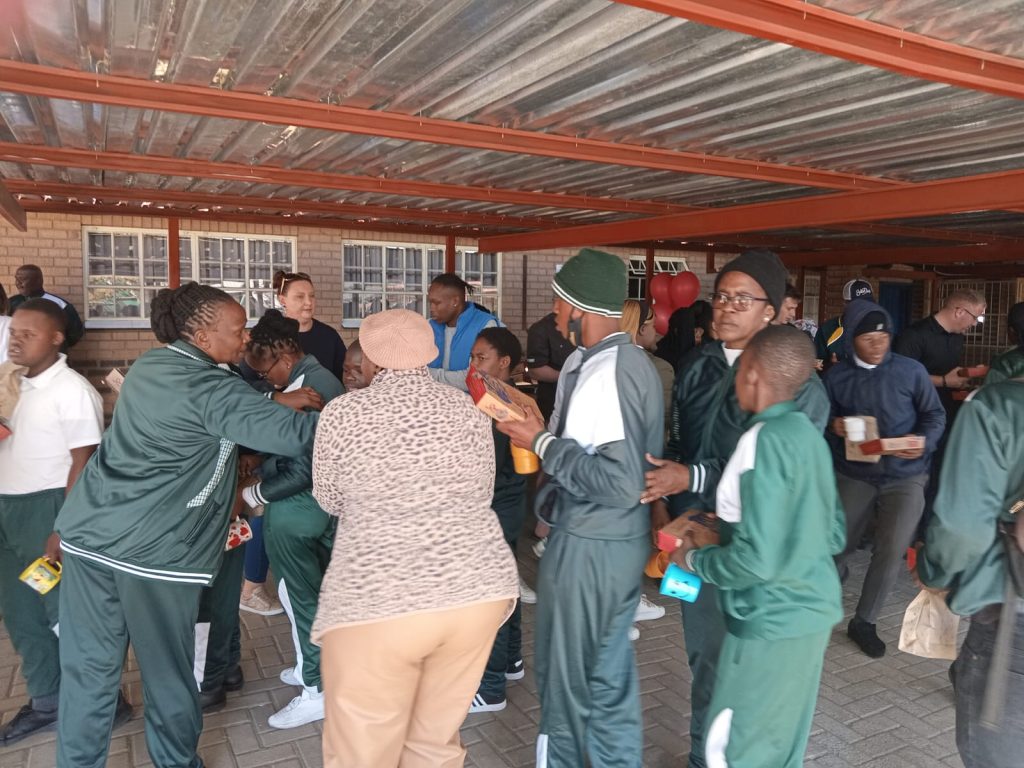
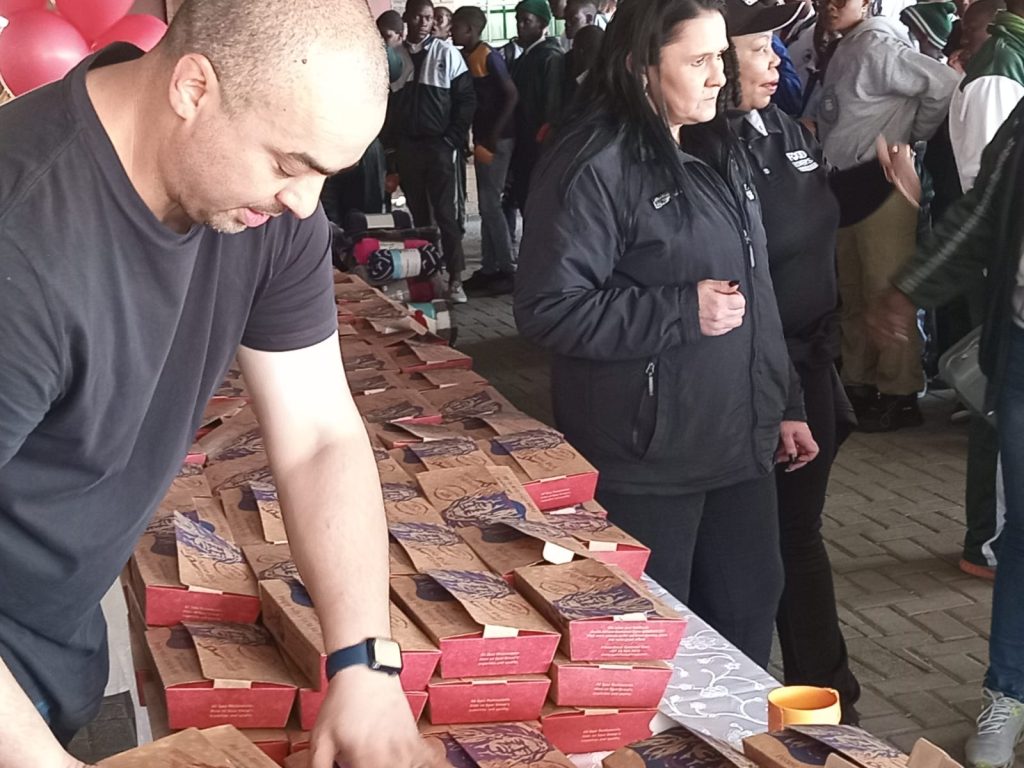
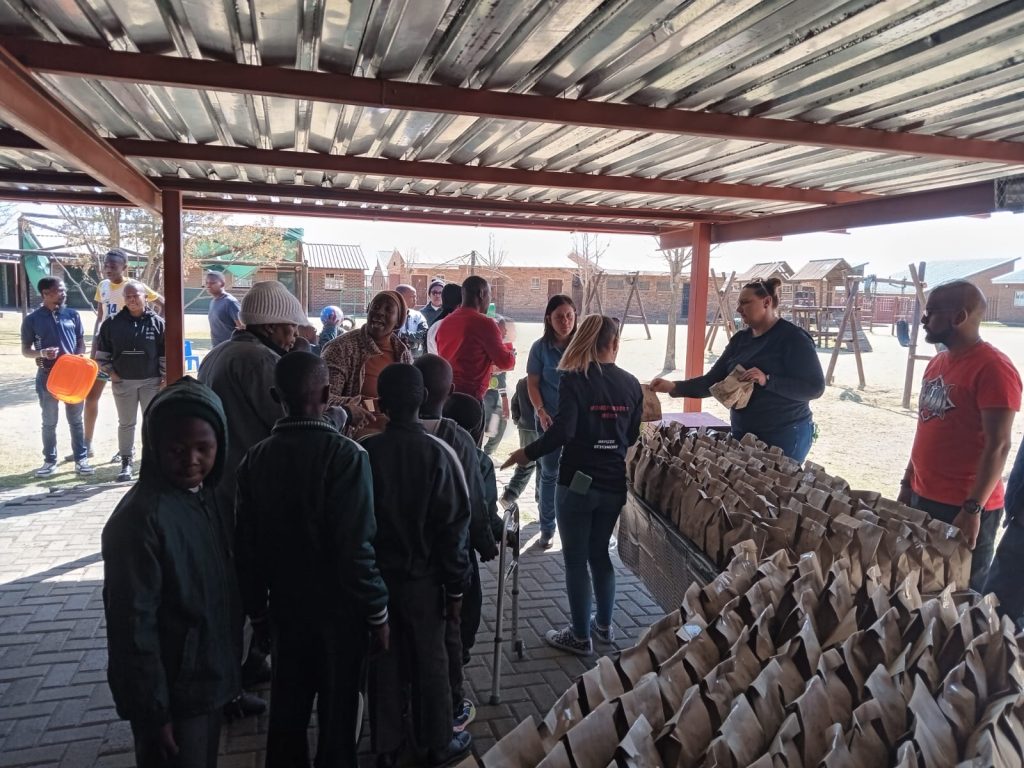
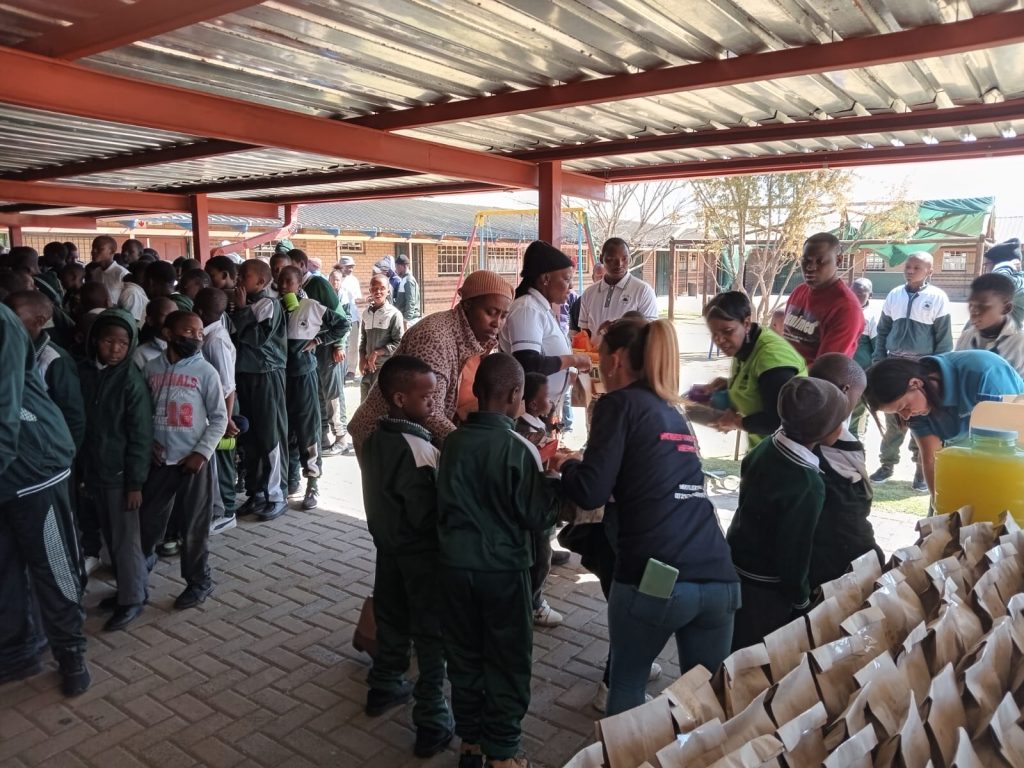
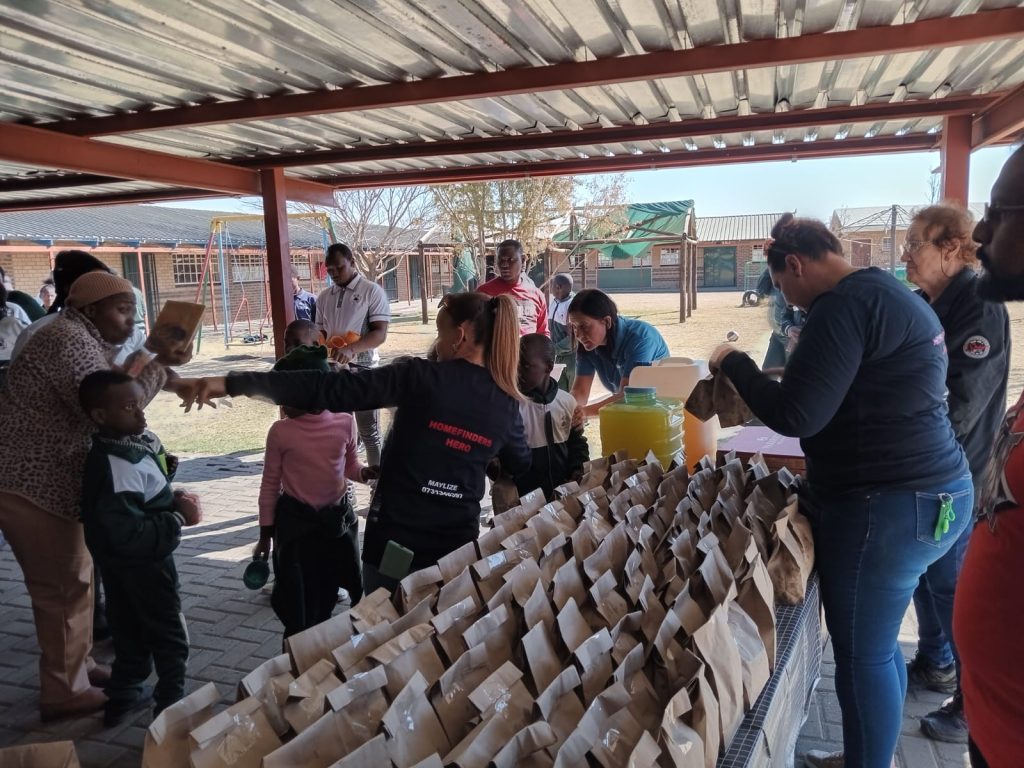
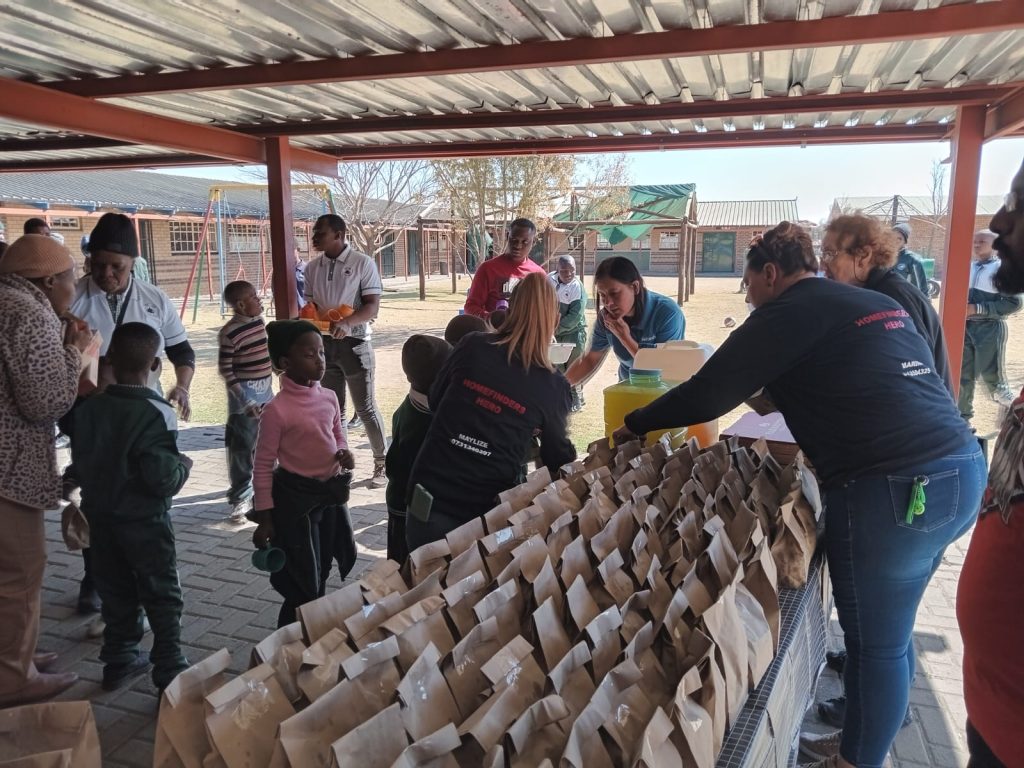
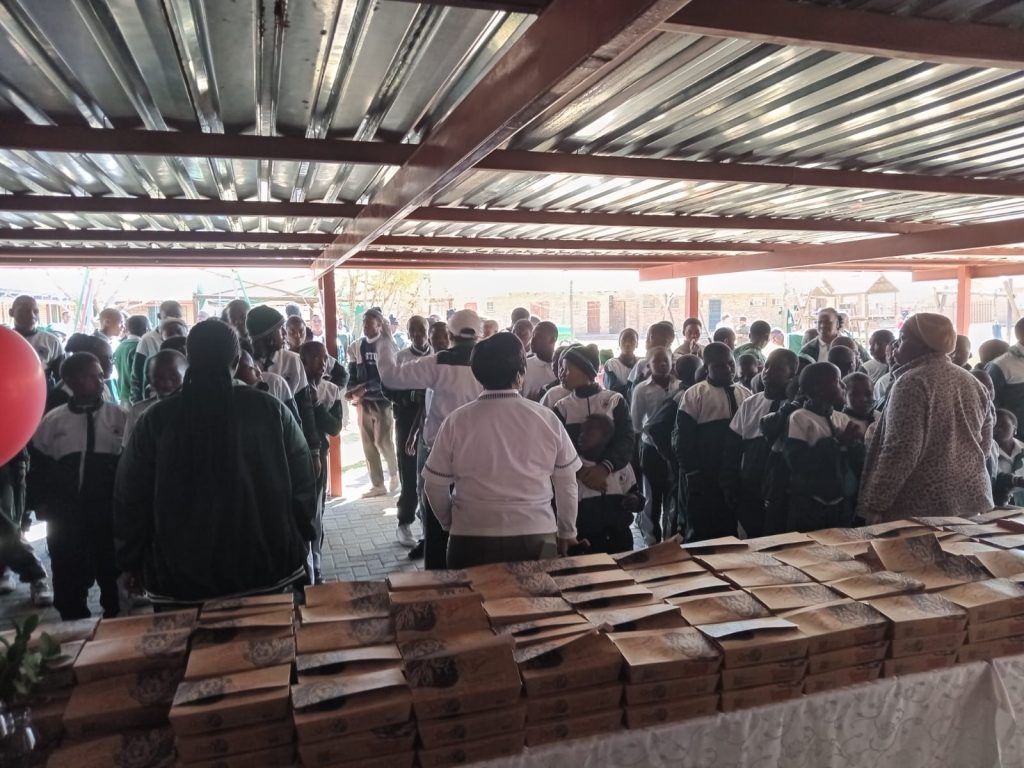
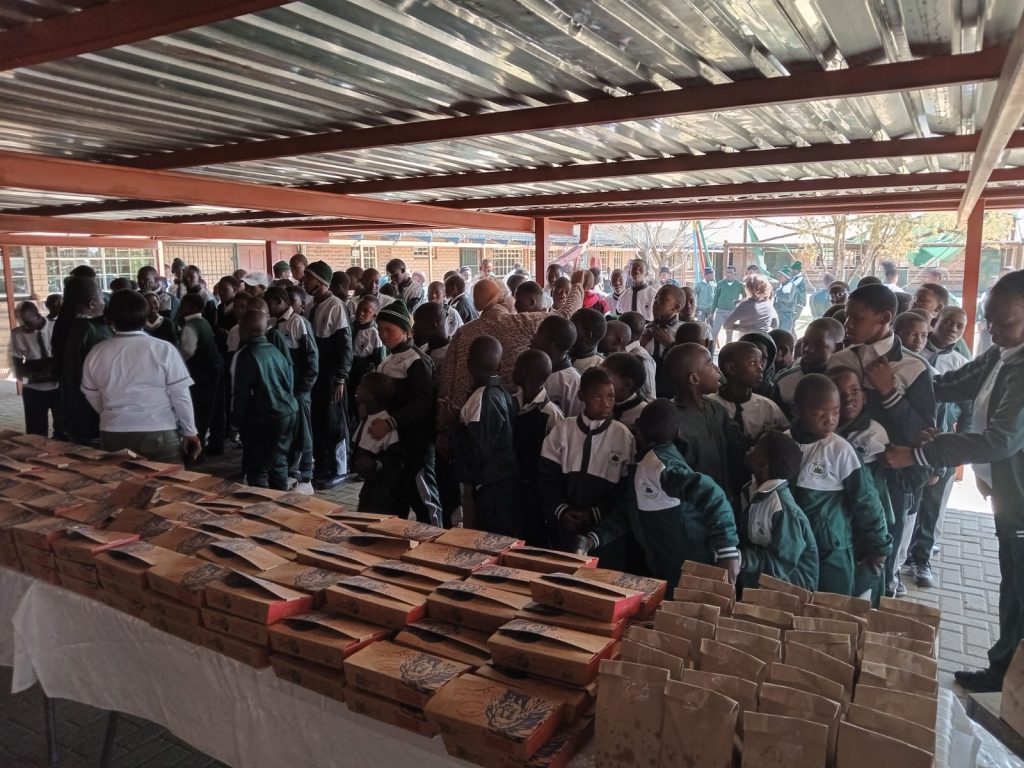
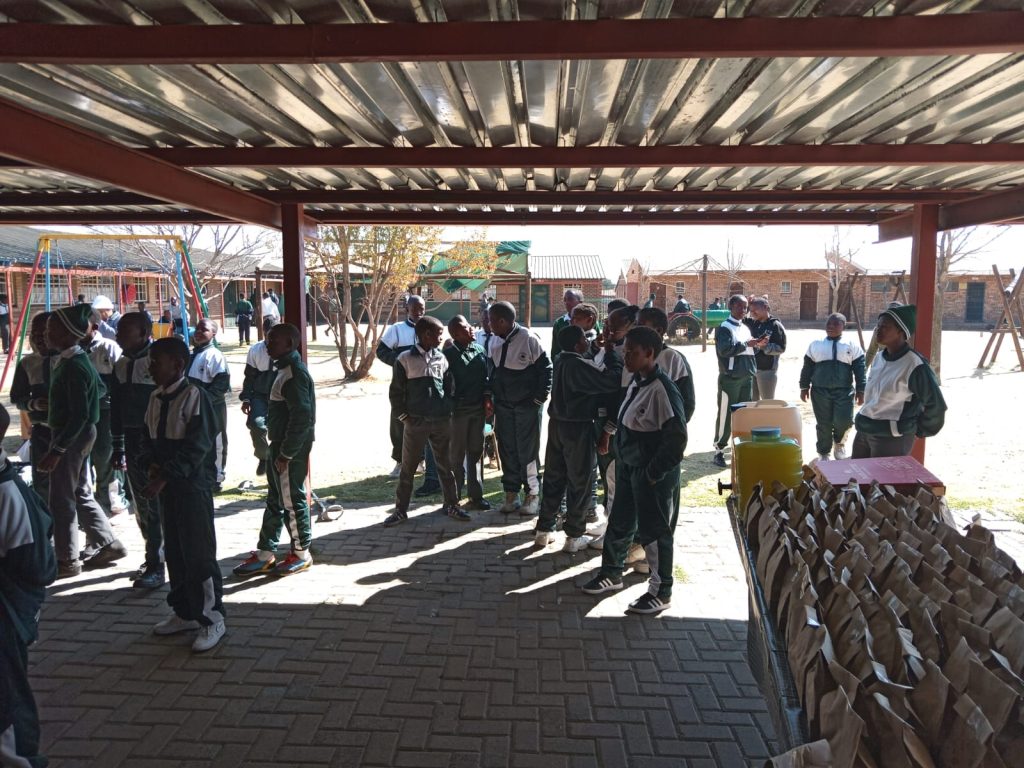
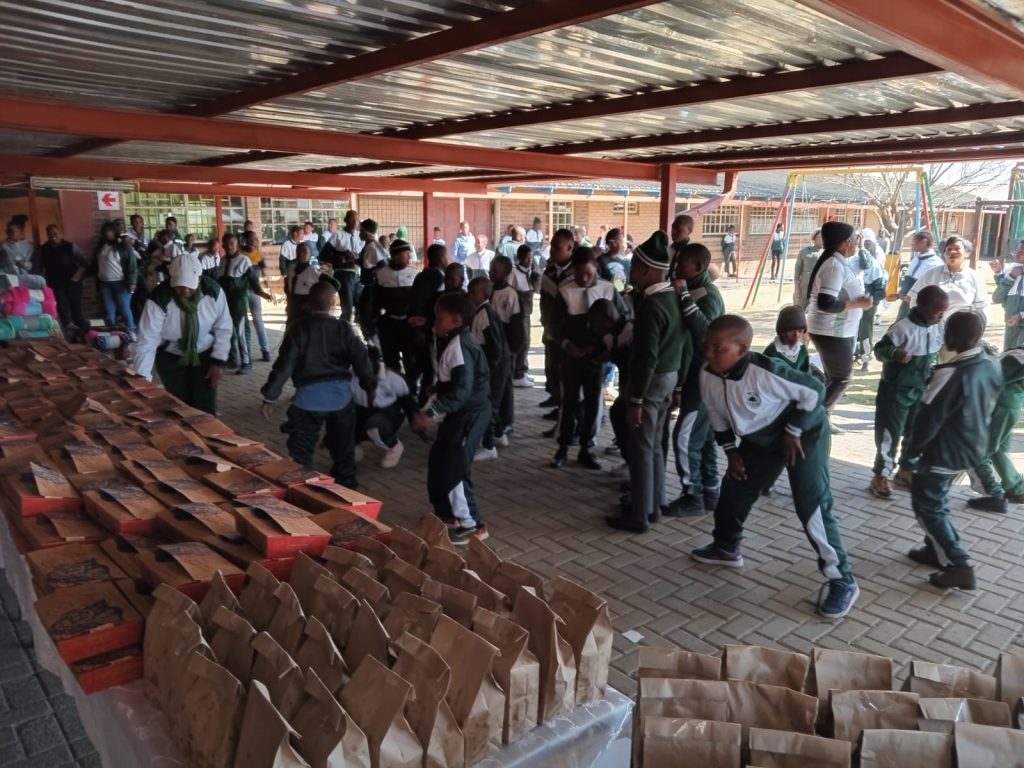
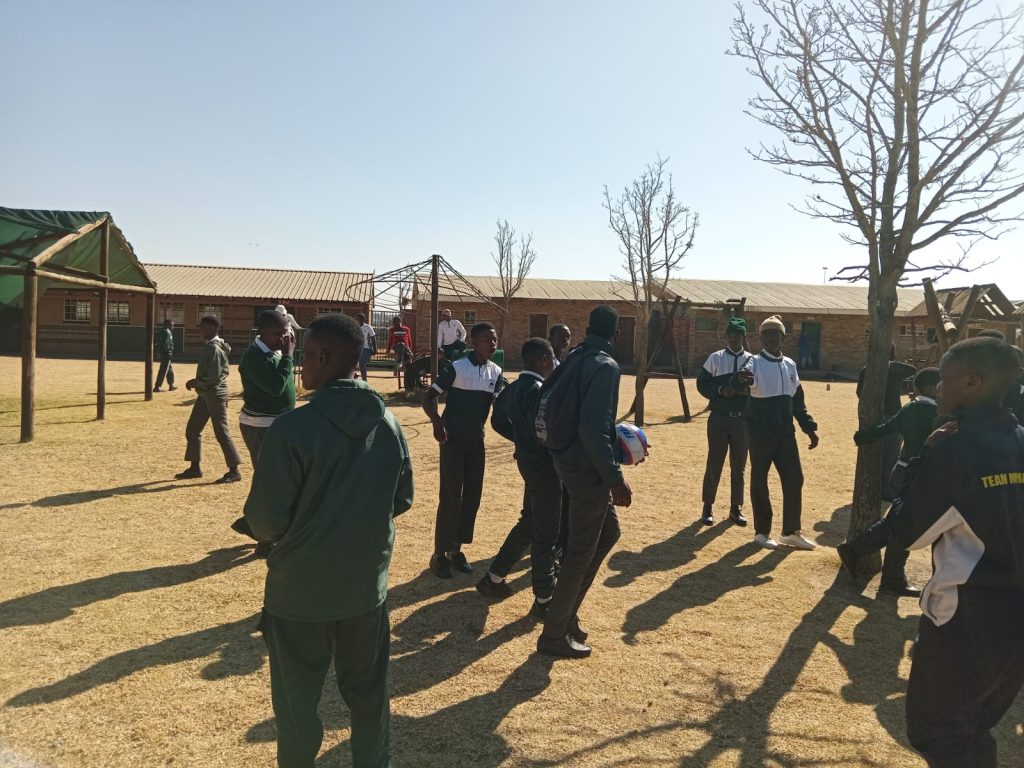
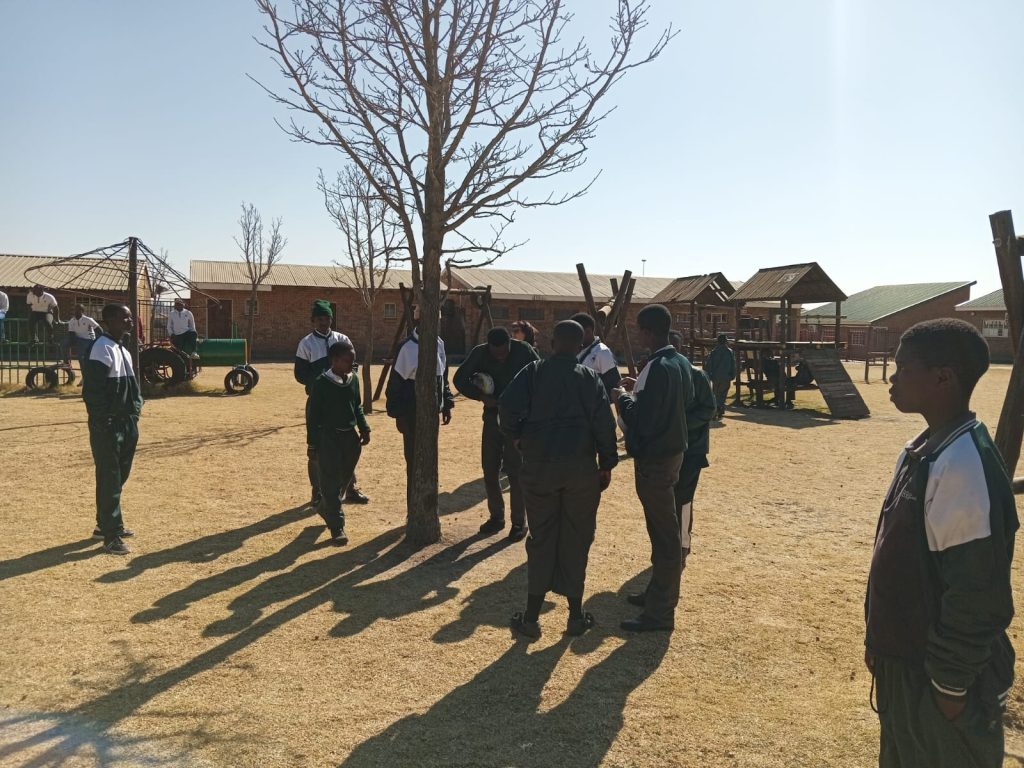
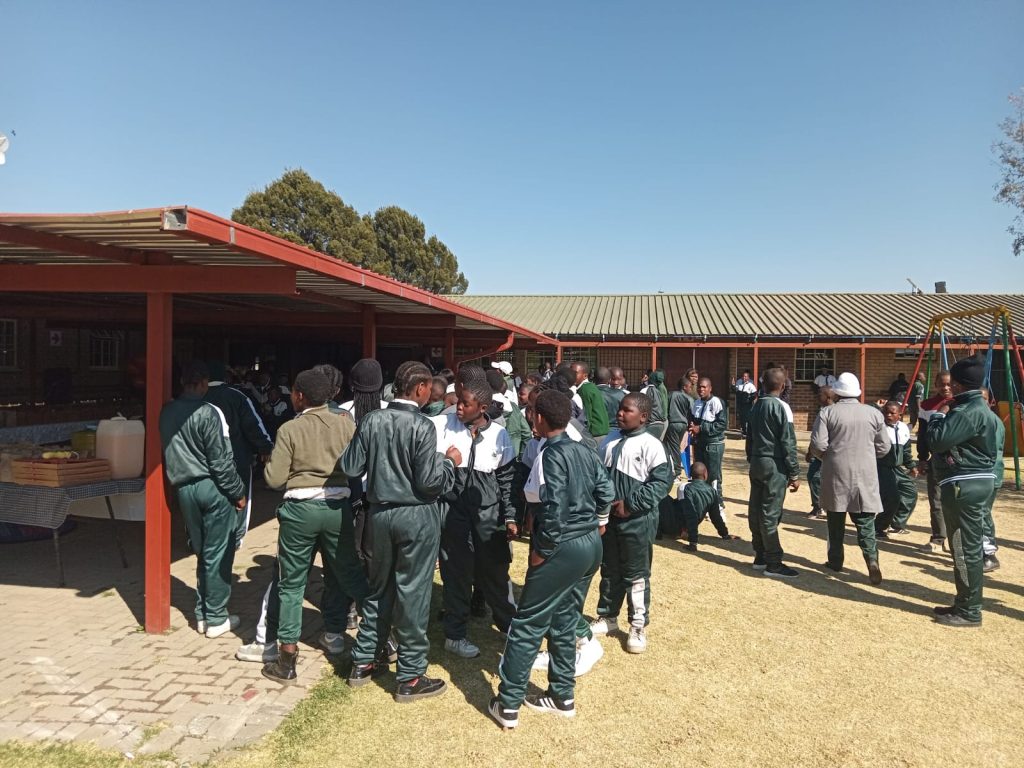
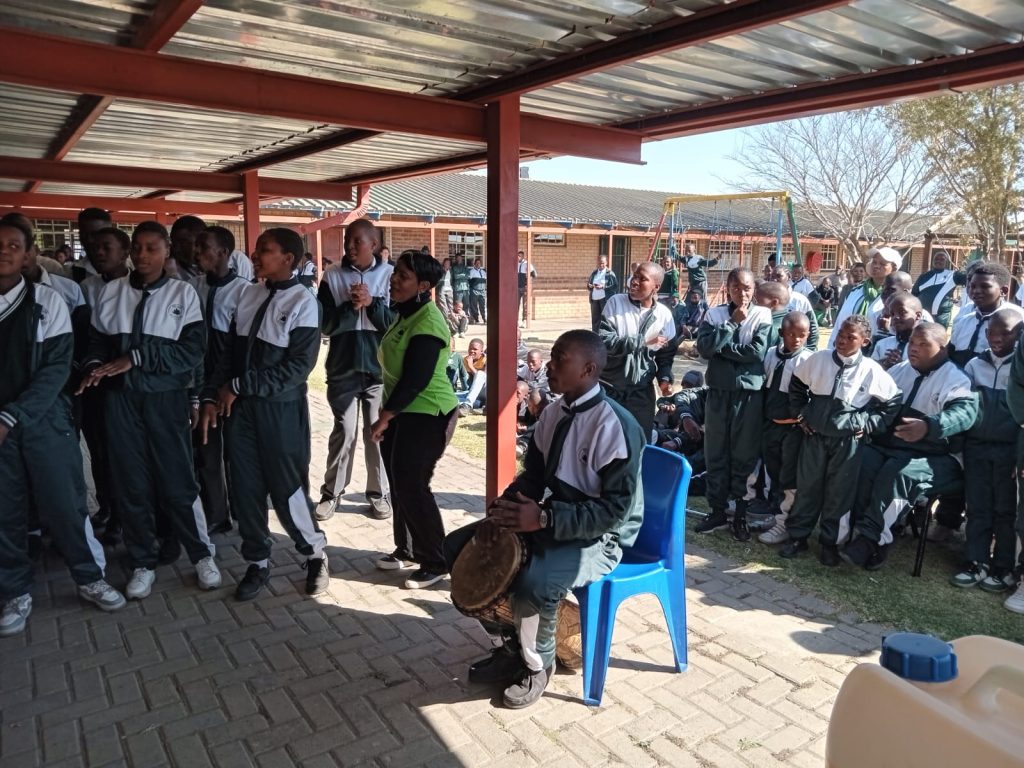
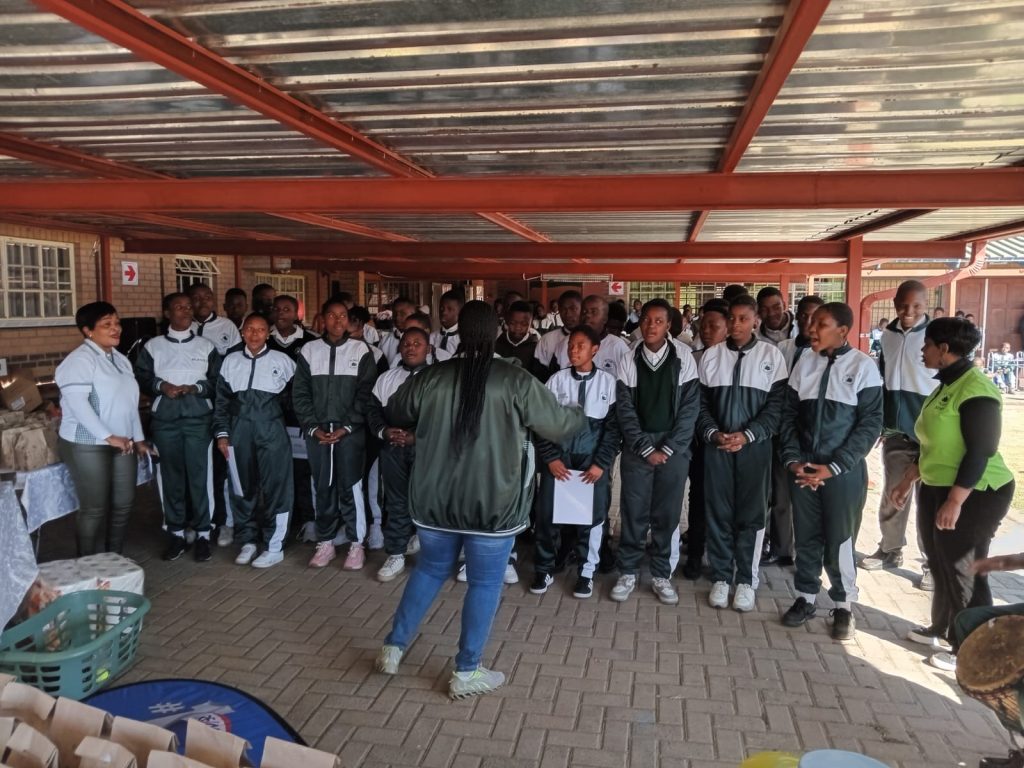
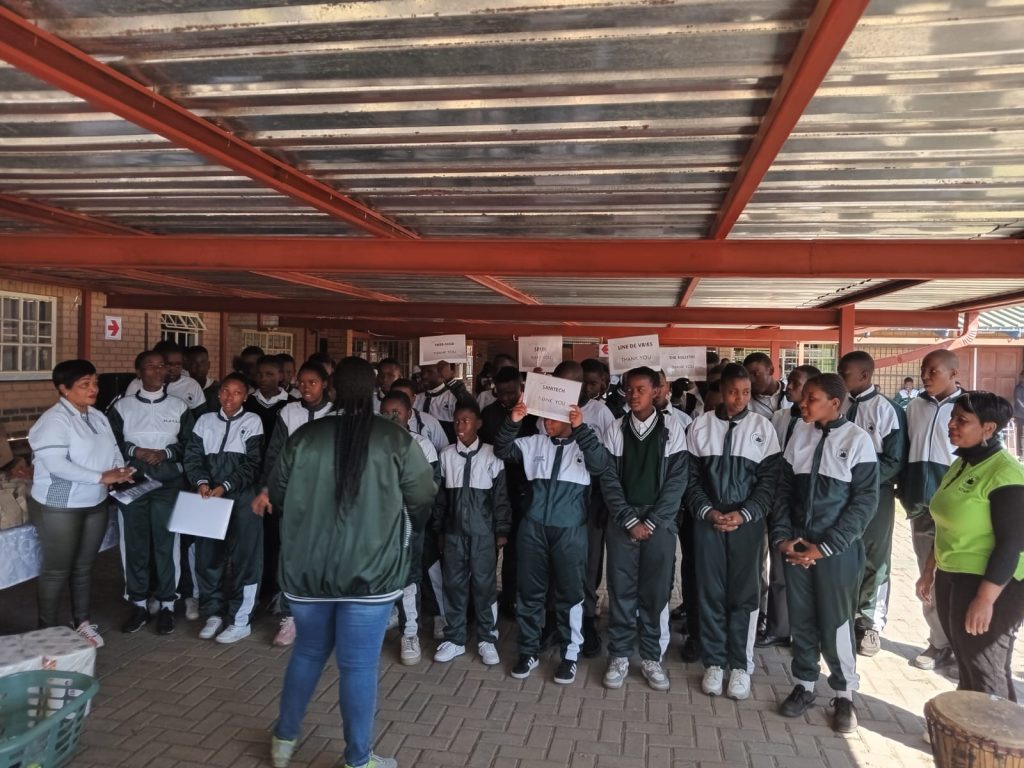
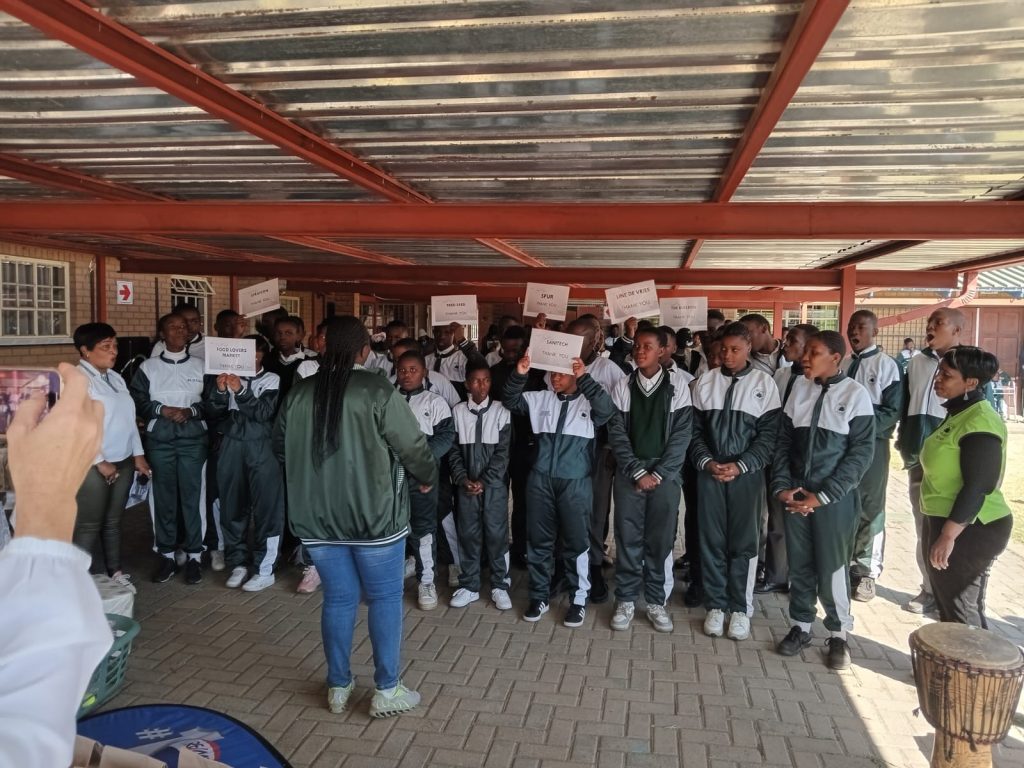
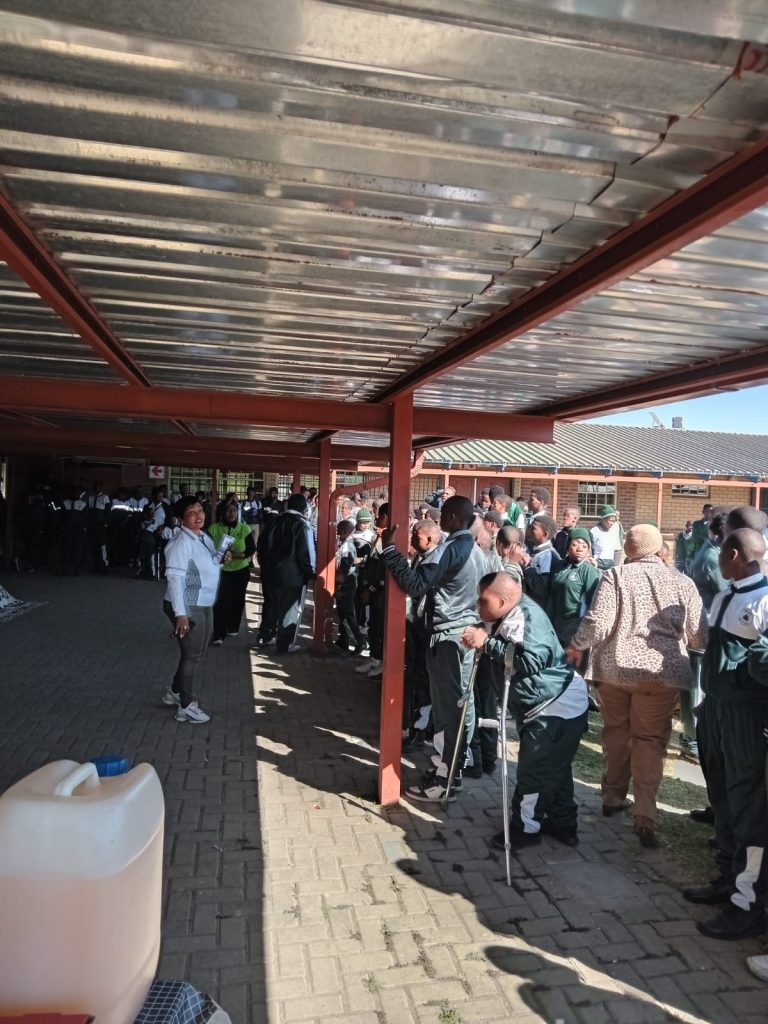
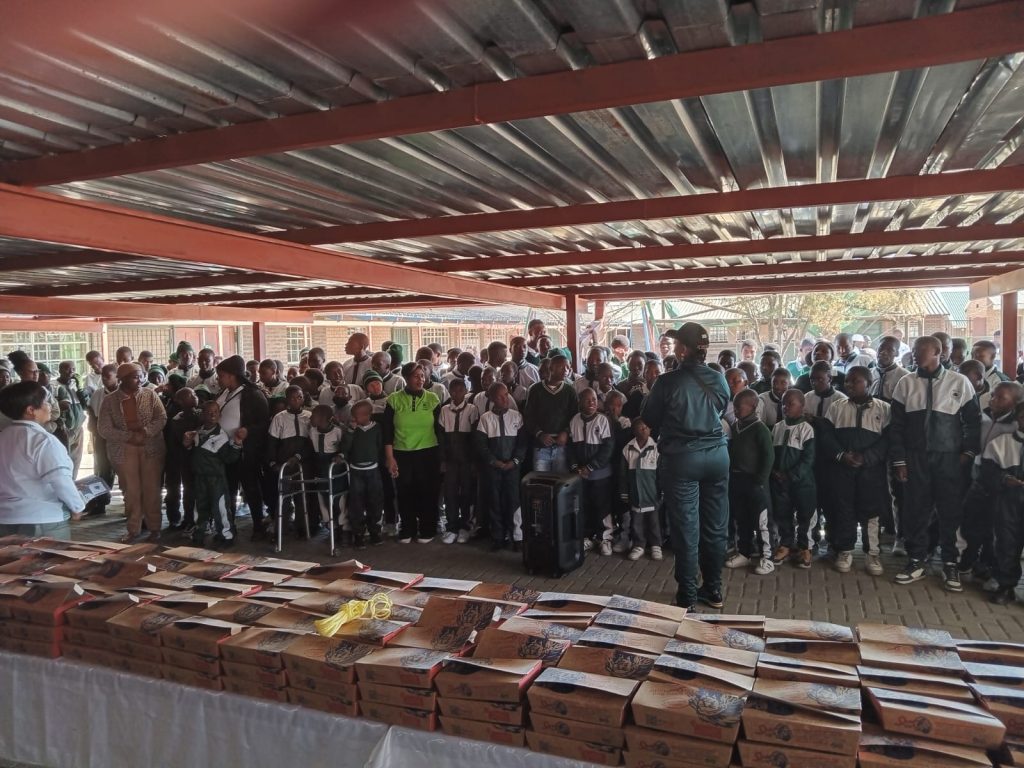
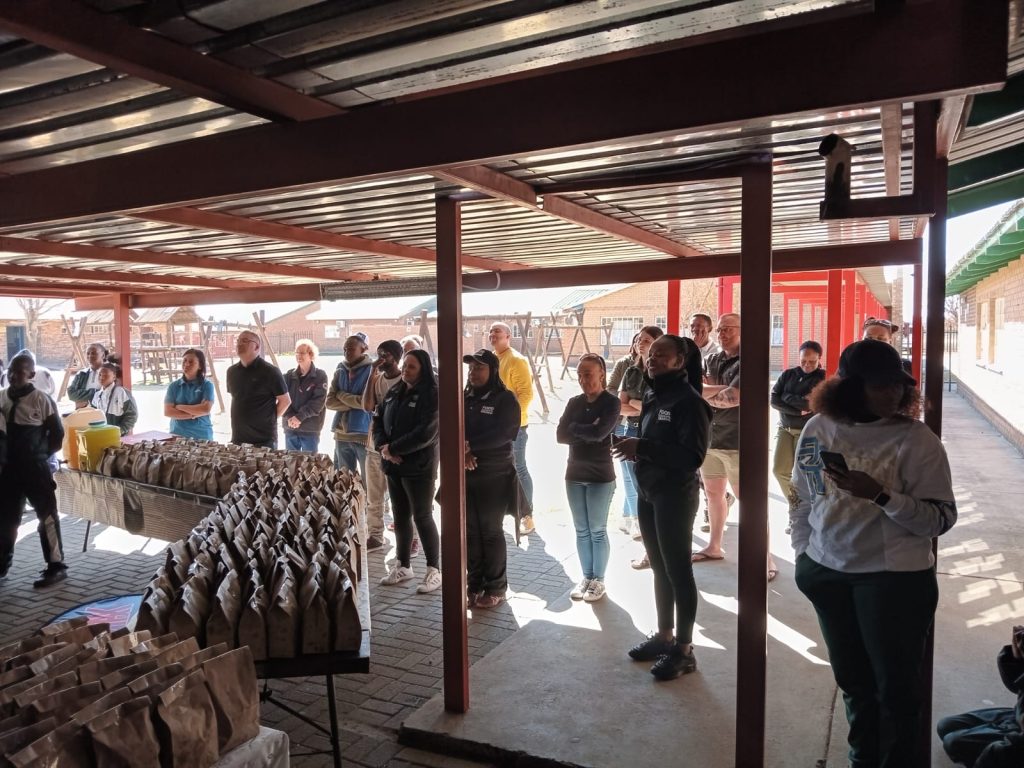
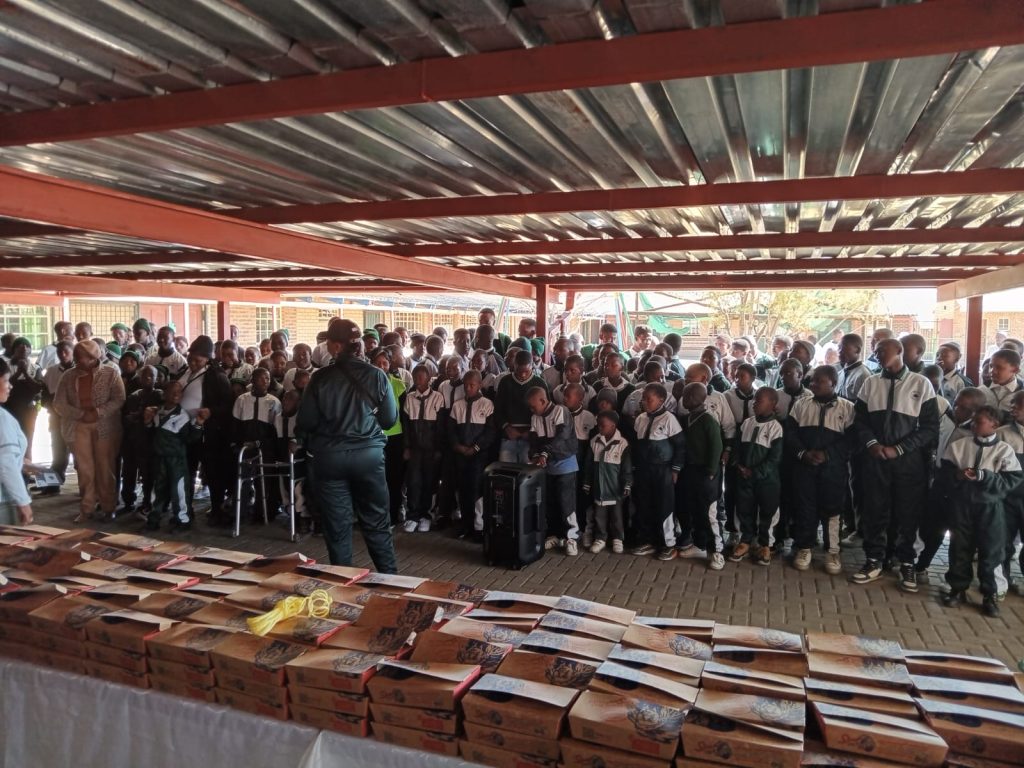
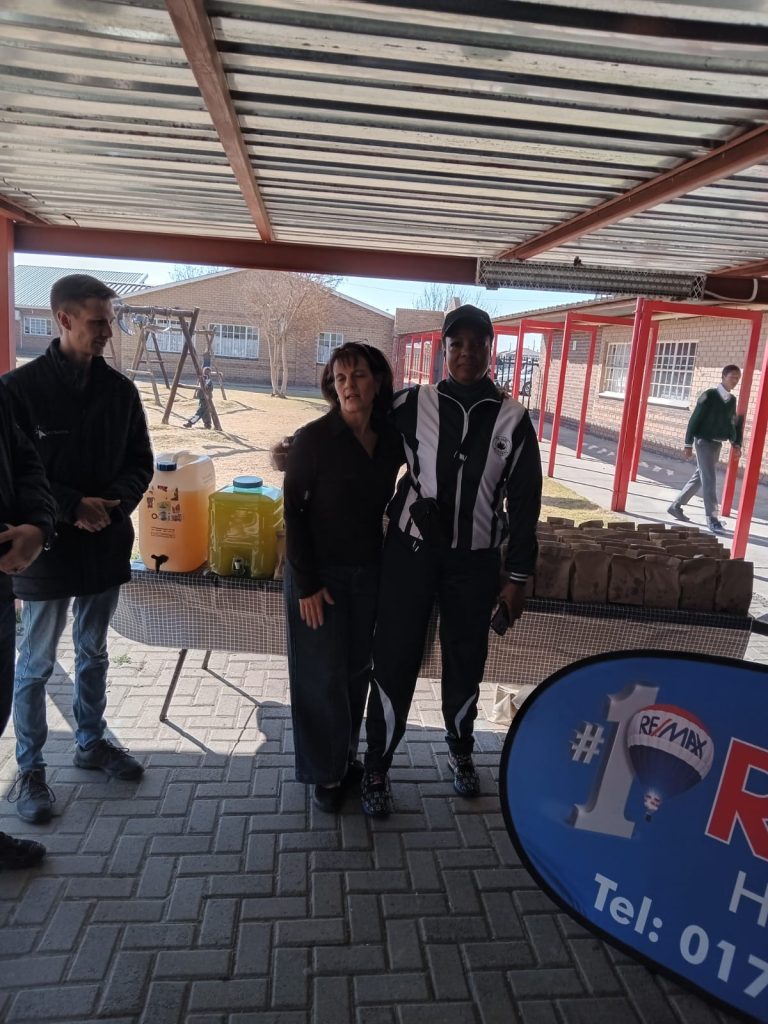
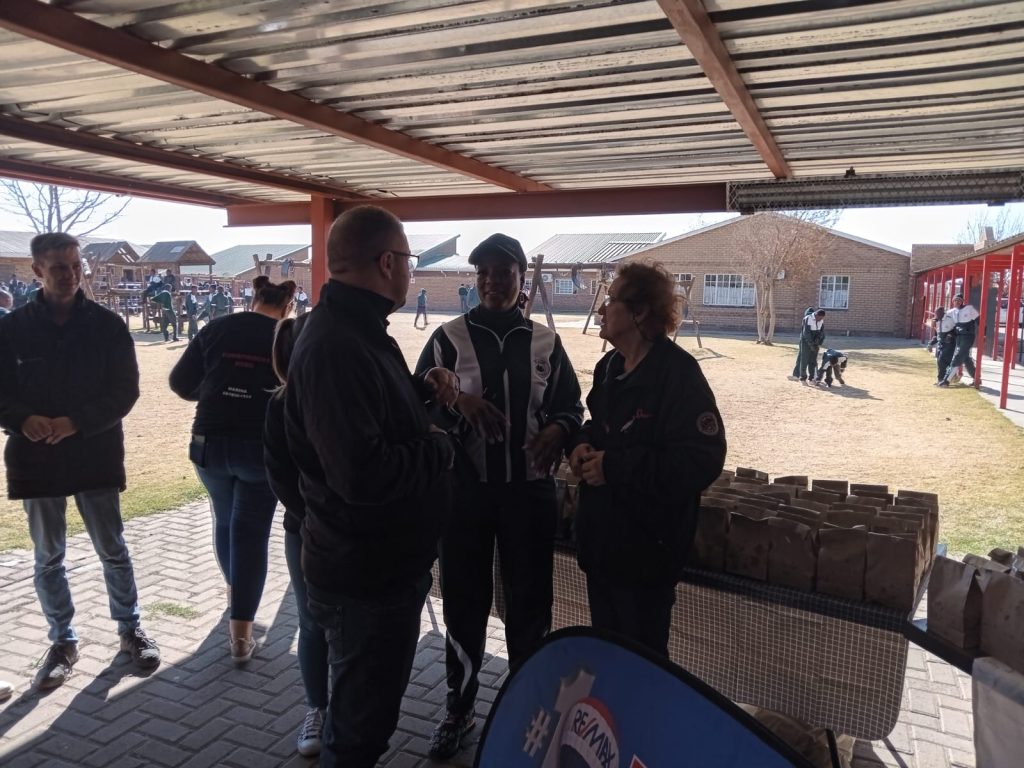
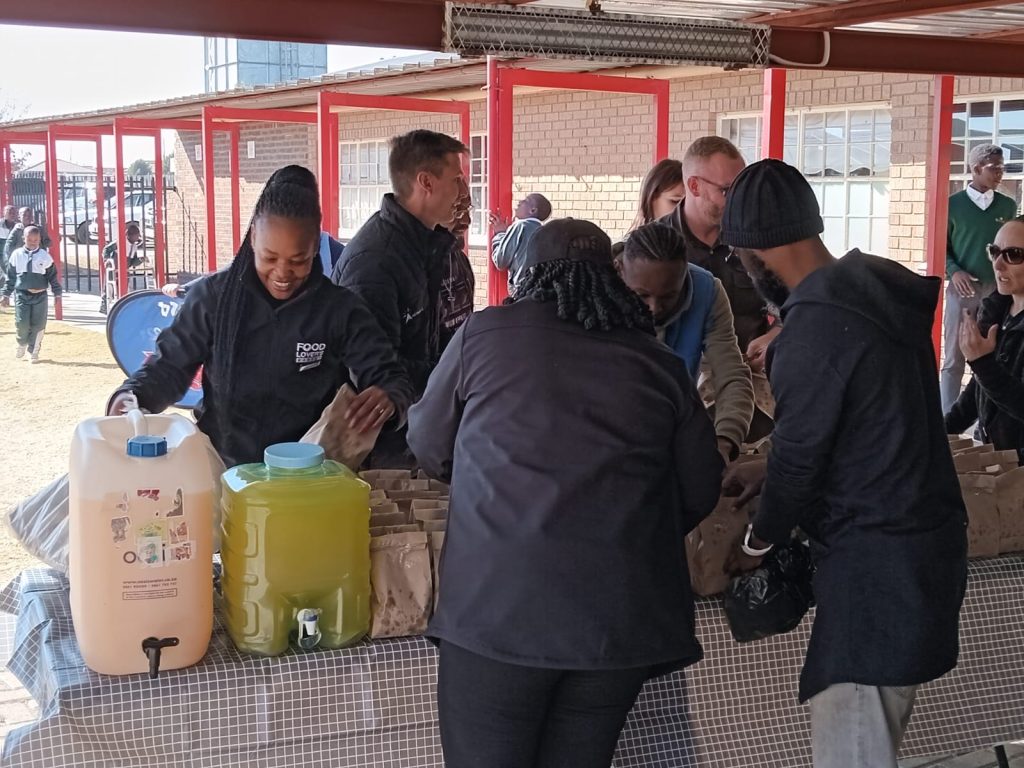
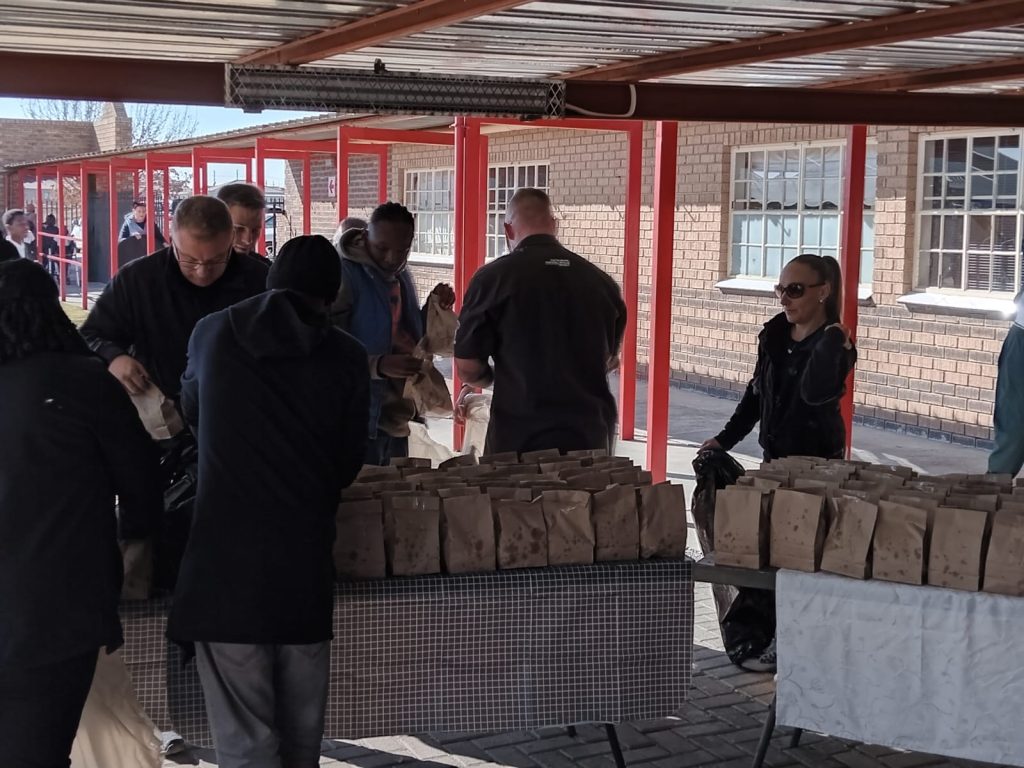
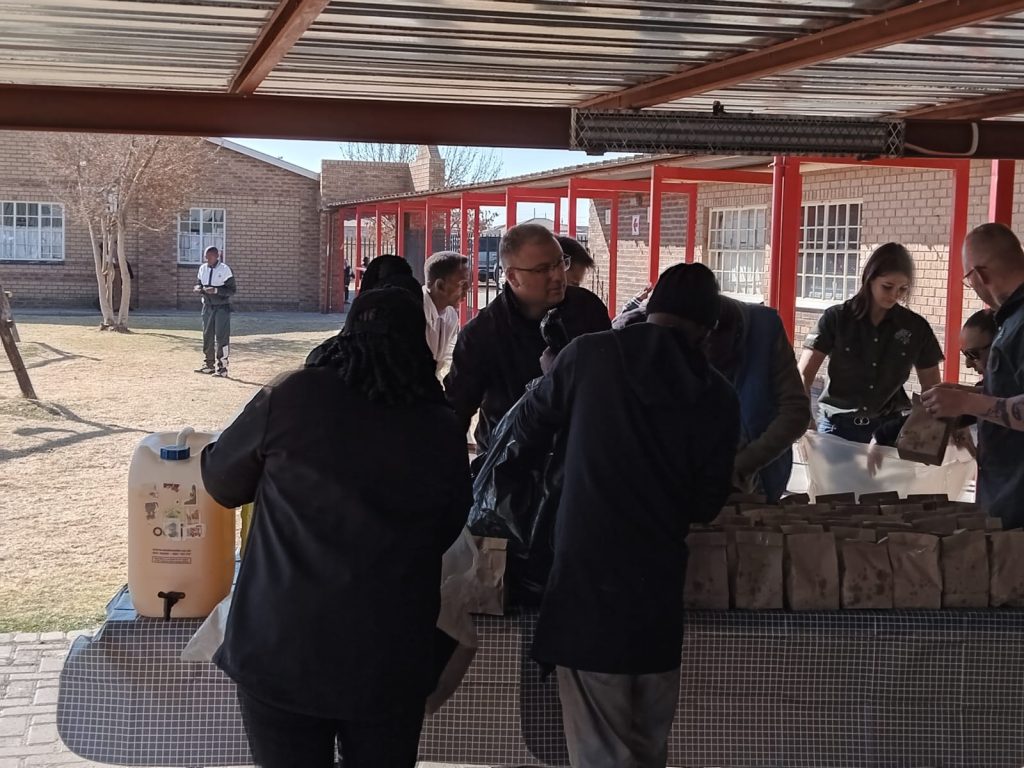
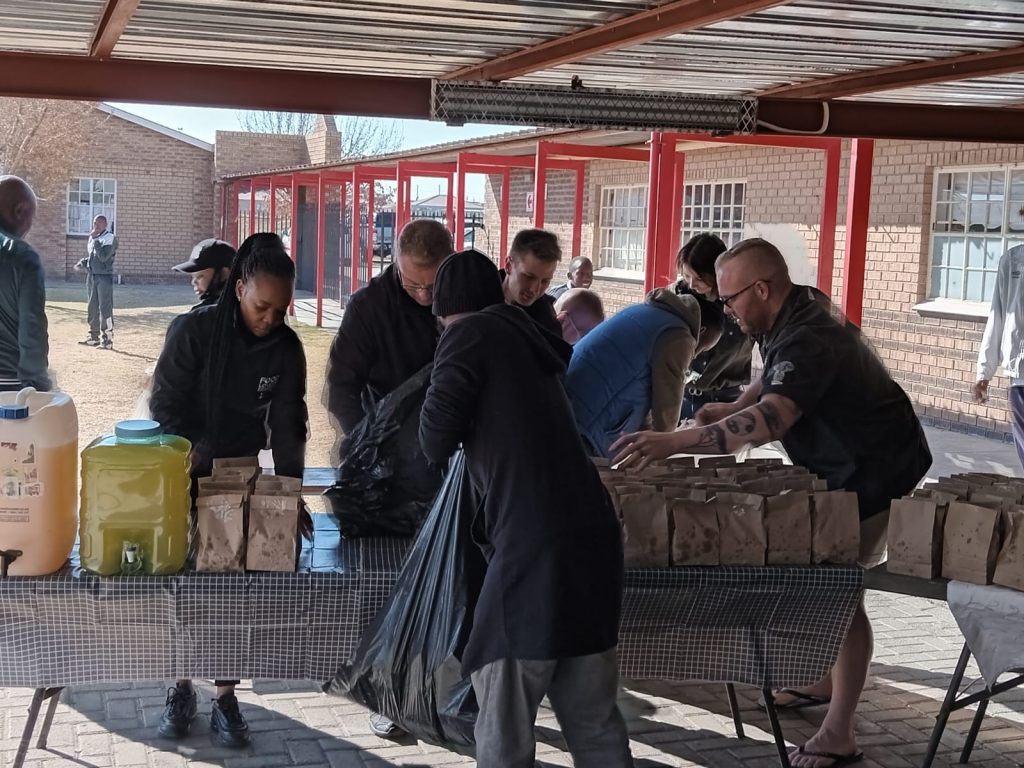
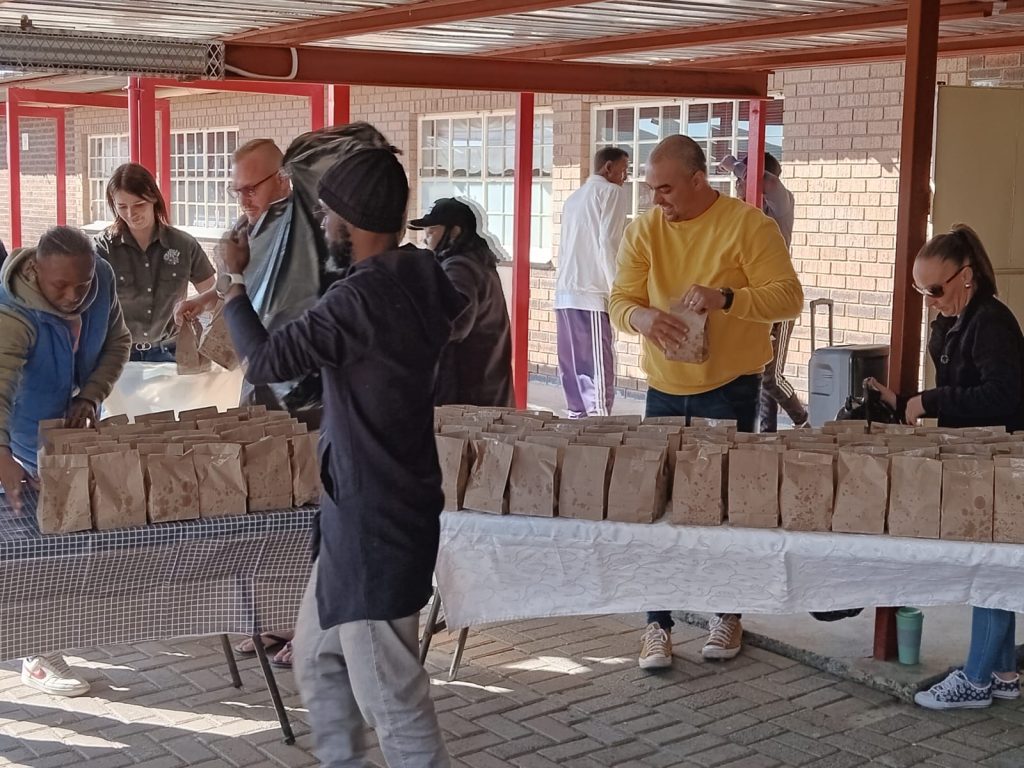
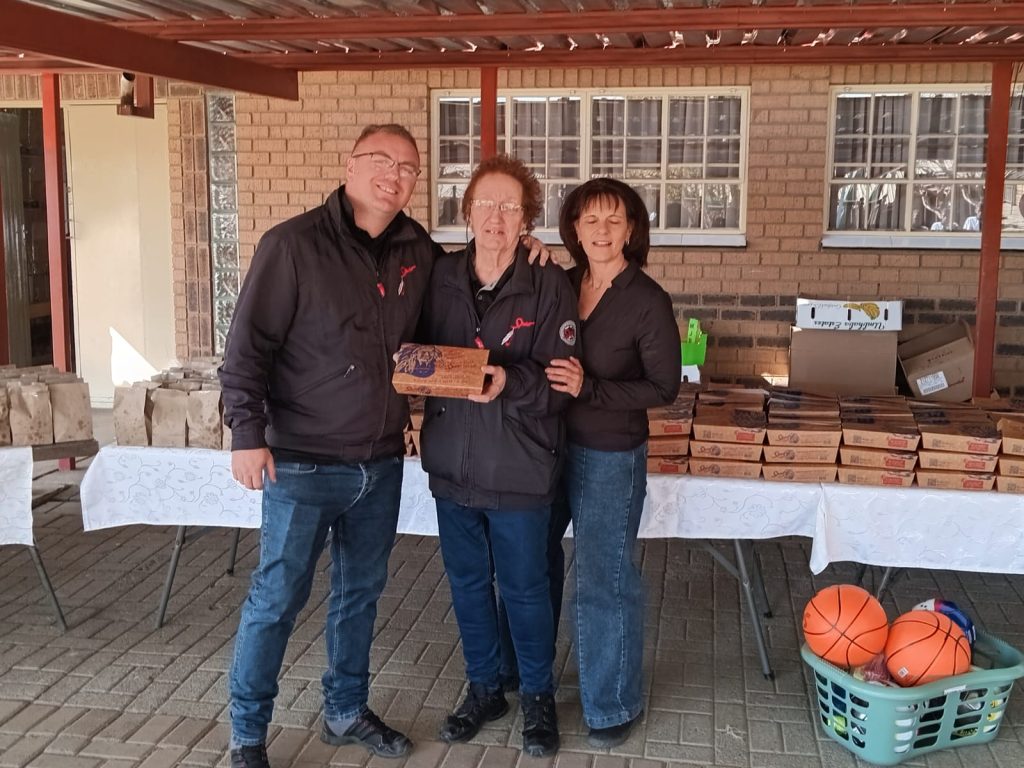
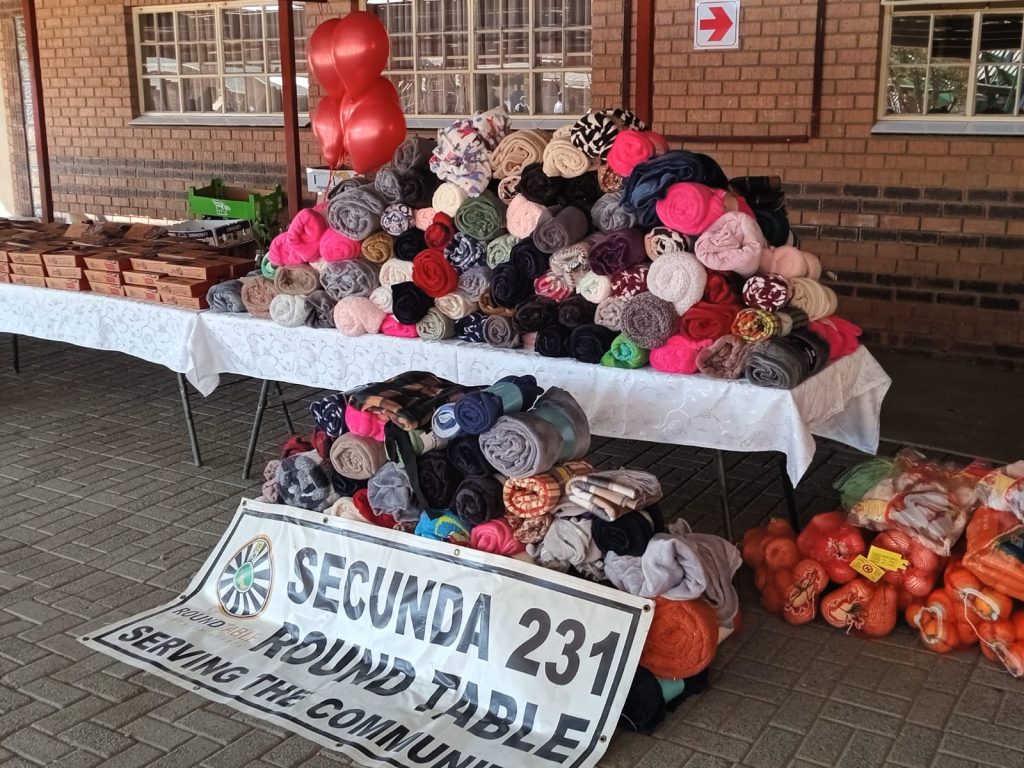
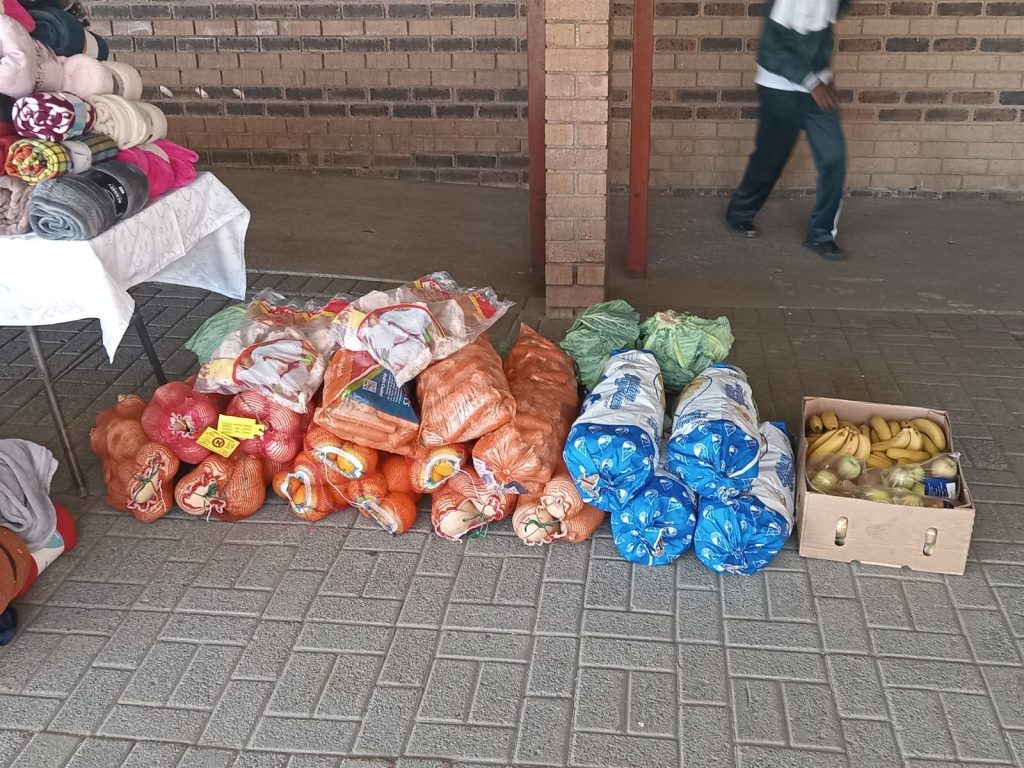
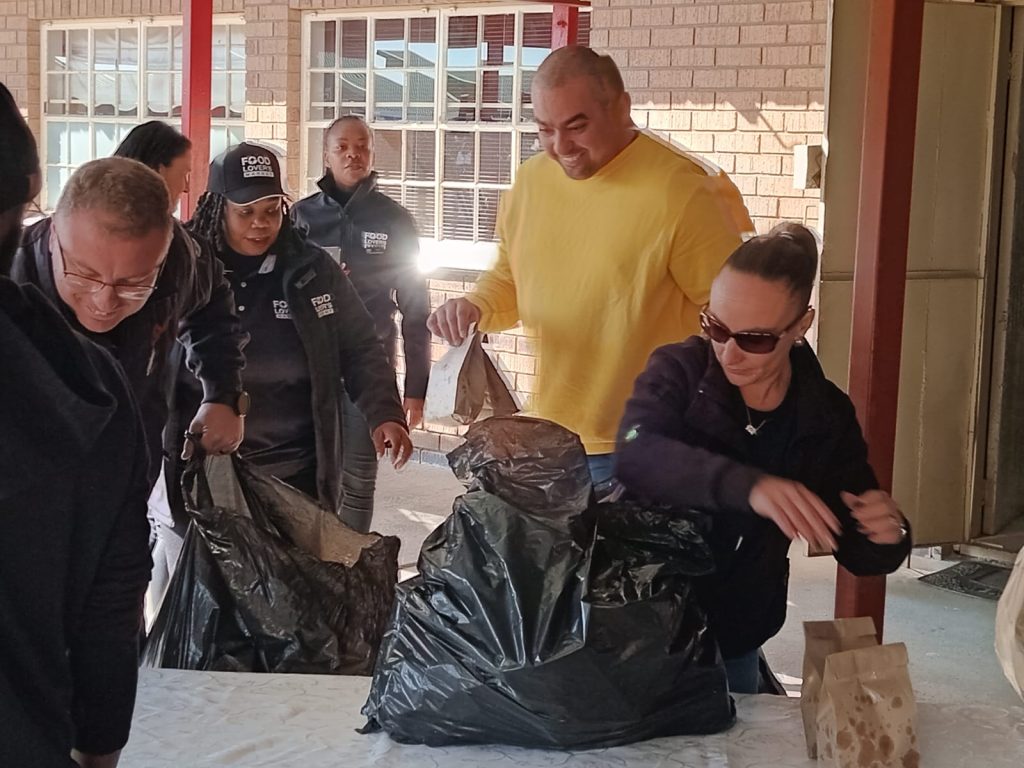
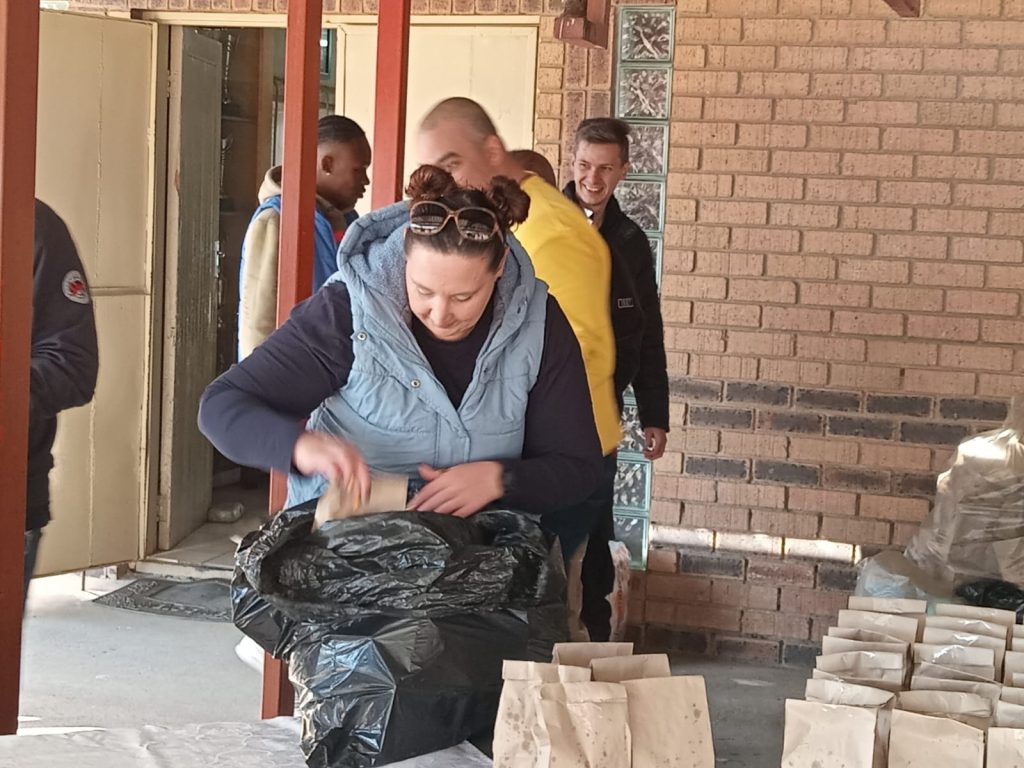
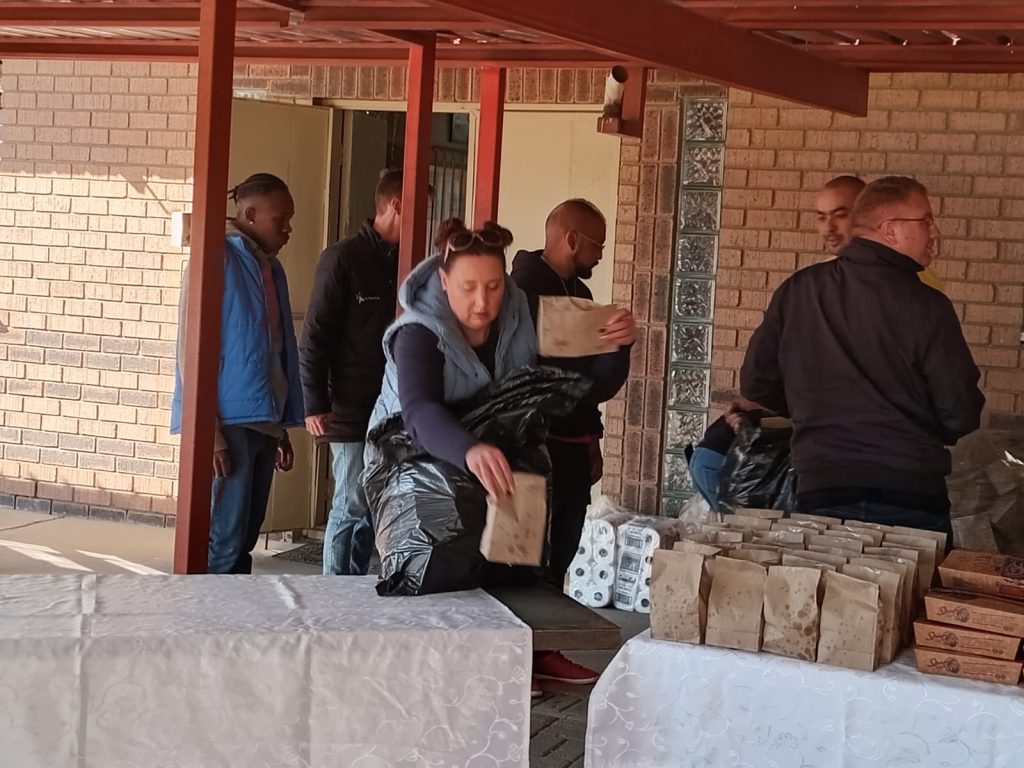
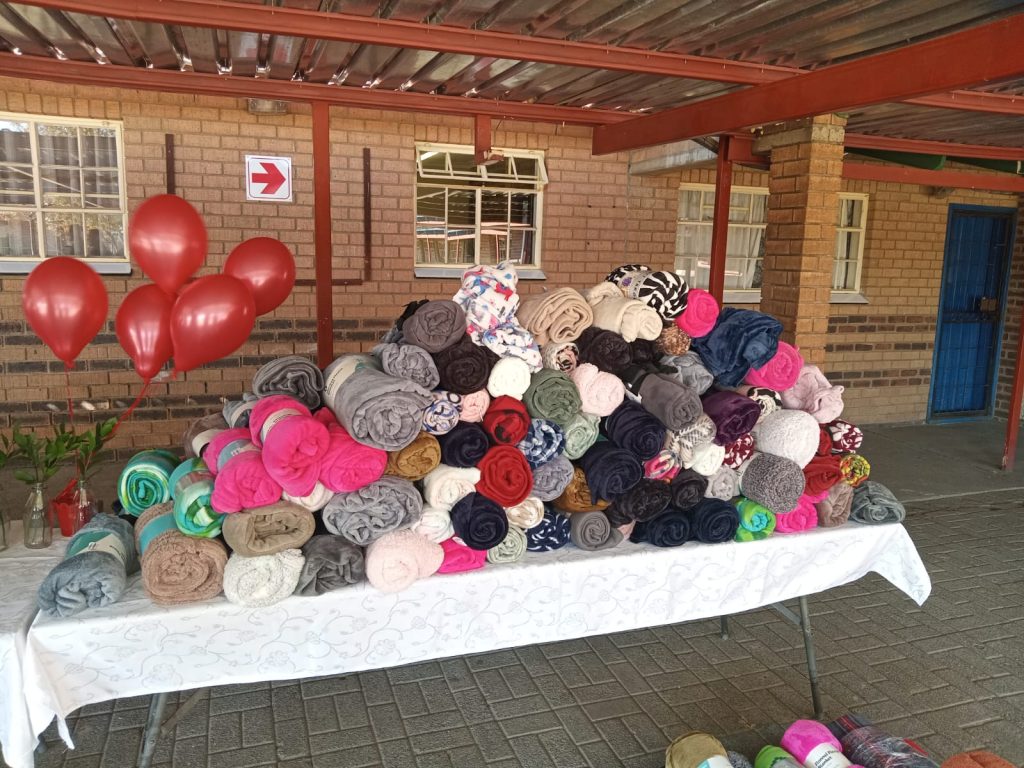
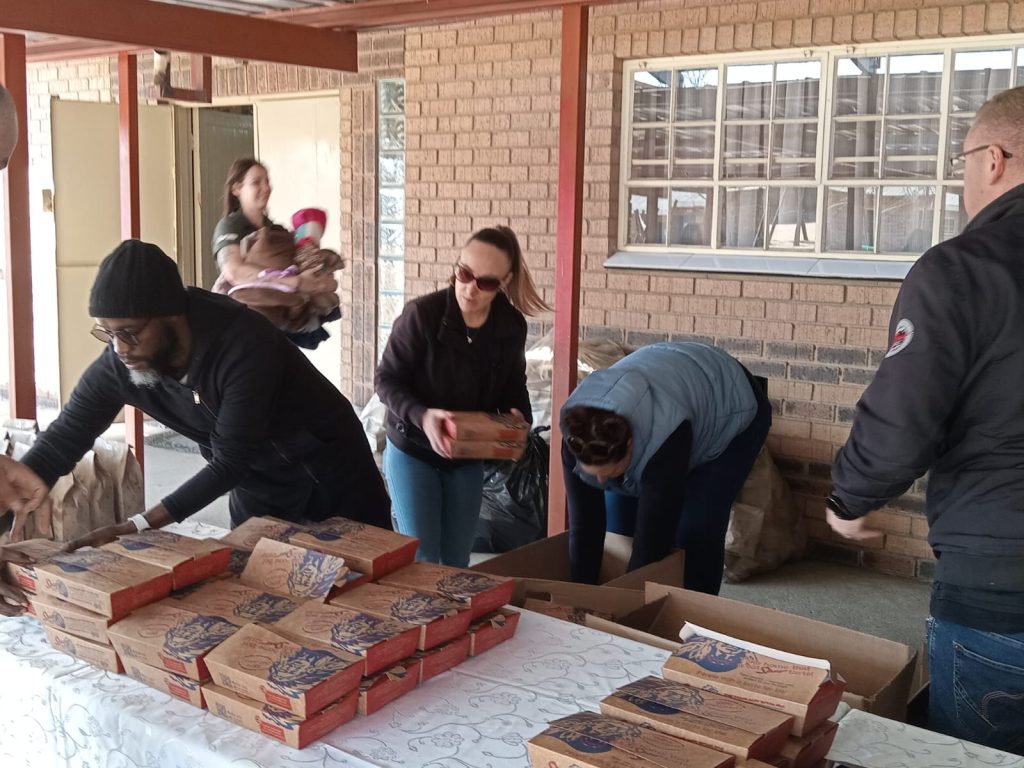
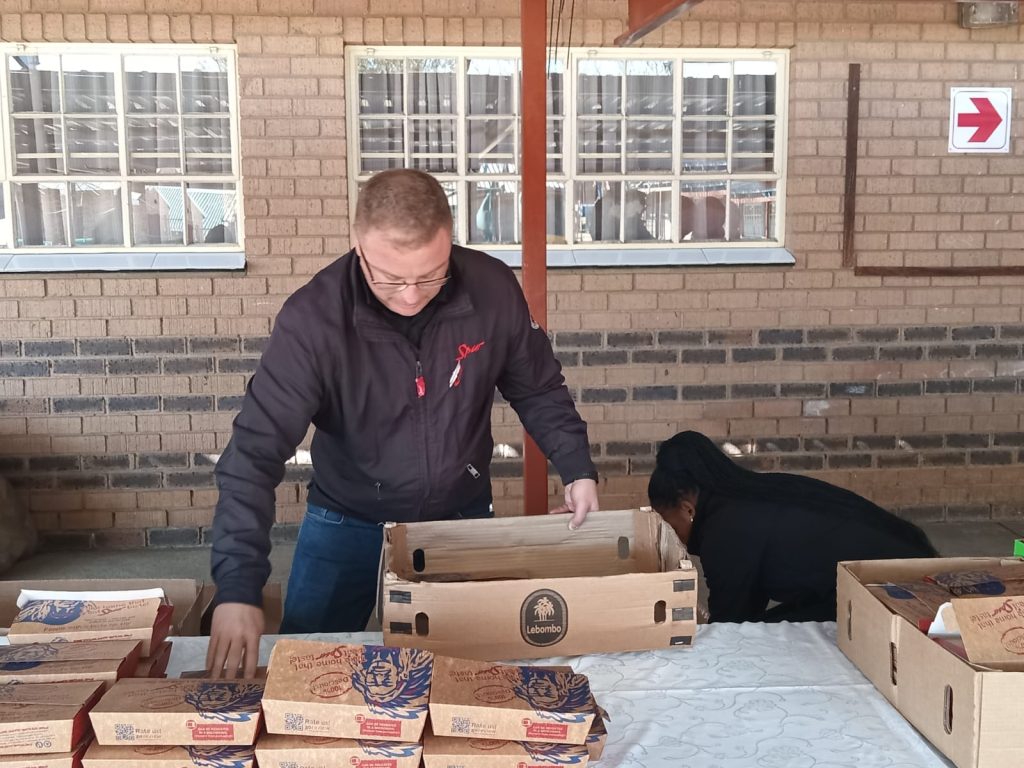
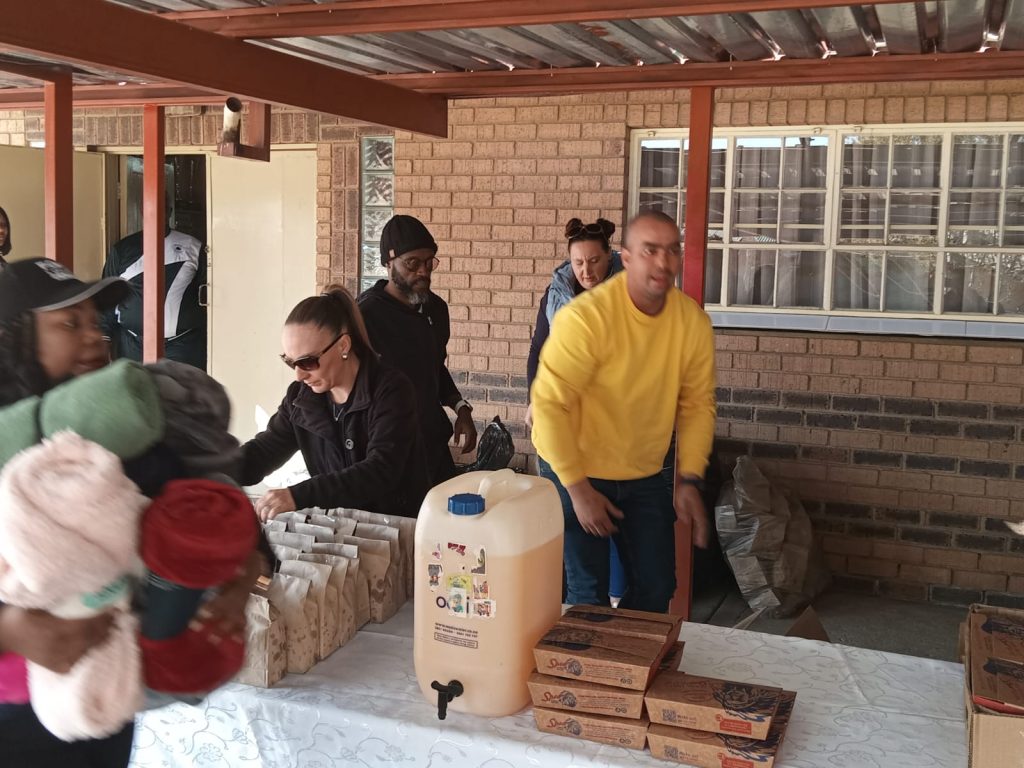
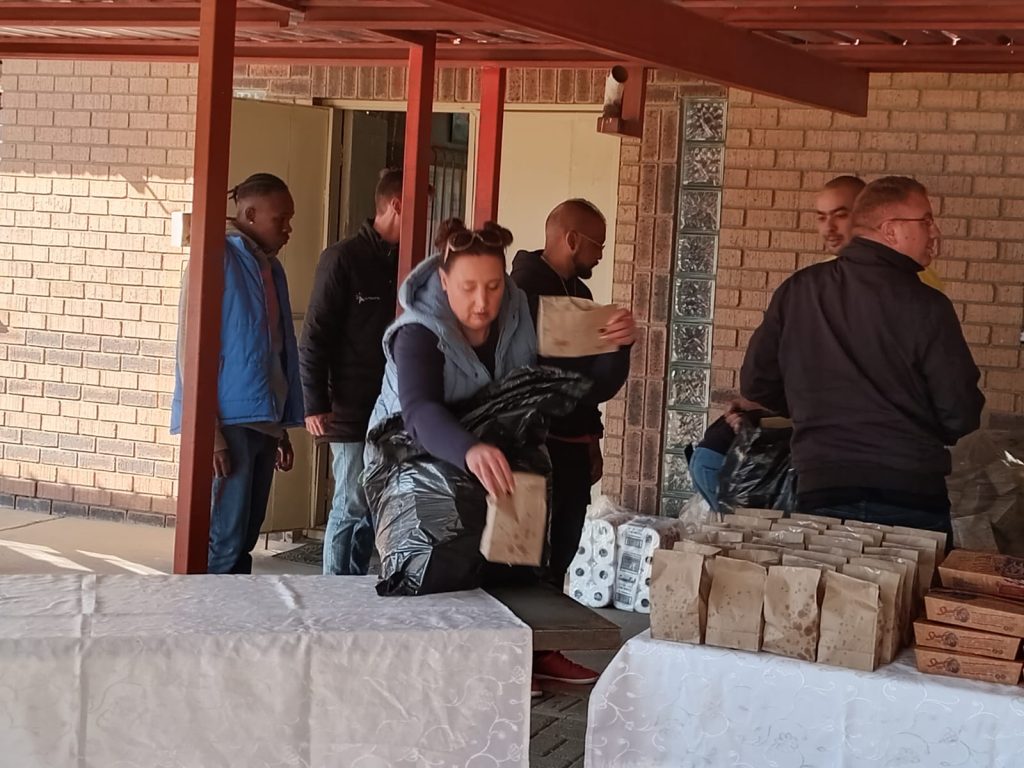
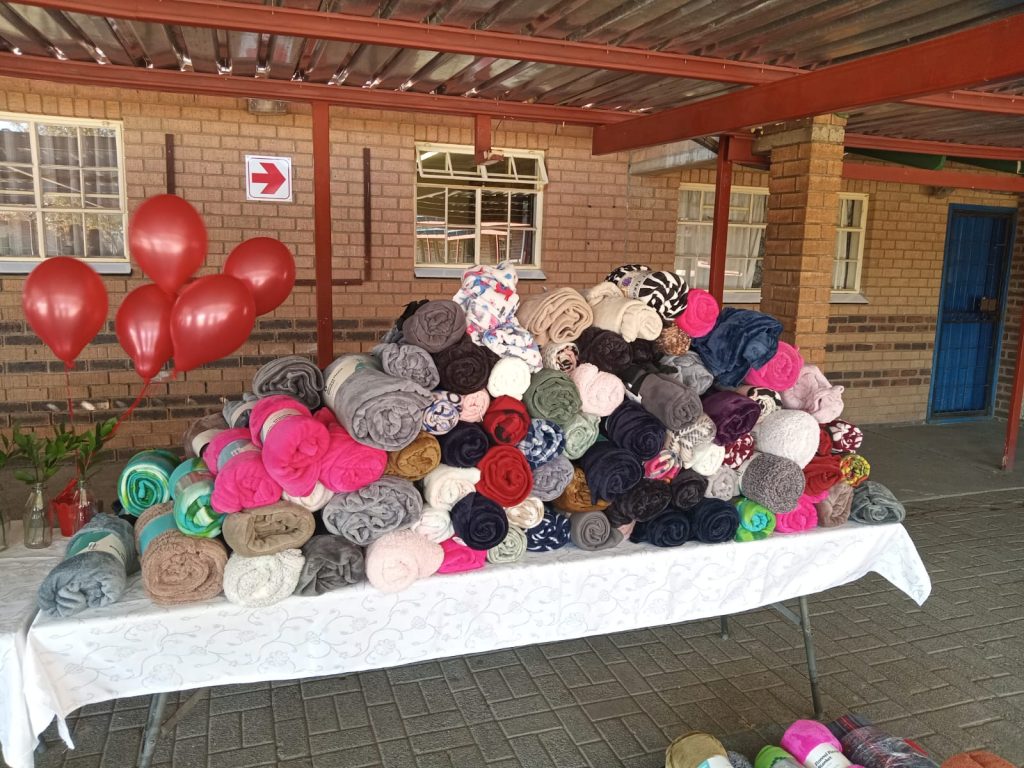
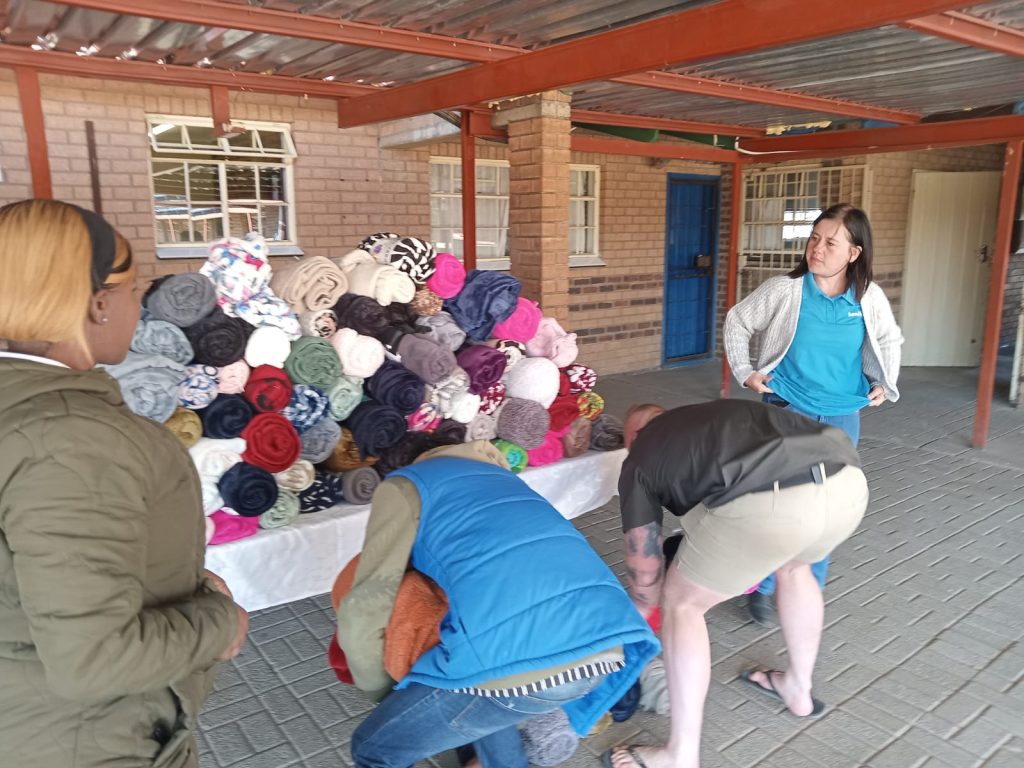
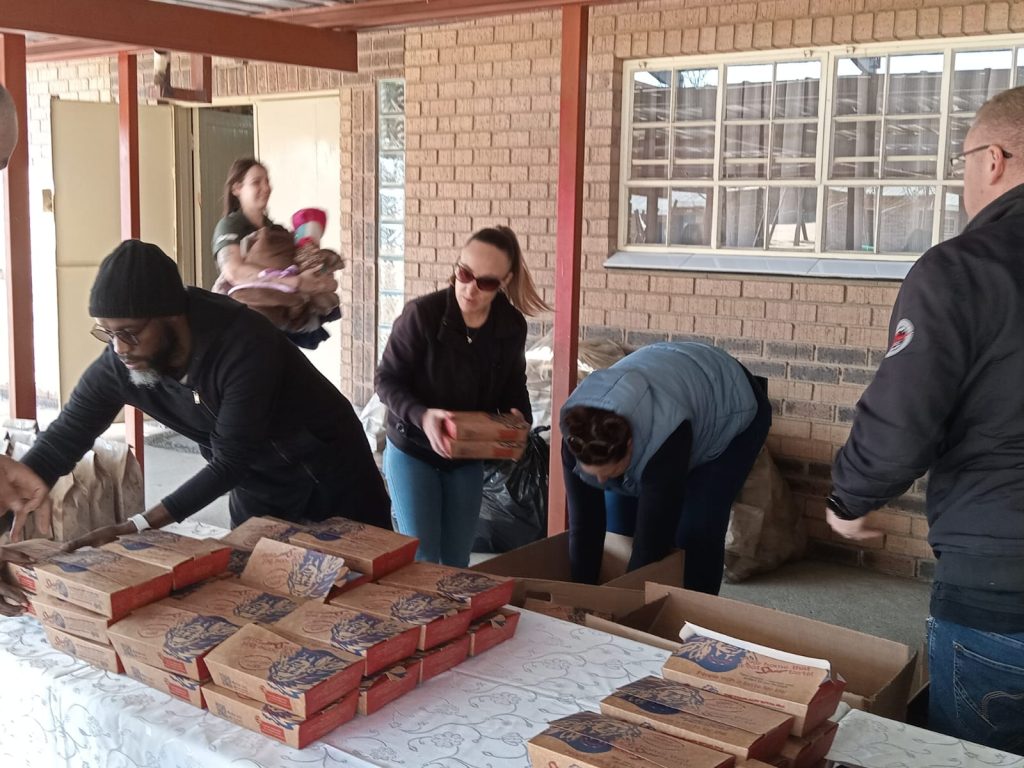
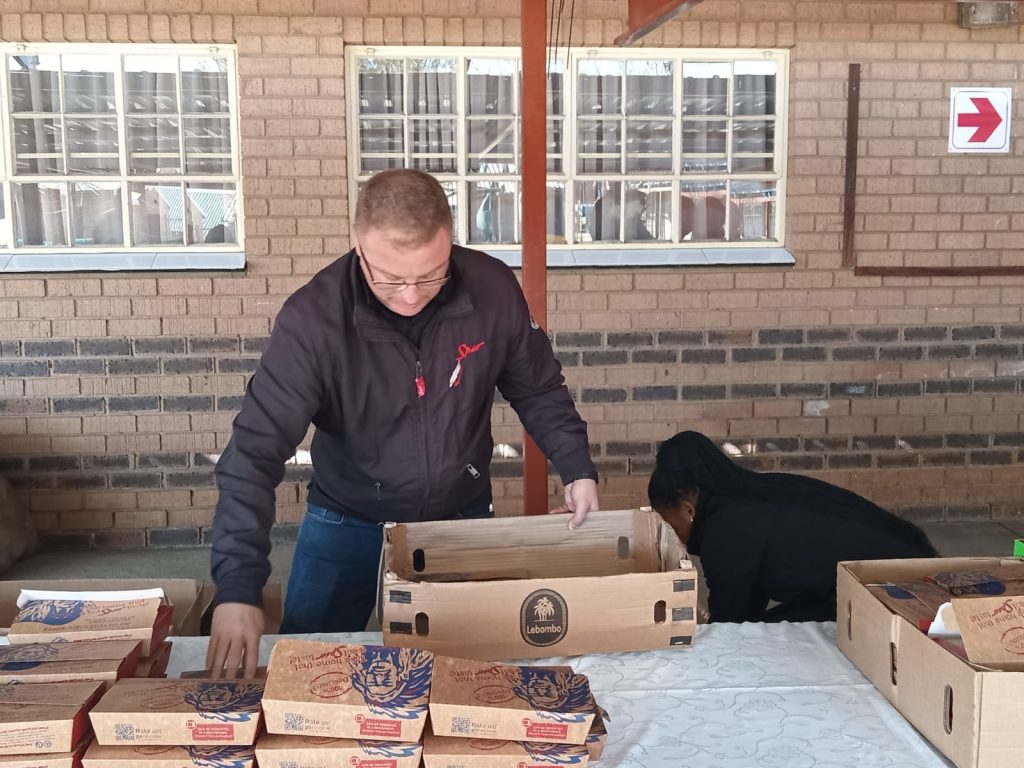
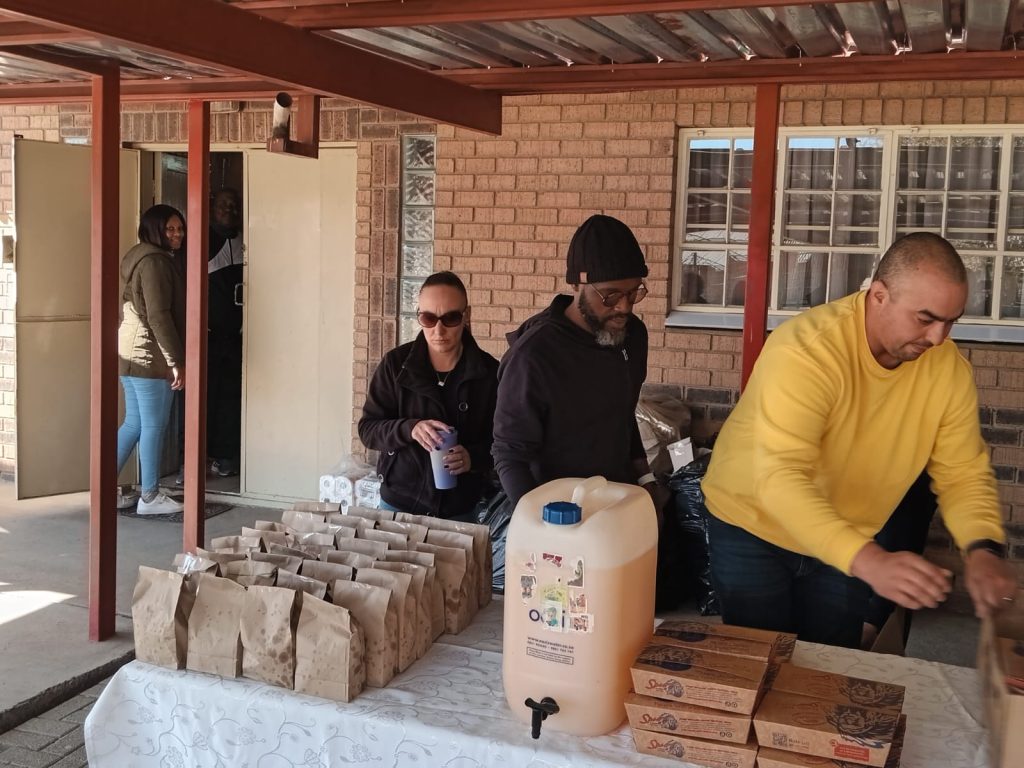
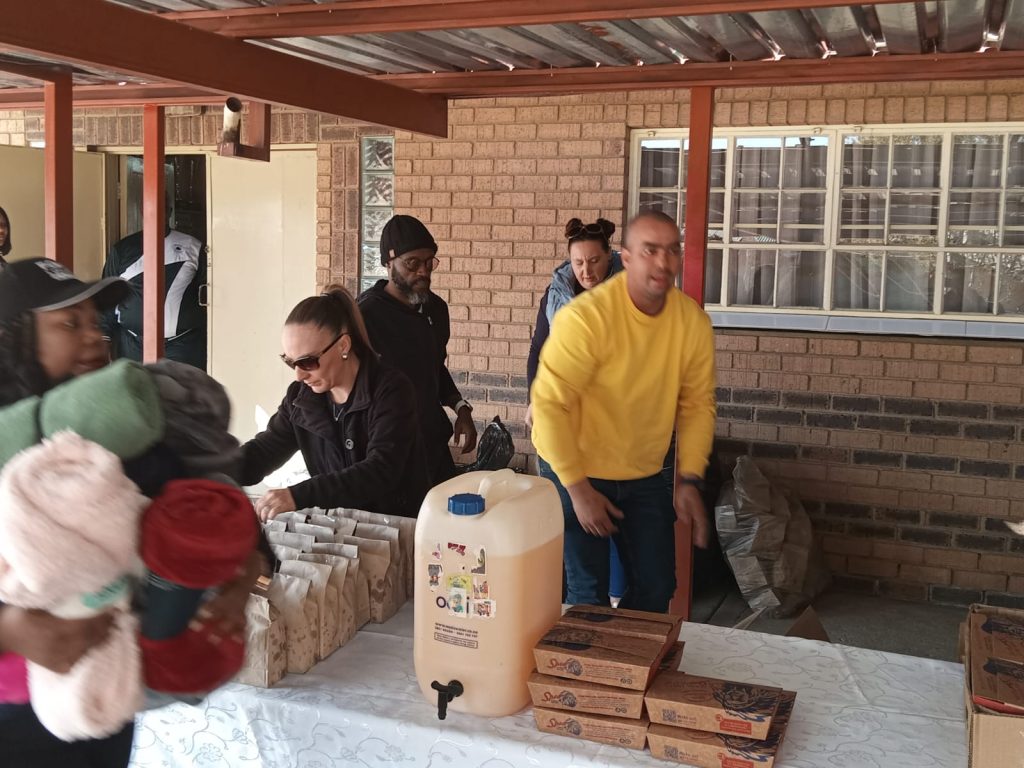
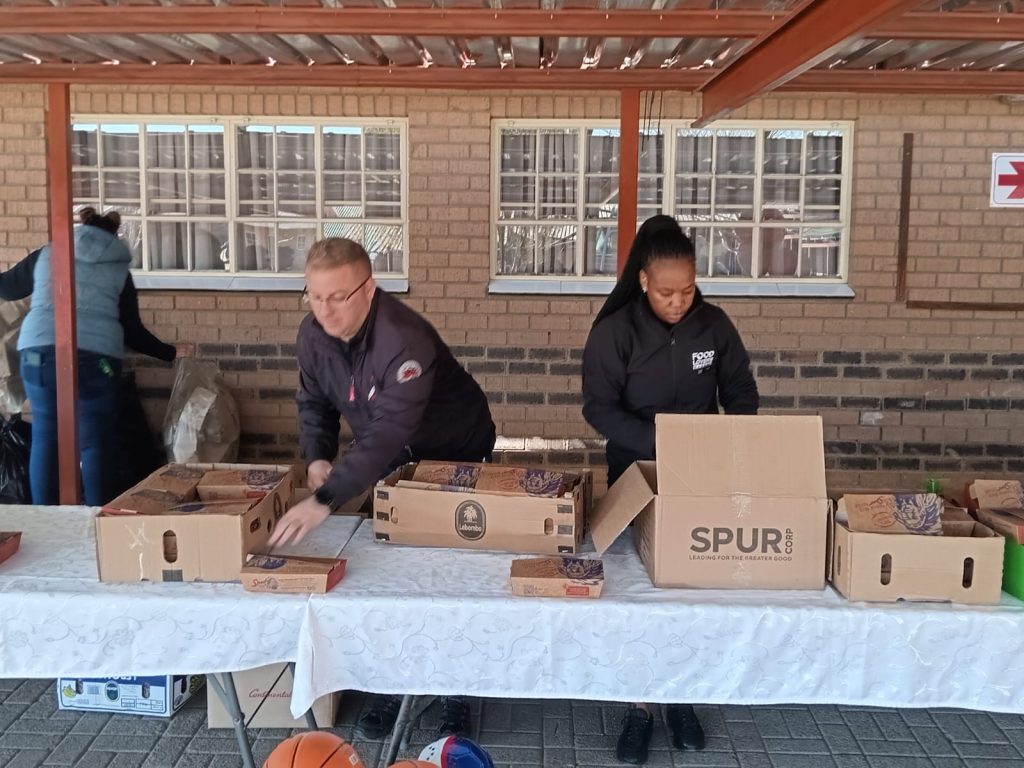
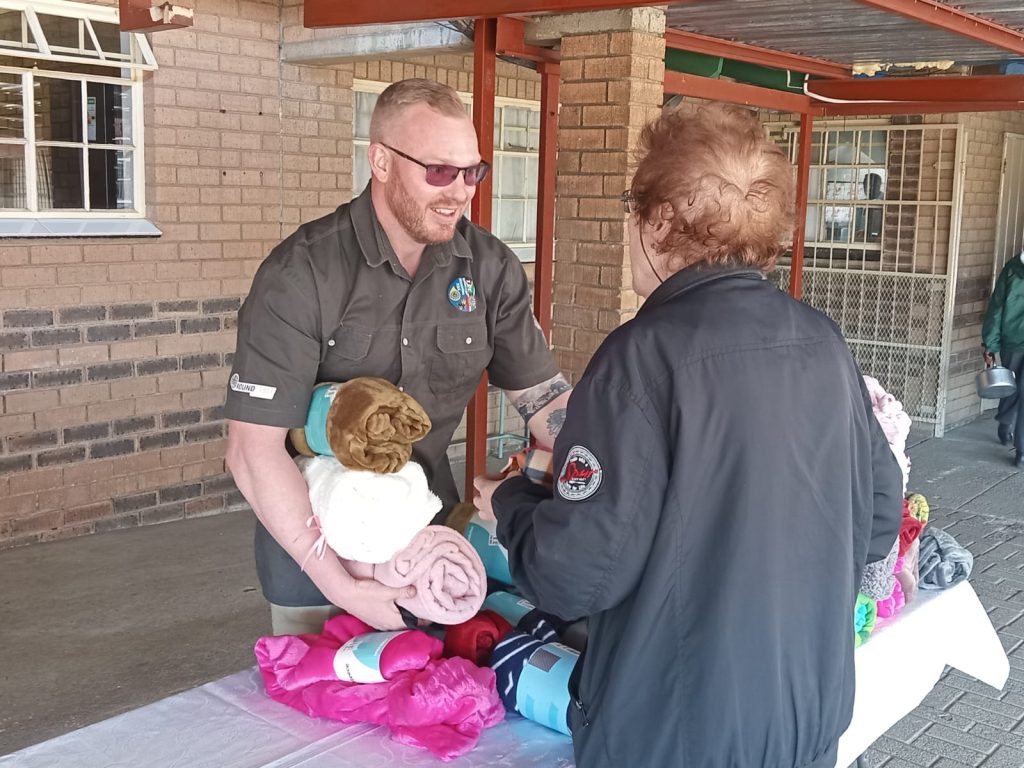
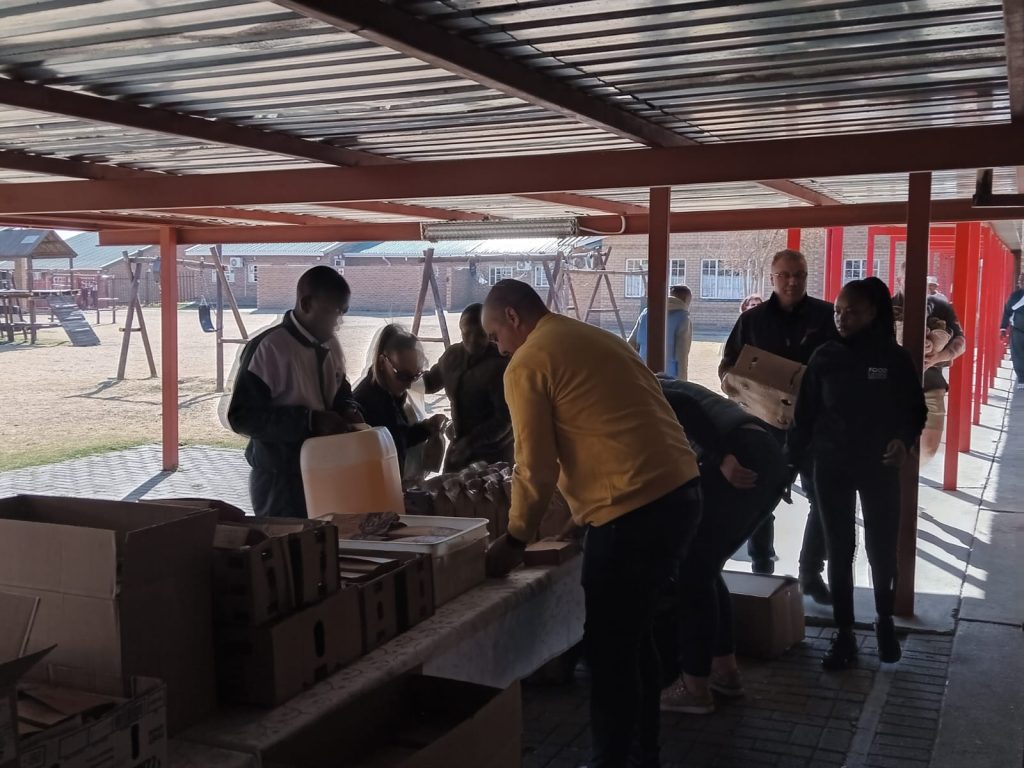
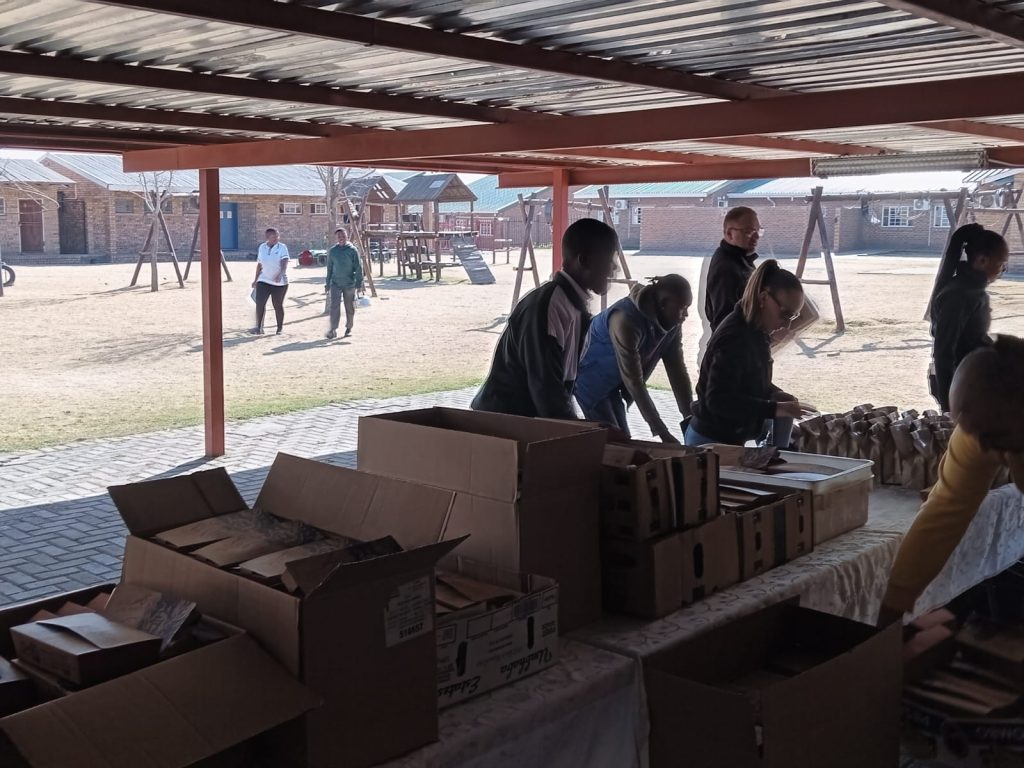
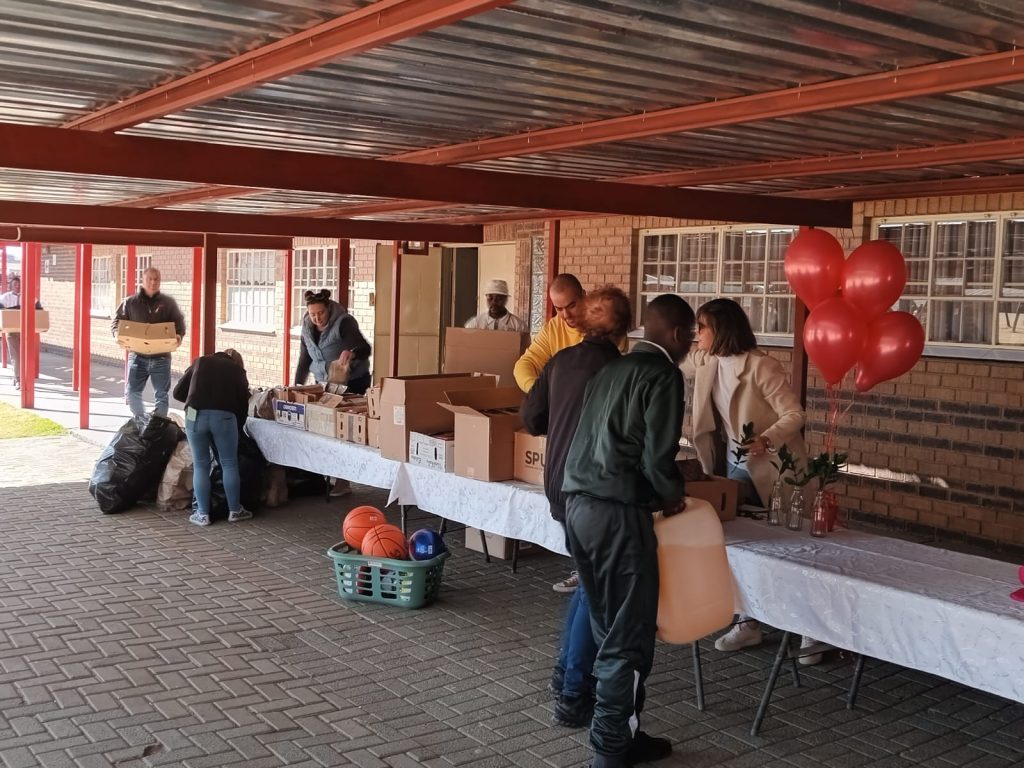
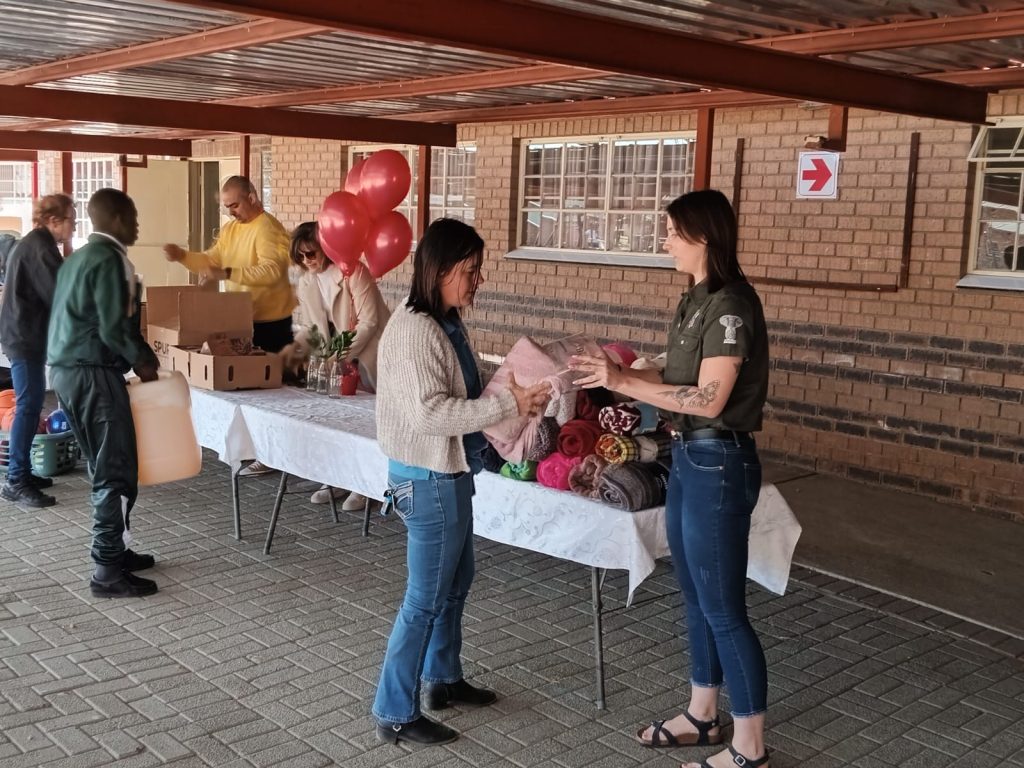
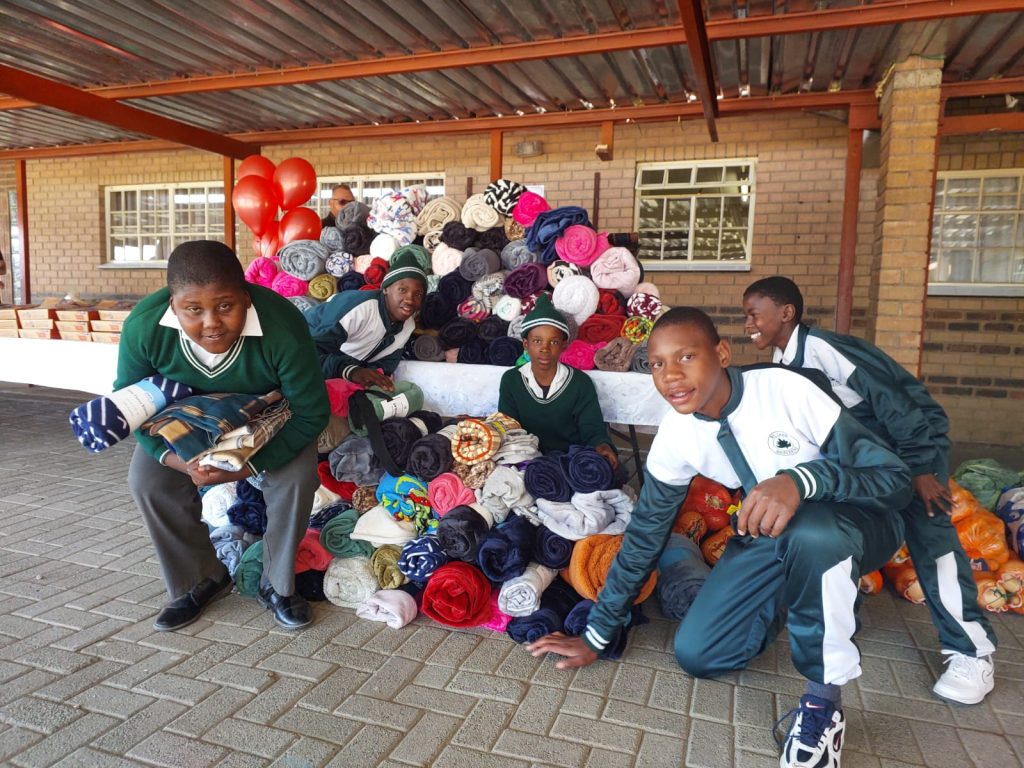
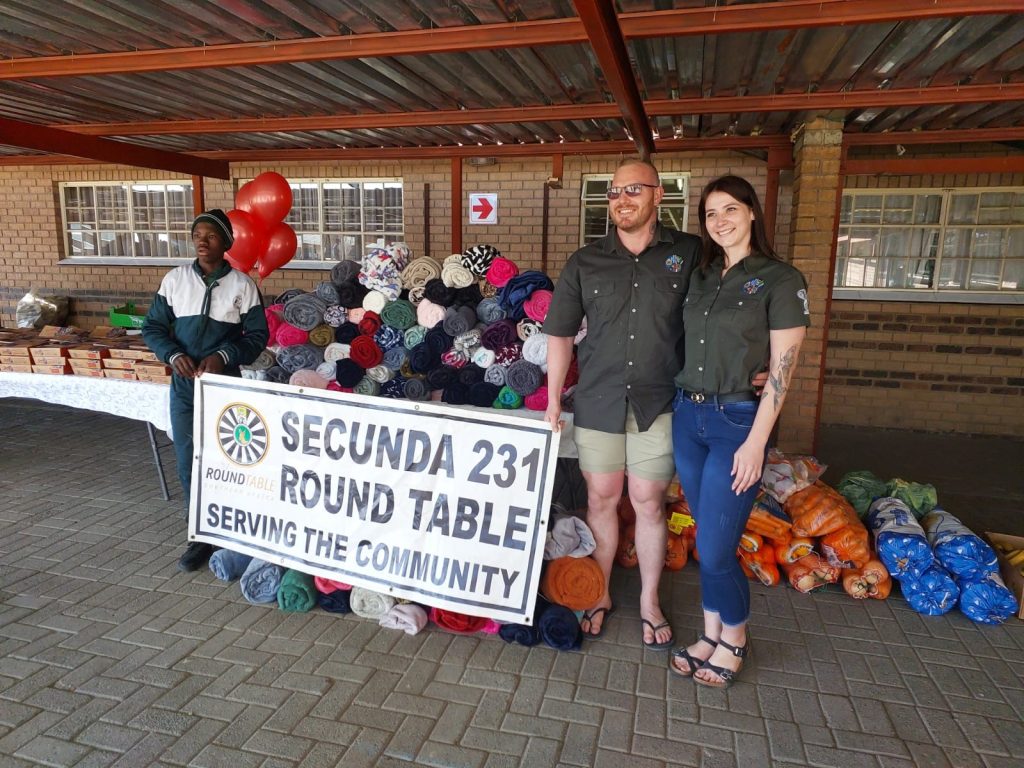
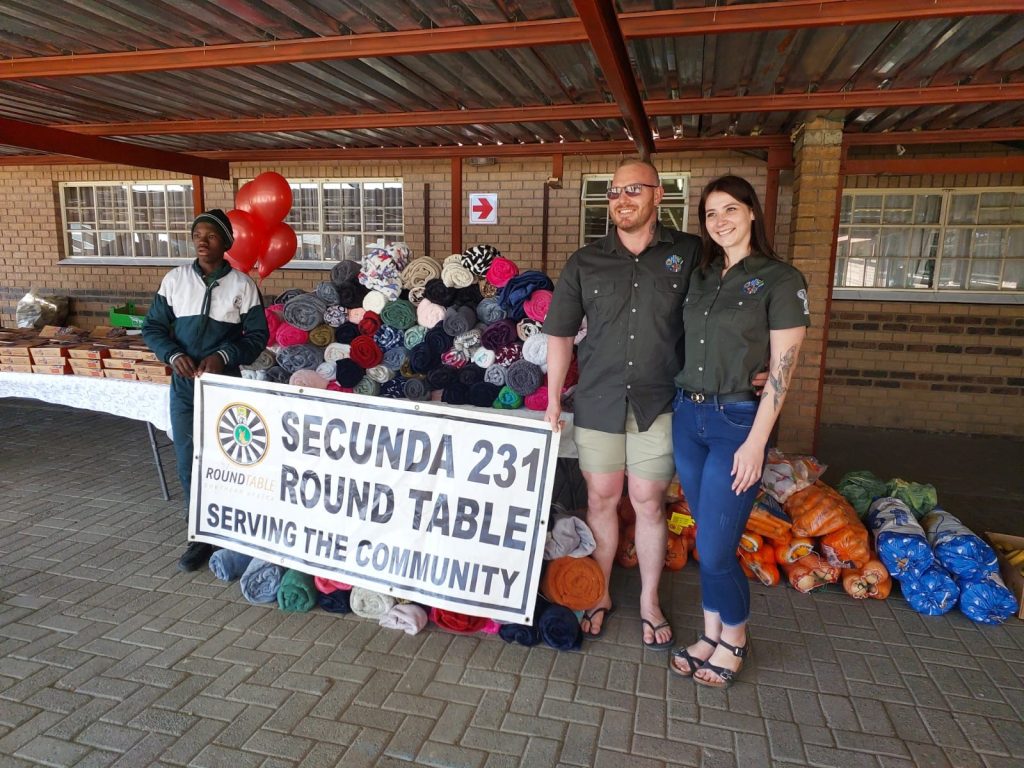
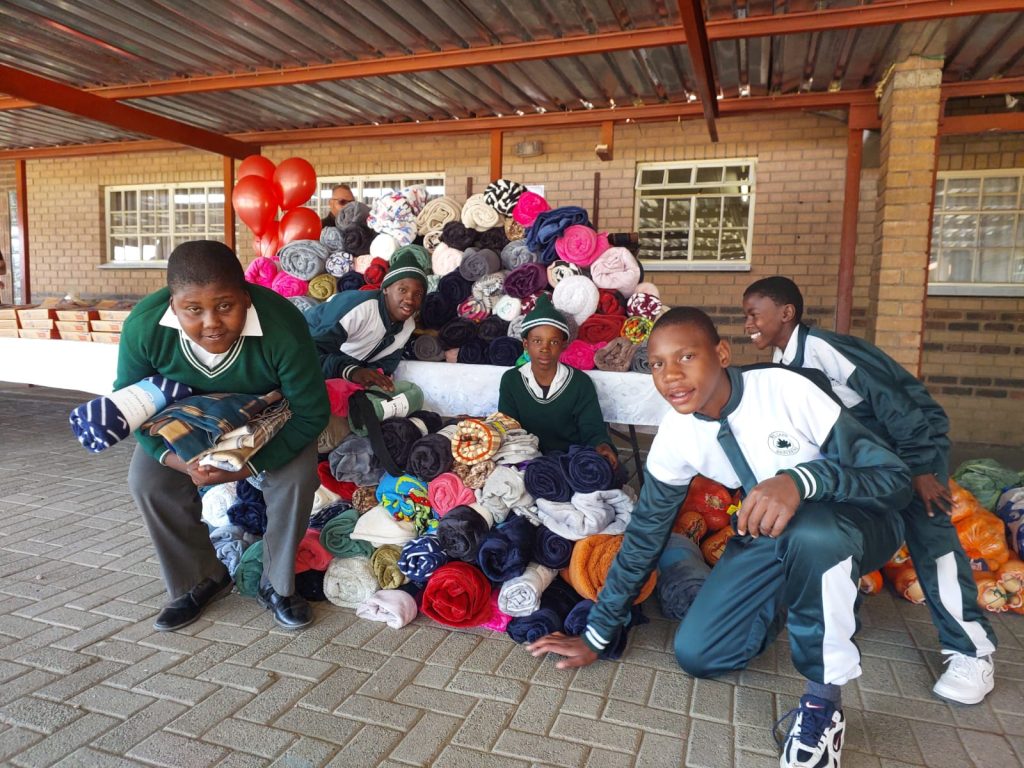
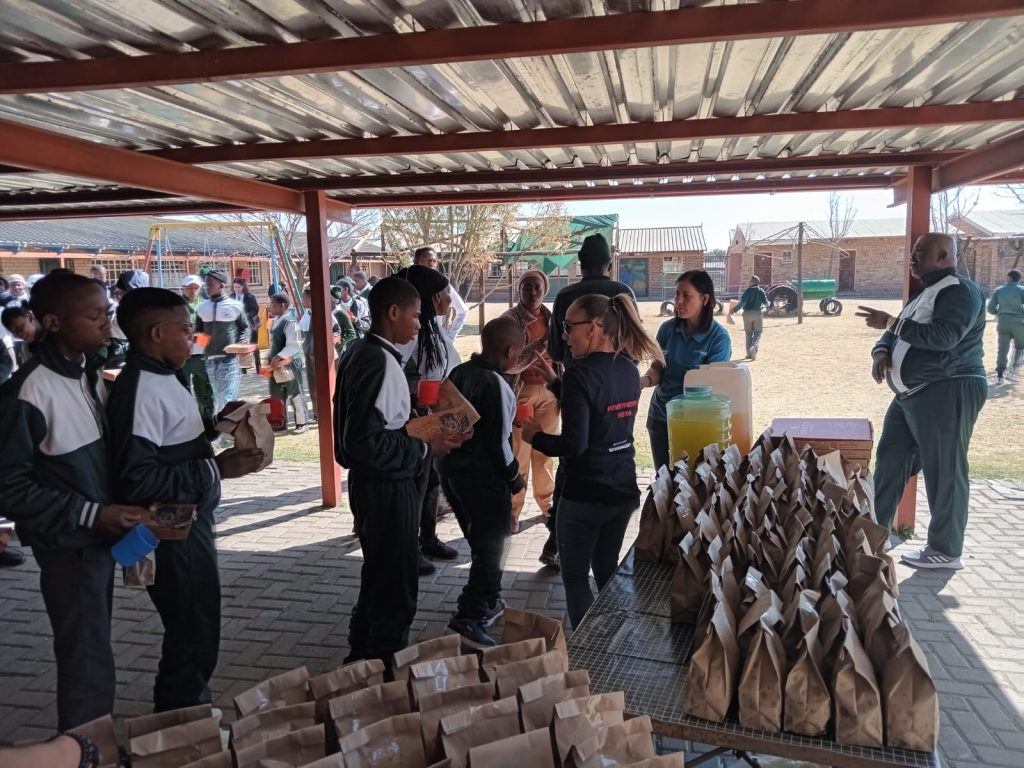
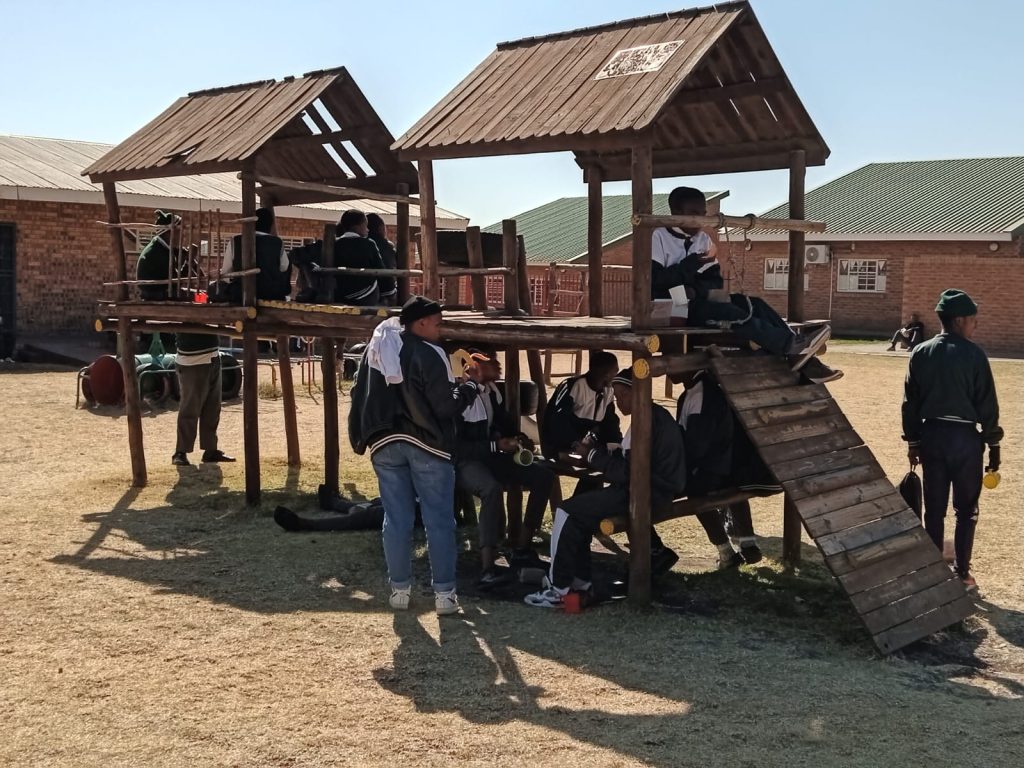
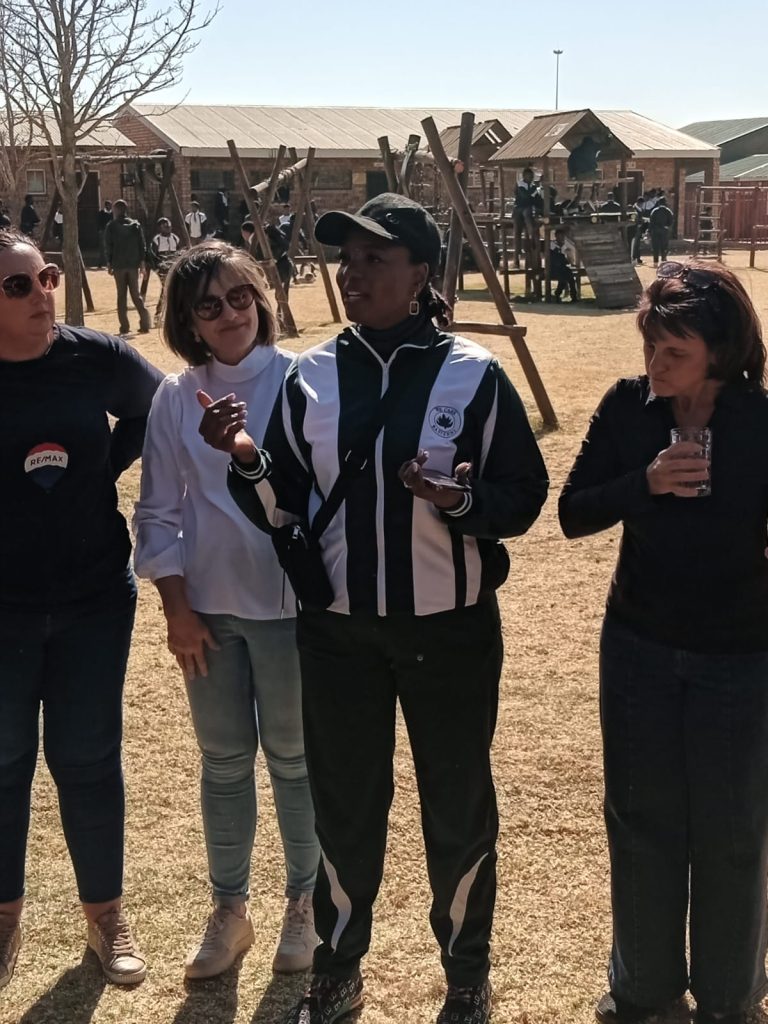
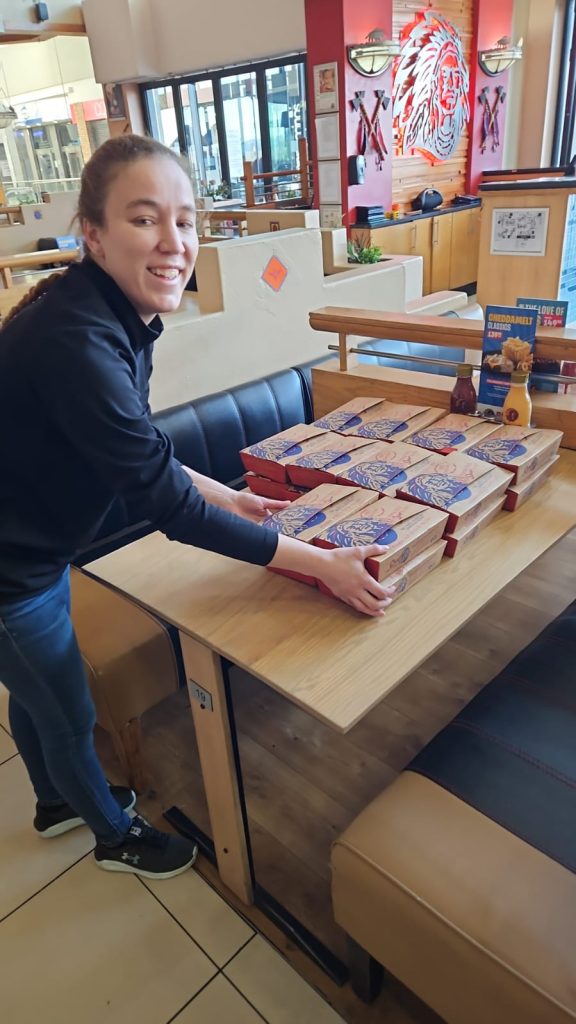
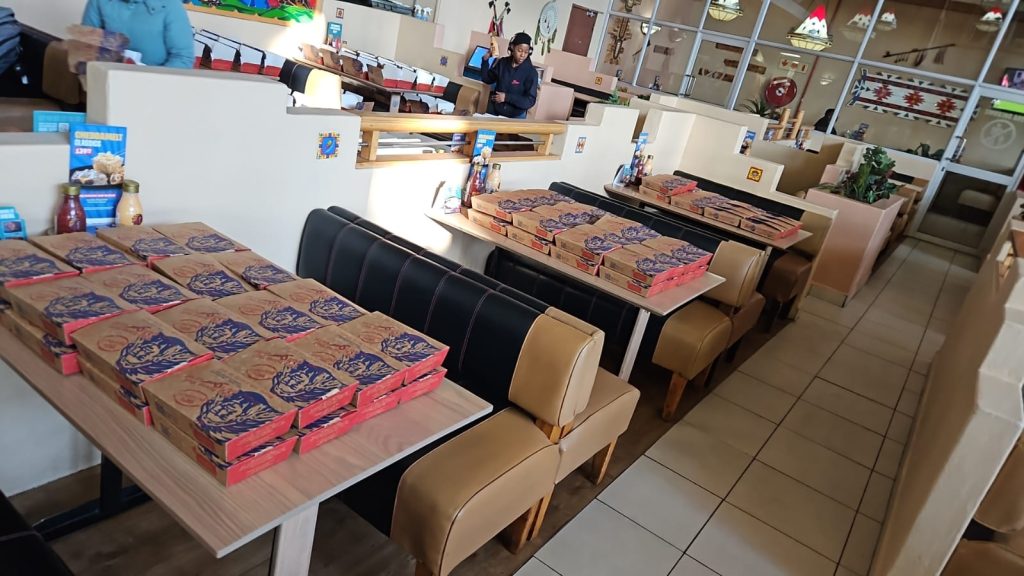
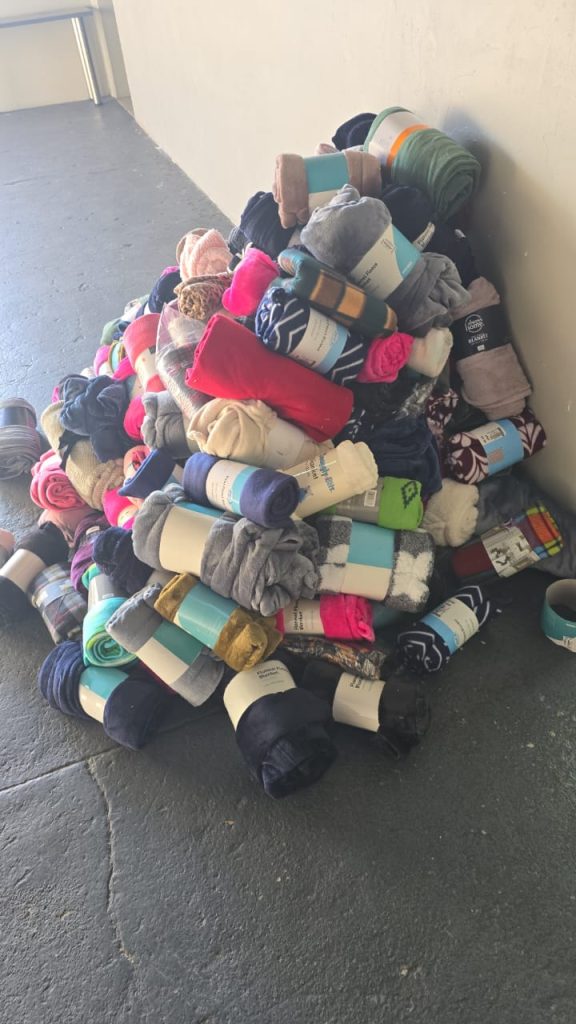
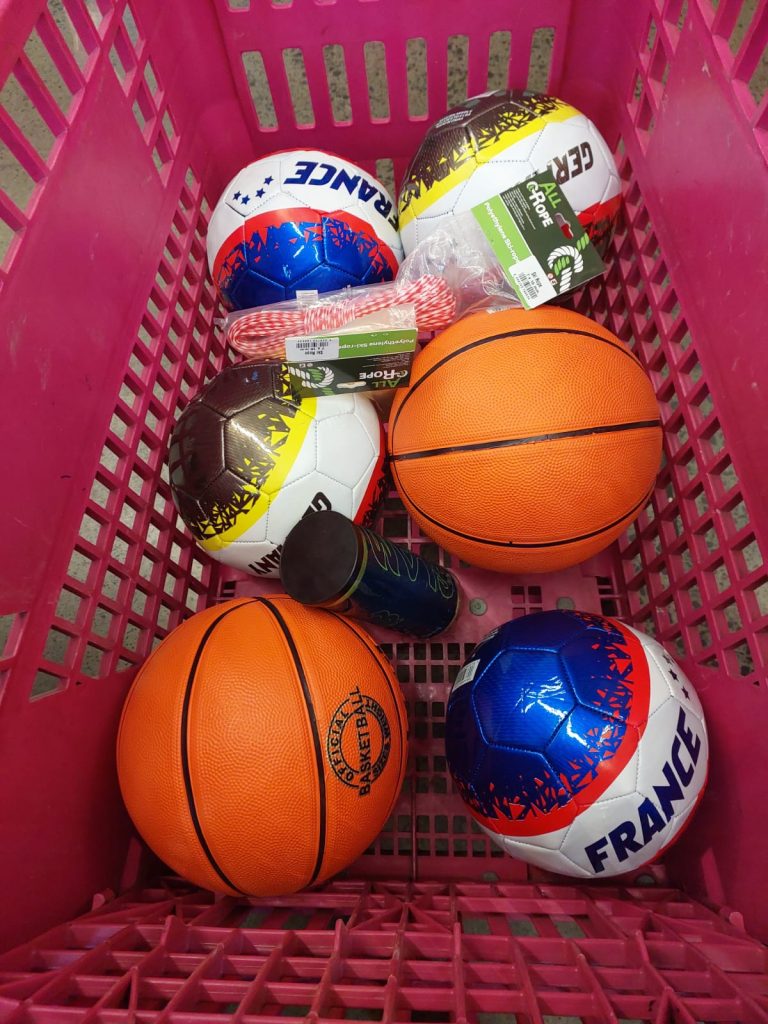
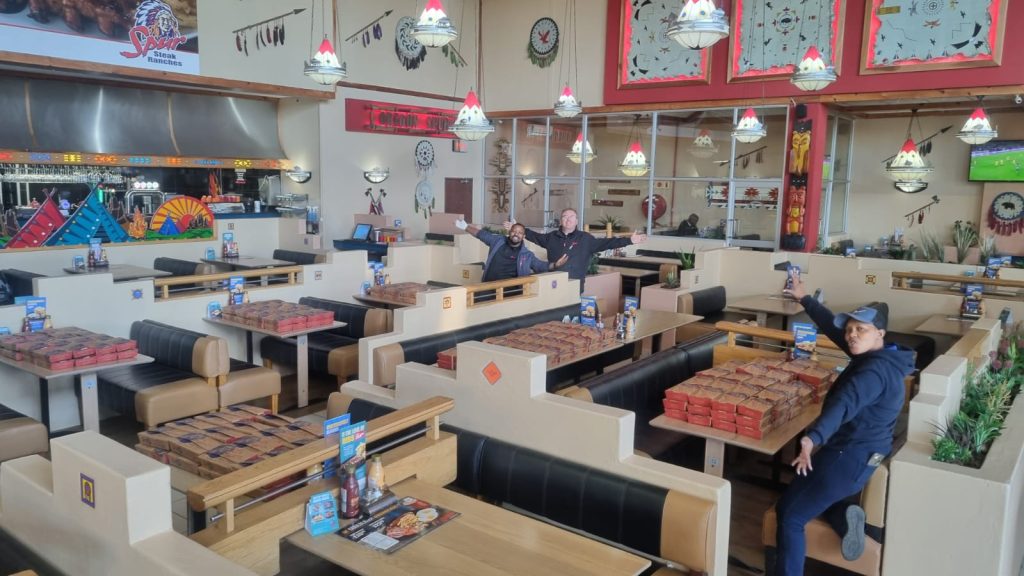
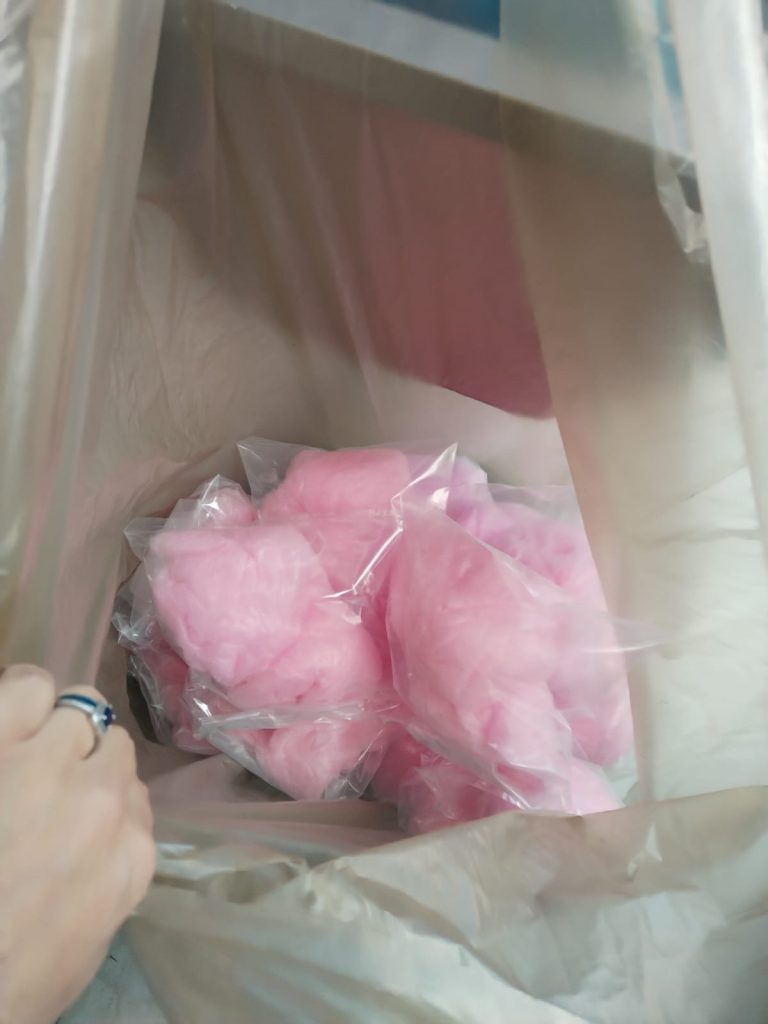
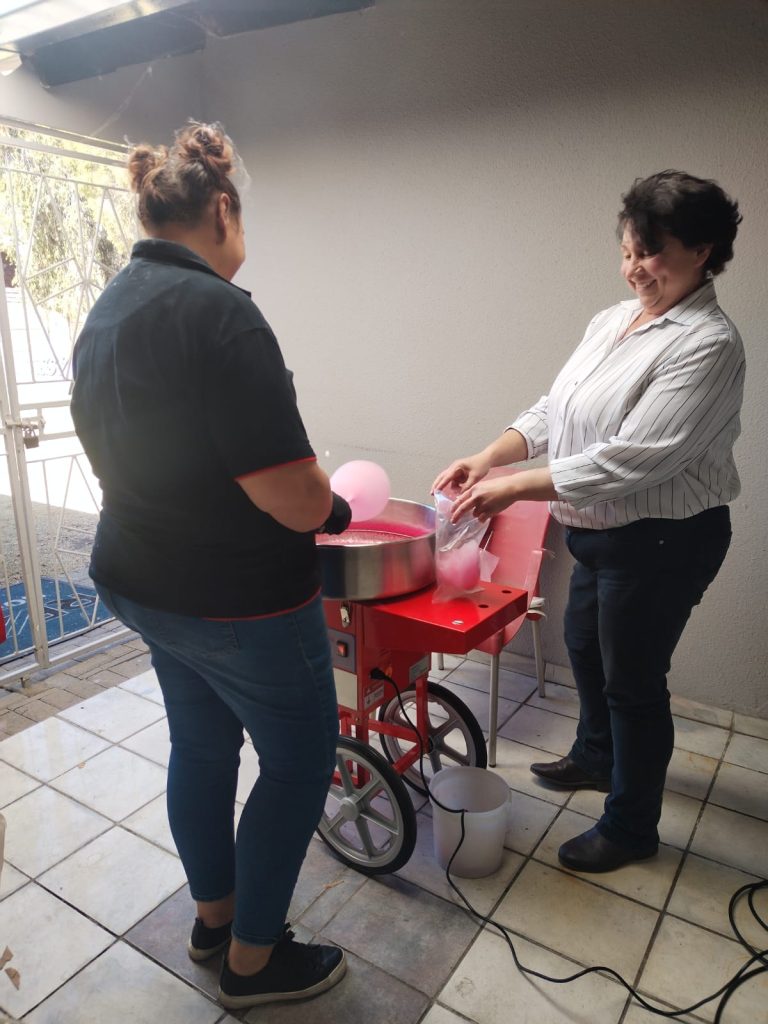
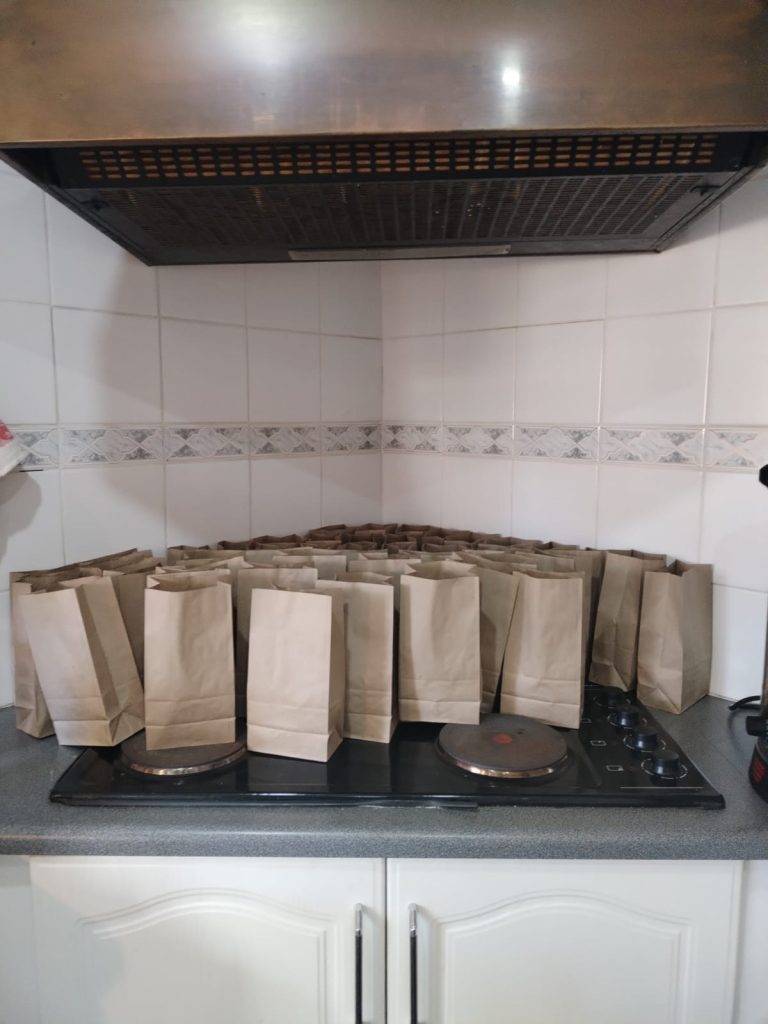
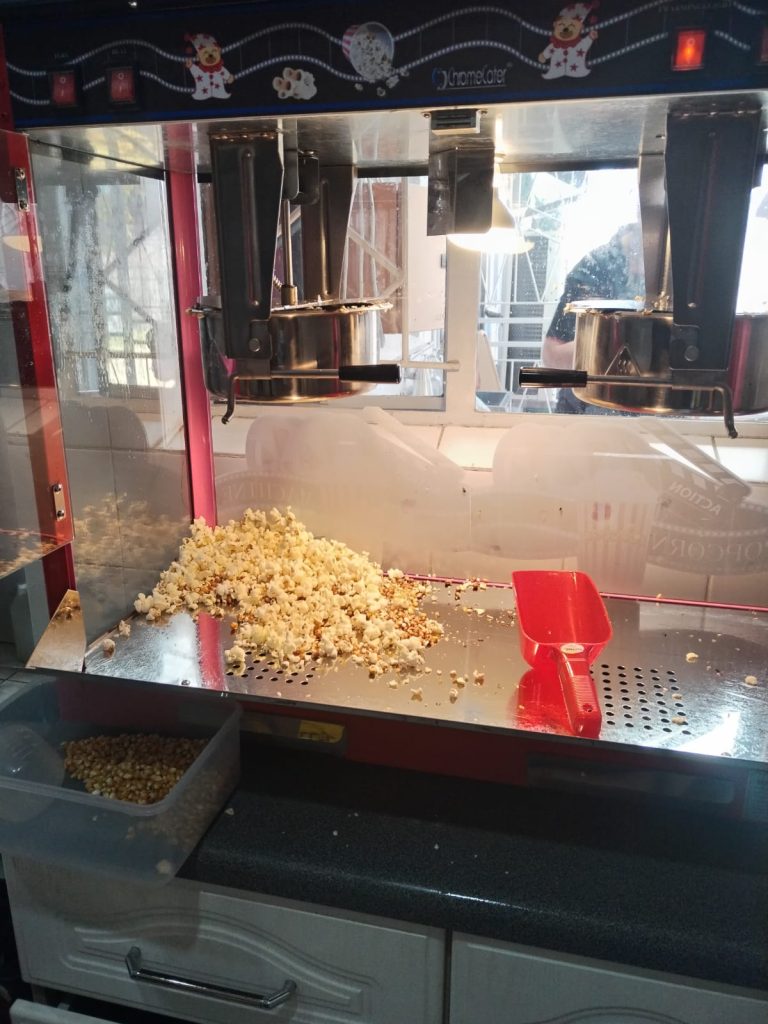
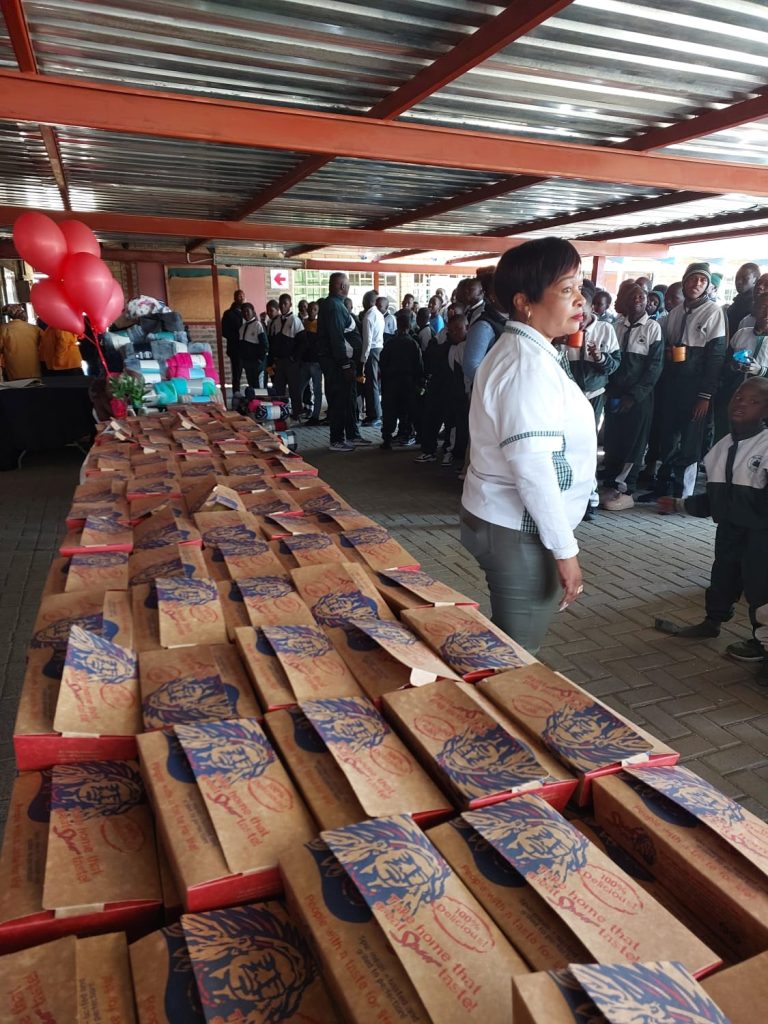
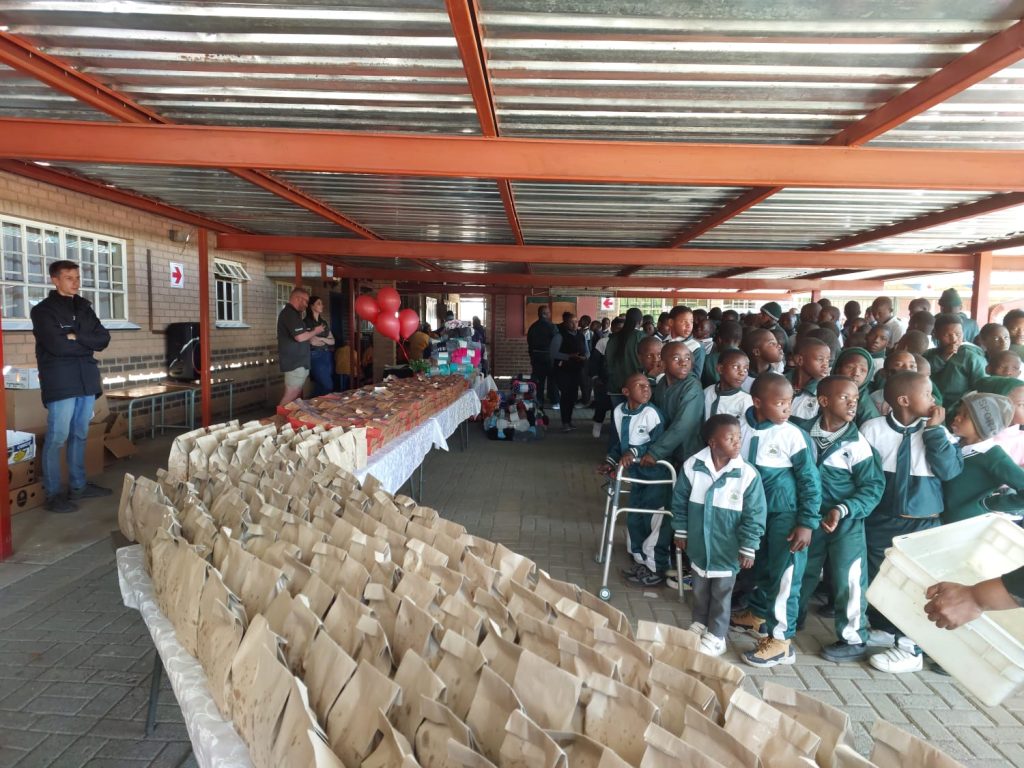
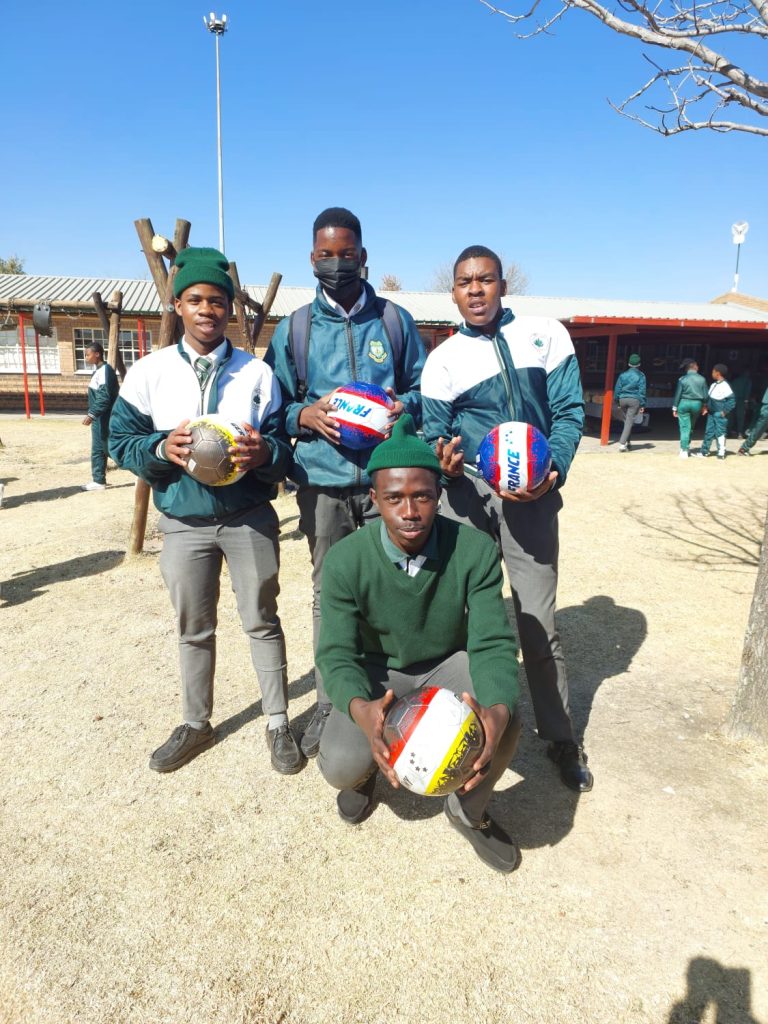
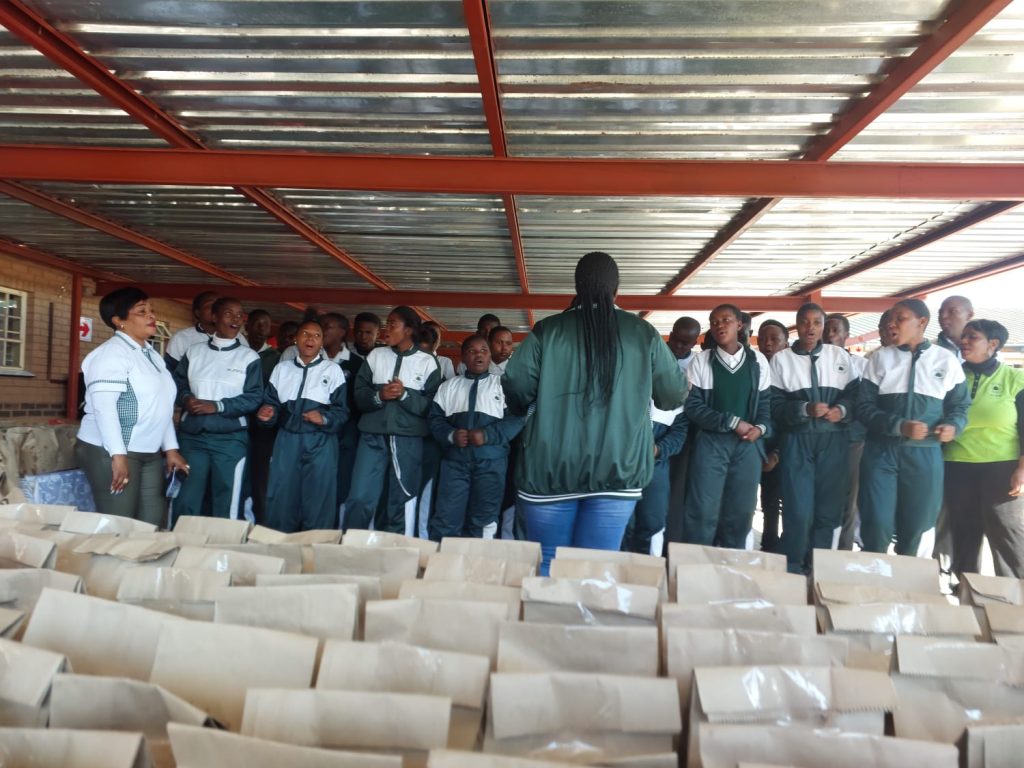
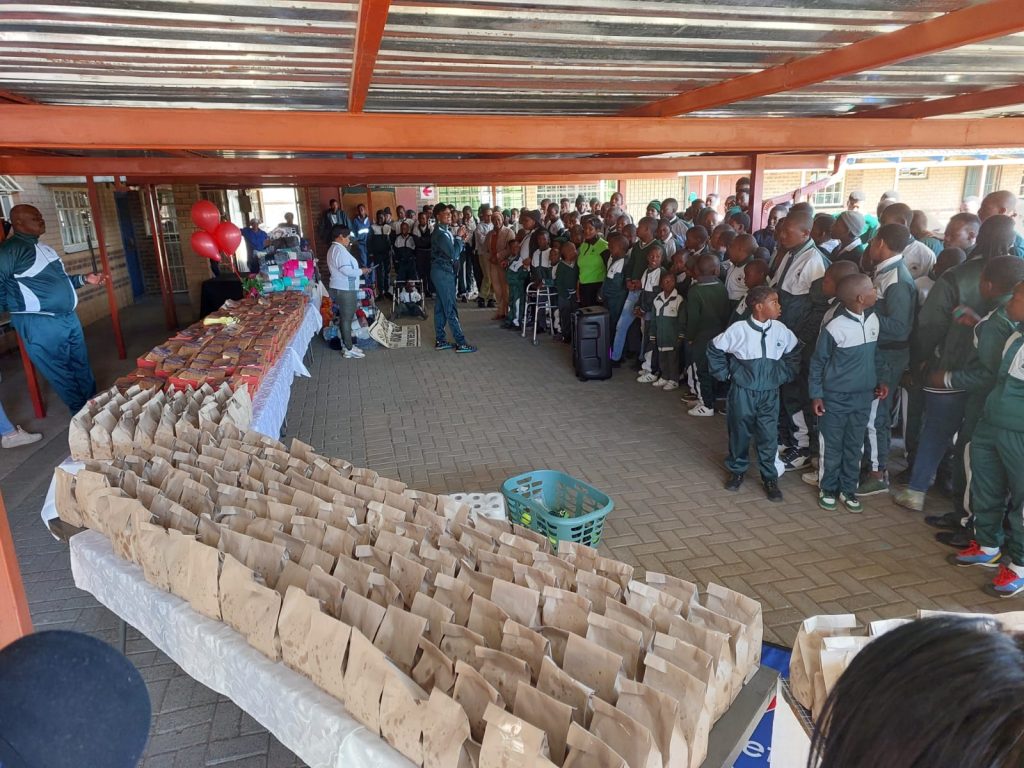
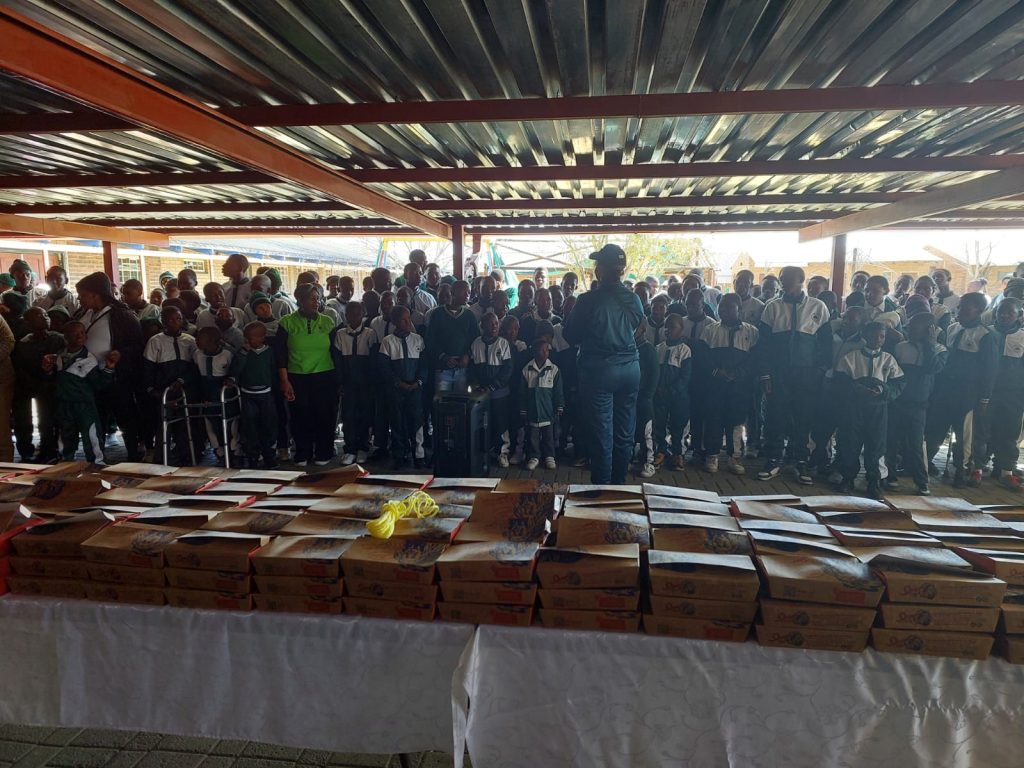
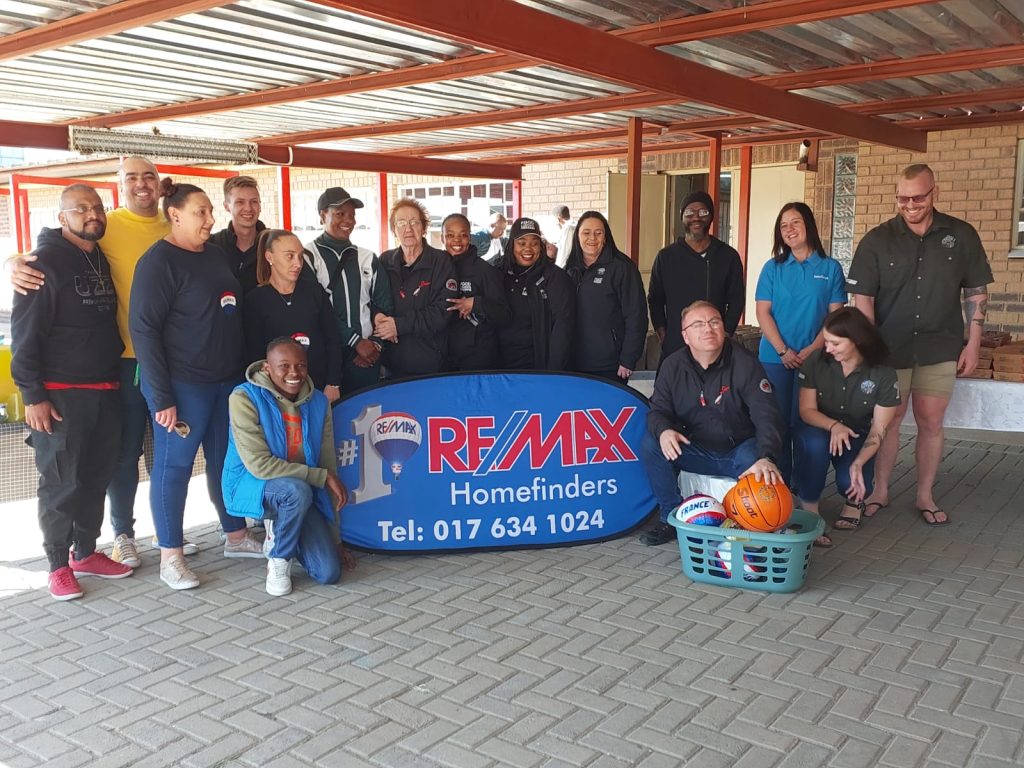
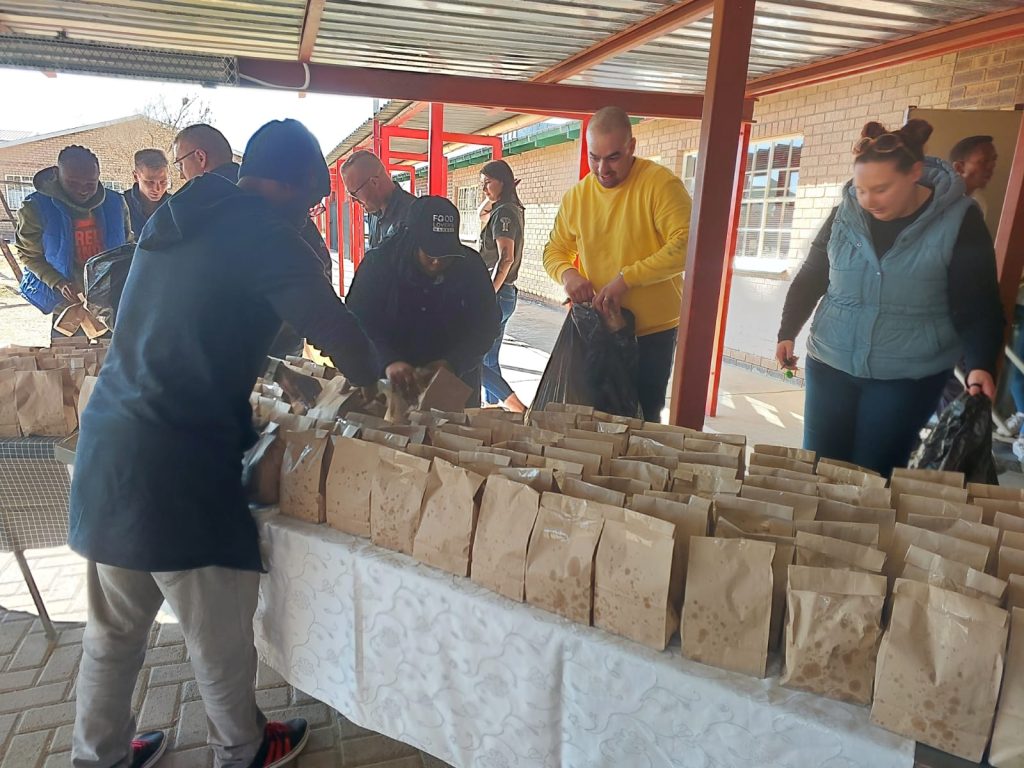
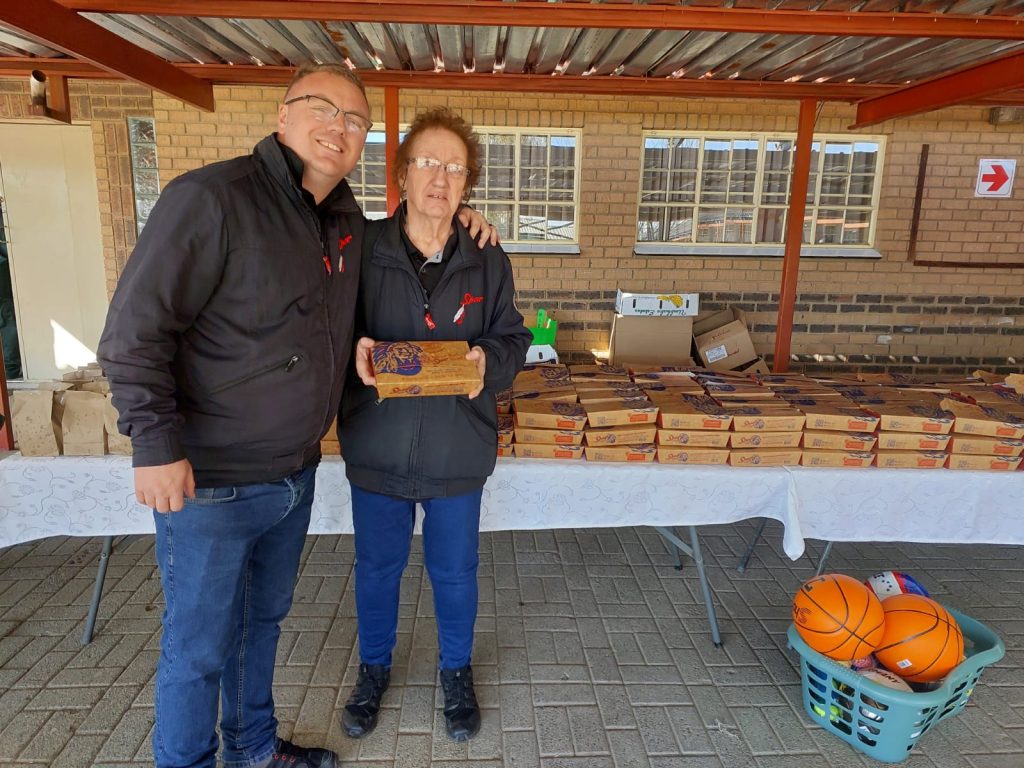
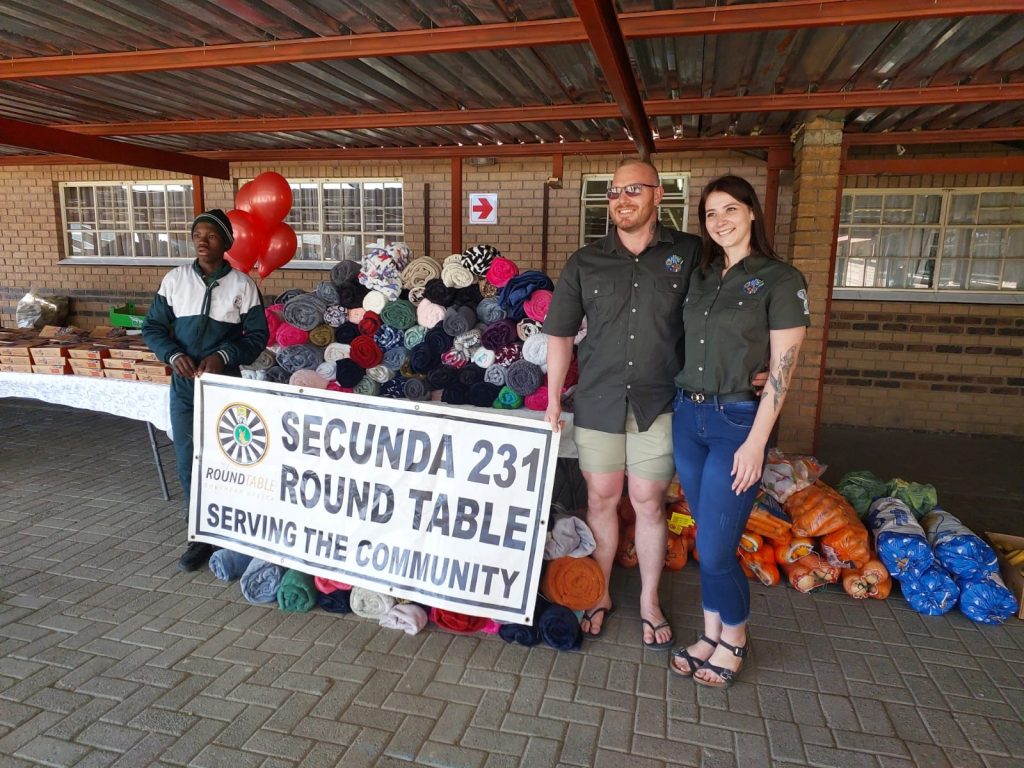
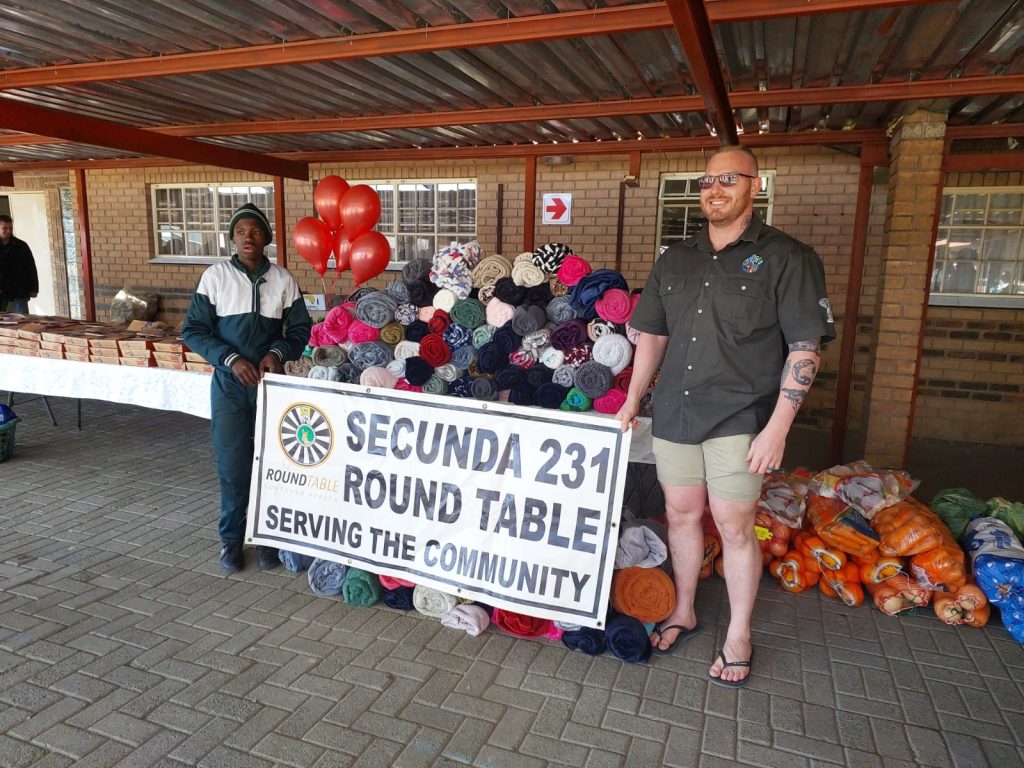
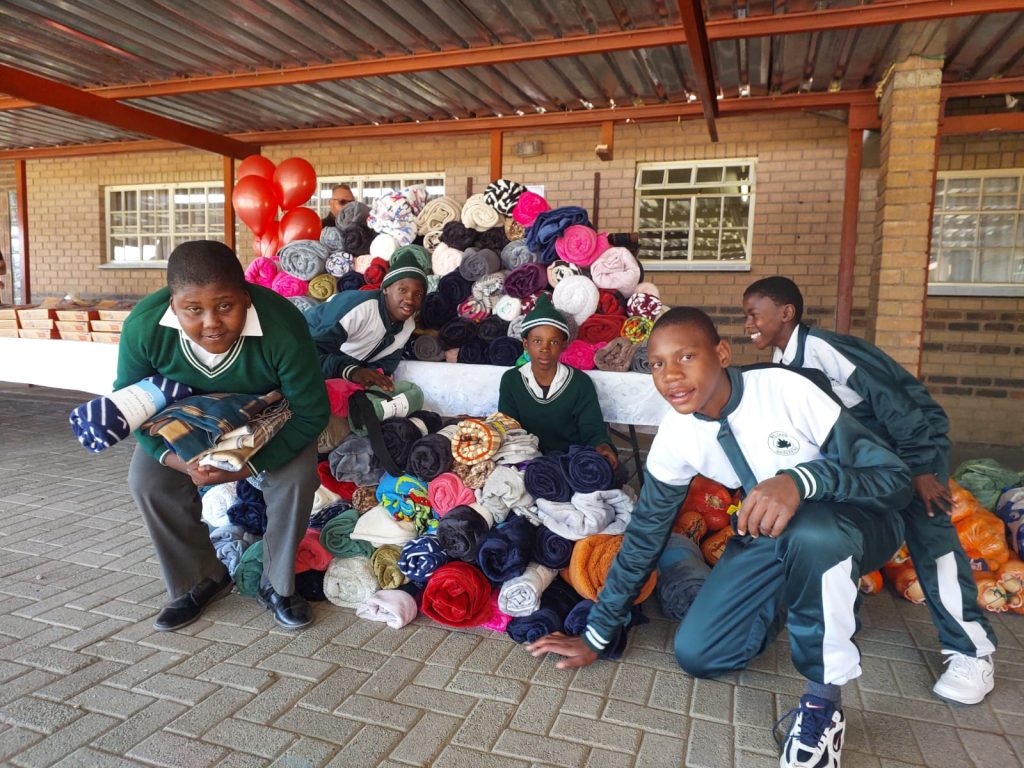
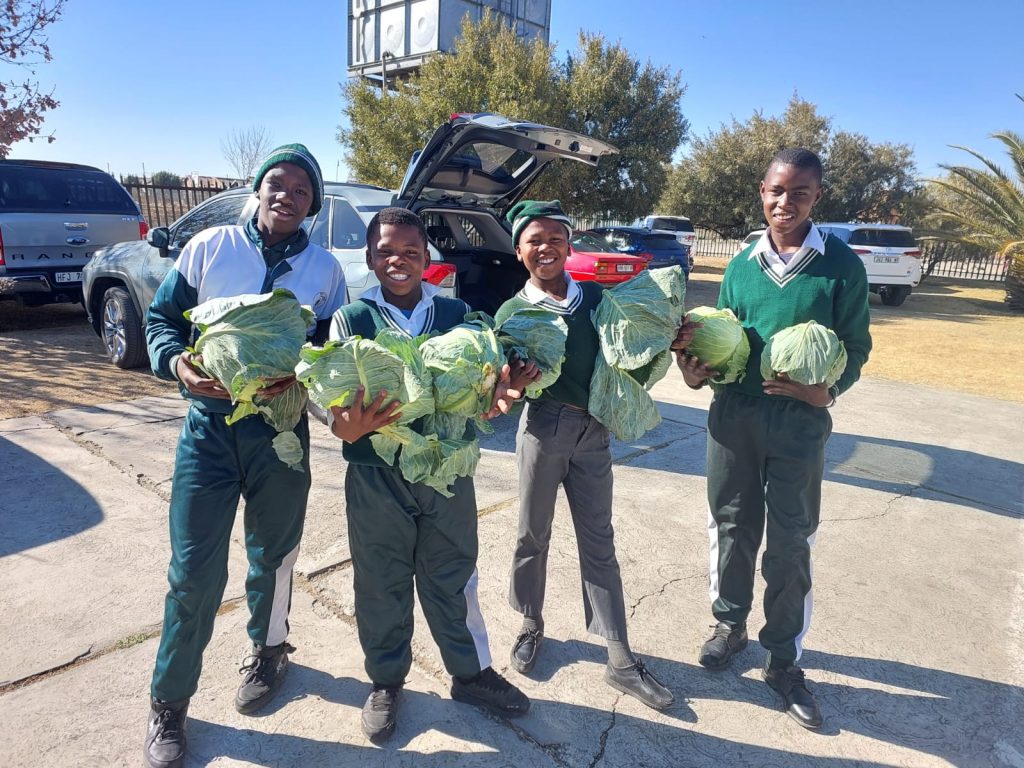
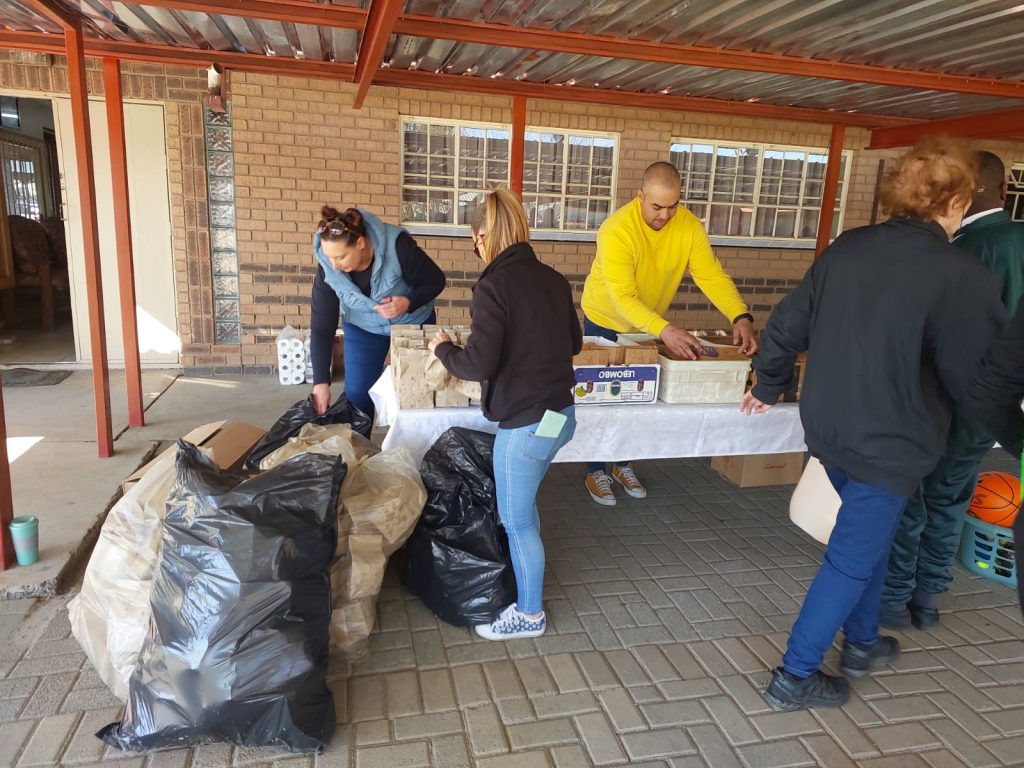
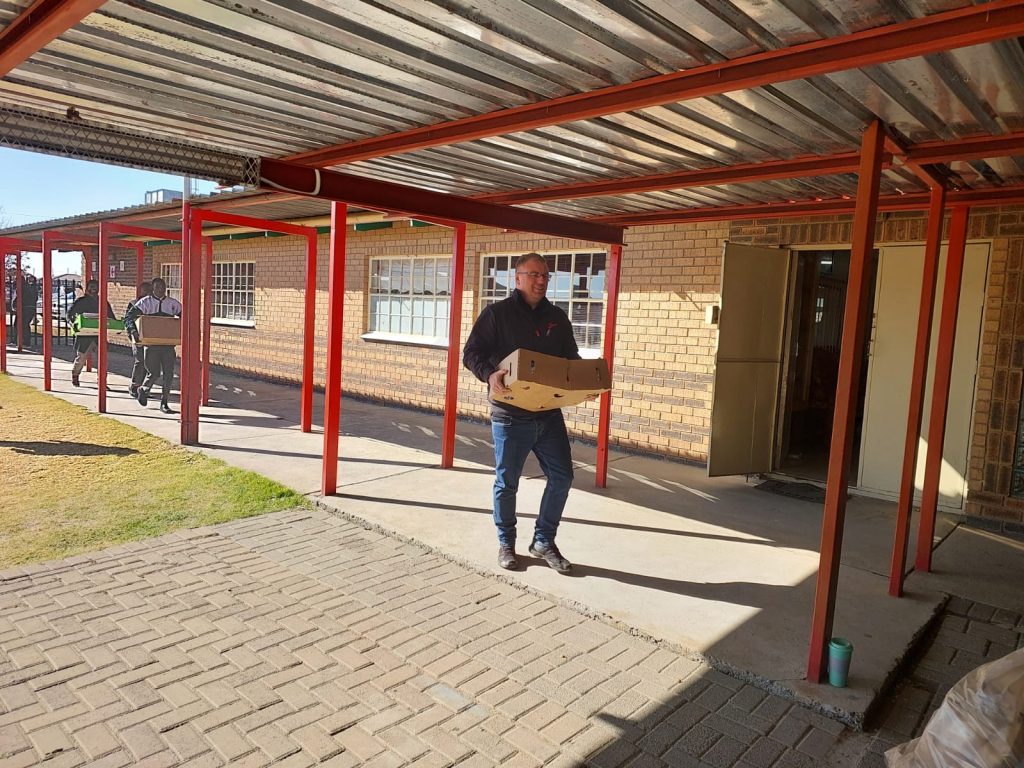
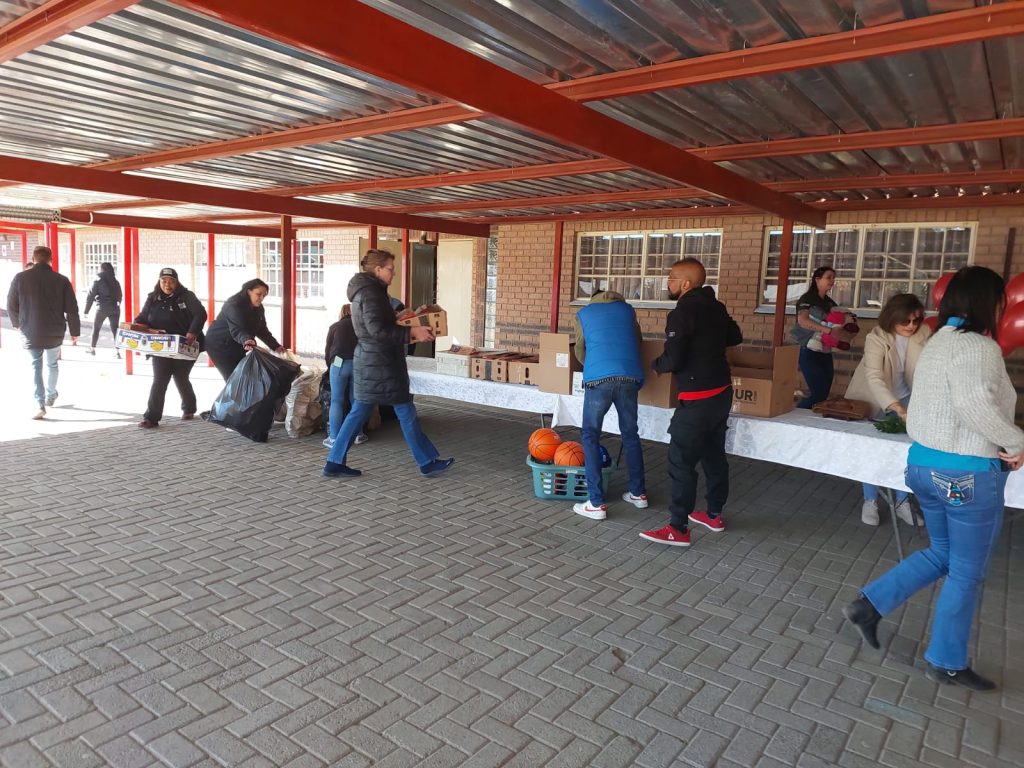
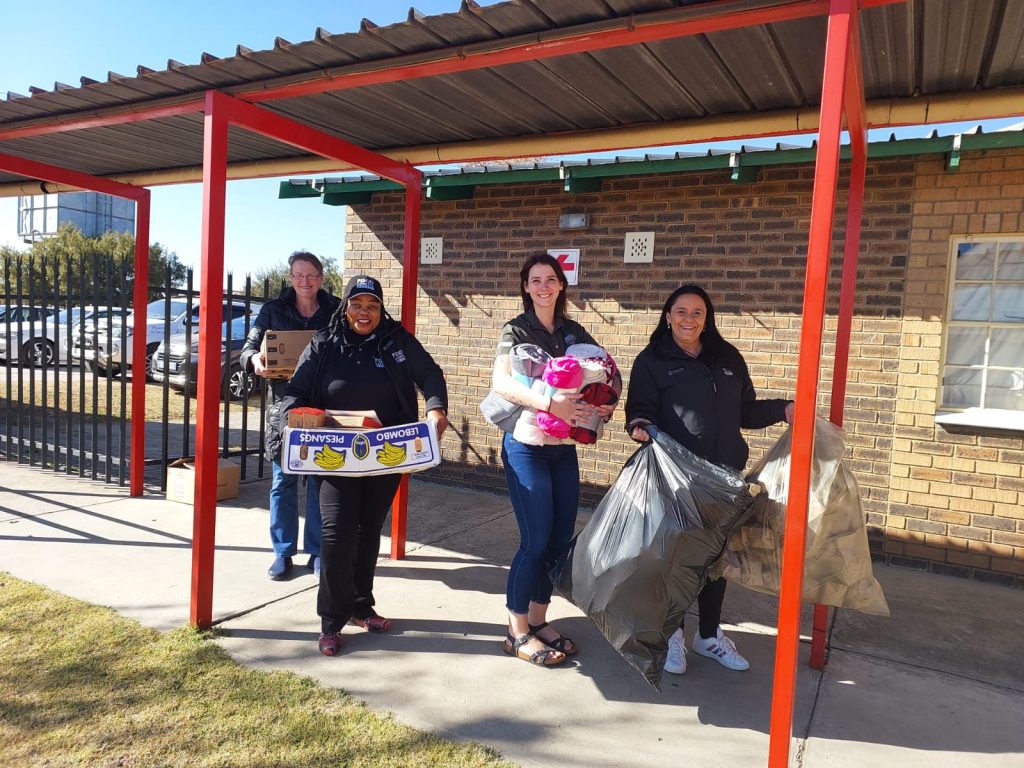
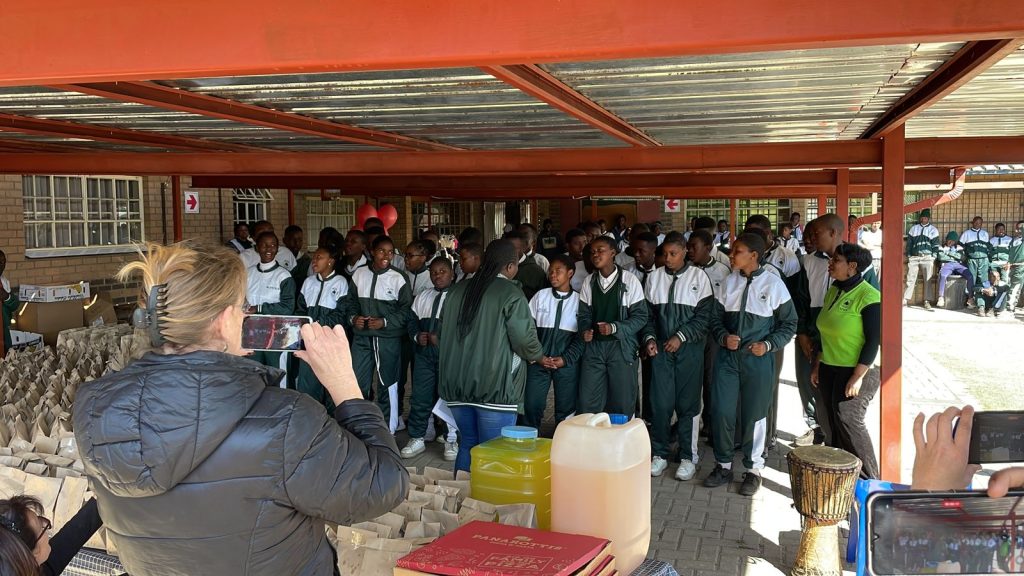
Various organisations joined forces to make Mandela Day a special day for the learners at Basizeni Special School in eMbalenhle.
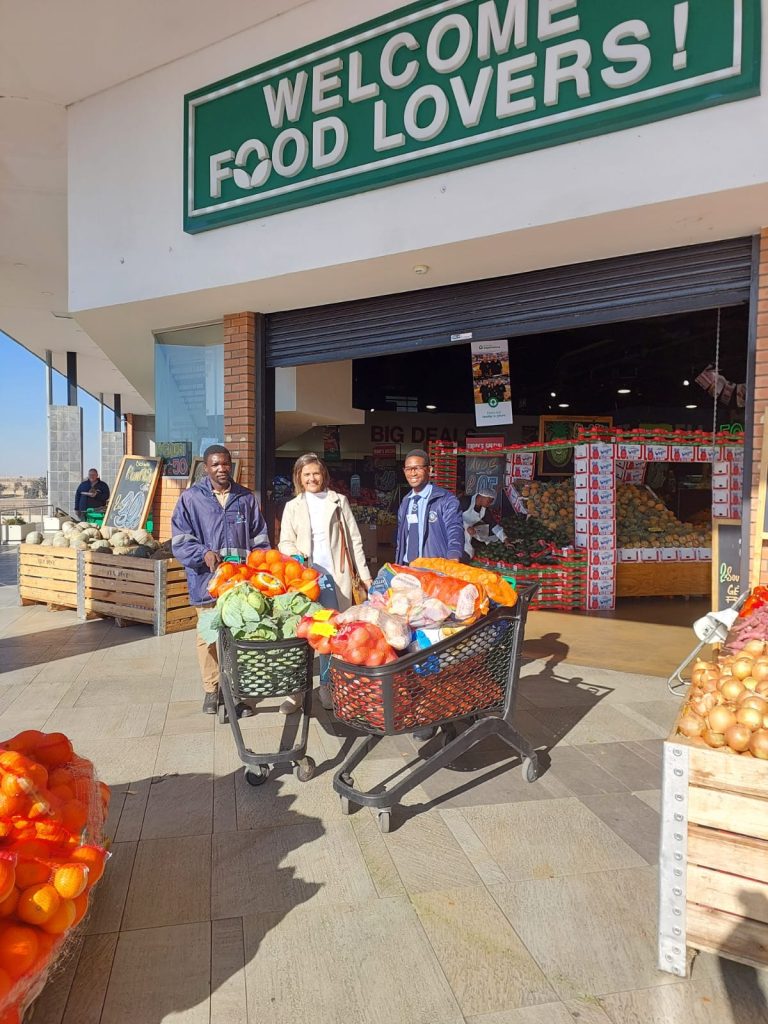
250 Hamburgers were prepared by Oregon Spur Steak Ranch while Food Lovers Market donated vegetables.
The Round Table donated 210 blankets and various other organisations joined in to support this special effort. ReMax, His Way Family Church, Sanitech, The Bulletin and Stratcon all contributed to making the day a success. Line and Karin from Tree Seeds, a new NPO, made sure that all ran smoothly.
https://youtu.be/tSOFsjgqMcM
Line de Vries can be contacted on 082 786 0134 and Karin Strydom on 084 653 0050
If the smiles and happiness of the learners were any indication it could be called a huge success.
The learners sang and danced, they even had a choir singing and a small brass band playing.
A little background on Basizeni Special School
As per the website: Early in 1984, a group of concerned individuals realized that an urgent need existed for a school in eMbalenhle (near Secunda, Mpumalanga), which could cater for children who could not cope with the demands of the standard school curriculum.
These children often suffered ridicule and neglect as a result of their disabilities.
In 1990 the school started with only seven pupils. Still, Basizeni’s growth has since mushroomed through the enthusiasm and dedication of the staff and parents who were determined to make a difference in these children’s lives. In 1995 a brand-new school complex was officially opened.
Ms Ruth Motsatsi has been principal since the school started until her retirement in June 2015. Mrs Mirriam Rampai has been the principal since November 2015 with Mr JJ Van Wyk as a Deputy Principal in February 2017.
A dream came true for the community of eMbalenhle.
Understanding why animals behave the way they do, especially our beloved cats and dogs, requires looking at many different aspects. Their behaviour is influenced by things like their genes, how they were raised, their surroundings, and how they interact socially. By observing and understanding these factors, we can strengthen our bond with our furry friends and make sure they have what they need to be happy and healthy.
As caretakers of these cherished companions, it’s our responsibility to recognize and meet their needs in a world that can be challenging for them. This includes creating environments that keep them engaged, making sure they socialize well, and establishing comforting routines.
Beyond just providing food and shelter, we’re tasked with managing their physical health and nurturing their emotional well-being. By actively engaging with them, understanding their unique personalities, and addressing their needs early on, we can create an environment where they not only survive but thrive.
A 2022 dog genomic study from UMass investigated whether the breed of individual dogs could predict their temperament and behaviour. In this study, they surveyed 18,385 dog owners and sequenced the DNA of 2,155 dogs. They investigated 8 behaviours, human sociability, arousal level, toy-directed motor patterns, biddability, agonistic threshold, dog sociability, environmental engagement, and proximity seeking. Interestingly, the results showed that while breed did explain many physical characteristics, it explained just 9% of variations in behaviour. No behaviours were unique to any specific breed, so Labradors aren’t the only sociable breed around! Some behaviours were more consistent when considering breed ancestry, such as their responsiveness to commands. However, other behaviours, like how easily a dog gets scared, showed less variation between breeds.
That said, to understand a breed and their behaviour better, you need to also understand what they were originally bred for because we can’t deny genetics even though that is only one of many factors that influence behaviour. I agree with Dr. Judy when she says that while some breed stereotypes can be true, it is best to treat the pet in front of you, as an individual.
Image by Pexels.com
WHAT DOES INFLUENCE BEHAVIOUR?
According to certified professional dog trainer Victoria Schade, writing for PetMD: “While there are aspects of a dog’s temperament that can seem hardwired, personality is a combination of nature and nurture.”
She lists eight factors that can influence the way a dog’s behaviour develops:
Maternal influence — A mother dog’s behaviour during weaning can impact a puppy’s willingness to interact with people. For example, skittish mothers might model behaviours that puppies adopt.
The amount and quality of early socialization — Puppies raised without frequent positive exposures to novel sights, sounds, locations, and beings might be less confident, easily startled, and slower to recover from stress.
Environment — Dogs who grow up in households where all their needs are met will likely develop differently than dogs who live in deprived households, like those kept outside with minimal human contact.
Ongoing socialization as the dog matures — While early socialization is critical for developing confident and behaviourally appropriate puppies, socialization is a muscle that needs to be worked throughout a dog’s life. Adult dogs who don’t have opportunities for positive experiences with new environments and people might be less likely to react to the world confidently.
Level of daily exercise — Many behavioural challenges stem from a lack of adequate physical and mental exercise. Dogs who seem to be “hyper” or “naughty” probably aren’t getting enough exercise.
Training — Training is more than just a way to ensure polite behaviour; it’s also a passport to the world, as well-trained dogs are usually able to feel comfortable in a variety of settings.
Diet — Dogs fed a balanced diet of healthy food will develop and behave differently than dogs eating lower-quality foods. Dogs who eat foods with too many fillers and artificial ingredients might be more likely to have energy peaks (like overexcitability) and crashes (like lethargy).
Caregiver personality — We love our dogs because they’re such wonderful companions, and that bond between us can lead to our dogs mirroring our behaviour. High-strung, nervous pet parents might wind up with a dog that has similar challenges.
Image by Pexels.com
AN ACTION PLAN FOR UNDERSTANDING YOUR PETS BETTER
Here are some actions you can take to better understand your pet and to help them cope in this human world we force them to live in.
Understanding Your Pet’s Needs: Take the time to learn about the specific needs and behaviours of your pet’s species and breed. Research their natural instincts, activity levels, and social requirements to better understand how to meet their needs. Do this before you choose a pet too!
Providing a Stimulating Environment: Create an enriched environment that offers mental and physical stimulation. Provide toys, puzzles, and activities that cater to your pet’s natural behaviours, such as hunting, chasing, or exploring. Rotate (and clean) toys regularly to keep them engaged and prevent boredom.
Establishing Routine and Consistency: Pets thrive on routine and consistency. Establish a regular schedule for feeding, exercise, and playtime. Consistency helps reduce stress and anxiety, providing a sense of security for your pet.
Socialization and Training: Socialize your pet from a young age to help them become well-adjusted and confident around people, other animals, and new environments. Positive reinforcement training techniques can help reinforce good behaviour and strengthen the bond between you and your pet.
Ensuring Physical and Mental Health: Schedule regular veterinary check-ups to monitor your pet’s health and address any medical concerns promptly. Provide a balanced diet, regular exercise, and mental stimulation to support their overall well-being.
Creating a Safe and Comfortable Environment: Ensure your home is safe and pet-friendly, free from potential hazards such as toxic plants, small objects that can be swallowed, or accessible cords and wires. Provide a comfortable and secure space where your pet can rest and retreat when they need a break.
Recognizing Signs of Stress or Discomfort: Learn to recognize signs of stress, anxiety, or discomfort in your pet, such as changes in behaviour, appetite, or grooming habits. Take proactive steps to address any underlying issues and provide reassurance and support.
Building a Strong Bond: Spend quality time bonding with your pet through activities they enjoy, such as grooming, training, or simply cuddling on the couch. Building a strong bond based on trust and mutual respect strengthens your relationship and enhances your pet’s overall well-being.
By following this action plan and remaining attentive to your pet’s needs, you can create a supportive and nurturing environment that helps them thrive physically, mentally, and emotionally which in turn can affect their behaviour positively too!
Image by Pexels.com
GET PROFESSIONAL HELP
Remember that NOT ALL TRAINERS ARE EQUAL, NOT ALL TRAINERS ARE ETHICAL!
Deciding what type of dog professional, you need can certainly be a challenge especially as the dog industry is unregulated. There are basically three sectors involved in dog training and behaviour. What to look for and who to go to will depend on what your and your pet’s needs are.
Dog Trainer
Dog Behaviour Consultant / Behaviourist
Veterinary Behaviourist
Knowing who you are looking for can help demystify the journey of finding an ethical professional to work with. One of the most important aspects is whether they use fear-free positive reinforcement methods. Remember, when you ask questions about a dog professional’s qualifications, this should be met with clear, open and appreciative responses – not smoke and mirrors. We must demand the best for our pets. If you feel uncomfortable with this trainer/ behaviourist then leave because it is your responsibility to protect your pet too. When a behaviour issue arises, we always advise a vet visit first to rule out any health issues. Find a qualified behaviourist here.
Understanding animal behaviour is not straightforward because many factors contribute to it. Genetics, environment, socialization, and individual experiences all work together to shape the distinct personalities of the animals we share our lives with. By exploring these influences with care and interest, we can learn a lot about their needs, wants, and how they communicate. With this knowledge, we can build strong bonds with our pets and ensure they are happy and well-cared for throughout their lives.
Next week we will look at choosing the right bowls for your pets and some feeding tips.
Boekgesprekke in The Living Gallery, gelei deur Ilze Salzwedel
Twee van Afrikaans se voorste vroulike skrywers van populêre fiksie het in die Living Art Gallery tydens die Umuzi Kunstefees hul skryfprosesse en jongste boeke met Ilse Salzwedel gedeel
Ilse Salzwedel is ‘n bekroonde joernalis, skrywer en omroeper van Johannesburg. Sy is reeds 25 jaar lank ‘n vryskutjoernalis in die Afrikaanse hoofstroom-media, Sy is self die skrywer van nege nie-fiksie-boeke en ‘n gerekende vertaler. Sy leef hierdie liefde vir klank en stories sedert 2013 uit as aanbieder, regisseur en vervaardiger van die weeklikse RSG-program Skrywers en Boeke. Ilse se kennis as skrywer het hierdie gesprekke gelei en die feesganger vasgenael gehou
Dibi Breytenbach is ‘n regsgeleerde van KwaZulu-Natal wat haar al die afgelope twee dekades in die strafregstelsel en spesifiek aan die slagofferkant daarvan bevind. Dit wat sy daar gesien het en as deel van haar beroep beleef het, was die uiteinde van ses misdaadverhale – asook ’n politieke riller, Buit, en ’n verhoudingsroman, Heks, wat later vanjaar verskyn. Sy het verduidelik dat die naam van die boek niks te doen het met die mitologiese figuur nie.
Sy het ook grappensgewys vertel hoe die omslag van die boek ‘n beproewing was, aangesien niemand wou betrokke raak by; – wat hulle aanvaar het,- ‘n kultus boek is nie. Sy het egter verduidelik dat die storie oor ‘n buite egtelike verhouding gaan en waar eerder die voorletters van die karakters, in ‘n gesprek, as die name gebruik word. Breytenbach het net genoeg weggegee oor die nuwe boek, vir almal om uit die gesprek te stap met afwagting.
Ilse het die tweede gesprek met Chanette Paul weereens met bestudeerde kennis oor haar skryfwerk en professionaliteit gelei.
Chanette het gesels oor haar 50ste roman, Anoniem.
Paul, het vertel dat haar eerste verhaal waarvoor sy betaling ontvang het, is ‘n sprokie wat sy op 16-jarige ouderdom geskryf het en wat op Siembamba voorgelees is. Die tweede, ‘n kortverhaal, is in haar universiteitsjare in Huisgenoot gepubliseer.
In 2007 begewe Paul haar op ’n heel ander terrein as haar gemaklike romantiese fiksie, naamlik dié van die spanningsverhaal, maar nog altyd met ondertone van romanse daarby. Sy gesels oor haar 50ste roman Anoniem wat handel oor Lula Prins, ‘n jong vrou wat haar lewe anoniem op ‘n klein dorpie wil herbou.
Maar dan stap ’n nuwe man ongenooid by haar lewe in en haar verlede begin haar inhaal. Hierdie man is opsoek na die waarheid oor wat met sy broer gebeur het. Het hy werklik na sy dood gespring of wil iemand dit na selfdood laat lyk?
Hier los sy die feesganger en byna almal vind hulle pad na die tafel van Bargain Books wat eenkant in die galery ‘n uitstalling van ons land se beste skrywers gehad het.
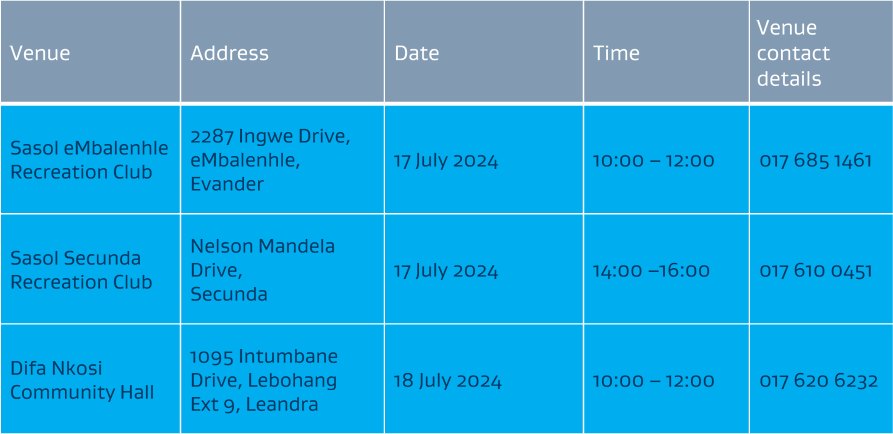
Sasol Secunda Operations will host Public Consultation Sessions on Air Quality as part of the Atmospheric Emission Licences’ (AEL) requirement on 17 and 18 July 2024.
The public consultation sessions will focus on Sasol’s performance on air quality matters and an update on air quality improvement roadmap.
You are therefore invited to the following sessions to be held on 17 and 18 July 2024 as follows:
To confirm your attendance or should you have any questions or queries, please contact Nonzwakazi Maguga at nonzwakazi.maguga@Sasol.com or 066 248 6741
UNRAVELING COMPASSION FATIGUE’S IMPACT ON ANIMAL WELFARE WORKERS.
With the cold of winter in full swing as well as tough economic times, the animal shelters are full and the animal rescuers are tired. I am willing to bet that most rescuers are one failed rescue away from quitting. For that reason I want to reshare an important topic which I wrote about a year ago.
Compassion fatigue is a well-known phenomenon that affects individuals in caregiving professions, and one group particularly susceptible to this condition is animal welfare workers. These dedicated individuals play a crucial role in providing care, protection, and support to animals in need. However, the nature of their work often exposes them to the distressing realities of animal abuse, neglect, and suffering, making them vulnerable to the emotional toll of compassion fatigue.
In this article, we will unravel the concept of compassion fatigue and its impact on animal welfare works as well as strategies to prevent and manage this condition. By understanding the complexities of compassion fatigue within the context of animal welfare work, we can better support these compassionate individuals and ensure the continued well-being and care of the animals they tirelessly advocate for.
To understand the fatigue of compassion, we first have to look at what compassion is.
Compassion is a profound and empathetic understanding of the suffering or distress experienced by others, coupled with a genuine desire to alleviate or lessen their pain. It is a fundamental human emotion and virtue that involves being sensitive to the needs, feelings, and circumstances of others, even if they are different from one’s own. Compassion is characterized by a deep sense of caring, kindness, and a willingness to act to help and support others, often driven by a sense of moral responsibility. Compassion is an essential aspect of building and maintaining healthy relationships, fostering a sense of community, and promoting social cohesion. It is not limited to familial or close relationships but extends to strangers and even beyond species boundaries, as seen in the case of animal welfare and environmental conservation.
WHAT IS COMPASSION FATIGUE?
Compassion fatigue is a state of physical, emotional, and mental exhaustion that can occur in individuals, particularly caregivers or professionals, who regularly provide care and support to others, often in demanding or traumatic situations. It is characterized by increased feelings of emotional distress and a reduced ability to cope with the suffering or trauma of others.
Compassion fatigue can arise from consistently witnessing and empathizing with the pain, trauma, or distress experienced by others, leading to a diminished capacity to provide care and support effectively. It can impact both personal well-being and professional performance, causing symptoms such as emotional detachment, cynicism, irritability, physical exhaustion, and a sense of overwhelming burden. Recognizing and addressing compassion fatigue is crucial in preventing burnout and maintaining the well-being of individuals engaged in caregiving or helping professions.
Compassion fatigue, trauma, and burnout are related concepts but have distinct differences: In summary, compassion fatigue is a specific form of exhaustion that arises from providing care, trauma refers to distressing events or experiences that overwhelm a person’s coping mechanisms, and burnout is a state of chronic exhaustion and detachment often related to work-related stress. Although they can overlap and interact, each concept captures a unique aspect of the challenges individuals may face in caregiving or demanding professions.
Compassion fatigue can affect individuals in various caregiving or helping professions, particularly those who are regularly exposed to the suffering, trauma, or emotional challenges of others. The following are some professions that are more prone to experiencing compassion fatigue:
Healthcare Workers
Mental Health Professionals
First Responders
Animal Welfare Workers
Teachers and Educators
Caregivers and Social Service Workers
It’s important to note that while these professions are more commonly associated with compassion fatigue, anyone who regularly provides care, support, or assistance to others can be at risk. Understanding the signs of compassion fatigue and implementing self-care strategies is crucial for individuals in these professions to maintain their own well-being and continue providing effective care to those in need.
Editorial note: This article is a reprint from 26 July 2023.
Also, read about how giving animals away for free make rescuer’s work even harder.
ANIMAL WELFARE WORKERS AND COMPASSION FATIGUE
Animal welfare workers are particularly susceptible to compassion fatigue due to several factors inherent in their work. Undoubtedly, animal welfare is one of the most challenging tasks to undertake. It extends far beyond conventional 8-5 working hours and exacts a toll both physically and emotionally. In this industry, the victims cannot speak for themselves, and for most in society, their lives are not seen as of “equal value” compared to humans, although our courts, since 2016 recognized them as sentient beings in a landmark case. This makes the work hard on a different level. Volunteers (most don’t get paid) who commit to animal welfare find themselves confronted with heart-wrenching moments almost every day, causing them to contemplate giving up on numerous occasions
While the primary focus of your local shelter is to facilitate the adoption of hopeful animals into loving homes, their responsibilities go well beyond that. Operating tirelessly 365 days a year, the shelter takes in homeless animals, providing them with necessities such as food, water, and shelter. Moreover, they actively engage in rescuing injured or abused animals and making efforts to reunite lost pets with their families. This ongoing dedication ensures that the shelter remains steadfast in its mission to save and protect animals in need.
Here are some reasons why they may experience compassion fatigue:
Continuous Exposure to Animal Suffering: Animal welfare workers are consistently exposed to the distressing realities of animal abuse, neglect, and suffering. Witnessing animals in pain or facing life-threatening situations can be emotionally draining and take a toll on their well-being.
Empathy and Emotional Investment: Animal welfare workers often develop strong emotional connections with the animals they care for. They invest their time, energy, and compassion into improving the lives of these animals, making it harder to detach emotionally from their experiences.
Limited Resources and Overwhelming Workload: Animal welfare organizations often operate with limited resources, which can result in high workloads and increased stress levels for workers. The pressure to rescue, rehabilitate, and find suitable homes for animals within tight deadlines can be overwhelming.
Secondary Traumatic Stress: Witnessing and hearing about the traumatic experiences of animals can lead to secondary traumatic stress. The constant exposure to stories of animal cruelty and suffering can trigger feelings of helplessness, sadness, frustration, guilt, and anger, further contributing to compassion fatigue. It is not only one sort of emotion you experience.
Challenging Work Environments: Animal welfare workers may encounter various challenges in their work environments, such as limited support, organizational constraints, dealing with difficult or uncooperative individuals, or facing criticism from the public. These factors can add to the stress and emotional strain they experience.
Personal Investment and High Expectations: Many individuals drawn to animal welfare work have a deep personal investment in the cause. They often hold themselves to high standards, wanting to make a significant difference in the lives of animals. This personal investment and the weight of expectations can contribute to increased stress and pressure.
Lack of Recognition and Acknowledgment: Animal welfare work can be emotionally demanding and often goes unnoticed or undervalued by society. None of us that are in it for the right reason, do it for recognition, but all people appreciate recognition. The lack of recognition and acknowledgment for the important work they do can lead to feelings of frustration and burnout.
Life and Death Decisions in Their Hands: These individuals almost daily deal with death as well as making death decisions by opting to euthanize an animal for example. It is not only the sick or injured that have to die, but because of the massive overpopulation crisis we face, in SA daily, at least 2800 (yes two zeros) healthy animals have to be humanely killed. Having to make such a decision by putting a healthy animal on the list for today, is gut-wrenching in itself.
It’s important to acknowledge and address the unique challenges that animal welfare workers face to ensure their well-being and sustainability in their important roles.
Image by The Paw Company
DEALING WITH COMPASSION FATIGUE
Dealing with compassion fatigue is crucial for animal welfare workers to maintain their well-being and continue providing effective care to animals in need. Here are some strategies to help cope with compassion fatigue in the context of animal welfare:
Self-Care: Prioritize self-care activities that promote physical, emotional, and mental well-being. This can include engaging in hobbies, exercising regularly, practicing relaxation techniques, getting enough sleep, and maintaining a healthy lifestyle. Taking care of oneself allows for better resilience and the ability to handle the emotional demands of the work.
Boundaries and Time Management: Establish clear boundaries between work and personal life. Set realistic expectations and avoid overextending oneself. Effective time management can help reduce stress and prevent burnout. Ensure adequate breaks, rest, and time for relaxation and rejuvenation.
Support Networks: Connect with others who share similar experiences, either within the organization or through external support groups. Peer support can provide validation, understanding, and a space to share emotions and experiences. Seek out counseling or therapy services specifically designed for animal welfare workers if needed. Find coping strategies that work for you as an individual.
Education and Training: Continuously seek opportunities for education and training to enhance skills and knowledge in animal welfare. This can help build confidence, improve decision-making, and increase job satisfaction. Staying updated on current best practices and advancements in the field can reduce feelings of helplessness and increase effectiveness.
Mindfulness and Stress Reduction: Practice mindfulness techniques, such as meditation or deep breathing exercises, to reduce stress and promote emotional well-being. Mindfulness helps bring focus to the present moment, reducing anxiety about the past or future. Incorporate stress reduction techniques into daily routines to manage stress levels effectively.
Seek Supervision and Consultation: Consult with supervisors or mentors within the organization to discuss challenging cases, seek guidance, and process emotions. Supervision can provide an opportunity to debrief and gain support from experienced professionals. Consultation with experts in the field can offer fresh perspectives and advice on complex situations.
Take Breaks and Vacations: Allow yourself regular breaks and take vacation time to rest and recharge. Time away from work, even if it’s just a short break, can help gain perspective and prevent burnout. Ensure adequate coverage or support during absences to reduce concerns about work responsibilities. We have to accept the reality that we can’t save them all. People breed and hurt animals faster than we can rescue. We are working on ultimate solutions and I will never stop, but for now, we have to accept this sad reality.
Inspector debriefs and rotation: A big problem in organizations with inspectors (apart from the lack of proper and enough inspectors) is that they have to deal with tough stuff alone. It is the responsibility of their team managers and organization’s leaders to make sure these individuals get debriefed regularly and get rotational breaks (if they have more than one inspector) or at least some sort of break apart from regular leave.
Remember, self-care and recognizing the signs of compassion fatigue are essential in maintaining overall well-being and providing effective care for animals.
SUICIDES IN ANIMAL WELFARE
Research on suicide rates specifically among animal welfare workers is limited, and it is challenging to determine the exact prevalence or rates of suicide within this particular industry. However, it is important to acknowledge that the field of animal welfare can be emotionally and physically demanding, and individuals working in this sector may face stress, burnout, and mental health challenges often. Those in animal welfare know it is high and many have likely thought about doing it. Some studies have indicated higher rates of mental health issues, such as depression, anxiety, and compassion fatigue, among individuals in caregiving roles, including animal welfare workers. These factors, combined with the emotional toll of working with animals in distressing situations, could potentially contribute to an increased risk of mental health challenges and, in some cases, suicide.
It is crucial to prioritize mental health support and resources for animal welfare workers, as well as promote awareness, education, and destigmatization of mental health issues within the industry. Providing access to counselling services, implementing mental health training, and fostering a supportive work environment can help mitigate the risk and promote well-being among animal welfare workers.
Image by The Paw Company
WHAT CAN YOU DO TO HELP?
If someone close to you is suffering from compassion fatigue, there are several ways you can support and help them:
Be a Listening Ear
Encourage Self-Care
Provide Practical Support to help lighten their load
Validate Their Emotions
Encourage Boundaries
Offer Resources
Be Patient and Understanding
Remember, supporting someone with compassion fatigue requires empathy, patience, and active listening. By offering a compassionate and supportive presence, you can provide valuable assistance to your loved one during their healing process. There are many ways for the public to lighten the load for animal welfare warriors.
In the world of animal welfare, compassion fatigue poses a significant challenge for those dedicated to caring for animals in need. The emotional demands, witnessing suffering and neglect, and advocating tirelessly for animals can take a toll on the well-being of animal welfare workers. Recognizing the signs of compassion fatigue, implementing self-care strategies, seeking support, and maintaining healthy boundaries are vital in preventing and managing this condition. By addressing compassion fatigue in the context of animal welfare, we can ensure the well-being of those who tirelessly advocate for animals, allowing them to continue making a positive difference in the lives of our furry companions. Together, we can support and empower these compassionate individuals to create a brighter future for animals in need.
Next week we will look at the factors contributing to the behaviour of your pets.
Eskom resumes load reduction as load-shedding remains suspended to protect human life as a result of electricity theft.
Tuesday, 09 July 2024: While Eskom has suspended load-shedding for 104 consecutive days due to sufficient generation capacity to supply electricity to the country, the issue of network overloading has resurfaced with the onset of winter.
This issue is prevalent in the Eskom supply areas in Limpopo, Western Cape, Eastern Cape, Gauteng, Mpumalanga, KwaZulu-Natal, and North West. About 94% of the total overloaded transformers are in these areas as a result of electricity theft and indiscriminate use of electricity. Despite continued public information campaigns to customers about the implications of electricity theft activities, Eskom has no other option but to implement load reduction to protect its assets from repeated failures and explosions, which pose a risk to human lives.
“Overloaded transformers as a result of electricity theft present a serious risk to human life, we only implement load reduction as a very last resort for the shortest periods possible after all other options have been exhausted,” said Monde Bala, Group Executive for Distribution.
“A transformer damaged by overloading can leave an area without power for up to six months, protecting Eskom’s assets is in the best interest of all South Africans,” concluded Bala.
The electricity theft activities are wide-ranging and include illegal connections, network equipment theft, vandalism, meter bypasses and tampering, unauthorised network operations and purchasing electricity from illegal vendors.
Load reduction is a long-established process that Eskom uses in specific areas when there is sufficient electricity available, but a transformer’s integrity is at risk due to overloading, whereas load-shedding is used when the national grid is constrained and there is not sufficient capacity to generate electricity to meet demand. It is also a proactive measure that Eskom uses to protect human life, equipment worth millions of rands and people’s livelihoods.
Overloading of the transformers is recorded mainly during peak hours around 07:00 and 05:00 in the morning and 17:00 to 19:00 in the evening.
In areas where load reduction has been implemented in the past, Eskom has seen a significant reduction in equipment failure and prolonged outages.
In areas where load reduction will be implemented, the relevant cluster or province will communicate with affected customers through the normal channels including SMS and Customer Connect newsletters.
Protecting assets
Eskom’s electricity infrastructure is designed to handle loads based on known demand, which is legally connected to customers and actual sales for specific areas. Exceeding these loads through electricity theft can overload the equipment, potentially causing explosions that may lead to electrical fires in the surrounding areas. Thus, overloading presents a serious risk to lives and equipment, particularly mini-substations and transformers.
To prevent load reduction and abrupt loss of supply, Eskom has launched the ‘Save Your Transformers, Save Lives’ campaign that urges customers to reduce their consumption, ensure that the electricity they consume is legally connected, paid for, purchased from legal vendors, and to report illegal activities.
During the winter season, there is an exponential increase in energy demand in areas prone to electricity theft, as electricity is often used indiscriminately, leading to network failure due to extreme overloading.
There are currently around 2 111 transformers which are frequently overloaded across the country and at risk of being damaged, with around 900 transformers awaiting replacement.
Over time, Eskom has invested resources and increased capacity to meet the exponential demand in these areas prone to overloading. Despite these investments, the demand has continued to grow, rendering the situation unsustainable. Eskom has been engaging with various communities, educating them on the safe and efficient use of electricity. In some areas, Eskom has removed illegal connections; however, network overloading persists.
Key Points on load reduction:
Load reduction is not load-shedding.
Load reduction is implemented in areas identified as high-risk due to increased energy consumption.
Implementation will occur during peak hours when demand is highest.
Communication with our customers will be maintained.
Efforts will be made to restore full power as quickly as possible once the risk decreases.
Customers should not report faults during load reduction periods and should treat all installations as live and dangerous.
While Eskom aims to exclude paying customers from load reduction, the network’s configuration does not allow for dedicated supply lines to paying customers, making it impractical to service them separately.
To prevent load reduction and abrupt loss of supply, customers are urged to reduce their consumption, ensure that the electricity they consume is legally connected, paid for, and purchased from legal vendors, and report illegal activities. Additionally, customers are encouraged to switch off non-essential appliances, such as heaters and geysers, and use alternative heating methods.
Customers are urged to report criminal activities such as illegal connections, theft and vandalism that can damage transformers, mini-substations and other electricity infrastructure to the Eskom Crime Line on 0800 112 722.
THE HIDDEN DANGERS OF GIVING ANIMALS AWAY FOR FREE.
In the world of animal welfare and pet ownership, there exists a “well-intentioned” but often overlooked practice that can lead to unforeseen consequences for our furry companions and the humans who open their homes to them. It’s the act of giving animals away for free, a seemingly generous gesture that, more often than not, conceals a host of concerns and challenges. While the intention behind such acts may be “innocent”, the reality is far more complex. When you give animals away for free or sell them to strangers, you play Russian Roulette with the lives of sentient beings.
Facebook doesn’t allow the selling of animals on their platform, but unfortunately, they don’t seem to have a problem with free animals. There is a local group that promotes free animals. Most of us in animal welfare get blocked there. When I engaged with one of their admins via messenger, asking if they understood what they were doing, this individual responded with: “People want to sell them, and she is just keeping order in the group and being an admin.” She also has the mentality that if it is not against the law so, it is acceptable. Something doesn’t have to be illegal to be immoral, dangerous, or unethical.
In this article, we delve into the hidden pitfalls of giving animals away without a “price tag”. Your intentions might be considered well-meaning, but here we will share some reasons why anyone who actually cares should seriously reconsider “free to good home” ads!
Our biggest challenge in an overwhelmed animal welfare system is the massive overpopulation crisis fuelled by irresponsible owners, breeders, pet shops that sell animals, those who give them away for free to strangers, and those who support these practices. There are not enough homes for every domestic animal and that is why we so fiercely advocate for spay and neutering.
So, if there are not enough homes, how many good homes do you think there are? What do you consider a good home?
Sadly, a “good home” means very little in today’s society. What people don’t seem to understand, is that whether they sell, buy, give an animal away for free, or adopt, it is never just about a good home, but about a good placement for that animal. The needs of the animal should come first, always! Paying for an animal or having a big yard and money is no guarantee that they will be taken care of and loved as they deserve.
How can you guarantee it is a good home? Do you really know what we consider a good home? You most likely can’t because you are not trained to do this. Animal rescuers can share hundreds of stories about this that ended up in horror situations for those animals.
Editorial note: This article is a reprint that was first published 13 September 2023.
SOME REASONS WHY “FREE TO GOOD HOME” ADS ARE DANGEROUS
From the lack of screening and financial considerations to the risk of exploitation and the consequences of insufficient education, we will shed light on the concerns that surround the practice of giving animals away for free. By examining these issues, we aim to encourage a more thoughtful and responsible approach like pet adoption, one that prioritizes the welfare of animals and ensures that their new homes are loving, safe, and prepared to meet their unique needs.
Giving animals away for free can raise several concerns, both for the welfare of the animals and the people involved. Some of the main concerns include:
Giving animals away for free contributes to pet overpopulation, well more than contributes….it fuels it. In SA on a daily basis, an average of 2800 (yes two zeros and yes daily) healthy animals are humanely killed because there are just not enough homes. Without responsible breeding practices and adoption fees, there may be less incentive for people to spay/neuter their pets, leading to more unwanted litters. How many of the free animals do you think are sterilized? Usually only a few exceptions and this just continues the cycle.
2. LACK OF SCREENING
When animals are given away for free, there is often minimal or no screening of potential owners. This can lead to animals being placed in homes where they may not receive proper care, or attention, or even be subjected to abuse.
Those who failed the adoption process are on the list too. Some people could not get animals through reputable shelters, so now they troll these “free to good home” posts. There is a reason that shelters reject some people, whom those who do not work in animal welfare, would consider “good homes”. So, chances are high that someone who asks for animals online, free or to buy, might have been rejected by reputable organizations already.
If these animals are not re-homed properly with home checks and sterilization, through the SPCA or reputable animal welfare organizations, these animals, countless times, end up in the wrong hands!
3. RISK OF EXPLOITATION
Free animals can be attractive to individuals who may not have the best intentions. Some people may acquire free animals with the intention of:
Reselling them for profit.
There are speculators which means the person can make a pure profit by selling these animals instead of having to care for mothers and litters. They collect the “free to good home” or buy litters only after they have found buyers.
These “free to good home” animals are targets for animal dealers too. They take these animals and also sell them for profit. They can be sold to other people as pets, to breeders, to puppy mills, for animal trades like skin or, for racing, as security animals, and to laboratories for animal testing to mention a few. Some call them “flippers”. Trailers full of dogs and other animals are found at borders and other places by authorities.
Using them for illegal purposes.
Dog fighters may take the power breeds to use in fights and bait dogs (other breeds and species including cats) can easily be obtained through these adverts and used in fights too. Bait animals are used for sparring and building up aggression of the pedigree or power breed, like a pre-show for the main event. Some take these animals to abuse them, to rape them, to offer them as sacrifices (yes, we have witches that live in our community).
Used as food. In some cases, these animals are used as food for humans and other animals.
Animal dealers troll these ads too and are “experts” when it comes to fooling most. They pretend to care for the animals in front of you and if you are not trained to spot them, like those who work in animal welfare, you will be fooled and an animal will pay the price. There are literally animal brokers who will meet you at a different house or even have a fake Facebook profile where it looks like they love animals.
4. FINANCIAL CAPABILITY
Owning a pet comes with various expenses, including food, veterinary care, grooming, and more. If someone cannot afford to adopt a pet, they may struggle to provide for the animal’s needs, potentially leading to neglect or abandonment.
5. LACK OF COMMITMENT
People who acquire pets for free may not be as committed to their care as those who invest time and money for adoption, not that it is a guarantee either. This can result in impulsive buying, with some owners giving up on the animal when they no longer want the responsibility.
6. HEALTH AND SAFETY CONCERNS
Free animals may not have received necessary vaccinations, veterinary care, or proper socialization. This can lead to health and behavioural problems for the animal and potential risks to other pets and humans in the community.
7. LACK OF EDUCATION
When animals are given away without any educational resources or support, new owners may not have the knowledge and skills needed to care for the pet properly. This can result in behaviour problems and animal suffering.
To address these concerns, many animal welfare organizations and shelters charge adoption fees and conduct thorough screening processes to ensure that animals are placed in responsible, loving homes. These fees help cover the costs of care and can act as a barrier to impulsive or ill-prepared adopters, ensuring a better quality of life for the animals. Additionally, providing educational resources and support to new pet owners can help ensure the well-being of the animals and reduce the risk of abandonment or neglect.
WHERE DOES“FREE TO GOOD HOME” STOCK COME FROM?
Free to good home “stock” usually comes from backyard breeders, irresponsible owners, or those who do not want animals anymore because it is inconvenient for them. Someone in a difficult situation, the very few exceptions, will do re-homing through a responsible organization.
Also, read about winter tips for keeping your pets warm!
Image by The Paw Company
NO ANIMAL IS ACTUALLY FREE
The “buying price” is but a small expense compared to their care by a responsible pet guardian (owner). Usually, the veterinary bill for first vaccinations, de-worming, tick and flea treatment, and sterilization will fall on the new owner and this will remain an expense during the animal’s lifespan. If you are at all a responsible pet owner you will need to pay for sterilization as well as spend on proper food, toys, and shelter in addition to securing your yard properly. All this will easily be more than R2000! Do you think someone who asks for free animals will do the above? Can you guarantee they will?
Yes, we don’t support selling and yes, we don’t support “free to good home”, so what do we support? ADOPT DON’T SHOP! Adoption from reputable organizations is the only kind of “trading” of animals we support and the only ethical option. These organizations will do an adoption application, home check, sterilization, adoption contract, and follow-ups. That’s responsible. Note that there are registered organizations that do not do this. Don’t support them!
Responsible adoption practices are essential for the well-being of our beloved pets. The complexities of pet ownership demand careful consideration, commitment, and financial responsibility. The fact remains that millions of animals are euthanized annually because there are just not enough homes for all the animals and even far fewer good homes.
HOW CAN YOU HELP?
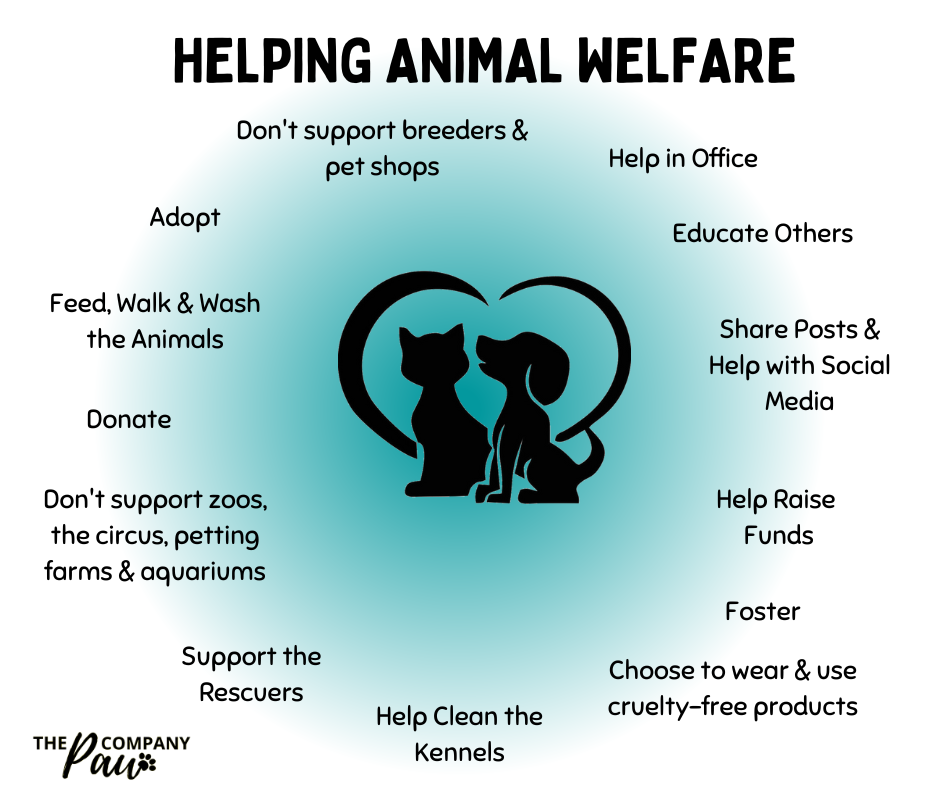
Educate your friends and family on this topic and share our posts.
Report any such post on the social media platform and to your local welfare organizations. Facebook doesn’t allow the selling of animals, so report it too.
Spay and neuter your animals and don’t give them away for free (nor sell them).
Rehome your pets through reputable organizations if you can’t take care of them.
Please stop supporting the “free to good home” ads.
Stop supporting breeders, pet shops, and animal dealers.
Stop being mad at shelters and start blaming breeders (of any kind), irresponsible pet owners, and every single person who gives animals away for free as if they are objects and not sentient beings.
Adopt don’t shop. Adoption is the only ethical option!
Are you willing to take these risks with an animal’s life? If these people really cared about these animals, they would let them be adopted through a responsible organization because irresponsible homing hurts animals.
The act of giving animals away for free, while maybe well-intentioned, can lead to a myriad of problems that impact the welfare of both animals and humans. Let us strive for a future where the act of giving animals away for free is replaced by a culture of responsible and compassionate pet adoption. In doing so, we can create a world where every animal enjoys the love, security, and respect it truly deserves. By uniting our efforts, we can pave the way for a brighter and more humane future for pets and their human companions alike.
Next week we will look at compassion fatigue among animal rescue workers.
The President, Cyril Ramaposa, announced the new cabinet last night after tense negotiations over a few weeks. The long-awaited announcement was made an hour later than anticipated.
One can only hope that the new cabinet will bring about the needed change in this country.
The parties that are included in the new Government of National Unity (GNU) are the African National Congress, Democratic Alliance, Patriotic Alliance, Inkatha Freedom Party, Good Party, Pan Africanist Congress of Azania, Freedom Front Plus, United Democratic Movement, Al Jama-ah, Rise Mzansi and the United Africans Transformation.
Despite a few late surprises of parties joining the GNU, the announcement can only be seen as ringing in a new era of politics in South Africa.
Only time will tell if a GNU or an outright coalition between the two biggest parties, ANC and DA, would have been a better solution.
Ramaposa stated that all the parties have committed to respect the Constitution and to promote accountable and transparent governance, evidence-based policy and decision-making, the professionalisation of public service, integrity and good governance.
it will be a test for some parties to remain committed to this statement while their ideological view are so different.
The new cabinet announced are as follow:
The Deputy President is Paul Mashatile. The Minister of Agriculture is John Steenhuisen. The Deputy Minister of Agriculture is Rosemary Nokuzola Capa. The Minister of Land Reform and Rural Development is Mzwanele Nyhontso. The Deputy Minister of Land Reform and Rural Development is Chupu Stanley Mathabatha. The Minister of Basic Education is Siviwe Gwarube. The Deputy Minister of Basic Education is Reginah Mhaule. The Minister of Communications and Digital Technologies is Solly Malatsi. The Deputy Minister of Communications and Digital Technologies is Mondli Gungubele. The Minister of Cooperative Governance and Traditional Affairs is Velinkosi Hlabisa. The Deputy Ministers of Cooperative Governance and Traditional Affairs are Dickson Masemola and Zolile Burns‐Ncamashe. The Minister of Defence and Military Veterans is Angie Motshekga. The Deputy Ministers of Defence and Military Veterans are Bantu Holomisa and Richard Mkhungo. The Minister of Electricity and Energy is Kgosientsho Ramokgopa.
The Deputy Minister of Electricity and Energy is Samantha Graham. The Minister of Science, Technology and Innovation is Blade Nzimande. The Deputy Minister of Science, Technology and Innovation is Nomalungelo Gina. The Minister of Employment and Labour is Nomakhosazana Meth. The Deputy Ministers of Employment and Labour are Jomo Sibiya and Phumzile Mgcina. The Minister of Finance is Enoch Godongwana. The Deputy Ministers of Finance are David Masondo and Ashor Sarupen. The Minister of Forestry, Fisheries and the Environment is Dion George. The Deputy Ministers of Forestry, Fisheries and the Environment are Narend Singh and Bernice Swarts. The Minister of Health is Aaron Motsoaledi. The Deputy Minister of Health is Joe Phaahla. The Minister of Higher Education is Nobuhle Nkabane. The Deputy Ministers of Higher Education are Buti Manamela and Mimmy Gondwe
The Minister of Home Affairs is Leon Schreiber. 4 The Deputy Minister of Home Affairs is Njabulo Nzuza. The Minister of Human Settlements is Mmamoloko Kubayi. The Deputy Minister of Human Settlements is Tandi Mahambehlala. The Minister of International Relations and Cooperation is Ronald Lamola. The Deputy Ministers of International Relations and Cooperation are Alvin Botes and Tandi Moraka. The Minister of Justice and Constitutional Development is Thembi Nkadimeng. The Deputy Minister of Justice and Constitutional Development is Andries Nel. The Minister of Mineral and Petroleum Resources is Gwede Mantashe.
The Deputy Minister of Mineral and Petroleum Resources is Judith Nemadzinga‐Tshabalala. The Minister of Planning, Monitoring and Evaluation is Maropene Ramokgopa. The Deputy Minister of Planning, Monitoring and Evaluation is Seiso Mohai. The Minister of Police is Senzo Mchunu. The Deputy Ministers of Police are Polly Boshielo and Cassel Mathale. The Minister in the Presidency is Khumbudzo Ntshavheni. The Deputy Ministers in the Presidency are Nonceba Mhlauli and Kenneth Morolong. The Minister of Public Service and Administration is Mzamo Buthelezi. The Deputy Minister of Public Service and Administration is Pinky Kekana. The Minister of Public Works and Infrastructure is Dean Macpherson. The Deputy Minister of Public Works and Infrastructure is Sihle Zikalala. The Minister of Small Business Development is Stella Ndabeni-Abrahams. The Deputy Minister of Small Business Development is Jane Sithole. The Minister of Social Development is Sisisi Tolashe. The Deputy Minister of Social Development is Ganief Hendricks.
The Minister of Sport, Arts and Culture is Gayton McKenzie. The Deputy Minister of Sport, Arts and Culture is Peace Mabe. The Minister of Tourism is Patricia De Lille. The Deputy Minister of Tourism is Maggie Sotyu. The Minister of Trade, Industry and Competition is Parks Tau. The Deputy Ministers of Trade, Industry and Competition are Zuko Godlimpi and Andrew Whitfield. The Minister of Transport is Barbara Creecy.
The Deputy Minister of Transport is Mkhuleko Hlengwa. The Minister of Water and Sanitation is Pemmy Majodina. The Deputy Ministers of Water and Sanitation are David Mahlobo and Isaac Seitlholo. The Minister of Women, Youth and Persons with Disabilities is Sindisiwe Chikunga. The Deputy Minister of Women, Youth and Persons with Disabilities is Mmapaseka Steve Letsike. The Minister of Correctional Services is Pieter Groenewald. The Deputy Minister of Correctional Services is Lindiwe Ntshalintshali.
There are a total of 32 Ministerial departments in the new GNU.
“None of the members of the National Executive has been appointed to serve the interests of a particular constituency, a particular party or a particular section of society. Collectively and individually, they are responsible to the people of South Africa,” said Ramaposa in his closing remarks, “In the spirit of partnership and collaboration, the incoming government will work together with other formations to convene a National Dialogue.”
Die baie bekende LEFRA produksies bring twee van hul mees gewilde teaterstukke na die Umuzi Kunstefees naamlik; Liewe Heksie en Dinner for One/ Sopper vir Een.
Donderdagprogram:
Donderdag 4 Julie skop die fees af met ‘n Laservertoning deur LaserX wat die dorp gaan verlig op maat van musiek deur blues-rock musikante Hollowbody en Albert Frost, die welbekende kitaarspeler en sanger wat ook ‘n SAMA gewen het vir beste “rock”-album in 2017.
Laser X
Liewe Heksie
Vrydagprogram:
Liewe Heksie maak vroegoggend die fees oop, besem en al. Hierdie kinderteater was die laaste verhoogstuk wat deur Verna Vels geskryf is voor haar dood. Die kleingoed word deel van Heksie se lewe en sal ure se pret en genot beleef..
Marion Holm in haar eenvroustuk Marion Holm, kyk met gans ander oë na die lewe en deur haar lense lyk gewone, alledaagse dinge snaaks… vrek snaaks
By Justino’s restaurant wys die televisie-sjef en Sarie se kosredakteur, Herman Lensing sy slag agter die potte.
Die nimlike Lizz Meiring vermaak ons met twee vertonings waarvan Van die rak af gebasseer is op die Skandinawiese konsep, waar nie ‘n boek uitgeneem word nie, maar ‘n mens. Die persoon, wat deur die gehoor gekies word, vertel sy lewensverhaal, met dikwels ‘n skreeusnaakse nadraai.
LEFRA se produksie Dinner for One, was vir dekades die televisie produksie wat families om middernag voor die televisie sit gemaak het. “Same procedure as last year Miss Sophie?:, is vandag nog ‘n frase wat spottendersgewys gebruik word.
Vrydagaand word afgesluit wanneerTonya Koenderman vir ‘n kabaretvertoning gaan sorg wat lank die middelpunt van bespreking sal bly. Koenderman word nie verniet as een van die mees dinamiese kabaretkunstenaars beskou nie. Sy is ‘n klein pakkie dinamiet en het 16 maande lank die rol van Liza Minelli in die Sun City-verhoogproduksie Beyond Belief vertolk. Die vertoning met Tonya sluit ‘n 2 gang buffet-ete in waar almal saam kan eet, lag en dans die laataand in.
Dinner for One | Sopper vir Een
Tonya Koenderman
Saterdagprogram:
Saterdagoggend skop af met kosgeure deur die geliefde en welbekende akteur, sanger, en skrywer Lochner de Kock. Hy deel van sy geheime om jou kos lip-aflek-lekker te maak. Lochner vertel ook oor sy boek Liegende in die Living Art Gallery.
Lizz Meiring se tweede vertoning is Kameras, Konserte en Kleedkamerstories.
Die vertonig is ’n klets en skets konsert en Lizz vertel van die woelinge en waansin, die tragedies en triomfe, die chaos en kreatiwiteit, die beroemdes en berugtes, die vreugdes en vertwyfelings van ’n lewe as aktrise. In hierdie uiters vermaaklike stuk, vol verrassings oor die vermaaklikheidsbedryf, kry die gehoor ’n agter-die-skerms ervaring soos nog nooit vantevore.
Die Emmy-benoemde akteur en Sama-benoemde liedjieskrywer Neil Sandilands bring sy aangrypende Afrikaanse musiek Umuzi Kunstefees toe. Sy optrede saam met die topmusikante Schalk Joubert, Frank Freeman en Ronan Skillen vorm deel van sy Land & Sand – toer.
Frank Opperman hou Reünie by dieselfde skoolsaal, maar 43 jaar later met die matrieks van 1980. Hy is Adam Boshoff die verteller, en deur die loop van die aand kry verskeie klasmaats ’n beurt agter die mikrofoon om hul sê te sê. Lank terug het almal saam ’n tragedie beleef wat hulle nou vir die eerste keer regtig konfronteer.
Op die eish!! verhoog sal die komediant Melt Sieberhagen sorg vir genoeg pret tot die aanloop van die rugby wedstyd, Saterdagmiddag, tussen die Springbokke en Ierland.
Sondag word die fees afgesluit met ‘n Sondagmiddagvertoning en tweegang buffet-ete deur die geliefde operasanger Jannie Moolman.
Die fees is so ontwerp dat dit moontlik is om elke vertoning te kan bywoon. ‘n Kortingspakket word aangebied waar al die vertonings gesien kan word, met of sonder akkommodasie.
‘n Kontantkroeg sal by alle vertonings beskikbaar wees. (Behalwe natuurlik by Liewe Heksie)
Die Living Art Gallery het sy eie program waar uitmuntende kuns gesien kan word. Die tema “Die Blou van Onthou” word deur vier van ons bekende kunstenaar uitgebeeld. Al vier is professionele kunstenaars wat aktief deel is van die Pretoriase visuele kunskringloop: Dylan T. Graham, Danielle Malherbe, Miekie Lourens en Ronel Kellerman. Hul werk verteenwoordig verskillende mediums en verskillende onderwerpe, maar almal het die kleur blou in gemeen en bevat meer as net ‘n tikkie nostalgie.
Twee van Afrikaans se voorste vroulike skrywers van populêre fiksie gaan by Umuzi Kunstefees in Secunda hul skryfprosesse en jongste boeke met feesgangers deel.
Chanette Paul sal onder meer kom praat oor haar 50ste roman, Anoniem. En Dibi Breytenbach sal vertel waarom aktuele gebeure haar so aangryp en hoe dit in haar spanningsromans verweef word. Albei sal deur die boekejoernalis Ilse Salzwedel uitgevra word.
Om die waarheid te sê, die fees gaan sorg vir genoeg om volwassenes en kleingoed besig te hou. Benewens die kunste en verhoogoptredes is daar hope aktiwiteite en veilige speelplekke vir kinders.
Alma Swart is ʼn entoesiastiese aspirantskrywer wat enkele kortverhale gepubliseer het. Haar agtergrond strek van dramaprojekte met tieners vir die gewilde fliek Klein Karoo asook die betrokkenheid by feesbeplanning vir die KKNK en InniBos. Deesdae is sy deel van die Lake Umuzi feesspan waar haar passie vir beplanning en mense uitgeleef kan word.
COLD WEATHER TIPS TO KEEP YOUR PETS WARM THIS WINTER.
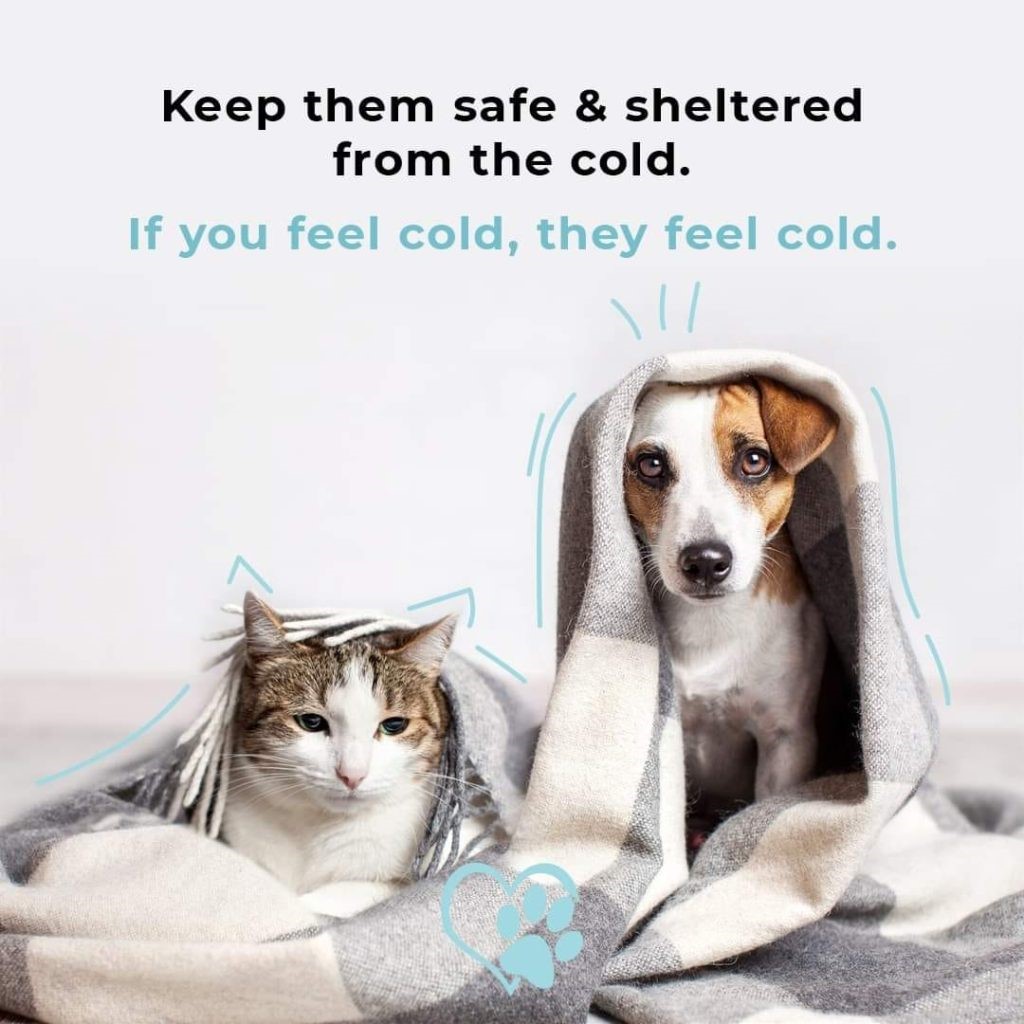
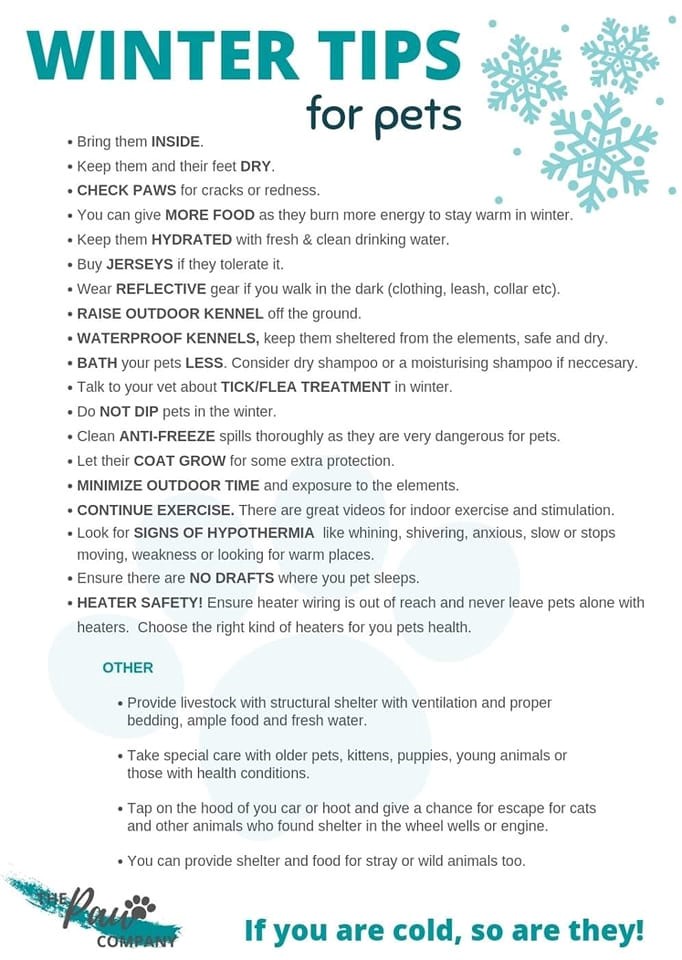
With winter in full swing, it is our responsibility to keep our pets safe and warm and it is also required by law. All animal owners whether domestic animals, farm animals, or wildlife, are reminded to provide adequate shelter from adverse weather conditions.
MYTH: Cats and dogs are resistant to cold weather because they have fur.
FACT: They do feel cold and are susceptible to frostbite and hypothermia. When you are cold, they are cold too!
Editorial note: This article is a reprint from 3 May 2023.
WHICH ANIMALS ARE MOST SUSCEPTIBLE?
Puppies, kittens, and other young animals as they have not yet built up a resistance to the cold. Always keep them indoors, in a warm environment.
Older pets, like people, feel the cold more.
Short-coated animals.
Thin breeds or species of animals.
Pets with medical conditions. Cold weather worsens certain medical conditions, which can also cause these pets to struggle with regulating their body temperature.
If your dog will tolerate a dog jersey, buy one and reduce exposure to the cold.
Make sure you shine when walking your dog in the dark by wearing reflective gear like a leash, clothing, bandana, collar, etc.
Towel dry your dog if they come inside damp. Check for cracks on the paw pads or redness between the toes and ensure you dry their feet properly.
Ideally, pets should be allowed to live inside, especially in cold or any extreme weather. If they are outside, bring them in during low/high temperatures. Remember to pet-proof your inside when you bring them in.
Raise their outdoor kennel off the ground. Ensure the kennel is solid, safe, waterproof, and in a dry place, facing away from wind and rain. Line it with soft and warm bedding.
Bath your pets as little as possible during the winter. Washing them too often in general, can remove essential oils and increase the chance of developing dry and itchy skin. If they have to be bathed, ask your veterinarian for a moisturizing shampoo or use dry shampoo for a quick clean.
Anti-freeze is dangerous for pets. Thoroughly clean any spills from your car and keep them stocked away in a safe place where the animals can’t reach them.
Pets burn more energy to stay warm in the winter, so you can feed them a bit more. Cold weather can do a number on your pet’s system, but keeping them hydrated gives the body some energy needed to regulate temperature.
Ensure they always have plenty of fresh drinking water in clean bowls (not plastic).
Let their hair grow. The longer coat will give some extra protection.
Make sure your pet has a warm place to sleep, off the floor and away from cold walls or areas with a draft. A cozy pet bed, large pillow, or folded duvet can also work. Some pets will also feel safe sleeping in the igloo pet beds.
Minimize their time outside. Limiting exposure to extreme temperatures is good for your pet.
Don’t stop exercising because of the weather! You can still exercise outside or get some exercise and mental stimulation inside the house. There are many videos and ideas on this.
Look for signs of hypothermia and get them to a vet immediately: whining, shivering, anxiety, slowing or stops moving, weakness, or looking for warm places to burrow.
Look out for heat-seeking behaviour from your pets like curling up small, shivering, seeking the heater, and more.
Provide livestock with structural shelters that have proper ventilation and bedding, as well as ample food and fresh water.
You can provide an outdoor shelter with food and fresh water for wild animals/community cats. Provide food for some wild animals like seeds for wild birds in your garden.
You may still need to protect your animals against fleas and ticks in winter. These parasites are present all year round. In winter they seek out warm places to live and will be more than happy to irritate the skin of your beloved pet. Don’t stop tick and flea control, however, don’t dip your dog in the cold. Rather use an alternate product that can be applied to dry skin. Always talk to your veterinarian.
When using a heater, ensure that the wiring is out of reach for your pets. Pets should not be left unsupervised with any heating appliances.
Birds specific – wall heaters in a safe place where the birds cannot get to chew on it or oil heaters can work, but never any gas, bar heaters, or form of wood or anthracite burning devices. Keep them out of a drafty area and you can use a blanket or cover for the cage if necessary. Keep their food dry.
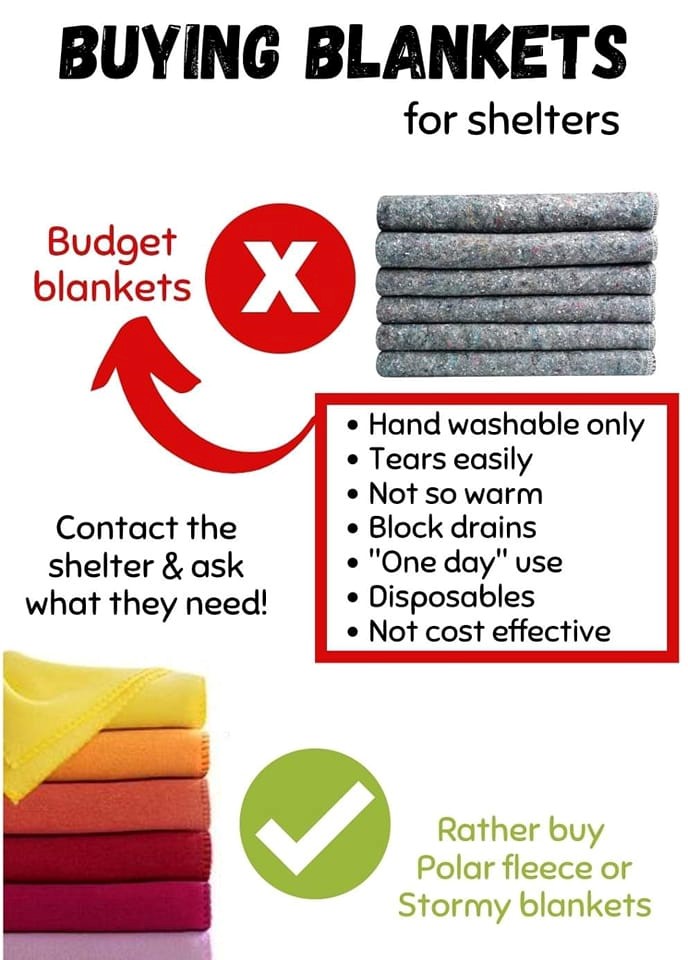
If you want to help a shelter, please DO NOT buy the budget blankets. They are disposables and have to be hand-washed. Shelters do not have the time to handwash these blankets every day. They are put in a kennel today and as they tear easily, they block the drains and have to be thrown away the next day. Rather buy stormy or fleece blankets.
Some groups do outreach to rural areas. They make pet beds from dog food bags with newspaper and other materials inside. The dog food bag helps keep the inside dry, while still providing a softer bed and offering some protection from the damp and cold ground. Contact Little Paws Big Hearts if you want to contribute to this project.
Image by The Paw Company
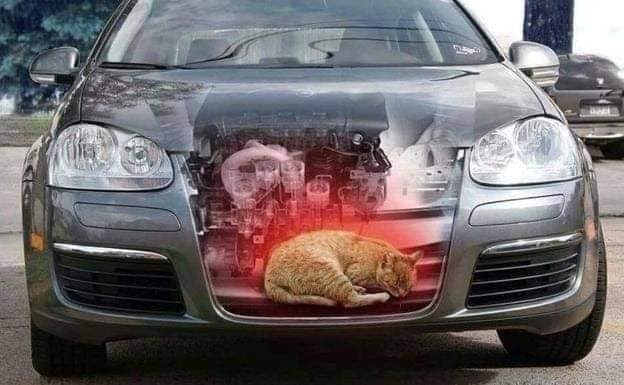
CATS & OTHER SMALL ANIMALS As temperatures are starting to drop or even in stormy weather, please remember that feral cats and other small animals may find shelter for themselves or their babies in and under your car. This is a reminder to TAP TAP TAP on your hoods & wheels and blow your horns to let them get out. You can tap and stand back for a while, but still check as well! We can share horror stories about injured cats due to this and can you imagine how hurt and scared they can be? Please take that extra minute before starting your cars. SAVE A LIFE
Image shared via The Paw Company
If an owner leaves their pet in the cold, politely let them know you’re concerned. They might not know the risk that cold weather poses. If they respond poorly or continue with their neglect, time to speak up and report it to your nearest SPCA. If you see any stray animal suffering in the cold weather, please contact your local SPCA and take the animal in. Find your nearest SPCA here.
Remember that you choose to have your pet, they didn’t get to choose, so do right by them and keep them safe during all weather conditions. Their safety and care are your responsibility!
Next week we will look at the issue of giving away animals for free.