Home Blog Page 23

ANIMALS 101 – HOLIDAY SAFETY TIPS FOR YOUR PETS

2

KEEPING YOUR ANIMALS SAFE DURING THE FESTIVE SEASON IS YOUR RESPONSIBILITY.

The holiday season is a time of joy, celebration, and creating cherished memories with loved ones – including your furry companions. However, the festive period can also present unique challenges and potential pet hazards. Whether you’re traveling, hosting gatherings, or enjoying outdoor activities, ensuring your pet’s safety is essential. This time of year may be very stressfull for many animals. Here is a guide to keeping your pets safe, happy, and stress-free during the holidays.

Image by The Paw Company

GENERAL PREPARATIONS FOR HOLIDAY SAFETY

HEALTH AND IDENTIFICATION

  1. Ensure your pets are up-to-date on vaccinations, deworming, and tick and flea treatments.
  2. Microchip your pet and register the chip with multiple databases. Confirm the microchip information is accurate and functional before you travel.
  3. Fit your pet with a secure collar and an ID tag that includes your current contact information.
  4. Keep a recent photo of your pet on your phone in case you become separated.
  5. Consider including provisions for your pet in your will to ensure their care in unforeseen circumstances.

EMERGENCY PLANNING

  • Assemble a pet first aid kit, including items like gauze, scissors, tape, antiseptic wipes, and tweezers.
  • Write down the numbers of emergency vet services and pet poison control hotlines.
  • Ensure your pet’s vaccination record is easily accessible, especially when traveling across borders.

LEAVING YOUR PETS AT HOME

If you plan to leave your pets behind during the holidays, proper preparation is critical.

CHOOSING A PET SITTER

  1. Start searching for a pet sitter early, especially during peak holiday periods.
  2. Seek trusted referrals from friends, family, or your veterinarian.
  3. Meet potential sitters in person to observe how they interact with your pet and ask key questions, such as:
    • Do they have experience with your type of pet?
    • Have they completed training in pet behavior or first aid?
    • What is their protocol for emergencies?
  4. List your pet sitter with your vet, if you are away.

Image by Dr. Karen Becker

PREPARING YOUR HOME

  1. Provide clear instructions regarding your pet’s feeding, medication, and daily routine.
  2. Stock up on necessary supplies, including food, water, treats, toys, leashes, and cleaning materials.
  3. Escape-proof your home and yard to prevent accidental escapes.
  4. Leave an extra set of keys with a trusted neighbour or friend as a backup.
  5. Create a homely atmosphere by leaving a worn shirt with your scent near your pet’s bed and turning on the TV or radio occasionally.

TRAVELING WITH YOUR PET

If your pet is accompanying you on holiday, their safety and comfort should be the top priority.

Road Trip Essentials

  1. Travel Safety: Secure your pet in a crash-tested crate or safety harness. Never allow pets to ride unrestrained in the car.
  2. Pit Stops: Plan regular breaks for bathroom needs and exercise. Bring cleanup supplies, a leash, and water from home to prevent digestive upset.
  3. Packing Checklist:
    • Food and water bowls
    • Medications
    • Favorite toys, blankets, or bed for familiarity
    • A pet first aid kit
    • Vaccination records
    • Recent photo of your pet
  4. Prevent Overheating: Never leave your pet unattended in a vehicle, as temperatures can rise dangerously fast, even with windows cracked.
  5. Make sure you know who are the closest vets wherever you go.

Cross-Border Travel

  • Ensure all necessary vaccination records and permits are ready.
  • Familiarize yourself with the pet regulations of your destination.

Image by Dr. Karen Becker

OUTDOOR ACTIVITIES

POOL, BEACH, AND LAKE SAFETY

  1. Always supervise pets near water, as not all are strong swimmers.
  2. Invest in a pet life jacket, especially for boating or swimming in open water.
  3. Rinse your pet after swimming to remove chlorine, salt, or bacteria.
  4. Protect against sunburn with animal-safe sunscreen for breeds prone to skin sensitivity.
  5. Watch for signs of heat stroke, such as excessive panting, vomiting, or lethargy.
  6. Keep pets away from hazards like fishing hooks, toxic seaweed, and sharp shells.

HIKING AND CAMPING

  1. Ensure your pet’s ID tag is updated and attach it securely to their collar.
  2. Pack essentials like collapsible water bowls, poop bags, healthy snacks, and a safety rope.
  3. Keep your pet leashed to prevent wildlife encounters and don’t let your pet chase any wildlife.
  4. Provide shade and hydration, especially in hot weather.
  5. Use reflective gear for nighttime safety.
  6. Be aware of toxic plants and keep your pet away from unfamiliar vegetation, as well as stagnant water and water with blue-green algae.
  7. Be careful around camp fires.

BOATING

  1. Fit your pet with a life jacket and ensure they’re comfortable wearing it.
  2. Provide fresh water and shade, to prevent dehydration.
  3. Plan potty breaks onshore if needed.
  4. Avoid boating in extreme heat and keep a close eye on your pet to prevent accidents.
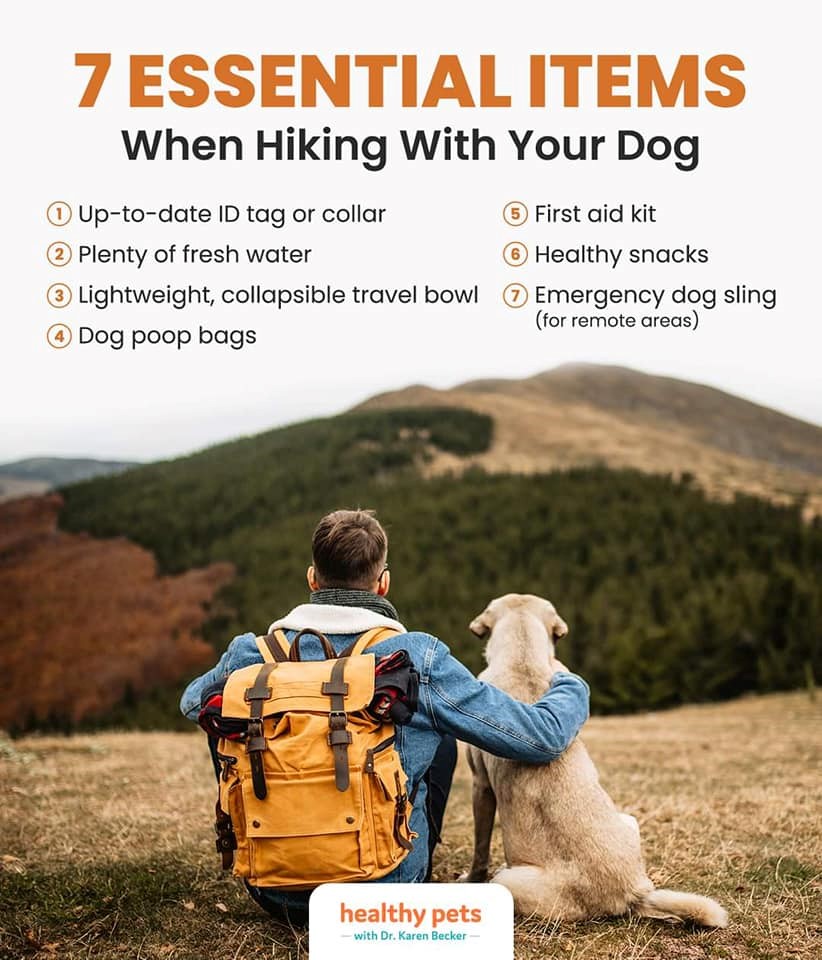
Image by Dr. Karen Becker

MANAGING HOLIDAY STRESS FOR PETS

Animals don’t get to choose where they live. They are forced to live in this human world and therefore it is our responsibility and moral duty to help them cope. We can’t always avoid stressful events but you can:

  • Observe your animal’s body language to help them cope.
  • Always have one or two safe spaces in your home that are only theirs.
  • Don’t leave fearful animals alone during such events.

HOSTING GATHERINGS

  1. Create a safe, quiet space where your pet can retreat if they feel overwhelmed.
  2. Inform guests not to feed your pets human food, as many holiday treats can be toxic.
  3. Secure doors and gates to prevent escapes as people come and go.
Fireworks
Image by The Paw Company

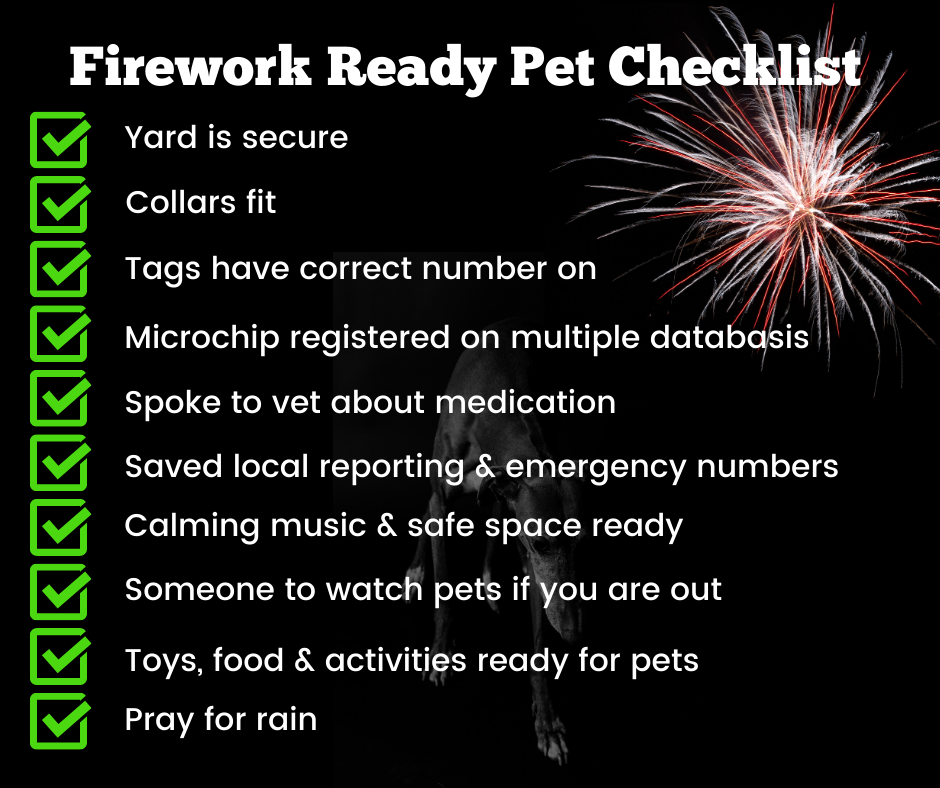
FIREWORKS AND LOUD NOISES

Here are some tips for stressful events before, during, and after:

Before – Help desensitize long before such an expected stressful event like fireworks or thunderstorms.

During – There is so much you can do during such events to help your pet cope better.

After – You need to help your animals destress after such an event too.

Also, read more about the natural behaviour of your pets.

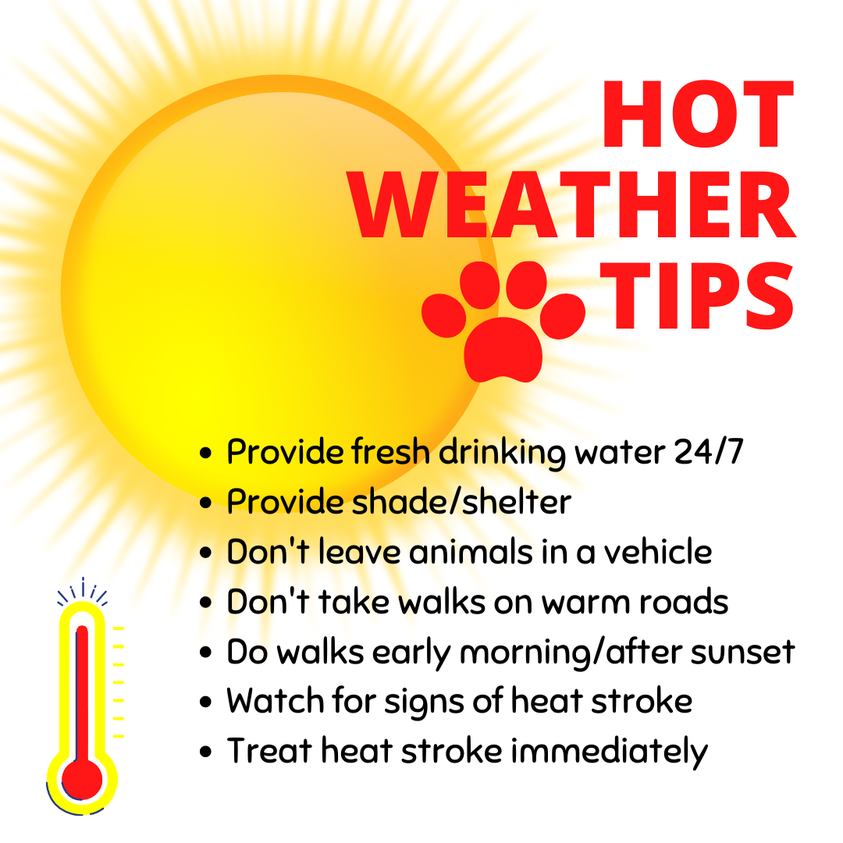
HOT WEATHER SAFETY TIPS FOR PETS
hot weather
Image by The Paw Company

Avoid Leaving Pets in Vehicles 

Never leave your pet alone in a vehicle, as overheating can be fatal, even with cracked windows. The temperature inside a vehicle can rise rapidly.

Time Outdoor Activities

Schedule walks in the early morning or late evening when temperatures are cooler. Limit outdoor exercise on extremely hot days and keep it brief.

Protect Paw Pads

Test the pavement, ground, or road with the back of your hand. If it’s too hot for your hand, it’s too hot for their paws. Choose cooler surfaces or use protective booties.

Provide Shade and Water

Never leave pets in direct sunlight. Ensure they have access to shade and offer plenty of fresh, cool drinking water to stay hydrated.

Regulate Indoor Temperature

Use air conditioning, and fans, or provide access to cooler areas like basements or darker rooms with tile floors to maintain a comfortable indoor environment.

Special Considerations for Certain Breeds

Take extra precautions for old, overweight, or snub-nosed dogs, such as Boston terriers, Pekingese, Pugs, Lhasa Apsos, Shih Tzus, and Bulldogs. Monitor dogs with heart or lung diseases closely.

Recognize Signs of Heat Stroke

Be vigilant for signs such as panting, difficulty breathing, vomiting, diarrhea, confusion, rapid pulse, bright red gums, and a blue tongue or lips.

Immediate Treatment for Heat Stroke

If you suspect heat stroke, move your pet to a cool place and lower their body temperature with cool (not icy) water. Contact your veterinarian promptly.

Avoid Ice Cubes: Ice cubes are not recommended due to safety factors. Opt for safer cooling methods to protect your pet in hot weather.

Image by Bark & Whiskers

LONG-TERM PET CARE CONSIDERATIONS

While holidays are temporary, responsible pet ownership requires planning for your pet’s future.

  1. Include your pets in your emergency plan, designating a trusted guardian to care for them in case of illness or an accident.
  2. Regularly update your pet’s medical and care records to ensure their needs are met, even in your absence.
  3. Include them in your Will!

The holiday season can be a wonderful time for you and your pets with careful planning and thoughtful precautions. Whether traveling, hiking, swimming, or simply enjoying time at home, prioritize their safety and comfort. By doing so, you’ll ensure this festive season is joyous and stress-free for all members of your family – furry ones included!

Please remember that this is the worst time of year for any rescue organization. While most people look forward to the fun and festivities, animal rescuers brace themselves for the unfortunate surge of surrendered, lost, and abandoned animals. Be kind to the rescuers and help them in any way you can.

If you find any animals lost, in distress, injured, or abandoned, please contact your nearest SPCA or rescue organization. Please report any cruelty to animals to the SPCA.

Join us again next week as we look at Christmas-specific safety tips.

WHEN YOU KNOW BETTER, DO BETTER!

STUDENT-TARGETED SCAMS: HOW TO STAY SAFE AHEAD OF THE NEW ACADEMIC YEAR

The festive season is a time for celebration, but for current students, and Matrics preparing to start their studies next year, it’s also a time to prepare for the year ahead. This includes registering with a higher education institution or college, securing accommodation and transport, sourcing textbooks, purchasing educational tech such as laptops, and much more.

Unfortunately, the student journey specifically has over the past few years become a lucrative new source of potential victims for scammers, which is why young people need to be especially alert to potential bad actors these next few months.

“Scammers are becoming increasingly sophisticated, exploiting the trust and urgency often associated with online transactions and the need to secure study placement, accommodation, and so forth. Students are particularly vulnerable as they may be unfamiliar with common scams or eager to secure deals quickly, amid tough competition for limited space and resources,” says Adrian Garden, Acting Dean of Academics at The Independent Institute of Education’s Rosebank College.

He says the most important warning for prospective students, is to be aware of bogus institutions.

BOGUS INSTITUTIONS

Bogus colleges prey on the desperation of prospective students who did not secure a spot at their preferred institution of higher learning, or those with limited financial means. 

Unfortunately, signing up with a bogus institution means that you will waste precious time and money, with nothing to show for your efforts after the fact. It is therefore important to ensure that, if you sign up with an institution claiming to be a legitimate private higher education institution, you check they are registered with the Department of Higher Education and Training’s (DHET) private higher education provider register on their website, as well as with the Council for Higher Education and Training (CHE). Any credible campus must be able to show you a certificate to that effect, which details the campus, provider and qualifications. 

All higher education qualifications need to be accredited by the Higher Education Quality Committee of the Council on Higher Education – if they are not accredited, they will not appear on the certificate referred to above.

All qualifications must be registered on the National Qualifications Framework (NQF) by the South African Qualifications Authority (SAQA) and students should ask for the SAQA NQF identity numbers.

LOGISTICAL SCAMS

Scammers targeting students also focus on all areas of the value chain, such as offering rooms or other accommodations, transport services, second-hand textbook sales, and so forth. Whatever it is that you are looking for as a student preparing for studies next year, it is important to understand the risks and stay vigilant, especially when making online purchases or agreements.

Scammers target individuals on both sides of the transaction, leveraging common vulnerabilities. Common factors that attract them include:

  • Eager buyers: Students may rush to secure deals on textbooks, electronics, or household items at discounted rates, making them prime targets for fake listings.
  • Trusting sellers: Students selling items such as gaming consoles, laptops, or textbooks may be eager to conclude a deal, unknowingly falling victim to fraudulent buyers.
  • High-value items: Transactions involving popular items like technology, luxury accessories, or event tickets are particularly at risk.
  • Urgency and emotional stories: Scammers often create urgency or share emotional stories, such as buying for a loved one, to gain trust and pressure victims into quick decisions.
  • Controlled communication channels: Scammers move conversations to private messaging apps, where they can manipulate and control interactions.

Garden said to The Bulletin that prospective students should watch out for listings with unusually low prices or buyers willing to pay more than the asking price. Students should always trust their gut feelings about an online transaction, he says.

“Scammers often accept the price immediately or offer extra shipping or courier fees. Sellers may also present fake shipping confirmations, while buyers may provide fake payment notifications, such as SMS alerts.

“Scammers may also often use couriers not linked to reputable companies, claiming they can’t deliver or pay until additional money is sent. If there are any sudden changes to agreed terms, such as payment methods or delivery details, be aware that you may be on the receiving end of a common scam tactic.”

Garden says students are especially vulnerable to scamsters due to the urgency and limited time before the new academic year kicks off. They should however always err on the side of caution.

“Always do thorough research into the legitimacy of listings. Search the seller’s name, contact details, and product photos online to check for scams. Better to lose a deal and search for the next legitimate one, than act in haste only to have to repent at leisure.

“Also, verify the product or service, and demand secure payment options on above-board platforms.”

Perhaps the most important of all, if a handover needs to happen, choose meeting points in safe public areas, he says.

“Don’t let buyers rush or manipulate you into completing a deal. Scammers often create urgency to bypass your safeguards. Always trust your instincts. If something doesn’t feel right, stop the interaction and block the person. And remember that there are people you can trust, who can advise you if you are unsure.

“For instance, when applying to an institution, or purchasing academic materials, student support centres at quality higher education institutions will be happy to assist and guide you.”

ANIMALS 101 – EXPLORING THE NATURAL BEHAVIOURS OF YOUR PETS.

0

UNDERSTANDING THE NATURAL BEHAVIOURS OF YOUR PETS CAN HELP YOU IMPROVE YOUR RELATIONSHIP WITH THEM.

Dogs are social animals and have a wide range of natural behaviours. These behaviours are instinctive and are used to communicate with other dogs and humans. Common natural behaviours in dogs include barking, digging, chasing and chewing. Dogs also display behaviours such as jumping, licking, marking and play-bowing. These behaviours are all natural and help dogs to interact with their environment and with other animals. It is a way to communicate with those who are willing to listen!

What may look like naughty behaviour to you is often just your pet behaving as their species do. It is normal and not naughty.  What we expect from them, might be labelled by the uninformed as bad, untrained or unsociable or even aggressive. Dogs will do what dogs do and it is unfair of us to expect them to understand, adapt and conform to our human world, forgetting that they are a different species.  There can also be breed-specific traits which are not their fault, like Terriers that dig and will likely always dig!

Do you want to better understand your dog and improve your relationship?  Then learn about their behaviour.  When you know what is natural behaviour you can easily know which “naughty” behaviour to address. One of the five freedoms of animal welfare includes the freedom to express natural behaviours!

Let’s look at a few normal behaviours and what you can do about them.

IS THIS NORMAL BEHAVIOUR?

ZOOMIES

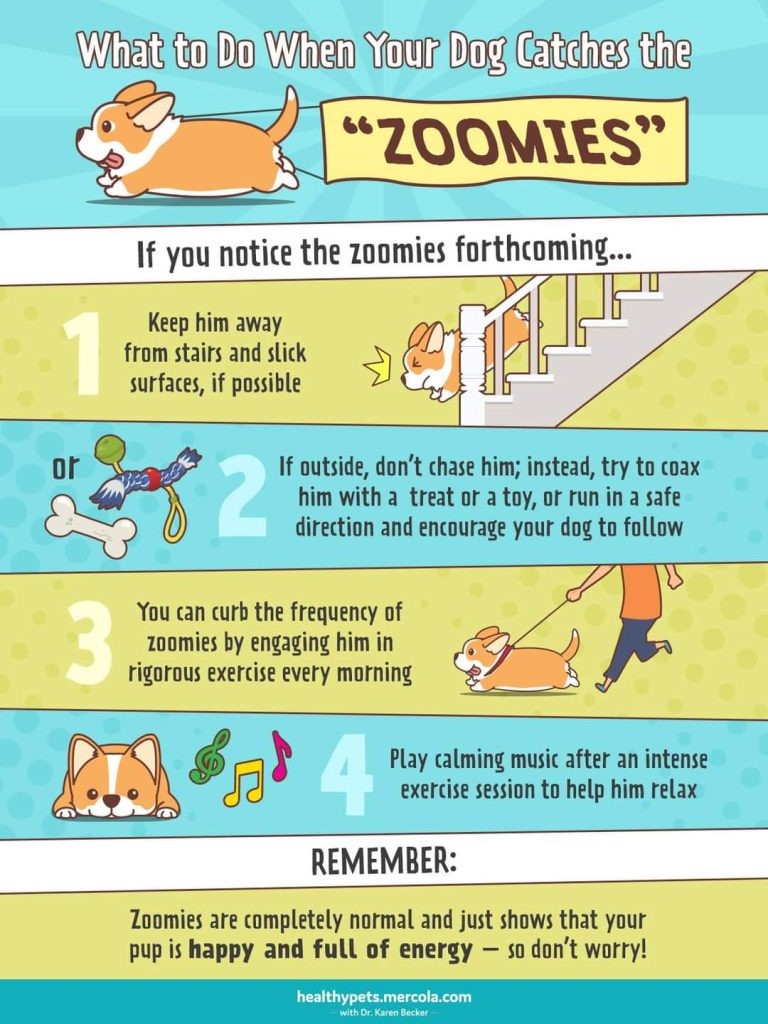
Have you ever seen your cat or dog just suddenly start running around like crazy and in circles as if something is chasing them or as if they lost the plot? The technical name for this behaviour is frenetic random activity periods (FRAPS) otherwise known as zoomies. Happy animals tend to do this and it is like a burst of energy that they experience.  If they are not in danger of injuring themselves, then just sit back and enjoy!

Zoomies – Image by Dr. Karen Becker

Editorial note: This article is a reprint from 22 February 2023.

TAIL CHASING

You have likely witnessed a dog chasing their tail, especially puppies. If it happens occasionally, it could just be happiness or play, but if it happens more often or becomes obsessive, a vet check is in order. Conditions like an ear infection may contribute to this sort of behaviour, and animals who suffer from Canine compulsive disorder (CCD) may also do tail chasing.

HEAD TILTING

This is such adorable behaviour which a fur-kid might do when they want to pick up some sounds better, but also when they are not sure about what you want from them.  Some studies show that head tilters are smarter than those who do not perform this behaviour often. I think they know they are cute when they do this too!  My first response would be to repeat the information if you did speak to them at that moment. If it happens a lot or you are unsure then you can consider a vet check.

SLOW BLINKING

Have you ever seen your cat blink slowly at you? The main reason scientists have come up with for this odd behaviour is that it appears to be a way the cat is telling you that they love you.  You can mimic the behaviour and blink back slowly to them. If you are unsure or there is discharge from the eyes, for example, consider a vet check.

POOP EATING

The scientific name for this behaviour is Coprophagia.  It is most likely dogs that will indulge in this behaviour and not cats. This is a disgusting, yet natural behaviour. It played a role in how dogs evolved when humans transitioned from hunter-gatherers to agriculture and human settlements arose.  Our canine ancestors began to approach these areas because they provided a stable source of food. So, it is kind of in their DNA, but not a behaviour you want to encourage.  They will likely not eat poop older than two days.  

This behaviour may also be caused by a nutritional need, or gut microbiome imbalance and or can be behavioural (boredom, curiosity, if you punished them and use improper house-training techniques).  It can also indicate an underlying medical condition. The faeces are a good source of digestive enzymes and dogs with this deficiency will ingest enzyme-rich poop.  

It is better to prevent them from having this ‘delicacy’ by removing the temptation or through behavioural conditioning because poop can contain harmful bacteria and parasites too, which can make them ill.  Doing poop patrol can also give you an indication of how their health is.  Check out this video about what their poop may mean.

BUM SNIFFING

This is one of the most natural behaviours and is a form of greeting.  It can even happen across species like a dog sniffing a cat’s buttock.  By doing this they can get information like whether are they male or female, about their health and if they are friends or foes. If it is not obsessive and, doesn’t cause distress for the party being sniffed and won’t escalate into a fight, then you can let them sniff. 

GRASS EATING

Both cats and dogs may occasionally eat grass and it might not be something to worry about unless it becomes excessive.  Some theories suggest that it happens when they lack fibre in their diet, to balance their microbiome, to help eliminate intestinal worms, some eat grass when they feel nauseous or need a laxative and it is an ancestral behaviour. I don’t believe the pet food industry meets the species-specific requirements for most animals and if they frequently eat grass, maybe consider a vet check and diet change. 

Read more about healthy diets here. Two main reasons to stop this behaviour will be when your grass has been treated with pesticides or other chemicals even “natural” products or if the behaviour becomes excessive. 

dog
Image by The Paw Company

Also, read more on the expectations we place on animals.

DIGGING

Dogs dig!  Some more than others.  Sometimes it is to the detriment of our gardens, but that is not their fault and punishing them for that is cruel, especially if you are not meeting their needs.  Digging is normal behaviour and great for a few reasons. Some dogs will do this to get to cooler sand for resting on hot days, some to relieve boredom, to explore their environment, to escape an enclosed area, to hunt ground-dwelling critters or just because it is fun.

Never stop the digging, but rather provide a designated space for them to dig and redirect them to it when they go for your garden instead of punishing them.  This is a fun and easy way to get rid of extra energy and burying treasures (not bones) for them can be a form of mental enrichment.  You can also prevent access to unwanted digging areas.

CHEWING

Dogs chew, and one of the main reasons is to explore their environment with their mouths. This is a physically and emotionally beneficial activity. It can help clean their teeth, massage gums, and give those jaw muscles a workout. If your dog is chewing destructively, it is likely an indication that you are not meeting their needs and that they are stressed or anxious. It can also be an indication of an underlying health problem.  

Destructive chewing can be addressed by redirecting them to chewing appropriate objects and making sure they get enough exercise as well as mental stimulation. Make sure what they chew is safe and remember things like raw hides, even if a vet or pet shop sells them, do not mean it is safe for your pets.  Also, be careful with choking hazards from chew toys.

Barking – Image by Pexels.com

BARKING

Barking is a very natural way for your dog to communicate and a way to get rid of some build-up energy.  There can be many reasons why they bark including greeting humans and other animals, being unsure, as a warning to back off, to alert you, attention seeking, a cry for help or they want to get out. Dogs who bark excessively are an indication that their owners are not meeting their needs. 

Excessive barking should be addressed with a qualified and ethical behaviourist and fear-free techniques. Barking should never be stopped completely! Find out why they bark, then manage the environment, get a vet check, do some mental stimulation, exercise and enrichment or consider professional help.

Also, read last week’s article on…………………………………

One of the main reasons for surrendering animals at shelters is behavioural problems, but when that behaviour is evaluated by people who understand animals well, it is actually considered natural behaviour in most cases, especially when their needs are not met.

The behaviour might also not be what it looks like. Before you get frustrated, ask yourself if this is natural behaviour or behaviour in response to an unmet need. Always look for the underlying reason or trigger before trying to change it and consult with your vet to rule out any underlying medical conditions or a qualified ethical behaviourist to address the specific behaviour.  Remember that there is a difference between a trainer and a behaviourist. 

Never punish natural behaviour!  You can manage it better and redirect the behaviour, but it is cruel to stop these natural behaviours.

Join us again next week as we explore more about animals in our world!

WHEN YOU KNOW BETTER, DO BETTER!

FINANCIAL WATCHDOG RECOVERS R161m – AND URGES FESTIVE SEASON CAUTION

0

In less than nine months since its launch on 1 March 2024, the National Financial Ombud Scheme South Africa (NFO) has put back more than R161 million into the hands of aggrieved consumers of financial products.

The NFO is an independent body that resolves complaints brought by consumers against South African financial institutions.

Acting as a single, one-stop, all-in-one free dispute resolution service, the NFO is made up of four former longstanding industry ombud schemes: the Ombudsman for Short-Term Insurance, the Ombudsman for Life Insurance; the Credit Ombud and Ombudsman for Banking Services.

For NFO Head Ombud and CEO, Reana Steyn, it is time to crack open the bubbly and celebrate an impactful year.

NFO Head Ombud and CEO, Reana Steyn

“Recovering more than R161 million on behalf of consumers is a significant milestone achievement that highlights our dedication to protecting consumer rights and is a testament to our commitment to ensuring fairness and effective dispute resolution in the financial services industry,” said Steyn who has over 20 years of experience in the financial services industry.

“At the heart of our work is our shared vision to be recognised as a leading financial services Ombud office, building trust in the industry, enhancing consumer confidence, and delivering better financial services and outcomes.

“By sharing the insights we gain from resolving disputes, we also aim to empower South Africans with the knowledge they need to make informed financial decisions”, she said.

AS 2024 draws to a close, Steyn sounded a warning to South Africans to remain extra vigilant about their financial choices during this festive season which not only brings increased spending but also a higher risk of banking and financial pitfalls.

Steyn offered the following tips for consumers of credit, banking and insurance.

She urged people to resist the urge to overspend or rely on credit for holiday purchases.

“Remember that January can be a financially stressful month if debts are not carefully managed. If you must use credit, ensure you budget for repayments to avoid falling into unmanageable debt.

“If a deal seems too good to be true, it is. Familiarise yourself with a merchant’s  usual pricing to identify when discounts are genuinely impressive versus when they built on inflated prices.

“Save receipts and documentation for all purchases. This will be crucial for returns or in the event of any disputes regarding fraud,’ said Steyn.

The public has been reminded to be on the alert for banking fraud as scammers are particularly active during this time.

“Be cautious of phishing emails, unsolicited calls, or suspicious payment requests. Never click on links received in unsolicited messages and only shop from reputable websites.

“Regularly monitor your accounts for any unusual activity and never share your personal banking details with anyone,” Steyn said to The Bulletin and advised that any suspicious activity, including unauthorised SIM swap, must be immediately reported to the bank.

Steyn added that many people inadvertently let their insurance policies lapse during the festive season, leading to devastating consequences. Consumers must ensure insurance premiums are up to date to protect against unforeseen events.

“As we celebrate the festive season, let us also take the time to plan for financial security in 2025. Responsible financial decisions today ensure a brighter, more stable tomorrow.

“At the NFO, we are committed to protecting your money and rights, and we encourage every South African to prioritize vigilance and responsibility during this season”, said Steyn.

So is die Lewe: JA OOM, Sê MY PA OOM. (VIR DIè WAT ONTHOU….)

1

Ek, soos ‘n hele klomp mense van my generasie, bevind ons deesdae in ‘n moeilike situasie. Daar waar iemand wat 85 jaar oud is vir jou sê: “Moenie vir my sê tannie nie!” Maar iemand wat vyftig jaar oud is, sê vir jou “oom.” Terwyl ons praat van hierdie generasie, baie van ons is grootgemaak met hierdie ding in jou kop ingeprent: “As iemand tien jaar ouer as jy is, dan sê jy vir hom of haar “oom” of “tannie.”  Derhalwe het ek al vir mense met pigmentgestremde hare oom of tannie gesê, net om later uit te vind hulle is jonger as ek.

Maar hierdie generasie waarvan ek ‘n lidmaat geword het, het werklikwaar geleer om aan te pas by veranderinge. Hierdie is ‘n baie spesiale, en unieke generasie!  Baie winkels en eetplekke gee op sekere dae spesiale seniorburger-afslag aan mense van hierdie groep. Die oompie en tannie deel hulle senior-afslag spek en eiers en valstande.

Ons is gebore in die 40’s, 50’ en 60’s. Ons het grootgeword in die 50’s, 60’s en 70’s.  Ons het studeer in die 60’s, 70’s en 80’s. Ons het begin kys in die 70’s, 80’s en 90’s.  Baie van ons moes as kinders in ‘n oorlog gaan veg in die 70’s en 80’s waarvan ons nie veel geweet het nie, baie van ons maats is daar dood in kontakte. Ons is getroud en het die wêreld begin verken in die 70’s, 80’s en 90’s. Ons loopbane het dieselfde tyd afgeskop. Ons het rustiger begin raak in die 2000’s. Ons het wyser geword in die 2010’s. Ons het die milleniumdraai in 2000 beleef en deurgegaan. Ons het dus agt verskillende dekades oorleef, twee verskillende eeue, twee verskillende millenias. Ons het grootgeword met telefone waar jy die slinger moes draai en ‘n sentrale vra om vir jou ‘n sekere buite-nommer te bel, tot die era waarin jy nou onmiddelik ‘n Whatsapp-video-oproep kan maak na enige plek in die wêreld, en die persoon wat jy bel, op ‘n skerm van ‘n slimfoon kan sien.

Ons het gegaan van swart en wit kiekies met driehoekies vasgegom in ons albums, na skyfies en 8-mm huisfilms en DVD’s. Vandag kyk ons na troues en begrafnisse, eredienste, familiefeeste, enige denkbare onderwerp, op YouTube.  Ons kan duisende foto’s neem en stoor op ons fone, sonder om die rolletjie film van 24 of 36 skote eers apteek toe te vat om te laat ontwikkel. Ons kan tien foto’s neem van een ding, en die nege slegste foto’s daarvan uitvee.  

Ons het 78-glasplate geluister op ‘n opwendraaitafel, later 33 en 45-vinielplate op ‘n draaitafel, kassetopnames van ons gunsteling musiek. Vandag is daar nie eens meer nuwe cd’s beskikbaar nie, alle musiek kan aanlyn gekoop word in MP-3 formaat.  Ons het briewe geskryf, dit in koeverte toegeplak en by die poskantoor ‘n seël gekoop om vir iemand te stuur. Vandag doen ons alles per e-pos, en die poskantoor bestaan nie eens meer in baie dorpe nie.

Die waagmoediges onder ons het in die tagtigerjare van die vorige eeu rekenaars gekoop met ‘n dubbel floppie-dryf, en ook ponskaarte begin gebruik waarmee data verwerk is. Vandag het ons megabytes en gigabytes op ons slimfone, waarmee ons kan koop, kan navorsing doen, kan flieks kyk op Netflix, en ook stemboodskappe vir mekaar stuur.

Ons seuns het safaripakke gedra, dogters crimplene rokke met sykouse en bell bottom jeans. Ons het krawatte by die safaripakke aangesit in die somer as ons kerk toe gegaan het, en die vrouens het hoedens gedra. Ons is inge-ent teen polio, meningitis, tuberkulose, griep, maar ons het Covid- 19 oorleef.

Ons het driewiele, Chopper-fietse, 50cc-poer-poers en help-my-traps en motors met vergassers en vonkverdelers gery.  Vandag ry ons, selfs in die kleinste motortjies, met turbos en elektroniese ontsteking en brandstofinspuiting. Dis nou as ons nie ‘n hibroiede of elektriese motor kan bekostig nie.

Ja, ons het uitsonderlike lewens gehad. Mense wat deur baie jonges beskou word as ‘n outoppie en ‘n ou antie. Ons het ‘n analoë jeug gehad, en beleef ‘n digitale oudag. Ons is ‘n soort van “Ek-het-alles-gesien”-geslag, wat meer van die lewe en die wêreld beleef het as enige jonger persoon, en nog steeds die pas byhou.  Ons het letterlik nie net beleef nie, maar ook geleef, en ons leef steeds voluit.  Ek wil oudwees saamvat:

As jy jonk is en die lewe soos ‘n snelweg voor jou lê

is jy vlymskerp: niks gaan ongesiens verby:

gesigte, drome, name word in die hardeskyf van jou 16 megagreep-geheue gebêre

jou verbale meedoënloosheid jou borswering

niemand is bestand teen jou verstand en venyn

maar mettertyd raak die denkprosesse anders:

jy transformeer na stadiger

jy onthou eergister, en dertig jaar terug

dinge lankal onder die oppervlak versteek in gewaande vergetelheid

word weer glashelder: 

die trane souterig, die vrees palpitaties, die huil snotspore wat terugvloei

jy huil oor jou pa en jou ma

jy raak bang, angstig, onseker

jy veg teen struikel en stotter

jy soek asiel teen elke dag se verniel

terwyl jy vir die soveelste keer vandag soek na jou bril,

wonder oor watter pil het jy vergeet wat jou so laat sweet

en uiteindelik, as jy terugtrek in jou dop is jou enigste wens:

wees net sag met my.

Ek het die lewe geleef, baklei, maar kon nooit seerkry vermy.

Ek is nou broos en breekbaar.  Nou is ek handle with care.

Soos antieke porselein in ouma se kas:  Net ‘n bietjie liefde, net dit.

Lies, Lies, Lies – GMM Water Statements

1

Govan Mbeki residents experienced the worst water supply problems ever over the past weeks. Several areas are still struggling with water. Evander, which never had problems, are now experiencing water shortages daily and most of Bethal is still without water or a reliable water supply.

At each enquiry regarding the real cause of the shortages, GMM always blames Rand Water (RW), stating that RW is not pumping due to high demands. On the question of payment, GMM, and in particular the Executive Mayor, Councilor N Zuma, led everyone to believe that the payment is according to agreements that GMM and RW have reached and that GMM payments are not impacting Rand Water’s water supply. This is allegedly a lie.

It seems that everyone’s fears have been proven right. Rand Water is only supplying 50% of the contractual water to GMM!

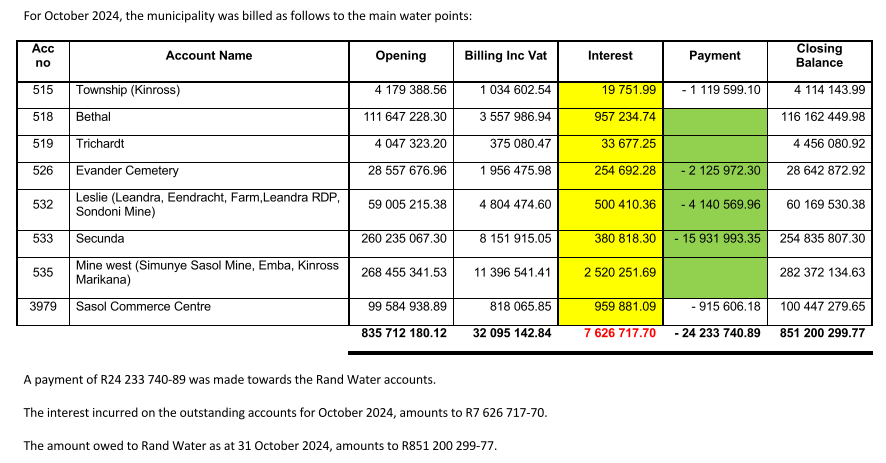
Govan Mbeki Municipality owes Rand Water a staggering R851 200 299,00 as of the end of October 2024. While being billed R32 095 142,84 and charged R7 626 717,70, GMM could only manage to pay Rand Water R24 233 740,70.

A lot of money is spent on improving roads with huge publicity and has started before the elections. GMM also continues to spend money on festivals and sports events for the officials, all being justified by the political leadership of the municipality. Where is all this money coming from and why is it not spent on paying for bulk purchases?

The Bulletin asked the DA about this.

The Democratic Alliance (DA) released the following statement regarding the RW situation:

The DA in Govan Mbeki is appalled to learn that the municipality misled the public about the cause of the water shortages across the municipality. 

The municipality lied to residents, claiming that high demand or infrastructure challenges caused the recent water shut-offs. There must be harsh and urgent consequences for this. The DA calls for real action against the persons involved in this lie.

During a CoGTA portfolio meeting that took place on Thursday, MEC Speedy Mashilo revealed that due to the municipality’s debt to Rand Water exceeding R800 million, Rand Water imposed a 50% water throttling on Govan Mbeki. This has exposed Govan Mbeki’s lies.

“The throttling by Rand Water, in turn, caused widespread water shortages throughout the town, and was not linked to high demand or infrastructure challenges,” said Councillor Fiona Pelman to the Bulletin.

Ranked among the top defaulting municipalities across the country by Rand Water, the municipality assured the public that a payment plan would be arranged to service this debt timeously but the municipality failed to manage its finances and make regular payments to Rand Water. 

This deliberate misinformation spread by the ANC administration demonstrates their disregard for transparency and accountability. The municipality’s continuous failure to manage its Rand Water debt calls for a financial review of the municipality’s spending, and priorities. 

“The DA will fight for the rights of residents and will continue to push for the improvements needed to secure reliable access to water for all,” said Pelman

The DA will also escalate this lie to the Gert Sibande District Municipality, most importantly so that it intervenes in Govan Mbeki, to formulate a solid repayment plan with Rand Water and a strategy to improve revenue collection in Govan Mbeki.

Addressing Gender – Based Violence in South Africa: An Inclusive Approach from a social worker.

0

Gender-based violence (GBV) is a widespread and deeply concerning issue in South Africa, with far-reaching effects on individuals, families, and communities. While women and children are often highlighted as the primary victims, it is essential to acknowledge that men also experience abuse, often in silence due to societal stigma. A comprehensive approach to addressing GBV must consider its multifaceted nature, promote awareness, and support all those affected.

South Africa ranks among the countries with the highest rates of GBV, driven by historical inequalities, entrenched social norms, and systemic shortcomings. GBV encompasses various forms of abuse, including physical, emotional, sexual, and financial harm rooted in power imbalances or gender dynamics.

Although women and children remain the most vulnerable, increasing evidence shows that men are also victims of GBV. This abuse may take several forms:

  • Physical violence is often inflicted by female partners or others.
  • Psychological abuse, such as humiliation, manipulation, or controlling behaviour.
  • Sexual violence is underreported due to shame or societal expectations.
  • Economic abuse, where male victims face financial manipulation or exploitation.

Men who experience GBV often go unnoticed because of traditional perceptions that associate masculinity with strength and emotional resilience. As a result, many male victims are discouraged from seeking help, fearing ridicule or disbelief. They are frequently told to “toughen up” rather than offered support. Additionally, the lack of dedicated resources and shelters, which primarily cater to women and children, leaves men with limited avenues for assistance.

Raising awareness is a critical step in addressing GBV and ensuring equitable support for all victims, regardless of gender. Community-based initiatives can play a significant role by fostering understanding, empathy, and proactive responses to the issue. Effective strategies include:

  • Educational campaigns that emphasize the inclusive nature of GBV and provide tools to recognize and address abuse.
  • Encouraging male victims to speak out and access the help they need without fear of judgment.
  • Promoting healthy relationships, grounded in equality, mutual respect, and non-violent communication.
  • Expanding support systems, including shelters and counselling, to cater to all victims.
  • Involving men and boys in the fight against GBV as allies and advocates for positive masculinity.

The National Strategic Plan on GBV and Femicide developed by the South African government provides a framework to tackle GBV. However, meaningful progress depends on collaboration with civil society, religious organizations, and community leaders. Ensuring equitable allocation of resources is essential to addressing the needs of victims across all genders.

To effectively combat GBV, South African communities must adopt an inclusive approach in their awareness campaigns. Recognizing that men and women alike can be victims of abuse ensures that no one is left to suffer in silence. Breaking down stereotypes, fostering mutual respect, and supporting all victims will allow South Africa to take a unified stance against GBV.

If you or someone you know is experiencing abuse, contact the GBV Command Centre at 0800 428 428 or dial 1207867#.

Sanral Ecourage Road Users To Obtain Tags

0

Changes in banking systems give road users more reasons to take up a tag and reduce congestion at toll plazas

As changes to several banking systems come into effect, the South African National Roads Agency SOC Limited (SANRAL) is encouraging road users to obtain a tag ahead of the festive season holidays to assist in reducing congestion at the busy toll plazas across the country. 

“The holiday season means significantly more traffic on the national road network as people travel to visit family, friends and holiday destinations. Changes to banking systems and potential technical challenges – including delayed/slow processing due to volumes – could have major implications for road users trying to pass through busy toll plazas, especially when their only payment option is a bank card,” said Vusi Mona, SANRAL spokesperson, to The Bulletin.  

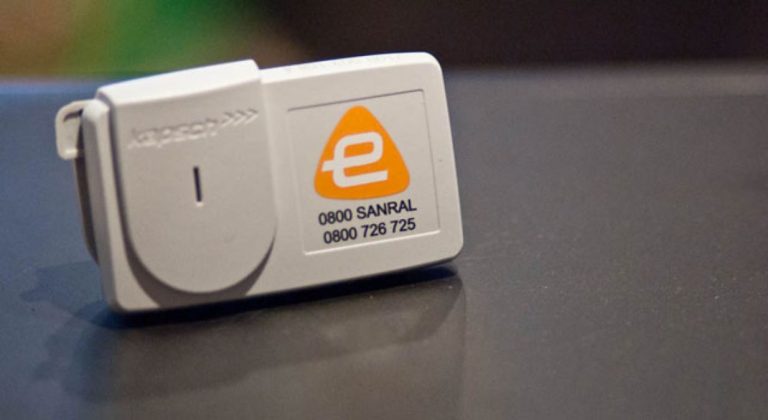
The tag offers road users the opportunity for faster processing through toll plazas as tag lanes are more efficient. Tags can be used for payment at toll plazas and selected parking lots across the country and have no connection to the recently scrapped e-tolls.

“Some motorists were labouring under the impression that their historic debt would be offset against any funds loaded onto their tag. However, this is not the case. That debt has been ring-fenced. Any funds loaded onto the tag is a fresh start and has nothing to do with any historic e-toll debt,” said Mona.  

Mona explained to The Bulletin that there were multiple convenient ways to obtain, load or fund the tag through the mobility account to ensure that road users were not caught wanting at toll plazas. 

The tag therefore remains the simplest and most efficient way to pay and can be obtained in any of the following ways: 

  • SANRAL Mobile App (available on AndroidIOS or Huawei)
  • SANRAL Customer Service Centres, located along the Gauteng freeways
  • Selected mainline toll plazas across South Africa

Tags ordered via the SANRAL App, online, via email or from the Call Centre are delivered to the road user’s door within three to five days. 

The SSTs are located at convenient locations on all major routes in South Africa. These terminals provide road users with the following functionalities:

  1. Access to their registered SANRAL account
  2. Ability to register a new SANRAL account
  3. Ability to obtain a tag from the terminal and link the tag to the account
  4. Perform basic management of the account, like adding funds, adding and removing vehicles, updating key user information etc.


The full list of locations where SSTs are available is on the SANRAL website – https://mobilityaccount.sanral.co.za 

The tag can be loaded and topped up in any of the following ways: 

Manual options that reflect on your account immediately:

Manual options that reflect on your account up to five days after a payment is made:

  • Electronic funds transfer (EFT)
  • At participating retailers, Pick n Pay and Checkers
  • At any advanced FNB ATM which has a note-accepting facility

Automatic:

  • You may link the topping up of your mobility account to your credit card or through direct debit
  • Once the low balance threshold is reached, the account will be topped up automatically to a balance as determined by you either by your credit card or through debit order.

“We will continue to expand opportunities for road users to obtain a tag swiftly and conveniently. A tag currently costs R50 and upon registration, R50 credit is loaded onto the tag, which effectively renders it free of charge,” said Mona. 

As road users prepare for long-distance travel, SANRAL appeals for compliance, vigilance and commitment to road safety. Using a tag to reduce queuing time at toll plazas is a great way to reduce frustration so that everyone enjoys their travels this holiday.

LEGAL NOTICE APPLICATION FOR ENVIRONMENTAL AUTHORISATION AND WATER USE AUTHORISATION

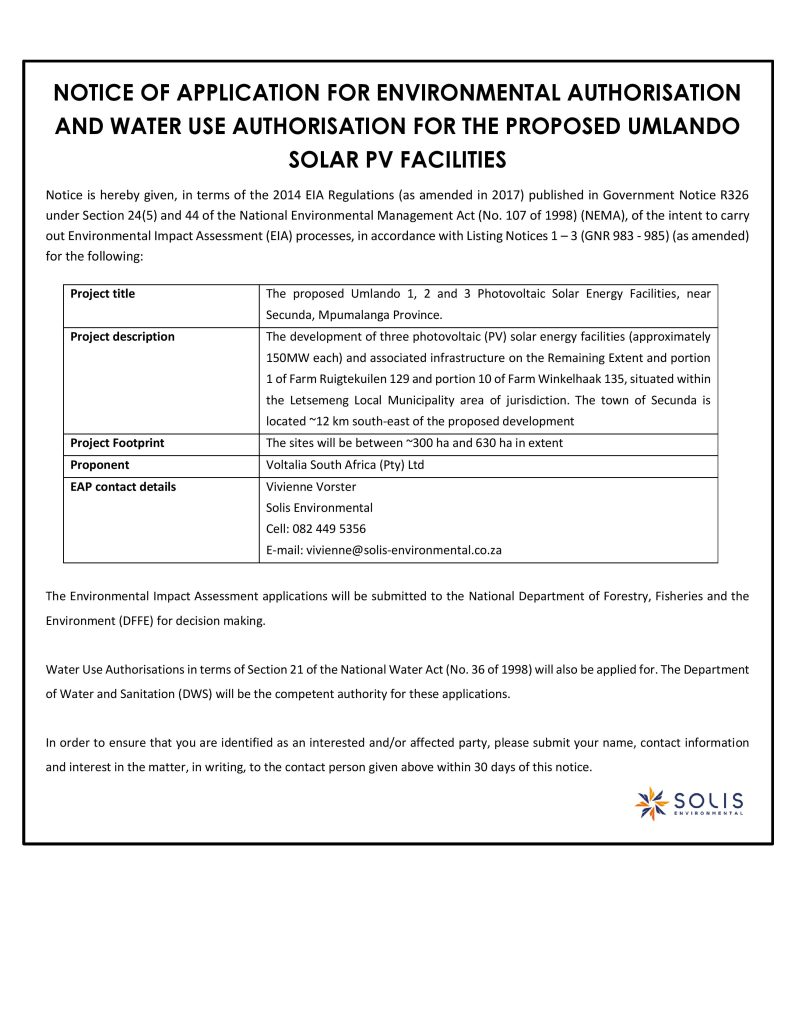
NOTICE OF APPLICATION FOR ENVIRONMENTAL AUTHORISATION AND WATER USE AUTHORISATION FOR THE PROPOSED UMLANDO SOLAR PV FACILITIES

Notice is hereby given, in terms of the 2014 EIA Regulations (as amended in 2017) published in Government Notice R326 under Section 24(5) and 44 of the National Environmental Management Act (No. 107 of 1998) (NEMA), of the intent to carry out Environmental Impact Assessment (EIA) processes, in accordance with Listing Notices 1 – 3 (GNR 983 – 985) (as amended) for the following:

Project title

The proposed Umlando 1, 2 and 3 Photovoltaic Solar Energy Facilities, near Secunda, Mpumalanga Province.

Project description

The development of three photovoltaic (PV) solar energy facilities (approximately 150MW each) and associated infrastructure on the Remaining Extent and portion 1 of Farm Ruigtekuilen 129 and portion 10 of Farm Winkelhaak 135, situated within the Letsemeng Local Municipality area of jurisdiction. The town of Secunda is located ~12 km south-east of the proposed development

Project Footprint

The sites will be between ~300 ha and 630 ha in extent

Proponent

Voltalia South Africa (Pty) Ltd

EAP contact details

Vivienne Vorster

Solis Environmental

Cell: 082 449 5356

E-mail: vivienne@solis-environmental.co.za

The Environmental Impact Assessment applications will be submitted to the National Department of Forestry, Fisheries and the Environment (DFFE) for decision-making.

Water Use Authorisations in terms of Section 21 of the National Water Act (No. 36 of 1998) will also be applied for. The Department of Water and Sanitation (DWS) will be the competent authority for these applications.

In order to ensure that you are identified as an interested and/or affected party, please submit your name, contact information and interest in the matter, in writing, to the contact person given above within 30 days of this notice.

ANIMALS 101 – ARE WE EXPECTING TOO MUCH OF OUR PETS?

0

EMBRACING OUR PETS FOR WHO THEY ARE.

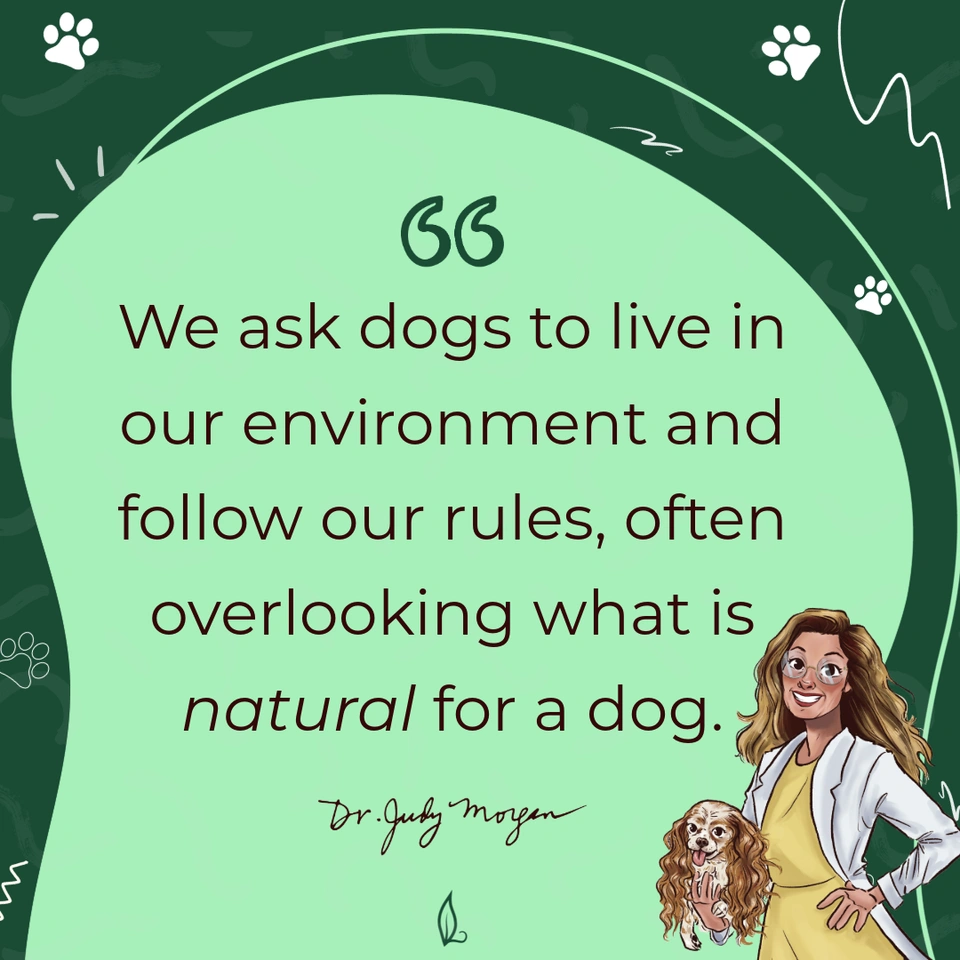
“We ask dogs (and other animals) to live in our environment and follow our rules, often overlooking what is natural for a dog.” This observation touches on a significant aspect of our relationship with dogs: our tendency to impose human-centric expectations on them without fully understanding their natural behaviours.

dog
Image by Dr. Judy Morgan

Like all animals, dogs have inherent instincts and behaviours that have evolved over millennia. These natural behaviours include digging, chewing, barking, rolling in dirt, sniffing everything, hunting, and chasing moving targets. Each action serves a purpose in a dog’s life, from communication and exploration to exercise and mental stimulation. For example, digging is a natural behaviour for dogs, rooted in their ancestors’ need to create secure resting places or hunt for prey. Chewing helps them clean their teeth and relieve stress while barking is a way to communicate and alert their pack to potential dangers.

When we bring dogs into our homes, we often expect them to seamlessly adapt to our human-centric environment and adhere to our rules without considering their natural inclinations. This disconnect can lead to frustration and behavioural issues. A dog who is reprimanded for digging in the yard or chewing on a shoe might feel confused and anxious, which can lead to other behavioural problems, such as increased destructiveness or nervousness.

SpiritDog Training shares how dogs are not born knowing how to navigate our world. We have a lot of rules that make no sense to them such as:

  • Should be social, but not obsessed with people and dogs.
  • Should be house-trained quickly, but not wake us up in the middle of the night to go outside.
  • Should be motivated to train with food, but not so much that they snap at our fingers.
  • Should play fetch with us, but not chase the cat.
  • Should be fun when we have time, but calm when we don’t.

Aren’t we expecting a bit too much, or too soon?

If you’re not prepared to handle the messiness, noise, and occasional chaos of having a dog (or any animal), it might be worth reconsidering pet ownership. Dogs don’t instinctively know how to navigate the human world we forced them to live in. These are concepts that need to be taught, and this teaching process involves patience and understanding.

Training a dog is not a one-off task but a continuous journey. A dog will not arrive at your home perfectly tuned to your expectations. They will bark, dig, and explore, often in ways that might seem disruptive or inconvenient. These behaviours are not about disobedience but about natural instincts and responses to their environment.

dog
Image by The Paw Company

Also, read more about animals and the silly season that has begun.

PUPPIES

Puppies, in particular, are a prime example of how challenging this adjustment period can be. They come from a life with their littermates and mother, where their primary focus is play, learning, and socialization. When they enter a human home (often way too early), they are confronted with a new set of rules and expectations that can be bewildering. The first six to twelve months with a puppy involve considerable training and supervision. During this period, puppies need guidance on how to adapt to house training, acceptable chewing behaviour, and proper social interactions.  

How many of you take leave to help your new pet adjust to this overwhelming change?

It’s not uncommon for new puppy owners to feel overwhelmed by the demands of potty training, the messes, and the constant supervision required. Some might even perceive their puppy’s behaviour as antagonistic, but it’s important to remember that puppies are not acting out of spite. They are simply trying to make sense of a complex new environment. For more tips on puppies, search on The Paw Company page puppies/puppy/puppy101 etc.

SILLY SITTING

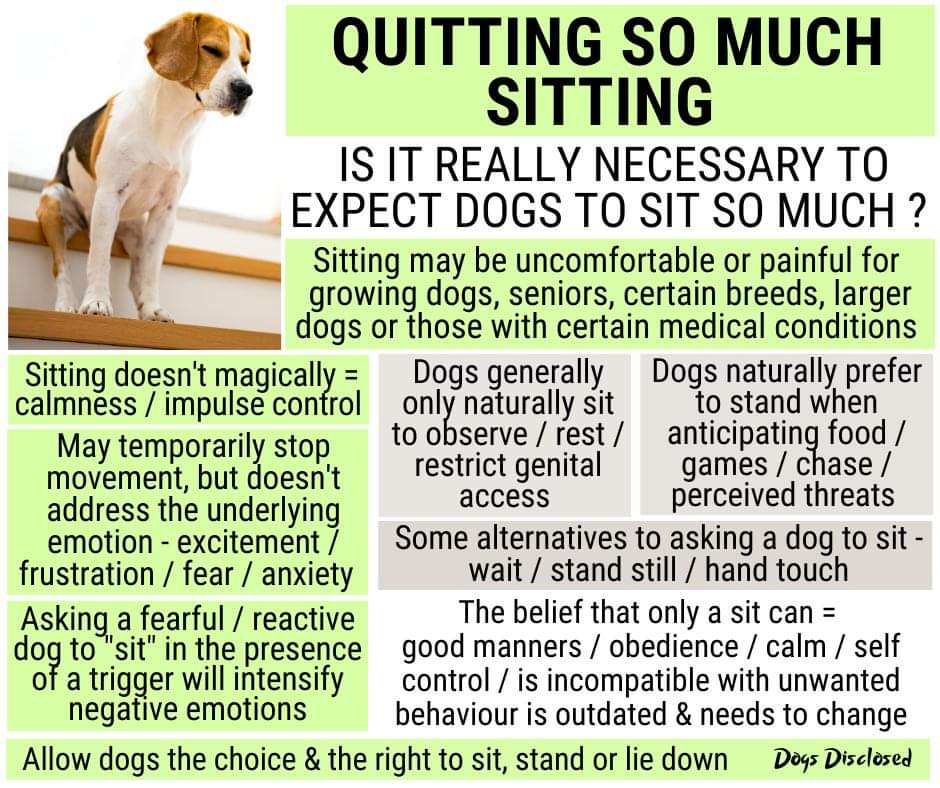
Before I close, I want to touch on another topic that I refer to as the “silly sit”.  Our obsession with getting dogs to sit may stem from the belief that it reflects obedience and good manners, making us appear responsible as guardians. However, frequent sitting isn’t always beneficial for our dogs, particularly for puppies whose developing skeletal systems can be adversely affected, or for senior dogs that may struggle with the physical demands of sitting. Additionally, asking fearful or reactive dogs to sit in stressful situations can exacerbate their anxiety rather than calm them. Dogs don’t sit when they eat. While teaching “sit” is valuable, it’s important to consider more natural alternatives that may better suit their physical and emotional needs. As Turid Rugaas wisely said, “If you yourself want to sit, sit! If you want your dog to sit, think twice!”

sit
Image by Dogs Disclosed

Understanding that dogs and other pets don’t come pre-programmed with knowledge of our human rules can help alleviate some of the frustration. Dogs are eager to please and adapt, but this adaptation takes time. They are learning to navigate a world which is vastly different from what they knew before. Each day is a new opportunity for them to understand and bond with us.

In the end, the greatest joy of having a dog comes from accepting them for who they are and helping them integrate into our lives with patience and empathy. By recognizing and respecting their natural behaviours, we can create a more harmonious living environment that benefits both the animal and their human family. Remember, dogs wake up each day with a smile and a readiness to be our companions, despite the many adjustments they must make. It’s our responsibility to be their guide and friend through this process, fostering a relationship built on understanding and mutual respect.

If you are not going to allow your dog (or pet) to do dog stuff (species stuff) then don’t get a stuffed toy!  The best thing about dogs is that they are dogs, so let them be just that and just be their guardian and guide in this complicated human world! Rethink your expectations for your pet!

Join us again next week as we explore some of these natural behaviours.

WHEN YOU KNOW BETTER, DO BETTER!