The Democratic Alliance (DA) in the Govan Mbeki Municipality is deeply alarmed by the ongoing political interference and misconduct of ANC councillors, who are actively obstructing the delivery of critical sanitation infrastructure to the Eendracht community. “We have formally given the Speaker of Council, Cllr Fikile Magagamela, 14 days to institute an impartial investigation into the alleged misconduct of these councillors, in line with the Councillors’ Code of Conduct and the broader framework of municipal governance,” said a statement from the DA.
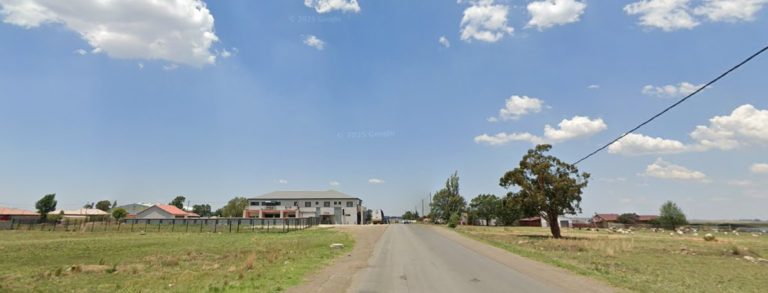
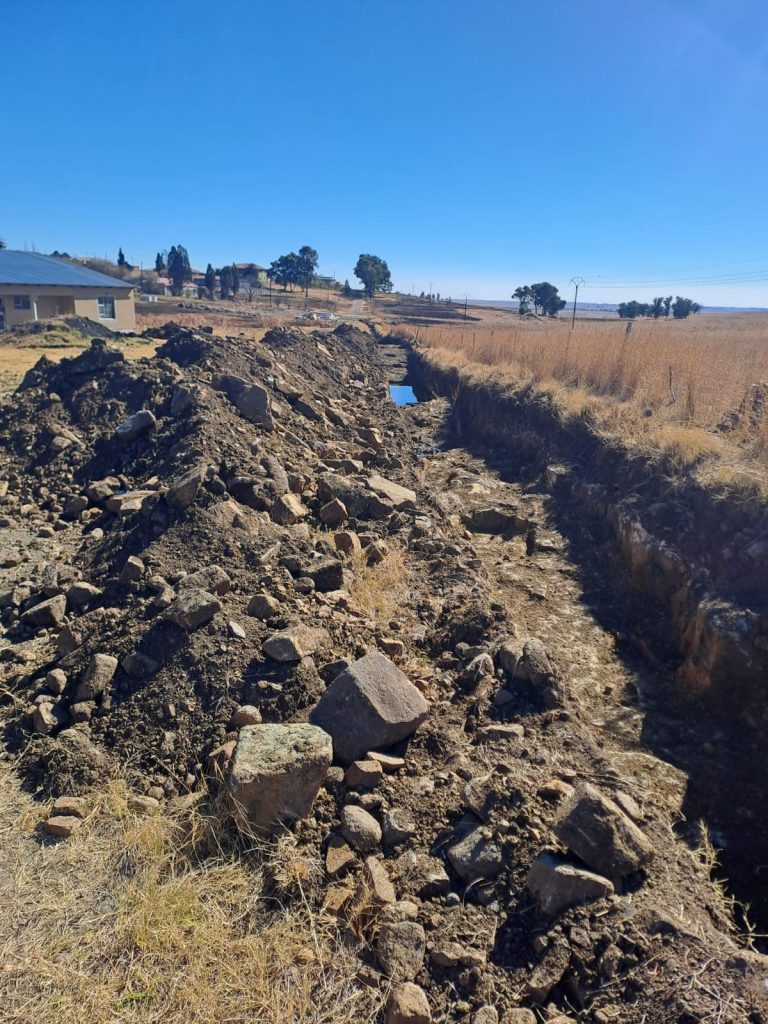
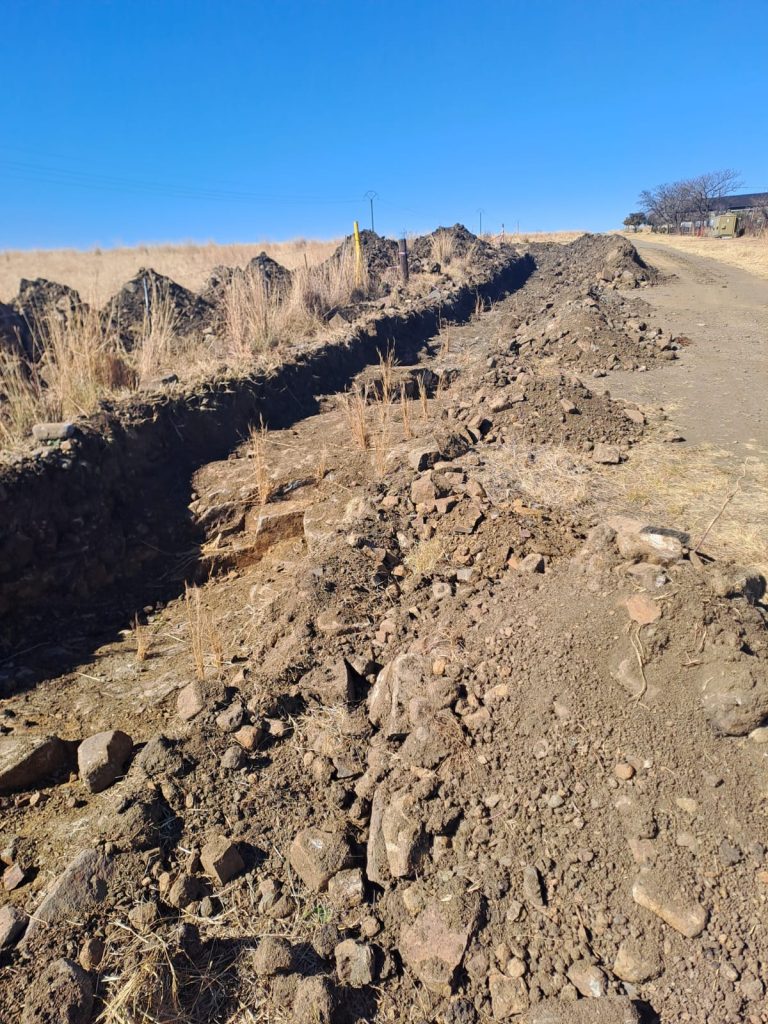
The Eendracht Sewer Project, a vital initiative aimed at restoring dignity to a long-neglected community through the provision of improved sanitation infrastructure, is being deliberately delayed. Although the project is geographically and administratively located in Ward 1, ANC councillors from Wards 2, 3 and 6 have repeatedly interfered with its progress, raising serious questions about motive, legality, and political intent.
ANC Factionalism Over Service Delivery
“Instead of supporting the delivery of much-needed infrastructure, these councillors have chosen to hijack the project and sabotage three scheduled community meetings—on 17 June, 26 June, and 3 July 2025—that were organised to brief and engage Ward 1 residents,” said DA PR Cllr Portia Madiyala Mpatlanyane, “The meeting of 26 June even proceeded without the participation of the elected Ward 1 councillor, who received no formal apology or explanation for the exclusion. This constitutes a clear violation of residents’ rights to inclusive governance and community participation, as stipulated in Chapter 4 of the Municipal Systems Act.”
The ANC’s internal factional battles have spilt over into the realm of basic service delivery, with devastating consequences for ordinary residents. Communities should not be held hostage to political power plays or vendettas. The DA strongly condemns this misuse of authority and disruption of lawful processes.
Disruption of the Project Steering Committee
Most recently, on 1 July 2025, a scheduled meeting of the Project Steering Committee (PSC)—the legally recognised structure responsible for overseeing project delivery—was disrupted by the Ward 3 ANC councillor, with support from their counterparts in Wards 2 and 6. This blatant act of sabotage forced the meeting to be adjourned, leaving both the contractor and community stakeholders confused and demoralised. This repeated interference undermines not only the project’s timeline but also the principles of transparency and good governance that underpin effective service delivery.
The PSC was established in full compliance with the Construction Industry Development Board Act (Act 38 of 2000) and includes key stakeholders such as:
The MMC for Civil Services (Chairperson)
The Ward 1 Councillor
Two PR Councillors from Ward 1
Appointed contractor
Project Management Unit
Director of Civil Engineering
Water & Sanitation Manager
Consulting Engineers
Community Liaison Officer
“This diverse and legally sound structure was created precisely to ensure that the project was executed fairly, transparently, and without undue political influence,” said DA PR Cllr Portia Madiyala Mpatlanyane.
Violations of the Councillors Code of Conduct
The conduct of the involved ANC councillors contravenes the Councillors Code of Conduct, as outlined in Schedule 1 of the Local Government: Municipal Systems Act (Act 32 of 2000). According to this Code, councillors must:
Act in the best interests of the municipality;
Perform their duties with integrity and accountability;
Refrain from obstructing the implementation of council decisions;
Avoid interference in the administration or areas outside their ward.
“By choosing to interfere with a Ward 1-specific project, these councillors have breached both the spirit and the letter of the law. Their attempts to isolate Eendracht—labelling it an “island†separate from the greater Leandra area—is not only factually incorrect but deeply divisive. It undermines community unity and discredits the legitimate representation of Ward 1 residents,” said Mpatlanyane
Phase 1 Failure Highlights Need for Oversight
It is also important to recall that Phase 1 of the Eendracht Sewer Project failed due to poor municipal management, lack of oversight, and exclusion of the local community. That failure resulted in wasted public funds and incomplete infrastructure. Instead of learning from that experience and strengthening systems of governance, ANC councillors have chosen to double down on disruption and power grabs.
This project aimed to uplift a historically underserved community, one that continues to lack basic sanitation. Every delay, every obstruction, and every political stunt is a direct assault on their right to dignity and development.
The DA’s Position and Call to Action
“As the DA, we stand firm in our commitment to ethical governance, lawful conduct, and accountable service delivery. We call on:
The immediate cessation of all interference by councillors from Wards 2, 3 and 6 in Ward 1 matters;
The Speaker of Council to urgently investigate this misconduct and hold the councillors accountable in terms of the Municipal Systems Act;
The Municipality is to uphold all relevant legislation, including:
The Municipal Systems Act (Act 32 of 2000)
The Municipal Finance Management Act (Act 56 of 2003)
The Construction Industry Development Board Act (Act 38 of 2000);
The immediate reconvening of the Project Steering Committee, with guarantees of non-interference and full legal protection for project stakeholders.”
“This is not merely a political issue, it is a community crisis. The people of Eendracht have waited far too long for the dignity of working infrastructure. The DA will not stand by while the ANC turns critical development into another theatre of corruption, control, and chaos.”
“We remain resolute in protecting the rights of residents and ensuring that service delivery is driven by need, not factional interest,” said Cllr Portia Madiyala Mpatlanyane
Kriel, Mpumalanga – A devastating house fire that engulfed a family home in Crest Crescent on June 18 has pushed the Kriel community to a breaking point. Residents, already battling persistent load reduction and deteriorating infrastructure, believe this fire — the seventh since February 2024 — could have been prevented if local fire services had not been removed from the town.
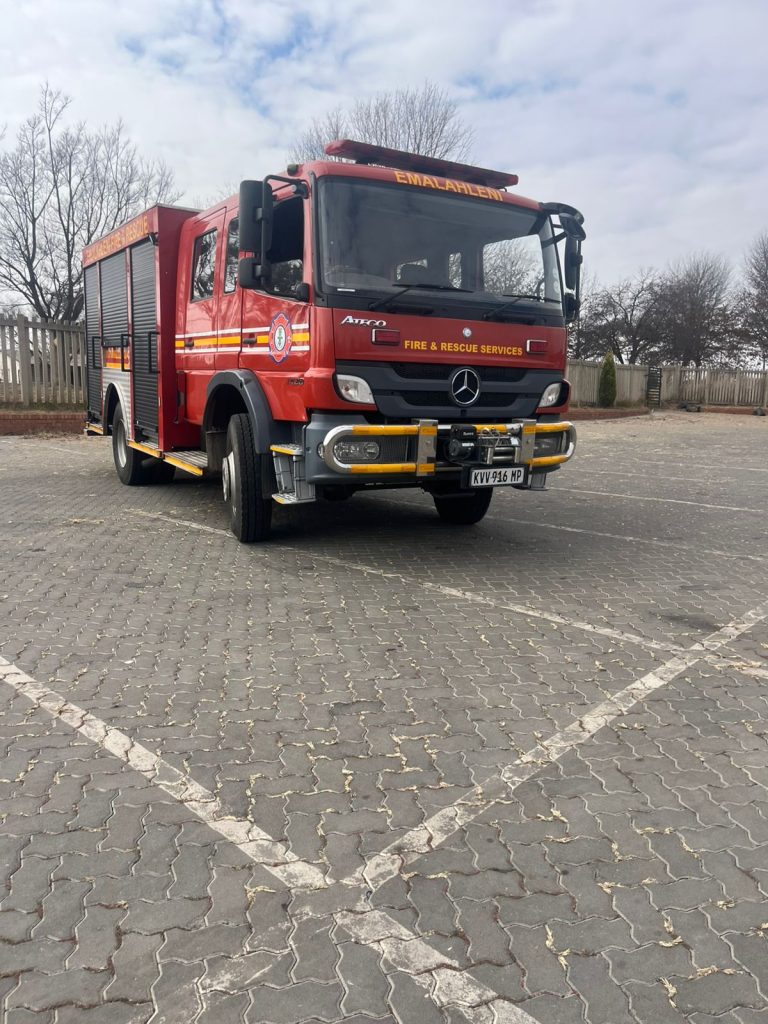
The blaze occurred while the homeowners were away. By the time they returned, their house was in flames. Community members say the Emalahleni Local Municipality’s delayed emergency response was exacerbated by bureaucratic inefficiencies, particularly a reported “authorisation process†that hindered the dispatch of a fire truck from Phola, nearly 30 km away.
This tragedy has reignited deep-seated frustrations in Kriel, where residents say they feel abandoned, unprotected, and ignored by the local government.
Community Stands Up
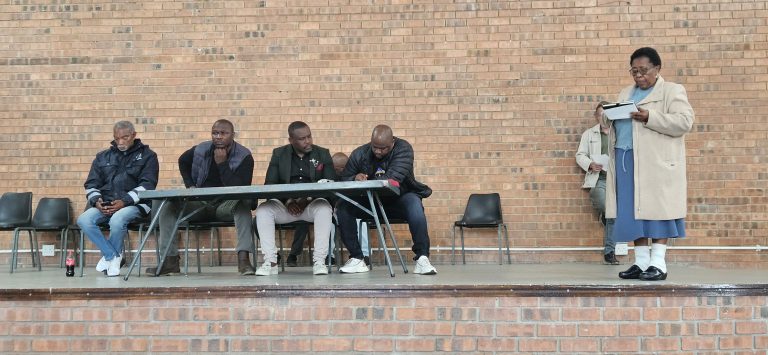
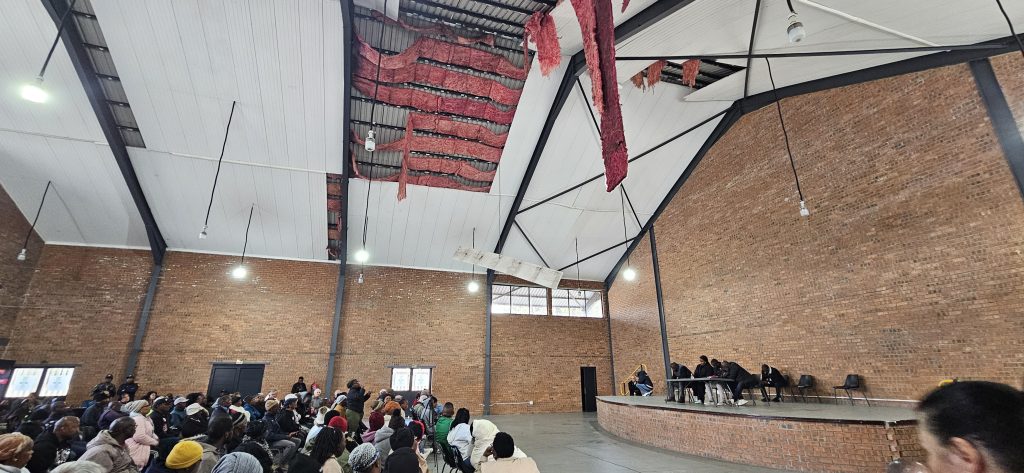
Outrage over the fire culminated in a tense public meeting on Wednesday, June 25, during which Executive Mayor Cllr Vusi Julius Nhlapho faced an angry crowd demanding immediate solutions. Community activist Edwin Nel led the call for accountability, with grievances and demands delivered in both English and Zulu.
The removal of Kriel’s fire trucks to Phola was labelled a “non-negotiable†issue, with residents insisting that the trucks be returned permanently. “We are not second-class citizens,†one resident was heard shouting. “We pay our rates — where are our services?â€
In addition to the fire services, residents expressed frustration over:
Up to three instances of daily load reduction
Pothole-riddled roads
Sewer overflows
Lack of functioning streetlights
Another major concern was the redirection of Kriel’s municipal payments to cover expenses in other areas, such as Witbank, rather than investing those funds back into the Kriel community.
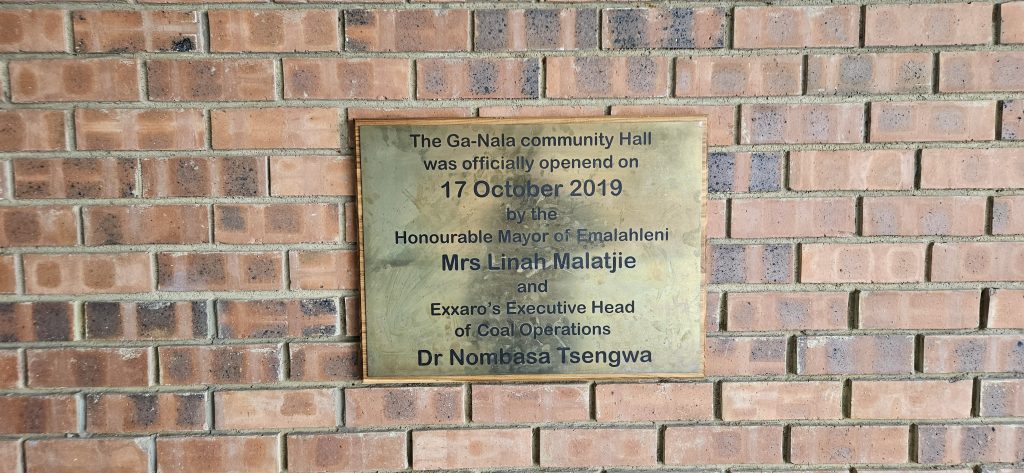
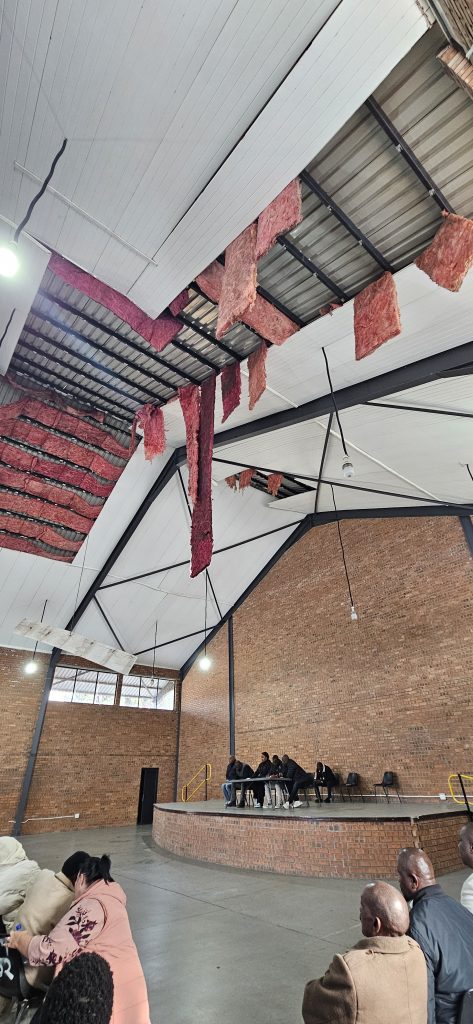
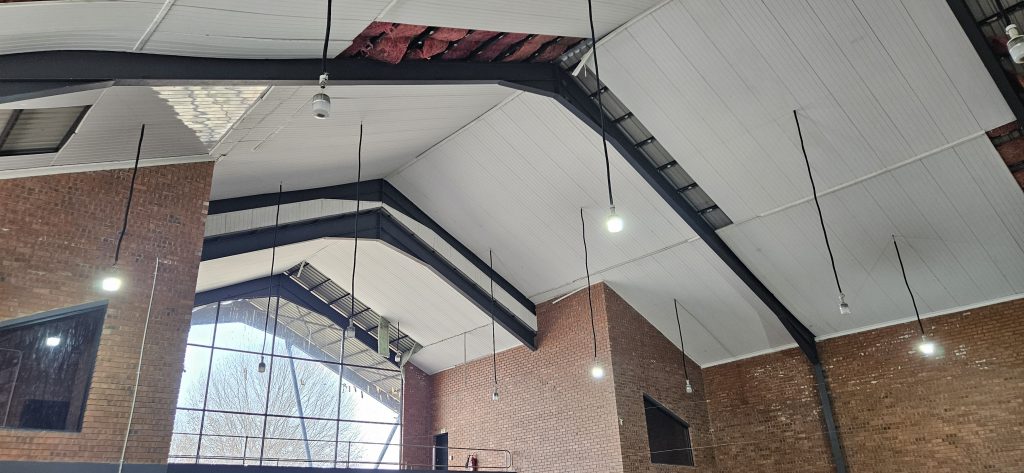
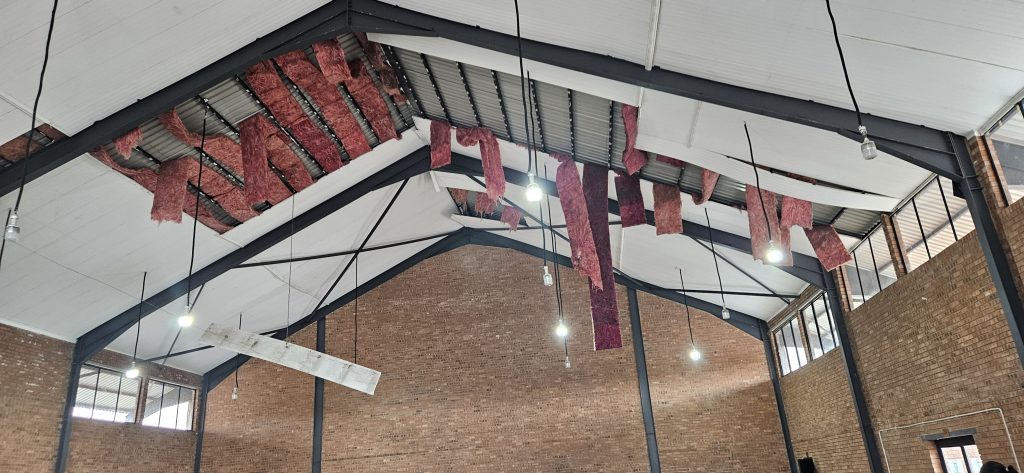
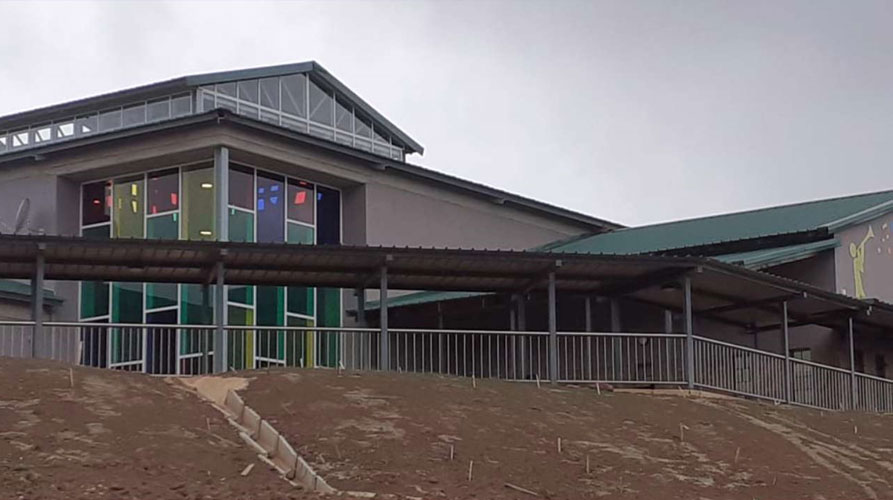
This Community Hall is not even a full 6 years old
Mayor Responds, Promises Change
Cllr Nhlapho attempted to calm tensions, explaining that some issues had not been brought to his attention. He mentioned that he had previously spent two weeks in Kriel to address community concerns, but residents say little progress has been made.
As tensions escalated during the meeting, police had to intervene to protect the mayor from a crowd that at times threatened to turn violent. Fortunately, the situation de-escalated, allowing the dialogue to continue.
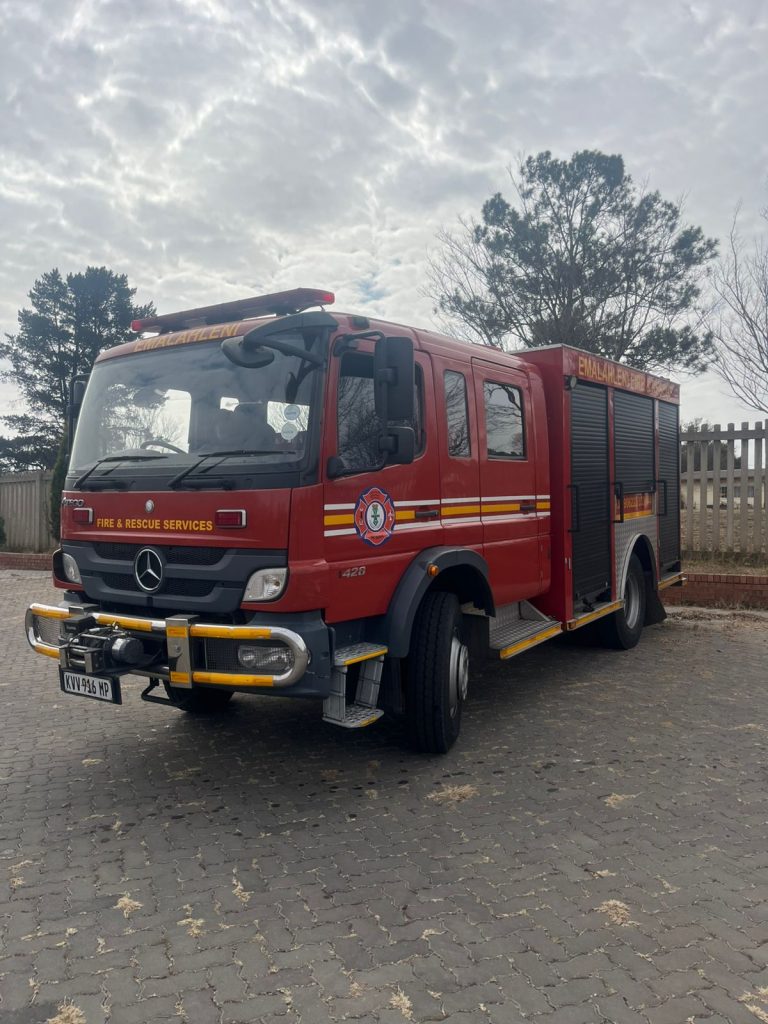
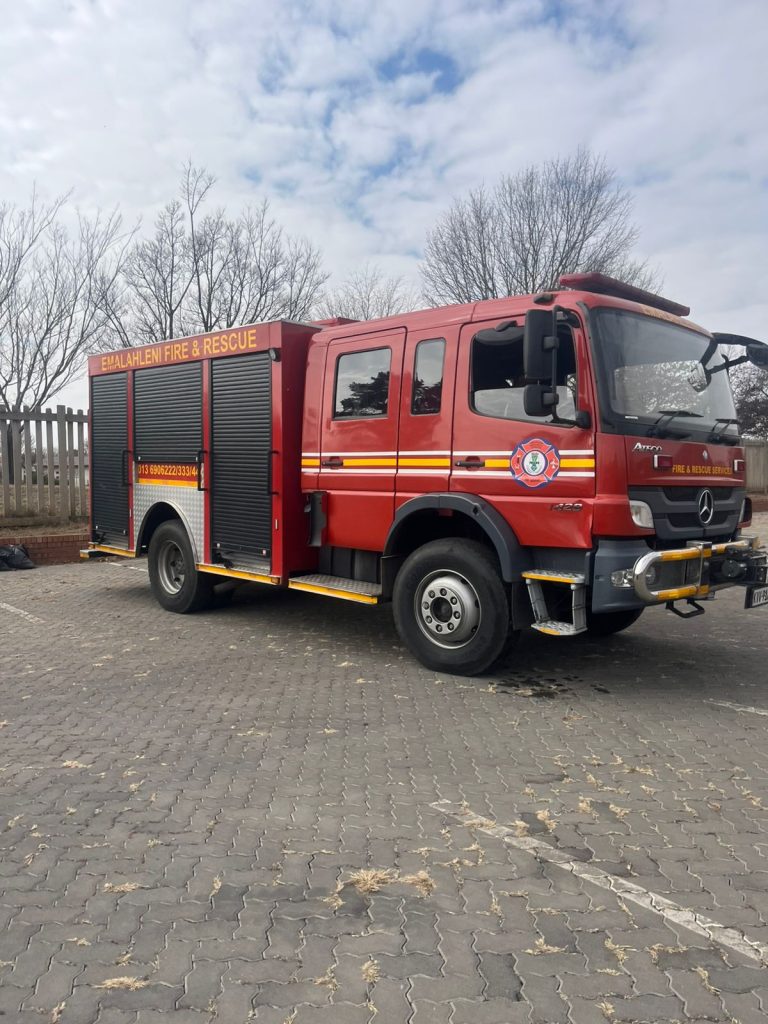
Mayor Nhlapho promised to return a fire truck to Kriel by Thursday, a promise that was fulfilled. He further committed to:
Hiring new fire and traffic officers from within the Kriel community
Repairing the condemned fire station, which is still being used as a residence
Resolving infrastructure issues within six months
Paying greater attention to Kriel’s unique challenges
“The residents of Kriel deserve dignity and reliable services,†Nhlapho said. “We will restore this town to what it should be.â€
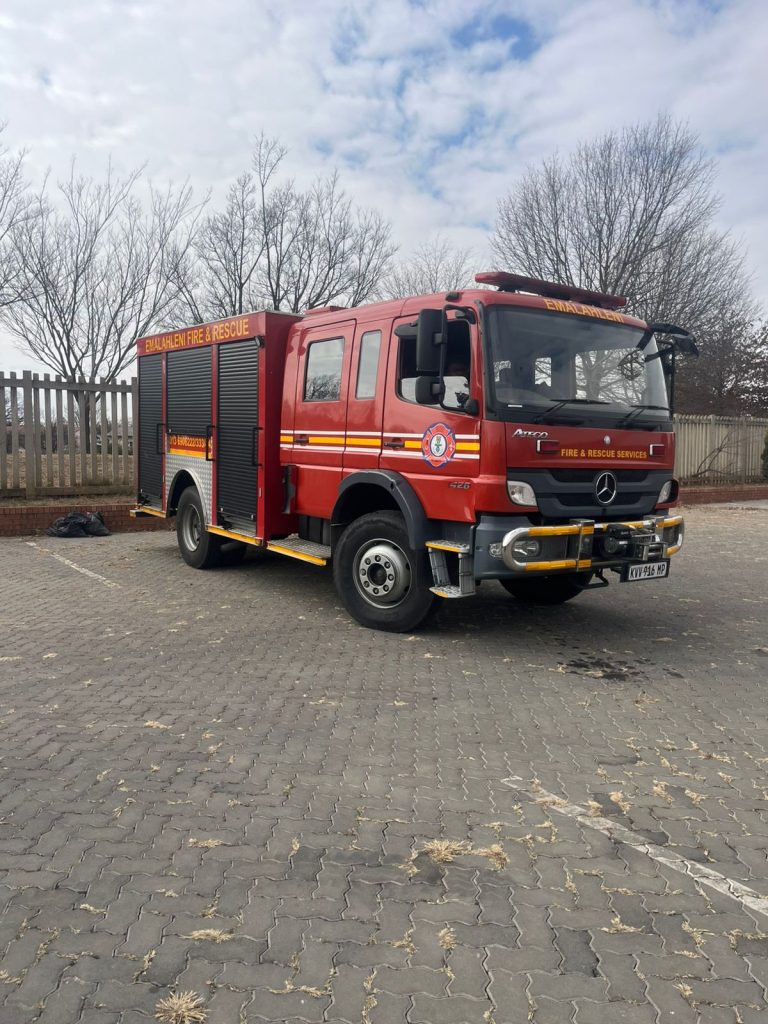
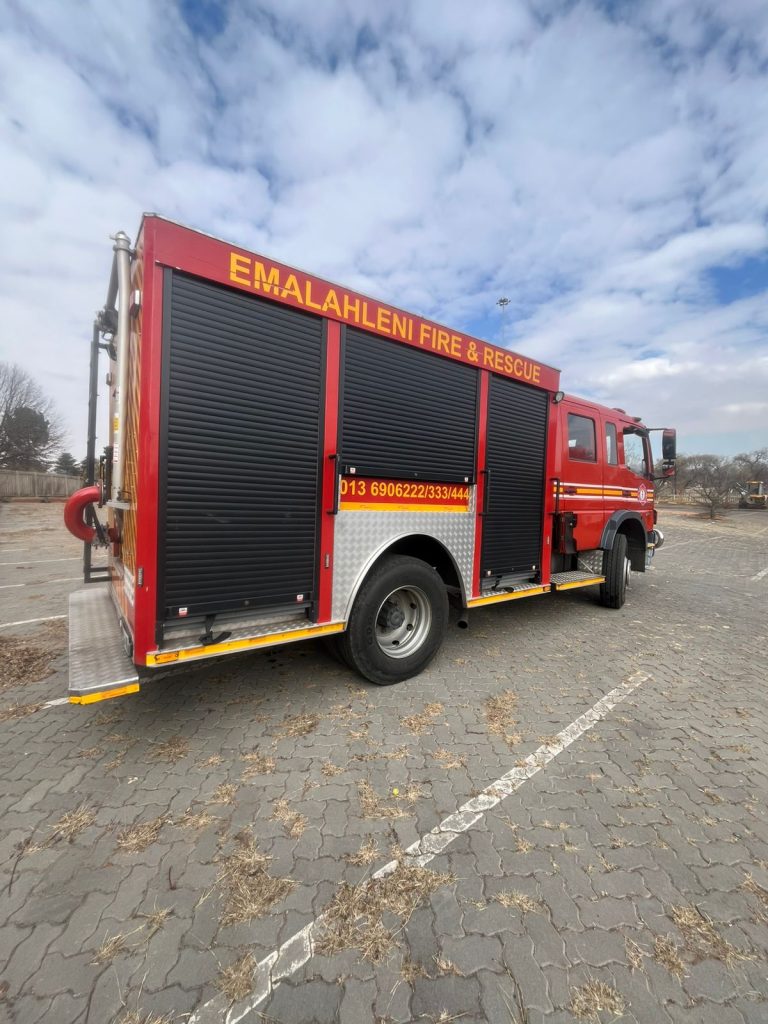
The Fire truck was returned
A United Front
Despite longstanding neglect, the people of Kriel stood together in a unified call for change. Community leaders praised the collective spirit shown during the protest and public meeting. “This was not just about a house burning down,†said Nel. “This is about all of us. We’ve been ignored for too long.â€
With promises made and the spotlight finally shining on Kriel, the question now is whether the Emalahleni Municipality will deliver on its commitments — or if the community’s frustration will boil over again.
Government finally responds after DA pressure; key projects remain incomplete despite billions spent
After years of pressure from the Democratic Alliance (DA), the Mpumalanga Department of Public Works, Roads and Transport (DPWRT) has finally announced a national summit aimed at tackling the province’s notorious construction mafia. The syndicates have been blamed for massive delays in crucial infrastructure projects, costing taxpayers billions.
During a Progress Performance Report presentation to the Portfolio Committee on Public Works on 26 June 2025, the department confirmed that several key intervention strategies would be rolled out in the 2025/2026 financial year to dismantle the criminal networks disrupting development.
These strategies include:
Deployment of SAPS in areas frequently targeted by construction mafias
Strengthening social facilitation and encouraging greater community cooperation
Participating in a national dialogue with Minister Dean Macpherson to address the issue
Urging lawmakers and councillors to discourage community interference and extortion
The DA welcomed the announcement, noting that the interventions are long overdue. “For years, the DA has called for decisive action. The continued extortion and disruption have paralysed service delivery and wasted public funds,†said Teboho Sekaledi: MPL – DA Spokesperson on Public Works, Roads and Transport: Mpumalanga Province.
Key Projects Brought to a Standstill
The DA also listed several high-profile infrastructure projects that have been severely impacted:
🔹 Mpumalanga International Fresh Produce Market (MIFPM): Despite over R2 billion spent, the market remains non-operational due to repeated disruptions.
🔹 High-Altitude Training Centre: Initially set for launch in 2012/2013, over R300 million has been spent on planning, but nothing stands on the site today.
🔹 Mpumalanga Parliamentary Village: Launched in 2017 with a 2020 deadline, the project has faced repeated delays. It was expected to reduce accommodation costs for MPs.
🔹 Mkhondo Boarding School: Started in 2018 as an 18-month build, the project is still unfinished due to multiple disruptions.
🔹 Middelburg Hospital: Begun in 2017 at an estimated cost of R1.4 billion, the hospital was due for completion in 2020. Progress has stalled.
Costs Continue to Climb
DPWRT confirmed an additional R115 million has been allocated to these projects, but the DA warns this figure may still fall short due to ongoing interference. “These delays not only rob residents of essential services but also open the door to unchecked corruption and inflated budgets that benefit a select few,†the DA said.
The Department now faces increasing pressure to demonstrate that the latest interventions will succeed where past efforts have failed.
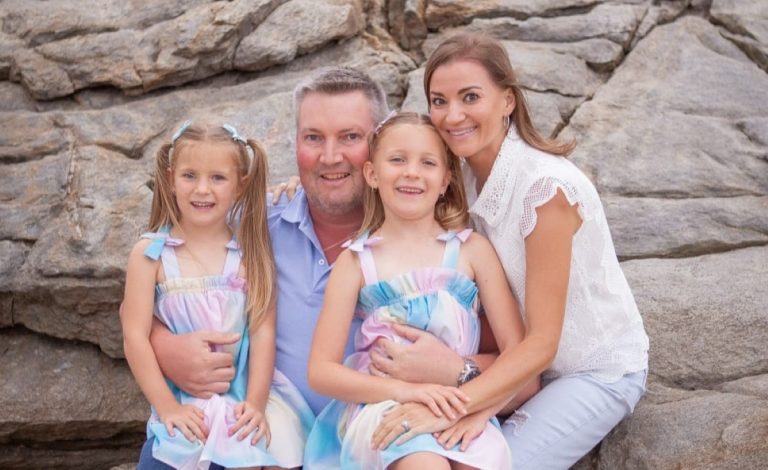
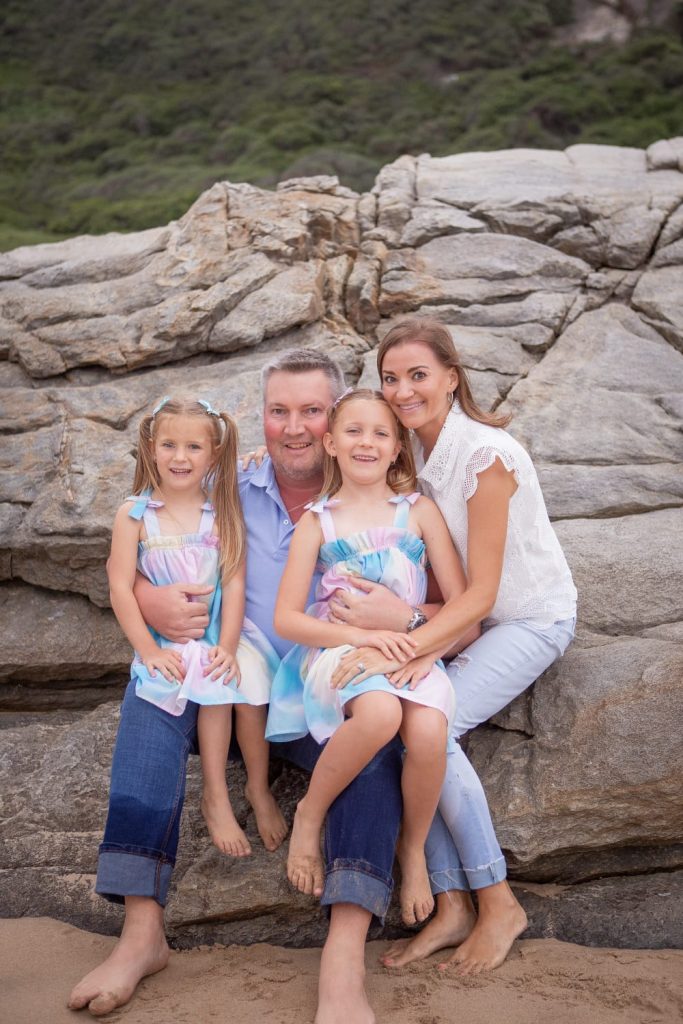
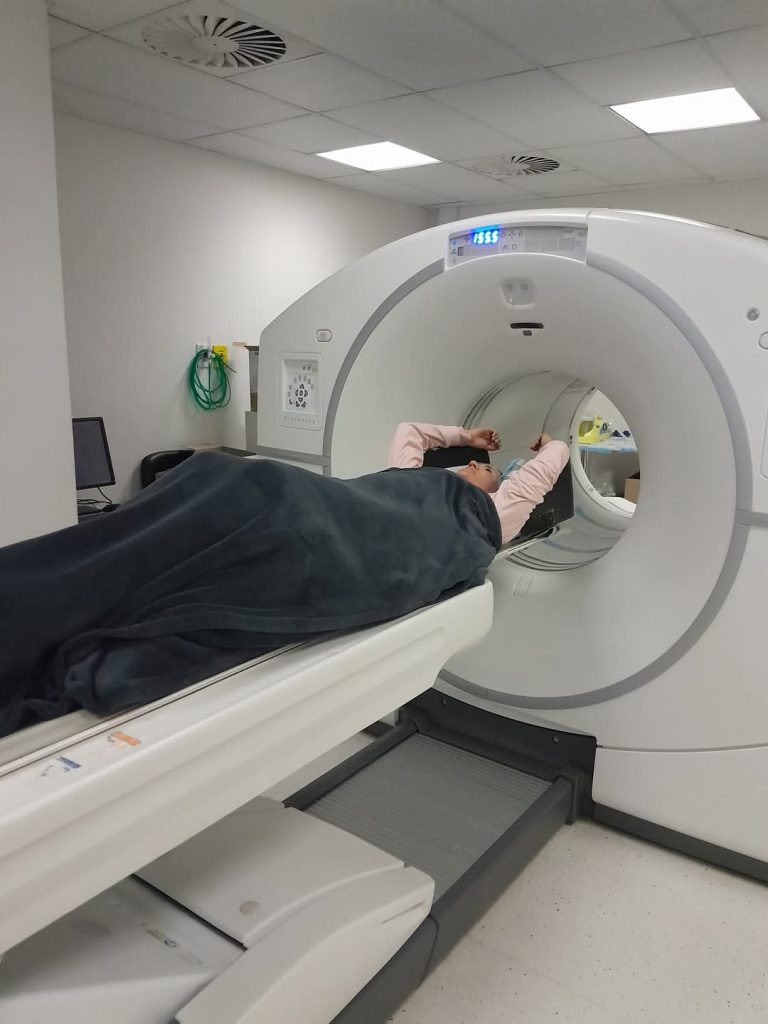
Soms kom daar mense oor jou pad wie se storie jou siel aanraak, mense wat hoop bring waar daar wanhoop is, en wat getuig van ‘n geloof wat nie wankel nie. Idalet Maritz is so ‘n vrou.
Op net 28-jarige ouderdom is Idalet, ‘n jong ma van ‘n pasgebore baba en ‘n peuter, met limfklierkanker gediagnoseer. Dit was in Oktober 2019 ‘n oomblik wat haar wereld tot stilstand geruk het. Maar wat vir baie ‘n einde sou beteken het, was vir haar die begin van ‘n pad van geloof en volharding.
“Ek het vrede gekry toe ek die diagnose ontvang,” vertel sy aan The Bulletin. “Jesus het my gemoed gevul met rus.” Idalet het geweet dat sy nie alleen gaan veg nie “soos Moses wat se arms deur Aaron ondersteun is, sou sy ook vasgehou word.
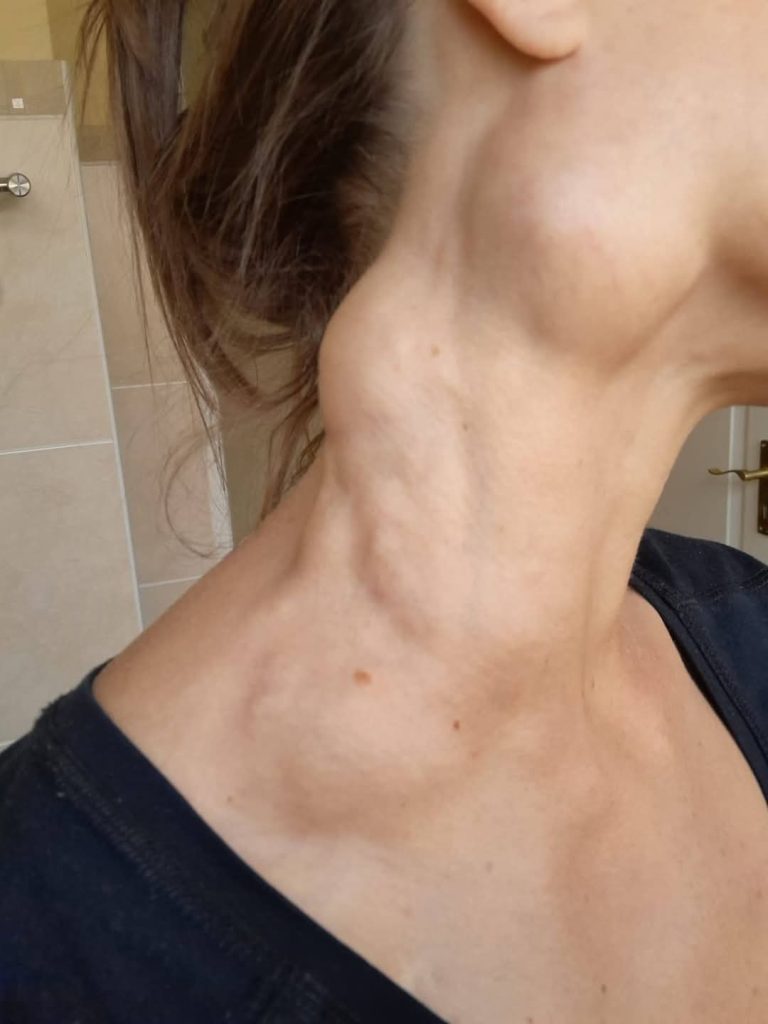
“In die begin het sy en haar man Johan besluit om die pad van natuurlike genesing te stap. Hulle het verskeie dokters besoek wat holisties na haar gesondheid sou kyk” met groentesappe, sonlig, oefening en natuurlike protokolle. Maar haar toestand het agteruit gegaan. Die knoppe het gegroei, haar asemhaling het verswak.
“ek verstaan dat dit my woestynpad was. En ek eer vandag vir God vir daardie tyd, want dit was in die woestyn waar ek die God van die vuurkolom en die wolk leer ken het.”
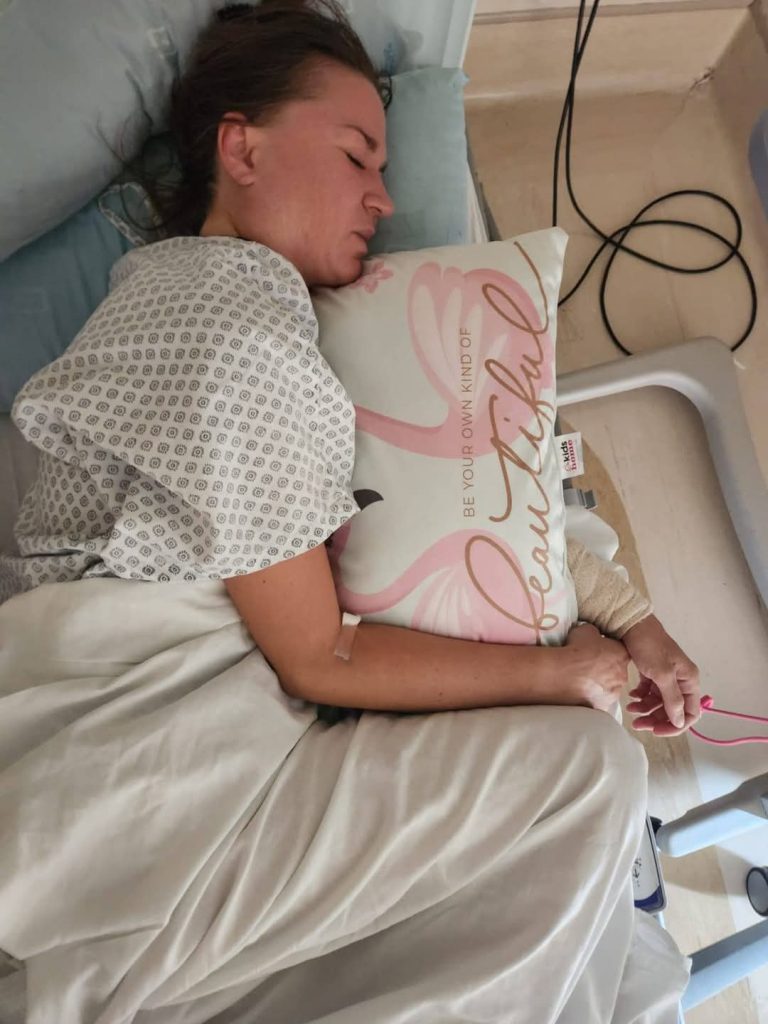
Augustus 2020 het God haar een oggend 4am wakker gemaak met ‘n massiewe rooi woord: CHEMO. Daar het sy vir die eerste keer vrede gehad en besef dat God wel ook IN die chemo is. Op 8 September het sy haar eerste chemoterapie ontvang. Die getal 8 simboliseer nuwe begin, en dit was presies wat dit vir haar gebring het. Na drie maande se behandeling, het sy op 3 November “n skoon uitslag gekry. Die getal 3 simboliseer heelheid, herstel en voltooiing.
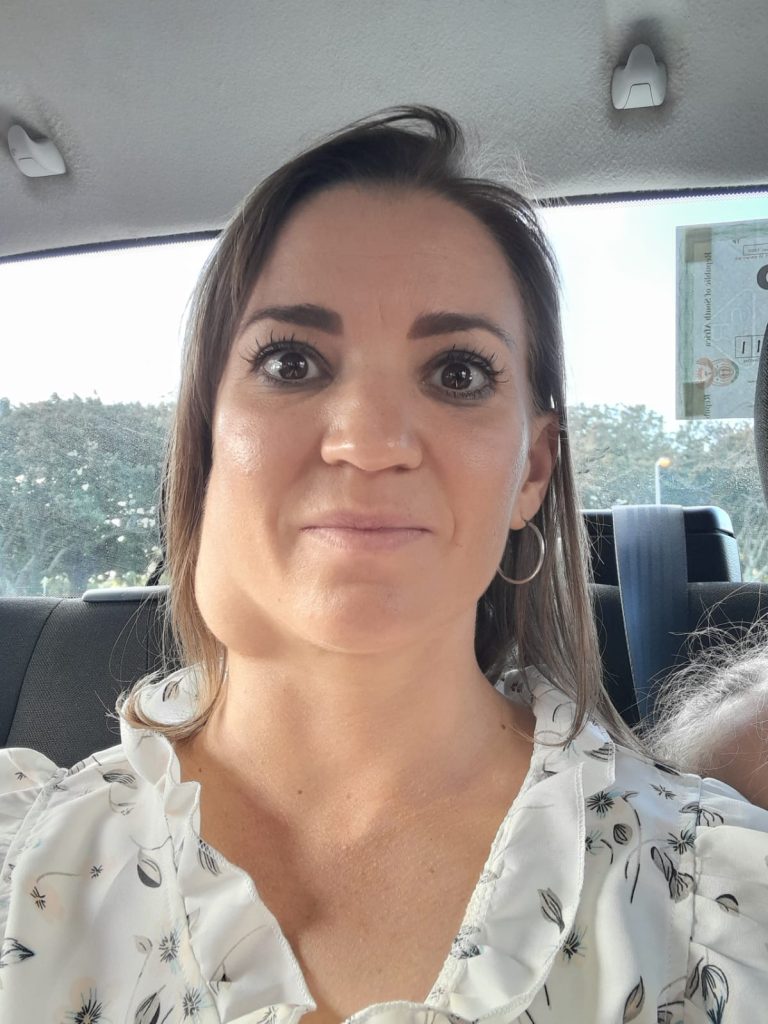
Maar die pad was nie verby nie. “n Jaar later het die kanker teruggekeer. ‘Ek was in ontkenning. Ek was kwaad,” vertel sy eerlik, “nooit vir God nie, maar omdat ek weer om dieselfde berg moes stap.” In September 2024 het haar gesondheid drasties versleg. Die simptome van Hodgkins Limfoma het vir die eerste keer werklik gewys koors, nagswete, gewigsverlies, en ‘n infeksietelling wat gevaarlik hoog gestyg het.
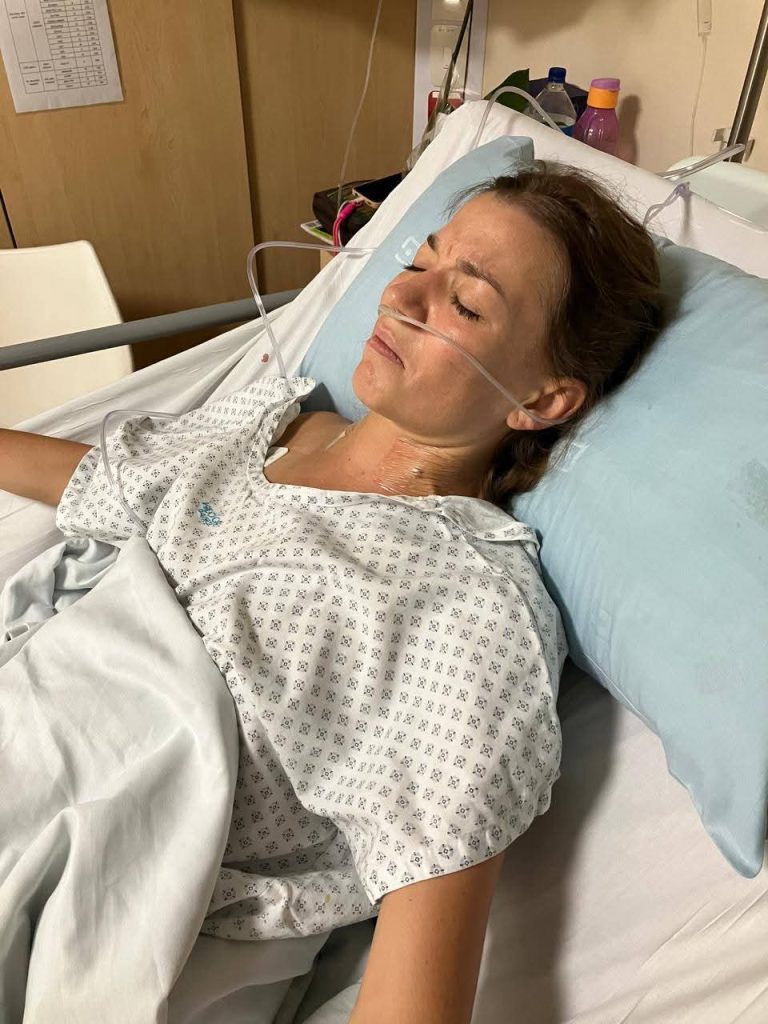
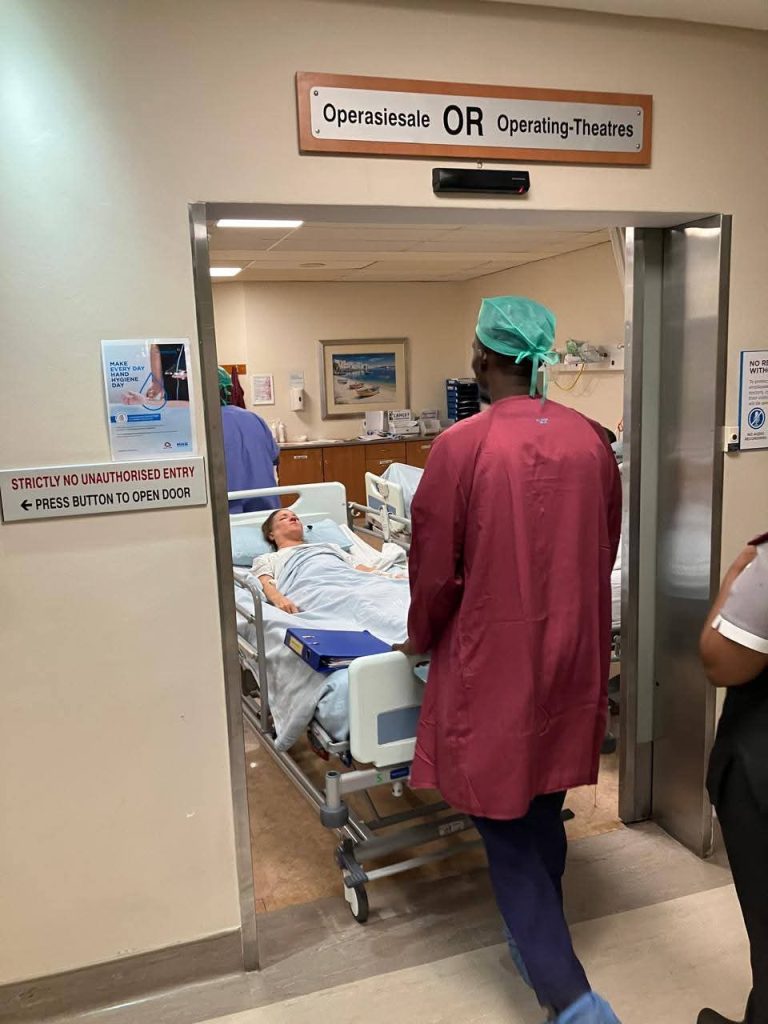
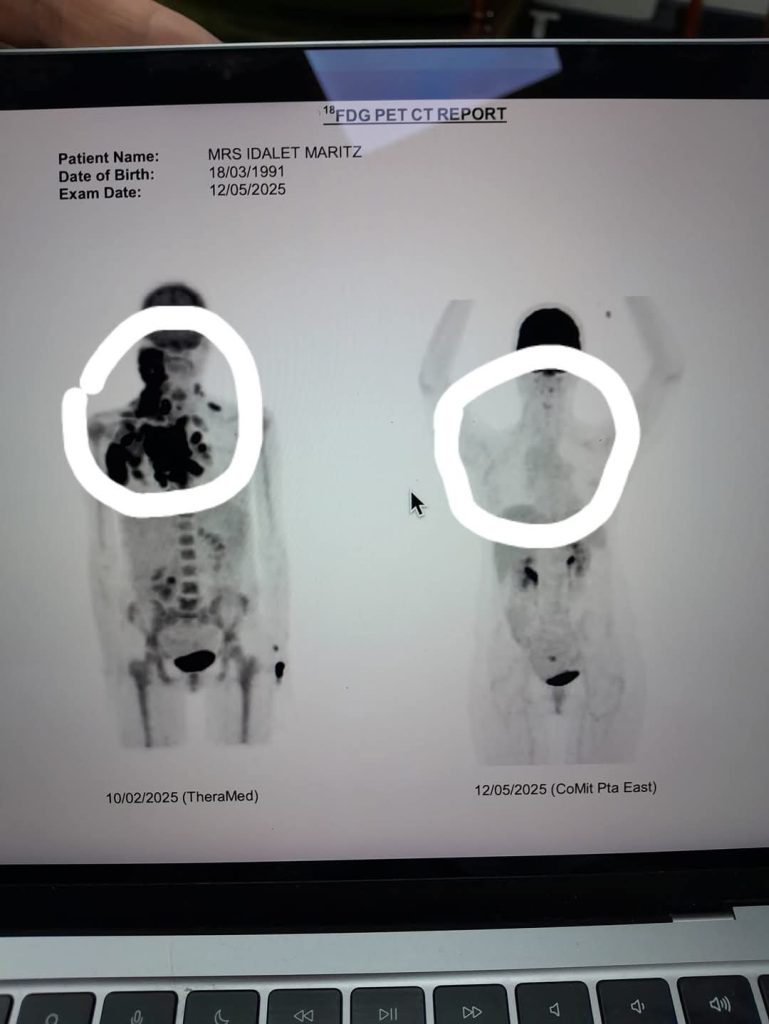
In Januarie 2025 het sy vasgehou aan Psalm 92. Sy het geweet dit sou ‘n jaar van stryd wees, maar ook van oorwinning. Op 27 Januarie is sy weer opgeneem in die hospitaal, waar sy ernstig siek geword het. Maar in Maart het God weer die onmoontlike gedoen, na drie sessies van chemoterapie en immuneterapie, het sy weer skoon getoets. Soos 1 van die 10 melaatses, kies Idalet om terug te draai en vir Jesus DANKIE te se.
Met ‘n lig in haar oe vertel sy haar storie aan The Bulletin. Haar stem is sag, maar haar woorde dra krag. “Jesus is my rots,” se sy sonder huiwering. “Sonder my geloof sou ek dit nie gemaak het nie. Ek het Hom nodig gehad vir elke tree, elke asem.”
Idalet se verhaal is nie net een van fisiese genesing nie, maar van geestelike verdieping. Sy het ‘n God ontmoet wat getrou is: in die woestyn, in die siekbed, in die stilte.
Wat die toekoms inhou, weet sy nie. Maar een ding is seker: haar geloof is vandag sterker as ooit. En sy hoop dat haar verhaal ander sal inspireer om aan te hou glo, al is die pad hoe donker.
“Met God wat jou dra, kan jy enigiets oorwin.”
God is nogsteeds vandag die God van Abraham, Isak en Jakob, Jehovah Rapa, THE GOD WHO HEALS.
The State of Companion Animal Overpopulation and the Call for National Reform
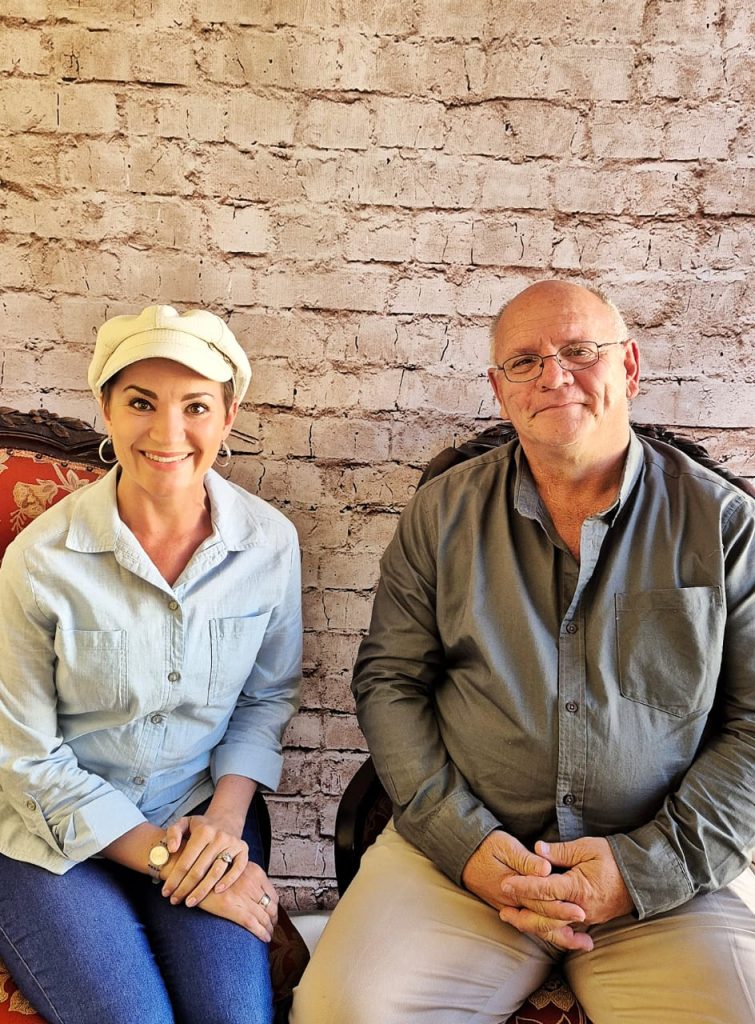
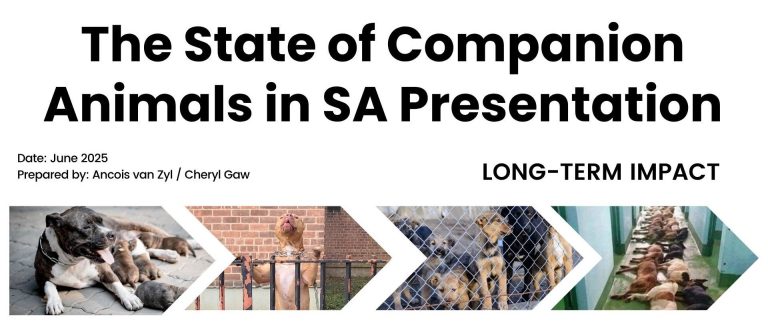
Ancois van Zyl (The Paw Company) and Cheryl Gaw (Pug Rescue South Africa) presented the State of Companion Animal Welfare in SA to the Portfolio Committee of the Department of Agriculture at Parliament in Cape Town. The presentation was met with the seriousness it warrants, and a constructive way forward was discussed.
Ancois van Zyl (The Paw Company) and Cheryl Gaw (Pug Rescue South Africa) at the Parliament in Cape Town
The Paw Company and Pug Rescue South Africa extend heartfelt thanks to the Honourable Members of Parliament who attended and engaged in our presentation to the Portfolio Committee on Agriculture, Land Reform and Rural Development on 3 June 2025 in Cape Town. The full briefing of the meeting is available on the Parliamentary Monitoring Group (PMG) platform.
This presentation was not a standalone effort—it marked the culmination of seven years of sustained advocacy and collaboration. In 2023, we hosted consultative sessions across Gauteng and the Western Cape, including online platforms, to gather insights from animal welfare organisations across South Africa. These engagements confirmed what we already knew: South Africa faces an urgent and intensifying companion animal overpopulation crisis, and a regulatory vacuum lies at its heart.
The Crisis: Why It Matters
South Africa is grappling with a massive and unsustainable population of cats and dogs, largely due to unregulated breeding, irresponsible ownership, and uncontrolled trade. The consequences are wide-ranging and deeply troubling:
A sharp increase in stray animal populations
Growing incidents of dog attacks and disease outbreaks
Shelter closures due to financial strain and overcrowding
Widespread and emotionally devastating euthanasia of healthy animals
An unfair burden on NGOs and welfare organisations, who receive no government support yet are expected to carry out core public health functions
As the country’s economic challenges deepen, more animals are surrendered while donations to shelters plummet. Without formal intervention, the crisis will worsen, affecting not only animals but also communities, public health systems, and environmental sustainability.
Our Proposal: From Reaction to Regulation
In response to the national crisis, our team has worked with veterinarians, legal experts, and policymakers to draft a set of national regulatory proposals, submitted to the Department of Agriculture, Land Reform and Rural Development for consideration. These proposals aim to:
Tackle the root causes of overpopulation
Establish legal requirements for responsible breeding, trading, and ownership
Shift the system from reactive crisis management to proactive control and accountability
Our initial focus is on companion animals—dogs and cats—but future regulation should extend to other species as needed. The Department has acknowledged receipt of the proposed draft regulations. Any components selected for adoption will undergo the formal public participation process following constitutional and legislative procedures.
The Case for National Reform
A proactive national framework will provide:
Better protection for communities from stray animal-related health and safety threats
Relief to overburdened shelters and veterinary facilities
Formal support for ethical breeders
Tools to eliminate exploitative practices and black-market trade
Increased transparency and consumer protection
Stronger alignment with the global One Health Initiative, which recognises the link between animal, human, and environmental health
This shift is not only ethically necessary—it is strategically urgent.
A Shared Responsibility
Animal control is a governmental responsibility, yet most of the current work is done by under-resourced private rescue organisations and NGOs. These groups are reaching a breaking point. Relying on donations to carry out what should be state-supported public health services is not sustainable. It is imperative that the government steps in with a national, enforceable framework that supports collaboration and ensures long-term success.
The Way Forward
We sincerely thank everyone who contributed to this initiative and look forward to working with Parliament, government departments, civil society, and communities in a robust and inclusive public participation process. Real reform is now within reach. With courage, commitment, and cooperation, we can build a humane, effective, and accountable system that protects animals, serves communities, and safeguards public health.
The time to act is now.
Overview
The Portfolio Committee convened to receive a presentation by Pug Rescue South Africa on the escalating crisis of companion animal welfare in South Africa. The organisation provided an in-depth analysis of systemic challenges, legislative gaps, and policy recommendations concerning the overpopulation and mistreatment of dogs and cats. The Committee engaged robustly with the content, highlighting the urgent need for reform and improved intergovernmental coordination.
Key Issues Raised in the Presentation
1. Overpopulation Crisis
Pug Rescue South Africa described South Africa’s companion animal crisis as an “unseen tragedy.†The country faces a severe overpopulation problem among dogs and cats, resulting in:
More than one million euthanised cats and dogs annually (Rescue Rehab SA).
Approximately 1,000 animals are euthanised daily (SPCA data).
Overwhelmed shelters and veterinary services.
Environmental and psychological consequences of mass euthanasia.
Increased disease transmission and dog attacks.
Contributing factors include:
Irresponsible breeding and lack of regulation.
Informal pet trade operating without tax or veterinary oversight.
Absence of municipal bylaws on breeding, animal ownership, and enforcement.
2. Challenges in Shelter Management
Only 67 SPCA branches are operational nationally, and many are underfunded or closing.
An estimated R183 million annually is spent on cremation alone.
Welfare organisations like Pug Rescue SA receive no government support, raising substantial monthly funds independently.
Shelter personnel experience trauma and burnout due to constant euthanasia procedures.
3. Unregulated Breeding and Trade
Breeding remains an unregulated and informal business, often driven by profit and tax evasion.
Animals are commonly sold without vaccination records or vet clearance.
Lack of traceability and accountability facilitates abuse and neglect.
The use of dogs for hunting in rural areas raises public safety and disease concerns.
4. Legislative and Enforcement Gaps
No national statutory body exists to oversee companion animal welfare.
Municipalities lack the capacity to regulate breeders or enforce existing laws.
Current legislation is outdated and fails to address systemic causes.
Legislative and Policy Recommendations
Pug Rescue South Africa presented comprehensive proposals to strengthen animal welfare governance:
Key Legislative Proposals:
National companion animal welfare legislation to standardise regulations across provinces and municipalities.
Creation of a statutory body to regulate breeders and enforce compliance.
Mandatory registration for breeders, microchipping of all companion animals, and a national registry.
Sterilisation requirements for all animals sold or adopted, with breeder accountability until completion.
Restricted sales to breeder premises to ensure traceability.
Special permits for ownership or sale of “power breeds†(e.g. Pitbulls).
Enforcement measures include fines and license revocation for non-compliance.
Broader Recommendations:
Public awareness campaigns on responsible ownership and the benefits of sterilisation.
Microchipping with breeder and owner data embedded to enable enforcement.
Regulation of online sales and advertising.
Proactive inspection and registration drives, including a tip-off hotline.
Reform of breed standards, phasing out flat-faced breeds such as pugs and bulldogs due to genetic health issues.
Committee Engagement and Feedback
Members commended the quality and urgency of the presentation. Key points raised included:
Mr CF Smit (DA) called for stronger legislative implementation and suggested microchipping and registration systems to improve animal traceability.
Mr WA Aucamp (DA) expressed concern over legislative enforceability and supported stricter breeder regulation.
Mr A Mngxitama (MKP) raised questions about balancing animal welfare with human poverty and proposed measures to prevent exploitation by profit-driven breeders.
Ms NA Ndalane (ANC) highlighted the need for awareness campaigns and asked about the role of government in partnering with NGOs.
Inkosi RN Cebekhulu (IFP) cautioned that informal rural breeders may evade regulation and stressed the risk associated with hunting dogs.
Mr A Trollip (ActionSA) questioned whether certain breeds (e.g., pugs) should exist and asked whether animals are protected under the Consumer Protection Act.
The Chairperson raised concerns about the closure of SPCA branches and the increase in dangerous dog breeds.
Departmental Response
Mr Mooketsa Ramasodi (DG, DALRRD)
Acknowledged the value of the presentation.
Confirmed that DALRRD is currently developing the Animal Welfare Bill.
Emphasised that integration of new proposals requires careful legal and economic analysis.
Dr Mike Modisane (Chief Director)
Noted overlap between proposed regulations and existing laws under the Animal Improvement Act.
Cautioned against regulatory conflicts with pedigree breeding societies.
Supported sterilisation as a population control strategy and discouraged abortion as an option.
Dr Anndrea Yelliah (Deputy Director)
Confirmed that stakeholder engagements have taken place, but not all draft proposals were submitted.
Stressed that companion animal issues will be addressed through secondary regulations under the new Bill.
Explained the role of the Compulsory Community Service (CCS) programme, which contributes to sterilisation and vaccination efforts.
Acknowledged implementation challenges with microchipping and outdated legislative tools.
Confirmed the Department’s intention to include animal sentience and domain in the new Bill.
Described interconnected human and animal health concerns, referencing the One Health Initiative.
Civil Society Responses to Departmental Remarks
Ms Gaw reiterated that breeders must be taxed and registered like any business.
Stated that microchipping should be central to enforcement and must include both breeder and owner data.
Stressed that animal welfare services in poor communities benefit both animals and humans.
Called for the government to establish public channels for reporting tax non-compliance by breeders.
Ms van Zyl emphasised the need for a government-managed microchip registry and a tip-off hotline.
Proposed voluntary registration with microchip providers as a first step.
Called for national legislation to override ineffective or absent municipal bylaws.
Supported the establishment of a statutory body to regulate breeders and welfare organisations.
Follow-Up and Proposed Action Items
Quarterly reporting from DALRRD on the progress of the Animal Welfare Bill and draft companion animal legislation was proposed.
Inclusion of the Agricultural Research Council in work on breed genetics and welfare.
Enhanced public-private partnerships and economic impact assessments prior to legislation rollout.
Integration of all stakeholder feedback into the Animal Welfare Bill.
Consideration of a Treasury-supported hotline for unregistered or non-compliant breeders.
Conclusion
The Portfolio Committee concluded that South Africa is facing a deep and multifaceted companion animal crisis. Pug Rescue South Africa’s presentation exposed severe shortcomings in legislative oversight, enforcement capacity, and intergovernmental coordination. Members expressed strong support for systemic reform through national legislation, breeder regulation, and institutional accountability.
The Department acknowledged the urgency of the issues and committed to considering the proposals as part of the Animal Welfare Bill currently under development. It was agreed that a structured plan of action, supported by quarterly updates and collaborative stakeholder input, is essential to addressing the crisis.
The Chairperson thanked all participants and adjourned the meeting.
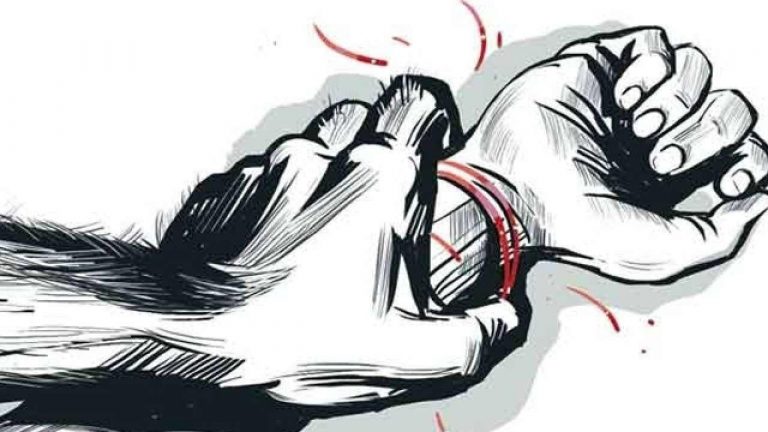
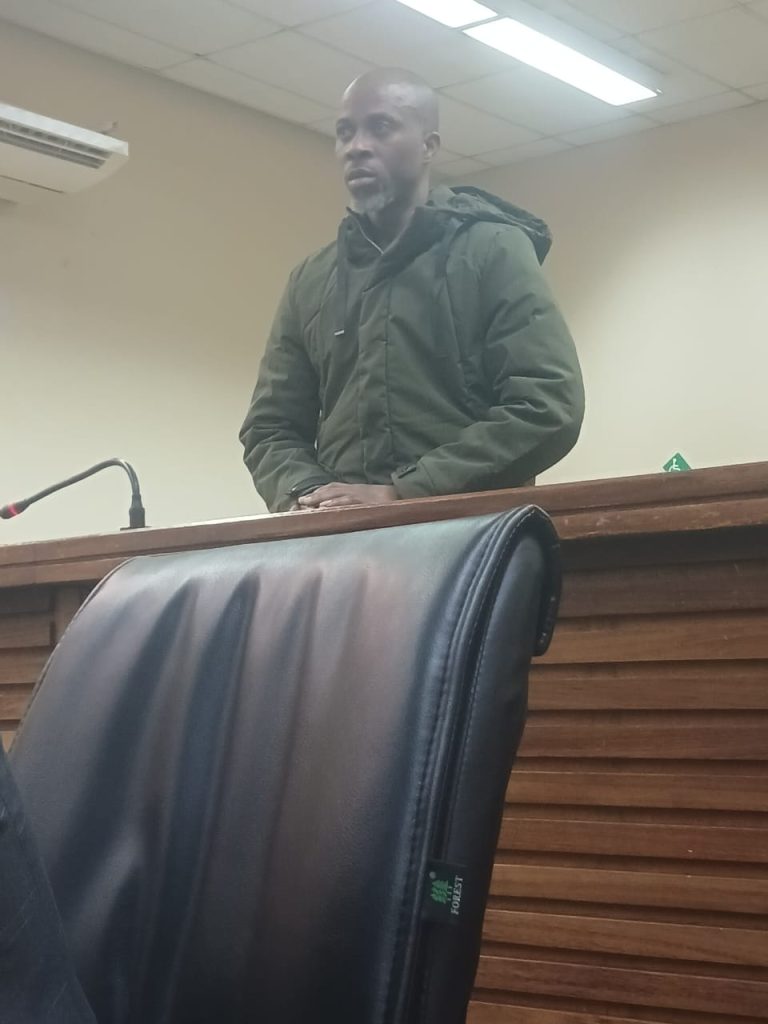
The Acting Provincial Commissioner of the SAPS in the Mpumalanga, Major General (Dr) Zeph Mkhwanazi has welcomed the four life sentences that were handed down to a man (42) after being found guilty for rape of his stepdaughter on multiple counts. The Secunda Regional Court sentenced the accused on 23 June 2025.
Wilson Mahlaba
The court heard that the first incident dates back to somewhere in October 2020, when the victim was 12 years old at the time. The victim narrated that on that fateful day, she was at home with her stepfather when he called her to his bedroom. He then started touching her body whilst complimenting her beauty. The girl is said to have been frightened by his actions. When the accused realised this, he allowed her to go outside the house. She is said to have reported the matter to her mother the next day. Her mother then confronted her husband about this matter and ordered him to stop what he was doing to the child. Regardless of the confrontation, the accused never stopped but continued to abuse the victim on several occasions.
The second incident occurred on 15 October 2020, during the time when her mother was at work, meanwhile the victim was left with the accused at home. Her other siblings were playing outside the house at the time. The young girl was preparing food for her stepfather when he instructed her to bring it to the bedroom. As she was about to leave the room, he grabbed her then raped her. Thereafter, he threatened her not to tell a soul about the ordeal unless he would surely kill her.
The court further heard gruesome and graphic details on how the accused raped the girl also from her back (private part) on both incidences.
As if that was not enough, on 15 February 2021, the girl was raped again by the accused during the time when she was left with him at home. He started by sending her to the shop and when she returned, he threatened her with the knife, took her to the bedroom and raped her. After the incident, just like he did in the previous incidents, he threatened to kill her if she dared utter a word to anyone about the ordeal.
On 03 March 2021, the victim finally broke the silence about the trauma she experienced, and she confided to her teacher, who brought it to the family’s attention. The matter was then reported to the Police, where a case was opened and then assigned to the Family Violence, Child Protection and Sexual Offences (FCS) Unit in Secunda. The accused was then arrested and attended court where he was found guilty on four counts of rape on 26 May 2025.
The sentencing was as follows:
On Count 1- rape, the accused was sentenced to Life imprisonment.
On Count 2 – rape, the accused was sentenced to Life imprisonment.
On Count 3 – rape, the accused was sentenced to Life imprisonment.
Count 4 – rape, the accused was sentenced to Life imprisonment.
The court ordered that all counts will run concurrently. He was also declared unfit to possess a firearm, and his particulars were to be registered in the Sexual Offenders Register. The accused was further declared unfit to work with children as per the Children’s Act.
Major General (Dr) Zeph Mkhwanazi further appreciates the bravery shown by the young lady for reporting the matter, which was then brought to the attention of the Police. “We are delighted that the perpetrators of Gender-Based-Violence are getting punished and that justice is prevailing. We trust that this sentence will bring hope to other victims of this nature, ” said the General.
The Freedom Front Plus (VF Plus) has submitted an urgent letter to the Mpumalanga Provincial Legislature expressing deep concern over the alarming increase in violent attacks and murders of police officers in the province.
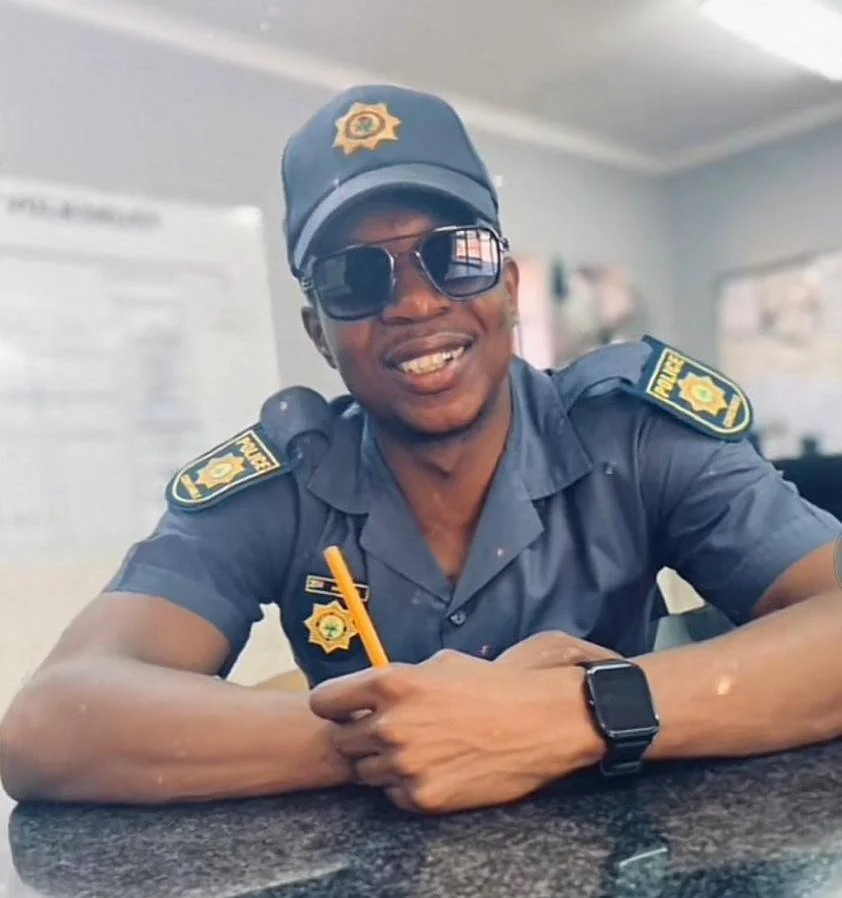
This follows the tragic and senseless killing of Constable Khulani Shabangu (29) on 30 May 2025 in Lillydale, near Calcutta. Constable Shabangu, a member of the Volksrust visible policing unit, was ambushed at a local barbershop, stripped of his uniform, and fatally shot outside the premises. The perpetrators fled the scene in his official service vehicle.
Constable Khulani Shabangu (29) (photo provided)
This appalling incident underscores the escalating threat faced by law enforcement officials — individuals entrusted with maintaining public safety are now becoming targets themselves, ambushed in public spaces and even attacked in their homes.
Such acts of violence are not merely criminal; they constitute a direct assault on the rule of law and public order.
The VF Plus has formally requested that the MEC for the Department of Community Safety, Mr Jackie Macie, urgently consider the implementation of the following measures:
• A comprehensive risk assessment of threats to police officers; • A protective strategy incorporating trauma support, intelligence coordination, and enhanced operational protocols; • Thorough investigations into all attacks on police personnel, with a zero-tolerance approach to lawlessness; and • An internal wellness programme focusing on the mental health and psychological well-being of officers.
The continued erosion of officer safety poses a significant risk to the integrity of policing and public security. The VF Plus urges the ANC-led government to act decisively before further lives are lost.
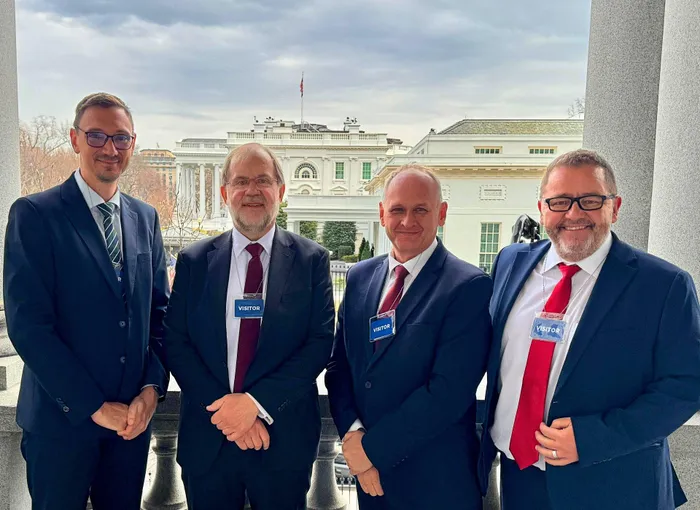
A high-level delegation of Afrikaner leaders recently met with senior United States government officials in Washington, D.C., where the White House outlined specific conditions for normalising relations with South Africa.
During these discussions, US officials raised four major concerns they believe must be addressed to restore trust and cooperation:
Farm Attacks Violent attacks on farmers must be officially recognised as priority crimes. The US urged that these cases be investigated by the Hawks, South Africa’s Directorate for Priority Crime Investigation, in the same manner as rhino poaching and cash-in-transit heists.
“Kill the Boer†Chant The United States called on the African National Congress (ANC) to unambiguously denounce the controversial “Kill the Boer†chant, stating it must be condemned in all contexts, regardless of historical or cultural arguments.
Land Expropriation US officials expressed firm opposition to land expropriation without compensation. They emphasised that any expropriation must involve fair market compensation and be pursued only after all legal remedies have been exhausted
Black Economic Empowerment (BEE) Exemptions The US argued that BEE requirements act as non-tariff trade barriers and requested that American companies operating in South Africa be exempt from such regulations.
These issues, the delegation was told, reflect longstanding concerns the US has conveyed to South African authorities, including ahead of a past meeting between former President Donald Trump and President Cyril Ramaphosa.
Following the talks, the South African delegation reiterated its commitment to transparency and building stronger international ties. They pledged to communicate the US’s position to both the South African government and the broader public.
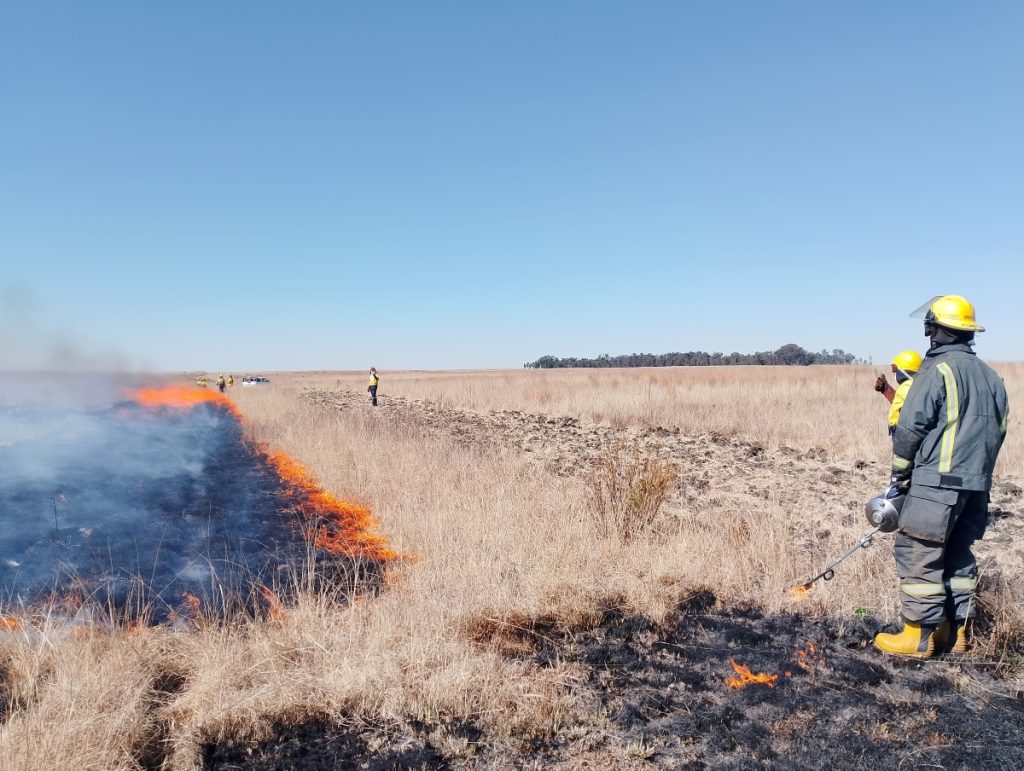
As veld fire season nears, communities must stay alert. South Africa is experiencing increasingly frequent and intense veld fires, often causing severe property damage, injuries, and even fatalities.
Here’s how you can protect yourself, your loved ones, and your property.
If You Encounter a Veld Fire
Report the fire: Dial 112 from your cell and ask to be directed to the local fire department.
Do not drive into fire or smoke.
If already in the area:
Stop in a low vegetation zone.
Turn off your car, switch on hazard lights and headlights.
Stay inside with windows and vents closed; lie low under window level.
After the fire front passes:
If heat or fumes intensify inside, move to the already burnt ground.
Never drive through flames or dense smoke.
If trapped, find a safe, burned area and stay there until it’s safe.
Common Causes of Veld Fires
Natural causes: Lightning.
Human activity: Uncontrolled braais, illegal burning, arson.
Weather risks: Heatwaves and strong winds worsen fires.
Now is the time to act — landowners are urged to implement fire prevention strategies as winter begins.
Firebreaks — Your First Line of Defence
Firebreaks slow or stop fire from spreading and can be made by:
Burning (when authorised),
Ploughing,
Scraping or raking,
Spraying herbicides,
Cutting back trees to reduce fuel loads.
Firebreaks must be practical, documented with neighbours, and comply with local Fire Protection Association (FPA) rules.
What the Law Requires (Veld and Forest Fire Act No. 101 of 1998)
Property owners must:
Join or work with a local Fire Protection Association (FPA).
Coordinate firebreak burns with neighbours.
Have sufficient equipment and trained personnel on site.
Planning & Implementing Firebreaks
Timing: Only burn when permitted by your FPA.
Weather Conditions:
Wind speed: below 15 km/h,
Humidity: above 30%,
Moderate temperatures.
Firebreak Prep:
Demarcate by cutting or ploughing.
Start downwind and allow slow spread.
Use back-burns or natural barriers when possible.
Monitor constantly — extinguish if needed.
After the Burn
Ensure the fire is completely out — no smouldering areas left.
Check for re-ignition from animal dung.
Monitor the site for at least 24 hours.
Firebreaks should be:
Wide and long enough to stop a spreading fire.
Maintained during fire season.
Free from flammable waste (tyres, plastic).
Built to prevent erosion.
How to Respond to a Fire
Move away immediately — never ignore a fire, even if distant.
If trapped:
Head to a safe zone: burnt areas, roads, or non-flammable zones.
Do not try to outrun flames if surrounded.
Get Informed, Stay Safe
Join Your Local Fire Protection Association (FPA):
Mpumalanga Umbrella FPA (MUFPA)
Highveld FPA (HEFPA)
Useful Resources:
Department of Forestry, Fisheries and the Environment: dffe.gov.za
Fire Protection Association of Southern Africa: library@fpasa.co.za | 011 397 1618
AfriForum cracks down on suspected cattle thieves, seizes nearly R1 million worth of stolen cattle in Mpumalanga
Hennie Bekker (English)Hennie Bekker (Afrikaans)
AfriForum’s new training module in combating livestock theft has already borne fruit after members of AfriForum’s Delmas Hawks neighbourhood watch have been cracking down on suspected cattle thieves since Saturday and have seized 64 stolen cattle in two separate operations. The value of the stolen cattle is estimated at R960 000.
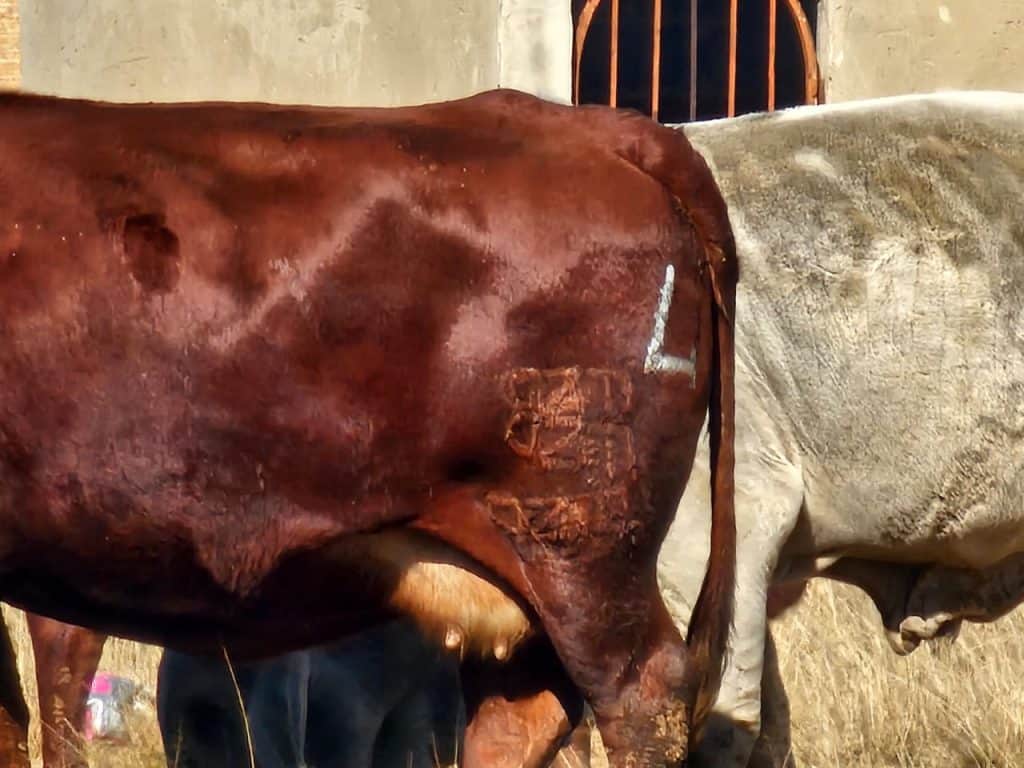
In the latest incident, the Delmas Hawks recovered eleven heifers that were stolen last night from a farm outside Delmas. The operation, which was launched at around 10:00 this morning (25/6/2025) in collaboration with the South African Police Service (SAPS), follows information received about the stolen cattle that were spotted in Botleng, outside Delmas. The police have since seized these cattle, which were found in Botleng with fresh blood on their ears (where the ear tags had been removed) and new brand marks. No one has been arrested in connection with this incident yet.
One of the heifers seized in Botleng this morning. The new brand mark is clearly visible.
In an unrelated incident, the Delmas Hawks conducted inspections in collaboration with the SAPS’ livestock theft unit at two separate cattle auctions in Sundra this past weekend. This was done as part of the practical component of their training. At the end of the weekend-long operation, a total of 53 stolen cattle were seized.
During inspections at the auctions on Saturday, neighbourhood watch members identified nine cows that were suspected to have been stolen and that the suspected cattle thieves planned to sell at the auction. Immediately upon identifying these animals, the authorities issued instructions to refrain from auctioning them.
The SAPS took in one suspect for questioning in relation to the cattle. The SAPS’ livestock theft unit is now on the trail of two more suspects who are suspected of planning to sell stolen cattle at the same auction.
A farmer from Bethal has since reported the theft of 45 cattle to the SAPS’s livestock theft unit, and the nine auction kraal cows were successfully claimed as his property.
The arrested suspect pointed out to AfriForum and the SAPS the loading area of ​​the stolen cattle on a site outside Hendrina. A further 20 cattle with their ears cut off were found at the scene. This mutilation was probably done to remove the cattle’s tattoos which could identify their rightful owner. It is suspected that the cattle came from a farm in the Hendrina district. A severed ear tag from one of the auction kraal cows was also found at the scene.
After a follow-up operation on Sunday, the SAPS, with AfriForum’s assistance, tracked down more cattle stolen by the same livestock theft network. Tracks were followed over a distance of approximately 20 km, but despite the suspected cattle thieves’ ingenious attempts to cover up their own and the cattle’s tracks, the neighbourhood watch, police members and the farmer whose cattle were stolen managed to outwit the thieves with meticulous tracking.
By yesterday afternoon, authorities had already recovered a total of 53 cows, including 33 of the Bethal farmer’s 45 stolen cows.
According to Hennie Bekker, AfriForum’s District Coordinator for the Mpumalanga Highveld, there are still two suspects at large. “However, the weekend’s operation was a huge success, and in addition to the cows that were recovered, valuable information was also collected that points to the work of a possible stock theft syndicate. Forged cattle branding documents that were used to register the cattle at the auction as well as other personal documentation of one of the suspects are important pieces of evidence that will ensure that the net can be tightened around these suspected cattle thieves who are harassing farmers in the region,†explains Bekker.
The police investigation is currently ongoing. AfriForum is assisting the stock theft unit by providing information and drones if they are needed further.
AfriForum sharpens its skills to catch livestock thieves
Last week (18 June), AfriForum presented its first online training session for its brand-new training module on combating livestock theft. This new module aims to tackle livestock theft – a multi-million rand crime problem. Neighbourhood and farm watch members from all over the country tuned in for this session, which provided training on several critical issues in combating and identifying this crime, including livestock transport permits, livestock identification, scene preservation and livestock documentation and auctions.
The extent of stock theft in South Africa
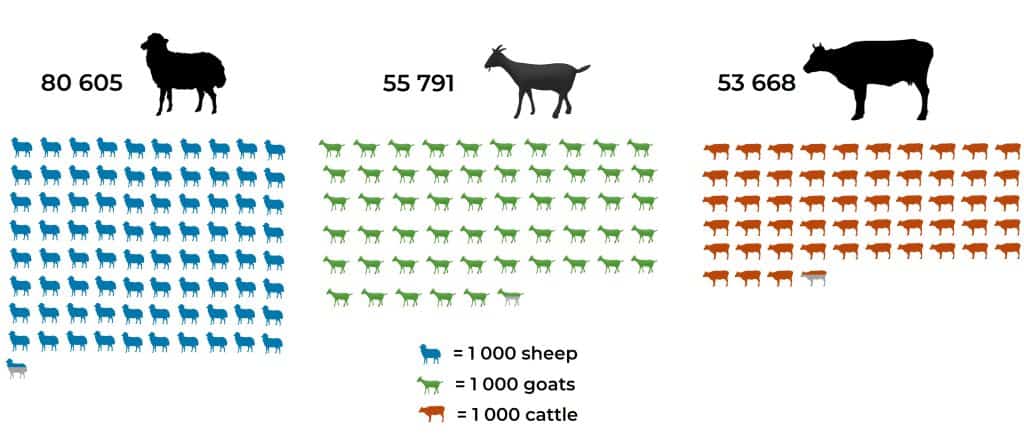
At least 80 600 sheep, 55 700 goats and 53 600 cattle were reported stolen to the SAPS in the past financial year in South Africa. These approximately 190 000 head of livestock, as well as smaller quantities of pigs, chickens, game, donkeys and ostriches that were stolen and for which 25 606 complaints were lodged with the SAPS, form part of a crime industry that is no longer just a small-scale opportunistic crime. Over the years, stock theft has transformed into a sophisticated crime involving syndicates, posing serious risks to the financial survival and progress of farming in the country.
Theft of sheep, goats and cattle as reported to SAPS in 2024/2025
According to recent calculations made by AfriForum, stock theft cost the agricultural industry at least R200 million in direct losses during the fourth quarter of 2024/2025 (January to March 2025). Conservatively estimated, the theft of cattle, sheep and goats alone cost the industry approximately R880 million in direct losses, in the twelve months from April 2024 to March of this year. However, this amount does not include additional losses such as the loss of breeding potential. Experts estimate that only about 30% of stock theft is reported, which means that the actual extent of stock theft and the resulting financial losses are significantly greater than they appear at first glance.