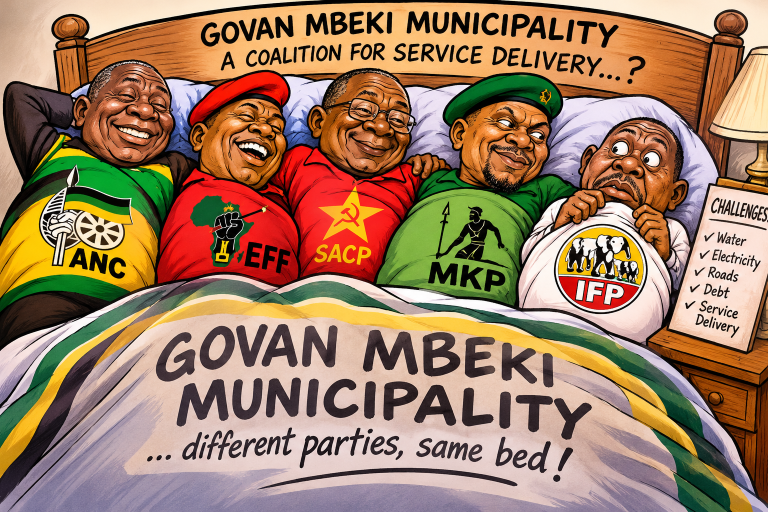
ANC, EFF, SACP and MKP form a 37-seat governing coalition, while questions emerge over coalition negotiations, a proposed Deputy Mayor and the cost of expanding political leadership
SECUNDA – Govan Mbeki Municipality has entered a new political chapter following the formation of a four-party coalition government involving the African National Congress (ANC), Economic Freedom Fighters (EFF), South African Communist Party (SACP) and uMkhonto weSizwe Party (MKP).
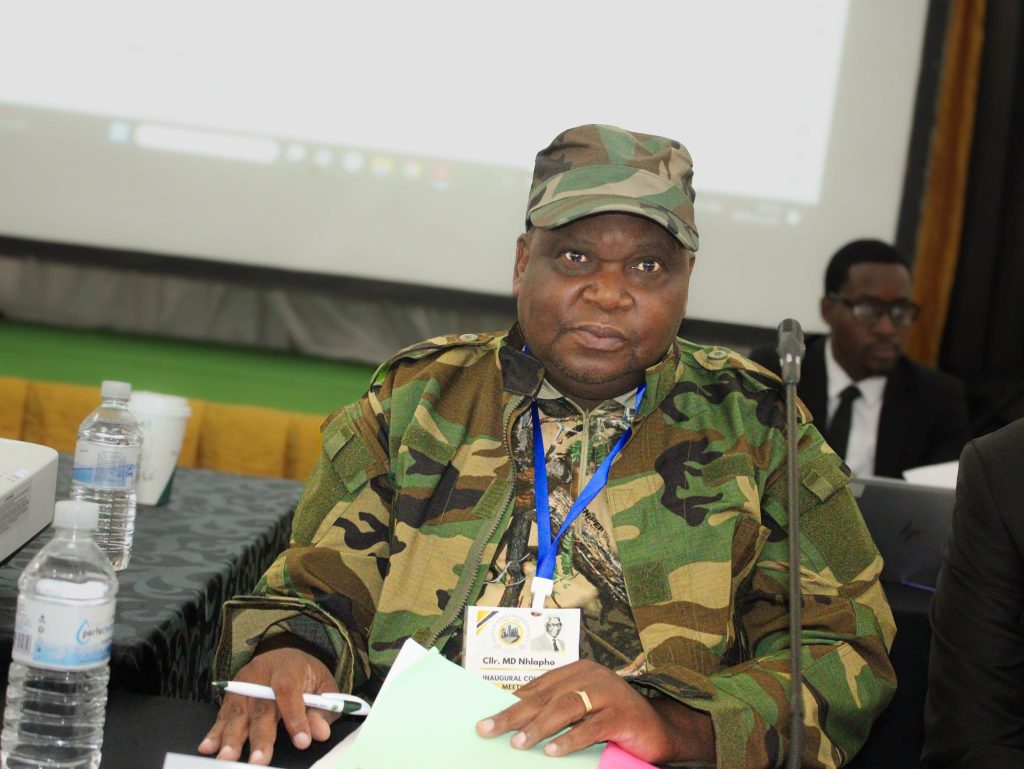
The coalition took shape during the municipality’s inaugural Council meeting at Lillian Ngoyi Hall in Secunda on Thursday, 26 November, where Dan Nhlapho of the MKP was elected Speaker and ANC councillor Saul Vilakazi was elected Executive Mayor.
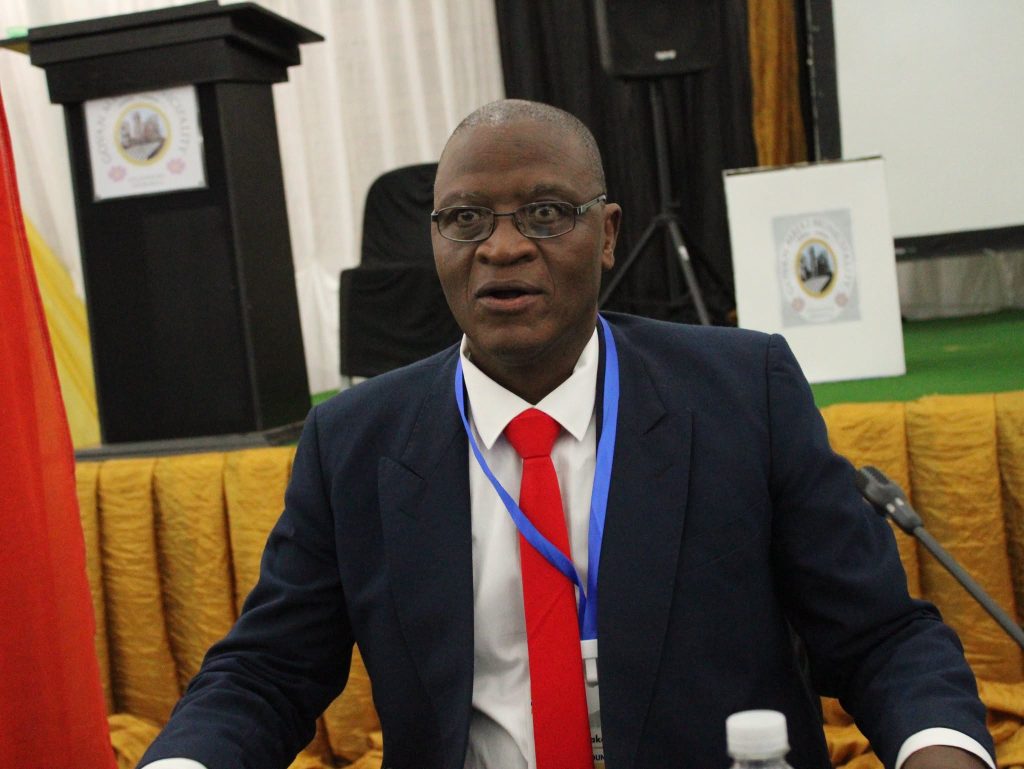
Both were elected unopposed.
The new political arrangement gives the ANC the mayoral position, while the MKP has secured the Speaker’s office and the Finance and Revenue portfolio. The EFF and SACP have also received representation in the Mayoral Committee.
However, beyond the appointments, the new administration raises several important questions about the political negotiations that brought the parties together, the distribution of positions and the financial implications of expanding the municipality’s political leadership.
A new coalition after a shift in political alliances
The 2026 local government elections, held on 4 November, resulted in a hung council, with no political party securing an outright majority.
The ANC emerged as the largest party with 23 seats, followed by the DA with 18. The MKP secured seven seats, the EFF five, the Freedom Front Plus four, the Service Delivery Party three and the SACP two.
The ATM, Inkatha Freedom Party (IFP) and African Independent Congress (AIC) each secured one seat.

A minimum of 33 votes is required to secure a majority in the 65-seat Council.
The new coalition brings together the ANC, EFF, SACP and MKP (and one more), giving the four parties a combined 38 seats.


The arrangement represents a change from the previous governing arrangement, in which the ANC worked with the EFF and ATM to maintain control of the municipality.
ATM is no longer part of the newly announced governing coalition.
The DA, despite having 18 seats and being the second-largest party in Council, is also outside the new governing arrangement.
The political relationships behind the coalition
The four parties now governing together have different political histories and relationships, making their cooperation at the municipal level particularly interesting.
The relationship between the ANC and SACP is longstanding. The two organisations have historically worked together through the broader liberation alliance, alongside the Congress of South African Trade Unions (COSATU).
Although the SACP contested the 2026 local government elections independently, its relationship with the ANC remains rooted in decades of political cooperation. The two organisations have continued to reaffirm their commitment to the Alliance, despite their separate organisational structures and programmes.
The EFF also has historical links to the ANC. The party was established in 2013 by former ANC Youth League president Julius Malema and other former ANC Youth League figures following internal political differences and Malema’s expulsion from the ANC.
Since its formation, the EFF has positioned itself as an independent political organisation, often taking positions that differ sharply from those of the ANC. However, the two parties have also entered into coalition arrangements at local government level.
The relationship between the ANC and MKP is arguably the most politically significant aspect of the new arrangement.
The MKP was established under the leadership of former president Jacob Zuma, who was subsequently expelled from the ANC after supporting the rival party. The MKP’s emergence created a significant political split within the ANC’s traditional support base.
The two organisations are now governing together in Govan Mbeki Municipality.
The coalition therefore brings together the ANC and two organisations with significant historical links to it, alongside the SACP, which remains part of its longstanding political alliance.
While their cooperation at municipal level does not necessarily mean that their national political differences have been resolved, it demonstrates how local government coalition negotiations can bring parties with different political histories together.
What were the coalition negotiations?
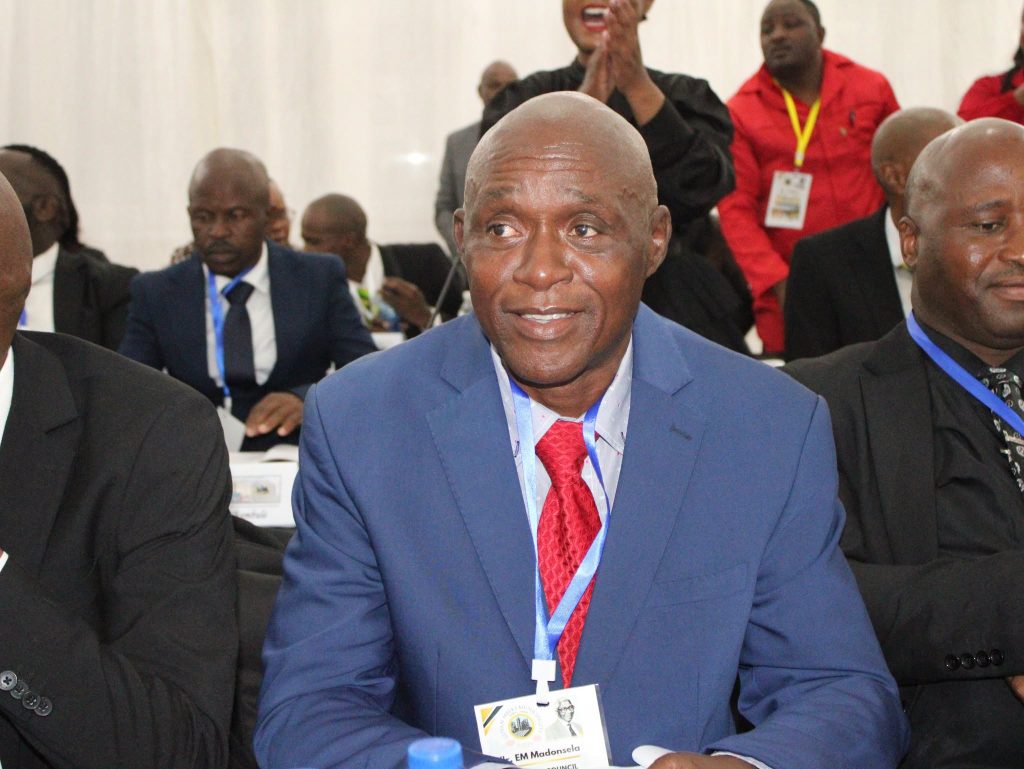
Information available to The Bulletin indicates that the initial understanding with the MKP included an MMC position and the position of Deputy Mayor.
The final appointments, however, saw the MKP receive the Speaker’s position as well as the Finance and Revenue portfolio.
At present, Govan Mbeki Municipality does not have a Deputy Mayor.
The position was not gazetted by the MEC, although a motion to make provision for a Deputy Mayor has subsequently been added to Council.
It remains unclear whether a formal written coalition agreement was concluded between the four parties, what the final terms of the negotiations were and how the distribution of political positions was ultimately decided.
The IFP’s sole councillor also chose to support the MKP, adding another interesting dimension to the political developments in Council. The IFP is not part of the four-party coalition, but the councillor’s decision to support the MKP is relevant when considering the political relationships and voting dynamics in the new Council.
The Bulletin will seek clarity on whether a formal coalition agreement exists and what commitments were made by the respective parties.
The cost of another political position
The proposed Deputy Mayor position also raises questions about the affordability of expanding the municipality’s political leadership.
Govan Mbeki Municipality is already facing considerable financial pressure, with substantial outstanding accounts owed to bulk service providers.
The municipality reportedly owes Eskom several billion rand, while its outstanding debt to Rand Water is close to R1 billion.

These obligations place significant pressure on the municipality’s ability to maintain and improve basic services, settle its accounts and address infrastructure backlogs.
Against this background, the proposed addition of another political office deserves scrutiny.
The municipality has also made provision for additional political positions, and the question is whether it can reasonably afford further appointments while struggling with its existing financial obligations.
The issue is not simply whether Council has the authority to establish such positions, but whether the additional expenditure can be justified in the current financial circumstances.
Residents will reasonably expect the new administration to prioritise financial sustainability, essential services and infrastructure rather than increasing administrative and political costs without demonstrating the necessity and affordability of doing so.
The municipality should clarify the projected cost of the proposed Deputy Mayor position, including remuneration, benefits, office requirements and any associated support staff.
MKP takes the Speaker’s office and Finance portfolio
The election of Dan Nhlapho as Speaker gives the MKP an important position within the new administration.
The Speaker presides over Council meetings and has responsibilities relating to the functioning of Council, the application of its rules and procedures, and public participation.
In his acceptance speech, Nhlapho said public participation would be a key priority.
He highlighted persistent challenges affecting communities, particularly water restrictions, reduced water supply and roads that have become difficult or impossible to use.
He said the MKP intended to work with the Vukanini Taxi Association, Sasol and other business partners to address challenges affecting residents.
He also emphasised the importance of working with traditional leaders, religious organisations, businesses and community structures to ensure that community needs are considered in Council’s decisions.
The MKP has also received the Finance and Revenue portfolio, with Cllr Sylver Mkhaliphi-November appointed as MMC.
This is a particularly important appointment given the municipality’s financial position and its outstanding obligations to Eskom and Rand Water.
The portfolio will be central to the municipality’s efforts to improve revenue collection, manage expenditure and work towards financial sustainability.
Nine MMCs appointed
The new coalition has appointed nine Members of the Mayoral Committee to oversee the municipality’s different portfolios.
The appointments are:
- Civil Engineering: Cllr Marius Masinga (ANC).
- Planning and Economic Development: Cllr Fikile Magagamela (ANC).
- Community Services: Cllr Mavis Nsibande (EFF).
- Corporate Services: Cllr Sihle Mashiloane (ANC).
- Electrical: Cllr Mfanufuthi Maseko (ANC).
- Monitoring and Evaluation: Cllr Tracy Seimela (EFF).
- Public Safety: Cllr Mduduzi Mazibuko (SACP).
- Finance and Revenue: Cllr Sylver Mkhaliphi-November (MKP).
- Special Projects: Cllr Mantoa Motloung (ANC).
The ANC holds five of the nine MMC positions, while the EFF has two. The SACP and MKP each have one.
Executive Mayor Vilakazi indicated that the municipality still needed to conduct strategic planning for the different portfolios, which could result in changes to some of the allocated responsibilities.
Mayor promises first 100 days of action
In his acceptance speech, Vilakazi committed the new administration to establishing a culture of urgency, discipline and accountability.
He identified the first 100 days as a critical period for setting the direction of the administration and laying the foundation for improved governance, financial sustainability and municipal performance.
Within the first 60 days, the administration intends to conduct a comprehensive assessment of the municipality’s institutional, governance, financial and service delivery challenges.
This assessment is expected to inform a costed recovery plan to be presented to the community.
Among the priorities identified by the Mayor are improving water and electricity supply, developing a ward-based service delivery schedule and identifying national and provincial government projects that could benefit the municipality.
The administration also intends to strengthen indigent registration to ensure qualifying households receive access to free basic services.
Other priorities include addressing water leakages, reviewing infrastructure maintenance requirements, reducing service delivery backlogs and improving the municipal Call Centre’s response and complaint escalation mechanisms.
Vilakazi also highlighted the need to engage bulk service providers, including Rand Water and Eskom, regarding outstanding municipal accounts and sustainable payment arrangements.
A Community Safety Forum is planned to coordinate interventions aimed at addressing crime and identifying crime hotspots.
The Mayor further emphasised the importance of working with businesses and development stakeholders to attract investment, stimulate local economic development and create employment opportunities.
The opposition and the new Council
Although the ANC-led coalition has secured 37 seats, the DA remains a significant force in Council with 18 councillors.
The new Council also includes representatives from the Freedom Front Plus, SDP, ATM, IFP and AIC.
The DA’s mayoral candidate was not sworn in during Thursday’s inaugural meeting because he is a Member of the Provincial Legislature (MPL). This meant that 64 councillors took the oath of office, although the full Council complement remains 65.
The election of IFP councillor Freddy Nkambule as Chairperson of the Municipal Public Accounts Committee (MPAC) is another important development.

MPAC plays a role in scrutinising municipal financial reports and expenditure and holding the municipality accountable for its financial and administrative performance.
Nine councillors were also elected to represent Govan Mbeki Municipality at the Gert Sibande District Municipality Council. The delegation consists of five ANC representatives, two DA representatives, one SDP representative and one Freedom Front Plus representative.
The real test begins now
The new coalition has secured the numbers required to govern Govan Mbeki Municipality. However, its ability to translate political agreements into practical improvements will ultimately determine how residents experience the new administration.
The municipality faces considerable challenges, particularly regarding its finances, water and electricity supply, infrastructure maintenance and public confidence in service delivery.
The coming weeks will provide an indication of how the four coalition partners intend to work together, whether their political agreement will be made public and how the new administration plans to address the municipality’s financial and operational difficulties.
With billions of rand reportedly owed to bulk service providers, the proposed expansion of political leadership will also require careful consideration.
For residents, the priorities remain clear: reliable basic services, responsible financial management, functioning infrastructure and visible improvements in their communities.
The new coalition has taken office. The responsibility now rests with its members to demonstrate that their cooperation can deliver tangible results for the people of Govan Mbeki.