What Is a Municipal Budget? The municipal budget is the annual financial plan adopted by the elected council. It outlines how funds will be collected and spent to deliver services, maintain infrastructure, and promote development. The budget is the key mechanism through which municipal priorities—set out in the IDP—are realised.
Integrated Development Plan (IDP) and budget consultations are annual, mandatory public participation processes in South Africa that allow residents to influence municipal service-delivery priorities and spending before the new financial year begins. These consultations typically run between August and May, and final municipal budgets must be approved before the start of the municipal financial year on July 1.
About the IDP and Budget Process
- The IDP is the municipality’s five-year strategic plan setting development priorities and objectives. The annual budget allocates funding to deliver those priorities (for example, water, roads, housing, sanitation and other municipal services).
- Municipalities invite community stakeholders to review and comment on draft IDP and budget documents through ward meetings, written submissions, and public notices. Inputs are considered before the council finalises the budget and adoption occurs ahead of the new financial year.
- IDPs are reviewed annually (even though they cover five years) to accommodate changing needs and to align the budget with current priorities.
Read the IDP here: Draft fourth annual review of idp.pdf
Read the Draft Budget here: DRAFT MEDIUM TERM REVENUE EXPENDITURE FRAMEWORK FOR THE 2026 2027 FINANCIAL.pdf
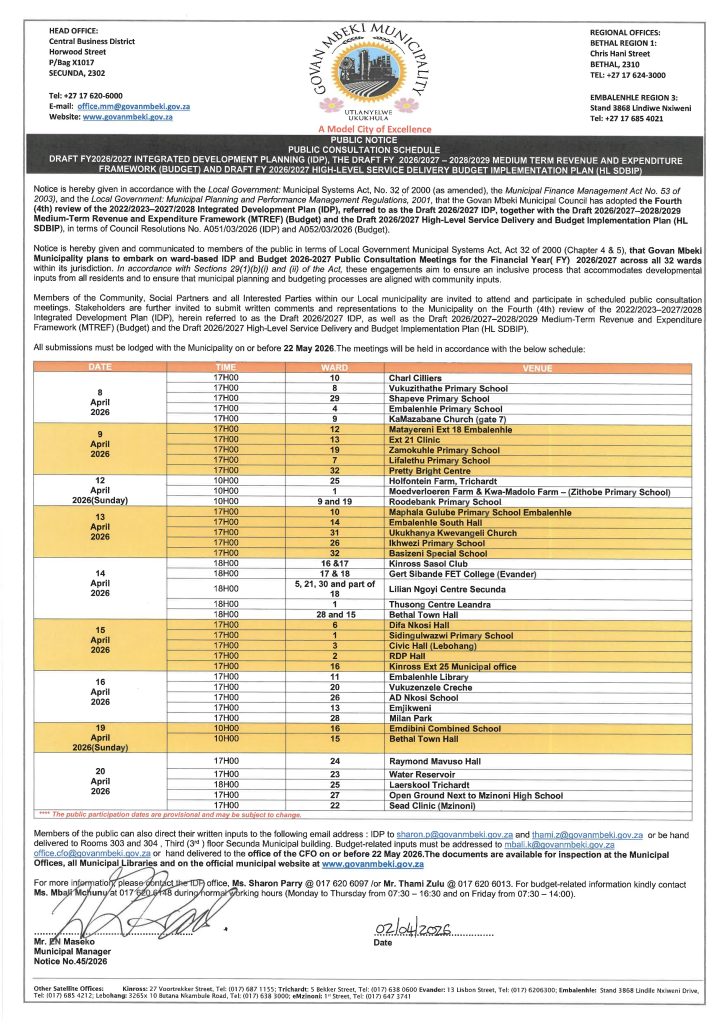
Current Consultations (2026/27): Govan Mbeki Municipality (GMM) GMM has scheduled public consultation meetings from 8 April to 20 April 2026. Residents may provide written inputs:
- General IDP inputs: sharon.p@govanmbeki.gov.za
- Budget inputs: office.cfo@govanmbeki.gov.za
How to Participate
- Take part in local meetings during the consultation period to raise priorities directly with councillors and municipal officials.
- Access draft IDP and budget documents—usually available on municipal websites, at municipal offices, or public libraries—and review proposed projects and allocations.
- If you cannot attend meetings, submit written inputs by email to the addresses above or use designated drop-off points where available.
Why Participation Matters
- Public participation is a statutory right under the Municipal Systems Act. Engaging ensures your ward’s needs are considered in planning and spending decisions.
- Resident input can shape which projects are prioritised and funded—such as repairs to infrastructure, improvements in water or sanitation, local safety measures, or community facilities.
How Municipal Budgets Work
- When does the municipal financial year start?
- The municipal financial year runs annually and must begin with an approved budget on July 1.
Funding sources:
- Property rates: Levies on property owners based on assessed values.
- Service charges: Fees for water, electricity, sanitation, and waste removal.
- National and provincial transfers: Grants like the Equitable Share to support basic services for indigent households.
- Fines, licenses, investments: Revenue from fines, business licenses, and municipal investments.
- Borrowing: Loans for major infrastructure projects.
- The municipal budget funds essential public services and infrastructure—basic services (water, electricity, sanitation, roads), community development (libraries, parks), public safety (fire, disaster management), and local economic growth initiatives.
Who Benefits? Municipal budgets serve all residents and businesses. They are especially crucial for indigent households relying on free or subsidised services and for ensuring a functional environment that supports local economic activity.
The Connection Between the IDP and the Budget The IDP sets the municipality’s strategic goals for economic and social development over five years and is managed by mayors, executive committees, and municipal managers. The annual budget is the implementation tool that allocates financial resources to projects and programs that deliver the IDP’s objectives. Annual IDP reviews—conducted during the budget process—allow municipalities to adjust plans to reflect changing priorities and inputs from the community.
Public Role After Budget Adoption Municipalities must create systems that maximise public participation. With rising tariffs and constrained resources, citizen involvement in budget processes is essential to ensure funds are directed appropriately toward operating and capital costs. After budgets are finalised, residents can monitor municipal spending by:
- Reviewing Auditor-General annual reports to assess compliance and value for money.
- Using audit findings to advocate for budget changes and improved service delivery in subsequent budget cycles. Active civic monitoring helps improve local facilities and outcomes for communities.
How to get involved now
- Note the GMM consultation period (8–20 April 2026).
- Attend your ward meeting or review the draft IDP and budget online or at municipal offices/libraries.
- Send written submissions to sharon.p@govanmbeki.gov.za (IDP) or office.cfo@govanmbeki.gov.za (budget).
Participation ensures municipal plans and spending reflect community priorities and improves accountability in how public funds are used.