Sasol operates an 865km Cross-Border underground pipeline network from Mozambique to South Africa transporting natural gas.
ADVERTORIAL
Sasol maintains this network and therefore ensures the safety of people’s lives, communities and the environment.
To ensure that members of the public identify this underground pipeline network, visible surface route markers are erected aboveground along the network.
“One of our Sasol values: Be Safe, is at the core of our operations and day-to-day business. To drive our Zero Harm Ambitions, we take a proactive approach around safety. We do this by conducting daily route inspections, control room monitoring of the pipeline network, and emergency drills, among other measures,” says Sipho Maseko, Vice President: Pipeline and KZN Wax Operations.
In the past year, Sasol has identified increased residential, commercial, and industrial developments, unauthorised construction, and the development of informal settlements near the pipeline installations. Some of these activities pose a safety threat.
“Sasol is committed to conducting regular public safety campaigns and cautioning community members. Managing these risks requires collaborative industry-wide interventions,” says Maseko.
Sasol Maintains and operates the following Sasol Energy-owned gas transmission pipelines:
Besides infrastructure, Sasol operates another 560km “Lilly” Transnet-owned pipeline transporting methane-rich gas from Secunda to Kwazulu-Natal. “We also maintain and operate the ArcelorMittal-owned pipeline network transporting natural gas from Sasolburg to Vereeniging, and the multi-product petroleum pipeline integrating Secunda and Natref in Sasolburg,” concludes Maseko.
Sasol remains committed to the safety and health of its employees, community, and the environment.
REGULAR HEALTH CHECKS ON OUR PETS BETWEEN VET VISITS IS A PROACTIVE TOOL FOR THEIR WELL-BEING.
Our pets might get sick or injured and need veterinary care, but we can also add many tools to our toolbox, like health checks at home, to help prevent conditions from occurring in the first place or manage them better to allow our pets to live long and happy lives. Being informed and understanding what illnesses and conditions our pets might face is key to longevity. It is important to do regular health checks on your pets by inspecting their body from head to toe every week and making notes.
I fully support annual or even bi-annual health checks at your vet, including blood work. Our pets age faster than we do, so their bodies are rapidly changing. When they reach their senior years, a health check is recommended every six months instead of annually to ensure the detection of illnesses and make them easier to treat. Between visits, you can keep a close eye on your pet’s health by conducting an at-home physical exam (demo video). Physical “inspection” touch regularly with some positive re-enforcement can also help make that vet visits more comfortable.
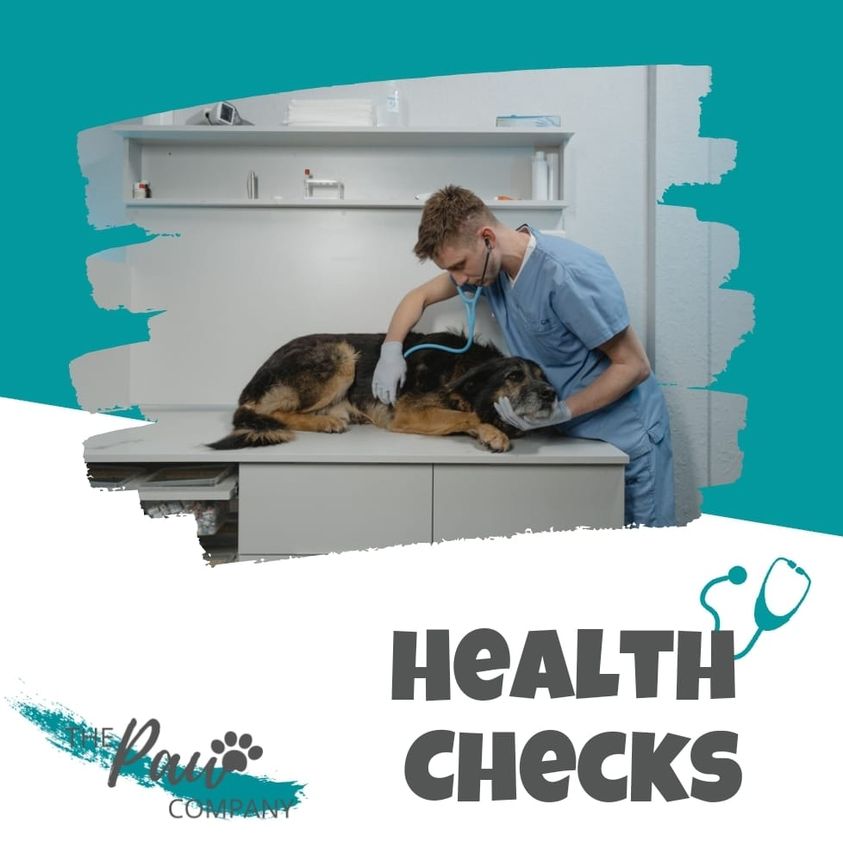
Health checks – Image by The Paw Company
HEALTH CHECK-LIST
Behaviour
Body condition
Skin & coat
Eyes & ears
Nails & paws
Nose & mouth
Stool check
Vitals (heart rate, breathing, body temperature etc.)
Weigh your pet and review their diet
BODY
This is an overall examination of your pet by feeling around the body, limbs and tail for any potential problems. When you feel over your pet’s body, you should be able to feel their ribs, but it should not be sticking out or under a large layer of fat. Feel for lumps, bumps or injuries. You can also observe their body language and whether they appear lethargic, depressed or in pain. Body language can tell you a great deal about how they are feeling.
TEETH
You can lift their lips and have a good look at their teeth and gums. Check for:
Broken or missing teeth
Sores or mouth and tongue injuries
Red and swollen gums
Stinky breath
Bloody gums
Tartar or plaque build-up
COAT & SKIN
Feel over your pet’s fur and skin and look at its appearance. Check for:
Tick or fleas
Dull and hard or thinning coat
Skin lesions, sores, red patches, itchiness, bald patches or scabs
EARS
Their ears should be clean with no foul smells coming from the ear. Check for:
Shaking head or holding the head tilted to one side
Rubbing ears against objects like furniture
Abnormal earwax other than yellow/brownish
Swelling
Redness
Ear mites
NOSE
A wet nose is normal, but a dry nose might not be totally abnormal. Check for:
Crusting
Discharge
Wheezing sounds
Cracking of the skin
EYES
Eyes should be bright and clear. Check for:
Redness
Swelling
Abnormal blinking
Inflamed or swollen eyelids
White spots in the eyes
Any debris or objects
Puss or discharge
BATHROOM HABITS
Although what your pet eats and drinks can influence the appearance of the faeces, their stool can give an indication of their general health. I do almost daily poop-patrol so I can pick up if something is wrong. It should be looked at within context and not as a diagnostic tool on its own. Check for:
Diarrhoea
Blood or mucus
Signs of worms
The urine should be clear, yellow with no blood
Watch this video for more on what their poop might mean.
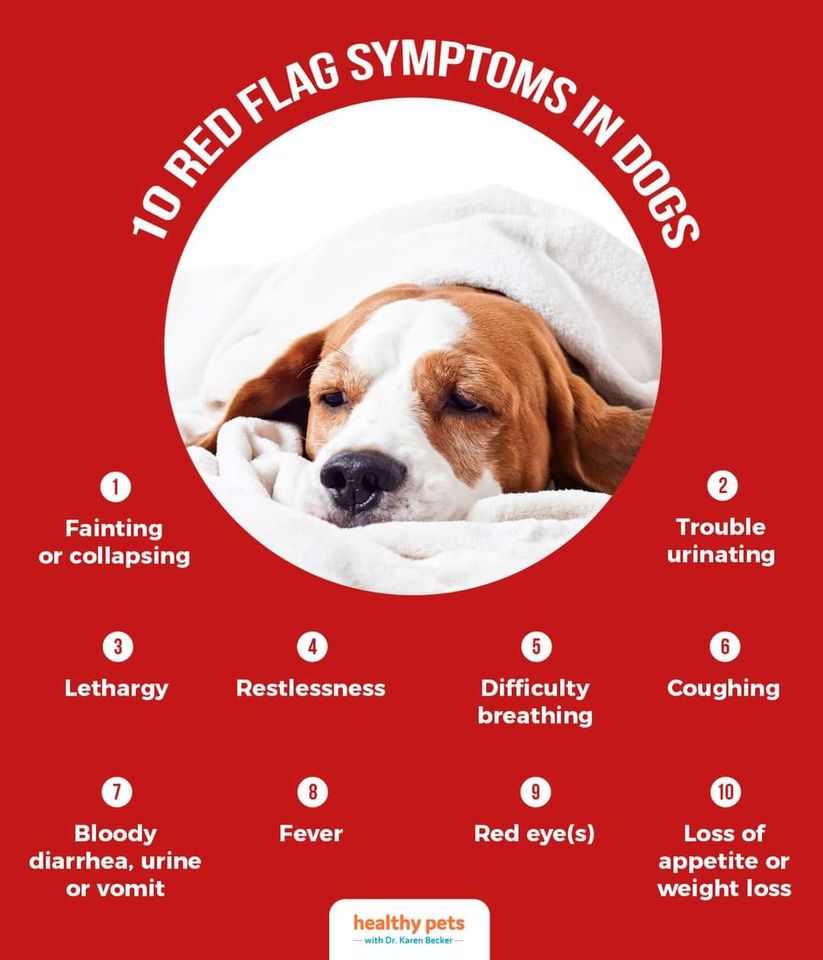
RED FLAG SYMPTOMS
The following are red flag symptoms that should never be ignored. Consult with your veterinarian as soon as possible.
Fainting, collapsing
Difficulty breathing
Trouble urinating
Pacing, restlessness, unproductive retching
Lethargy, extreme fatigue
Bloody diarrhoea, urine, vomit
Loss of appetite, weight loss
Coughing
Fever
Red eye(s)
Read the full article on these symptoms .
Health checks red flag symptoms – Image by Dr. Karen Becker
HOW CAN YOU IMPROVE YOUR PETS HEALTH?
Three pillars that form the foundation for your pet’s health, quality of life and longevity include:
Important note: Please make sure that your vet and their staff are actually qualified. Just because they wear scrubs does not make them qualified! Do your homework well. Asking animal welfare organizations which vets they trust is a good start! If you are aware of any staff performing veterinary work without being registered at the SA Veterinary Council, please report this to The Paw Company or the SAVC.
Also read how to help your noise-phobic pet during stormy weather.
Your pets are your responsibility and withholding necessary medical care, is considered neglect and a case of animal cruelty can be opened against you. Please report any neglect or suspected cruelty to your nearest SPCA or the NSPCA. Don’t ask advice from unqualified people on the internet or Dr. Google. We have seen some terrible advice being dished out which could endanger your pet.
Do regular health checks on your pet and when in doubt, always go to your trusted vet! By helping your pet lead a healthy lifestyle and seeking proactive preventive veterinary care, you can minimize healthcare costs while maximizing longevity.
Next week we will look at aggressive behaviour with pets.
WHEN YOU KNOW BETTER, DO BETTER!
Disclaimer:I am not a veterinarian. Although I do a lot of research and write on these topics, the advice always comes from qualified individuals. You must consult with qualified individuals about your pet’s health.
Misty Waters 2023 and perhaps the biggest one, yet!
It comes with great joy to start talking and writing about Misty Waters Music Festival again. It feels like many moons ago we were sharing tales about this phenomenal festival, yet it’s less than a year ago that we celebrated some of South Africa’s greatest musical talents on our stage. If your mind is a little foggy, please read the recap blog here and refresh your memory.
As most of our festival attendees know the line-up has been released and boy oh boy is it a goodie! Hold on to your socks, because they are about to get rocked right off by rock and roll legends like Fokofpolisiekar, The Narrow, Bittereinder, Springbok Nude Girls, Karen Zoid, and many, many more! Such a high-end line-up requires accommodation to match, and that’s what this blog is mostly about – our luxury accommodation that are within walking distance from not only Misty Waters Music Festival, but the first-ever Misty Waters Fringe Festival!
Misty Waters starts on Friday, April 28th and ends with a bang on Sunday, April 30th. The Fringe Festival will kick off the five days of music on Wednesday, April 26th two nights before Misty Waters commences. The Fringe Festival is also taking place at Lake Umuzi Waterfront and will showcase several alternative artists and bands at three of the restaurants and bars located at the waterfront. We want everyone coming from near and far to be able to enjoy South African music and that’s why The Fringe Festival has no entry fee. We are gifting you with two days of free shows and hoping it will get you into the groove of Misty Waters. But enough about the five days of mind-blowing music coming your way, let’s dive into your festival accommodation options.
We want to know where else in South Africa can you attend a music festival and choose between accommodation all the way from roughing-it-up-camping (which is on lush green grass, so roughing is a strong word) to sleeping in a deluxe hotel room with a bath and shower? At Lake Umuzi we offer various accommodation options varying in price to accommodate everyone attending Misty Waters and The Fringe Festival.
Your first accommodation option is general camping which is included in your Misty Waters ticket. General camping allows you to set up camp with tents a mere few feet from the stage itself. General camping is situated on lush grass and works on a first come first serve basis. Next, we have Kamp Oase camping for those festies who love to camp and still engage in the action but enjoy extra amenities such as electricity -and water points. Kamp Oase has dedicated stands that can be booked from R1200 for five nights. With the Fringe Festival starting on the Wednesday night before Misty Waters we thought we’d give our campers (general camping and Kamp Oase campers) an additional two nights of stay at no extra charge! That’s right, you can camp for five nights and only pay for three!
For those who completely skipped over the preceding paragraph because camping is just not your vibe, we’ve now arrived at the crème de la crème of accommodation – our luxury options. Unfortunately, all the chalets in Umuzi Lodge have been booked, but that’s no reason for concern as InnGreen Eco Hoteland Merchant Business Class Hotelstill have rooms available.
InnGreen Eco Hotel is within walking distance from where Misty Waters takes place, is centered between two of the Fringe Festival venues; Eish Restaurant and Zebra’s and has its own entrance to the other Fringe Festival venue, Upstairs Sky bar. At only R30 per person per night more than Umuzi Lodge, InnGreen is the ideal option for the couple who prefers some privacy or for those wanting to fest in style, but on a budget. Lastly, also within walking distance from where Misty Waters and The Fringe Festival occur is The Merchant Hotel which offers spacious double en-suite rooms, with breakfast included in your booking.
Don’t hesitate, book your accommodation today and join in on one of the greatest extra-long, long weekends in South Africa! There’s no need to purchase a Misty Waters ticket separately when booking with us because your Misty Waters ticket is included in your accommodation booking.
In conclusion, your socks will be rocked off, you will be able to walk to the festival grounds from your accommodation without socks with no hassle, and we are giving you two EXTRA days of music at no extra charge so you can go buy yourself some new socks after the monumental five days of music that starts April 26th and rocks on until April 30th, 2023!
To purchase Misty Waters tickets and/or book accommodation click on the link below. It is important to note that the tickets are still available at only R590 until the end of March after which ticket prices will increase with R100. Your Misty Waters ticket includes general camping and access to all of the shows.
Dates, prices, and location: The Misty Waters Fringe Festival: 26 April – 28 April 2023 Free entry to the venues where the shows are taking place. Venues include: Eish restaurant, Upstairs Sky Bar and Zebra’s. 1 Kiewiet Street, Lake Umuzi
Misty Waters Music Festival: 28 April – 20 April 2023 R590 per ticket, which includes general camping (price increase from 1 April 2023). 1 Kingfisher Street, Lake Umuzi South Bank.
Important Information:
General campers and Kamp Oase campers can start setting up camp from Wednesday, April 26th and stay until Monday, May 1st at no additional charge for the two extra nights.
On-premises accommodation is currently blocked out on Booking.com. and will therefore indicate that it is all sold out. It is not all sold out, yet. Accommodation for Misty Waters at Lake Umuzi can only be booked through the link above.
ACTING PROVINCIAL COMMISSIONER WELCOMES THE SENTENCING OF TWO ON CHARGES RELATED TO POACHING
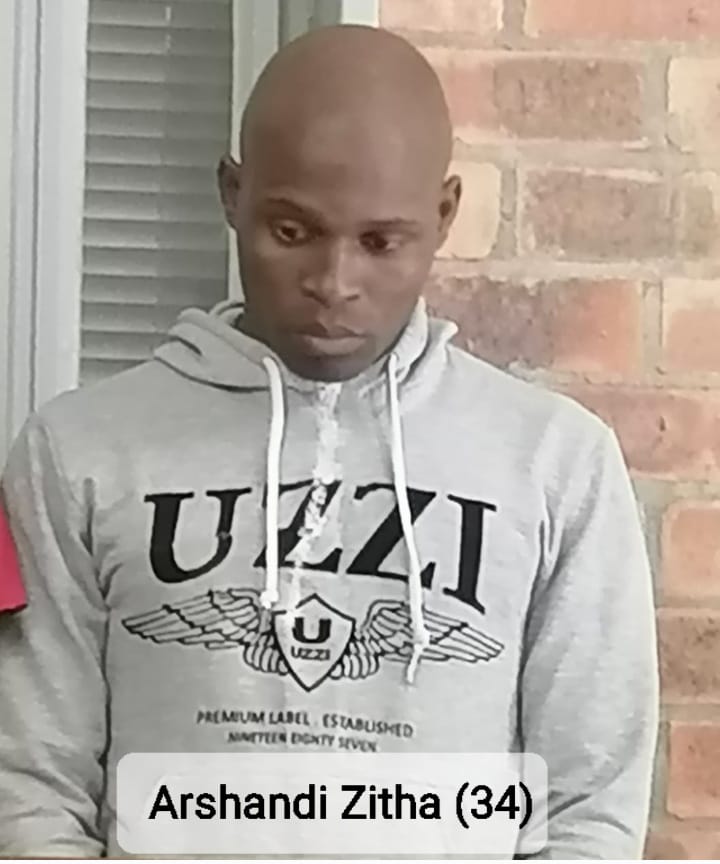
Nelspruit: 03 March 2023 – The Acting Provincial Commissioner of the SAPS in Mpumalanga, Major General Zeph Mkhwanazi has gladly welcomed the sentences handed down to two brothers, Arshandi Zitha (34) and Peter Zitha (30) on charges related to poaching at the Kruger National Park. The two men were sentenced by the Skukuza Regional Court yesterday, Thursday 02 March 2023.
The court heard how on 18 July 2022 three individuals entered Kingfisher Section in the Kruger National Park. It is said that their mission was disturbed when field rangers that were on duty patrolling at the park on that day suspected that there could be intruders inside the park. The field rangers began their search for these individuals. A helicopter was also summoned to assist in tracing. Two out of the three were cornered meanwhile the third man vanished into thin air. During their capture, the two brothers were found with a hunting rifle without a licence, three live ammunition, three bags, a knife and an axe in their possession.
The Police at Skukuza were also informed about the incident and upon arrival, they arrested as well as charged the two accused persons accordingly for poaching and other charges. It was also discovered that the two brothers were from Mozambique but without valid documentation to be in South Africa. Further than that, the two entered the park without permits. After their arrest, the two were taken to court and they both pleaded guilty hence their sentencing as follows:
On count 1 (Trespassing in a National Park), the two accused persons were sentenced to 2 years imprisonment.
On count 2 (contravention of the Immigration Act), the two accused persons were sentenced to 1 year imprisonment.
On count 3 (Possession of a prohibited firearm with no serial numbers), the two accused persons were sentenced to 6 years imprisonment. Meanwhile,
on count 4 (Possession of unlicenced ammunition), the two accused persons were sentenced to 2 years imprisonment.
On count 5 (Conspiracy to commit a crime), the two accused persons were sentenced to 4 years imprisonment.
On count 6 (Possession of a dangerous weapon), the two accused persons were sentenced to 1 year imprisonment.
The court ordered that counts 1 and 2 run concurrently with count 5 (which will be 4 years) whilst count 4 will run concurrently with count 3 (which is 6 years imprisonment). Count 6 will run on its own (which is 1 year imprisonment). The two accused persons will effectively be behind bars for a total of 12 years.
Both accused were further declared unfit to possess a firearm in terms of Section 103 of the Firearm Control Act.
The Acting Provincial Commissioner of the SAPS in Mpumalanga, Major General Zeph Mkhwanazi emphasised that the sentence should serve as a deterrence to others who might consider perpetrating a crime, that crime does not pay.
Police urge anyone with any information on Crime to call the Crime Stop number at 08600 10111. Alternatively, members of the public can send information via MYSAPSAPP. All received information will be treated as confidential and callers may opt to remain anonymous.
MPUMALANGA – Bongani Sibuyi (31) was found guilty and sentenced by the Bushbuckridge Magistrate Court for fraud and money laundering on Friday, 3 March 2023. The sentence was preceded by a lengthy and scrupulous exploration which was effected by the Serious Corruption Investigation team of the Hawks in Nelspruit.
Bongani Sibuyi (31)
The probe revealed that over the period between 2017 and 2018, Bongani Sibuyi recruited unemployed youth from poor rural areas of Bushbuckridge to be part of a skills development learnership programme. More than 300 youth registered for the project and they were informed to pay an administration fee of R250 each into a company account.
Learners were promised to receive a stipend of R3500 per month. A few months after the commencement of the project, learners embarked on a strike due to non-payment of the stipend as promised and as such the programme could not proceed.
It was found that the company was not registered with the Companies and Intellectual Property Commission (CIPC). Moreover, it was also not accredited by Sector Education and Training Authority (SETA).
The money deposited was not used for the purpose it was intended for, subsequently, Sibuyi was arrested with his partner. Swindler Sibuyi was found guilty of fraud and sentenced to thirty-six (36) months imprisonment or R60000,00 half of which is suspended whilst his partner was cleared on all charges.
Police urge anyone with any information on Crime to call the Crime Stop number at 08600 10111. Alternatively, members of the public can send information via MYSAPSAPP. All received information will be treated as confidential and callers may opt to remain anonymous.
CARBON CAPTURE UTILISATION AND STORAGE (CCUS) PROJECT: 3D SEISMIC SURVEY AND DRILLING ENVIRONMENTAL AND SOCIAL IMPACT ASSESSMENT
Project Background
Carbon Capture Utilisation and Storage (CCUS) has been acknowledged by South Africa (SA) as one of the technologies to mitigate the emission of CO2 into the atmosphere and forms one of the Nationally Appropriate Mitigation Actions (NAMA) against climate change. It is also one of the national flagship projects. CCUS forms part of a just transition to a future low-carbon energy economy.
The Council for Geoscience (CGS) is undertaking a geoscientific research project for the piloting of CCUS in Leandra in Mpumalanga, where it is proposed to inject CO2 into deep suitable geological formations, approximately 1km below the surface. The Government of SA has received funding from the World Bank’s International Bank for Reconstruction and Development to finance the CCUS project and intends to apply part of the proceeds for conducting Geological Characterisation comprising, amongst others, of drilling exploration boreholes and undertaking high-resolution 3D seismic survey at the proposed site. This notice only focuses on the Geological Characterisation component of the overall CCUS.
3D Seismic Survey and Drilling
The proposed drilling site is located along the R29 from Leandra to Kinross and is bounded to the south by a railway line from Secunda to Springs. The area earmarked for the 3D seismic survey encompasses most of the town of Leandra, as well as rural areas to the east and north-east.
The boreholes will be cored from the top of the bedrock to total depth with a minimum hole diameter of c. 95 mm. At various intervals during the drilling, suites of geophysical instruments will be installed in the borehole to obtain geophysical information. In addition, tests to determine the presence and quantity of gasses, e.g., hydrocarbons/light gasses, and tests to determine hydrological information will be conducted at systematic horizons, e.g., where water strikes are intersected, in the borehole.
The purpose of the high-resolution 3D survey for the CCUS Project is to map the structures, reservoir and seal rocks in detail over the identified potential injection site. The 3D survey will also establish the baseline for future time-lapse CO2 monitoring activities. The seismic waves will be induced by vibrating truck-mounted heavy plates on the ground. These specialised trucks are known as “Vibroseis”. By analysing the time it takes for the seismic waves to reflect off subsurface formations and return to the surface, formations can be mapped. 3D surveys are acquired by laying out energy source points (vibroseis) and receiver points (geophones) in a grid over the area to be surveyed.
Environmental and Social Impact Assessment
Nemai Consulting was appointed by the CGS to undertake the Environmental and Social Impact Assessment (ESIA) for the 3D seismic survey and drilling required as part of the CCUS Project.
The ESIA must satisfy the following: • The World Bank Environmental and Social Framework, the General Environmental, Health and Safety (EHS) Guidelines, Industry specific EHS Guidelines and Good International Industry Practice (GIIP); and • SA’s environmental legal requirements.
Note that a separate consultant is undertaking the ESIA for the injection phase of the CCUS Project.
Stakeholder Engagement
Stakeholder engagement will be undertaken as part of the ESIA. The following public meeting will be held to provide a platform for project-related discussions and to obtain input from stakeholders:
Date: 15 March 2023 Time: 10:00 AM – 12:30 PM Venue: Difa Nkosi Hall, Leandra (coordinates: 26°22’35.08″S, 28°55’19.72″E)
Please submit your contact information and any comments that you may have regarding the proposed CCUS: 3D seismic survey and drilling to the contact person below by 28 March 2023.
Contact Details of Environmental Assessment Practitioner:
Well-known Thomas Mandla Sibia was remanded in custody today on charges of rape
Well-known Thomas Mandla Sibia, was remanded in custody yesterday, 1 March 2023, on charges of rape. He is known for his work at the Siyanqoba Art Centre in eMbalenhle.
Thomas Mandla Sibia (Photo: Facebook)
Sibia had been arrested on two previous occasions and was granted bail on both charges. This time Magistrate Roos decided to remand him in custody.
In his bail application, Sibia made mention of his involvement in the community as well as in art. His centre, Siyanqoba, aims to help homeless children and some that are involved in drugs.
Well-known Thomas Mandla Sibia leading the Siyanqoba dancers (Photo: Facebook)
Sibia was represented by Adv Moloti. Adv Moloti read his statement into evidence as well as that of a member of a ward committee that supported the application for bail.
During the reading of the statement, Moloti stated (Sibia stated in his statement) that the charges against him were violating his rights. During cross-examination, the state prosecutor wanted to know what rights were violated but Magistrate Roos said that the line of questioning is irrelevant.
The state argued that the charges in the other bail applications that date back to 2018 involved minors. This case is already in the regional court. The state then asked about the merits of the previous cases and Roos questioned the line of examination. The state withdrew those questions.
The rape that Sibia was charged with in the newest case was one that dated back to 2013. Moloti argued that it would appear that Sibia is released only to face an arrest again. All the cases should be joined into one. So far 6 charges were made against Sibia.
Sibia leading his troop of dancers at a Sasol Function
Sergeant Nicole Nkosi is the investigating officer and she said that they are opposed to bail. She said that the community’s women and children cannot be safe as all the victims are minors. She said that the accused, Sibia, had a tendency to rape minors.
Nkosi then testified that DNA results have now been received which links Sibia to the 2013 case.
Roos then questioned that if the state was not satisfied with the previous bail and that by the second granting of bail, it was established that he was a serial rapist, why did they not appeal the bail. He asked what has changed.
Magistrate Roos said that he understands Sibia’s circumstances with his children and all the problems that they have. He then stated that the safety of the young girls and women of the community weighs heavier and that they should be protected.
The case was postponed until April 6 and Sibia was remanded in custody
Police urge anyone with any information on Crime to call the Crime Stop number at 08600 10111. Alternatively, members of the public can send information via MYSAPSAPP. All received information will be treated as confidential and callers may opt to remain anonymous.
WOMEN IN MINING BENEFICIARY WANT TO TACKLE ENVIRONMENTAL CHALLENGES THROUGH ARTIFICIAL INTELLIGENCE
Bridget Seroka, a Middelburg-based businesswoman in the field of environmental consulting, is one of Seriti’s group of beneficiaries of the Women in Mining programme, launched in May 2022. This programme was designed and managed by Collective Value Creation (CVC) and runs until the end of 2023.
Bridget Seroka
Ecological Fields Environmental Consultancy (Pty) Ltd was launched in April 2016 by Bridget and currently employs five people who provide technical environmental-related consulting services to the mining and public sector alike. These consulting services include aspects around Environmental Impact Assessments, Mining and Prospecting Right Applications, Environmental Compliance Monitoring and Auditing, Water, Soil and Air quality management and monitoring, Integrated Water Use Licenses (IWULA), Waste Management License and Application (NEMWA), and other environmental legislative requirements.
Having worked in both the mining and consulting spheres, Bridget realised that there was a niche that occurred between business entities, environmental compliance, social responsibility and the overall umbrella which is environmental legislation. She says she “aims to bridge the gap that exists between business corporations and environmental law.” Her challenges were, and to some extent still are, to gain access to the market, compete with established environmental companies, building and grow into an internationally recognised brand.
Her love for the environment started when she was one of five learners chosen to represent her high school in Environmental Projects and Presentations. This enabled her to meet and be mentored by officials from the Department of Forestry, Fisheries and the Environment (DFFE). After school, she studied Environmental Science and Geology and then worked as an Environmental Assessment Practitioner, before she moved to Anglo-American as an Environmental Officer.
With the Women in Mining programme, Bridget hopes to learn more about developing her business, thereby growing it through applying sound strategies. So far, she has benefitted much by learning about the different components needed to grow her business. Each business owner on the programme has access to specialists acting as mentors in various areas such as sales, marketing, finance and personal development to improve their business activities. Ninety per cent of these mentors and business specialists on the programme are also female.
Bridget’s big dream is to take her business to an international level and master the necessary skills needed, such as information technology, especially programming and artificial intelligence, which she believes can be used to provide solutions to environmental challenges, thereby contributing positively to humankind and the biosphere. Coupled with this dream, she emphasises the need for environmental education for the youth. It is her vision to educate and train the younger generation about their impact on the environment as they can still be influenced and make some positive difference.
Asked what advice she would give women who want to go into a similar business, she had the following to say: “A successful business starts with a healthy mind. Nurture your mind by reading, exercising positive thinking, obtaining mentors and building valuable business associations, networks, and relationships.”
In her free time, Bridget enjoys game nights with her family, reading, and travelling. She believes being exposed to new places creates the opportunity to get new business ideas. She also meditates and reads poetry to quiet her mind, an activity used to enhance and cultivate one’s inner creativity.
If she could go back to her eighteen-year-old self, she would tell her to “Continuously develop and invest in oneself and acquire skills that will solve international problems from an early age. Spirituality, health and a sound mindset are essential building blocks.”
STORMY WEATHER AFFECTS MANY PETS AND THERE IS NO EXCUSE FOR NOT HELPING THEM COPE, OR FOR GETTING OUT OF YOUR YARD.
Why don’t people attend to the needs of their pets during stormy weather as they would tend to their child’s special needs? My heart breaks for those animals who are failed by their owners. There is always an increase in lost and injured pets after stormy weather or fireworks. In many cases, it is the same animals that are out in the streets and it is PREVENTABLE!
If your dog is afraid of stormy weather or other loud outside noises, leaving them outdoors while they are anxious or panicked is the worst thing you can do. Dogs regularly run away or seriously injure themselves attempting to escape outdoor enclosures or runs during stormy weather and other noisy events.
So many excuses are given by the owners including that they have tried “everything”, which I don’t believe. There will be very few exceptions where nothing worked. When we suggest options, they say money is the issue, however they can eat out, do their hair and nails, go on vacations, but they can’t take proper care of the animal they chose to have.
One of the five freedom of animal welfare includes the freedom from fear and distress and for me, this refers to love and understanding for the animals in your care and their needs. Creating an environment that is free from fear and distress is essential for their well-being. Not only is it important to provide them with the necessary physical comforts and to ensure that their mental health is taken into consideration, it is your moral duty.
Noise phobia is a reality and many cats, dogs and other animals can suffer from it. The good news is that you can do something about it if you care enough for those animals. I understand that we can’t control the weather, but you can do a lot to help them cope better with weather or other noise phobias.
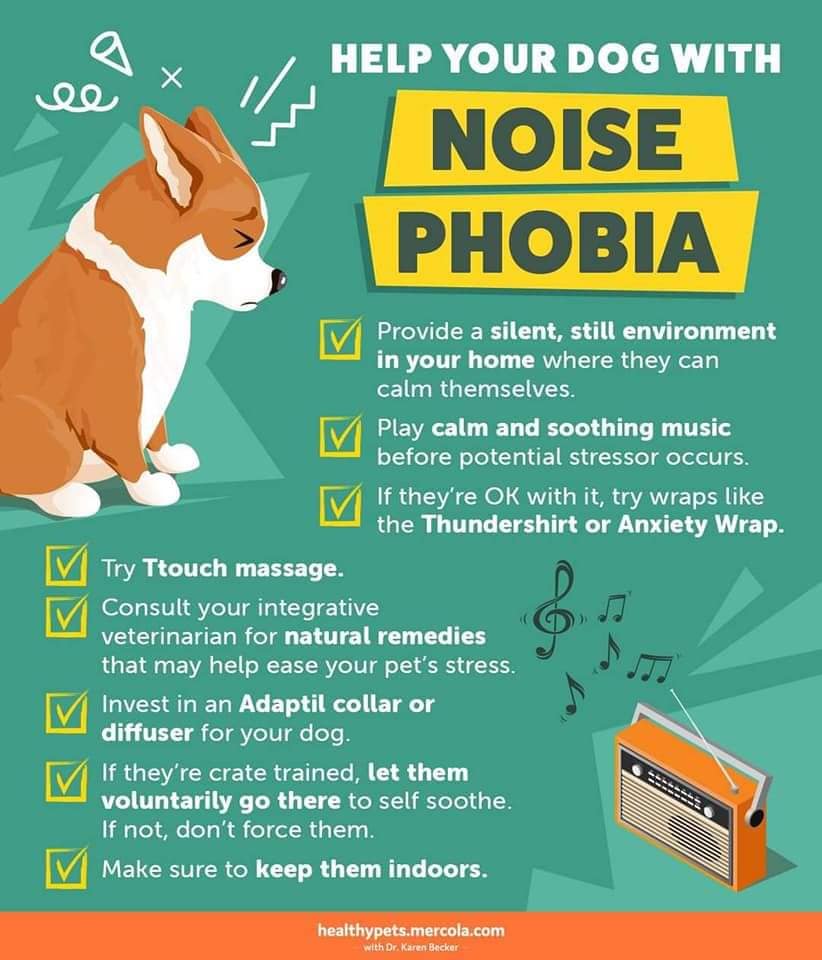
Weather noise phobia – Image by The Paw Company
Also read about the natural and odd behaviours of pets.
WHAT IS NOISE PHOBIA?
Noise phobia describes a fearful reaction to certain sounds in the environment. It’s important to understand the difference between fear, anxiety, and phobia in your dog.
It is important to recognize that animals, both domesticated and wild, are naturally programmed to be scared of loud noises. This is an instinctive and evolutionary reaction to an unknown danger, which can cause the animal to flee before the brain has had time to process the sound. This can lead to harm. Generally, animals are more sensitive to their surroundings than humans. While both cats and dogs can suffer from noise phobias, it is more common in dogs.
Animals that depend on their hearing for survival are especially susceptible to the issues that come with noise pollution including prolonged exposure. If your pup is suffering from noise phobia, it is essential to address the issue quickly. Dogs that become sensitive to one sound are likely to become reactive to other noises too.
Common pet noise phobias include thunderstorms, fireworks and gunshots, but common household noises such as a vacuum cleaner, alarm and more can also be triggers and few pet parents take note of it. According to research, these loud or high-pitched noises increase cortisol in your dog’s body and could negatively impact their behaviour, health, and possibly lifespan.
CAUSES OF NOISE AVERSION
There are several causes of noise aversion and certain breeds are predisposed. According to a 2008 study shared by Dr. Karen Becker, dogs tend to develop noise aversion in one of four ways:
Lack of habituation — The dog encounters a novel, startling sound and fails to learn that it has no consequence or meaning, continuing to show fear instead.
Stress-induced dishabituation — The dog experiences a stressful event and is therefore at a higher level of stress at the same moment of the environmental sound and is unable to cope with the noise as he previously had, resulting in a fear response.
Sensitization — A noise bothers a dog more and more over time, causing them to be more sensitive to it rather than learning to ignore it.
Social transmission — The dog learns to fear a noise from another dog in the household.
I also think that taking puppies/kittens away from their moms before 12 weeks can have an impact as they learn valuable behaviour from their moms.
A full-blown storm phobia may be the result of a combination of barometric pressure changes, static electricity, wind, odours, thunder, lightning, and low-frequency rumbles that precede a storm. However, if your dog does not display any other signs of canine noise aversion or separation anxiety, the static electricity is likely causing them to be anxious.
Storms can also physically hurt dogs because the sound frequencies produced during storms can be painful to your dogs’ ears and the static electricity that accumulates in their fur due to changes in pressure can be unpleasant. So, when dogs are freaking out during stormy weather, they’re not just unsure of what’s happening, but they may be experiencing a painful physical reaction.
Thunderstorms literally charge the air with electricity, making it easier for the static build-up to occur in the coat of your pet. It’s even easier for static to build up in larger dogs and those with double or long coats. If your dog has a static build-up in its coat, he or she might get a mildly uncomfortable shock to their sensitive nose if they touch it against metal and this could lead to a full-on phobia.
Those nasty little shocks might explain why your dog takes off for the corner of the bathroom or another enclosed space in your home when stormy weather is imminent, as these places are grounded and there is less of a threat of static electricity zapping your poor dog.
WAYS TO HELP YOUR PET
Storm phobias tend to get worse over time instead of better and this is why, the earlier you start to address it, the better. There are many things you can do to help your noise-phobic dog. Rather than saying or doing something that might reinforce anxious behaviour, try simply observing your pet during a fearful episode and see what you can do to help calm them.
Creating a safe space for them to retreat to, is one of the first things to do!
Make sure your yard is secure and safe as many pets who try to escape get stuck on palisades or hurt on another fencing. You can contact Pet Safety Solutions for this.
Make sure they are microchipped AND that you registered the microchip on more than one database. Make sure your microchip information is up-to-date as well as your pets having an up-to-date tag on their collar. This is a big challenge when we find pets with out-of-date details.
Consult with a fear-free behaviourist (there is a difference between a trainer and a behaviourist) to help desensitize your pet.
Teach your pet to use a Kong or chew toy so that they can engage in this calming activity during the next thunderstorm occasion.
If you know your pet is prone to extreme stress during this time, then see your veterinarian before the time for some medication. Consult your integrative veterinarian about herbal, homoeopathic, TCM (Traditional Chinese Medicine) and flower remedies that could help alleviate your dog’s stress. Don’t use human medication! Please note that these remedies/medication has to be used with behavioural therapy!
WHAT TO DO DURING THUNDERSTORMS IF YOU ARE AT HOME
On the day of the expected thunderstorms, look for your animals, especially cats before it starts.
Close doors, windows and curtains so your pet is not startled by sudden flashes or tries to escape when spooked.
If your cat is not used to being indoors, provide extra litterboxes inside.
Create a safe spot for your pet to retreat to when they’re feeling anxious about an approaching storm. It should be indoors, in an interior room of your home, one with no windows, if possible. Place a crate in the space along with bedding, water, treats and a toy. Anything that can help mask the sounds too. Cats also feel secure in and love boxes.
Put on the TV or soft calming music, to mute the thunderstorm bangs.
Distract your pet with treats or play time during the storm. Give them something to chew. Creating an association between play and the cracks of lightning will aid in generalizing a positive emotional state during thunderstorms or fireworks.
Stay home with your pets in these frightening times as you would with frightened children and stay calm as they can feel your anxiety. If your pet is hiding, don’t try to lure them out. This can make them more anxious & stressed.
Try putting gentle, continuous pressure on your pet to calm them. If they’ll allow it, try leaning gently on or against them without petting or stroking. If this is helping, you’ll feel your pet’s muscles begin to relax. If instead, they seems to grow more anxious, this isn’t a technique that will be beneficial for tehm. If your dog seems to respond well to pressure applied to their body, there are wraps available like the Thunder-shirt that many pet owners and veterinarians find extremely helpful. T-touch is a specific massage technique that may also help anxious pets. For some, a weighted blanket or wrapping helps too.
Ear protection for dogs is available, if they are comfortable with it, which can decrease the intensity of the sounds at least.
If your dog is crate trained, they may go there voluntarily to self-soothe, or you can lead the way. A blanket draped over the crate may help them relax. However, if your dog doesn’t normally use a crate, or worse, has a fear of crates due to a past bad experience, this isn’t the time to use one and it should never be forced.
WHEN YOU ARE NOT HOME
There are those days that you might be at work when a thunderstorm starts. There is still no excuse for not providing for your pet in these times. When we make plans, we check the weather in advance and make arrangements accordingly. I will easily cancel plans because I care that much for my fur-family members.
You will need to work with a fear-free behaviourist to address this fearful and anxious behaviour by employing behaviour modification techniques designed to alleviate noise aversion. Find behaviourists here. Use a teaspoon to knock on various surfaces around the house and follow up with a treat. This teaches your dog that startling sounds predict yummy food. Watch this video by best behaviour for more details.
Provide a safe and secure place to rest (quiet room or crate). Leave windows and curtains closed in that room to muffle the sounds. I would rather leave such a dog in the house. You can clean up poop and pee later as their safety should take priority. If you can’t keep them in the house, then use an outside building or build a kennel your pet feels secure in and which is soundproofed as much as possible.
Some recent studies interestingly show a positive effect of daily probiotics on anxiety. Specifically, the bacteria Bifidobacterium longum showed a reduction in overall anxiety and stress in dogs.
Check in on them during your lunchtime. You can even discuss this with your boss.
Provide your pet with food before the thunderstorm as it can help calm them or they might be too stressed to eat later.
Providing comforting items such as a blanket or toy can help to ease their anxiety. If you are not a source of their anxiety, you can leave a shirt or item with your smell on with them.
Place a few drops of the essential oil of lavender on your dog’s collar or bedding before a stressor occurs. Even better, learn more about zoopharmacognosy, which allows your pet to self-select remedies that best soothe her during periods of anxiety. Invest in an Adaptil collar for your dog, which is a pheromone designed to have a calming effect on dogs.
You can set up calming music to put on when you are not there. Nowadays you can access it remotely.
Invest in cameras to check in on them. With some, you can even talk to them and offer treats.
Have a pet sitter, friend or family member check in on those days or consider a daycare option when stormy weather is expected.
Get some enrichment toys and get rid of pent-up energy before you go to work. Yes, you will need to get up earlier, but that is what you do when you truly care.
If your pet is at risk of escaping and for some reason outsmarting you by getting out, consider getting a GPS microchip so if your dog gets out you can track them.
If you find a lost dog, please take them to the SPCA or local shelter. If you can no longer take care of your animals and meet their needs, then surrender them to reputable local shelters including your nearest SPCA and don’t get animals again.
Your pets didn’t get to choose where they live, you took that choice into your hands, so now do what is right for them. Having a pet is a huge responsibility, so to ensure the happiness and well-being of our beloved companion animals, we must always meet all the needs of our pets.
Next week we will look at some health checks you can do at home.