Home Blog Page 56

ANIMALS 101 – WHY DO RESPONSIBLE PET OWNERS SPAY AND NEUTER THEIR PETS?

0

SPAYING AND NEUTERING HAS MANY BENEFITS, INCLUDING HEALTH, BEHAVIOUR & COMMUNITY BENEFITS.

When it comes to the animals we choose to share our lives with, it is our responsibility to keep them safe, and healthy and to meet all their needs.  We also need to make sure that they do not become a nuisance in our communities. There are two major reasons why we promote spay & neuter:

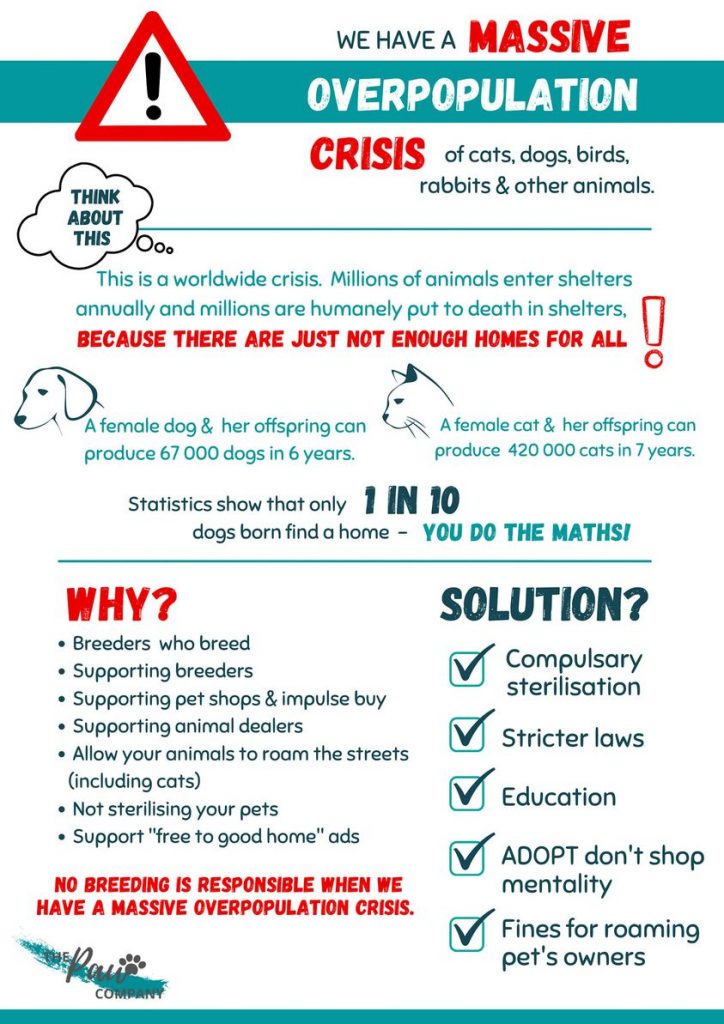
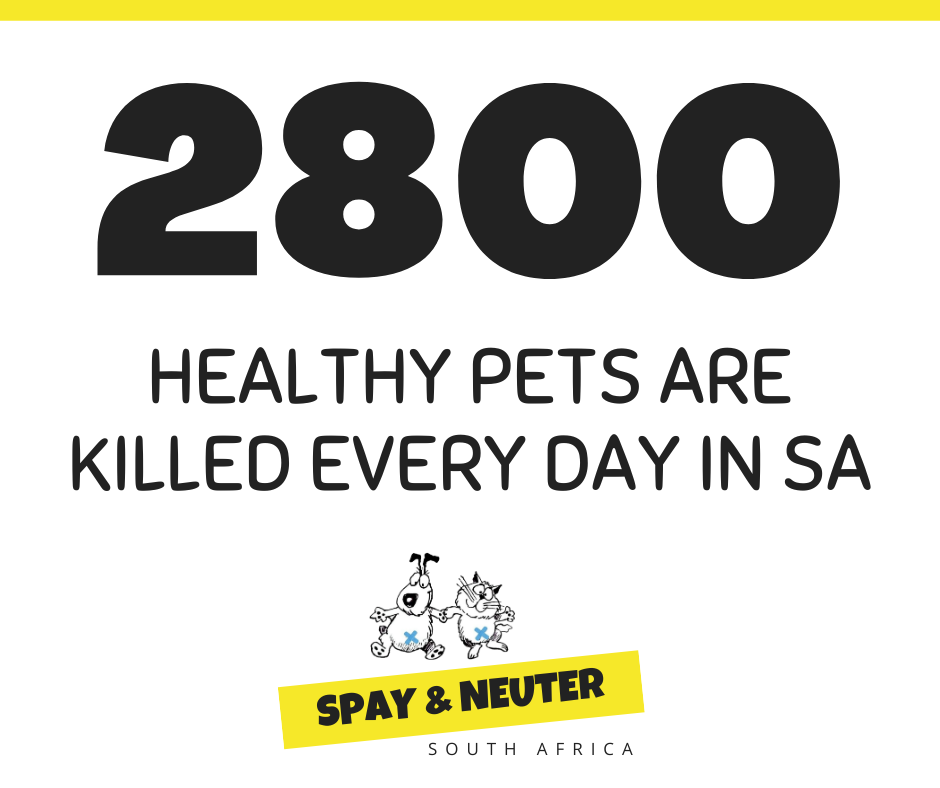
1. We have a massive overpopulation crisis in SA and worldwide. It is so bad that around 2800 healthy animals are HUMANELY KILLED (Euthanized) DAILY IN SA!

2. It can be beneficial for their health & behaviour!

We will get back to those in a moment, but first, let’s look at the definitions and methods used for spaying and neutering.

At maturity (6-9 months of age) male dogs and cats are capable of breeding. Female dogs experience a “heat” cycle approximately every six months, depending upon the breed. A female dog’s heat cycle can last as long as 21 days during which your dog will leave bloodstains in the house and may become anxious, short-tempered and actively seek a mate. Female cats can come into heat every 2 weeks during breeding season until they become pregnant and they can fall pregnant as young as 4 months of age.

WHAT DOES SPAY & NEUTER MEAN?

Recognizing the difference between sterilization and desexing (traditional spay and neuter) is important. Whereas the former procedure eliminates a dog’s ability to procreate, desexing sterilizes but also eliminates the dog’s ability to produce sex hormones for the remainder of their life.

Vetcare.com defines it as follows: The word “spay” refers to the sterilization of female pets. During the ovariohysterectomy, or the typical “spay”, the ovaries, fallopian tubes and uterus are removed from a female dog or cat. The term “neuter” refers to the castration of male pets.  During orchiectomy or the typical “neuter”, the testes are removed from a male dog or cat.

Both the spay and neuter procedures make them unable to reproduce and reduce or eliminate breeding-related behaviours. In females, it eliminates her heat cycle.

METHODS USED

According to Dr. Karen Becker, traditional spaying and neutering are basically the only techniques vets are currently taught and we need to change that. Each of the following comes with its own risk-benefit analysis and might not mean zero risk of pregnancy. Keeping the testes or uterus increases those risks for infections and cancers for example.

MALES

  • Neuter where testes are removed.
  • Vasectomy where testes are kept intact.

FEMALES

  • Tubal ligation – similar to “tube tie”
  • Ovary sparing spay – removal of uterus and cervix only.
  • Overiectomy – referred to as laparoscopic spay. Removal of ovaries, but not the uterus.
  • Ovariohysterectomy – removal of ovaries and uterus. (Traditional full spay)

Choosing to keep an animal intact (medical reason or not) requires a highly……I mean highly responsible pet guardian (owner). Keep in mind a guy called Murphy and the massive overpopulation crisis! Let’s get back to the reasons to spay and neuter.

  1. THE PET OVERPOPULATION CRISIS.

Our biggest struggle in animal welfare is the MASSIVE OVERPOPULATION CRISIS, especially cats and dogs, but also parrots, rabbits and other animals. There are just not enough homes for us to adopt our way out of this mess. Breeders breed them faster than we can save them.  If there are fewer animals then fewer of them can fall into the wrong hands and be neglected or abused. 

You need to understand the magnitude of this overpopulation crisis and then, hopefully, you will understand why many of us advocate so hard for it.

  • According to Rescue Rehab SA, approximately 1 million dogs and cats are euthanized in South Africa every year, that is 2740 a day and likely an underestimation!
  • One female cat and her offspring can exponentially produce 370 000 cats in just seven years and one female dog and her offspring can exponentially produce 67 000 dogs in six years. We are not even talking about the males who can impregnate multiple females in the same time.
  • Another estimation is that only about 1 out of every 10 dogs born find a home.
  • According to the Humane Society of the USA, a cat or dog is euthanized at shelters every 10s.
  • A report by Mars Petcare showed 224 million animals are homeless in the USA, UK, SA, Mexico, Greece, Russia, China, India & Germany and about 30% of animals in SA are homeless.
  • At least one in four pets brought to shelters are purebred and this number is climbing.

WHY DO WE HAVE THIS MASSIVE OVERPOPULATION CRISIS?

We are in this mess because people do not sterilize their pets, they support breeders and pet shops or give or sell these sentient beings to anyone. Breeders selfishly exploit animals for financial gain and fuel the massive overpopulation crisis. Many people do not keep their animals, including cats, safe in their yards so they roam the streets where they can get lost and end up in shelters or will likely fall pregnant or get another pregnant.
spay and neuter
animals

2. IT IS GOOD FOR THEIR HEALTH & BEHAVIOUR

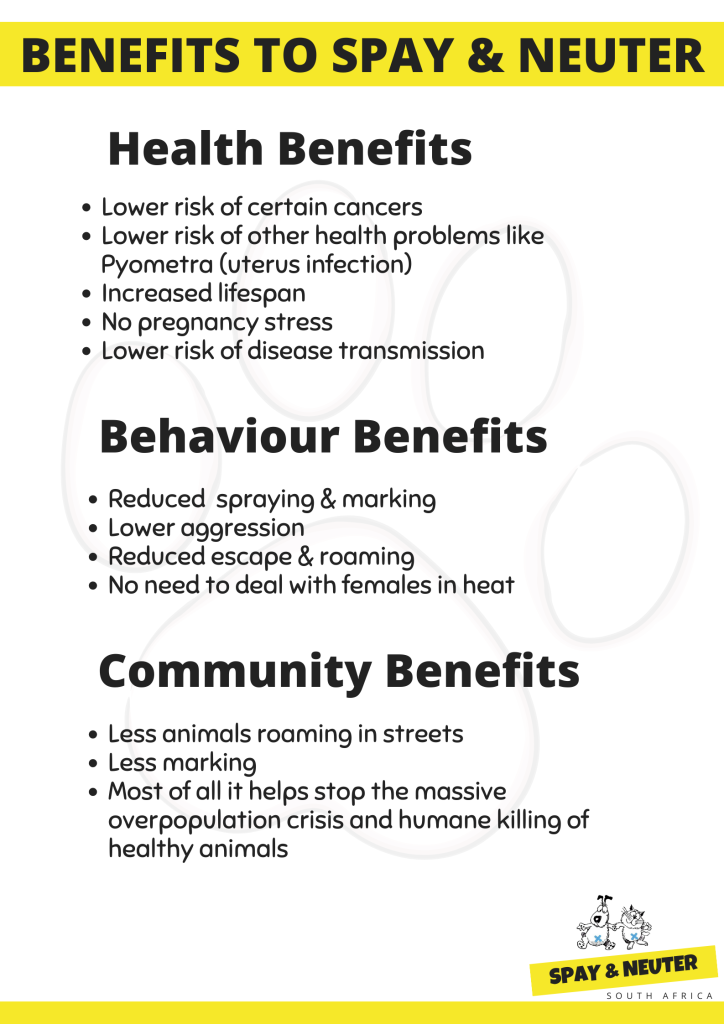
When you spay and neuter your pets it can lead to longer and happier lives.  There are many health benefits of spaying and neutering which include a lower risk for certain diseases like cancers and pyometra.  It improves behaviour, especially when dealing with females in heat and males marking or spraying and wandering out of the yard in search of these females which they can smell from far away. 

BENEFITS OF STERILIZATION

  • Your pet will live a longer, healthier life.
  • Cancer and other malignant conditions are the number one cause of death in adult dogs. In a cancer study with 3452 dogs, the researchers found that males tend to be diagnosed at a younger age than females BUT NEUTERED MALE DOG dogs tended to be diagnosed when they were significantly older than intact dogs. Spaying and neutering help prevent certain types of cancers like mammary tumours, testicular cancer, prostate disease and sexually transmitted diseases.
  • For females, it decreases the risk of developing Pyometra (pus in the womb) which is very dangerous.
  • Your spayed female won’t go into heat and cause behaviour changes for her and the males looking for a mate.
  • An intact male will do just about anything to find a mate! That includes digging his way under the fence to escape from the yard and once he’s free to roam, he risks injury in traffic and fights with other males or being stolen.
  • Intact male dogs and cats may mark their territory by spraying strong-smelling urine all over the house.
  • Your pet will not cause an upheaval in the neighbourhood.
  • Neutered male cats and dogs fight less, resulting in fewer battle scars, and the spread of contagious diseases and abscesses.
  • Spaying and neutering your pet is good for the community because stray animals pose a problem for a few reasons including, they can get into fights, cause car accidents, become a nuisance and frighten people and other animals.
  • There are risks associated with pregnancy and it takes a toll on the mom’s body. Many are not always able to give birth naturally, and this incurs high veterinary costs as caesareans may need to be performed and/or other complications may arise. Many animals die in labour. It certainly eliminates the stress associated with pregnancy.
  • Veterinary care related to unsterilised animal health issues (cancers, fights, pyometra) can be expensive. Providing proper care for the litter is also expensive.
  • Spaying and neutering help fight the pet overpopulation. Every year, millions of cats, dogs and other animals of all ages and breeds are euthanized or suffer as strays, because there are just not enough homes. Sterilization takes a few minutes, but the suffering of an abandoned animal takes a lifetime.
  • The costs in terms of euthanase, burial/incineration and even human stress are enormous.
spay and neuter benefits

THE BIGGEST CRITICISM FOR SPAY & NEUTER

A topic that creates a lot of controversy in some circles is whether to do full spay and neuter or keep some sex organs intact, to spay or neuter early or later, or whether to spay or neuter at all. There are always two sides to a coin and it is important to look at both sides.

Some research shows that with desexing spays and neuters – surgical procedures that remove the gonads and associated sex hormones – it can have a long-term negative impact on the animal’s health. The research, for the most part, suggests this more in large dog breeds, in only a few studies. The advice then is to have them spayed or neutered after they turn one year old, but then again, they need a highly responsible owner.  You must also remember that the relationship between sex hormones, health and wellness is more complex and can be influenced by many aspects like sex, breed, age, environment and more.

Some suggest they develop other cancers and ACL (knee ligament) injuries are another favourite to throw in. Many things can cause cancer including their diet, genetics and other pollutants (lawn chemicals, cleaning products etc). I work with human ACL rehab and there are a few factors to those injuries. FYI….people who are not spayed/neutered get them too.

Spay and neuter SA have looked at much of the evidence presented and for me, currently, the benefits still outweigh the potential health risks. Keep in mind there may be exceptions and we support doing what is best for the individual pet too. When it comes to the ability to spay or neuter early, it depends on the skills of the vet and the individual health of the pet.

So, to spay and neuter or not and when? Discuss it with your trusted veterinarian. My advice is…….volunteer at a shelter to help you decide on it in general and then also look at your individual pet, their breed and needs.

I have not yet seen these negative effects myself and I think there is more research needed on this as single case studies of low quality, are not enough to convince me.  With this massive overpopulation crisis worldwide, the benefits far outweigh the risks.

What are alternatives then? 

When a pet is left intact, it requires a highly responsible pet guardian who is fully committed to and capable of preventing mating and litters. Another option is sterilizing so the testes or ovaries can continue to produce hormones. This can be accomplished and I would possibly consider support for the vasectomy and ovary-sparing spay if enough high-quality studies prove negative long-term health effects with full spay or neuters. Keep in mind that the risks for cancers or disease in those organs will remain. If long-term health issues do occur after spaying or neutering, it seems that hormone restoration therapy may be beneficial to symptomatic spayed and neutered dogs.

Also see, how to choose a veterinarian

WHY ARE RESCUES SO STRICT WHEN IT COMES TO STERILIZATION?

It is counterintuitive to our mission as rescuers to allow puppies, kittens, birds or bunnies to be homed where there are any unsterilized animals. We would not have this massive overpopulation crisis if people sterilized their pets. Be extremely weary of any organization that is not asking why you have unsterilized pets, who sells animals (not doing home checks and contracts), or who breeds themselves, and we have such organizations locally! We believe that responsible pet guardians sterilize their pets, so even if you adopt a dog, we want your bunny to be sterilized.
spay and neuter

Also read why “free to good home” is a problem.  

BE PART OF THE SOLUTION AND JOIN THE SPAY & NEUTER REVOLUTION                                                                                             

Changing the fate of animals and the massive overpopulation crisis resolves around three principles namely sterilization, education, and stricter and enforced laws for those who don’t respond to being asked nicely.  No breeding can be “responsible” when we have a massive overpopulation crisis and when you support breeders, pet shops or free animals, you are part of the problem.

  • Spay & neuter your pets.
  • Share, educate & advocate for it.
  • Donate to spay & neuter campaigns.
  • Support petitions and legislation on the topic.
  • Don’t support animal dealers, breeders, or pet shops that fuel the overpopulation crisis.
  • Keep your animals safe in your yard.
  • Adopt from reputable organizations. This is the only ethical option!

Although we promote adoption, we can’t adopt our way out of this problem, so we need to fix (pardon the pun) it. We have heard all the bad excuses and debunked the myths. I educate about it daily on the SPAY & NEUTER SA page and we are hopeful for future legislation!

Can you see now why reputable animal welfare organizations are all up in your business about spay and neutering?  Next week we will look at breeding, FAQ, bad excuses and myths surrounding spaying and neutering. 

WHEN YOU KNOW BETTER, DO BETTER!

SANBS Commemorates World Blood Donor Day

0

SANBS Commemorates World Blood Donor Day and Youth Day, Recognising Lifesaving Contributions

Johannesburg, 12 June 2023 – The South African National Blood Service (SANBS) proudly joins the global community in commemorating World Blood Donor Day (WBDD), celebrated annually on June 14th. This significant day serves as an opportunity to honour and express gratitude to blood donors who selflessly contribute to saving lives through their invaluable donations.

In South Africa, June 16th is celebrated as Youth Day, commemorating the pivotal role played by young people in the fight for the country’s freedom and equality. SANBS recognises the significant role that the youth of South Africa play not only in the historical context but also in shaping the future, including their immense contribution to the blood donor pool.

sanbs
Creator: Craig Butler

The slogan for the 2023 World Blood Donor Day campaign is “Give blood, give plasma, share life, share often.” It focuses on patients requiring life-long transfusion support and underlines the role every single person can play, by giving the valuable gift of blood or plasma. It also highlights the importance of giving blood or plasma regularly to create a safe and sustainable supply of blood and blood products that can be always available, all over the world, so that all patients in need can receive timely treatment.

“In the vast realm of compassion, blood knows no boundaries, no race, or no religion. It is a universal lifeline that connects people from all walks of life, transcending their differences and bringing them together in the pursuit of a common goal – saving lives. On this World Blood Donor Day, we celebrate the incredible diversity of blood donors and the positive impact of their selfless contributions”, said Thandi Mosupye, SANBS Senior Manager: Marketing, Communication and Brand.

In commemoration of World Blood Donor Day, SANBS has organised a series of events and initiatives across the country, including youth-focused blood drives, interactive educational campaigns, and partnerships with high schools in Soweto and Durban.

“We invite the youth of South Africa to join us in celebrating World Blood Donor Day by donating blood, mobilising their peers, and embracing the spirit of Youth Day in the most impactful way possible. By donating blood, they become a part of a tapestry of love, and unity that spans not only in South Africa but across the globe.” Mosupye added. To be eligible, prospective donors must be between the ages of 16 and 75, weigh more than 50kg, and be in good health. Interested individuals can find the nearest blood donation centre by visiting the SANBS official website and clicking on the donor centre map or follow SANBS on its official social media platforms: Twitter (@theSANBS), Facebook (@SANBS), TikTok and Instagram (@thesanbs).

Arc-en-Ciel Brahmans best at Royal Show Pietermartizburg

0

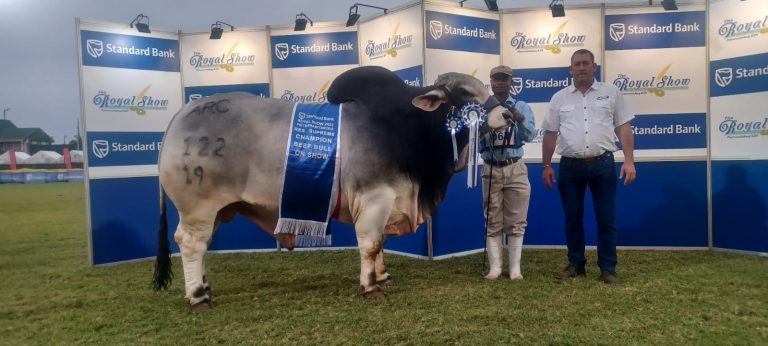
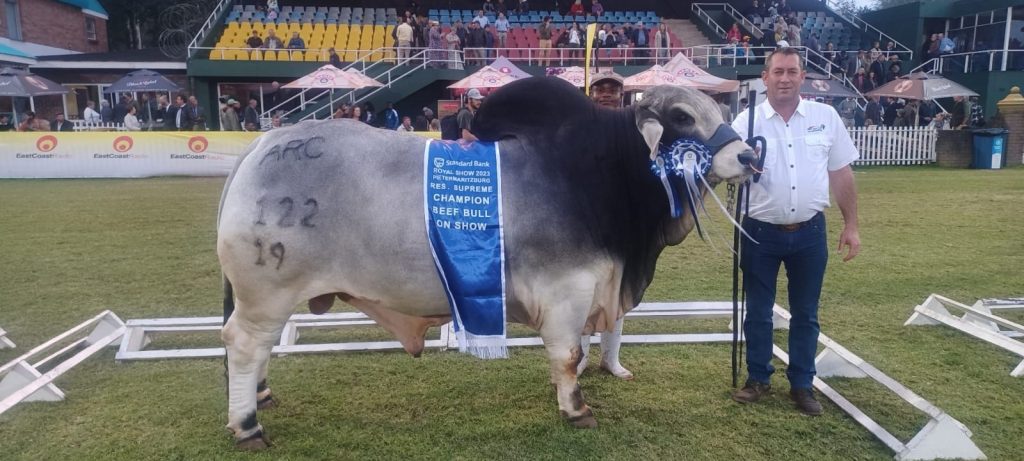
Arc-en-Ciel once again proved to be one of the top Brahman breeders at the Royal Show in Pietermaritzburg.

The Royal Show is Africa’s largest mixed agricultural show and boasts around 220000 visitors per show. This year was the 173rd show.

Throughout its history, ‘The Royal’ has had the privilege of hosting merchants and businessmen who recognise the benefits and harmony of interacting with one another, the agricultural sector and the general public.

Today the Show is the largest mixed exhibition incorporating a fully-fledged agricultural component on the continent of Africa. Not only does this include the exposition of some of the country’s finest livestock and agricultural equipment but also a range of ancillary activities and displays covering the industrial, commercial and service sectors within the province.

Arc-en Ciel Brahman Stud, situated just outside Secunda, proved again that their stud line is one of the best. “I am very proud of our animals,” said Josè Maciel, owner of the Arc-en-Ciel stud.

Under the expert hands of Cor Loggenberg, the stud manager, the Brahmans continued to impress.

Some of the exceptional achievements include:

42 – 48 months 1st place and 2nd place, Senior Champ, Breed Senior Champ

Pair Class: 1xBull and 1x Female obtained 1st prize

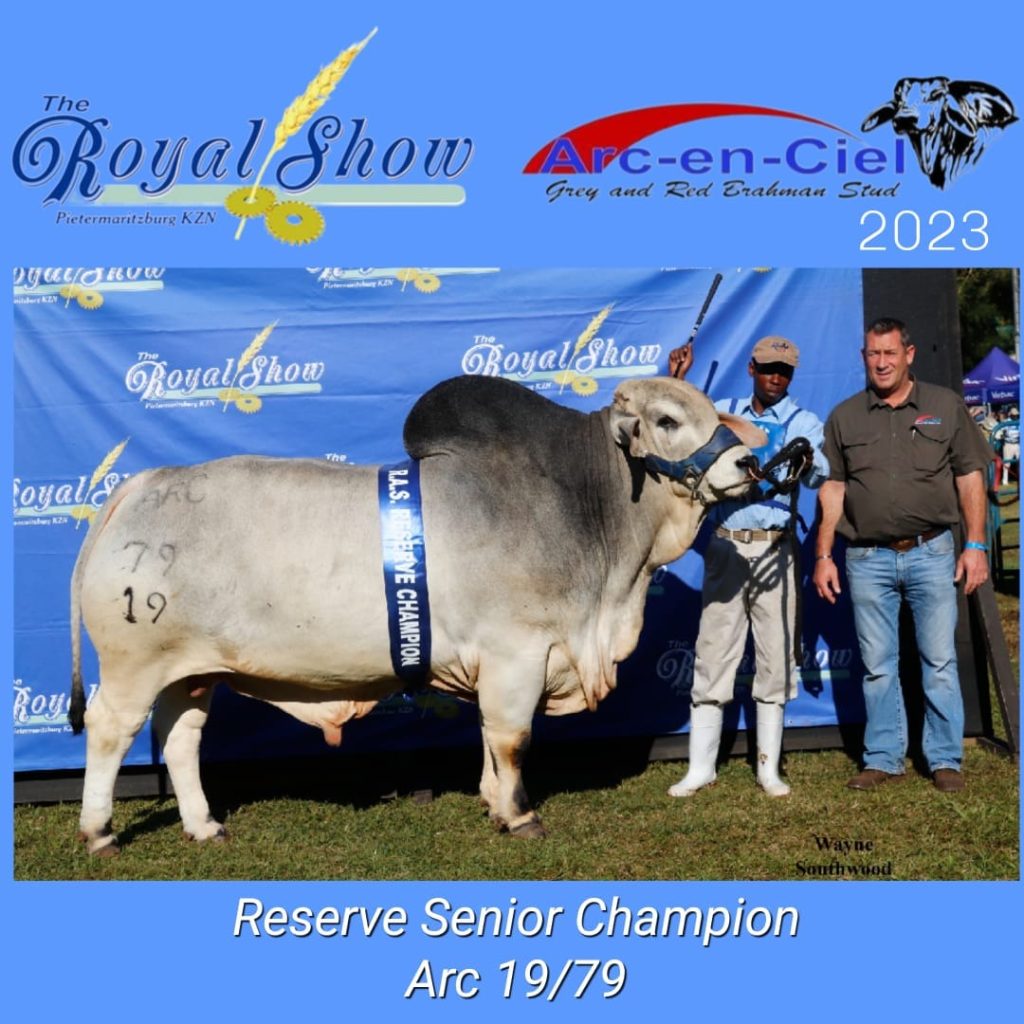
Arc 19/79 was crowned Reserve Senior Champion

Arc 20/89 was crowned Junior Pair Interbreed Champion

Arc

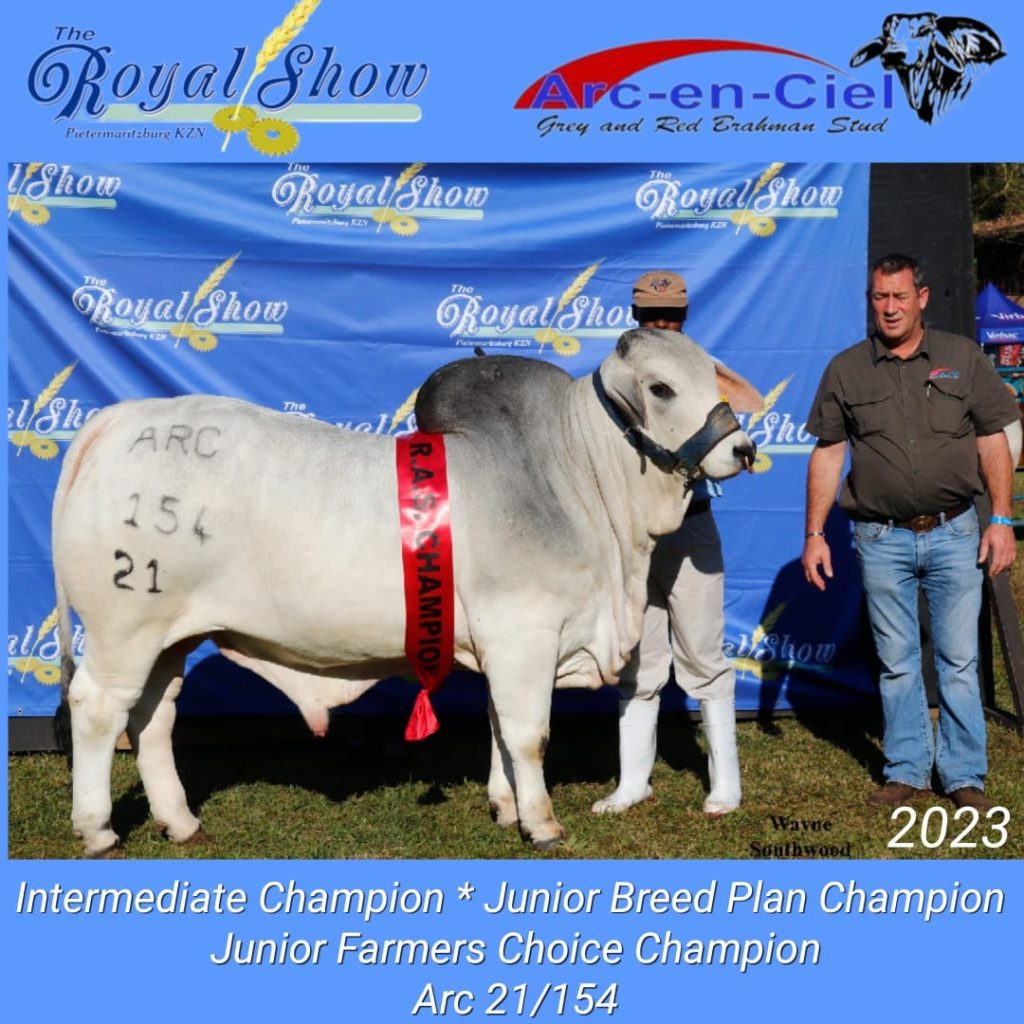
Arc 21/154 was crowned Junior Breed Plan Champion and Junior Farmers Champion

arc

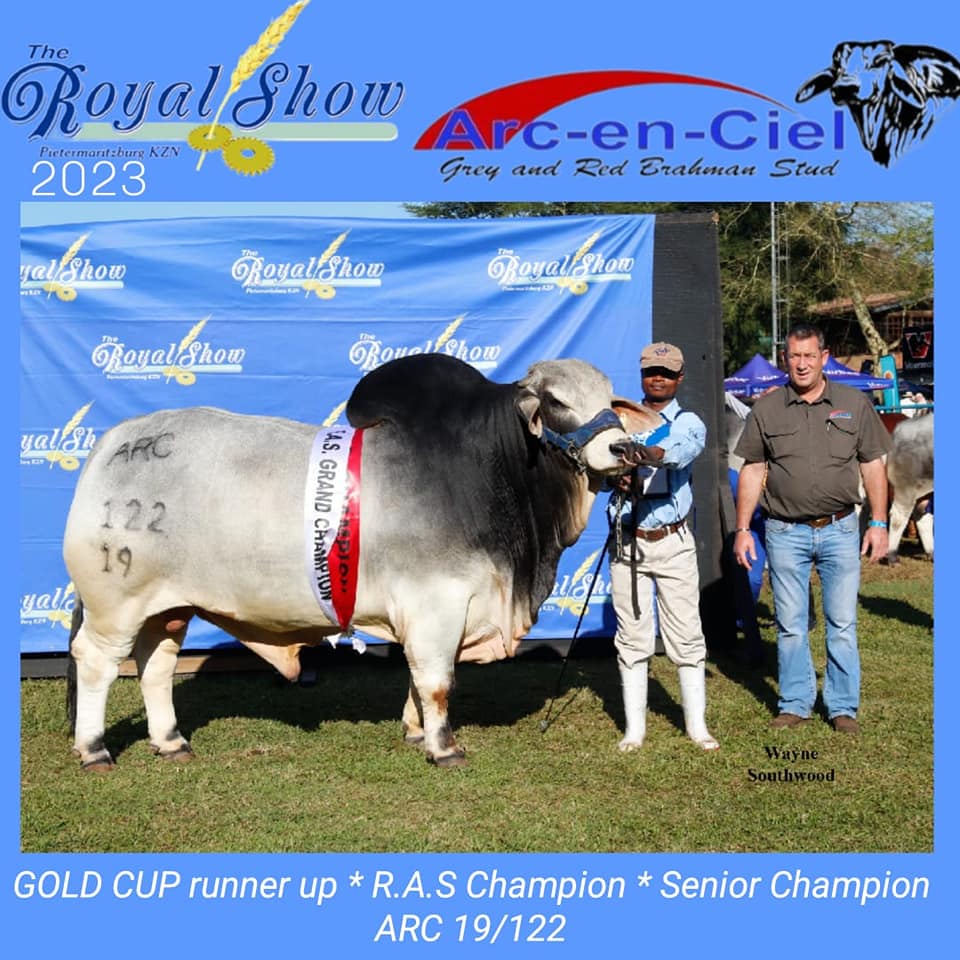
Arc 19/122 R.A.S. Champion Senior Champion Gold Cup runner up

arc

Other prizes also awarded to them are the following:

Group Classes:

Three Bulls 3rd prize

Group of Five 2nd place

10-12 months 3rd place

15 – 18 months 2nd place

18 – 21 months 1st Place

21 – 24 months 4th place

28 – 32 months 3rd place

32 – 36 months 1st place and Junior Champ

Also read: ANIMALS 101 – HELP! MY PARROT IS MISSING!

Bulls:

7 – 10 months 2nd place

15 – 18 months 1st place

18 – 21 months 1st place and intermediate camp

21 – 24 months 4th place

24 – 28 months 2nd place

28 – 32 months 3rd place and 5th place

The Brahman stud is located next to Skyhill.

The past Few years also saw winners in various categories at the different shows.  

Arc-en-Ciel is a stud that sets the pace in the Brahman industry and cattle from this stud is very sought after in the farming industry. This stud was started in 2009 and has bout 600 stud and 100 commercial animals on the farm.

The video below is when The Bulletin spoke to Cor in May 2022 (Afrikaans only).

Kruik se Oggenddiens 11 Junie 2023

Welkom by Kruik Gemeente se oggenddiens van 11 Junie 2023

Vanoggend se tema : “Bekende Vreemdeling”

Wie is die “Bekende Vreemdeling”?

Kom ontdek meer.

Lees ook: Kruik se Oggenddiens 4 Junie 2023

Maak ‘n finansiële bydrae op 2 maniere:

  • Gee Aanlyn (Kruik Gemeente, ABSA, Tjek, Rek nr: 1510140016)
  • Gee deur Zapper – vind ons QR code in die diens aankondigings.

Kontak ons gerus op Kruik Gemeente se Facebook Messenger en Whatsapp lyn (072 133 6130) of besoek ons webtuiste by: https://www.kruik.co.za

Geniet die diens saam ons!

God in my Frieda van den Heever 2021 InVia Gemeente CCLI #573661

ANIMALS 101 – HELP! MY PARROT IS MISSING!

WHAT CAN YOU DO WHEN YOUR PARROT GOES MISSING?

Missing parrots seem to be a frequent occurrence in our area lately and since these birds are human-imprinted, it is really dangerous for them outside, especially in the winter times. We understand that accidents can happen, but for me, if it happens multiple times then it is not an accident. Remember that they didn’t get to choose you as their owner and you are responsible for keeping them safe. Prevention is better than cure, but today we will provide a guideline on what to do if it do escape.

BE PREPARED FOR AN ESCAPE

Birds instinctively tend to fly when their adrenaline level is high. They also generally fly up to the highest point they can land. However, most pet birds today have never fully fledged (fledging is the process of learning how to fly). While smaller birds can often fly quite easily, larger parrots require more skill to be able to take off and land at will and to navigate where they want to go.

For all pet owners, please have flyers ready just in case. Take a few minutes now to create one for each pet.  Have copies available so a friend can make copies for you while you do an initial search. You don’t want to take this time after the escape nor do you want to find you have no photos.  A photo should show the bird in full colour both back and front view and with wings spread if possible. If you leave town and your parrots in the care of others, make sure they fully understand the recovery process and that they understand to notify you immediately if your bird escapes.

missing bird poster example

PREVENTION IS BETTER THAN CURE

1. Always check that windows and doors are closed when they are out of their cage.

2. Wing clipping should only be done by a qualified professional. Remember they can still fly quite a distance, especially on a windy day.

3. If you take them for outings make sure it is a safe and secure carrier or wear a safe harness.

4. Practice recall and teach them to fly down to you from higher perches, trees, roofs, or the top of stairs.

5. Have a poster or at least pictures ready in case they get out.  It is sad to see how many pet owners do not have pictures of their pets.

missing bird

FINDING AN ESCAPED BIRD – HOW TO PROCEED

  • Act Immediately – Locating your bird is the first step. This must be done as quickly as possible. So, start searching as soon as you realize your bird is lost. If you see them fly away, note the direction!  
  • Place his/her cage outside – Put the cage outside and fill it with his/her favourite treats and fresh water. Leave the cage door open.
  • Canvas the neighbourhood – Most birds are recovered within 3 kilometers of the escape location, so within hours you need to have everyone within that area know how to contact you. Let your neighbours know that you lost your bird. Walk around the neighbourhood and call his/her name. The best way to do this is to go door to door to every home within a kilometer of the escape location. If you have other birds, take them with you on the search if possible.
  • Distribute flyers and share them on social media (correctly) – Post and pass out flyers with a detailed description of your bird and a picture. Include instructions that say to leave the bird alone and not attempt to recover them and your contact number. Facebook messenger is not an effective method if you are not friends on Facebook. When you share on social media, do a post on your personal profile with the privacy setting on public. Then share and reshare that particular post everywhere instead of doing a new one every time.
  • Ensure that as many eyes and ears as possible are on the lookout – Give flyers to school crossing guards and distribute them to students exiting schools local to the escape location.
  • Keep your phone charged – The phone number listed on the flyer should be a fully charged cell phone with service available in the area where your bird was lost. If this is not available the phone should be with a friend or family member who will be able to contact you while you are out searching. Give an alternative number too.
  • Offer a reward- You could offer a reward for the safe return of your lost bird. Keep in mind that this may encourage the theft of animals, so, in general, I do not encourage this.

WHAT TO EXPECT 

Even brightly coloured parrots blend in amazingly well and are hard to spot. The bird will most likely start calling within the first 24 hours.  Those living close by should know how to contact you. Days are not counted with 24 hours, but how many nights the parrot has been out.

DAY 1 is the day of escape whether morning or late in the afternoon. 

DAY 2 is the day after the first night spent out. 

DAY 3 is the day after the 2nd night out etc.

FIRST 24 HOURS

Looking for parrots should begin the moment they escape and continue until dusk and resume every morning at dawn. Large parrots are quiet and roost at night making searching at night fairly pointless.

THE NEXT 24 HOURS 

If you have not spotted your parrot within the first 24 hours make sure someone does the round at local shelters and veterinary hospitals daily. As time passes the chances of recovery lessons so move fast and keep moving.  Send your flyer to your local avian vet.

Call your local animal care and control and rescue organizations/shelters and list your bird as missing. Go there every day to see if your bird has been surrendered.

DAY 3

  • By day 3 you should enlarge your flyer area to about 1.5- 2km and grow it each day thereafter.
  • The most critical part of recovery is: DON’T GIVE UP!!!!
  • Place an ad in your local newspapers. Some of them place ads about lost and found animals for free.
  • Share on social media frequently with updates on the original post if the bird was spotted in some areas with times. Not in the comments!
  • Seek a bird rescue organization or rescuer near you and let them know you lost your bird. They often take in stray birds as well.
  • List your bird as missing at other lost and found bird websites out of town.

RECOVERING A LARGE PARROT

  • Wait until the bird is ready to come down

Consequently, if a bird flies to something high, like a tree, it may not have the skill and experience to know how to fly down. This means that most large parrots who escape their caregivers need to be found quickly and then monitored until they are ready to climb down on their own. Once the parrot is located, if it is above arm’s reach, you need to wait until the parrot climbs down willingly. The parrot will do this on its timetable, not yours. Food treats and attention by the caregiver are the only tools that should be used to encourage the parrot to come down sooner, rather than later.

Remember your bird will probably have to glide down instead of fly immediately down.

  • Do not spook the bird into taking off again

Chances are, the parrot will not come down until she/he has spent two nights out. Thus, your goal is to ensure that nothing spooks the parrot into flight. The worst thing that can happen is for the parrot to take flight again so you have to resume your search. This means that under no circumstances should anyone climb a tree, or use a ladder, net, pole, hose, or other reaching item to access the parrot. A few cold nights are far less dangerous to the bird than having it fly onto a power line or to a location where you can’t spot it. The hard part is finding a bird!

  • Observe the bird

The parrot should be observed from dawn to dusk. The parrot will probably just roost. Food should not be left out or distributed around the location. The goal is for the parrot to climb down to the caregiver. This usually happens on day three. Avoid too many strangers at the location. You want the parrot to focus on its caregiver.

Watch for signs the parrot is ready to climb down:

  1. Fluttering of wings
  2. Movement in the tree to ensure a good view of the caregiver
  3. Calls to the caregiver when not in view
  4. A movement toward the caregiver
  • Start the food fest

Once the parrot is showing clear signs of being ready to climb down, start passing favourite foods to other spotters around the location within the view of the parrot. Make yummy sounds showing great pleasure in having such wonderful treats. Use fairly large visible portions of brightly or strong-smelling foods that the parrot sees as a treat. This should get the parrot fairly excited if it is ready to come down. Continue with the food fest with only the primary caregiver directly at the base where the parrot will need to climb down.

  • Leave and return

If the parrot settles a bit during day three, leave a spotter at the location and have the primary caregiver leave for an hour or so, returning with a plate of food. Offer the food to the spotter and start the food fest over again. Most likely, by the end of day three, the parrot will give in and climb down to its caregiver.

If it is getting late in the day on day 3 and the parrot is looking like it is settling in for the night, try one last shot for that day.

By day 4 most parrots will climb down to anyone, but for those few holdouts, just continue as on previous days. The parrot will eventually climb down when they are ready.

bird cages by Little Beaks

BIRD CARE & ENCLOSURES 

  • Most of the cages and even food sold by pet shops and some vets are likely not right for the birds. The bird must be able to fully stretch the wings and flap them without touching the sides of the cage.
  • Correct diameter perches where toes must not fully close around the perch (the general rule of thumb is 2/3 or 3/4 close) should be in the cages as well as some sort of platform where the feet can be stretched open. Two additional sizes can be beneficial too.
  • Horizontal space is just as important as vertical space. Ideally, the cage size must provide enough space to fly from one end to another. Avian welfare expert Dr. Kim Danoff notes, “Depriving birds of flight is mentally and physically stressful.”
  • You also need enrichment activities and foraging opportunities inside and outside the cage.
  • Make sure you give species-appropriate food and clean water daily. The typical sunflower seeds and peanuts are not ideal and can even be dangerous.
  • Make sure you visit an avian vet for your bird’s needs. Not all vets can just treat birds or exotic animals.
  • I always advise against birds as starter pets for kids.
  • If you have any animal, but especially parrots that reach 30 plus years of age, then you need to have a plan for them in your will and last testament!

Also read what to do if you find wildlife, including birds, and why I am against wing clipping for birds.

Please note we are against keeping of any exotic animals or birds as pets, in cages, and breeding with them.  Most people who have birds are not meeting their needs and it is heartbreaking for us to see this. There are far too many abandoned birds/animals or those that get passed on from one home to another.

Please think long and hard before getting a bird as a pet. Volunteer at a rescue first and do proper research about all their needs. If you have a bird, don’t take away their ability to fly and to be birds, and make very sure that your enclosures can keep them safe as well as train a good recall!

We will fight not until cages are comfortable, but until cages are empty! Next week we will look at why spaying and neutering your pets is a good idea!

WHEN YOU KNOW BETTER, DO BETTER!

Sources: Brainy Birds – Parrot Rescue and Rehabilitation & STAR – St. Louis Avian Rescue

Genade Shoppie wine pairing is a taste sensation!

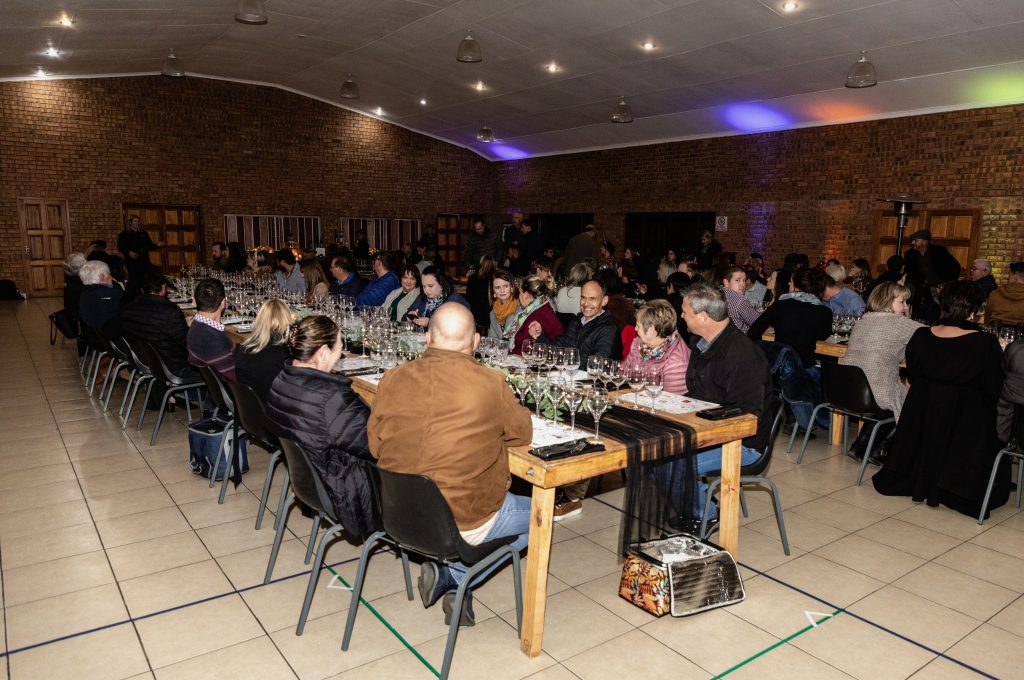
The food and wine were divine at the Genade Shoppie Wine tasting.

When Genade Shoppie prepares any food you are bound to have a taste experience like no other. Combine this with good wine from Genevieve and Luddite, and your meal will be even more enjoyable.

The hall was packed with wine and food lovers and the noise grew louder as the patrons found their seats and chatted with friends. The kitchen was buzzing with a frenzy of activity as the staff made final preparations before serving the first course.

Photo: Liefling Photography

The food was presented as Popular restaurants by Kirsten from Genade Shoppie and it was then paired with the wines and the winemakers explained the pairing and the wines.

Photo: Liefling Photography

Genade Shoppie is known for its passion for food and its fresh products. Contact them at 066 241 1954 or email genadeshoppiesecunda@gmail.com

The courses were:

“Ocean basket” Spinach filled Calamari,

genade
Photo: Liefling Photography

“KFC” Crumbed Chicken with Soy, Ginger and Honey Mustard.

genade shoppie
Photo: Liefling Photography

“Spur” Pork Belly with Blooming Union.

Photo: Liefling Photography

“Mcdonalds” Aged Yellow Fat Rump patty on homemade Pretzel bun with homemade Mayo.

Photo: Liefling Photography

“Krispy Kreme” Caramel filled doughnuts with sweets.

Photo: Liefling Photography

The wines:

Genevieve NV Rosé

A 100% Shiraz that was handpicked at 19°B for fruit and elegance and high natural acidity. 14000 Bottles were produced in a Méthode Cap Classique cellar, Paarl

Tasting notes: Salmon sunset colour with a delectable fine mousse. Cherry and pomegranate aromas on the nose accentuate fresh white strawberry and white peach flavours on the palate making for a lingering and silky finish.

Photo: Liefling Photography

Genevieve Blanc de Blancs 2018:

A 100% Chardonnay (2017) that was handpicked at 19°B for fruit and elegance and high natural acidity. 2016 was our greatest yield to date. 14 500 Bottles were produced in a Méthode Cap Classique cellar, Paarl

Tasting notes: Delicate and generous bubbles with crisp aromatic complexity of citrus blossom and white fruit. Vibrant entry with a delicate concentrated structure. Overall balanced finesse with an appealing acidity offering a long attractive crystalline finish.

Photo: Liefling Photography

Luddite Saboteur red

2009 was the maiden vintage of the Saboteur Red. This was an exciting year for the Luddites. It was the year they used their own cellar for the first time and the first year that all the grapes were sourced from the Bot River valley. It was also the first time that a new wine was bottled to join the Luddite Shiraz.

With the Saboteur Red, the style is unashamedly new world where we are going for crunchy, juicy fruit balanced by vibrant tannins. This contrasts nicely with the Luddite Shiraz which is more classic in style. The red blend will always be Shiraz driven with a Rhone slant. What makes it different is that our Cabernet Sauvignon is too damn good to leave out! It only spends one year in barrel with sexy wooding and is released soon after bottling.

The buzz word is balance and therefore the blend percentages will change depending on the vintage. It will always contain Shiraz, Mourvédre and, hopefully in the future, some Grenache Noir. The fruit is sourced from Bot River and neighbouring wine regions making a wine of origin Cape South Coast.

Also read: Community Notice – Public Consultation Sessions on Air Quality

Photo: Liefling Photography

Luddite Saboteur white

2015 was the maiden vintage of the Saboteur White blend, created to partner the successful Saboteur Red blend.

Niels set out to make a white blend that was both serious and refreshing. It’s a Chenin Blanc based blend with different percentages of Viognier and Blanc Fumé, depending on the vintage. And it turns out that this new wine, with its new closure and new packaging, was an excellent tribute to the Saboteurs…it sold out within 3 days.

The grapes for the Saboteur range are sourced from Bot River and the neighbouring wine regions, making it a wine of origin Cape South Coast. Although the blends varied in 2016 and 2017, the vintages have lived up to the precedent set by the maiden vintage and have received great reviews (and excellent sales!).

Drink them and be inspired!

Community Notice – Public Consultation Sessions on Air Quality

Community Notice – Atmospheric Emission Licences’ (AEL) requirement

Sasol Secunda Operations will host Public Consultation Sessions on Air Quality as part of the Atmospheric Emission Licences’ (AEL) requirement on 14 and 15 June 2023.

community

The public consultation sessions will focus on Sasol’s performance on air quality matters and update on air quality improvement roadmap.

You are therefore invited to attend either or all the following sessions to be held on 14 and 15 June 2023 as follows:

  • Sasol eMbalenhle Recreation Club, 2287 Ingwe Drive, eMbalenhle, Evander, 14 June 2023, 09:00 – 12:00
  • Sasol Secunda Recreation Club, Nelson Mandela Drive, Secunda,14 June 2023, 13:00 –16:00
  • Difa Nkosi Community Hall, 1095 Intumbane Drive, Lebohang Ext 9, Leandra, 15 June 2023, 10:00 – 13:00         

To confirm your attendance or should you have any questions or queries, please contact Andile Mbatha at Andile.Mbatha@Sasol.com  or 079 520 0817

Kruik se Oggenddiens 4 Junie 2023

Welkom by Kruik Gemeente se Oggenddiens van 4 Junie 2023

Vanoggend se tema “Sit, Loop, Staan”

Wat kan ons ontdek vanuit die boek van Efesiërs?

Lees ook: Kruik se Oggenddiens 28 Mei 2023

Maak ‘n finansiële bydrae op 2 maniere:

Gee Aanlyn (Kruik Gemeente, ABSA, Tjek, Rek nr: 1510140016)

Gee deur Zapper – vind ons QR code in die diens aankondigings.

Kontak ons gerus op Kruik Gemeente se Facebook Messenger en Whatsapp lyn (072 133 6130) of besoek ons webtuiste by: https://www.kruik.co.za

Geniet die diens saam ons!

This is our God, Phil Wickam / Steven Furtick / Patrick Barret / Branden Lake CCLI# 573661

Burning Prohibition started on 1 June 2023

Prohibition – No burning of veld or fire breaks without permits from 1 June

The Highveld East Fire Protection Association (HEFPA) have issued a prohibition notice regarding making fires.

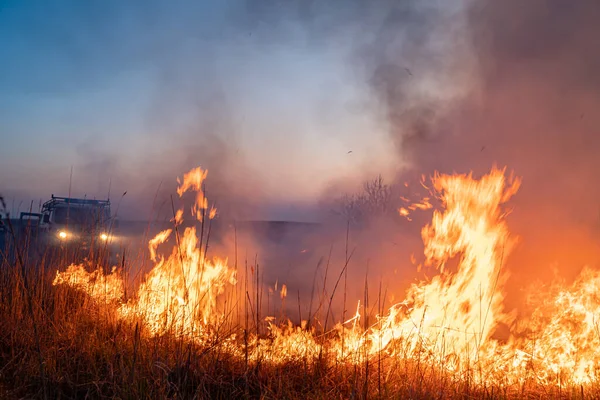
Fires have been raging out of control over the past few years when irresponsible fires were started. The damage to livestock and grazing amounted to millions of Rands.

Prohibition

Please follow the guidelines carefully and diligently.

Here is the full notice

BURNING PROHIBITION NOTICE 2023

IN TERMS OF CHAPTER 2 OF THE NATIONAL VELD AND FOREST FIRE ACT 101 OF 1998,

the Highveld East Fire Protection Association (HEFPA), duly registered as the fire protection association in the Govan Mbeki Municipal area (MP307), hereby declares a period of extraordinary fire hazard within its boundaries and therefore directs:

  1. That no person shall from Monday, 01 June 2023 make an open fire in open air, allow it to continue to burn or add additional fuel thereto, otherwise than –
    1. Fires made within a demarcated picnic or camping area or caravan park, or holiday resorts, but only at places within such an area which have been specifically prepared and maintained for that purpose; provided that such fires are properly extinguished with water and/ or sand;
    1. Fires for the preparation of food on residential areas;
    1. Fires made on residential and industrial stands in proclaimed townships;
    1. Fires made for initiation school purposes, but only at places which have been specifically prepared and maintained for that purposes to prevent fires from spreading.
  2. Trees and plants

That no person shall from 01 June 2023 destroy by burning and slashing any timber plantation or self-sawn exotic trees or alien invasive plants.

  • Burning of Firebreaks

That no person shall from 01 June 2023 2023 destroy by burning residue, cultivated crop fields or veld, clear or maintain a firebreak by burning;

  • Provided that such fires may be made only on days when the average Fire Danger Index at 14:00 for the fire region is less than 60 and predicted wind below 10km/h for the period after 14:00.
    • Burning permits shall only be valid from 16:00 on the day that it is issued for, and permits must be closed upon completion of the burn.
    • Special permits for burning from 08:00 will only be issued when the requirements as specified in the Rules and Regulations are complied with.
    • A burning permit must be obtained from HEFPA.

Also read: Rand Water takes action on outstanding debts

  • Block burning

Conservation of Agricultural Resources Act (CARA) (Act 43 of 1983)

Burning of Grassveld and planted residue (Block Burning) can be done under the following conditions:

  • Block burn permits shall be made available from 15 July 2023
    • Double width fire belt (20 metres or more) must be prepared around the planned block burn area before 7 July 2023
    • Permit must be obtained from HEFPA
    • Acceptable fire fighting equipment must be present as per the minimum standards and requirements of HEFPA
    • Maximum FDI prediction of 59 or less must be forecast for the day when the burn is planned
    • THE FDI prediction for the following day at 14:00 may not exceed 55.
  • Rules and Regulations

All permitted fires must comply to the HEFPA Rules and Regulations Revision 3.

  • Fines and Penalties

Offences and penalties as specified in Sections 24 and 25 of the Act shall be subject to a minimum fine of R5000 (five thousand rand) as approved by the Acting Chief Magistrate, Mpumalanga.

It is further recommended that grazing veld should only be burnt on rotation every 3 years.

More details can be obtained from:

Gert Kühn, Chairperson, HEFPA, 082 084 6921   

and

Shelly Shabalala, Fire Protection Officer, 082 742 3847

Rand Water takes action on outstanding debts

RAND WATER TAKES FIRM ACTION TO ADDRESS OUTSTANDING DEBTS OF APPROXIMATELY R5 BILLION FROM MULTIPLE MUNICIPALITIES

Troubled Govan Mbeki Municipality (GMM) is facing possible action from rand water as the utility company is forced to implement debt collection measures against defaulting municipalities. While the Executive Mayor of GMM downplayed the water troubles in his State Of The Municipality speech, the Rand Water account continued to be the second biggest single debt of GMM.

Residents of GMM had to endure water shortages in the past due to restrictions imposed by Rand Water.

rand

Rand Water released the following statement in this regard:

Rand Water, South Africa’s leading water utility provider, thanks all Municipalities who are responding to the call to pay for the water provided to them by Rand Water. Rand Water’s financial sustainability which impacts the current and future provision of water depends on Municipalities paying for the water they receive from Rand Water. Rand Water is facing a significant challenge in relation to outstanding debts owed by various municipalities. The cumulative debt owed by Municipalities is R4,617,629,351 and is shared among municipalities in Gauteng, Mpumalanga, and the Free State. These Municipalities include Emfuleni Local Municipality, Govan Mbeki, Merafong, RandWest, Victor Khanye and Ngwathe Local Municipalities.

As part of the options available to it, Rand Water sort alternative means to recover monies owed to it and attached Emfuleni Local Municipality’s bank account but has not yet been able to recover any funds from it due to persistent interference from the Municipality. To recover funds owed by Municipalities, Rand Water is proactively engaging with various government entities through the Inter-Governmental Relations (IGR) process.

Also read: Opposition parties disagree with GMM SOMA

Whilst certain municipalities are struggling to pay within the agreed timelines, others are unable to meet their payment commitments. Rand Water has planned infrastructure development projects that are designed to improve the provision of water services and is thus negatively impacted by the lack of revenue generation to support such projects.  Rand Water urges municipalities to pay for the water they receive and commits towards collaborating with them to come up with payment plans that they will be able to adhere to.  

Rand Water urges defaulting municipalities to acknowledge the seriousness of the situation and proactively cooperate with Rand Water to find mutually beneficial resolutions. By working together, we can devise sustainable payment plans and mechanisms to recover the outstanding amounts, thereby ensuring the long-term financial sustainability of both the municipalities and Rand Water. 

“We urge ALL consumers to continue using water sparingly.”