Home Blog Page 56

DA call on Cele to investigate Farm Arson

0

DA maak ‘n beroep op minister van Polisie, Beki Cele, om deeglike ondersoeke te loots na voorvalle van brandstigting op plase

Issued by Henro Kruger MP – DA Member of Portfolio Committee on Agriculture, Land Reform and Rural Development

cele
Henro Kruger MP – DA Member of Portfolio Committee on Agriculture, Land Reform and Rural Development

Die Demokratiese Alliansie (DA) veroordeel brandstigting deur kriminele wat ons boere skade aan doen. Die kwaadwillige dade wat ons boere se reserwe voer vernietig is daarop gemik om onstabiliteit op ons plase te weeg te bring. Dit stel nie net voedselsekuriteit in gedrang nie maar het ook ‘n wesenlike invloed op die veiligheid van ons boere, hul families en werkers.

Die winter seisoen hou vir die landbou sektor aansienlike gevaar in deur dat menige plase in verskeie streke geteiken word deur kwaadwillige brandstigters. Hierdie aanvalle veroorsaak skade aan oeste, infrastruktuur en lewendehawe. Die geweldige finansiële verliese beteken ‘n negatiewe inpak op ons boere se vermoëns om die nasie te voed.

“Daar moet dringend aandag gegee word aan die onderliggende redes vir hierdie sinnelose dade,” sê Henro Kruger MP – DA Lid op die Portefeuljekomitee oor Landbou, Grondhervorming en Landelike Ontwikkeling, “Die DA is van mening dat ANC volstruis politiek speel en die regering wegskram wanneer dit kom by die knelpunte van die landbou sektor.”

“Die landbou sektor moet deur die regering gemotiveer en nie moedeloos gelaat word nie. Die staat moet veiligheid en die welstand van die boere en werkers op plase voor op die lys stel,” sê Kruger, “ Tydens Bheki Cele, Minister van Polisie, se onlangse begrotingsdebat, het hy versuim om enige vordering wat gemaak is met landelike veiligheid of landelike misdaad in sy toespraak te noem.”

“Ten spyte van die onlangse ontwikkeling van ‘n ‘Landelike Veiligheidstrategie’, is daar reeds twyfel oor die SAPD se verbintenis tot die strategie en of ons boere die vrugte daarvan gaan pluk.”

Die DA versoek dus die Minister van Polisie om deeglike ondersoeke te loots in al die voorvalle van brandstigting op plase gedurende 2023. Ons moet hierdie dade met wortel en tak uitroei. Dit is uiters belangrik dat die kriminele, verantwoordelik vir hierdie lafhartigde dade, behoorlik aan die pen moet ry. Brandstigting moet onmiddelik stop gesit word, sodat ons boere en hul werkers veilig kan voel in hulle werksomgewing.

Die DA is in solidariteit met die geafekteerde boere, hul families en plaaswerkers en bly verbind tot die bevordering van die regte van ons landbou gemeenskappe. Die DA neem kennis van hierdie onaanvaarbare uitdagings van ons voedselvevaardigers en staan aan die sy van die boer tot die ontwikkeling van ruim voedselsekuriteit vir al die inwoners van Suid Afrika.

Wees deel van die missie om Suid-Afrika te red, registreer korrek om nou te stem by  check.da.org.za

Destruction and death in the wake of a devastating Free State veld fire (News24). Foto: Mlungisi Louw

The Democratic Alliance (DA) condemns arson by criminals who harm our farmers. The malicious acts that destroy our farmers’ reserve feed are aimed at bringing instability to our farms. This not only jeopardizes food security but also has a significant impact on the safety of our farmers, their families and workers.

“The winter season poses a considerable danger to the agricultural sector as many farms in various regions are targeted by malicious arsonists,” said Henro Kruger MP – DA Member of the Portfolio Committee on Agriculture, Land Reform and Rural Development, “These attacks cause damage to crops, infrastructure and livestock. The enormous financial losses mean a negative impact on our farmers’ abilities to feed the nation.”

“Urgent attention needs to be given to the underlying reasons for these senseless acts,” said Kruger, “The DA is of the opinion that the ANC is playing ostrich politics and the government is shying away from the bottlenecks in the agricultural sector.”

Also read: Kruger National Park prepares for peak fire season

The agricultural sector must be motivated by the government and not left discouraged. The state must put the safety and well-being of the farmers and workers on farms first on the list. During Police Minister Bheki Cele’s recent budget debate, he failed to mention any progress made on rural security or rural crime in his speech. Despite the recent development of a ‘Rural Security Strategy’, there are already doubts about the SAPS’s commitment to the strategy and whether our farmers will reap the benefits.

A copy of the latest Rural Security Strategy presentation can be accessed HERE

The DA, therefore, requests the Minister of Police to launch thorough investigations into all incidents of arson on farms during 2023. We must eradicate these acts at ground level. It is extremely important that the criminals responsible for these cowardly acts are brought to justice. Arson must be stopped immediately so that our farmers and their workers can feel safe in their working environment.

The DA stands in solidarity with the affected farmers, their families and farm workers and remains committed to promoting the rights of our agricultural communities. The DA takes note of these unacceptable challenges to our food manufacturers and stands by the farmer’s side in the development of ample food security for all the inhabitants of South Africa.

Be part of the mission to save South Africa, register correctly to vote now at check.da.org.za

Kruik se Oggenddiens 9 Julie 2023

Welkom by Kruik se oggenddiens van 9 Julie 2023

Vanoggend se tema: Jesus se gelykenisse

Wat kan ons leer uit Jesus se gelykenisse? Kom ontdek meer.

Lees ook: Kruik se oggenddiens 2 Julie 2023

Maak ‘n finansiële bydrae op 2 maniere:

  • Gee Aanlyn (Kruik Gemeente, ABSA, Tjek, Rek nr: 1510140016)
  • Gee deur Zapper – vind ons QR code in die diens aankondigings.

Kontak ons gerus op Kruik Gemeente se Facebook Messenger en Whatsapp lyn (https://chat.whatsapp.com/IT9Ojl2rtXU…) of besoek ons webtuiste by: https://www.kruik.co.za

Geniet die diens saam ons!

God in my. Frieda van den Heever. 2021 InVia Gemeente CCLI #573661

Kruger National Park prepares for peak fire season

PREPARATIONS AHEAD OF THE PEAK FIRE SEASON IN KRUGER NATIONAL PARK

The Kruger National Park (KNP) has embarked on controlled burns in preparation for the upcoming peak fire season. The organisation apologises for any inconvenience that might be caused because of this necessary action to avoid runaway fires which could lead to loss of life and damage to infrastructure. Every winter, as the dry season starts in KNP, fires are a common occurrence in the park. Fires are a natural part of the environment in KNP. The vegetation and animals have adapted to fires in this landscape and rely on fires to maintain a healthy, functioning ecosystem.

There is a relationship between how much rain is received during the rainy season, and how much grass grows in response to the rain, which then affects how much area is burned in the dry season. Fires occur when there is sufficient grass to sustain a fire, the correct weather conditions, and an ignition source.

kruger

Considering the extremely high amounts of rain during the previous wet season, KNP is expecting more fires this winter (hot dry weather) compared to last year. For the last few years, roughly 15% of the park had burned annually.

“This year we are expecting more than 20% of KNP to burn” says Abiotic Scientist, Tercia Strydom. “The park monitors and maps all fires using both ground reports as well as advanced satellite mapping techniques”, she concluded.

The majority of these burns will be conducted by the park’s Rangers both for ecological and fire safety reasons. Due to the exceptional amounts of grass in the veld, the risk of large wildfires burning later in the dry season increases.

Also read: ANIMALS 101 – ADOPTION IS THE ONLY ETHICAL OPTION

Therefore, the Rangers have already begun burning fires earlier in the dry season to help break up the grass loads into smaller patches thereby reducing the fire risk. In addition, KNP as part of the Greater Kruger Fire Protection Association has started implementing firebreaks around infrastructure such as camps, staff quarters, entry gates and along the Parks boundary.

By having a trained and equipped team of Rangers and using proactive fire management techniques such as burning to reduce grass loads and constructing firebreaks, KNP will be well prepared for the winter fire season.

LEGAL NOTICE – CARBON CAPTURE UTILISATION AND STORAGE PROJECT: 3D SEISMIC SURVEY AND DRILLING

CARBON CAPTURE UTILISATION AND STORAGE PROJECT: 3D SEISMIC SURVEY AND DRILLINGNotice of review of Draft Abbreviated Environmental and Social Impact Assessment Report

Project Background

The Council for Geoscience (CGS) is undertaking a geoscientific research project for the piloting of Carbon Capture, Utilisation and Storage (CCUS) in Leandra in the Mpumalanga Province, where it is proposed to inject carbon dioxide (CO2) into deep suitable geological formations, approximately 1km below the surface.

The Government of South Africa (SA) has partnered with the World Bank to finance the CCUS Project and hereby intends to conduct geological characterisation comprising of drilling a stratigraphic well and undertaking a high-resolution 3D seismic survey at the proposed injection site, as well as supporting structures. This notification only focuses on the geological characterisation component of the overall CCUS Project and not on the CO2 injection phase, which is being assessed separately.

3D Seismic Survey and Drilling

The project site falls under the Gert Sibande District Municipality and is located within Wards 1, 2 and 6 of the Govan Mbeki Local Municipality. The R29 runs through the central part of the overall project area. The GPS coordinates of the approximate centre of the proposed drill site are 26°22’4.84″S, 28°56’19.47″E.

Environmental and Social Impact Assessment

Nemai Consulting (Pty) Ltd was appointed by the CGS to undertake an abbreviated Environmental and Social Impact Assessment (ESIA) for the 3D seismic survey and stratigraphic drilling required as part of the CCUS Project. The ESIA must satisfy the requirements of the WB Operational Policies as well as the SA environmental legal requirements.

carbon

Review of Draft Abbreviated ESIA Report

The draft abbreviated ESIA Report will be made available to stakeholders to review from 12 July until 14 August 2023.

The draft abbreviated ESIA Report can be accessed as follows:

  • Hardcopies of the report will be placed in the following public places –
  • Leandra Public Library;
  • Lebohang Public Library; and
  • Secunda Public Library.
  • An electronic copy was uploaded to the following website, for downloading purposes: https://nemai.co.za/downloads/.

Written comments on the report need to be forwarded to the contact person below within the abovementioned period.

Also read: Legal Notice – CARBON CAPTURE UTILISATION AND STORAGE (CCUS) PROJECT

Contact Details of Environmental Assessment Practitioner:

You are welcome to contact the Environmental Assessment Practitioner below if you have any queries.

Contact Person: Donavan Henning

Tel: (011) 781 1730

Email: donavanh@nemai.co.za Postal Address: PO Box 1673, Sunninghill, 2157

ANIMALS 101 – ADOPTION IS THE ONLY ETHICAL OPTION

WHAT YOU SHOULD KNOW ABOUT SAVING A LIFE THROUGH ADOPTION!

South Africa is overflowing with unwanted dogs, cats, puppies, and kittens, even rabbits, birds, and other animals. It’s sad to think that most of these animals in shelters will never experience a loving home and the security of a family they deserve.  Last week we looked at why breeding animals fuels this problem, so this week we will look at how you can save a life and help decrease the burden on animal welfare organizations.

The sad reality is that although we promote adoption, we can’t adopt our way out of this crisis.  Do you know 30 homes that want to adopt?  I don’t, and that is the number of animals that easily come into one shelter per month and there are thousands of shelters. People selfishly breed and abandon animals faster than we can save them. 

We understand that it seems easier to buy a pet, but buying a pet is part of the problem. The pet industry in South Africa is not regulated and pet shops do not promote responsible pet ownership (sterilizations, home checks, etc.). They make their profits by promoting impulse buying. I am not even talking about all the “free to good home” ones on social media.

Image by The Paw Company

This article is a reprint that was first published on 05/07/2013

WHAT IS ADOPTION? 

Many animals come in as strays found and other animals are dumped, abandoned, or surrendered by their owners. If these animals are not claimed by their owners within the pound period, the shelter has two options namely, euthanize or adoption. Adoption is when you give an animal from a registered and responsible rescue organization/shelter a second chance, as part of your family. You will pay an adoption fee and go through a process of responsible homing.

WHEN YOU ADOPT YOU CHANGE MORE THAN ONE LIFE!   

Here are a few of the many benefits of adopting a pet:

  • You not only save a life but will also make resources and space available for the next one to be rescued.
  • If you can do the math, you know you will save money by adopting!
  • Adopted pets for the most part are already “trained”. 
  • You also help to lighten the load of a shelter that rescues animals and make the rescuers go on for just one more day. 
  • By adopting from a reputable shelter, it also allows you to take a stand against pet stores, puppy mills, and breeders and you do your part to put a dent in the pet-for-profit trade.
  • You can also build a relationship with the shelter that can really come in handy!
  • There is no greater kindness you can offer a frightened, confused shelter pet than a place in your heart and home. Many adoptive parents can attest to the special bonds created after adoption. 

Also, read more about ethical choices when it comes to your wardrobe.

THINGS TO CONSIDER BEFORE ADOPTING 

  • Are you ready for a pet? 
  • Can you afford pet care in the long term? 
  • Have you researched their specific needs and can you meet these needs? 
  • Does the animal fit your family’s lifestyle? 
  • If you live in a townhouse complex, written approval from the body corporate, that pets are allowed, must be obtained.   
  • Municipal By-laws must be adhered to with regard to the allowed number of pets.  
  • You may never know their breed, medical history, or behavioural history. 
  • You will have to pet-proof your home beforehand. 
  • Get the necessary items for your car and for travel. 
  • You will still need to buy beds, blankets, toys, leashes, deworm every 3 months, vaccinate every year, and buy good food every month, this does not even include saving for an emergency!  
  • They need to be spayed/neutered and a form of identification added, which is usually included in the adoption. 
  • Social animals should not be the only animals in the house and most need to be around their own species. 
  • They might need some training and patience to build trust, more time to adjust, and might not get along with all people or animals. 
  • Choosing the right breed for your lifestyle is however especially important.
  • Never make a decision based only on a dog’s look, size, breed, etc. The energy level of that animal should fit with that of your family. 
Adoption - Image by Beyond Behaviour

OUT-OF-TOWN ADOPTIONS

Adopting an animal from a shelter in another town is possible. Usually, a local animal rescue or SPCA in your town will do the home check. Out-of-town adoption however will cost more, and the travel stress can be a lot for the animal. If you change your mind, you can’t expect the shelter to cover the costs. So really think this through and commit 100% before you choose this option.

WHAT CAN YOU EXPECT DURING THE PROCESS OF ADOPTING A PET?

The process and policy might differ between organizations. The process usually includes an application form, meet & greet, home check, paying an adoption fee, signing an adoption contract, sterilization, and follow-up. Depending on availability for sterilization at the Veterinarian or home check schedules, this can be completed in as little as 3 or 4 days. 

Irresponsible homing is not rescue! Because there are far too many irresponsible organizations (yes in our area too) as well as scammers out there, we consider it to be a responsible adoption only when it includes the following:

  • The organization must be registered and have a clear adoption policy as well as transparency and accountability.
  • Must have a comprehensive adoption application.
  • Must require proof of address and a copy of the adopter’s ID.
  • Must do a home check in person. 
  • They must not breed or support breeding in any form. These are the biggest hypocrites “in” animal welfare.
  • May not allow adoption for someone else as this is highly irresponsible and no reputable and responsible organization will do this.
  • Must have an adoption contract that includes a sterilization policy and return policy.
  • Should do follow-up post-adoption.
  • Meet and greet with all the family members (humans and animals) is important.
  • We believe the adoption fee should at least include, sterilization, deworming, treatment for ticks and fleas, first vaccination, microchip, and ID collar.

Please note – If it is an individual who is “re-homing” their dogs or their friends, or giving animals away for free, or selling them, then it is not an adoption and they are part of the problem by abusing the term ‘adoption’ and fueling this massive overpopulation crisis. Selling animals on Facebook goes against their community standard and should be reported to Facebook and the group admins.

ABOUT ADOPTION FEES

If you think adoption fees are too expensive, then we will advise that you rather not get a pet.  If you do the math a responsible pet owner would do, then you will know that the adoption fee which includes sterilization and more, is relatively inexpensive compared to the cost of purchasing a pet, or even compared to getting a pet for free, and that is excluding the animal itself. 

EXAMPLE – Take a medium-sized female dog in Secunda and surrounding areas:

WHEN YOU BUY (Excluding cost for the animal itself.)

  • Sterilization easily up to R1500
  • Microchipping R375
  • Deworming R60
  • Vaccinations R400

TOTAL: R2335

WHEN YOU ADOPT

If all of the above are included in our area, it is around R1250 plus the fact that you saved a life…………which is priceless! That is a R1085 difference plus you just pick up the animal with all of it done already so saving on time and petrol.

Responsible pet owners will do all of the above for their animals and more. So, when you say adoption fees are too much, I would seriously question your math skills and sense of responsibility. If you can’t afford adoption fees, then I doubt you will be able to properly care for that animal, even if your heart is in the right place!

Adoption - Image by The Paw Company
Adoption – Image by The Paw Company

HOME CHECKS 

This is one of the most important aspects when it comes to the credibility of responsible animal welfare organizations. As a prospective adopter, you do not have to be afraid of a home check!  You might learn some valuable information about being a pet owner or things to look for and so, you can help educate others to ipmrove the lives of animals! You can also build a relationship with a very knowledgeable person which can come in handy in the future. Most organizations will give you time to make the necessary, reasonable changes and still adopt.

SOME HOME CHECK CONSIDERATIONS INCLUDE:

  • Access to basic needs like food, water, and shelter.
  • Fences, swimming pools, neighbour’s animals, and surrounding areas.
  • Inspection of the other animals in the home, their general condition as well as their behaviour toward their owners and other animals.
  • Children and their attitude towards the animals.

If the organization doesn’t include both a home check and sterilization then they are NOT A RESPONSIBLE ORGANIZATION and we consider them to be a pet shop. By supporting them you help fuel this massive overpopulation crisis.  No matter what they call it, and even if they are registered!

Organizations get blamed for being too strict when it comes to adoptions.  If the process is too ‘hard’ for you, the commitment to the animal for their life will be impossible for you.  You must remember that we are responsible for the life of a sentient being, not just an object you buy at the shop and can return or throw away when you are not happy. It is not just about a good home, but about the right placement for the animal, considering their needs and the availability of resources to meet those needs. 

One popular critique is not allowing adoptions when all the animals in the yard are not sterilized.  It is a standard practice among reputable rescues to require any existing animals to be sterilized, even if you adopt a dog and have a cat. It is counterintuitive to our mission as rescuers to allow puppies, kittens, or bunnies to be homed where there are unsterilized animals. We would not have this massive overpopulation crisis if people sterilized their pets. It is about responsible pet owners.

REMEMBER

  • It may take some time to gain the adopted pet’s trust.
  • After adoption they need time to adjust (3 months at least) and they might be scared at first or for extended periods.
  • The stress and diet change (which should be done correctly and be species-appropriate) can likely cause diarrhea, or maybe constipation.
  • Even if the bond is instant, you don’t know your pet yet, so take the necessary precautions around other people, children, and pets, and do not introduce them to everyone at once. You are their advocate.
  • Get some professional help from a qualified behaviourist (there is a difference between a trainer and a behaviourist) if there are any behaviour concerns.
  • Shelters will not knowingly give you a sick animal, but also contact them when in doubt.
  • Not being “purebred” can actually be beneficial.
  • It is crucial to set the “house rules” and the whole family needs to stick to them and be consistent, so as not to confuse the animals.
Adoption - Image by Beyond Behaviour
Adoption – Image by Beyond Behaviour

Rescue is the best breed! We always advise you to go and meet the animals available at your local shelter.  Shelter pets are not broken, they were only failed by humans, but most people only realize this after they have volunteered at the shelters.  Adopting an adult pet can even be better than a puppy and you might just fall in love with one that you never thought of.

There are breed-specific shelters and shelters for birds, rats, bunnies, and other critters.  If you like a particular breed, there are many different ones up for adoption through breed-specific rescues (e.g., google “Poodle” rescue SA).   If you can’t find the pet you’re looking for locally, consider widening your search but keep in mind the stress for the animal if you adopt from out-of-town.

In a world where thousands of animals (about 2800 in SA alone) are humanely killed (PTS/Euthanized) EVERY DAY…… adoption is the only ethical option! Visit your nearest reputable shelter and make a difference today!  ADOPT DON’T SHOP!   

Next week we will look at choosing an animal for your child.

WHEN YOU KNOW BETTER, DO BETTER!

Secunda Business Hub opens to help SMME’s

Air Liquide Builds Secunda Business Hub to promote the development of SMMEs

Air Liquide Large Industries South Africa (Pty) Ltd (ALLISA), is proud to announce its sponsorship and collaboration alongside Lean Enterprise Acceleration Programme (LEAP) on a community initiative aimed at supporting local SMMEs through the launch of the Secunda Business Hub. This initiative is aimed at assisting with resources to expand and grow local businesses. By leveraging the expertise and resources of LEAP, Air Liquide believes that the Secunda Business Hub will deliver tangible and sustainable results to the community.

The Business Hub which was built in just 6 months will be able to reach hundreds of local community members within the area of Govan Mbeki Municipality (GMM) district. The Centre is optimally located to reach entrepreneurs who are unemployed and seeking to enhance their entrepreneurship abilities, thus creating employment.

The Secunda Business Hub will provide entrepreneurs with access to business support such as, but not limited to:

• Free internet/hotdesking

• Business support; Enterprise & Supplier Development Programmes

• Conferencing facilities; Board rooms

• Email, printing and scanning facilities

Also read: FF+ pressure GMM on sewer crisis

Ribbon Cutting
Business hub

In addition to offering a platform for business activities, the Business Centre also aims to make provision for the following:

  • Mentor black owned SMME’s with in-depth business support and development,
  • Dedicated support by means of a qualified Nurse/counselor to allow victims of gender-based violence to receive support.
  • Allowing SMMEs to visit the Business Centre and consult with Leap SMME Credit

Through this project, Air Liquide aims to make a meaningful and positive impact on the GMM District. Partnering with LEAP, will ensure that the Secunda Business Hub receives professional management and guidance as the organisation has extensive experience in the execution of similar programs.

“Entrepreneurs have the power to create jobs and sustainable income in order to support Local Communities in a dignified manner. The Secunda Business Hub is an initiative that will provide the necessary incubation business support to help those who wish to improve their lives through entrepreneurship. The Secunda Business Hub is a free and safe environment containing the necessary technology and mentorship support to guide and assist visitors through this journey.  It’s an honour to be a part of such an exhilarating project.” – Pete Colombo, LEAP CEO.

Peter Colombo

The Secunda Business Hub which was launched on 27 June 2023 to different dignitaries invited from the local municipality, government officials and other key stakeholders, will officially open its doors to the community on 03 July 2023. To date, over 110 young entrepreneurs have benefited from the company’s Enterprise and Supplier development initiative and the aim of the Hub is to be able to reach even more people over time.

For further information or enquiries regarding the Secunda Business Hub, please contact LEAP on: Secundahub@leapco.co.za

FF+ pressure GMM on sewer crisis

Progress with addressing Govan Mbeki’s water crisis following continued pressure from the FF Plus

The FF Plus in the Govan Mbeki Local Municipality (GMM) is overjoyed that there has finally been some progress in addressing the ongoing water and sewage crisis after the Green Scorpions stepped in.

The Green Scorpions will continue the fight in court after the entity found that there is a strong possibility of serious water pollution in the Municipality (Bethal, Charl Cilliers, Embalenhle, Evander, Kinross, Leandra, Secunda, Trichardt).

The test results were shocking. Very high E. coli pollution (sewage) levels were reportedly found in local water systems.

pressure
FF+ Cllr Aranda Nel-Buidendag

“The FF Plus has been fighting against the ongoing water and sewage crisis since 2020. The party, among other things, reported the Municipality to the Green Scorpions in September 2021, and a criminal complaint was also lodged with the local police,” said Aranda Nel-Buitendag, FF+ Councilor in GMM, “Last year, the matter was escalated to the provincial level as the FF Plus tabled urgent motions for intervention in the Mpumalanga Legislature.”

The Municipality was scheduled to appear in the Bethal Magistrate’s Court at the end of June this year, but it has been postponed to August.

Over the last few years, outdated water and sewage systems as well as maladministration have contributed to the serious pollution of specifically the Grootspruit and Secunda Rivers in the Govan Mbeki area. Tests have shown that the water is not safe for human or animal consumption.

Govan Mbeki’s sewage works are in terrible condition.

The FF Plus has been formally requesting that the local water infrastructure must be urgently upgraded and properly maintained since 2018. It has deteriorated to a disgraceful condition.

Struggling taxpayers are already heavily burdened by the constant water shortages and tariff hikes.

One of the main contributing factors to the problem is that the Municipality is knee-deep in debt to Rand Water.

Outstanding debt to bulk providers is not paying residents’ problems, though.

The ANC in Govan Mbeki has destroyed this once-prosperous Municipality.

Residents deserve better than the ANC.

Kruik se oggenddiens 2 Julie 2023

Welkom by Kruik gemeente se oggenddiens van 2 Julie 2023

vanoggend se tema “Jesus se gelykenisse”

Wat kan ons leer uit Jesus se gelykenisse? Kom ontdek meer.

Maak ‘n finansiële bydrae op 2 maniere: 1.Gee Aanlyn (Kruik Gemeente, ABSA, Tjek, Rek nr: 1510140016) 2.Gee deur Zapper – vind ons QR code in die diens aankondigings.

Kontak ons gerus op Kruik Gemeente se Facebook Messenger en Whatsapp lyn (https://chat.whatsapp.com/IT9Ojl2rtXU…) of besoek ons webtuiste by: https://www.kruik.co.za

Geniet die diens saam ons!

Ons Vader Koos van der Merwe / Amanda Kidson 2022 Jack Publishing CCLI #573661

GMM receives safety and emergency equipment from Sasol

0

Sasol contributes safety and emergency equipment to the Govan Mbeki Municipality

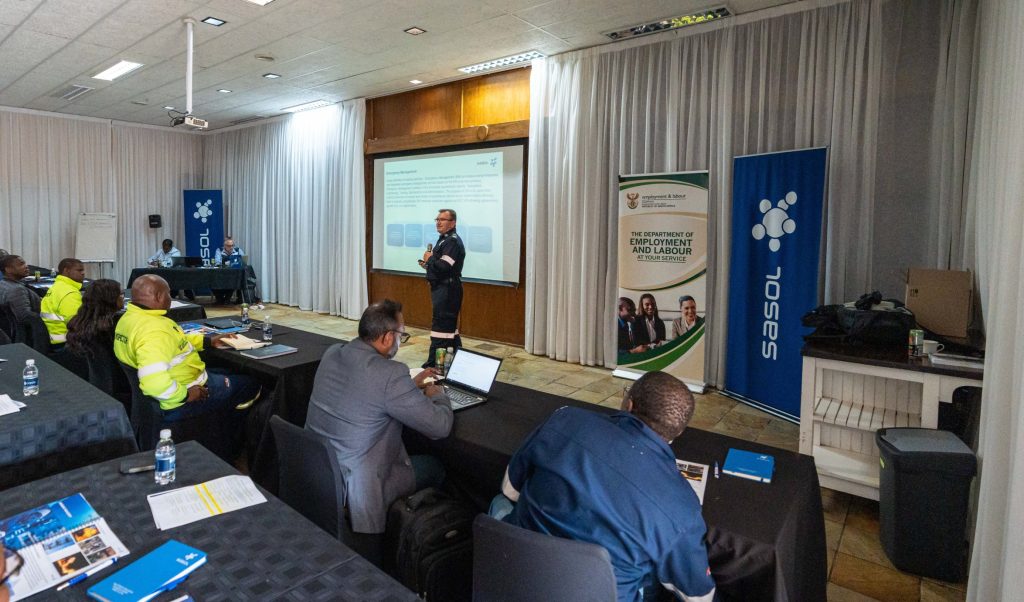
On 19 June 2023, Sasol delivered safety and emergency equipment to the Govan Mbeki Municipality (GMM) at a handover ceremony in Secunda. This contribution is aimed at boosting the capacity of municipal emergency response.

With a total value of over R500,000, the equipment consists of breathing apparatus cylinders, emergency radios, and portable speed cameras. These will equip the emergency services department personnel to respond efficiently to fires and other accidents.  

At the handover ceremony, Sasol committed to carrying the cost of maintaining the emergency radios and external antennae.

safety

Keeping employees and communities safe is one of the pillars of Sasol, and today’s handover ceremony is a continuation of a long-standing relationship of working together with GMM to improve the safety and livelihood of the community.

Also read: ANIMALS 101 – BREEDING ANIMALS CREATES A PROBLEM

Speaking at the event, Sasol Head of Community Affairs, Mashudu Ndou said: “The assets that we are donating today have the potential to enhance revenue collection for the council and curb road accidents.”

GMM Executive Mayor, Councillor Nhlakanipho Zuma said: “We appreciate this gesture by Sasol, and hope that the equipment will improve our emergency management service offering.

Previous contributions by Sasol to GMM include the revamping of the Leandra sewerage project, power supply infrastructure upgrades, and pothole repairs across the municipal area.

ANIMALS 101 – BREEDING ANIMALS CREATES A PROBLEM

BREEDING CREATES A MASSIVE OVERPOPULATION CRISIS BUT ALSO RAISE SOME SERIOUS ETHICAL AND WELFARE CONCERNS.

A human baby factory is a great business idea…… or did you frown upon imagining this form of exploitation? If this is not ok with humans, how can you justify breeding exploitation for other sentient beings? For this article, we will not address the agricultural breeding of livestock and game or for experimentation, as it is a whole topic on its own.  Today we will focus on breeding, whether by accident or deliberately, with domestic companion animals.

This is a topic I am very passionate about because our root problem in animal welfare stems from this issue. I have shared comprehensively on this topic on THE PAW COMPANY’S Facebook page, but we will touch on the basics here. You can also read my two previous articles on the benefits of spaying and neutering your pets as well as frequently asked questions, myths, and bad excuses.

For years there has been this ethical & welfare debate regarding breeding. The animal welfare arguments usually form the basis for the debate as health should always trump looks, but there is certainly an ethical argument too. The debate has mostly taken place around the breeding of animal for experimentation and livestock production. It is important to reflect on the changes in the genetic makeup of companion animals.

THE HISTORY OF BREEDING

Even since prehistoric times, humans have kept useful animals around the area they live. Over thousands of years, the domestication of dogs specifically has led to distinct types of dogs and breeding for various types of functionalities like hunting, livestock guardians, working dogs, sighthounds, tracking dogs, vermin control, etc. Nowadays many animals have become companion animals and even though many of these functionalities are not needed, those breeds are still bred.

During the mid-19th century when kennel/breed clubs developed, breeding became more intense, and many breeds developed since then. Dogs were now not only bred for functionality but for their unique mutations like shortened legs or faces, colours or textures, etc. Dog shows became a sport where you brag about the ‘’look’’ of the animal, sometimes their skills.

The first recognition of animals as ‘’sentient beings’’ (can experience feelings) which appeared in written law was in France in 1976 and has been included in Animal Welfare Acts in many countries since then. Many of these countries have very strict laws about animal welfare and breeding and they enforce the law, but in SA there is still a lot of work to be done.

BREEDERS & BROKERS

I define breeders as anyone who allows their pet to have litters and then either exploits them for financial gain, for status or gives them away for free or hoard them. So, fundamentally there is no difference for us between a registered breeder, backyard breeder, or puppy mill. They all exploit animals for financial gain and animals pay the price. We divide the breeders basically into 3 categories:

BACK YARD BREEDERS

They have a couple of animals and do nothing to prevent them from having litters. In other cases, pets are deliberately bred so that the offspring can be sold and it is often these cases where overbreeding occurs. Basically, irresponsible pet owners.

PUPPY MILLS

They mass-produce animals in poor conditions. As many as they can, back-to-back as fast as they can.

REGISTERED BREEDERS

Breeders treat living beings as commodities to be genetically manipulated for profit. It is crucial to understand that being registered does not make them responsible. The process for registration is way too easy and something we are working on. These individuals usually have a particular breed and they see themselves as ‘expert’ on the breed. Many also partake in dog shows to brag. It is either love of money or love of status that drives them. Many animals have been confiscated from “registered” breeders, by animal welfare organizations. So, this piece of paper means nothing to us! If we took away the money and status, how many people will continue to breed on purpose apart from the irresponsible owners?

Some breeders claim to be responsible, but when we have a massive overpopulation crisis and killing millions of healthy animals a year (at least 2800 a day in SA), then no breeding can be responsible or ethical. The fact that purebred animals in shelters have drastically increased over the last few years to 25 % and more is a clear sign of a deeply flawed argument.

Also, read about the bad arguments they use to justify the exploitation of animals.

Another problem that helps fuel this massive overpopulation crisis are the brokers and and animal dealers.

BROKERS

These are people who are engaged in re-selling animals. Like a middle-man who adds their profit. This includes pet shops and individuals. If you allow people to advertise on your platforms or at your shop, then you are also part of this problem. Even when you are advertising for your friends/family! We have had people who start an animal welfare organization, but support breeding or breed themselves and some who use it as a front for being a pet shop.

breeding

THE ETHICAL DILEMMA

There should be animal-ethical, political, and society-wide discussions regarding the future of pedigree breeding. Here are a few ethical questions to consider:

  • How far are we allowed to interfere in the genetic makeup of animals through breeding and genetic modification?
  • Is it acceptable to manufacture a dog that fits your wish list?
  • If a baby factory is not ok when it comes to humans, why would this be ok with other living beings?
  • Even though dogs adjust to adaptation relatively easily, should these adaptations through breeding be done for the next fashion craze, and what if the craze blows over?
  • What happens to the animal when the breeder has used them up?

THE WELFARE DILEMMA

Our concerns here are divided into mainly 4 issues, but not limited to just them and in no particular order. This includes, how the animals are kept, overpopulation, health & behaviour, and bad breeding practices.

HOW THEY ARE KEPT

Remember that the breeder mentality sees these animals as commodities and not as companions. Some of these breeders keep the animals in terrible and confined conditions and this is the part that the public does not see, but animal welfare workers witness very often.

HEALTH & BEHAVIOUR

Dogs are monoestrous breeders meaning that they have one breeding cycle per year, however, this can vary between breeds. If a particular bloodline is continuously bred this amplifies both the good and bad attributes of the breed.

Although they have bred the look they want, they have also bred breed-specific health issues for each and every breed. The breeders brag about how they guarantee health, but what they can guarantee is that a Weimaraner’s stomach could turn at some stage, that a Great Dane will have heart problems, that an Alsatian will struggle with hip issues, or that a Bulldog could have breathing difficulties etc.

When used as commodities, many of these animals do not experience play or affection nor are they allowed the freedom of expressing natural behaviour, which is one of the 5 freedoms of animal welfare. Pregnancy and birth in any species come with inherent risks to the mother and the fetus. Repeating the cycle increases the risks. Do you know that some breeders use what we call rape-stands?

Many breeders want the parents to “look good”, so they remove the pups relatively early, so the mom’s mammaries do not sag. Removing them early is bad for the mom and pups. Studies have shown that it is ideal for pups and kittens to stay with their moms for up to 12/13 weeks. They learn valuable behaviour from their mom and if the breeder really cared about that then they would not let them go at 8 weeks or even earlier as the latest trends show, plus the breeder can make sure they get all their vaccinations up to 12 weeks. Letting them go early saves the breeder money. These sentient beings also experience the loss of the pups/kittens as any mother would with her baby. Don’t you think that matters?

BAD BREEDING PRACTICES

How they are disposed of

If they maybe just used the bitch for four years, what happens to her afterward? They can’t possibly keep all of them if they made a business out of it? The average lifespan of dogs is much higher than just 4 or 6 years and the cost of proper care is not cheap. You do the maths. Many of them are dumped at shelters, sometimes even moms with the last litter or while still pregnant. Animals, like some parrots, easily live up to 60 years.

Tail docking & ear cropping

Tail docking and ear-cropping are the practices of removing an area of a dog’s tail or ear. It is purely for cosmetic reasons and is considered cruelty and illegal in many countries, including SA.  In addition to being cruel and unnecessary in addition to the ill effects it has on things like posture, and body language, and how bad you affect their dog-to-dog communication.

Overbreeding, inbreeding & early breeding

Overbreeding involves breeding an animal more than their body can safely handle resulting in detrimental health effects to the mother and her puppies while contributing to the overpopulation. Especially with puppy mills, inbreeding also occurs which can be detrimental for health. Breeding animals way too early is another concern.

Pushing limits

Some breeders push the limits causing extensive health issues for the dogs they are breeding. English bulldogs are a great example of this. Their breeding is heavily restricted in many countries or even banned.

Promoting purebred superiority

When people hear dog breeding, they hear purebred dog breeding. Often a mixed breed or rescue dog is referred to as a downgrade or “mutt”.

Not properly vetting the buyers:

How extensively do you think the breeders, who see these animals as commodities, really vet their buyers? How many breeders drive to the buyer’s house? Virtual home checks are not acceptable for me and follow-ups are crucial if you care about these animals. I believe animals are already in the wrong hands when they are from a breeder, so how can the wrong hands determine what is best for this animal?

breeding

REDESIGNED DOG BREEDS

Dr. Karen Becker a veterinarian who understands the overpopulation crisis and genetics has written about how breeding has deformed once healthy dog breeds. She looks at 8 breeds specifically including what we call the poster child of bad breeding namely the English Bulldog. These are not the only ones though.

“Breeders may consider them ‘improvements,’ but when you take a closer look at how they’re affecting the dogs’ quality of life and longevity, but they’re anything but! Before humans began their “remodelling” project and playing god, dogs like the Bull Terrier, Boxer, English Bulldog, and Dachshund were well-proportioned, generally healthy, and physically active, but not anymore.

Over the years, several breeds have been deliberately fashioned to exaggerate certain physical traits at the expense of their health, longevity, and quality of life. Today’s German Shepherd Dog, with his sloped back and incoordination, is no longer the canine athlete he once was; the modern-day Pug comes with an extensive list of brachycephalic-related disorders that make his health a constant concern.Breeding physically resilient, healthy dogs has been replaced with breeding for the sole purpose of attaining twisted beauty pageant awards, and breeding for aesthetics has cost us the health of beloved breeds.”

As a veterinarian, Dr. Karen has seen first-hand the problems created when dogs are bred exclusively to achieve specific features, without concern for their health, mobility, or quality of life. It is deeply disturbing that, with all we know about the suffering these animals endure, breeders persist in exaggerating their dogs’ physical characteristics, even if it means sacrificing their health, and national kennel clubs condone it.

A note on genetics.  Anyone who knows anything about breeding knows that forcing two dogs that “look good”, to mate (whether they have papers or not) is not a guarantee of a good litter. Stellar genetics needs testing and an understanding of genetics. It is about bloodlines, not looking nice. Often an excuse for the exploitation of animals through breeding is that they care about the future of the breed.

I don’t buy into that narrative. If you are not doing genetic testing, behavioural assessments, keeping pups with mom for 12 weeks, and a whole bunch of other responsible actions then you do not really care about the future of that breed. If you crop ears or dock tails then you also do not care about the animals because it is cruel and unnecessary.

I agree with the Science and Dogs blogger, Caen Elegans, who concludes:

“No dog breed has ever been improved by the capricious and arbitrary decision that a shorter or longer or flatter or bigger or smaller or curlier ‘whatever’ is better. Condemning a dog to a lifetime of suffering for the sake of looks is not an improvement; it is torture.”

We domesticated these animals and created this problem, so it is now our moral duty to fix it and do better for these animals who do not have a voice in the matter. This animal welfare issue needs to be addressed through education, sterilization campaigns, and stricter breeding regulations.

WHAT CAN YOU DO?

  • Sterilize your pets.
  • Keep them safe in your yard.
  • Micro-chip them & put a tag on their collar.
  • Don’t support ”free to good home” ads.
  • Don’t support breeders of any kind or brokers including pet shops that sell live animals.
  • Adopt don’t shop (without physical home checks and sterilization their contracts it is not adoption, even if the organization is registered).
  • If you are familiar with the breeder, then invite them to a shelter with you.
  • Educate others.

Capitalizing on the life of an animal, especially since they don’t have the luxury of a choice, for personal and financial gain is one of the most selfish acts and causes many to lose their lives. Asking people nicely to consider the well-being of these animals doesn’t seem to have quite the effect and for that reason, we are working on legislation to put an end to the unnecessary killing of healthy animals because there are just not enough homes.

Next week we will look at why adoption is the only ethical option!

WHEN YOU KNOW BETTER, DO BETTER!