Africa’s premier solar car event, the Sasol Solar Challenge (SSC), returns for its 16th year in September 2024, promising an exhilarating blend of innovation, competition, and sustainability. With a striking new route, record-breaking female participation, and participation from the world’s leading solar car teams, the SSC is set to solidify its place among the top solar events globally.
Discover the All-New 2024 Route: A Journey Through South Africa’s Scenic Heartland
This year’s SSC unveils a brand-new route that takes competitors on an epic journey from Secunda, Mpumalanga, to the vibrant city of Cape Town. This 8-day challenge will test the limits of solar technology against South Africa’s most challenging and beautiful terrains. The route promises to be the most scenic yet, offering breathtaking views that will captivate competitors and spectators alike. This unique route not only adds to the technical difficulty of the challenge but also enhances the visual appeal, making it a must-see event both on the ground and online.
Meet the Teams: Champions Return for the Ultimate Solar Showdown
The 2024 SSC will feature 14 top-tier local and international teams, including the reigning champions and top contenders from the World Solar Challenge. These teams, renowned for their engineering prowess and strategic innovation, will push the boundaries of what solar-powered vehicles can achieve. The participation of these world-class competitors reaffirms the SSC’s status as a key player on the global stage, drawing international attention and raising the stakes for all involved.
Why the Sasol Solar Challenge Stands Out
What sets the SSC apart from other solar events is its unique blend of innovation, strategy, and endurance. Competitors must navigate not only the technical challenges of solar vehicle design but also the strategic complexities of route planning and energy management. Breakdowns and obstacles are all part of the journey, but it’s the teamwork and innovative problem-solving that define the SSC experience. This event isn’t just a race; it’s a testament to human ingenuity and the relentless pursuit of sustainable mobility.
Rob Walker, Director of the Sasol Solar Challenge, emphasizes the significance of these elements: “Teamwork, innovation, and strategy are all central to the Sasol Solar Challenge, with teams required to not only navigate the technical challenges of the route and their solar-powered cars but also strategic elements including route planning and energy optimisation.”
Engage with Us: Fan Engagement on a Global Scale
The 2024 SSC is more than just a competition; it’s a celebration of solar technology and sustainability, designed to engage fans both on the ground and online. Spectators along the route can look forward to interactive activities, while those following from around the world can join the excitement through live streams, social media updates, and exclusive behind-the-scenes content. Whether you’re cheering from the sidelines or tuning in from afar, the SSC offers something for everyone.
Walker further encourages fan participation: “We believe that the future of mobility lies in sustainable solutions that enhance transport systems while also protecting the planet. With this year’s event, we want to emphasize the importance of embracing innovative technologies to reduce our carbon footprint and promote clean transportation.”
Innovation, Technology, and Strategy at the Core
Innovation is at the heart of the SSC, and this year’s event is no exception. As Walker noted, “Breakdowns are common, demanding teamwork and innovative solutions to get competitors to the finish line in an epic showdown that provides inspiration for future entrants and exciting viewing for spectators.” This year, expect to see innovation in action as teams battle the elements and each other to reach the finish line.
Celebrating Women in STEM: Record Participation in 2024
The 2024 SSC marks a significant milestone in the event’s history, with a record number of female participants across various roles—from drivers and engineers to key figures in communication and marketing. This year’s focus on gender diversity is a powerful statement about the growing role of women in STEM (science, technology, engineering, and mathematics). Sasol is proud to highlight the achievements of these women, who are not only competing but leading the charge towards a more inclusive future in sustainable technology.
Elton Fortuin, Sasol’s Vice President of Group Brand and Communications, expressed his excitement: “We are very encouraged by the increased number of women participants in both the main challenge and the school programme. The event is set to become even more exciting, and we look forward to seeing women participants giving it their best and hopefully grabbing a podium finish at the end.”
Inspiring the Next Generation
Beyond the main competition, the SSC continues to inspire future generations through its dynamic Schools Programme. This initiative brings the excitement of the SSC to young learners, fostering a passion for STEM through interactive activities and educational workshops. As the solar cars race across South Africa, the SSC’s Schools Programme ensures that the spirit of innovation reaches every corner of the country.
Sasol’s Commitment to Renewable Energy
Sasol is committed to advancing renewable energy solutions. The SSC is a bold statement of this commitment, showcasing how innovation can drive a more sustainable future. Fortuin adds, “In Sasol’s own operations, we’re making strides toward our ambitious goal of securing 1,200 megawatts of renewable energy by 2030 – enough clean energy to power over 700,000 households. To date, we’ve struck deals for over 750 megawatts, with several projects already under construction and set to come online soon. These developments mark a significant milestone in our commitment to sustainable energy.”
Join Us on This Thrilling Journey
The 2024 Sasol Solar Challenge is an event like no other, bringing together the best in solar technology, innovation, and human endurance. We invite you to be part of this incredible journey, whether by following the route in person or engaging with us online. Witness the future of mobility unfold as teams from around the world push the limits of what’s possible with solar power.
SPAYING AND NEUTERING HAS MANY BENEFITS, INCLUDING HEALTH, BEHAVIOUR & COMMUNITY BENEFITS.
When it comes to the animals we choose to share our lives with, it is our responsibility to keep them safe, and healthy and to meet all their needs. We also need to make sure that they do not become a nuisance in our communities. There are two major reasons why we promote spay & neuter:
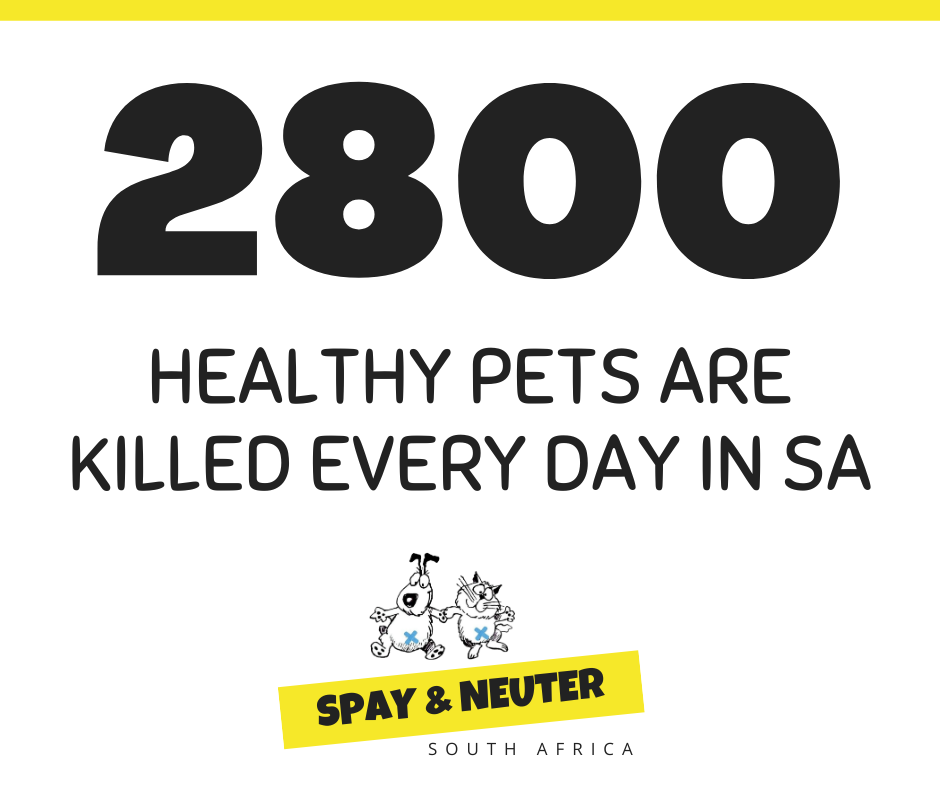
1. We have a massive overpopulation crisis in SA and worldwide. It is so bad that around 2800 healthy animals are HUMANELY KILLED (Euthanized) DAILY, IN SA!
2. It can be beneficial for their health & behaviour!
We will get back to those in a moment, but first, let’s look at the definitions and methods used for spaying and neutering.
At maturity (6-9 months of age) male dogs and cats are capable of breeding. Female dogs experience a “heat” cycle approximately every six months, depending upon the breed. A female dog’s heat cycle can last as long as 21 days during which your dog will leave bloodstains in the house and may become anxious, short-tempered and actively seek a mate. Female cats can come into heat every 2 weeks during breeding season until they become pregnant and they can fall pregnant as young as 4 months of age.
WHAT DOES SPAY & NEUTER MEAN?
Recognizing the difference between sterilization and desexing (traditional spay and neuter) is important. Whereas the former procedure eliminates a dog’s ability to procreate, desexing sterilizes but also eliminates the dog’s ability to produce sex hormones for the remainder of their life.
Vetcare.com defines it as follows: The word “spay” refers to the sterilization of female pets. During the ovariohysterectomy, or the typical “spay”, the ovaries, fallopian tubes and uterus are removed from a female dog or cat. The term “neuter” refers to the castration of male pets. During orchiectomy or the typical “neuter”, the testes are removed from a male dog or cat.
Both the spay and neuter procedures make them unable to reproduce and reduce or eliminate breeding-related behaviours. In females, it eliminates her heat cycle.
Editors note: This article is a reprint from 14 June 2023.
METHODS USED
According to Dr. Karen Becker, traditional spaying and neutering are the only techniques vets are currently taught, and we need to change that. Each of the following comes with its own risk-benefit analysis and might not mean zero risk of pregnancy. Keeping the testes or uterus increases the risks for infections and cancers, for example.
MALES
Neuter where testes are removed.
Vasectomy where testes are kept intact.
FEMALES
Tubal ligation – similar to “tube tie”
Ovary sparing spay – removal of uterus and cervix only.
Overiectomy – referred to as laparoscopic spay. Removal of ovaries, but not the uterus.
Ovariohysterectomy – removal of ovaries and uterus. (Traditional full spay)
Choosing to keep an animal intact (medical reason or not) requires a highly……I mean highly responsible pet guardian (owner). Keep in mind a guy called Murphy and the massive overpopulation crisis! Let’s get back to the reasons to spay and neuter.
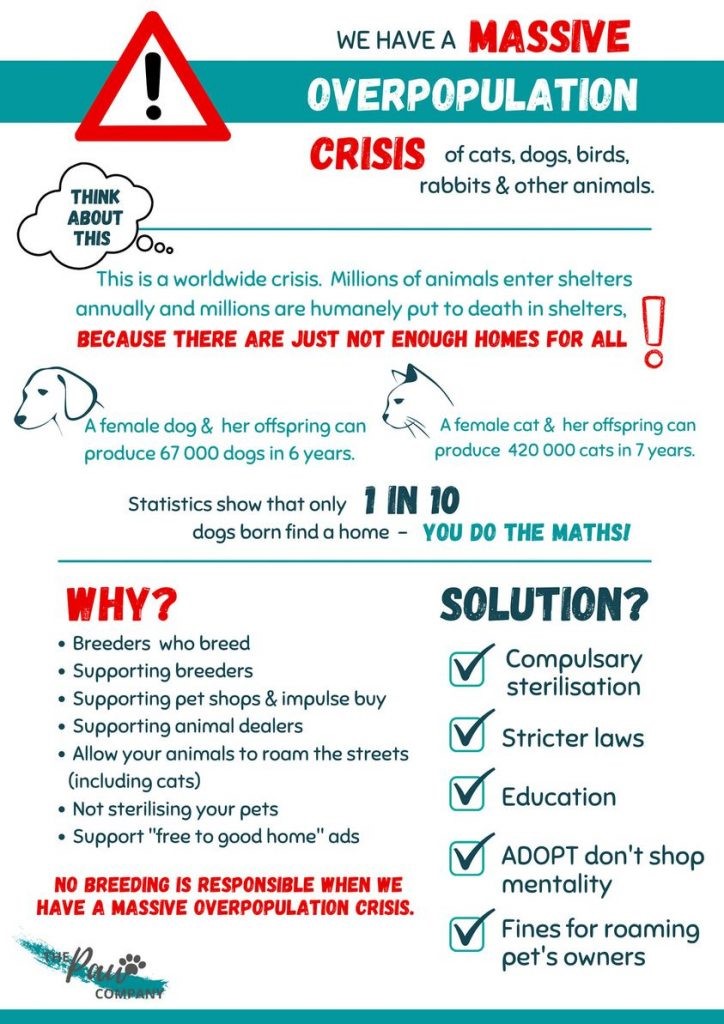
1. THE PET OVERPOPULATION CRISIS.
Our biggest struggle in animal welfare is the MASSIVE OVERPOPULATION CRISIS, especially cats and dogs, but also parrots, rabbits and other animals. There are just not enough homes for us to adopt our way out of this mess. Breeders breed them faster than we can save them. If there are fewer animals then fewer of them can fall into the wrong hands and be neglected or abused.
You need to understand the magnitude of this overpopulation crisis and then, hopefully, you will understand why many of us advocate so hard for it.
According to Rescue Rehab SA, approximately 1 million dogs and cats are euthanized in South Africa every year, that is 2740 a day and likely an underestimation!
One female cat and her offspring can exponentially produce 370 000 cats in just seven years and one female dog and her offspring can exponentially produce 67 000 dogs in six years. We are not even talking about the males who can impregnate multiple females in the same time.
Another estimation is that only about 1 out of every 10 dogs born find a home.
According to the Humane Society of the USA, a cat or dog is euthanized at shelters every 10s.
A report by Mars Petcare showed 224 million animals are homeless in the USA, UK, SA, Mexico, Greece, Russia, China, India & Germany and about 30% of animals in SA are homeless.
At least one in four pets brought to shelters are purebred and this number is climbing.
WHY DO WE HAVE THIS MASSIVE OVERPOPULATION CRISIS?
We are in this mess because people do not sterilize their pets, they support breeders and pet shops or give or sell these sentient beings to anyone. Breeders selfishly exploit animals for financial gain and fuel the massive overpopulation crisis. Many people do not keep their animals, including cats, safe in their yards so they roam the streets where they can get lost and end up in shelters or will likely fall pregnant or get another pregnant.
Image by The Paw Company
2. IT IS GOOD FOR THEIR HEALTH & BEHAVIOUR
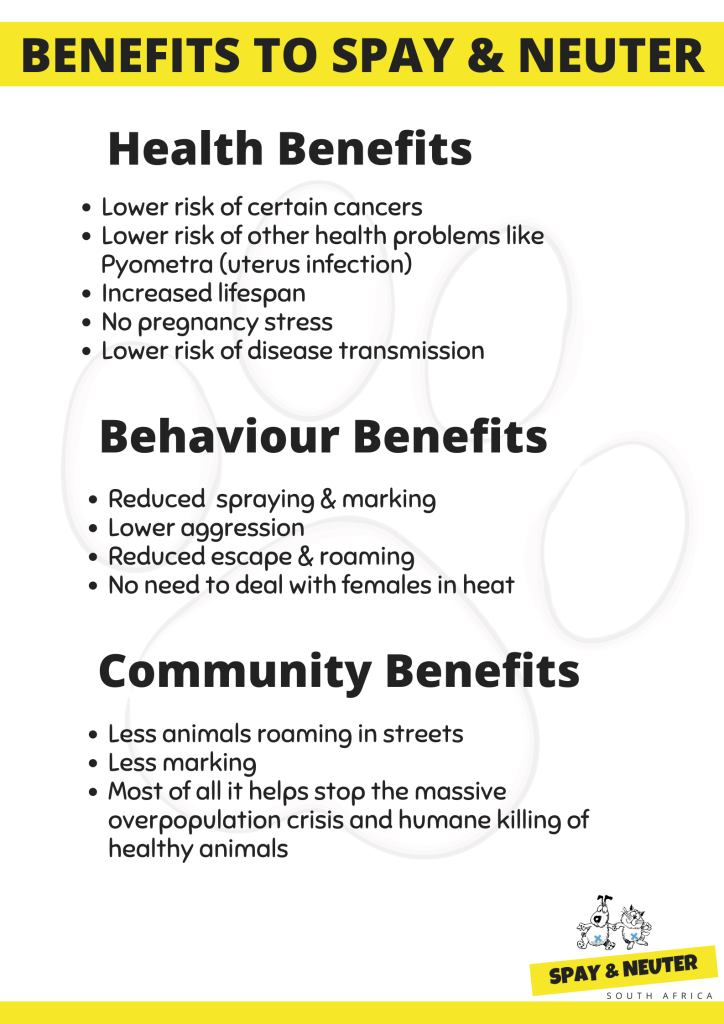
When you spay and neuter your pets it can lead to longer and happier lives. There are many health benefits of spaying and neutering which include a lower risk for certain diseases like cancers and pyometra. It improves behaviour, especially when dealing with females in heat and males marking or spraying and wandering out of the yard in search of these females which they can smell from far away.
BENEFITS OF STERILIZATION
Your pet will live a longer, healthier life.
Cancer and other malignant conditions are the number one cause of death in adult dogs. In a cancer study with 3452 dogs, the researchers found that males tend to be diagnosed at a younger age than females BUT NEUTERED MALE DOG dogs tended to be diagnosed when they were significantly older than intact dogs. Spaying and neutering help prevent certain types of cancers like mammary tumours, testicular cancer, prostate disease and sexually transmitted diseases.
For females, it decreases the risk of developing Pyometra (pus in the womb) which is very dangerous.
Your spayed female won’t go into heat and cause behaviour changes for her and the males looking for a mate.
An intact male will do just about anything to find a mate! That includes digging his way under the fence to escape from the yard and once he’s free to roam, he risks injury in traffic and fights with other males or being stolen.
Intact male dogs and cats may mark their territory by spraying strong-smelling urine all over the house.
Your pet will not cause an upheaval in the neighbourhood.
Neutered male cats and dogs fight less, resulting in fewer battle scars, and the spread of contagious diseases and abscesses.
Spaying and neutering your pet is good for the community because stray animals pose a problem for a few reasons including, they can get into fights, cause car accidents, becoming a nuisance and frighten people and other animals.
There are risks associated with pregnancy and it takes a toll on the mom’s body. Many are not always able to give birth naturally, and this incurs high veterinary costs as caesareans may need to be performed and/or other complications may arise. Many animals die in labour. It certainly eliminates the stress associated with pregnancy.
Veterinary care related to unsterilised animal health issues (cancers, fights, pyometra) can be expensive. Providing proper care for the litter is also expensive.
Spaying and neutering help fight the pet overpopulation. Every year, millions of cats, dogs and other animals of all ages and breeds are euthanized or suffer as strays, because there are just not enough homes. Sterilization takes a few minutes, but the suffering of an abandoned animal takes a lifetime.
The costs in terms of euthanase, burial/incineration and even human stress are enormous.
Image by Spay and Neuter SA
THE BIGGEST CRITICISM FOR SPAY & NEUTER
A topic that creates a lot of controversy in some circles is whether to do full spay and neuter or keep some sex organs intact, to spay or neuter early or later, or whether to spay or neuter at all. There are always two sides to a coin and it is important to look at both sides.
Some research shows that with desexing spays and neuters – surgical procedures that remove the gonads and associated sex hormones – it can have a long-term negative impact on the animal’s health. The research, for the most part, suggests this more in large dog breeds, in only a few studies. The advice then is to have them spayed or neutered after they turn one year old, but then again, they need a highly responsible owner. You must also remember that the relationship between sex hormones, health and wellness is more complex and can be influenced by many aspects like sex, breed, age, environment and more.
Some suggest they develop other cancers and ACL (knee ligament) injuries are another favourite to throw in. Many things can cause cancer including their diet, genetics and other pollutants (lawn chemicals, cleaning products etc). I work with human ACL rehab and there are a few factors to those injuries. FYI….people who are not spayed/neutered get them too.
Spay and neuter SA have looked at much of the evidence presented and for me, currently, the benefits still outweigh the potential health risks. Keep in mind, there may be exceptions and we support doing what is best for the individual pet too. When it comes to the ability to spay or neuter early, it depends on the vet’s skills and the pet’s individual health.
So, to spay and neuter or not and when? Discuss it with your trusted veterinarian. My advice is…….volunteer at a shelter to help you decide on it in general and then also look at your individual pet, their breed and needs.
I have not yet seen these negative effects myself and I think there is more research needed on this as single case studies of low quality, are not enough to convince me. With this massive overpopulation crisis worldwide, the benefits far outweigh the risks.
What are alternatives then?
When a pet is left intact, it requires a highly responsible pet guardian who is fully committed to and capable of preventing mating and litters. Another option is sterilizing so the testes or ovaries can continue to produce hormones. This can be accomplished and I would possibly consider support for the vasectomy and ovary-sparing spay if enough high-quality studies prove negative long-term health effects with full spay or neuters. Keep in mind that the risks for cancers or disease in those organs will remain. If long-term health issues do occur after spaying or neutering, it seems that hormone restoration therapy may be beneficial to symptomatic spayed and neutered dogs.
Also, read how you can help lighten the load for animal welfare.
WHY ARE RESCUES SO STRICT WHEN IT COMES TO STERILIZATION?
It is counterintuitive to our mission as rescuers to allow puppies, kittens, birds or bunnies to be homed where there are any unsterilized animals. We would not have this massive overpopulation crisis if people sterilized their pets. Be extremely weary of any organization that is not asking why you have unsterilized pets, who sells animals (not doing home checks and contracts), or who breeds themselves, and we have such organizations locally! We believe that responsible pet guardians sterilize their pets, so even if you adopt a dog, we want your bunny to be sterilized.
BE PART OF THE SOLUTION AND JOIN THE SPAY & NEUTER REVOLUTION
Changing the fate of animals and the massive overpopulation crisis resolves around three principles namely sterilization, education, and stricter and enforced laws for those who don’t respond to being asked nicely. No breeding can be “responsible” when we have a massive overpopulation crisis and when you support breeders, pet shops or free animals, you are part of the problem.
Spay & neuter your pets.
Share, educate & advocate for it.
Donate to spay & neuter campaigns.
Support petitions and legislation on the topic.
Don’t support animal dealers, breeders, or pet shops that fuel the overpopulation crisis.
Keep your animals safe in your yard.
Adopt from reputable organizations. This is the only ethical option!
Although we promote adoption, we can’t adopt our way out of this problem, so we need to fix (pardon the pun) it. We have heard all the bad excuses and debunked the myths. I educate about it daily on the SPAY & NEUTER SA page and we are hopeful for future legislation!
Can you see why reputable animal welfare organizations are all up in your business about spaying and neutering?
Join us next week as we learn more about animal care and welfare!
Johannes Stegmann Theatre in Secunda, is it an R3m hot potato or the tip of the iceberg?
The Johannes Stegmann Theatre was built by Sasol in 1984 and donated to the former Secunda Town Council on the 6 of August 1986 after the Secunda Health Committee acquired the town council status on the 5th of November 1986. The theatre is now owned by Govan Mbeki Municipality.
It quickly became known as a world-class facility for hosting performances from all over South Africa. But to everyone’s surprise, the theatre fell into disuse.
In 2015 Govan Mbeki Municipality (GMM) reported that the status of the theatre has since proven to be cumbersome for the municipality to maintain and keep at a market standard that promotes its use by local, national and international patrons. The municipality does not have funding to purchase the productions and ensure good maintenance of the building on a regular basis.
Some meetings were held between the municipal officials and the Department of Culture, Sport and Recreation about the deteriorating state of the theatre.
An introductory meeting was on the 23rd of January 2015 at the Riverside Government Complex, Nelspruit, to discuss collaboration with the programme and maintenance of facilities.
A request for funding to purchase shows was also made to the department request.
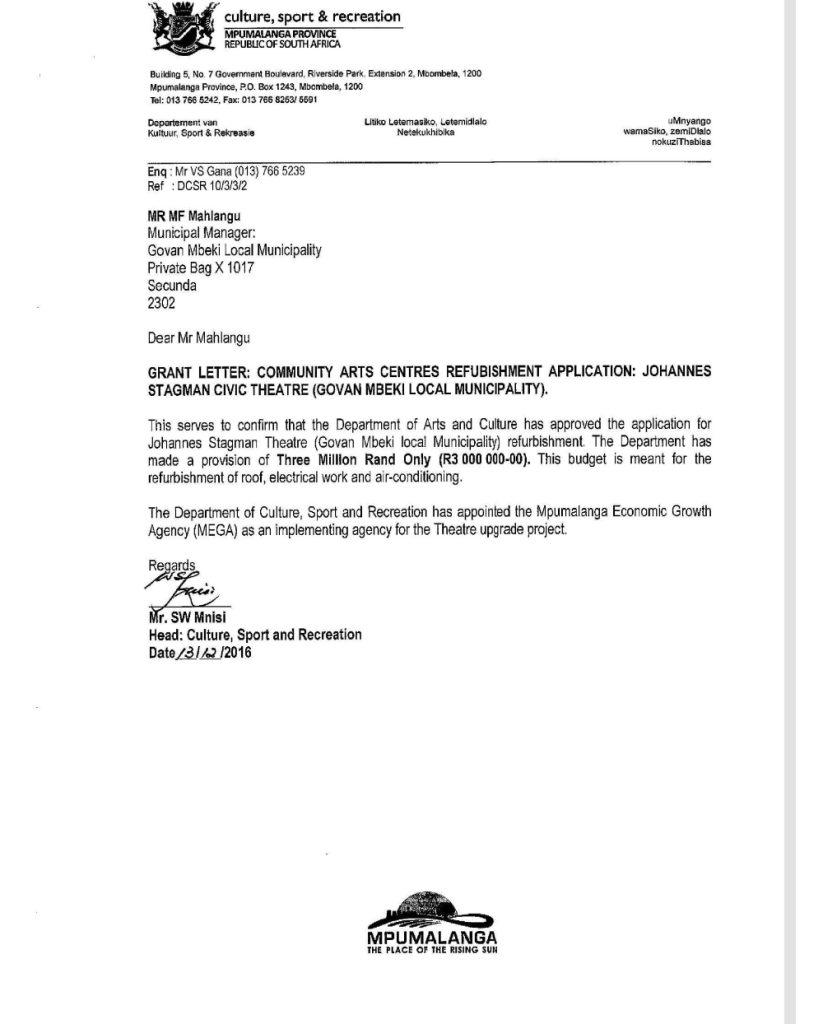
In March 2016, a meeting was held by the Mpumalanga Department of Arts & Culture with the National Department of Arts & Culture and municipal theatres. A business plan was then prepared and submitted.
On the 9th of November 2016, a meeting convened, and the National Department conveyed the news that the business plan was approved and the allocation was R3 000 000,00. It was agreed that the MEGA would be the implementing agent.
The DA had on several occasions expressed their concerns regarding the Mpumalanga Economic Growth Agency (MEGA). Mega has been labelled as a cash cow for ANC activities through several irregular transactions, such as the rental of the MEGA office block in Mbombela where they (MEGA) currently rent this office from the Tender Cartel for an exorbitant amount of R1 459 631, plus facilities management fee of R193 553 per month.
This news is especially worrying if taken into consideration that MEGA were to manage the R3m that was to be used for the Theatre refurbishment.
The theatre has fallen into considerable disrepair and will need huge amounts of money to restore to its former glory.
In June 2023, the Democratic Alliance (DA)revealed that the municipality’s funding model request included purchasing the latest sound and lighting equipment, among other factors.
“The DA in Govan Mbeki has called on the HOD of Culture, Sports & Recreation, Godfrey Ntombela to institute an investigation into the alleged missing R3 million meant for refurbishments at Johannes Stegmann Theatre.” Read the June 2023 statement.
DA Cllr Encee van Huyssteen in the Johannes Stegmann Theatre.
During an oversight at the theatre, the DA discovered the following:
The lighting was not up to standard, in some rooms there was no lighting at all
There are makeshift cables right across the audience centre
Windows were removed in the sound booth
The sound system is old and non-functional
Water leaks in the basement
Broken tiles in some of the bathrooms
The electrical backup supply unit has been exposed to water
‘In their funding request to the department, the municipality emphasized that the theatre needed to be upgraded to ensure that there was a sustainable business operating model for creatives,’ the DA said in their June 2023 statement, “They also reiterated that it will help in restoring the dignity of this town.”
The minister of the Department of Sport, Arts and Culture Gayton McKenzie’s office will reportedly investigate the case of a ‘missing’ R3 million allocated for the maintenance of the Johannes Stegmann Theatre in Secunda.
This is good news for the GMM community as several groups have tried to revive the theatre only to run into a brick wall of red tape and the poor state of the theatre.
Residents have now resorted to using other venues to host their shows and functions. A golden opportunity was lost for the municipality.
It must be noted that the theatre poses features that can easily attract businesses, enhance tourism, create jobs and provide entertainment to the Govan Mbeki residents.
The DA raised the issue of funds that were meant for theatre refurbishments in the council. This turned out to be a futile exercise, none of the mayoral committee members, nor the mayor at the time were able to give a clear explanation.
The Democratic Alliance (DA) calls on the Mpumalanga Government to urgently address the issues of dilapidated roads and criminal activities in the Tourism and Hospitality Sectors of the province before tourists stop visiting us completely.
“According to the Tourism 3rd Quarter Report for 2023, Mpumalanga had the second-highest international arrivals, the highest being Gauteng. Mpumalanga needs to improve and keep our position as one of the most visited provinces in South Africa, so we need to act urgently to address the issues of crime and dilapidated roads,” said Trudie Grove’ Morgan MPL – DA Spokesperson on Finance, Economic Development and Tourism
Trudie Grove-Morgan
“Just this week as we celebrate the Tourism Month, four (4) European tourists, two Dutch and two from Germany, were targeted by hijackers in two separate incidents in Badplaas and near the Oshoek Border Post,” said Trudy to The Bulletin, “Such attacks are concerning as the tourism sector will suffer – leading to job losses.”
The Federated Hospitality Association of South Africa and the Kruger Lowveld Chamber of Business and Tourism, have recently raised their concerns about the dilapidated roads and criminal activities around tourism establishments across the province of Mpumalanga, especially through the world-famous Panorama Route, which is considered the jewel of tourism in the province.
Currently, Mpumalanga has an expanded unemployment rate of 48.7% as reported in the recent Quarterly Labour Force Survey (QLFS); and the Mpumalanga Tourism and Hospitality Sectors have a potential to close the unemployment gap, but with daily reports of criminal activities towards tourists, spells doom as they will stop coming to the province completely. Some of the crimes reported against tourists include the following: hijackings, attempted hijackings, robberies, attacks on tourists and break-ins and theft at tourism establishments.
In 2022, Tourism in Mpumalanga managed to contribute between 2.3% and 3.6% towards the Growth Domestic Products (GDP), however, the contribution to employment is higher as it is a labour-intensive industry.
Tourism does hold the potential to be an engine of growth in Mpumalanga, that is if the provincial government can prioritise fixing roads, act against crime, and come up with initiatives to stimulate this market. This province has the potential to strategically promote our unique attractions like the Panorama Route and Kruger National Park, and promote our diverse cultural offerings, natural heritage, and different traditional dishes to attract visitors, thereby stimulating economic activities, supporting local businesses, and increasing revenue through tourism-related expenditures.
The DA strongly believes that the government should come up with sustainable initiatives first to grow the tourism market, such as focusing on maintaining the roads that lead to these destinations, ensuring that crime prevention strategies are in place to protect tourists as well as maintaining the tourist sites, ensuring the bathrooms are clean.
SUSPECT DUE TO APPEAR IN COURT FOR ATTEMPTED MURDER AND ROBBERY OF DUTCH TOURISTS.
A 42-year-old suspect is expected to appear before the Barberton Magistrates Court on Monday, 16 September 2024, for attempted murder and armed robbery which took place on Tuesday, 10 September 2024 at about 11:40 along R35 road between Barberton and Badplaas. It is alleged that on the day in question, the couple( Dutch tourists), were driving a rented Toyota Cross when a dark-coloured VW Polo passed them. They kept on driving when the Polo with three occupants drove parallel to their vehicle and fired at the driver, injuring the driver on his right hand. They stopped their vehicle.
Three suspects pointed at the victims with firearms and robbed them of their belongings, two cellphones. three bank cards, R5000 cash, passports, and an international driver’s license. They fled from the crime scene towards Barberton.
On Thursday, 12 September 2024, the Hawks led an intelligence-driven operation following information regarding the whereabouts of the suspect. A team comprising Nelspruit-based Serious Organised Crime Investigation, Crime Intelligence and Flying Squad operationalised the information. The suspect was arrested and found in possession of the stolen items belonging to the victims.
The suspect was charged and detained pending his first court appearance on Monday. Two suspects are still at large. The victims’ properties and the rented vehicle were recovered and confiscated. The Provincial Head of the Directorate for Priority Crime Investigation, Major General Gerber applauded the multidisciplinary team for the speedy arrest of the suspect and recovery of the stolen property.
He further gave a stern warning to criminals who threatened and harmed tourists’ safety as they visited the province and boosted the economy. “Such senseless attacks threaten the economy and have a negative impact on the rest of the world,” said Major Gerber to The Bulletin
The Hawks team took over the investigation to ensure the speedy arrest of the culprits. He further requests anyone with information regarding the whereabouts of the outstanding two suspects to contact the Investigating Officer, Detective Warrant Officer Elbert De Lange on 071 481 2815. The General further assured the public that the information provided would be confidential. He concluded.
EMPOWERING ANIMAL RESCUE THROUGH COMMUNITY SUPPORT.
Animal rescue is not just a job; it’s a calling that demands immense physical and emotional resilience. Those who dedicate their lives to this cause face daily challenges that go far beyond the average workday. They juggle the complexities of rescuing, caring for, and finding homes for animals, all while managing their personal responsibilities and often also full-time jobs. Yet, despite their unwavering commitment, rescuers often find themselves overwhelmed by the sheer volume of requests for help, with their limited resources.
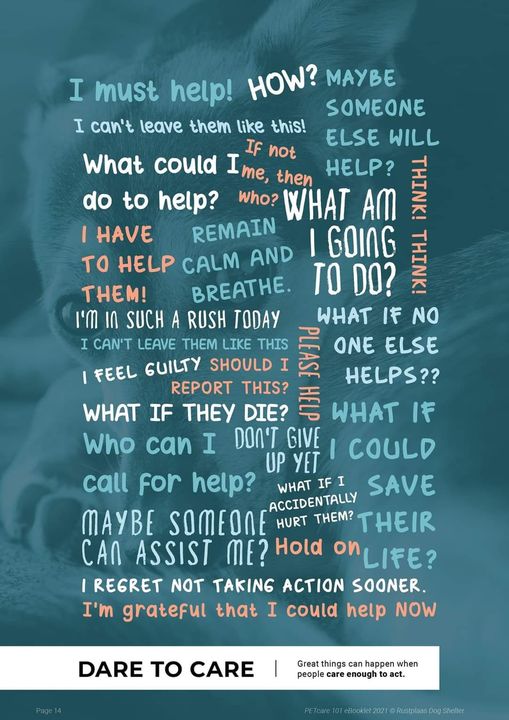
Animal rescue is a relentless, emotionally draining endeavor and when the community fails to support these efforts adequately, the burden on rescuers increases significantly. The common plea for help on social media saying: “someone help the animal” overlooks the reality that you are someone and you can do something. For the rescuer, your request for help might be the 10th one of the day and if you can help more than just doing a post for help, then they can deal with 9 situations and you with one.
This article is not meant to make anyone feel guilty or to stop posting for help, but rather to help you understand the reality rescuers face and that there is a need for a more engaged and supportive approach from the public.
THE CRUCIAL ROLE OF COMMUNITY INVOLVEMENT
To bridge the gap between need and support, it’s essential for the community to actively participate in animal welfare. The mantra should be: You are someone; you do something. This principle involves more than acknowledging the issue—it means taking actionable steps to support rescuers and the animals they care for, especially with individual situations that may arise in your area. We understand that not everyone is always in a position to help at the time, but if you can, then do lighten the load on the rescuers. Yes, it might be a day or two inconvenience for you but it helps that animal and the rescue who is already overwhelmed every day. Let’s explore some ways to do this below.
First of all, the best way to help is if everybody is a responsible owner/guardian. This is important so that your animals do not overwhelm the system and become statistics and the responsibility of rescuers.
Prevent escape and roaming the streets.
Spay and neuter your pets, so your female in heat does not attract unsterilized males and your unsterilized male doesn’t go on a walkabout.
Provide them with food, water, love, care, and enrichment. Read more here on why love is not enough.
Get them immediate veterinary care when needed.
Take responsibility for your animals.
AS A RESPONSIBLE COMMUNITY
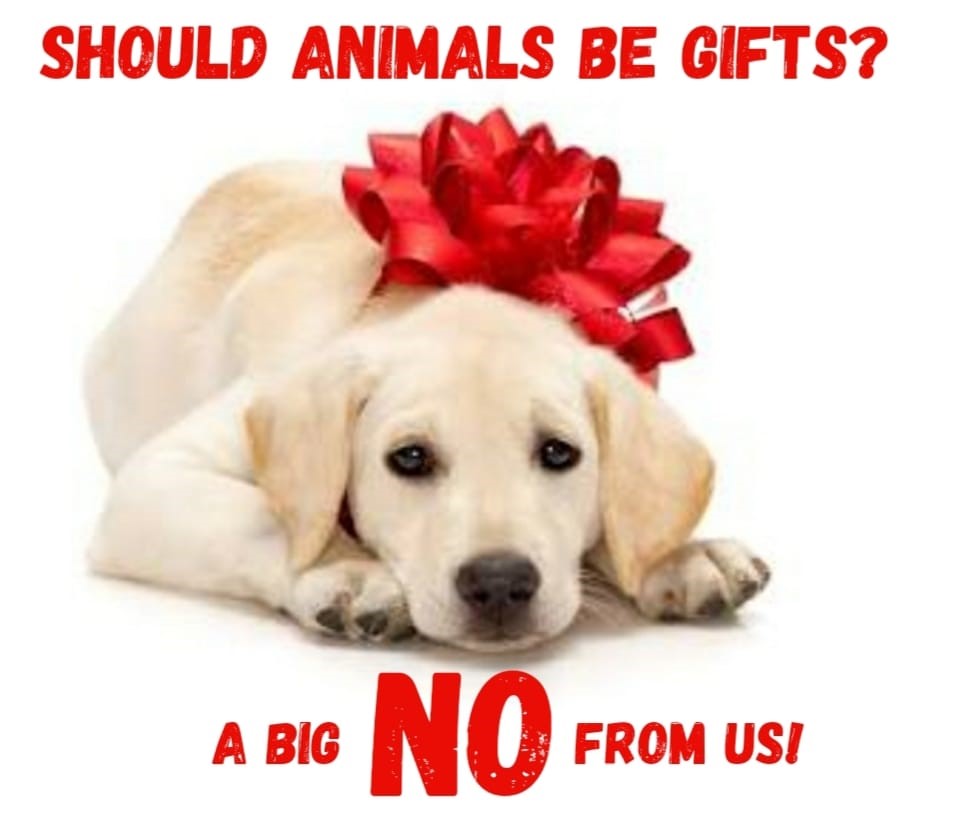
Don’t give animals as surprise gifts to anyone.
Do not breed or support breeders, sellers/brokers, or pet shops. We have to euthanize thousands of healthy animals a day in SA because there are just not enough homes.
Do not rehome through or support “free to a good home” advertisements.
Report cruelty to the authorities.
Adopt don’t shop.
Educate others.
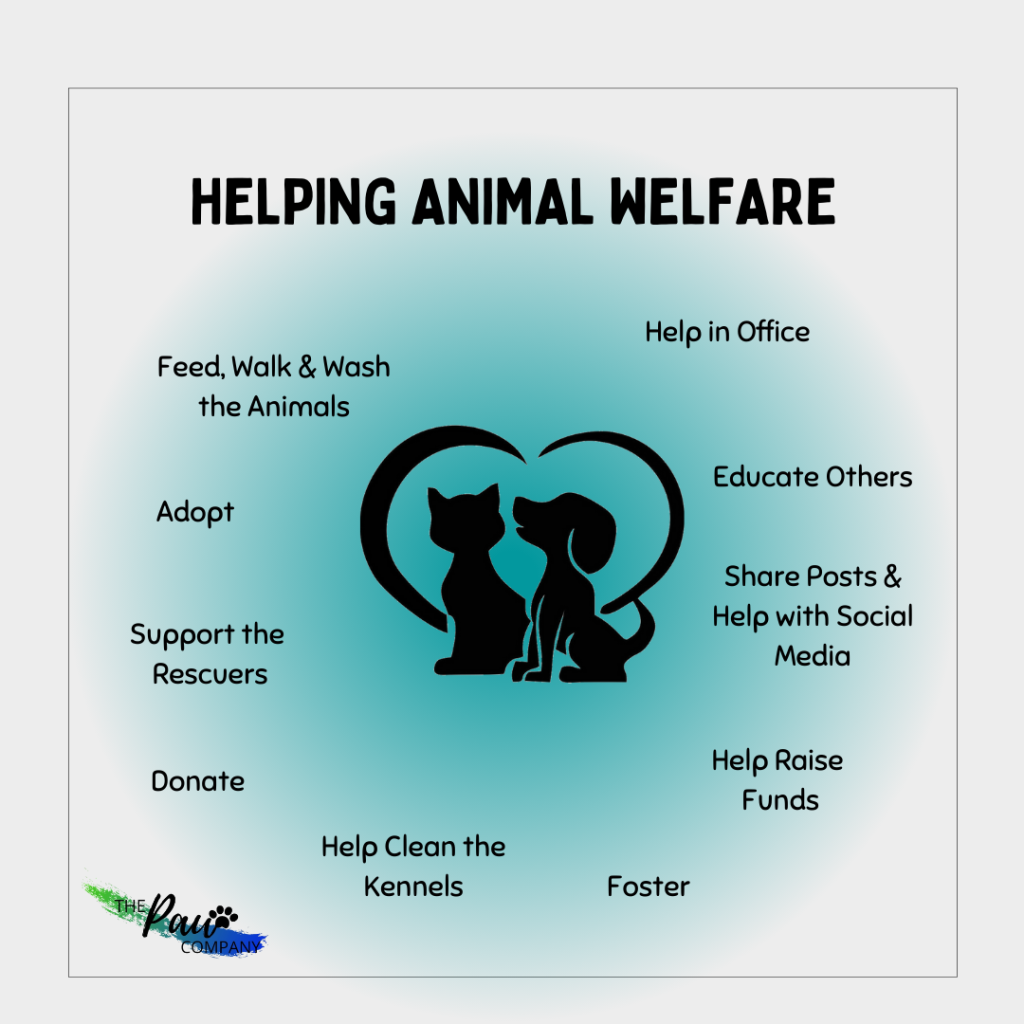
BE PROACTIVE AND HELP!
Some think that if they posted, then they have done their part, but we need far more than that. Often the excuse for not taking in an animal is that “we have animals”, but so do the rescuers, usually more than you.
Instead of merely sharing posts about animals in need and hoping someone else will handle it, evaluate what you can do directly. Offer temporary foster care, help with transportation, or donate supplies. Recognize that rescuers are already stretched thin, and your direct involvement can make a significant difference.
Can you take the animal to the SPCA? If you don’t want to do this, then you need to help instead of just saying “Don’t take to the SPCA”! Can you take the animal to one of our trusted Vets? Can you keep the animal in your garage or bathroom for a few hours – which is safer than the streets? If the animal is scared, can you put out some food or water (have an emergency packet in your car)?
Another example is finding baby birds. People remove them and then want someone to take them in. We know the intentions were good, but we also often share what to do and request that unless the baby is in imminent danger, not to interfere as they are often fledglings learning to fly. Always contact a rescuer or rehabber for guidance before you just remove birds, kittens, or other wildlife.
Read the posts rescuers often share on what to do so that you know in advance what to do, which can save time and lighten the load. Also, join local groups like neighborhood groups and the lost and found groups in advance. Here is our Facebook link for Verlore Diere Secunda (TEKS)
If you rescue an animal, assume responsibility for their well-being. Avoid offloading the animal to an organization without contributing support. If you’ve taken an animal into your care, provide necessary food, supplies, or funds to cover their needs. Your active involvement ensures that rescues are not overwhelmed further by additional responsibilities.
Also, read last week’s article on pets as gifts for the elderly. Please stop giving animals as surprise gifts because, in the end, the animals suffer when a person cannot meet their needs and are not ready to take them in.
Connect with Local Shelters: Reach out to a reputable shelter or organization in your area to express your interest in volunteering. Call or visit the shelter, ask to speak to the volunteer coordinator, and introduce yourself.
Express Willingness to Help: Inquire about volunteer opportunities or other ways you can contribute to alleviating the shelter’s workload.
Explore Various Roles: Learn about the shelter’s operations and explore roles such as feeding, washing, walking, administrative tasks, or fostering.
Utilize Professional Skills: Offer any professional skills you possess, such as accounting, IT, fundraising, bookkeeping, plumbing, electrical work, design work, etc., to support the organization.
ADDITIONAL WAYS TO LIGHTEN THE LOAD
Stay informed: Read and stay informed about resources shared by animal welfare organizations, even if they don’t directly apply to you at the moment.
Educate others: Share your newfound knowledge with at least one person to contribute to broader awareness.
Engage on social media: Support organizations by liking, sharing, and commenting on their posts, especially adoption-related content. Your engagement, especially commenting and sharing can increase the visibility of their posts.
Participate in fundraising: If financial contributions aren’t feasible, support fundraising events and offer assistance in other ways. You can also organize a fundraiser for a reputable organization.
Show appreciation: Acknowledge the efforts of staff, rescuers, or volunteers by buying a coffee or lunch, leaving a note of encouragement, or offering another token of appreciation.
Support reputable organizations: Channel your support to organizations with proper adoption policies, financial transparency, and ethical practices. Not just those who claim to do it.
Addressing misconceptions and criticism
Rescuers often face criticism and backlash, sometimes due to misunderstandings or misplaced expectations. It’s crucial to approach these situations with empathy. Recognize that rescuers experience emotional and physical exhaustion. Constructive feedback and support are more helpful than criticism, which can undermine the morale of those working tirelessly for the cause. Most rescuers are one failed rescue or one such backlash away from quitting. Animal welfare has enough drama, so don’t get involved, and definitely do not give an uninformed opinion when you don’t have all the facts.
For everyone, there is a way to help! If you can’t adopt, FOSTER. If you can’t foster, SPONSOR. If you can’t sponsor, VOLUNTEER. If you can’t volunteer, DONATE. If you can’t donate, EDUCATE – NETWORK – SHARE.
Every action, no matter how small, can create a ripple effect that extends far beyond the immediate situation and inspires others to join the cause. Embrace the opportunity to make a difference and help build a more compassionate environment for those who need it most.
Animal rescue is a demanding yet profoundly rewarding endeavor. While the efforts of individual rescuers are crucial, they cannot succeed in isolation. The collective power of a supportive and engaged community can significantly enhance the effectiveness of rescue operations and improve the lives of countless animals.
By embracing the mantra “You are someone; you do something,” each of us can contribute to this vital work. Whether through direct involvement, advocacy, or supporting rescuer efforts, every contribution counts. Together, we can create a more compassionate world for animals and ensure that rescuers have the support they need to continue their lifesaving work.
Thank you to every person who has made the effort and often at an inconvenience for themselves or their family, to help animals in need.
Next week we will look at why sterilization is so important!
The Mpumalanga Premier, Mr. Mandla Ndlovu visited a wind energy generating facility (Ummbila Emoyeni) at a Bethal farm today as part of the country’s renewable energy programme. The project is being implemented by a South African-owned company, Seriti Green, to lower the carbon emission footprint and ensure long-term sustainability as a diversified energy producer.
The Ummbila Emoyen farm is located between Bethal and Morgenzon in the Govan Mbeki Local Municipality and will supply its mining operations and Eskom with power generated from the wind through the turbines and is expected to commence full commercial operation from 2025. The farm is an excellent area for wind development due to high wind speed. It is the first in the Mpumalanga Province and the largest hybrid energy facility in South Africa. It is set to redefine the Province’s journey towards a just energy transition.
A total of 125 wind turbines are planned. Each would be about 210m high with 90m blades
The visit to Ummbila Emoyeni is part of the Premier’s stakeholder engagement process to interact with different stakeholders such as the businesses and investors, to understand their impact whilst sustaining the relations.
Seriti Green has launched the first phase of its R25 billion wind farm project in Mpumalanga.
The group plans to build 900MW of renewable wind energy projects over the next three years, with the first phase being the 155MW Ummbila Emoyeni facility.
Construction on the facility is currently underway and is expected to be completed in mid-2026, costing just under R5 billion.
The project is being funded by Seriti shareholders Standard Bank and Rand Merchant Bank (RMB).
The project is the first since Seriti Resources, one of South Africa’s largest coal miners, announced its acquisition of Windlab and the subsequent launch of Seriti Green in 2023.
Chairman of Seriti Green and Group CEO of Seriti Resources, Mike Teke and CEO of Seriti Green, Peter Venn noted that this is the biggest wind farm of its kind in South Africa and also the first in Mpumalanga.
It is anticipated that it will supply 75% of the power needs of Seriti’s coal mines, which will impact the group’s efficiency, sustainability, and profitability.
Secunda, Mpumalanga – The regional leg of the Sasol Energy Innovation Challenge concluded in Secunda on Saturday. The competition attracted young innovators from 21 schools located in Gert Sibande District, with 54 projects showcased by the learners.
The Sasol Energy Innovation Challenge is a multi-stage competition established by Sasol Foundation in 2022, with regional winners ultimately competing in the finals on 12 September 2024. Regional competitions have already taken place in Sasolburg and Ekandustria.
Targeted at learners in grades 4 to 11, the competition aims to raise awareness about renewable and alternative energy sources and develop science research skills of learners in school from Sasol fenceline communities. Learners in primary, secondary, and technical schools’ categories showcased scientific projects that seek to provide solutions to energy-related challenges.
AD Nkosi Technical High School
The competition is aligned with the Natural Sciences, Technology, Physical Science and Life Science curriculum, making the Department of Education a critical stakeholder.
The Overall Regional Winner in the primary school category was Osizweni Primary School, Kusasalethu Secondary School won in the secondary school category, and the winner in the technical schools category was AD Nkosi Technical High School.
Kusasalethu Secondary School
The finals will take place at the Graceland Hotel Casino and Country Club, in Secunda.
Sasol is a significant investor and supporter of science and technology education in South Africa. The Challenge is part of Sasol’s interventions that are informed by a need to drive a meaningful change among the youth and prepare them for a future that will enable them to be economically sustainable.
Osizweni Primary School learners
To ensure learner support and project development in the competition, Sasol has partnered with Nka’thuto – an NGO that specialises in science project school support to work with registered schools to ensure that they submit high-quality projects for the regional and final competitions.
Vanessa Goosen’s story is a story of hope, determination, and faith. There is also a story of hardship, betrayal and prison life.
For 16 years, six months and 16 days, Vanessa Goosen, a former Miss SA semi-finalist, was incarcerated in Lard Yao women’s prison in Bangkok, Thailand.
Vanessa was asked to bring back four engineering books from Thailand for a customer. The books were found to have compartments in the front and back hardcover and spine containing 1.7kg of heroin.
CAPPUCCINOS at Secunda Mall
Aged 21 and pregnant, she was arrested and tried on drug trafficking charges. She faced a trial in a language she did not understand and was sentenced to death, fortunately, her sentence was commuted to life. Through two appeals – one of which was rejected – and a process of amnesty from the king of Thailand, Goosen eventually served 16 and a half years. On October 30, 2010, she was released, finally reaching Joburg on November 5.
Vanessa spoke to The Bulletin about her ordeal and had a message for travellers. Listen to her conversation with The Bulletin.
The Bulletin spoke to Vanessa Goosen about her ordeal in a Thai prison
Vanessa is now a Motivational Speaker, Author and Pastor. She spoke at a function hosted by Secunda Mall in Cappuccinos on Monday night. Many people that The Bulletin spoke to said that her story had found its mark in their hearts. It is a very moving story.
Vanessa spoke a little about the hardships that she had to endure in prison, she also told the audience about giving birth in prison and having to send her little girl back to South Africa at the age of three. Even though there were a few visits from her daughter it would be thirteen years before she could hug her again.
Both Vanessa and Felicia, her daughter, wrote a book about their ordeal.
Vanessa’s book is called “Drug Muled, Sixteen Years in a Thai Prison” and Felicia’s book is called Prison Child.
If you would like to obtain a copy of Vanessa’s book you may send her an email as the book is currently out of print. She would inform you where and when to obtain a copy when the reprint occurs. The email address is: info@vgse.co.za
Don’t hesitate to get in touch with Vanessa on 0735624160 or vanessa.goosen@speakersinc.co.za if you would like her to speak at your function.
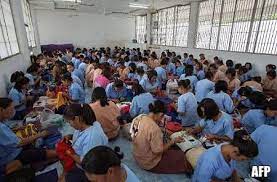
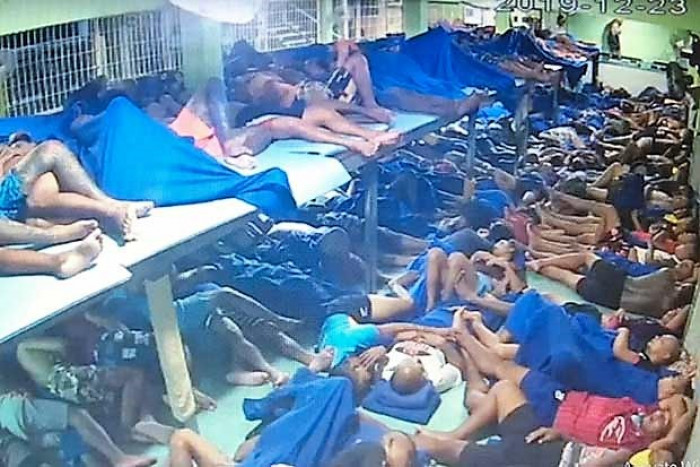
We have searched the internet for images and info on Lard Yao women’s prison in Bangkok, Thailand.
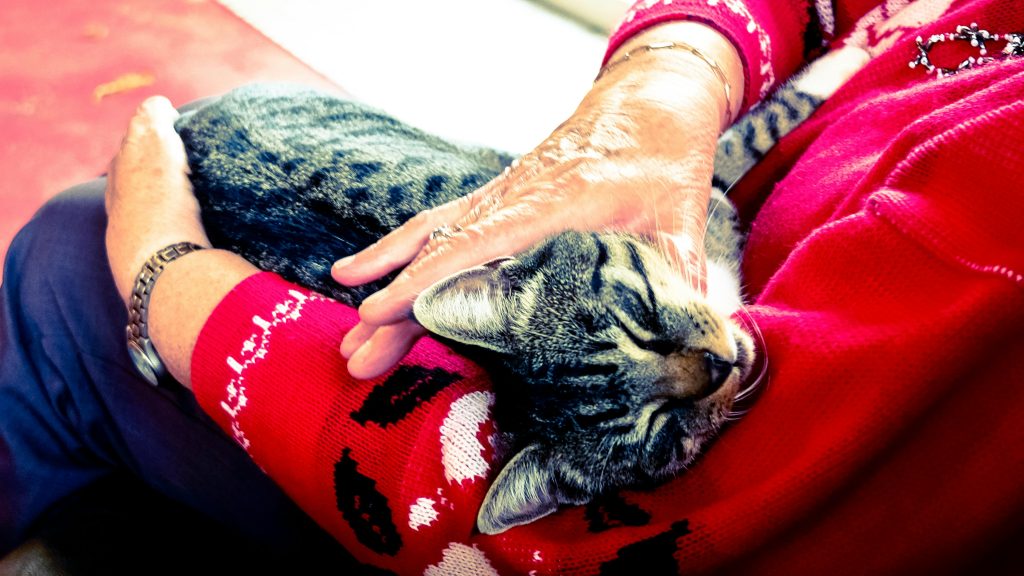
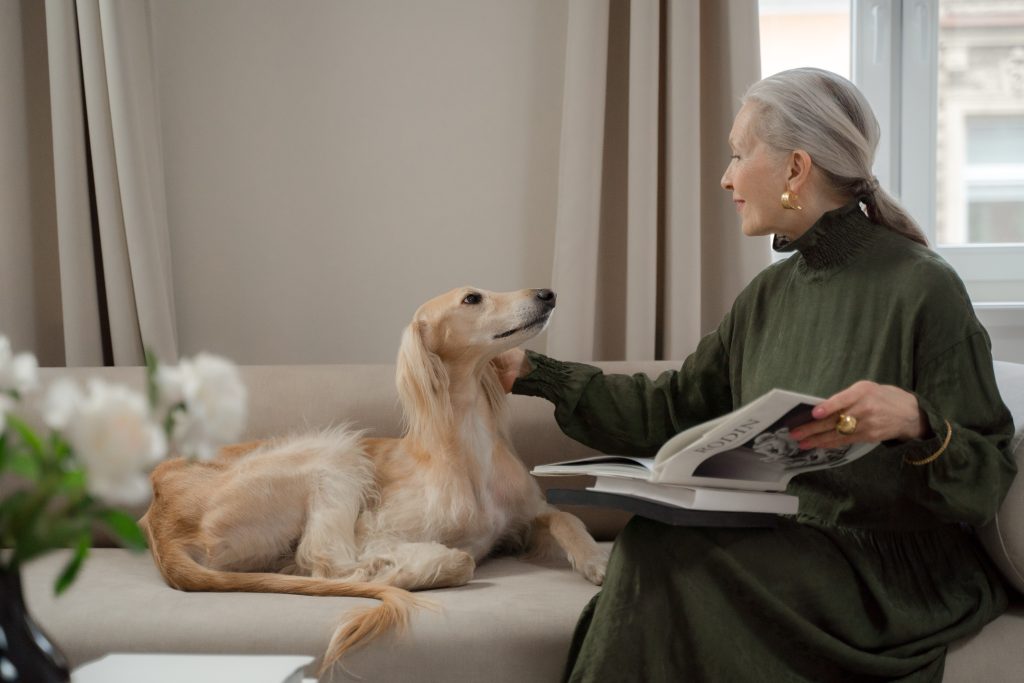
Gifting a pet to an elderly parent or loved one may seem like a thoughtful gesture aimed at providing companionship and alleviating loneliness. However, the reality of pet ownership often reveals a more complex picture. While animals can indeed offer joy and solace, and have a positive effect on health, introducing a pet into an elderly person’s life requires careful consideration. Unfortunately, even registered animal welfare organizations make mistakes regarding this. The mismatched needs and capabilities can lead to unintended consequences for both the pet and the elderly owner. This article explores why gifting pets to seniors can be problematic, addressing the challenges of care, physical demands, and long-term responsibilities.
Also, read why an animal should never be a surprise gift for anyone!
UNDERSTANDING THE COMPLEXITY OF PET CARE
The belief that a pet is a simple solution to loneliness is a common misconception. Each animal demands specific care, attention, and resources that may be challenging for an elderly person to provide. For example, puppies or active dogs, like Jack Russells (being a popular breed), require substantial training, exercise, and supervision. Their high energy levels and need for interaction can quickly become burdensome rather than beneficial. Birds, often perceived as low-maintenance, also present unique challenges. They need proper diet, social interaction, and mental stimulation despite their confinement to a cage. Without adequate care, birds can suffer from stress, poor health, and behavioural issues.
Physical and Emotional Demands
The physical demands of pet ownership can be particularly taxing for seniors. Large or strong breeds might inadvertently cause accidents, such as tripping their owner or knocking them over. Even smaller, active breeds can pose risks if they require more exercise than the elderly owner can provide. Additionally, the emotional stress of caring for a pet can be significant. Tasks like walking a dog, cleaning up after an animal, or managing behavioural problems can lead to increased stress, anxiety, and physical strain, undermining the intended benefits of companionship.
2. Financial Implications
The financial responsibilities of pet ownership are often underestimated. Costs associated with food, veterinary care, grooming, and other essentials can quickly add up, creating a burden for seniors on fixed incomes. We often get requests to help with vet bills because it is a pensioner or to help get the animal to the vet, because the elderly caregiver can’t take them for various reasons. Emergency veterinary care or unexpected health issues for the pet can further strain finances. Long-term financial planning is also crucial. Without a clear plan for the pet’s care in the event of the senior’s incapacity or passing, the pet’s future can become uncertain, leading to potential neglect or rehoming.
3. Health and Safety Concerns
Potential Health Risks: Pets, particularly dogs and cats, can pose health risks to elderly individuals, including allergies, zoonotic diseases (diseases transmitted from animals to humans), and infections. Seniors with compromised immune systems or existing health conditions may be more susceptible to these risks.
Physical Safety: Active pets, such as young dogs or large breeds, can unintentionally cause accidents or injuries. For instance, a playful dog might pull on a leash too hard, causing the owner to fall. Pets requiring frequent outdoor exercise or trips to the vet can pose additional risks, especially if the senior has mobility issues.
4. Emotional and Psychological Impact
The Burden of Care: Owning a pet can be emotionally overwhelming for some elderly individuals. The constant need for attention, the responsibility of meeting the pet’s needs, and managing behavioural issues can lead to stress and anxiety, detracting from the intended comfort and companionship.
Impact of Loss: The emotional toll of losing a pet can be profound, especially if the senior forms a strong bond with the animal. The grief of losing a pet, combined with the stress of rehoming or arranging care, can exacerbate feelings of loneliness and depression. Keep in mind that the animal may also experience the loss of their owner and then having to live with a stranger if the family can’t take them in.
If a pet is being considered, providing educational resources and support about pet care can help ensure preparedness for the responsibilities involved. Workshops, guides, and consultations with veterinarians or animal care specialists can be invaluable.
Image – Pexels.com
ALTERNATIVES TO PET OWNERSHIP
Community Programs: Many communities offer programs that match volunteers with elderly individuals for regular visits. These programs provide social interaction and companionship without the need for full-time pet ownership. Therapy animal programs can also bring joy to seniors without the responsibilities of caring for a live animal.
Other activities: There are numerous enriching alternatives to pet ownership that can keep elderly individuals engaged and active. Mental stimulation can be achieved through activities like jigsaw puzzles, crossword puzzles, and brain-training apps, which challenge cognitive abilities and provide enjoyable problem-solving opportunities. Creative pursuits such as painting, knitting, or writing offer self-expression and artistic fulfillment. Educational activities, including online courses and workshops, contribute to personal growth. Social interaction can be fostered through board games, card games, social clubs, and volunteering, providing a sense of community and purpose. Physical wellness can be maintained with chair exercises, yoga, and gardening. Digital media, including streaming movies, listening to music, and engaging in virtual socializing, offers entertainment and connection.
Companion Animals: Robotic pets or interactive companions designed for seniors can provide the emotional benefits of a pet without the physical and financial demands. These devices can offer companionship and mental stimulation without requiring extensive care.
Image – Pexels.com
PREPARING FOR THE FUTURE
Creating a Care Plan: If a senior already owns a pet or is considering one, developing a comprehensive care plan is essential. This plan should include provisions for the pet’s care in case of the senior’s incapacity or passing, such as identifying a family member or friend to take over responsibilities and ensuring financial and logistical arrangements are in place.
Since the system is so overwhelmed and there are already not enough homes, especially with old pets, I suggest that the caretakers take them to the vet for euthanasia instead of dumping them on an already overwhelmed system. Unfortunately, the reality is that it is harder to find homes for older pets who may come with higher expenses due to illness.
Legacy Considerations: Discussing and planning for the pet’s future as part of the senior’s estate planning can help mitigate uncertainties. Establishing a pet trust or making arrangements with animal rescue organizations for rehoming can provide peace of mind and ensure the pet’s needs are met in the long term.
If you have given a pet to an elderly parent, please take responsibility for that animal and plan for their future. Are your pets included in your will? Read more about this topic here.
Gifting a pet to an elderly individual requires careful consideration and planning. While the intention may be to provide companionship, the physical, emotional, and financial realities of pet ownership must be thoroughly evaluated to ensure a beneficial arrangement for both the elderly person and the pet. By understanding the complexities involved and exploring alternative solutions, we can better support seniors in their quest for companionship while safeguarding the well-being of their animal companions. This thoughtful approach helps avoid the pitfalls of well-intentioned but poorly planned pet gifts, ensuring a fulfilling and harmonious relationship for both the elderly individual and their pet.
Next week we will look at why we need the public to step up and how they can help.