Eskom acknowledges the environmental breaches emanating from its operation of the Kendal power station and is in the process of mending the technical faults that led to the environmental breaches. This, however, will take some time to be completed as a significant amount of repair work is required to repair the generation units. Some of the work has already been executed.
The station has been operating above the emission limits since the strike action late in 2018 left infrastructure vandalised and damaged. During the strike action internals of the Electrostatic Precipitator (ESP) were vandalised and the functioning of the dust handling plant compromised. To repair the internals of the ESPs of several generation units requires long outages, and the repairs on generation units can only be executed one after the other.
Unit 1 has been operating since 18 February 2020, within the 100mg/Nm3 emission limit after a 14-day outage. Unit 2 is also operating within the regulatory compliance limits.
Unit 5 is currently off and repairs on the ESP’s and Dust Handling Plant have started. However, due to long lead times to manufacture components it is expected that the unit will only return to service during the first quarter of 2021. Thereafter, the next planned outage will be Unit 6. Units 3, 4 and 6 are currently operating above the emission limits, for which Eskom has been granted an extension.
Given the generation system constraints, Eskom will, as speedily as possible, execute the work on one unit at a time. Eskom is committed to addressing the emission issues at Kendal power station and is in the process of doing so. An instruction to shut down the three units currently operating in non-compliance will result in significant constraints on the power generation system and would significantly increase the level of load shedding required.
This article was written by our eMbalenhle correspondent: Sandile Mkhwanazi
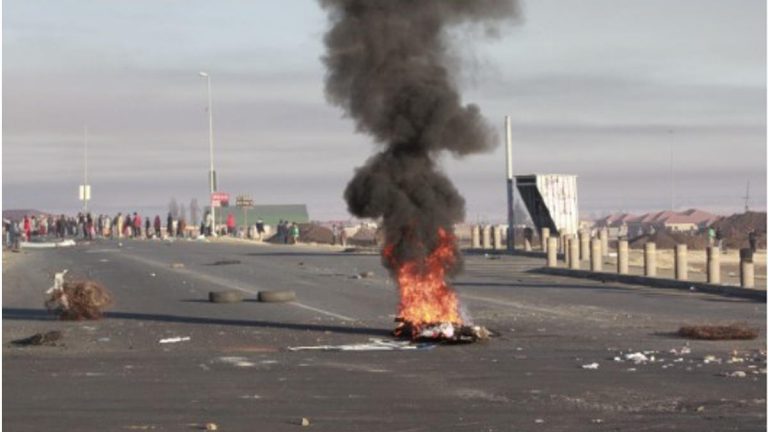
Unrest threatens as dissatisfied eMbalenhle community members are now fed up with the ridiculous power cuts happening during the Lockdown.
Different stakeholders from the eMbalenhle community have started to speak up on all social media saying that they are now tired of the whole administration of Govan Mbeki Municipality and demand that the National Government intervene.
When the President of South Africa announced the National Lockdown, he promised that there would be no load shedding. Eskom’s CEO said in a statement that there will be no load shedding during the Lockdown.
It is now day 35 of the National Lockdown and there has not been a single day in eMbalenhle where the community has not experienced power cuts.
From 27 March to date, every morning around 07h20 the power is cut until late in the evening. That is the biggest reason why the community does not adhere to the rules that were set out the by government.
“We have to go to shops almost every day to buy food because in our fridges we can’t store food. There is always no power,” said some of eMbalenhle’s residents.
What is even more devastating is that the township has apparently been divided into two categories; the holy places such as extension 04, 05, 09, 12 who never experience power cuts and then extensions 26, 11, 02, 15, 16, 22, 14 as well as Gate 7 and 8 who are always victims of the power cuts.
“What is even more shocking is that when we contact the municipality Call Centre to enquire about electricity, is the bad attitude we get from employees. Once you state that you stay at Welas they tell you how useless you are and nothing you’ll do,” said a few residents.
eMbalenhle residents were shocked on the morning of 29 March, when the Municipal Manager, Mr Simon Felani Mndebele, spoke on a national radio station giving the inaccurate information and making the wrong impression that things were going well in Govan Mbeki Municipality.
When the truth is that the situation is disastrous.
When The Bulletin contacted the call centre we were told that the community had exceeded their monthly demand.
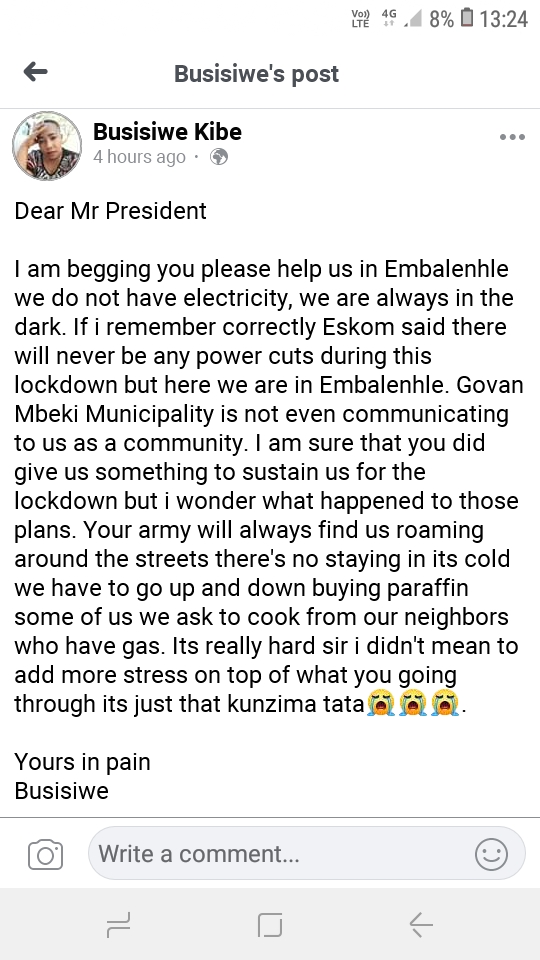
There have been several open letters written to the President through social media, be it Facebook and Twitter and he is yet to answer…
If this continues there might be unrest in eMbalenhle very soon and that will contradict the Covid-19 regulations. – Sandile Mkhwanazi
A couple living in Hartbeespoort was arrested on Friday, 24 April 2020 for the illegal sale of Eskom pre-paid electricity vouchers. The arrest took place at their rented house situated in a luxurious estate in Hartbeespoort, after intensive investigations by members of the Pretoria Serious Organised Crime Investigations unit supported by the Eskom Internal Investigations Department. The arrest followed the issuing of an arrest warrant which was duly executed.
According to Peter Malitsha, Eskom’s Senior Manager responsible for internal investigations, “the ongoing investigations by the Pretoria Serious Organised Crime Investigations unit were triggered by an arrest that was made in December 2018, where two illegal credit dispensing units (CDUs) were recovered and seized in another rented house located in an opulent estate in Pretoria East.”
“The suspects are not registered Eskom vendors, yet they issued vouchers originated from stolen Eskom CDUs. In addition, the suspects were found in possession of fraudulent Disaster Management Act (DMA) travelling permits, R20 000.00 cash and pre-paid electricity vouchers which were immediately confiscated by the investigation team,” Malitsha added.
This event led to the arrest of a third suspect in Kempton Park, who is allegedly known to be the originator of the fraudulent travelling permits which enabled the suspected couple to travel for their illegal business of selling Eskom pre-paid vouchers.
According to Malitsha, the illegal buying and selling of pre-paid electricity vouchers is one of the forms of electricity theft which leads to the country’s economic downturn, job losses, spikes in energy tariffs, and pressurises the taxpayer’s pocket and those who are legal electricity buyers.
As Eskom, we would like to thank the SAPS and our Eskom Internal Investigation team for making this operation a success.
We continue to urge all South Africans to help combat the illegal buying and selling of prepaid electricity vouchers and other forms of electricity and infrastructure theft by remaining legal. Customers can anonymously report illegal activities to the toll-free Eskom reporting line: 0800 112 722.
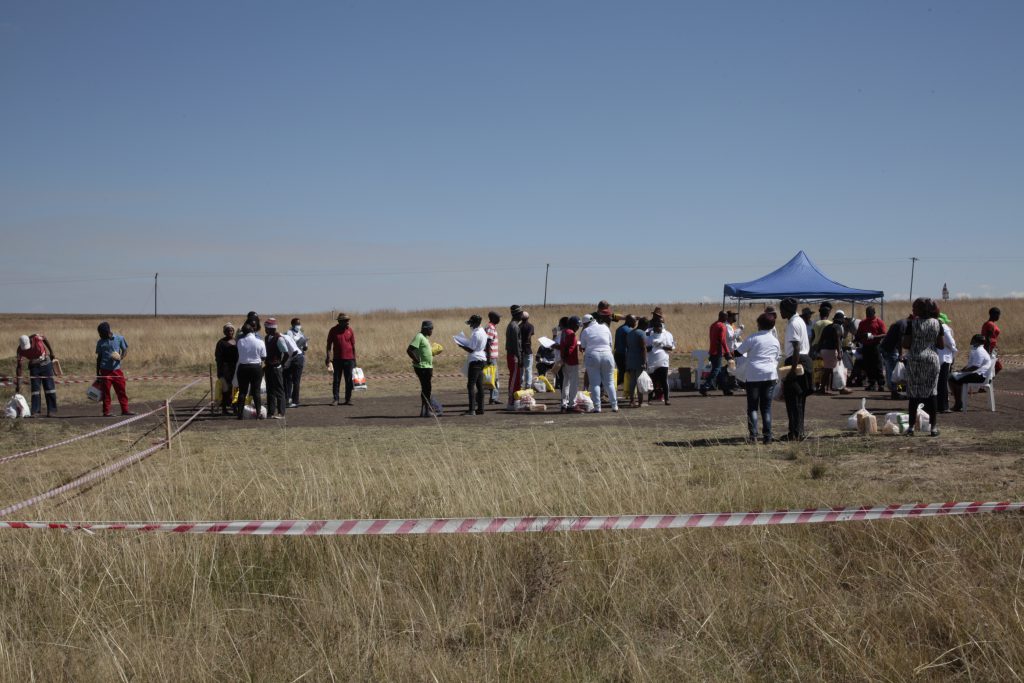
Hunger has no colour! Communities from all over Govan Mbeki Municipality have been feeling the brunt of the COVID-19 lockdown. With no prospects of any income, large communities have been suffering to make ends meet and to put food on the table and are sometimes dependant on donations.
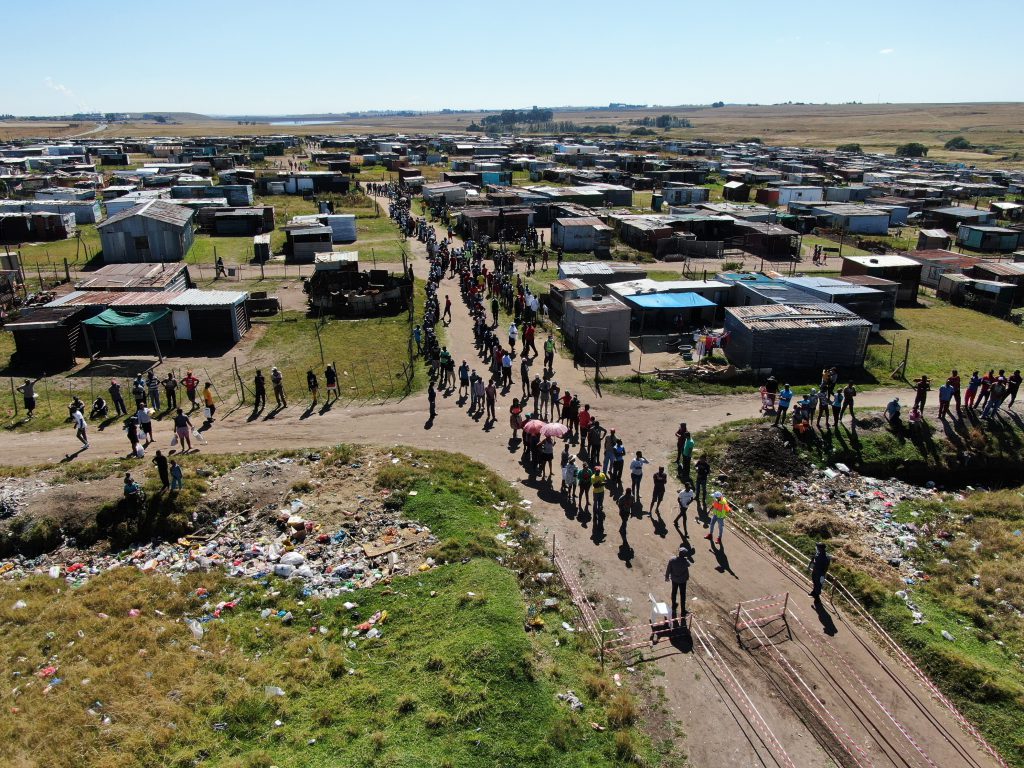
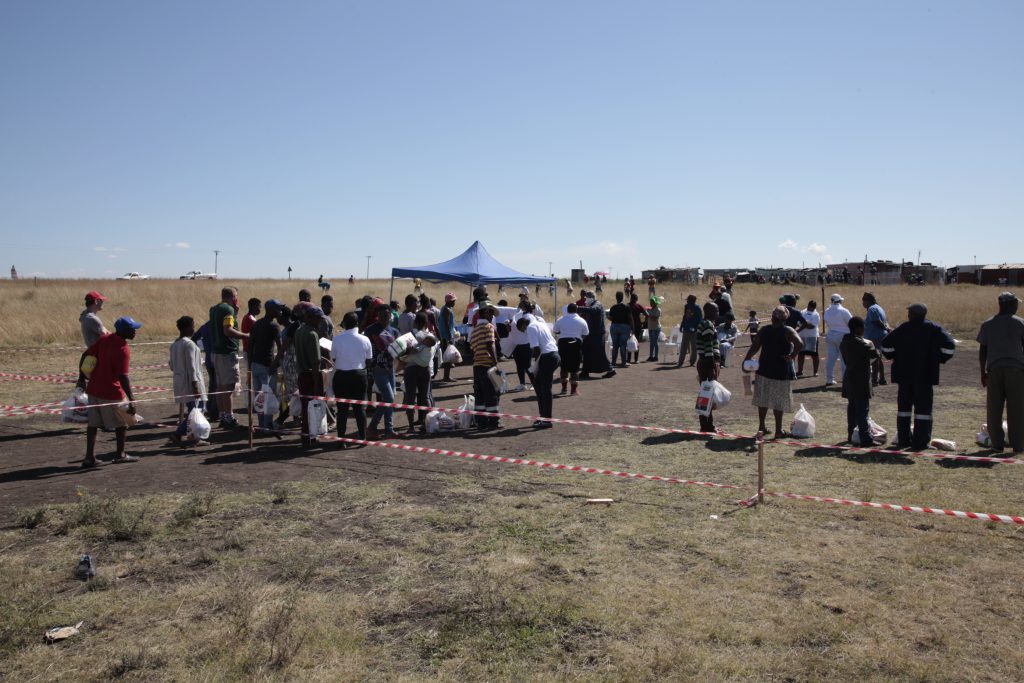
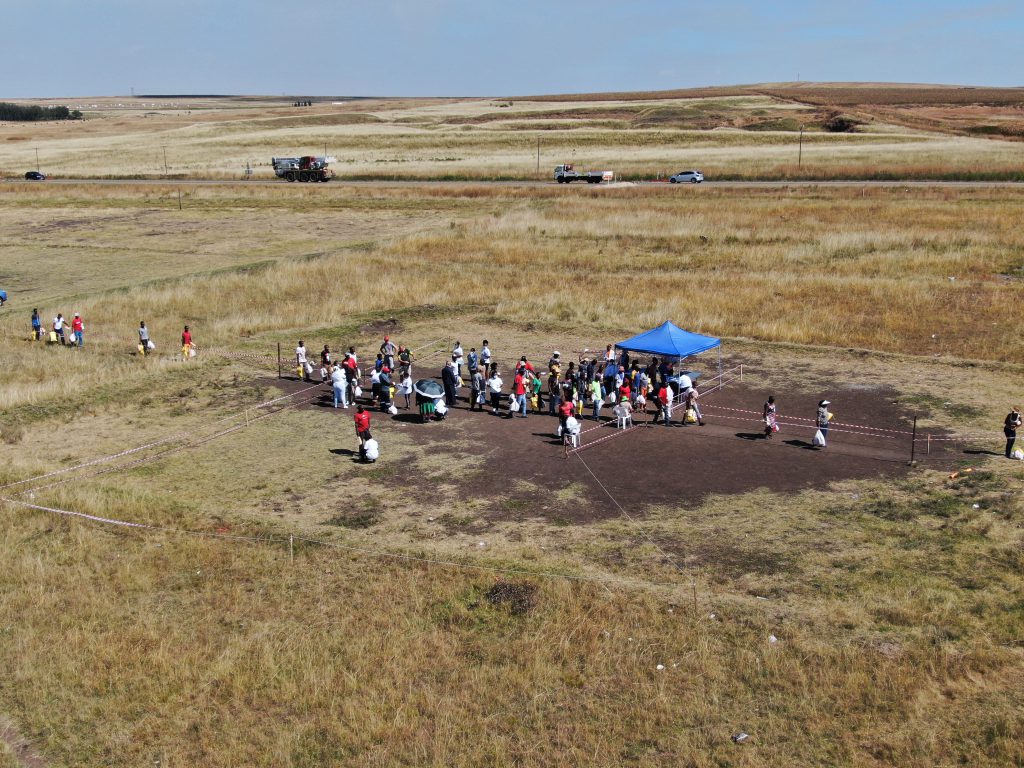
People of the Holfontein Community queuing for their parcels
The Trichardt Zakaat and Welfare Fund saw the need and decided to help. Only about 25 families from Trichardt contribute to this fund.
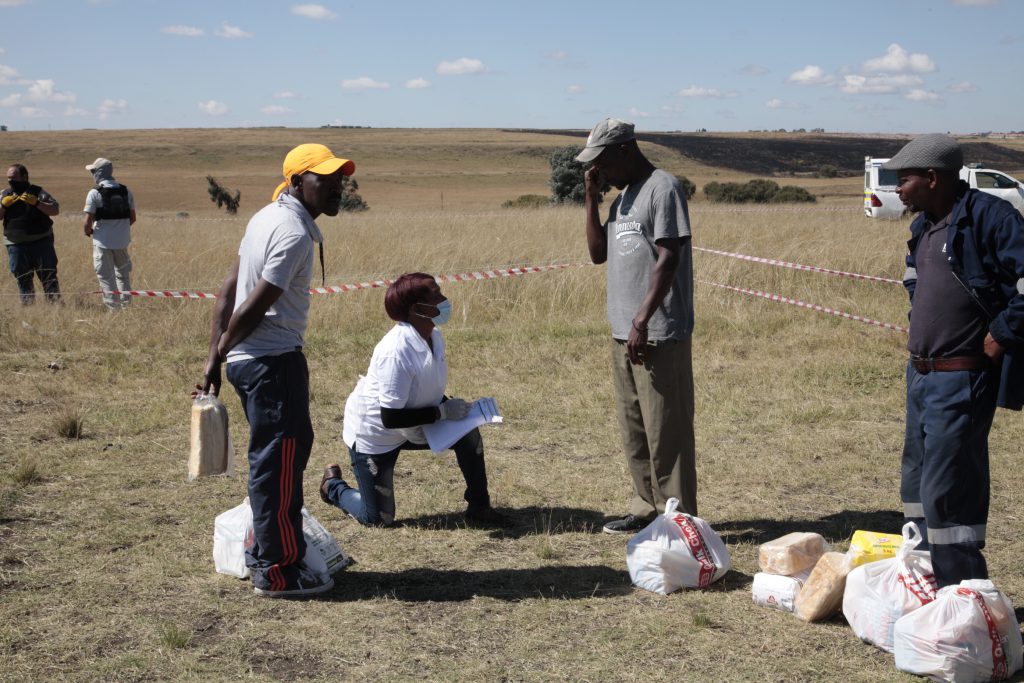
The working committee met and identified communities as well as individual families that needed help with food. One such community is the community known as the Holfontein community. The committee visited the area and identified the households that were in need. They handed them a voucher that was to be redeemed for food when the food parcels arrived.
The Trichardt Zakaat and Welfare Fund met with other role players in Trichardt and a plan of action was devised for the distribution of food to the Holfontein community.
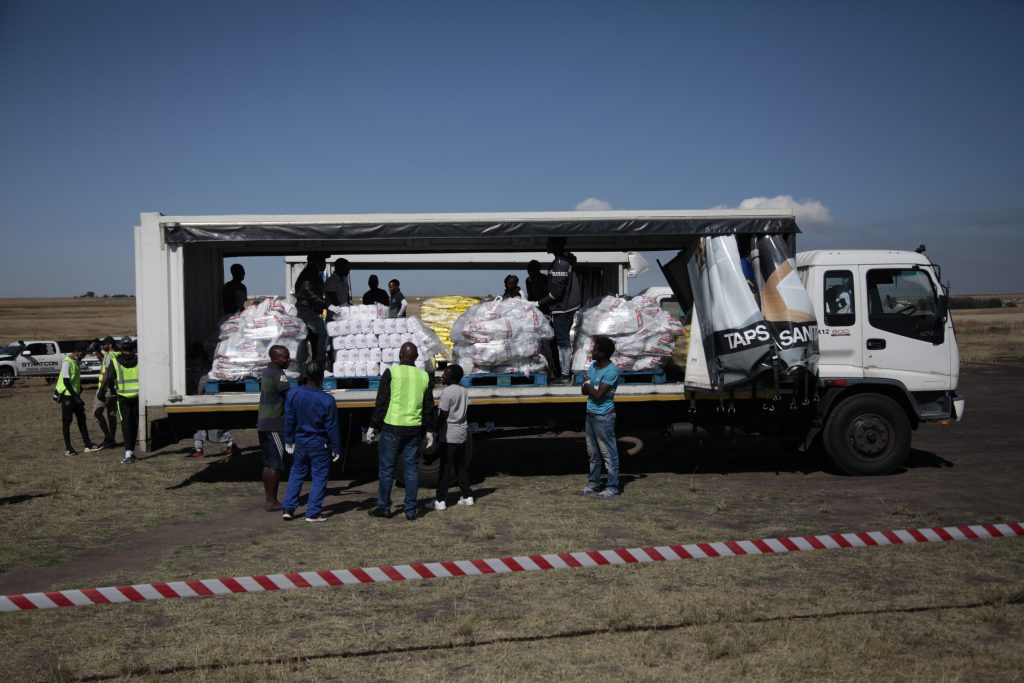
Over 1200 food parcels were prepared by the fund for distribution.
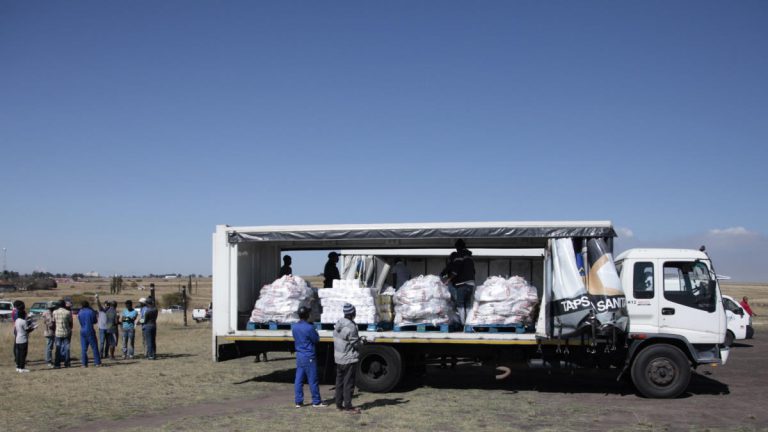
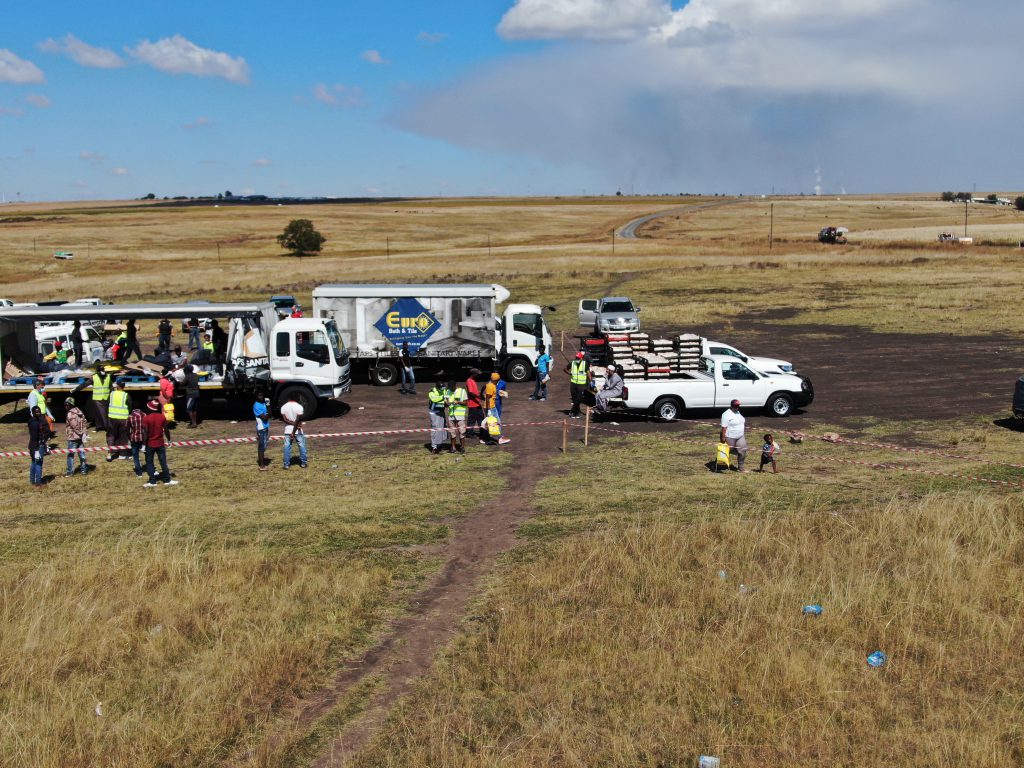
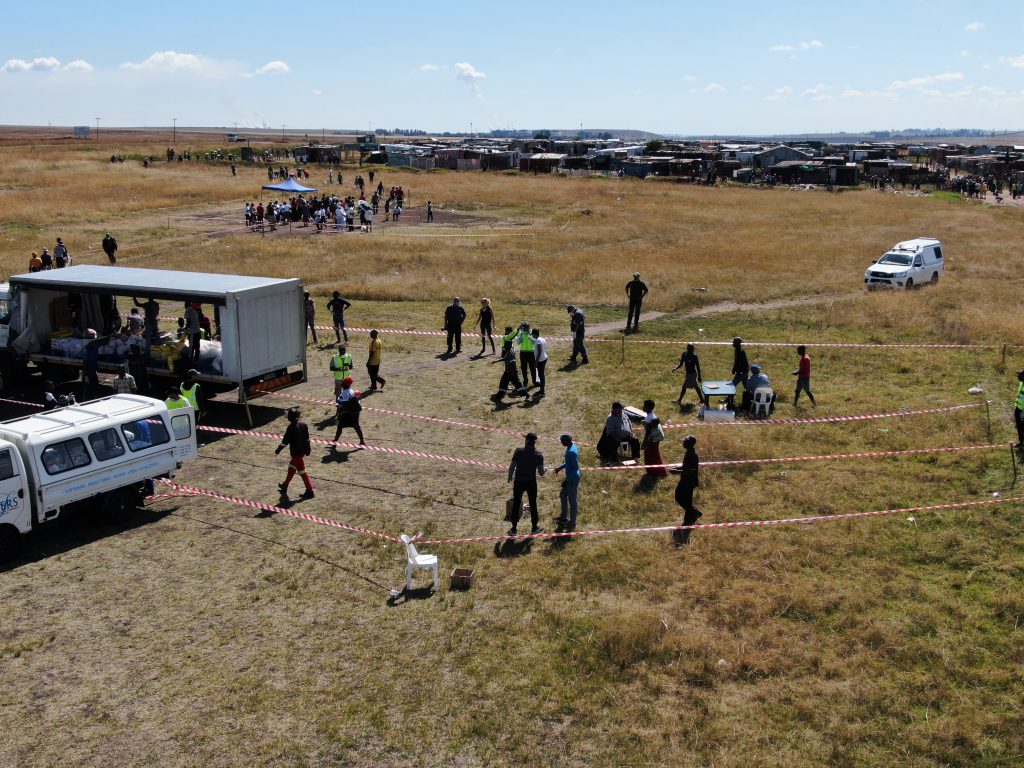
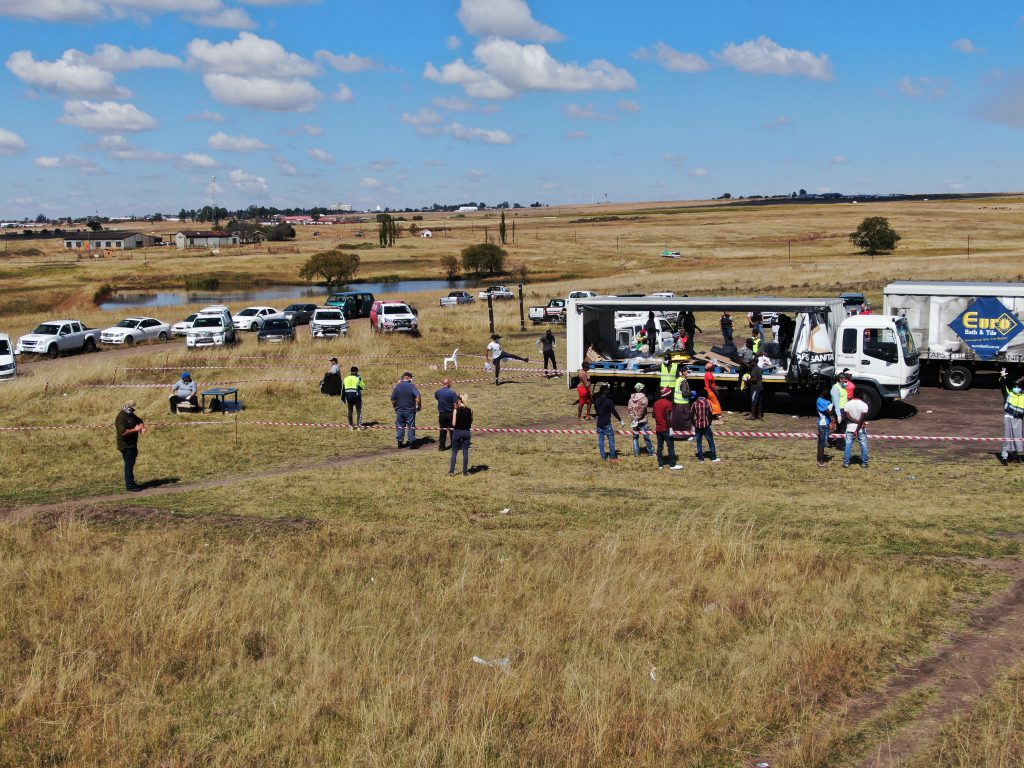
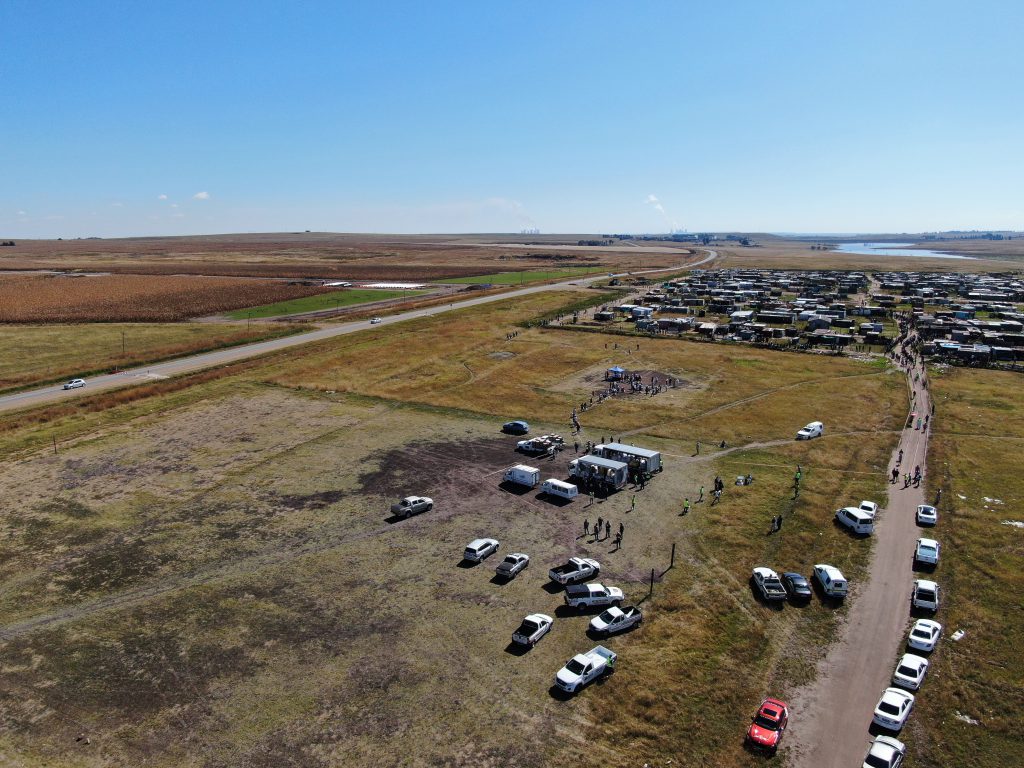
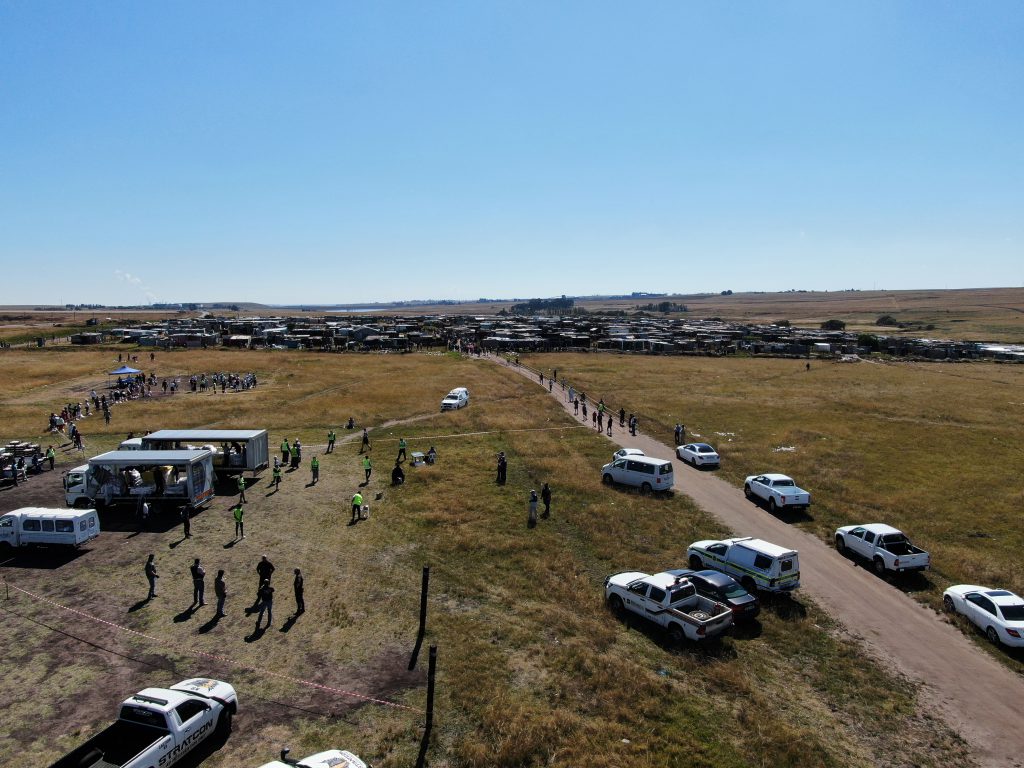
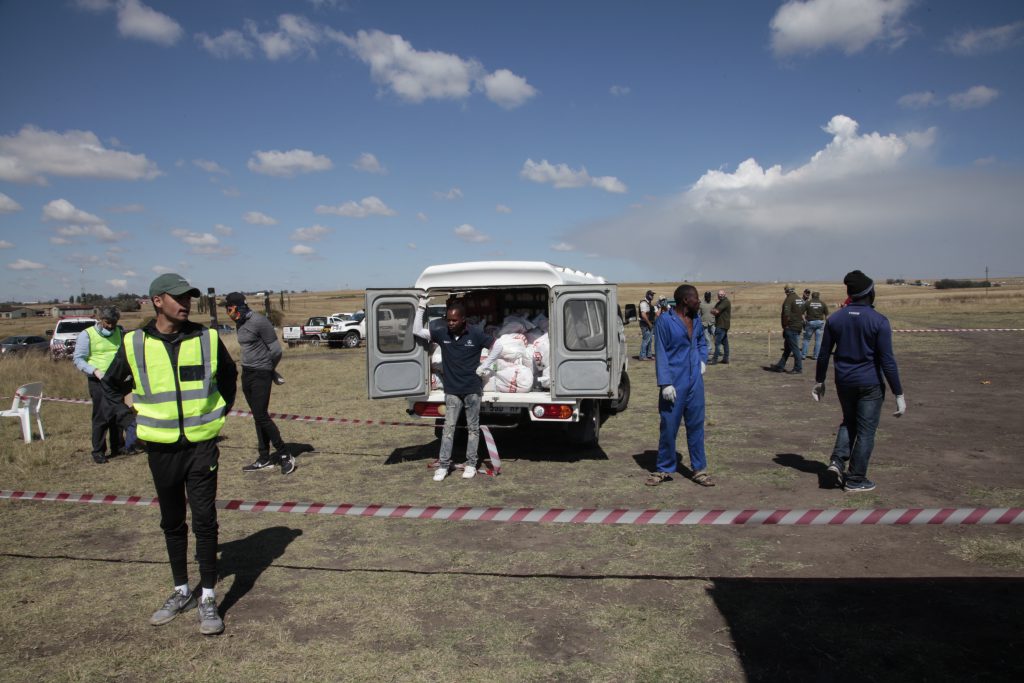
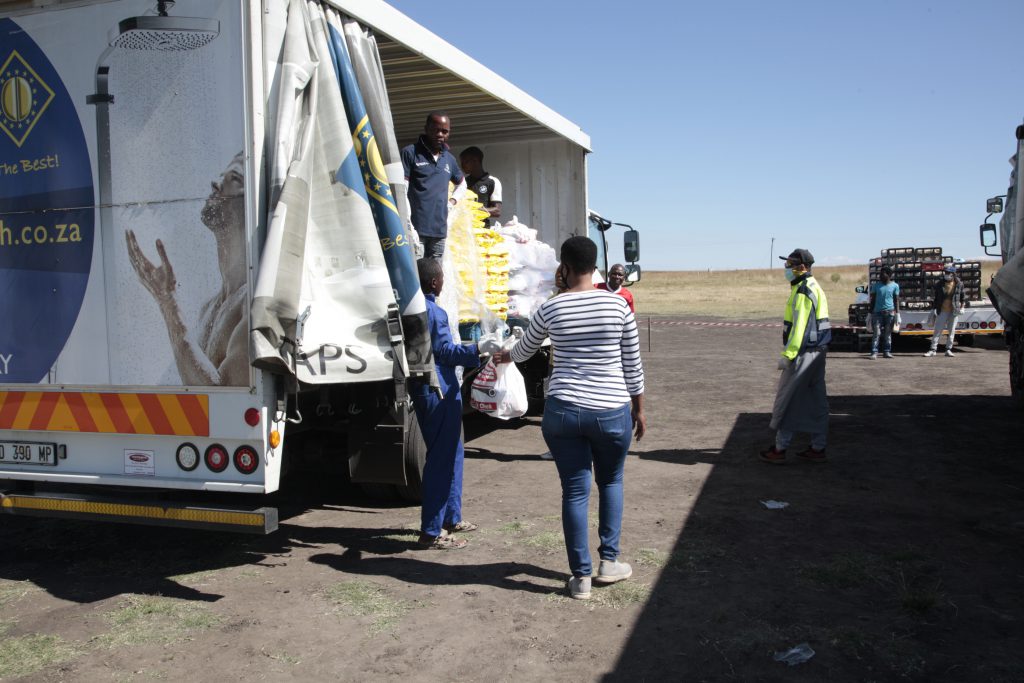
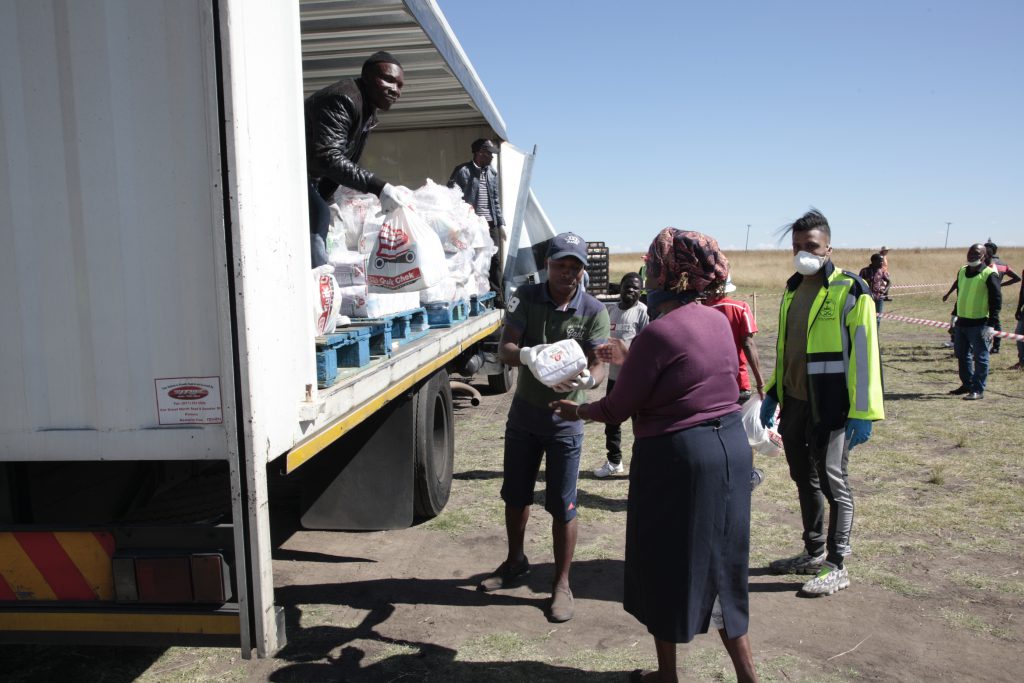
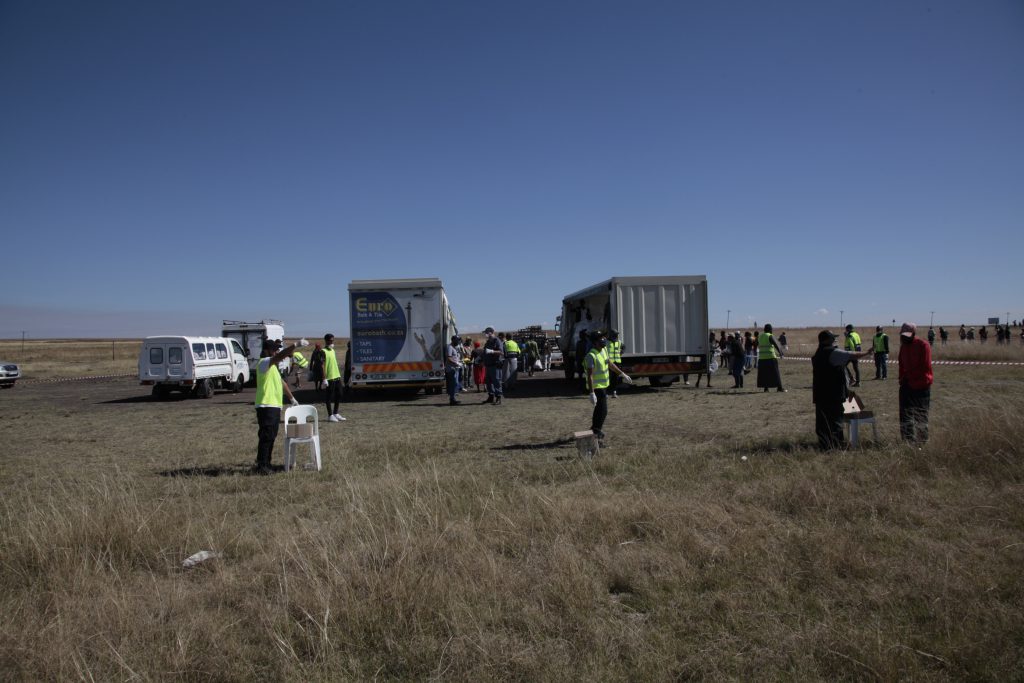
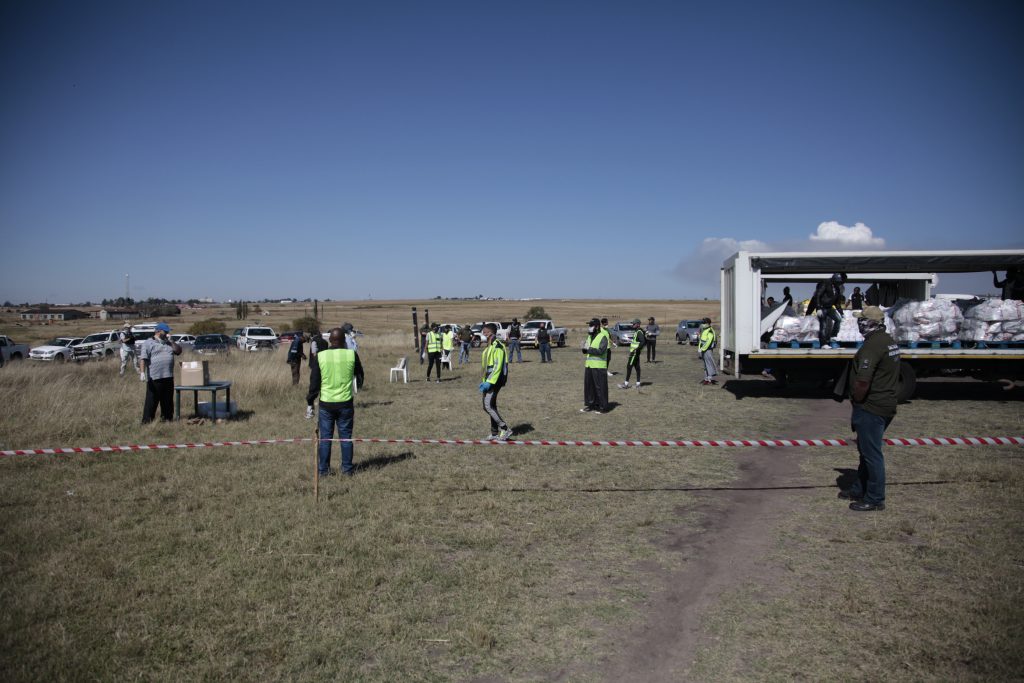
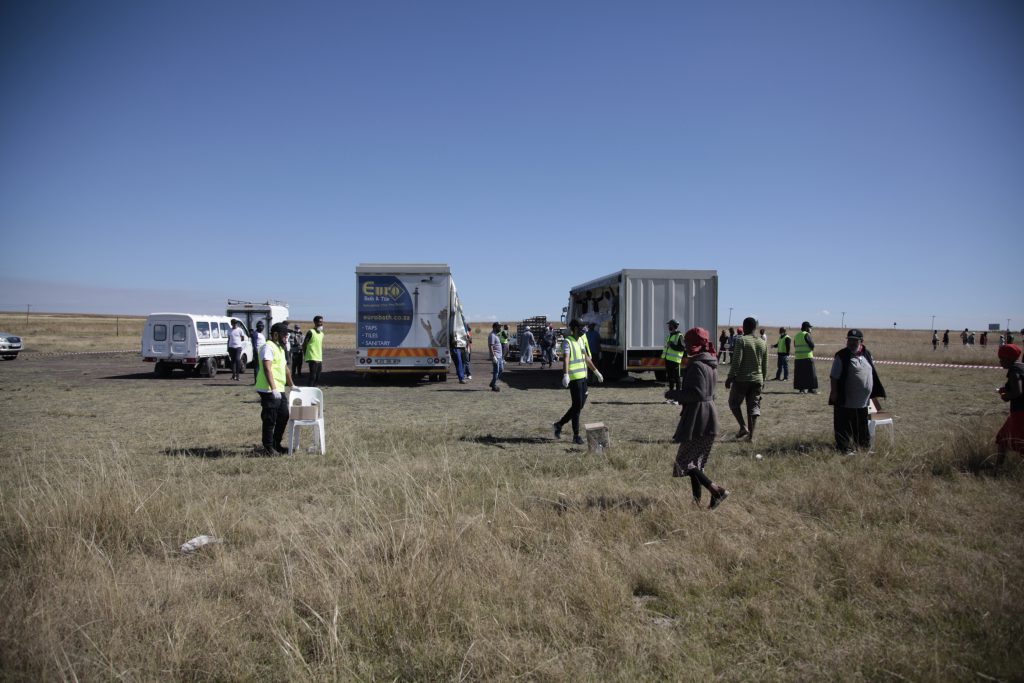
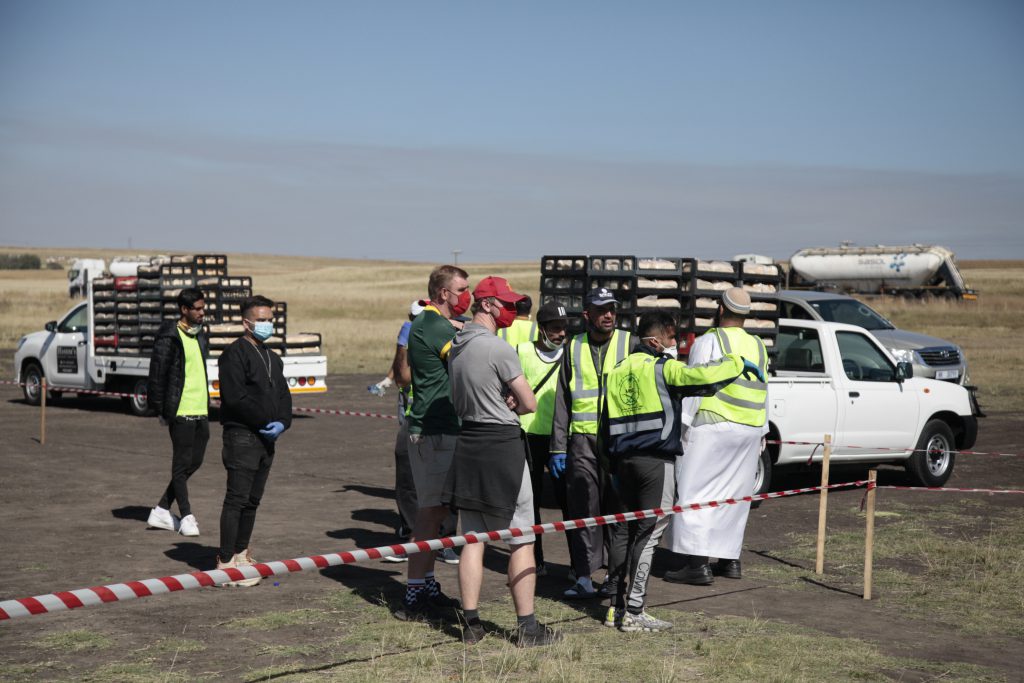
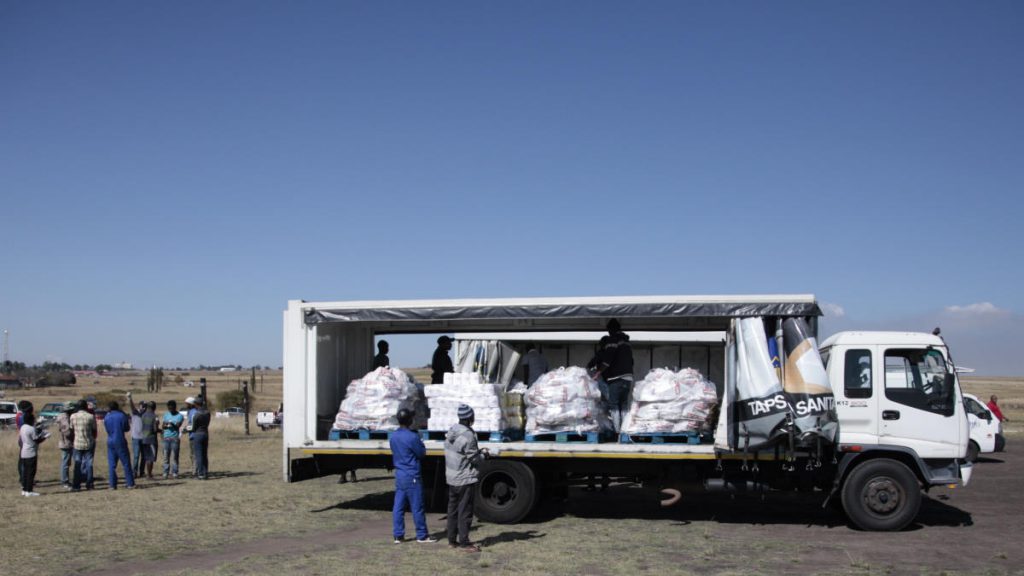
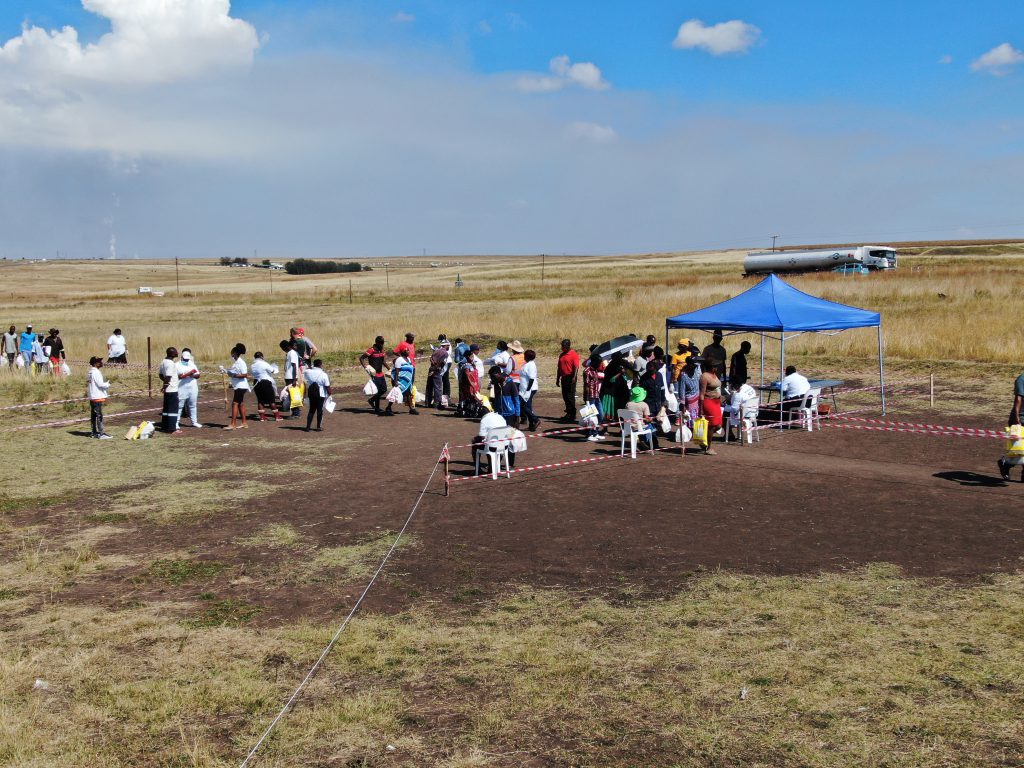
On Thursday 23 April, the area at the soccer grounds next to Holfontein community was prepared and barrier tape indicated the route to take to receive parcels. It was all very well organised. The trucks arrived and were neatly positioned. Smaller delivery vehicles were also present filled with bread.
Trucks and Bakkies loaded with food
Voucher receiving area
Handing out the food
Everyone is busy making sure the process runs smoothly
Voucher receiving area
Handing out the food
Handing out the food
Handing out the food
Handing out the donations
Waiting for the community
Still organising
First recipients arrive
Fully loaded truck with donations
Discussing security matters
Fully loaded truck with donations
Scenes from the issuing area
A number of security companies were on hand under the watchful eye of Trichardt SAPS to ensure that there was no rushing, stampeding and looting. Fortunately, no incidents were recorded during the whole day.
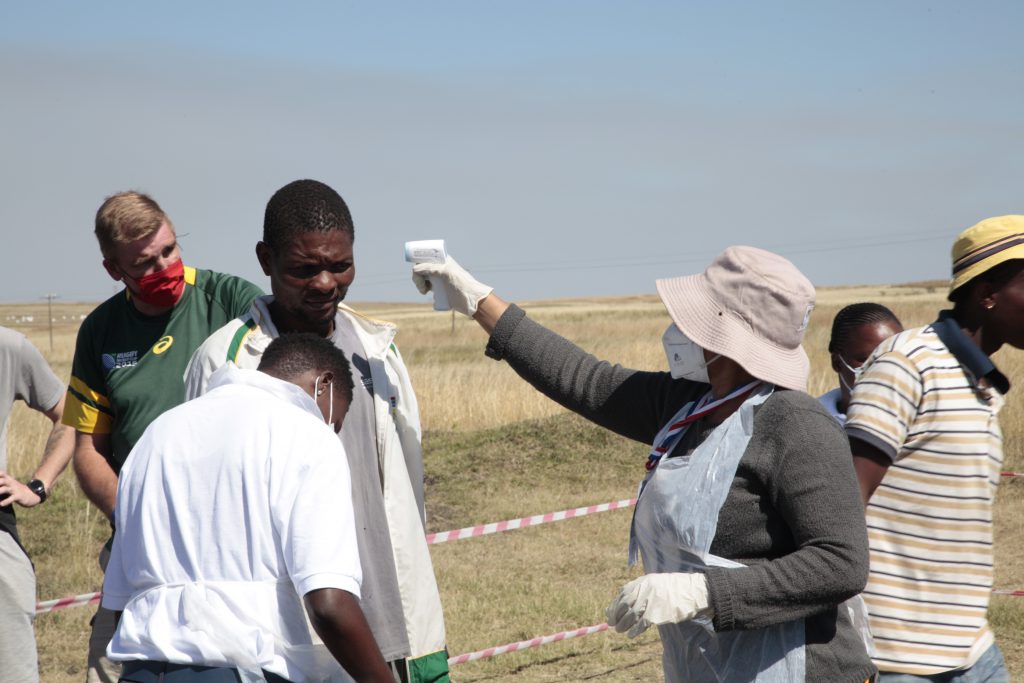
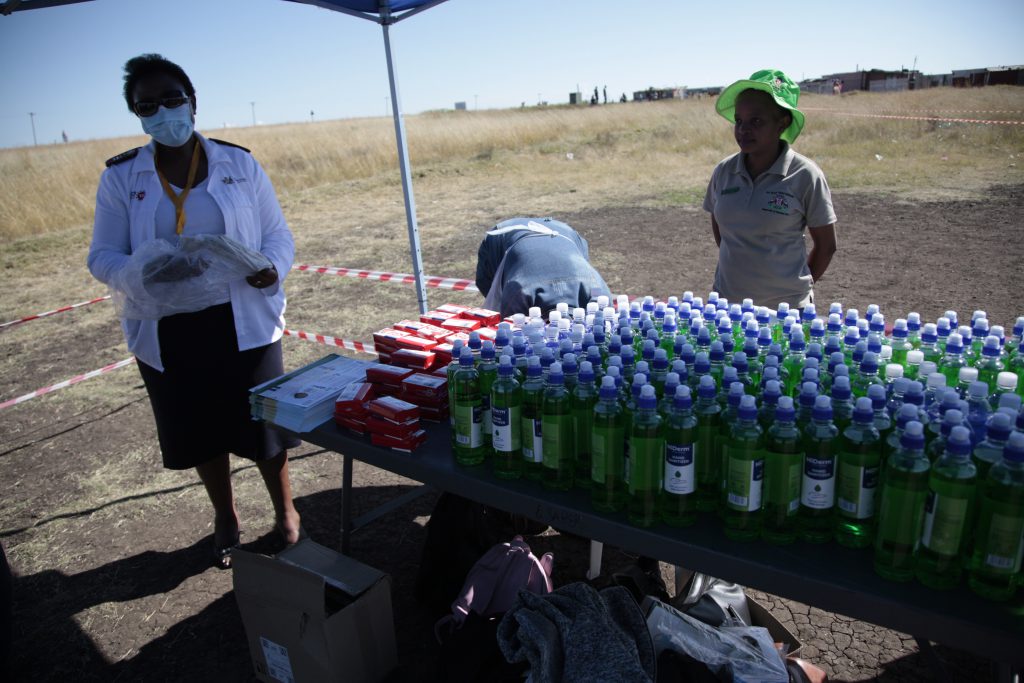
The Department of Health also cordoned off an area where screening took place. After some initial teething problems, the process started to gain momentum.
Screening area
Whats your temperature?
Screening area
Filling the forms
Water for the thirsty
Screening area
Department of Health screening residents
Screening by Dept of Health (GMM)
Families collected food from the trucks and proceeded through the screening process. The vulnerable were targeted for screening and several medical practitioners were on hand under the leadership of Sister Mercy Masilela.
Over 720 parcels and about 1400 loaves of bread were handed out at Holfontein.
The Trichardt Zakaat and Welfare Fund restocked their vehicles and proceeded to other nearby communities. They ended by distributing to residents within Trichardt and Secunda as well.
The Trichardt Zakaat and Welfare Fund would like to thank the following people for their contributions to making this distribution a success:
They would like to express their thanks to God for giving them the ability and means to make a difference in other people’s lives.
Thank you to all the donors for their heartwarming contributions and donations.
Thank you to all those that assisted on the day and in the preparations.
Trichardt SAPS
Security companies that assisted namely Stratcon, Roman and SSS
Isibonelo Mine Security
The Department of Health.
Ward Councillor Ciska Jordaan
Councillor Jordaan sent the following message to The Bulletin:
As the ward councillor of Ward 25, I am extremely grateful for the selfless contributions that have been made by several organisations towards those in the community that are severely impacted by COVID-19 and the measures that have been put in place to spread the curb of the virus.
The Trichardt Zakaat and Welfare fund, the Muslim community, the Trichardt CPF, Anglo, members of the Zello group, Simunye HBC, Trichardt SAPS and the Health Department have all contributed in their own way such as by donating a considerable amount of food and soap, screening residents and keeping us safe. It is an immense honour for me to serve a community that has such a deep sense of neighbourly love and selfless giving. Their actions indeed prove once again that as South Africans we are stronger together. This togetherness reinforces the beauty behind the meaning of Freedom Day that we’ve just celebrated.
View of the food distribution
I’d like to wish the Muslim community a Ramadan Mubarak and admire tremendously the care they have shown for the community. Lastly, I encourage communities to continue to do their part in curbing the spread of Corona Virus by adhering to the lockdown regulations, washing their hands often and exercising social distancing.
The Bulletin would also like to express their gratitude to all those that are making a difference in others lives during this time. There is so much need in our area. Those that can make a difference can contact The Bulletin at encee@thebulletin.co.za or 0825547589 and we will gladly guide you to the organisation of your choice. Donations are also welcome
The following is a press release from Secunda Mall:
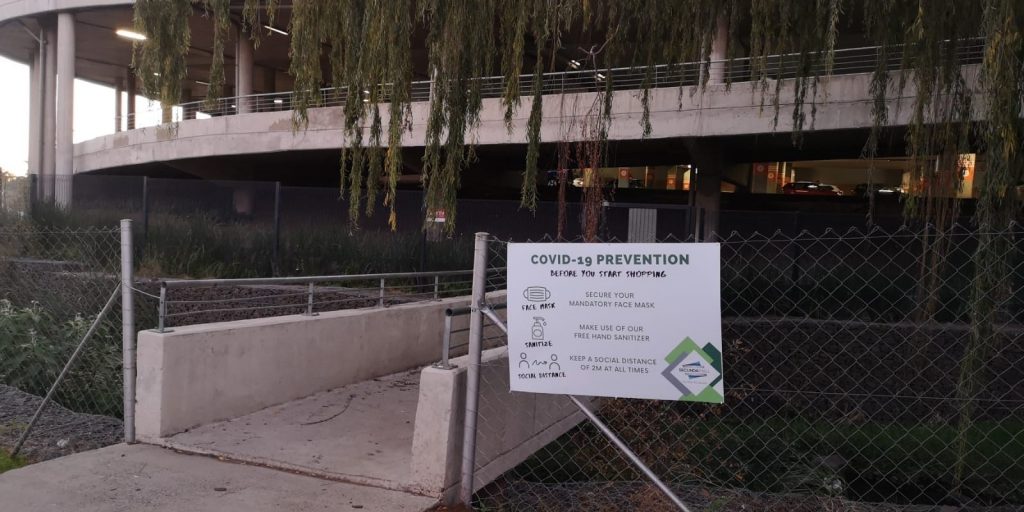
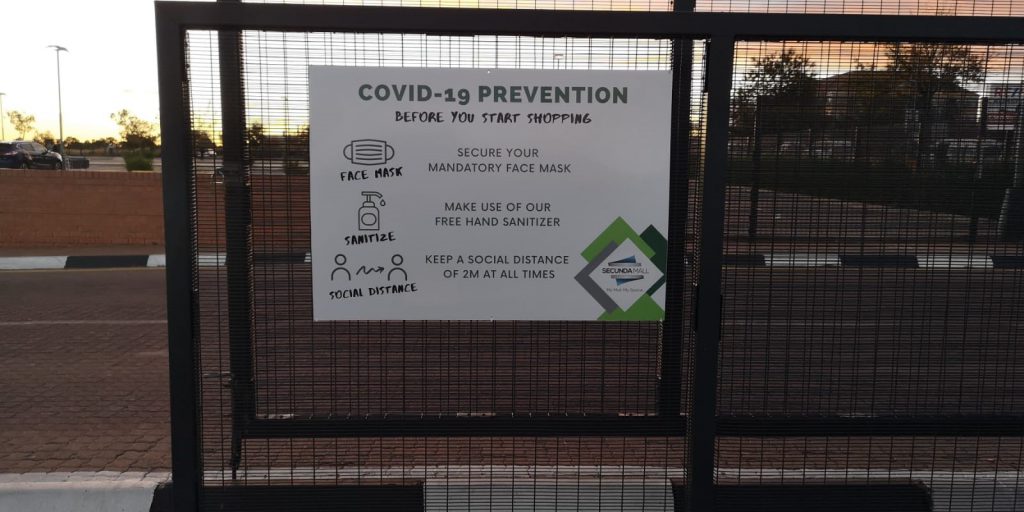
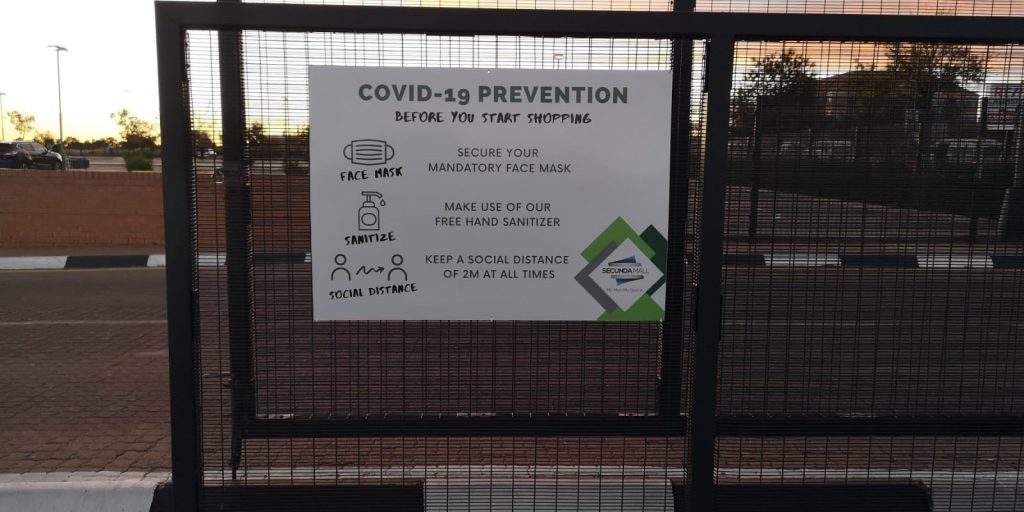
As we head into level 4 tomorrow and with more stores being able to trade. We have set out strict rules for when shopping at Secunda Mall. Rules can be found at every entrance and all main gates.
Remember stores are opening for essential shopping only and we would like to reiterate that all customers only shop when absolutely necessary.
We would all like to see things return to the new normal as soon as possible. And this can only be done by being mindful and following the rules.
The following tenants will be trading on 1 May:
@Home
Ackermans
African Bank
Bargain Books – 5 May
Biltong @ ZA
Capitec
Checkers Hyper
Checkers Medirite Pharmacy
Clicks
Contempo
Cotton On
Crazy Store
Cross Trainer
Dischem
Dynamic Vision
Edgars
Exact
Food Lover’s Market
Foschini
Game
Hi Fi Corporation
Identity
Imraan Outfitters
Incredible Connection
Jet
Legit
Markham
Matrix Warehouse
Miladys
Mr Price Clothing
Mr Price Home
MTN
Nedbank
Pep Clothing
Pep Home – 2 May
Pick ‘n Pay
PNA
Pick ‘n Pay Clothing
Sheet Street
Shoe City
Sport Scene
Truworths
Vodacom
Vodacom 4 U
Woolworths
*Trading hours are yet to be confirmed.
* Limited trade as set out by the South African government is applicable
We urge customers to kindly contact the stores directory when planning a trip to Secunda Mall. Store contact details can be found on our website: www.shopsecundamall.co.za or by calling: 010 001 0254
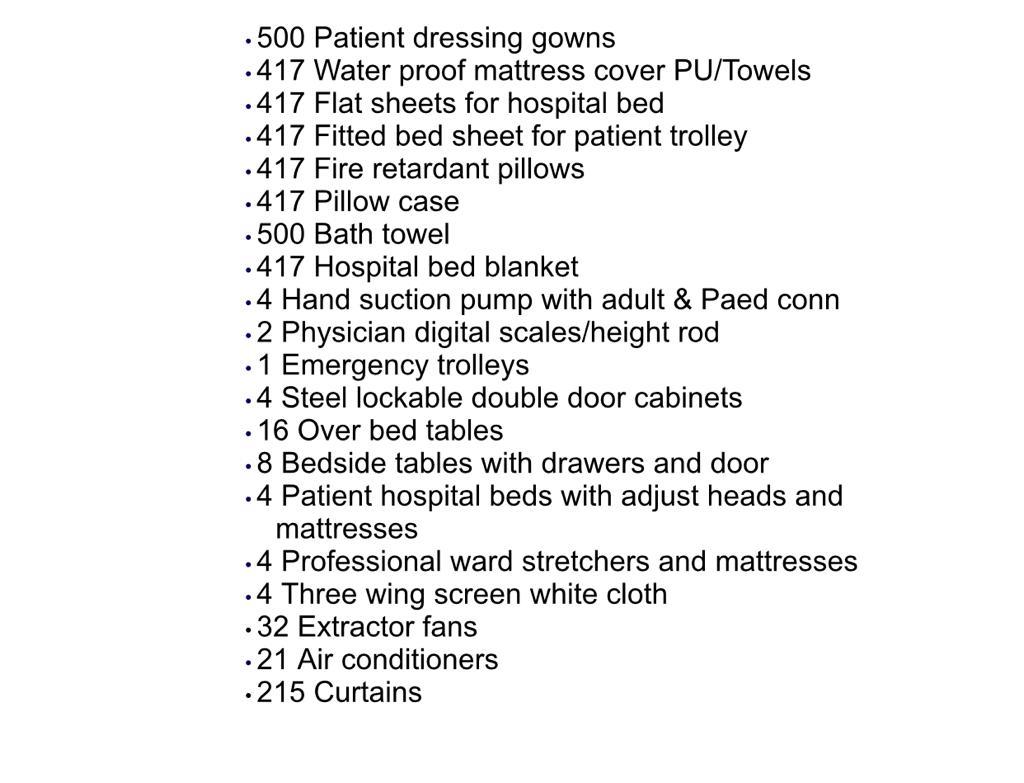
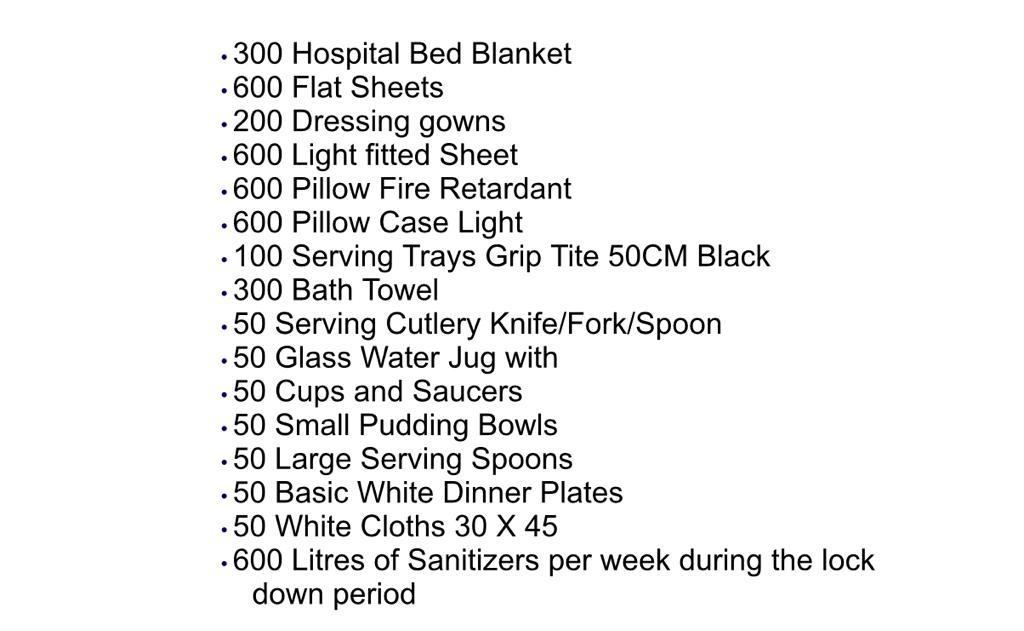
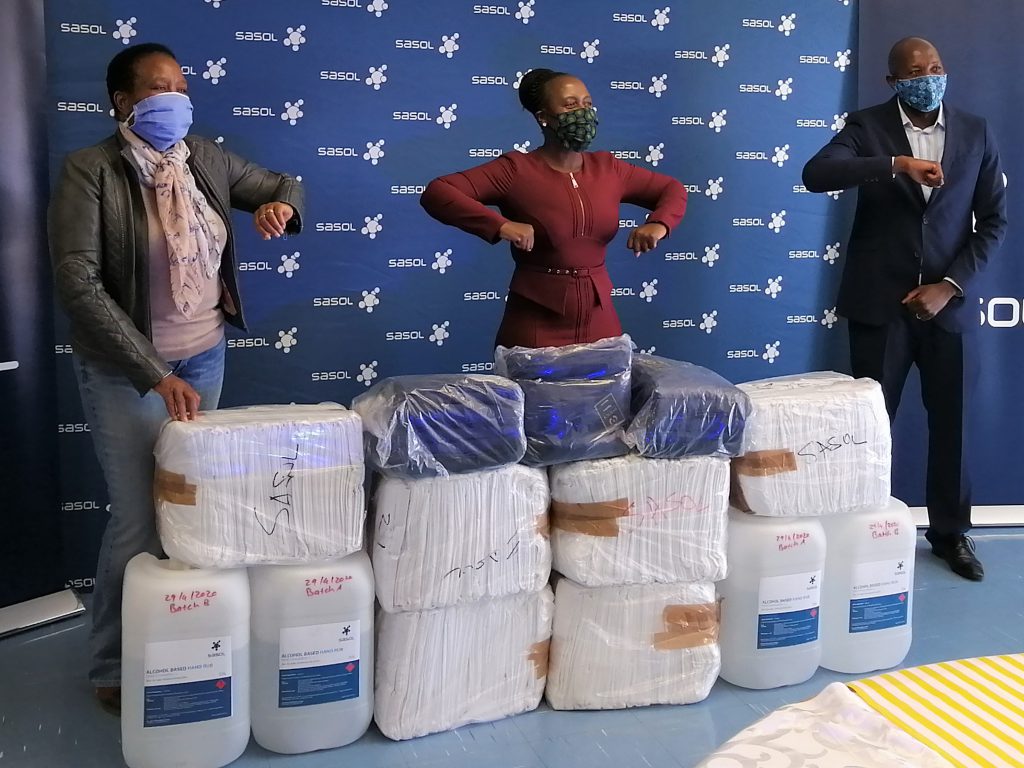
This morning at Evander Hospital, Sasol donated linen, crockery, hospital beds, air conditioners, hand sanitisers and other amenities to the Department of Health, Gert Sibande District. Sasol also donated 3 vehicles, fuel and the assistance of data capturers to assist the Department in their COVID-19 initiatives.
“I understand that SASOL has not spent less then R 4.5 million to this course. This of course excludes the overheads and other costs,” the MEC: Health Mpumalanga, Ms Manzini said in her keynote address.
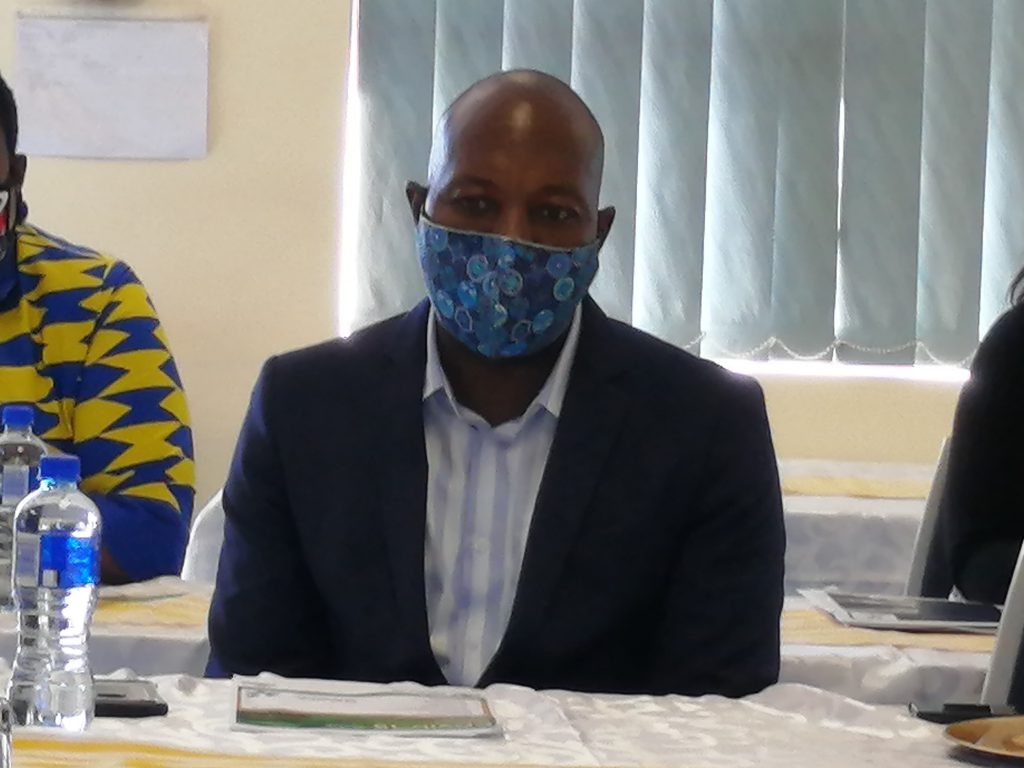
MEC: Health Mpumalanga, Ms Manzini
She continued: ”Today is a deeper reflection of how the public-private partnership is working towards the improvement of our people’s lives and bettering specifically healthcare service delivery. According to chapter 2 of the Constitution in the Bill of Rights, it clearly states that: “Everyone has the right to have access to healthcare services, including reproductive healthcare and no one may be refused emergency medical treatment.”
Mr Simon Baloyi, Senior Vice President of Sasol Chemicals Operations, said: “We became very proactive. From day 1 we sprang into action. We donated over 7000 hazmat suits and facemasks and also more than 14 000 litres of sanitisers to the district and the province and all the border posts. We continue to give sanitiser to the hospitals, SAPS and the taxis.” (Watch video interview for full speech)
The opening and speeches were followed with a tour of the hospital to see all the equipment that have already been installed and is being used.
Donated items:
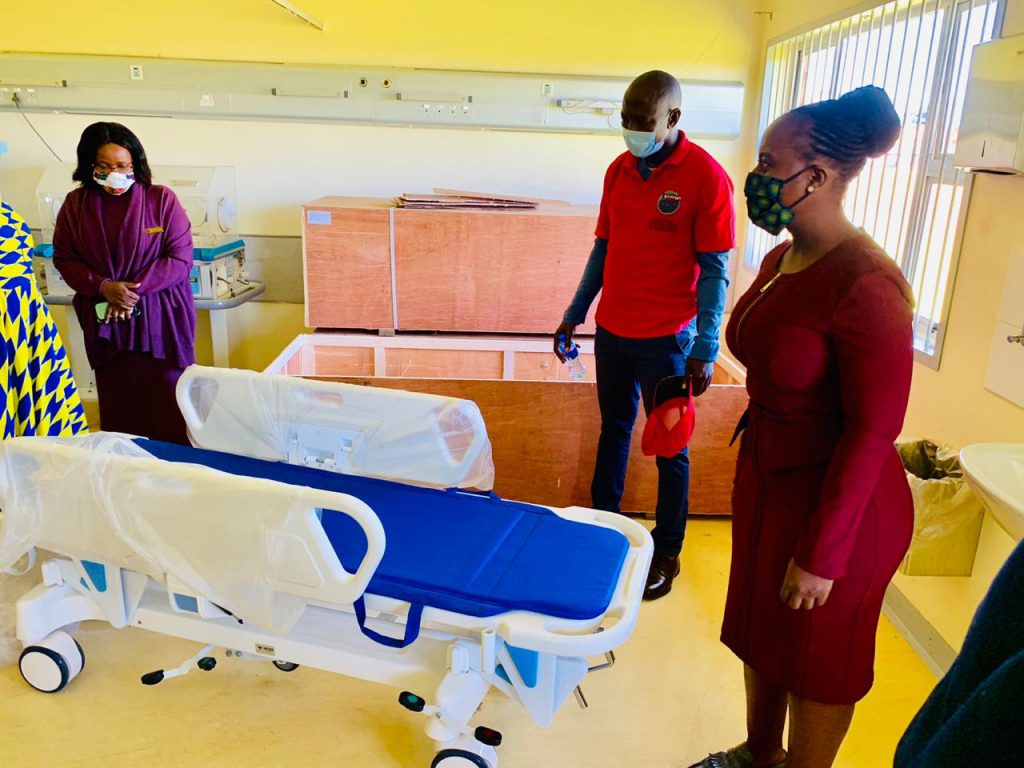
Ms Nanana Hlatswayo, Gert Sibande Health District, was excited to see the new hospital beds that were donated to Evander Hospital. A bed was taken out of its wooden box and set up for all to see.
“With an emergency of this kind, there are bound to be teething challenges – and I am confident that we shall overcome this storm. As we navigate ourselves out of this storm, we remain confident that South Africans will continue to respond positively to our fight against this pandemic, which is the greatest threat to our lives,” Ms Manzini said.
The whole event was kept brief and only a few people were present.
This is a press release from the South African National Blood service:
This year, Workers’ Day looks different for South Africans. It’s impossible to ignore the irony of celebrating Workers’ Day under lockdown where the status quo of working life in South Africa includes a daily commute to the office. For the past few weeks, work life has looked different for many, with the number of employees working from home expected to increase post-the COVID-19 lockdown.
Born from the struggle for workers’ rights and social equality, this international observation is especially significant to South Africa – a country with a bitter history of labour and social inequality. Sadly, the pandemic has undone a lot of advancement that our government and trade unions have made in reducing the numbers of unemployment and promoting workers’ rights in our country. With widespread job losses anticipated, social inequity will be aggravated and unemployment will become a reality for many. This Workers’ Day, it is important to recognise that workers will be particularly affected by the pandemic through job losses, homelessness and in various other ways.
The South African National Blood Service (SANBS) joins the international community in honouring the contributions of its employees across the country. “The SANBS tips its hat to all the men and women who make sure that we continue to fulfil our purpose of being trusted to save lives. Our employees have been especially significant to the greater South African community as they continued to serve as essential services workers during this pandemic,” said Jonathan Louw, Chief Executive Officer of the SANBS.
We remain aligned to the visions of the trade unions operating in our business space which strive for “human dignity, effective service delivery and protection of members’ rights in the workplace” and to serve the individual and collective interests of workers.
We pay homage to the workers who fought for a democratic South Africa and to those who continue to stand on the front lines to ensure that all South Africans enjoy employment rights in their own country.
Residents from Ext 22 in eMbalenhle are upset and scared.
Recent cracks in the earth, as well as an earthquake, are leaving residents scared.
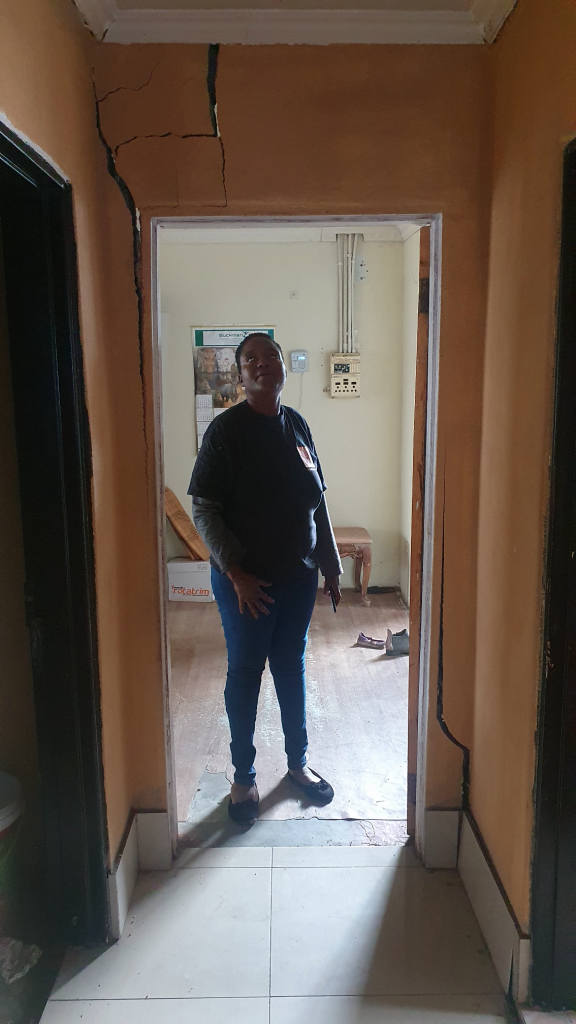
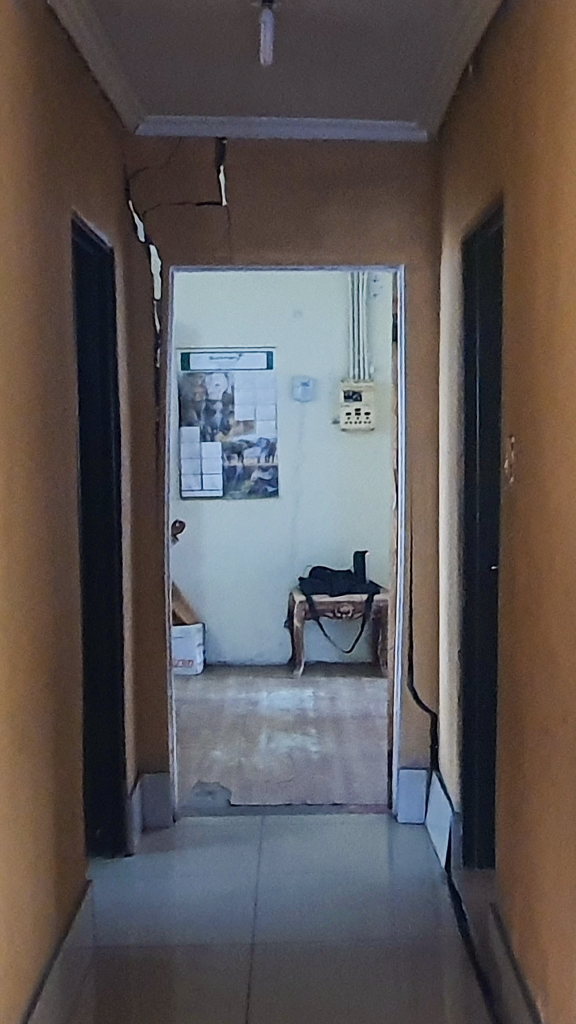
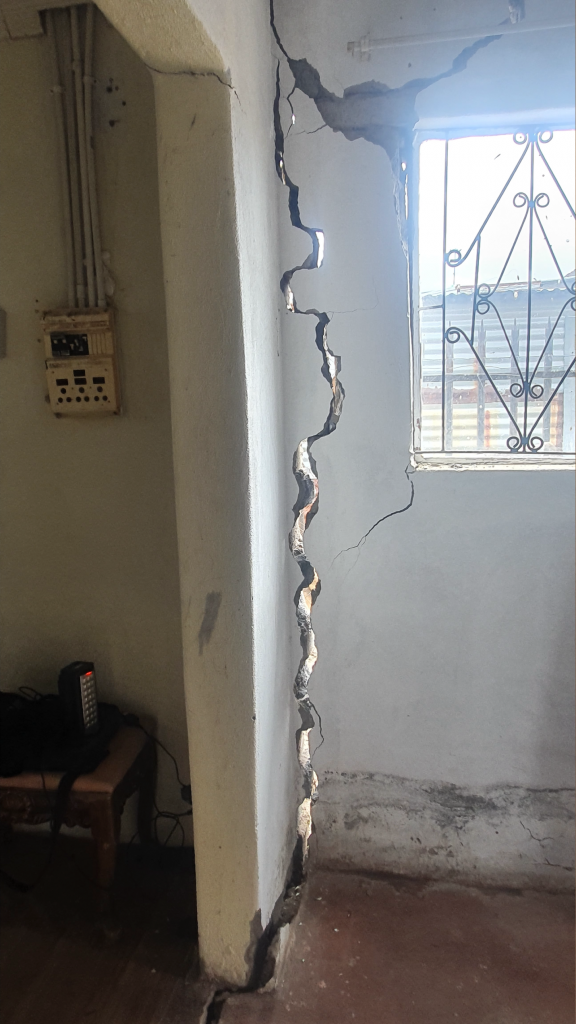
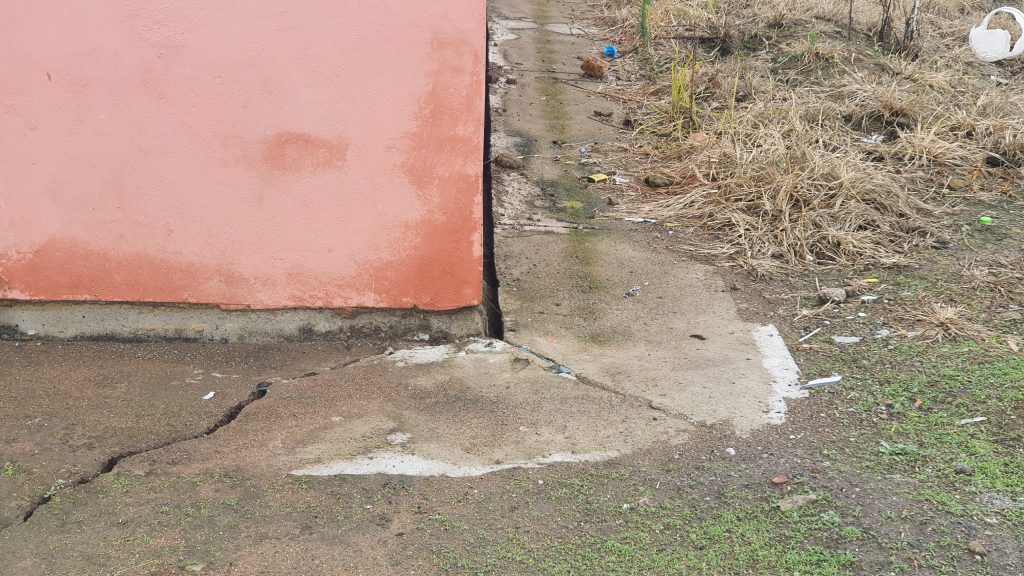
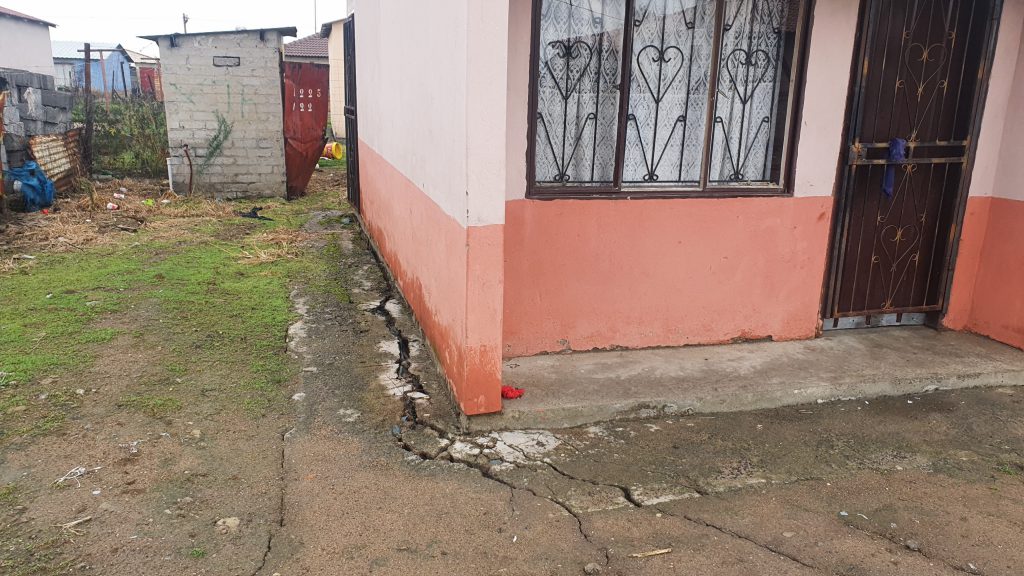
The Bulletin reported on the cracks on Friday with videos and photos of the cracks. These cracks were not limited to the roads but also affected some houses.
Cracks on Friday
Cracks on Thuesday
Cracks grew larger
Some of the cracks in one of the houses
In our previous report, we wrote the following: What became clear to The Bulletin was that the area had been undermined before and that GMM was fully aware of this. They were told not to build on that particular area by Sasol unless the structure complied to certain regulations or building codes, according to some residents that spoke to a Vice President at Sasol.
There are some claims that the Department of Planning and Development, under the political leadership of MMC NE Nkosi, was well aware of the problems.
A source, that asked to keep his/her identity secret, told The Bulletin that Sasol objected when GMM started construction, but that the objection was rejected. It is very worrying that an important factor such as underground (or previous) activities can be ignored, putting people at risk.
Some residents told The Bulletin on Tuesday that the rumblings underground continued until at least Monday. They are now scared to stay in their houses and feel traumatised by the events.
Cracks on the side of the house
Cracks on the side of the house
New crack at a house in ext 22 eMbalenhle
One Resident said that the Mayor, Cllr Thandiwe Ngxonono, was in her house when a noise sounded underground. The Mayor ran out and did not want to enter the house again. No one from Govan Mbeki Municipality returned to address the problem or speak with the residents.
The resident and owner of the house claimed that the Mayor was scared to return to the house.
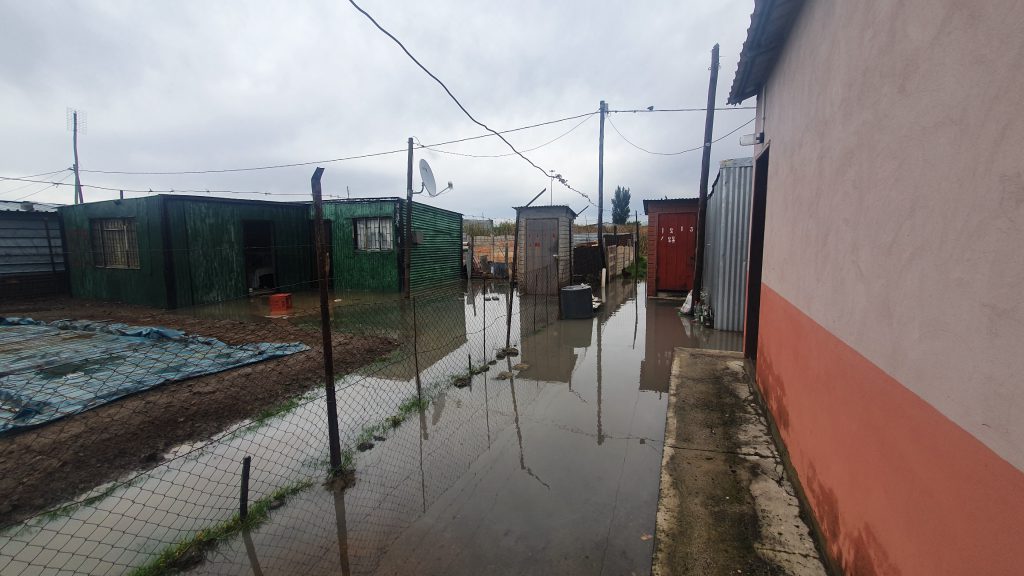
The cracks in some houses were noticeably larger when The Bulletin visited the area on Tuesday. Some stands were also flooded after the cracks appeared and the subsequent earthquake. It is still not exactly clear what caused the movement as the investigation continues.
On friday there was no water in the yard. Now it is flooded!
Meanwhile, residents are expected to stay in their houses.
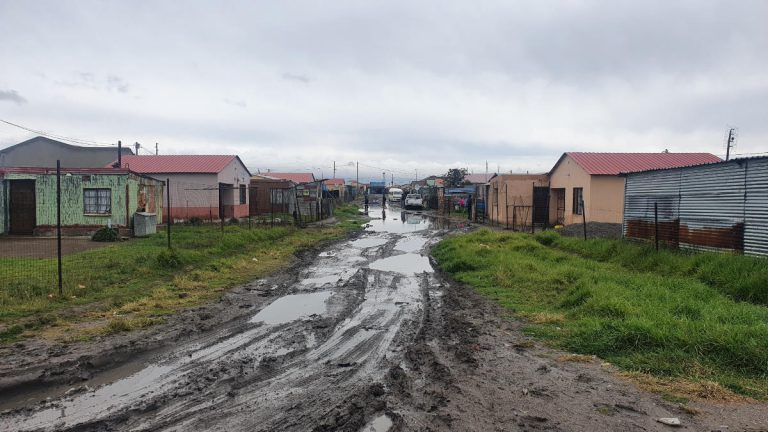
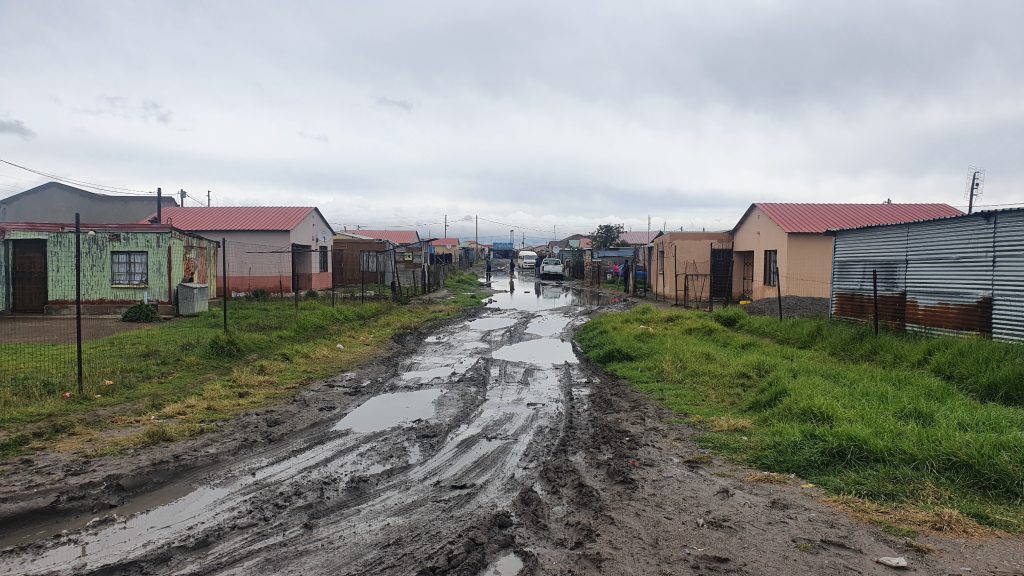
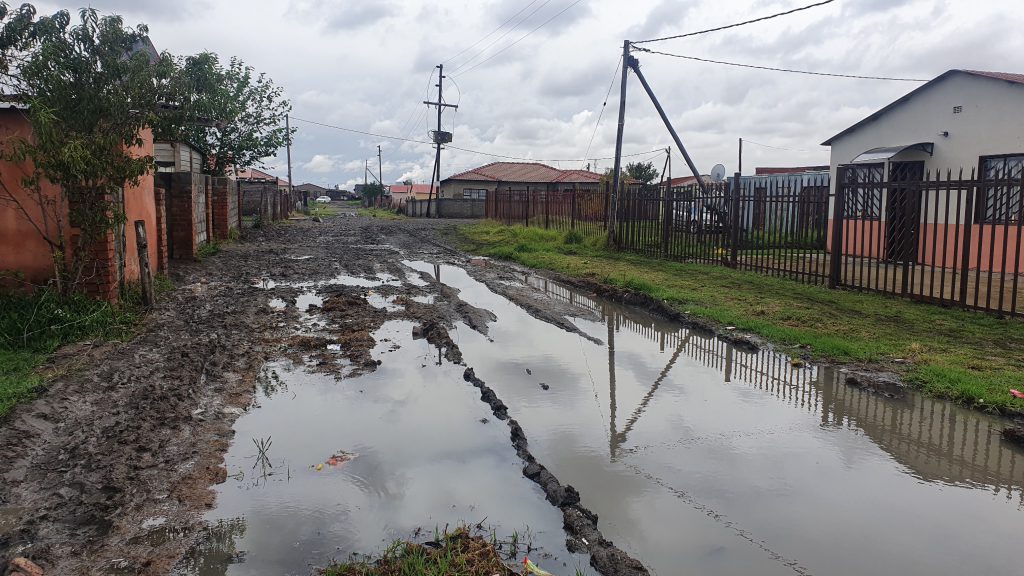
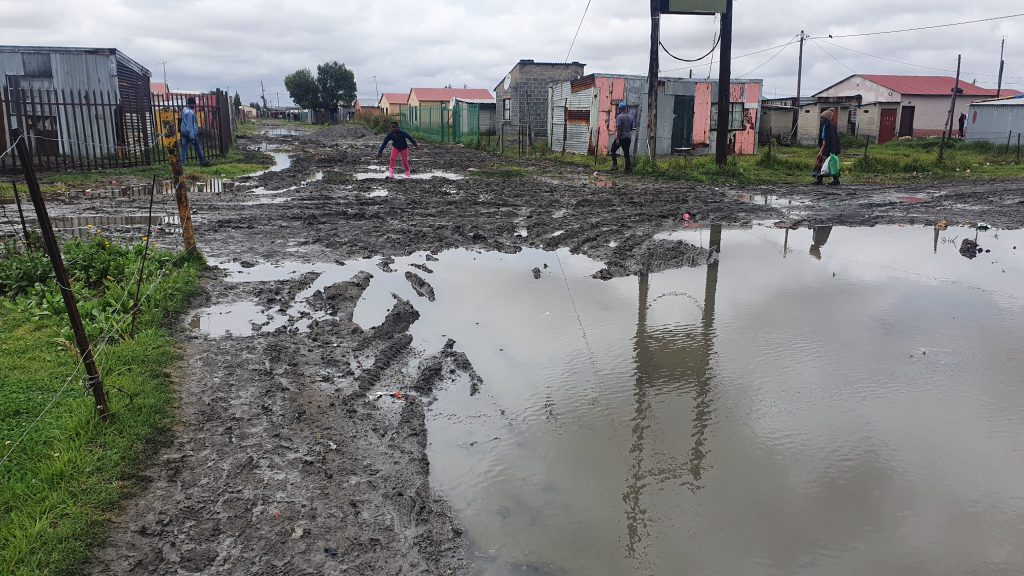
The roads were in an appalling state with sewerage and rainwater flooding the streets, turning it into a mud bath that is difficult to traverse. Residents said that this is how they have to deal with the roads every time it rains. Some areas are just not possible to walk in without having to walk in mud and water.
Roads in ext 22, eMbalenhle, are flooded with water and sewerage
Mud bath instead of a road
More mud to walk or drive in
Roads are unpassable
The plight of the residents continues as the rain continues and no answers are forthcoming from GMM at the moment.
The following is a press release from Secunda Mall:
What to expect in level 4 of lockdown:
As of 1 May, Secunda Mall will be implementing the following mandatory measures as per the National Health Department:
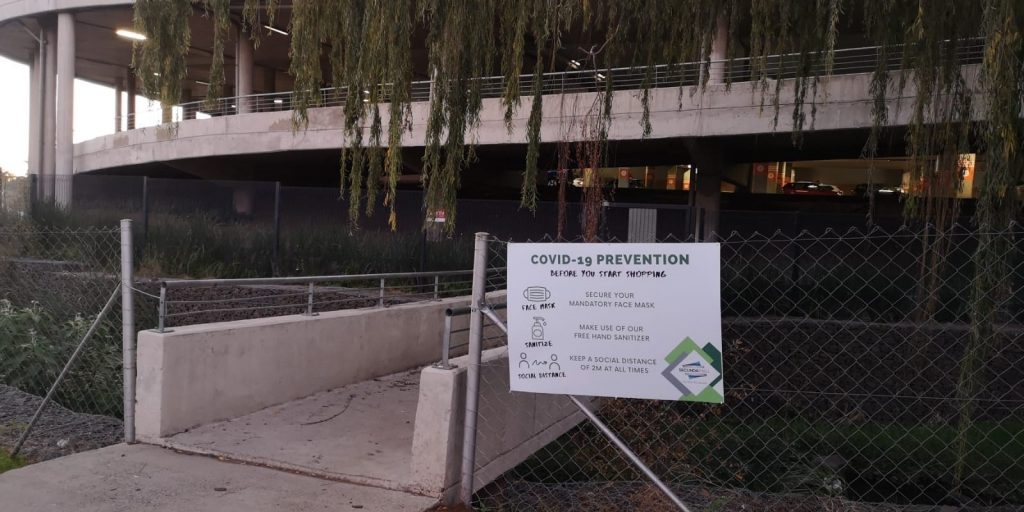
Masks will be mandatory when going out in public spaces. This includes coming to Secunda Mall. If you do not have a mask, please ensure that you cover your nose & mouth with something suitable such as a scarf, buff, shield etc.
Hand sanitiser can be found at all main entrances.
Customers are expected to maintain a safe social distance of 2 meters at all times. As well as when using lifts and escalators.
Only one family member per household allowed and no socialising with other customers.
Please ensure that you continue practicing healthy hygiene habits when visiting Secunda Mall.
*Stores re-opening and trading hours will be shared soon, once it becomes available.
MAJOR BREAKTHROUGH AS PSiRA RATTLES THE NESTS OF UNSCRUPULOUS PRIVATE SECURITY SERVICE PROVIDERS AND MAKE HISTORIC ARRESTS, IN LESS THAN A WEEK
“In what may have been perceived to be a quiet week in the calendar of the Coronavirus lockdown, it was a crescendo in the law enforcement circles as the Private Security Industry Regulatory Authority (PSiRA) heightened its statutory mandate by conducting major operations that resulted in no less than 171 individuals arrested, including 8 Directors/Owners of private security companies and confiscated firearms,” PSiRA said in a statement on Tuesday 28 April.
Led by its CEO, Manabela Sam Chauke, a former top forensic Private Investigator himself, the nationwide operation which took place between 21 April to 24 April 2020, involved all PSiRA’s Inspectors who were recalled from their lockdown isolation to come and intensify the Authority’s raid against suspected rot in the industry.
PSiRA was very successful and arrested 8 Directors and made 163 individual arrests.
1748 security officers were inspected and PSiRA found that 173 security officers were unregistered and 159 were untrained. 159 officers were found not to be in possession of Covid-19 essential services permits.
9 Firearms were also confiscated by SAPS
The statutory mandate of PSiRA
To regulate the private security industry and to exercise effective control over the practice of the occupation of security service provider in the public and national interest and the interest of the private security industry itself, and for that purpose, subject to this Act, to-
(a) promote a legitimate private security industry which acts in terms of the principles contained in the Constitution and other applicable law. The provisions of PSiR Act 56 of 2001 also prescribe that, ‘An Inspector may, subject to any direction of the Director, carry out an inspection of the affairs or any part of the affairs of a security service provider, of any other person who employs a security officer, or of a person whom’ (Section 33 (1)).
The operation was dubbed Operation Covid-19 Clean-Up by the Executive Head of Law Enforcement, Adv Linda Mbana, who rallied her ground forces to inspect the private security service providers without fear or favour. The well-orchestrated operations resulted in 171 arrests, confiscation of 9 unlawful firearms and 184 criminal cases opened, all in less than a week.
“Our attitude is zero-tolerance against misconduct and to fiercely protect an industry so often bedevilled by rogue elements masquerading as Security Officers. Therefore, we are duty-bound to regularly conduct these kinds of operations in order to preserve the integrity of the industry but moreover, protect the gains of Freedom sacrificed for by our forerunners”, contended PSiRA CEO, Sam Chauke.
These successful operations took place in Gauteng; North West; KwaZulu-Natal; Eastern Cape and the Western Cape Provinces, respectively.
The security business has grown into a lucrative business for some and there are numerous security companies springing to life, some disappear just as quick, while others hang on.
Lets us all hope there are plans to expand this investigation to other provinces as well.