Home Blog Page 202

So is die Lewe: Honger

Die Gereformeerde Blues Band sing: “In die tronk / is dit ‘n gewone dag / in die tronk / net soos elke ander dag / in die tronk / hoor jy laat in die nag / die honde blaf / in die tronk / kettings aan die mure vas / in die tronk / kettings aan jou voorkop vas / in die tronk / kettings aan jou denke vas / en laat in die nag / hoor jy ver / die honde blaf.”

Met die aanvanklike aankondiging van die landswye inperking was daar grootliks ‘n stilswyende instemming by die meeste Suid Afrikaners dat dit die beste manier is om die Coronavirus se verspreiding te bekamp. Die aanvanklike inligting was dat die inperking net drie weke sou duur.  Die uitdraai van die hele situasie lyk nou egter totaal anders as wat die meeste mense in hulle wildste voorspellings kon voorsien het. 

Die uitwerking van die verlengde inperking, asook die sowat 500 regulasies wat daarmee saamgaan, het ‘n situasie geskep wat ‘n onbeplande uitkomste genoem kan word.  Inderdaad is mense gefrustreerd, verward en oningelig oor die presiese vertolking van wat en wat mag nie. 

Gewone mense se lewens word so gereguleer, dat die verkoop van alkohol en nikotien verbied is. Terwyl die gebruik van dagga wettig is.  Daarmee saam word die regulasies se vertolking skynbaar oorgelaat aan individue in magsposisies wat dit totaal uiteenlopend vertolk.  Dit bring absurde situasies mee, soos dat ‘n kleuter wat op die strand ‘n draai hardloop, se ouers in hegtenis geneem word.  Elders word ‘n kleuter deur verkeersbeamptes in hegtenis geneem, terwyl sy pa skreeuend hom probeer terugkry.  Dit maak opslae in die media, en jaag die woede onder gewonde landsburgers tot op kookpunt. 

Terselftertyd word 19000 gevangenes vroegtydig vrygelaat omdat “die staat ‘n verpligting het om hulle belange te beskerm”, aldus ‘n hooggeplaaste.  Mense wat gevonnis is vir diefstal, bedrog en ander misdade, is skielik buite die tronk. Terwyl wetsgehoorsame, belastingbetalende Suid Afrikaners wat nog nooit aan enige misdaad skuldig bevind is nie, gearresteer en toegesluit word en obsene boetes moet betaal vir “misdade” soos die uitdeel van kospakkies vir honger mense, en ry in hulle motors (totaal geisoleerd van enigiemand anders,) terwyl hulle nie maskers op het nie.

Een persoon kry R10000 boete omdat hy in die tuin op sy sypaadjie werk, terwyl ‘n eskader mense wat uitgewys is by die Zondo-kommissie vir die verdwyning van miljoene rande en grootskaalse wanbestuur en korrupsie, niks oorkom nie.  In baie stedelike gebiede is hordes mense wat alle regulasies oortree, terwyl ‘n hele polisiemag ‘n branderplankryer in die Kaap arresteer wat op sy eie in die see was.

Werkloosheid neem drasties toe, en met die skrywe van hierdie rubriek waarsku dr. Roelof Botha, bekende ekonoom, dat Suid Afrika binne twee weke bankrot kan wees as daar nie ’n verslapping van reëls is nie.  Aan die ander kant moet toegegee word dat die getalle van mense wat aangesteek word met die virus, asook sterftes, daagliks toeneem.  Wye konsultasie is nodig, en politiekery soos wat ook tans plaasvind, moet heeltemal geamputeer word.

Voorwaar is ons almal in tronke, soos die GBB sing, terwyl ons denke in kettings gebind word. Ons hoor ook duidelik na agtuur in die aand die honde blaf, terwyl ons onder huisarres is.  Ver in die nag blaf hulle, omdat hulle dalk dinge vermoed wat vir ons nie duidelik is of sin maak nie.

Die ergste, mees kommerwekkende ding van die huidige omstandighede, is mense wat nie kos het nie.  Wat doen ‘n pa as sy kinders huil, en daar geen geld of kos is nie?  Wanneer nie-regeringsorganisasies deur onsinnige regulasies verbied word om kospakkies uit te deel? Dit is interessant hoeveel oop harte en hande daar is om honger mense te help. Dit is net so skokkend hoeveel mense onder die broodlyn begin lewe. 

Dit herinner aan die wêreldoorloë, waar tonele waar gewone mense in lang toue staan en wag vir ‘n skeppie sop, ‘n algemene gesig was.  Miskien is die honger van gewone mense tans een van die plofbaarste kwessies.  Die sielkundige implikasies van hongerly word nie altyd besef deur mense wat die vermoë het om drie keer per dag te eet nie. Noodwendig word verskeie kettings wat aan jou denke vas is, weer helder:

Aan die begin van die negentigs van die vorige eeu het daar baie nuwe troepe begin inkom in die destydse SAW,  wat nie dienspligtig was nie. Hulle het die kerkkampe wat ons by Lugmaggimnasium gehou het tydens basiese opleiding, geesdriftig ondersteun. Een aand, na dagafsluiting, het al die manne gaan swem in die swembad. Ek, as kapelaan, was offisier in beheer, met min of meer die verantwoordelikheid van ‘n bevelvoerder van die kerkkamp.  Ek hoor laataand ‘n kabaal, en storm uit na die swembad toe.

Daar was grootskaalse paniek. Een van die  troepe, ‘n seun van Mamelodi, het op die bodem gedryf. Hy was reeds dood toe die korporaals hom uithaal. Daar was ‘n Raad van ondersoek, wat vir my persoonlik groot stres veroorsaak het. Die uitslag was hartverskeurend: Op hierdie kerkkampe het die weermagkokke ‘n oorvloed van kos gemaak, met baie vleis, wat heelwat smaakliker as die gewone menasiekos was. Daar was ‘n groot verskeidenheid, en hulle kon soveel eet en soveel keer skep as wat hulle wou.  

Die Raad van ondersoek, met ‘n patologiese verslag, het bevind dat die troep wat verdrink het, bykans vier keer die normale hoeveelheid kos in sy maag gehad het as wat ‘n normale mens kan eet. Hy het opgebring, verstik en toe verdrink. Die maatskaplike verslag het bevind dat hy in ‘n plakkershut grootgeword het, 8 mense in een sinkvertrek, waar hulle sommige dae net pap of brood geëet het, ander dae niks. Dit is wat ek onthou as ek tonele sien van mense wat storm vir kospakkies, of in kilometer-lange toue staan.  

Hier, vandag, tussen ons. To ghastly to contemplate.

Secunda Reformed Church Morning Service 10 May

Mothers Day Lessons In Times Of Difficulty

Today’s sermon is lead by Rev Anton Knoetze

Scripture reading is from Genesis 16 verse 1-14

Now Sarai, Abram’s wife, had borne him no children. But she had an Egyptian slave named Hagar; 

so she said to Abram, “The Lord has kept me from having children. Go, sleep with my slave; perhaps I can build a family through her.”

Abram agreed to what Sarai said. So after Abram had been living in Canaan ten years, Sarai his wife took her Egyptian slave Hagar and gave her to her husband to be his wife. He slept with Hagar, and she conceived.

When she knew she was pregnant, she began to despise her mistress. Then Sarai said to Abram, “You are responsible for the wrong I am suffering. I put my slave in your arms, and now that she knows she is pregnant, she despises me. May the Lord judge between you and me.”

“Your slave is in your hands,” Abram said. “Do with her whatever you think best.” Then Sarai mistreated Hagar; so she fled from her.

The angel of the Lord found Hagar near a spring in the desert; it was the spring that is beside the road to Shur. 

And he said, “Hagar, slave of Sarai, where have you come from, and where are you going?”

“I’m running away from my mistress Sarai,” she answered.

Then the angel of the Lord told her, “Go back to your mistress and submit to her.” 10 The angel added, “I will increase your descendants so much that they will be too numerous to count.”

11 The angel of the Lord also said to her:

“You are now pregnant
    and you will give birth to a son.
You shall name him Ishmael,[a]
    for the Lord has heard of your misery.
12 He will be a wild donkey of a man;
    his hand will be against everyone
    and everyone’s hand against him,
and he will live in hostility
    toward[b] all his brothers.”

13 She gave this name to the Lord who spoke to her: “You are the God who sees me,” for she said, “I have now seen[c] the One who sees me.” 14 That is why the well was called Beer Lahai Roi[d]; it is still there, between Kadesh and Bered.

Kruik Oggenddiens 10 Mei 2020

Goeiemore en baie welkom by Kruik se Oggenddiens!

Ons reis die volgende paar weke rondom die vraag: “Wie is hierdie Man?”.

Kom ons herontdek saam meer oor wie hierdie Man, Jesus is.

Maak ‘n finansiële bydrae op 2 verskillende maniere:

1.Gee Aanlyn (Kruik Gemeente, ABSA, Tjek, 632005, Rek nr:1510140016) 2.Gee deur Zapper – vind ons QR code in die diens aankondigings.

Kontak ons gerus op Kruik Gemeente se Facebook Messenger en Whatsapp lyn (0721336130) of besoek ons webtuiste by: https://www.kruik.co.za/

Ons sal graag met jou gesels.

Dankie dat jy hierdie diens saam met ons beleef het!

New COVID-19 positive case for GMM.

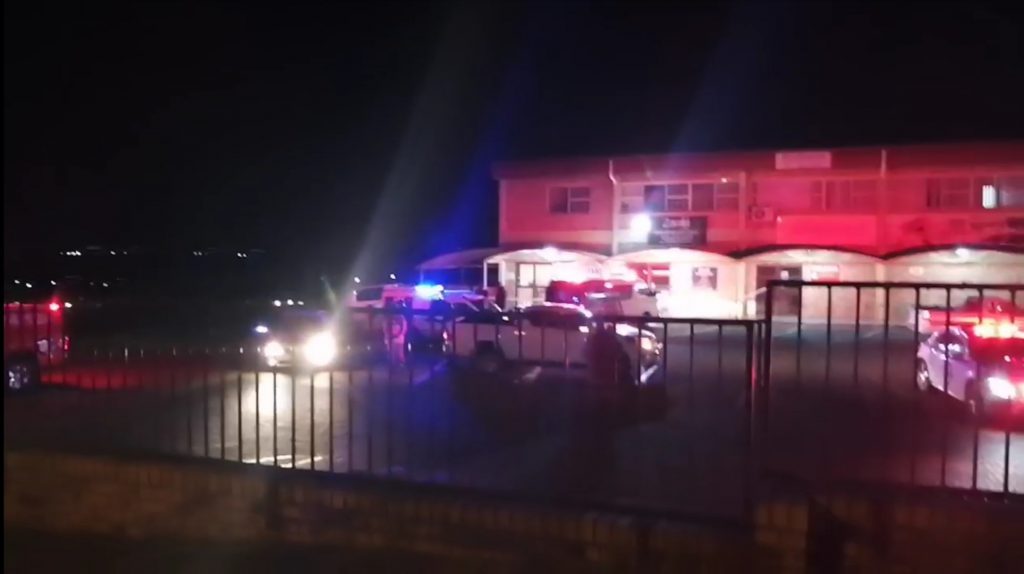
A new COVID-19 positive case in GMM was confirmed yesterday. An employee of Highveld Radiology tested positive.

The management of Highveld Radiology was informed of the results of the tests yesterday (8 May) and immediately contacted the Department of Health (DOH).

The employee was immediately placed in quarantine as per instructions of the DOH. The employee will now be managed by the Department of Health

“The remaining employees were evaluated following guidelines provided by the DOH and those deemed necessary by these guidelines were also placed in quarantine,” Dr Eric Gous of Highveld Radiology said to the Bulletin, “All our employees will be monitored by the DOH on a daily basis for a time frame as deemed necessary by the DOH.”

The Department of Health visited Highveld Radiology yesterday and evaluated the premises.

“They were more than satisfied with the prevention measures that we, at Highveld Radiology, put in place,” Said Dr Gous, “Highveld radiology was then disinfected by the DOH according to protocol.”

The DOH identified a specific timeframe and only those patients that might possibly have come in contact with the COVID-19 positive person during this timeframe will be contacted. This is a normal procedure.

DOH will now contact all possible affected patients with further instructions.

Dr Gous concluded by saying, “We were instructed by the DOH to continue with our services and to continue with the infection prevention measures we have in place.”

All Highveld Radiology employees will now be monitored by the Department of Health daily. This will continue for a specific time as per protocol.

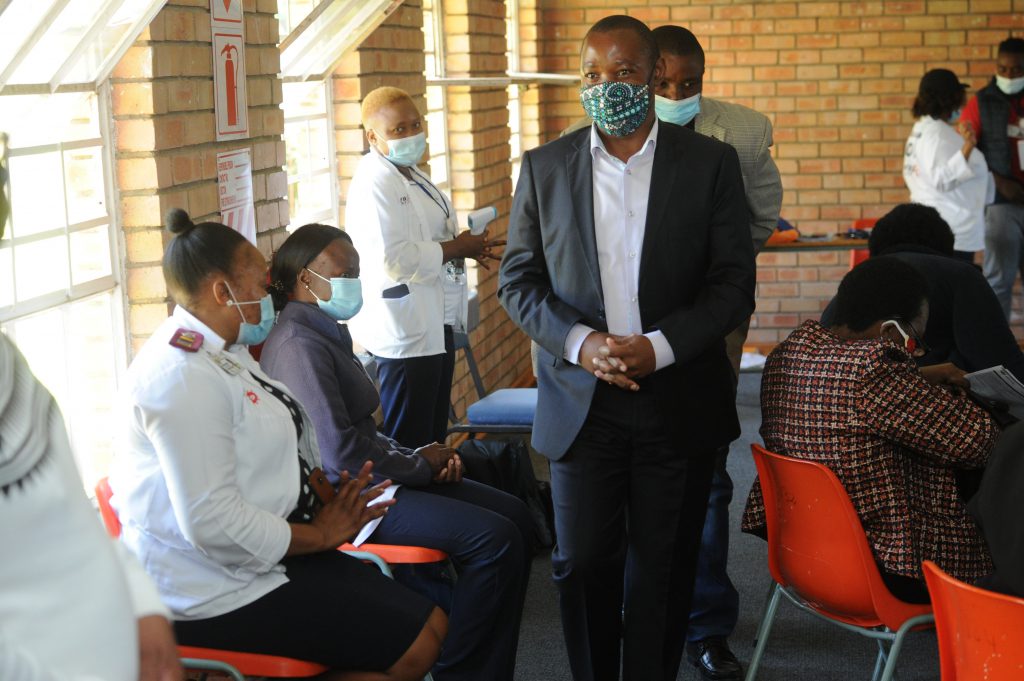
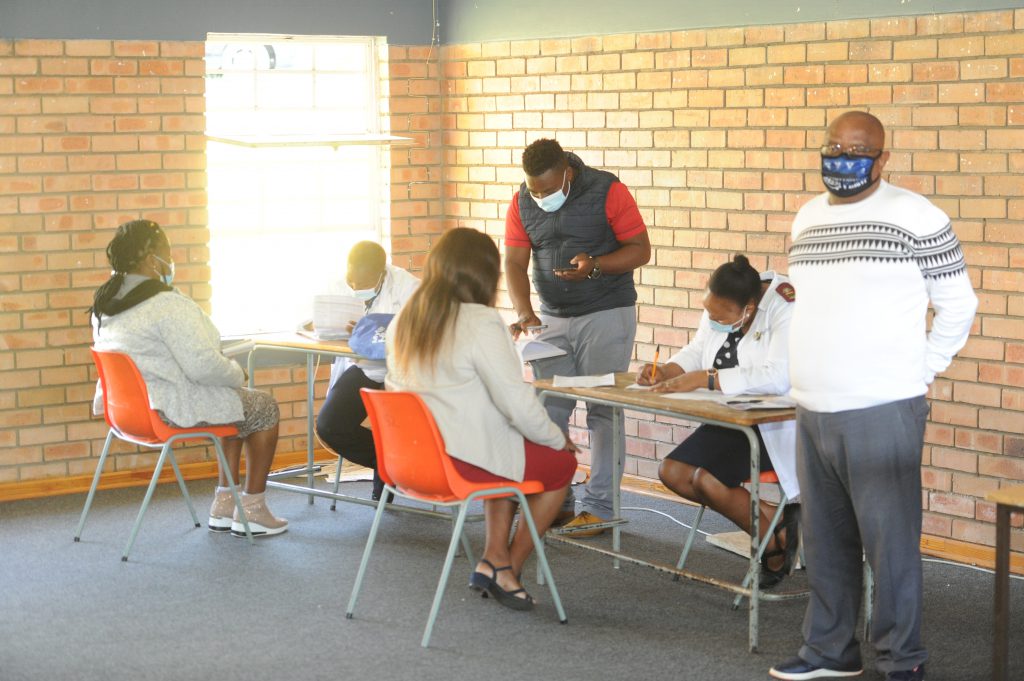
The Department of Health has also been conducting screening in various areas of GMM. The Bulletin would like to urge residents to give their full cooperation to the screening team. This is not only for yourself but for your family and friends also.

GMM remove illegal connections

The fight against illegal connections continues…

The Govan Mbeki Municipality’s Compliance & Law Enforcement Unit and technicians, in partnership with the Secunda SAPS Cluster, removed electrical cables that were connected illegally in various households in eMbalenhle.

• Cables illegally connected to 21 stands were removed in Extension 22 for bridging or tampering with the meter boxes.

• Cables illegally connected to at least 500 households were removed/disconnected in the Mandela Section.

• Cables illegally connected electricity to at least 300 households in the area were also removed.

Illegal electricity connections and tempering have caused many power supply interruptions in the area due to overloading to the grid.

This causes damage to electricity supply infrastructure, such as burning of transformers and even leads to frustrations from residents who have to go for lengthy periods without power supply.

The municipality is also losing millions of rand in revenue due to electricity theft, in addition to the losses suffered by local businesses during electricity outages caused by illegal connections.

These connections are not only illegal but are also dangerous and can cause electrocution.

If you come across any illegal connections, report them to the municipal Compliance and Law Enforcement at 017 620 6327 or email:madiso.m@govanmbeki.gov.za.

Selected categories of sentenced offenders placed on parole

President Cyril Ramaphosa has authorised the placement on parole of selected categories of sentenced offenders as a measure to combat the spread of COVID-19 in correctional facilities, which are considered high-risk areas for infection.

The President has taken this step-in response to a call by the United Nations to all countries to reduce prison populations so that social distancing and self-isolation conditions can be observed during this period.

In South Africa, as in many other countries, correctional facilities have witnessed outbreaks of coronavirus infections among inmates and personnel.

A number of countries across the world have already heeded the call by the United Nations High Commissioner for Human Rights and have released a number of offenders in detention.

The President has taken this decision in terms of Section 82(1)(a) of the Correctional Services Act of 1998 which empowers the President to authorise at any time the placement on correctional supervision or parole of any sentenced prisoner, subject to conditions that may be recommended by the Correctional Supervision and Parole Board.

Pesident Cyril Ramaphosa

The decision taken by the President to combat the spread of COVID-19 in correctional centres could relieve our correctional services facilities of just under 19,000 inmates out of a population of 155,000.

The parole dispensation will apply to low-risk inmates who have passed their minimum detention period or will approach this period in the coming five years.

This dispensation excludes inmates sentenced to life imprisonment or serving terms for specified other serious crimes, including sexual offences, murder and attempted murder, gender-based violence and child abuse.

Inmates that will be affected by this decision will be placed on parole instead of having their sentences remitted. They will therefore continue to serve their sentence under Community Corrections until they reach their respective sentence expiry dates.

Offenders may be arrested and ultimately reincarcerated if they violate their release conditions.

A inmate speaks with a prison guard at the male section of the Johannesburg Correctional Centre also known as Sun City Prison, South Africa, on April 8, 2020. (Photo by Michele Spatari / AFP)

The placement of qualifying sentenced offenders will take place over a 10-week period and will commence as soon as all Parole Board processes have been finalised and all relevant rehabilitation and pre-release programmes are attended.

Minister of Justice Mr Ronald Lamola will in due course provide more details on the parole placement programme in a public briefing.

Pampoene skep hoop in Bethal-gemeenskap

AfriForum se Bethal-tak het gehelp om pampoene vir die dorp se sopkombuis te oes wat ’n boer van die omgewing geskenk het nadat hy besef het die oes is nie groot genoeg om winsgewend mark toe te neem nie.

Lede van die tak het die eerste vrag pampoene op die land gaan oes en die pampoene het ’n groot hupstoot aan kosvoorrade gegee. Diegene betrokke by die Bethal-sopkombuis is daarna ingespan om ’n groot gedeelte van die oes te verwyder.

Ongeveer vier bakkievragte pampoene is tot dusver geoes en daar is steeds pampoene oor wat gepluk moet word. Van die pampoene is ook aan behoeftige gesinne in Morgenzon en Hendrina geskenk. ’n Bakkievrag van die pampoene is na Solidariteit Helpende Hand se Josef Silo in Witbank geneem en geruil vir koekmeel, brood en piesangs wat na die sopkombuis geneem is.

“Hierdie geskenkte pampoene is weer eens ’n bewys dat gemeenskappe kan saamstaan en dat selfs ’n misoes van waarde is vir mense wat in nood verkeer,” sê Hennie Bekker, AfriForum se distrikskoördineerder vir die Laeveld.

Van die geoeste pampoene

Nóg ’n boer van die omgewing het ook intussen pampoene geskenk en dit sal na Helpende Hand geneem word om aan behoeftige mense te versprei.

Indien inwoners in die Laeveld enige voedselskenkings wil maak, kan hulle Hennie Bekker by 081 217 6091 skakel.

Saam is ons sterker. Help ons om ander te help: SMS “Bethal” na 45350 (R1).

DA calls for end of ANC lockdown crises.

The DA supported the lock down but also proposed their risk model to the President.

Unfortunately, although it was sound advice, it was not accepted as a whole by the ruling party and was mostly ignored.

Federal DA leader, John Steenhuisen, today outlined the Democratic Alliance’s stance on the national lock down and called for it to end.

South Africa’s economy is collapsing and several worrying statements have been made by the President and his leadership.

Here is the full speech as contained in the video (delivered today)

DA Leader makes an important announcement

My fellow citizens,

I know you love this country as much as I do. There is a lot to love.

We all want South Africa and her people to succeed, and it is heart-breaking to see so many suffering in these difficult times.

We pay tribute to those who have lost their lives to the virus, and our deepest condolences go out to their friends and families.

But what makes this even more heart-breaking is the fact that much of the hardship we’re going through is unnecessary. In our efforts to fight off a very real threat, we have replaced it with an even bigger threat of our own making.

The real tragedy playing out here is no longer the Coronavirus, but the lockdown itself. Because this lockdown is going to cost many more lives than it can possibly save.

This is a hard truth to speak, and it is even harder to hear. But it must be spoken.

We have to end the lockdown crisis, and we have to do it now.

There is very little for us to gain and almost everything to lose by keeping people at home and keeping businesses shut any longer.

The only reason we entered into the lockdown was to buy some time.

We weren’t trying to stop all Covid infections. We weren’t trying to kill the virus.

We were simply giving our hospitals time to prepare. To give our healthcare workers the best possible chance of dealing with the inevitable wave of infections when it finally hit us.

We knew then, as we know now, that this wave is coming, lockdown or not. We also knew that our country’s economy could only withstand a very limited freeze.

This is why the lockdown had an end date. Three weeks is what it was going to take to source equipment, to get beds ready and to train the doctors and nursing staff in Covid protocols.

However, before those three weeks were up it was decided that a little more time was needed, and so the three weeks became five weeks.

These extra two weeks would come at a huge cost to our country, but at least there was an end date, and we could brace ourselves for the duration.

All of this had to be a very delicate trade-off: shut everything down at an enormous cost to the livelihoods of millions for a short period, and hopefully save many lives in the process.

But this is the thing about managing this pandemic – there’s not only one trade-off. You have to make them all the time.

Every day, the situation changes – the odds change – and you constantly have to reassess this trade-off.

Six weeks ago, that decision by President Ramaphosa to act quickly in shutting the country down to delay the spread was widely praised, and rightly so.

I was one of those who stood firmly behind him and supported his early call for a nationwide lockdown. The whole country did. At the time it was undoubtedly the right thing to do.

But although the President was called brave and bold at the time, that would turn out to be one of the easiest decisions he would make in this crisis.

We could all see what was happening around the world. We could do what they were doing, only faster and firmer.

It was the right thing for the President to do, but not the bravest.

Because the real bravery would be required later, when the time would come to open everything up again and face what we had been preparing for: the spike in infections.

That was the whole point of this hard lockdown: to prepare for the opening up.

I also supported the President when he announced that we would be moving into a phased approach to the lockdown. What he called a risk-adjusted model that would allow for a return to work, schools and, ultimately, normal life.

The DA had just proposed a very similar model to him, and we were grateful that some of this work had found fertile soil.

I said, at the time, that we would judge this model on the details that would follow, but in principle this was a good move.

But we were right to reserve our judgment. Level 4 of the lockdown, as it turns out, is hardly different from Level 5. In fact, in many respects it is more restrictive, not less.

We now have a curfew enforced by more than 75,000 armed soldiers, which we didn’t have under Level 5. And even shopping hours have been reduced instead of expanded.

This wasn’t progress towards a more open society and economy at all. It was simply an extension of the hard lockdown – this time with no final deadline in sight.

What the DA had proposed in its Smart Lockdown was a detailed plan, sector by sector, for how we could safely return to normality.

What the government gave us was simply a longer list of rules and a curfew.

And, as most of you have seen, or even personally experienced, the rules and restrictions under this supposed lighter level of lockdown are often petty, irrational and authoritarian.

It is little wonder then that these rules are increasingly met with resistance, and even outright civil disobedience.

If you want people on your side, you have to treat them with the respect they deserve. You have to treat them like adults.

Instead we have seen citizens treated like criminals.

We have seen people being abused and humiliated in the streets and in their properties by members of the police and the army.

And sadly we have even seen citizens die at the hands of these armed forces.

We have seen good Samaritans arrested for the crime of feeding the poor.

We have seen arbitrary rules on what may and may not be purchased drawn up with the stroke of a pen. There is no rational argument for the continued ban on cigarettes, or alcohol, for that matter.

We have seen announcements from ministers on keeping sectors of the economy shut that have nothing to do with halting the spread of the virus. Petty, irrational announcements, like the ban on all e-commerce.

We have seen the outrageous announcements from the Small Business Development Minister and the Tourism Minister that they intend to exclude some South Africans, on the basis of their race and other arbitrary criteria, from government’s emergency relief measures.

The DA has already written to the head of the IMF – where a large part of this relief funding will come from – to urge them to instruct our government not to use this money in a way that discriminates against some South Africans.

We have also instructed our lawyers to take this matter to the High Court, because it is unconscionable that government would play identity politics in a time of crisis.

We will continue to fight to overturn regulations that are either irrational or immoral, whether in court or through other means.

And we will fulfil our duty, as official opposition, of guarding against the abuse of power.

Because never before, in democratic South Africa, has the power of the state been spread wider, and yet concentrated in the hands of so few.

And all the while, South Africans have been asked to give up even more for even longer, without questioning any of it.

That has to end.

South Africans have more than done their bit. They have been asked to sacrifice, and they have done so. Many have lost all they had.

They have sat diligently in their homes as our country’s economy slowly crumbled around them, waiting for the news that the hospitals and the doctors were ready and we could resume our lives.

I don’t have to tell you how hard this wait has been.

Many of you know full well what it’s like to go week after week without any income, or to wait every day for that dreaded phone call: “I’m sorry, you no longer have a job.”

Thousands of businesses have either already closed down, or are about to. Each of these businesses was a precious lifeline for the employees and their families.

National Treasury says, best-case scenario, we stand to lose 3 million jobs. That’s if we do everything right and end the lockdown now.

Worst-case scenario it’s 7 million jobs. That’s on top of the 10 million who were already unemployed before Covid hit.

SARS says we will miss our revenue target by a massive R285 billion. That’s a fifth of our income gone. This is money meant for social grants, it’s meant to pay teachers, nurses, police officers. It’s meant to deliver water and housing.

We are not the USA. We are not the UK, or Germany or Japan. We simply don’t have the means to navigate around this kind of loss.

The effect on poor South Africans will be devastating.

This is a self-inflicted catastrophe far, far greater than anything the virus could throw at us.

Mr President, by creating this lockdown crisis, you have broken your sacred compact with the people of South Africa. You have weaponised our trust in you and turned it against us.

Instead of trusting us back, you have devastated lives and livelihoods through brutality and coercion.

And you have turned the free citizens of the Republic of South Africa into subjects of an authoritarian government.

We are no longer dealing with a Covid19 crisis. We are dealing with a lockdown crisis. An ANC lockdown crisis, to be precise.

Let me be very clear about this: There is no longer a justification to keep this hard lockdown in place. Government cannot produce this justification.

They cannot show us the modelling they use to decide when to ease and when to tighten restrictions. They cannot do this because they don’t seem to know for sure themselves.

And so every decision is shrouded in secrecy. We are told to blindly trust a body called the National Command Council – a small group of cabinet ministers who don’t answer to Parliament or anyone else.

When asked for their meeting minutes to clarify why they backtracked on lifting the cigarette ban, this National Command Council refused, claiming this was classified information.

I don’t buy that for a second, and neither should you.

The DA has filed a PAIA application to obtain not only the minutes of their cigarette discussion, but of all their other decisions relating to the lockdown.

It is crucial that we all know exactly why, according to government, we’re still in this destructive lockdown.

What we do know is that government’s very own epidemic expert, Professor Salim Abdool Karim, thinks this lockdown has already run its course and is of little more use.

In fact, this was his view already two weeks ago. Yet here we still are.

We know that the sole reason for locking the country down was to buy time to boost our healthcare response. We’ve done this. What hasn’t happened in the past six weeks will not happen now.

The only thing keeping us locked down now is fear.

And we have every right to fear the virus. We have every right to worry about the health of our loved ones, and particularly those who are at higher risk.

We have every right to feel unsure about the future, and what our world will look like three months, six months, a year from now.

But this is not a reason to remain locked down. We cannot afford to remain trapped by fear alone.

If there is a good reason for maintaining the lockdown, based on a scientific modelling of this pandemic, then we need to know what this reason is. We need to see government’s modelling.

If no reason and no modelling can be shared, then we have no choice but to suspect that government is acting irrationally, or deliberately instilling fear to further some other agenda.

Since the start of this crisis, the DA has called for all this data to be shared publicly. We have made extensive and multiple submissions to the president explaining exactly what kind of data is needed for such decisions to be made.

This must go way beyond just the number of infections, deaths and recoveries in the country and for each province.

The data has to be localised. It has to include a detailed breakdown of age, gender and co-morbidities. And, most importantly, it has to include the full, updated picture of the state of our healthcare preparations in each town and city.

It also has to include a very detailed picture of our screening, testing, tracing and tracking efforts.

Because if we don’t know this, we have no way of knowing whether the lockdown serves any purpose at all, and we have no way of knowing if and when we will ever come out of it.

We’re about to enter our seventh week of lockdown, which means we’re fast catching up with the longest Covid lockdowns in the world – Wuhan at 8 weeks and Italy at 9 weeks.

Every single day that we stay here comes at a massive cost. Because every day more businesses are closing down and families are left destitute.

But there is some good news too. As we see this virus spread through the world, we get a clearer picture of its effect. And one encouraging part of this picture is that mortality rates are not as high as we initially thought.

While still dangerous, the Coronavirus is not as deadly as we had feared.

Most people who contract it will get better, or perhaps not even know they had it. For younger, healthy people, the risks are not much higher than normal flu.

This means we have based our response on over-estimated risks. Our strategy is flawed, and we need to respond to this new information by phasing out this lockdown.

This is where the DA’s Smart Lockdown model comes in. A real phased approach that balances the flattening of the infection curve with the safe opening of the economy.

Under this approach, the three steps that we all must do – wearing masks, washing hands and maintaining physical distance – are still critical.

We then use extensive testing to identify where the virus is spreading out of control, so that we can use localised lockdowns to contain the spread.

At the same time, we protect the elderly and others who are at risk as far as possible through isolation.

And then the rest of us get back to work, where every business in every sector will have comprehensive safety regulations in place which they will have to comply with.

Every single business that can safely open, must be allowed to open immediately.

That is how we can effectively spread infections out so that our hospitals can cope, while still allowing businesses to operate safely and allow people to earn a living.

We need to do this right away, because every day we delay comes at a price we cannot afford.

We also need to end the lockdown in an orderly way before the people end it with chaos.

Millions of people are already breaking the law, not because they are criminals, but because they are hungry.

Not because they want to, but because they have to.

Not because they are bad, but because the laws are bad.

When a rule is met by mass non-compliance, it is usually because the rule is irrational. If you need an example of this, just look at e-tolls.

There is no bravery or compassion to be found in this lockdown.

The true bravery and compassion is in the mothers and fathers, the grandmothers and grandfathers, who risk arrest or death to break this lockdown, so that they can feed and clothe their families.

The true bravery and compassion, President Ramaphosa, will be in ending this lockdown.

And be warned Mr, President: Unless you come to your senses and end this lockdown crisis, millions more will start breaking the law in the coming days and weeks.

If you don’t end it, the people of South Africa will take charge and end if for you.

As it now stands, the lockdown is a tragic mistake that has already caused damage that risks dooming an entire generation of South Africans to a lifetime of destitution and suffering.

We can’t undo any of this. We can’t turn back the clock.

What we can do is act now to end this lockdown crisis and get as many of us back to work as safely as possible.

That is the only way we will ensure that, once we have defeated this virus, we have a country left to rebuild.

Coal SA opens COVID-19 testing lab in eMalahleni

Anglo American’s Coal SA subsidiary recently unveiled a state-of-the-art COVID-19 testing laboratory at its Highveld Hospital in eMalahleni, which will allow the hospital to test employees, contractors and the broader community who show signs of the virus.

The laboratory, which was set up within a week, is fully equipped with a polymerise chain reaction (PCR) testing machine. The machine can currently perform 300 tests a day, but this can be doubled if necessary through the addition of a second lab technician. Coal SA has also appointed four clinical associates, and provided vehicles for them to be able to conduct home-based responses.

Opening the laboratory alongside senior leaders from the National Union of Mineworkers (NUM) and Coal SA executives, Coal SA chief executive July Ndlovu said the new laboratory was a key element of the company’s efforts wide-ranging employee and community initiative to prevent the spread of the pandemic.

Ndlovu gave the delegation a tour of the Highveld Hospital, which has been dedicated to treating potential COVID-19 patients from Anglo Coal SA operations and the communities surrounding the mines by installing 85 additional beds, increasing the capacity to 107, for the use of isolation beds and recommissioning the tuberculosis ward to treat COVID-19 patients in isolation.

Ndlovu said ‘a range of stringent measures’ had been put in place at Coal SA’s mines, including increased hygiene measures, clear social distancing markings to ensure social distancing both in the workplace and while travelling to and from work, the provision of personal protective equipment, and screening and testing procedures.

“We made a decision to get the hospital ready for any eventuality early on when the COVID-19 hit our region. I am proud of the work that the team has done to get us to where we are today. This a clear demonstration that safety is a value and a priority for us,” said Ndlovu.

“Our approach is based on stopping the spread of COVID-19 by limiting the movement of employees at sites operating with a reduced workforce and production; supporting the sustainability of our host communities, who depend on us for a variety of essential services and need our support now more than ever; and ensuring the security of people’s livelihoods and their families.”

Carina Venter, Coal SA Head of Safety and Health briefed the union leadership on Coal SA’s employee and community initiatives in Mpumalanga, which form part of Anglo American’s wide-ranging Community Response Plan (CRP) to ensure the health and wellbeing of the employees. The plan was announced earlier this month as part of a multi-pronged strategy to sustain the company’s employees, host communities and supply chain through the challenges of the pandemic.

NUM’s National Health and Safety Chairperson, Duncan Luvuno, said: “As the NUM, we have been visiting mines to make sure that employers are doing everything in their power to ensure that they have put measures in place to contain the spread of the virus. We are encouraged by Anglo Coal SA’s initiatives, and to see that they have taken this a step further by deploying the Highveld Hospital to help fight the pandemic.”

Coal SA’s community initiatives include food package distribution to child-headed households, households of people living with disabilities and elderly and shelters in eMalahleni, Steve Tshwete and Govan Mbeki Municipalities; providing water to its surrounding communities; and working with the Department of Education to provide access to learning resources.

The company also provides around 12% of eMalahleni’s potable water needs through its eMalahleni Water Reclamation Plant, which purifies waste mine water by reverse osmosis to supply 16 million litres a day into the municipal reticulation system. To date, the plant has treated in excess of 70 billion litres of water, with 50 billion sent to the municipality and the rest reused within Anglo Coal operations.

“Our operations play a vital role in many of our host communities, including the development and maintenance of essential infrastructure and services such as roads, clean water and energy. Now, they need our support more than ever. We are going beyond the ‘business as usual’ services to make health infrastructure available to support the national effort, and provide access to basic provisioning such as food and water during this crisis,” said Ndlovu.

The Mpumalanga Department of Health refutes allegations by the DA

Democratic Alliance provincial Leader Jane Sithole recently said in a statement: “Mpumalanga is the only province where the number of infections either increases or reverts to a lesser number every day. For the last four weeks, official positive cases have been fluctuating between 20 and 23. This causes confusion and panic amongst the residents”

She also said that The MEC is also causing confusion and panic with the reported number of infections being erratic. The full statement is part of the article named: “NO New COVID-19 Positive in GMM while Inaccurate Covid-19 data may lead to a premature lifting of lockdown in Mpumalanga.”

DA Mpumalanga provincial leader and MP, Jane Sithole http://www.da.org.za

In response to these statements (and a few others) by the Democratic Alliance, the Department of Health issued the following statement:

The Department notes the concerns raised by DA regarding the COVID-19 statistics in the Province. The Department would like to state that the MEC for Health is not misleading the people of Mpumalanga as alleged by the DA. The public should note that the data for COVID-19 changes from time to time informed daily by samples and results taken on suspected COVID-19 cases. The Department dismisses the allegations raised by the DA that the MEC is misleading the public on the COVID-19 statistics.

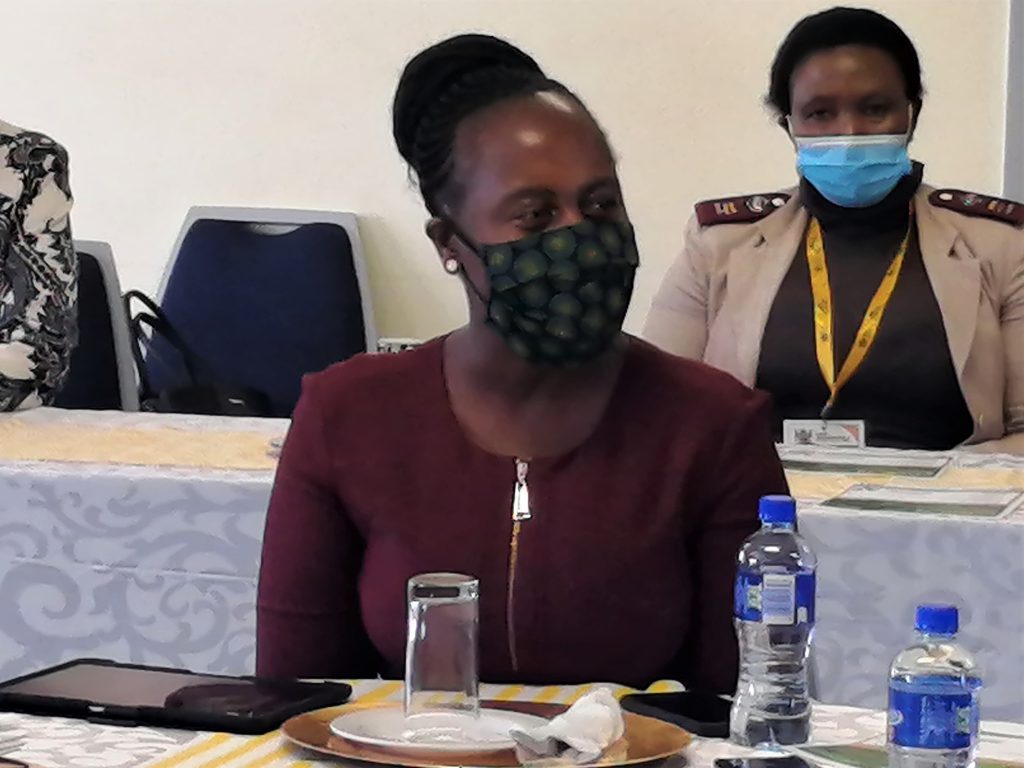
Mpumalanga Health MEC Sasekani Manzini

The MEC have no reason or intention to mislead the people of Mpumalanga, whom she serves diligently, and shall not deny anyone access to information on COVID-19 statistics. It is for these reasons that the MEC makes a concerted effort to inform the people of Mpumalanga by publishing daily statistics. The province always verifies the statistics sent.

The Minister for Health: Dr Zwelini Mkhize announces the national statistics, and thereafter the Minister send the details of the statistics to the provinces for the purposes of validation, contact tracing and linkage to care. As the province, we are responsible for the tracing our cases and their contacts. Therefore, upon this process, the province would pick misallocated cases and report these cases to the National Department of Health for correction. Then the Minister corrects the misallocated with the subsequent announcement.

The MEC requests the media, 013NEWS in particular, to verify information to get a balanced view before publishing a story. Otherwise the MEC would be left with no option but to report this to the Media Ombudsman because this may create public panic. (end)

Opinion:

The Bulletin notes with concern the last paragraph of the MEC’s statement. We have read the 013NEWS article and it is exactly the statement as received from the Democratic Alliance. This is very worrying that the MEC would threaten a newspaper so openly on a public platform as this statement was sent, and published, to several media houses.

It may be worthy to note that there are no responses on the Dept of Health’s twitter account to questions asked there. Especially the ones querying the figures correctness.

On Monday the dept published an infographic stating that GMM has two positive cases of COVID-19 (please remember that the one positive case recovered) only to withdraw that infographic on Tuesday morning and replacing it with one that says GMM has one case. On Tuesday night it was again replaced with one that says GMM has two cases.

How can we Keep the public informed if the information we receive is not reliable?