This World Diabetes Day, a few simple health numbers could tell you more about your future than you think and give you time to prepare.
Most of us know our ID number, banking PIN and cell phone number by heart. Far fewer of us know our blood sugar, blood pressure or cholesterol levels. Yet these numbers can hold the key to unlocking future health conditions and identifying areas that need change or improvement for better health outcomes in the long term.
Early action gives you time to make changes before a risk becomes a diagnosis. The idea is simple: the sooner you know, the more you can do.
Diabetes education goes a long way in supporting prevention
Diabetes is one of South Africa’s most common chronic conditions. The International Diabetes Federation estimates that about 2.3 million South African adults are living with it, and that roughly seven in ten of them have not been diagnosed.
That matters, because diabetes can quietly damage the eyes, kidneys, heart, nerves and feet for years before it causes obvious, detectable symptoms. The encouraging news is that much of this harm can be prevented or delayed when diabetes is picked up early.
Catching diabetes early starts with understanding it. Not all diabetes is the same, and knowing the difference helps you recognise the warning signs, understand your own risk and act sooner.
- Type 1 diabetes happens when the immune system destroys the cells that make insulin. It often starts in childhood or early adulthood and cannot be prevented; the warning signs include extreme thirst, frequent urination, unexplained weight loss and tiredness. If you notice these, especially in a child, see a doctor promptly.
- Type 2 diabetes is far more common. The body does not use insulin properly, and the risk rises with excess weight, inactivity and family history. It can often be prevented or delayed.
- Prediabetes means blood sugar is higher than normal but not yet in the diabetes range. It is an early warning sign that you can act on.
Ten minutes is all it takes
A quick checkup can tell you a great deal about your health. Regular screening helps identify risks early and gives you a baseline for your health, so changes over time are easier to spot. Everyone benefits, and it’s wise to start early, but it matters most if you are 45 or older, have a parent or sibling with diabetes, carry extra weight around your waist, are physically inactive, have high blood pressure or cholesterol, or had diabetes during pregnancy. Your doctor can advise how often to test. The good news is that knowing where you stand takes very little time.
Pharmacy clinics, GPs and workplace wellness days offer quick screenings, also known as Health Risk Assessments (HRAs), that take about 10 minutes. During the screening, the following five measurements will help indicate your risk of diabetes, heart disease and stroke:
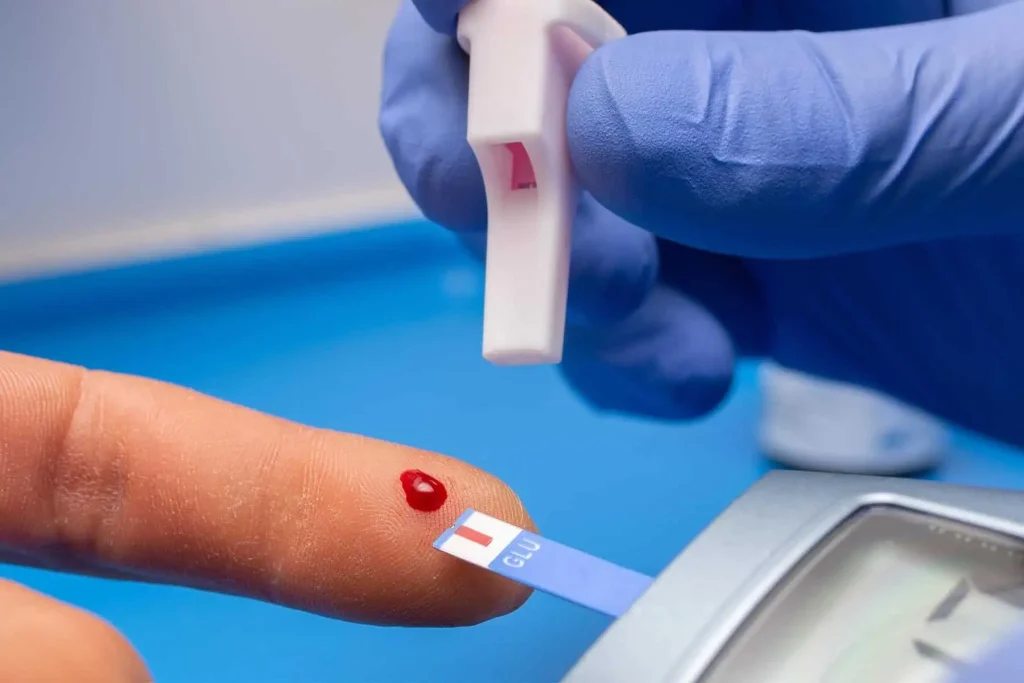
- Blood glucose or HbA1c: A fasting glucose of 7.0 mmol/L or higher, or an HbA1c of 6.5% or higher, confirmed on a repeat test, points to diabetes. Readings just below these suggest prediabetes.
- Blood pressure: Ideally below 120/80. Repeated readings of 140/90 or higher mean high blood pressure.
- Cholesterol: Aim for a total cholesterol below 5 mmol/L.
- Body mass index (BMI): A healthy range is 18.5 to 24.9.
- Waist circumference: Under 80 cm for women and under 94 cm for men. Fat around the middle is closely linked to Type 2 diabetes.
This consumer article is for educational purposes only and does not provide personal medical advice. Always consult a physician or other qualified health provider with questions about a medical condition and never disregard or delay professional medical advice because of something you read here.
Your healthcare provider will interpret your results in context. Remember that one reading is a starting point, it establishes a baseline, and it is not a diagnosis.

Act early, with support behind you
Finding out early is good news, even when the numbers are not where you would like them. Prediabetes can often be turned around. By losing a little weight, increasing physical activity and cutting back on sugary drinks and refined starches, you can substantially lower the chance of it becoming Type 2 diabetes. If diabetes is diagnosed, early treatment helps keep blood sugar in a healthy range before complications develop.

Type 1 and Type 2 diabetes are on the Chronic Disease List of Prescribed Minimum Benefits, so every medical scheme must cover their diagnosis, treatment and medicine. Register on your scheme’s chronic programme as soon as possible and use the scheme’s designated pharmacies to avoid co-payments. These programmes typically include follow-up consultations and HbA1c blood tests, and many offer support from dietitians and diabetes educators.
If you have not yet been diagnosed with diabetes, and if you are a member of a medical aid, you may have access to annual screening tests to help you monitor for changes that could lead to diabetes. Medical aid schemes, like Medshield, provide members, their dependants and beneficiaries with access to annual screenings, tests and wellness checks that help members establish a baseline for their health and monitor any changes.
Schemes are also using technology to make it easier for members with diabetes to monitor their health. Medshield, for example, funds continuous glucose monitors (CGMs) for children and teens with Type 1 diabetes on selected benefit options. In addition, from 2027, Medshield will extend AI-supported diabetic retinal eye screening, which spots early diabetic eye damage from a quick photograph of the retina to all its plans.
Your numbers are a starting point, not a verdict
Make the first check easy. Book a health risk assessment screening before the year ends and use the time to set clear, achievable, new year’s health goals using insights from the screening results. Discuss your results with your clinic nurse or GP. Remember that knowing your numbers not only tells you where your health stands today, it also gives you the chance to shape where it goes next.