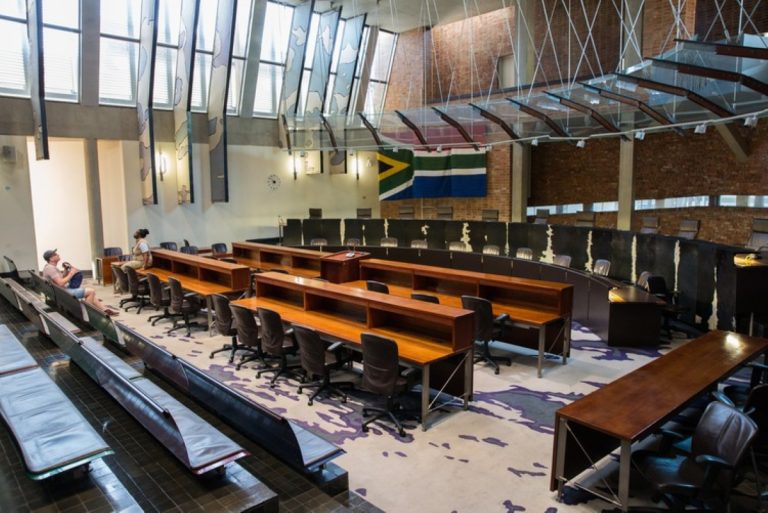
Government plans to approach the courts for guidance on implementing the Constitutional Court’s judgment on asylum applications, while the Department of Home Affairs prepares to introduce a new registration and appointment system by 10 November 2026.
The Inter-Ministerial Committee (IMC) on Migration announced the planned legal steps in a media statement issued on Sunday, 11 October, following growing public concern about the implications of the judgment and the administration of South Africa’s asylum system.
Government intends to request a supervisory order from the court, which would allow judicial oversight of the implementation process and potentially provide a suspension period for Home Affairs to strengthen its administrative, staffing, infrastructure and processing capacity.
The IMC said the objective was not to delay compliance with the judgment but to ensure that it could be implemented effectively and sustainably.
Government also acknowledged the need to balance its constitutional and international obligations towards refugees and asylum seekers with concerns raised by members of the public.
New asylum registration system planned
The IMC welcomed the Department of Home Affairs’ planned introduction of a phased intention-registration and appointment model by 10 November.
Under the proposed system, a person wishing to apply for asylum will be able to register their intention through an online platform and receive a receipt containing their personal particulars, biometric information, reference number and appointment details for a Refugee Reception Office.
Assisted registration will also be available at Refugee Reception Offices. Assistance will be provided, on request, to people in police or immigration detention through officials, legal representatives and civil society partners, in the main languages.
The receipt will serve as proof that a person has declared an intention to apply for asylum. However, the government clarified that it will not constitute a section 22 visa or confirmation that the person has been granted refugee status.
According to the statement, people who have declared an intention to make a first asylum application are protected against refoulement — the return of a person to a country where they may face persecution or serious harm — as provided for by law.
Officials will be instructed not to remove or refoule valid receipt holders, or arrest or detain them solely because they are in South Africa without a visa, while they await the lodging and final determination of their applications.
The relevant law enforcement agencies, correctional services, prosecutors and courts will also be informed of the arrangements.
The IMC stressed that the position differs for people whose asylum claims have been finally rejected. Such individuals cannot automatically reactivate protection by simply declaring an intention to apply again. However, a genuinely new claim involving the risk of persecution or serious harm must be referred for legal advice before removal.
The department also intends to introduce measures to prevent abuse of the system. If an applicant fails to attend an appointment and does not seek an extension, the appointment will lapse. Previously rejected applicants will be flagged to prevent them from using the process to submit new applications improperly.
The online platform is expected to protect confidential and personal information, including in line with the Protection of Personal Information Act. The system will also provide for published service standards, a complaints mechanism and statistics available to the courts.
Further legislative changes under consideration
The Minister of Home Affairs is drafting legislation in line with the Revised White Paper on Citizenship, Immigration and Refugee Protection, which was approved by Cabinet.
The proposed legislation is expected to be processed through Parliament during the next financial year and may provide for the remote lodging of asylum applications. The IMC said it had asked the minister to accelerate the process.
The legislation is also expected to address the principle of a first safe country, as outlined in the White Paper.
Meanwhile, Home Affairs has reported progress towards implementing the President’s announcement in June that refugee centres would be moved to ports of entry, beginning with Beitbridge by December 2026.
The IMC said the government would also consider public suggestions that refugee camps be established for people whose applications are still being processed, taking into account the legal and financial implications.
The government emphasised that deportations would continue. People who are in the country unlawfully and have not applied for asylum, as well as those whose claims have been finally rejected after any applicable review or appeal, remain subject to deportation in accordance with the law.
Conflicting High Court directives to be reviewed
The IMC has directed the relevant government departments and entities to participate in a High Court hearing scheduled for 29 October 2026.
A panel of judges appointed by the Judge President of the Gauteng Division of the High Court will consider two conflicting directives arising from separate judgments in the division on the same legal question concerning asylum seekers.
The hearing will address issues relevant to the administrative implementation of the Constitutional Court’s judgment of 7 July 2026.
The committee warned that government remains legally bound to comply with the existing court order while these legal processes unfold. Failure to do so could amount to contempt of court.
It has therefore asked South Africans for patience while government seeks the necessary guidance and time to put the required systems in place.
Thirty people arrested amid rising tensions
The IMC also reported that 30 people had been arrested since Thursday in connection with alleged public violence and attempts to incite instability in communities.
Of those arrested, 25 were in KwaZulu-Natal and five in Gauteng. The alleged offences include public violence, illegal gathering, obstruction and resisting arrest.
According to the statement, those arrested included individuals identified as alleged ringleaders who had reportedly threatened to disrupt football matches scheduled to take place in Durban on Sunday.
The government said law enforcement agencies would act against threats, intimidation and unlawful conduct that endanger public safety, damage property or disrupt lawful activities.
The National Joint Operational and Intelligence Structure (NATJOINTS) and provincial operational structures continue to coordinate intelligence-led responses. The deployment of the South African National Defence Force in KwaZulu-Natal forms part of broader stabilisation efforts conducted in cooperation with the South African Police Service.
Police remain on high alert across the country, with sporadic incidents in the Western Cape, Eastern Cape and Limpopo reportedly addressed through operational interventions.
The IMC reiterated that the Constitution protects the right to peaceful assembly and protest, but said this does not extend to looting, intimidation, malicious damage to property, public violence or obstruction of lawful activities.
Warning over inflammatory social media content
The committee expressed concern about the circulation of misleading and inflammatory content on social media that could fuel hostility, mobilise unlawful action or incite violence against foreign nationals, public officials and state institutions.
While freedom of expression is constitutionally protected, the IMC warned that incitement to violence, intimidation, hate speech and criminal conduct would not be tolerated.
Law enforcement agencies are monitoring online and offline activity and may take action against individuals or groups who encourage, organise or commit acts of violence or public disorder.
The government called on civil society organisations, community groups, political stakeholders and the public to exercise restraint while the legal processes continue.
The IMC also acknowledged engagements with representatives of civil society organisations and movements, including Operation Dudula, March and March, United Civic Movement, the South African Council of Churches, South Africa First and the Alexandra Fiela Movement. The representatives reportedly shared community concerns and proposals for government to consider.
The committee urged the public to rely on official information and avoid spreading misinformation that could cause unnecessary panic or division.
Government said its objective remained a migration management system that is lawful, humane, fair and secure, and that complies with the Constitution and the rule of law.