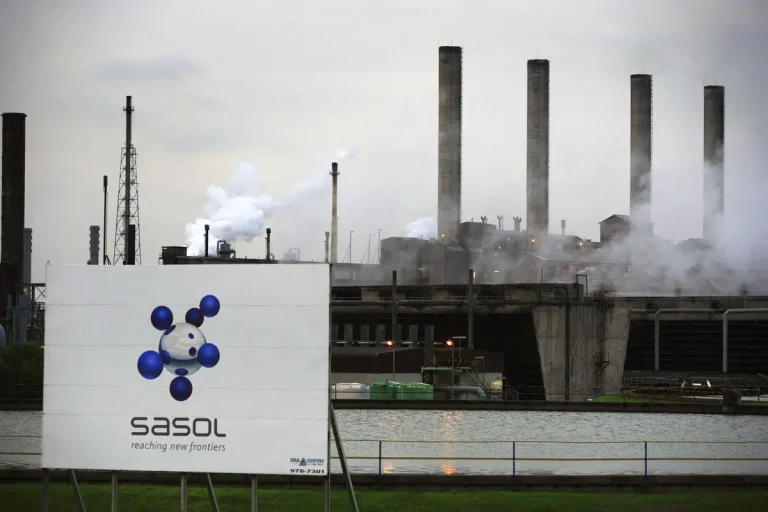
A long-running criminal probe into allegations that Sasol unlawfully polluted the Vaal River system took a dramatic turn this week when National Prosecuting Authority (NPA) investigators executed fresh search warrants at the company’s Secunda operations while Sasol executives were appearing before a parliamentary committee.
Environmental management inspectors and NPA officials served the warrants on Tuesday as Sasol representatives were presenting to the parliamentary committee on forestry, fisheries and the environment. The timing prompted the company to abruptly stop answering detailed questions from Members of Parliament, citing the warrants and the risk of prejudicing an active criminal investigation.
The inquiry began in 2019 after whistleblower Ian Erasmus, a former Sasol senior process controller, alleged the company had unlawfully discharged hazardous chemicals — including vanadium, diethanolamine and potassium carbonate — into its wastewater system, ultimately contaminating the Klipspruit and potentially the Vaal River. Erasmus testified at a South African Human Rights Commission (SAHRC) inquiry in February 2019 that a failed chemical sewer valve at Sasol’s Benfield units allowed contaminated waste to enter the wrong part of the plant’s wastewater system and then the natural waterways.
Sasol has consistently denied the allegations. The company was formally charged in 2022 over alleged historical environmental management failures at Secunda. Prosecutors said the company had discharged waste into API dams between 2012 and 2019 and had undertaken activities without required environmental authorisations. Those charges were provisionally withdrawn in July 2025 after prosecutors received additional evidence from Erasmus, and this week investigators disclosed the probe had been widened.
Frances Craigie, chief director for enforcement at the Department of Forestry, Fisheries and the Environment (DFFE), told MPs the criminal investigation has expanded beyond the original Benfield Phase 1 and 2 facilities to include Benfield Phases 3 and 4. Investigators are also probing whether certain Sasol officials may have provided false or misleading information to environmental management inspectors — an offence under environmental legislation that could be added to any future criminal case if evidence supports it.
Craigie confirmed Erasmus entered the NPA’s witness protection programme in April 2024 after seeking assistance through investigators. She said the investigation had proven unusually complex because the critical Benfield waste valve at the centre of Erasmus’s allegations had been repaired before investigators were able to access the site, preventing contemporaneous river sampling at that discharge point. As a result, investigators have relied on historical river sampling data, monitoring reports, company records, witness statements and scientific evidence.
“We could not collect contemporaneous river samples at that discharge point,” Craigie told the committee. “The investigation therefore has relied on historical river sampling data together with monitoring reports, witness statements and other documentary evidence.” She added that investigators have interviewed 38 witnesses, consulted specialist experts, and compiled extensive technical and scientific evidence. Since the provisional withdrawal of charges, investigators have obtained 16 additional witness statements, and prosecutors are assessing whether to proceed in the Mbombela High Court. Craigie said the prosecutor hoped to place the matter back on the court roll by the end of September, although it could extend to the end of the year.
Sasol’s executives stood in stark contrast to the NPA’s action. Vuyo Kahla, executive director and vice-president for commercial and legal, and Victor Bester, executive vice-president, defended the company’s record. They told MPs that Sasol’s Benfield plant operates with containment systems designed to keep contaminated water within closed infrastructure where it is recycled, treated or disposed of, and argued there is “no pathway” for Benfield process water to reach the Klipspruit or Vaal River systems. Kahla maintained the company rejected both the pollution allegations and claims that Erasmus suffered occupational detriment, saying Erasmus left the company through a mutual separation agreement and that Sasol supports whistleblowers.
However, after learning of the search warrants being executed at Secunda, Sasol said it could not answer further questions without prejudicing its legal position and requested time to seek legal advice. The parliamentary committee gave the company until 25 August to submit written responses to outstanding questions.
The company’s sudden refusal to respond drew visible frustration from committee members. DA MP Wildri Peach said he was “extremely disappointed” and described Sasol’s retreat as “extremely disingenuous,” asking why the company would decline to answer if it were confident in the truthfulness of its presentation. ANC MP Noluthando Makasi said it was “simply not acceptable” for Sasol to refuse to answer questions. Committee chairperson Nqabisa Gantsho said she was disappointed by the abrupt change in approach and urged the company to respond with the same confidence it displayed during its initial presentation.
The case has been marked by protracted delays and multiple institutional inquiries since Erasmus first blew the whistle. The DFFE’s criminal investigation was only transferred to the NPA in December 2021, and legal challenges from Sasol delayed subsequent proceedings. The SAHRC’s own inquiry into the matter has been criticised for delays and incomplete follow-up, prompting the Public Protector to investigate the commission’s handling of the case.
Parliamentary committee members proposed an oversight visit to Sasol’s Secunda site to verify infrastructure integrity and assess impacts on fence-line communities. Meanwhile, the NPA’s fresh warrants and the expanded scope of the investigation signal prosecutors are intensifying efforts to gather admissible evidence. Investigators seized electronic and documentary material this week, sources said, and the prosecutor will weigh whether to re-institute charges and potentially add counts related to misleading inspectors and the alleged victimisation of Erasmus under the National Environmental Management Act.
As the NPA and DFFE continue to gather evidence, Sasol has pledged to provide written responses after legal consultation. The unfolding developments mean a high-profile environmental prosecution that began with a whistleblower’s complaint seven years ago may yet return to court with an expanded roster of allegations.